How we make this list: we compare pricing pages, product documentation and public user reviews. Rankite is independent; if a vendor ever pays for a featured spot, that listing is clearly labeled Partner.
Key takeaways
- Climate FieldView and John Deere Operations Center are the two dominant field-data platforms, and both connect to equipment most row-crop farms already own.
- AgriWebb leads for livestock operations, while Croptracker leads for fruit and vegetable growers that need spray records and food-safety compliance.
- Traction Ag is the farm accounting specialist; note that Traction has acquired Conservis, consolidating two enterprise farm management platforms under one roof.
- Agrivi and Agworld suit operations that coordinate across agronomists, staff, and advisors, with Agworld's collaborative record-keeping a particular strength.
- PTx Trimble and Granular Insights serve precision and data-driven row-crop operations, with Granular offering a free entry tier for field-level profitability analysis.
Bayer reports that Climate FieldView is used on more than 220 million subscribed acres globally. That number says something important about farm software in 2026: the winners are the platforms that meet farmers where their data already lives, in the cab, on the phone, and in the equipment they already own. The nine tools below cover the main jobs on a modern farm: field records and agronomy, livestock management, farm accounting, and the precision data layer that ties it together.
Quick comparison
| Tool | Best for | Starting price | Free plan |
|---|
 AgriWebb AgriWebb | livestock producers managing herds and grazing | See website | No |
 PTx Trimble PTx Trimble | precision ag across mixed equipment fleets | See website | No |
 Granular Insights Granular Insights | row-crop farms starting with field-level profitability | See website | Yes |
 Climate FieldView Climate FieldView | data-driven row-crop operations | See website | No |
 Agrivi Agrivi | enterprise farms and agri-food companies | See website | No |
 Agworld Agworld | collaborative farm and agronomist record-keeping | See website | No |
 Traction Ag Traction Ag | farm accounting tied to the crop year | See website | No |
 John Deere Operations Center John Deere Operations Center | Deere equipment owners centralizing machine data | See website | Yes |
 Croptracker Croptracker | fruit and vegetable growers needing compliance records | See website | No |
Is your product missing or out of date?
We review this list regularly. Vendors can request a listing, send updated pricing or ask about featured placement.
The best agriculture software
Starting priceSee website
Free planNo
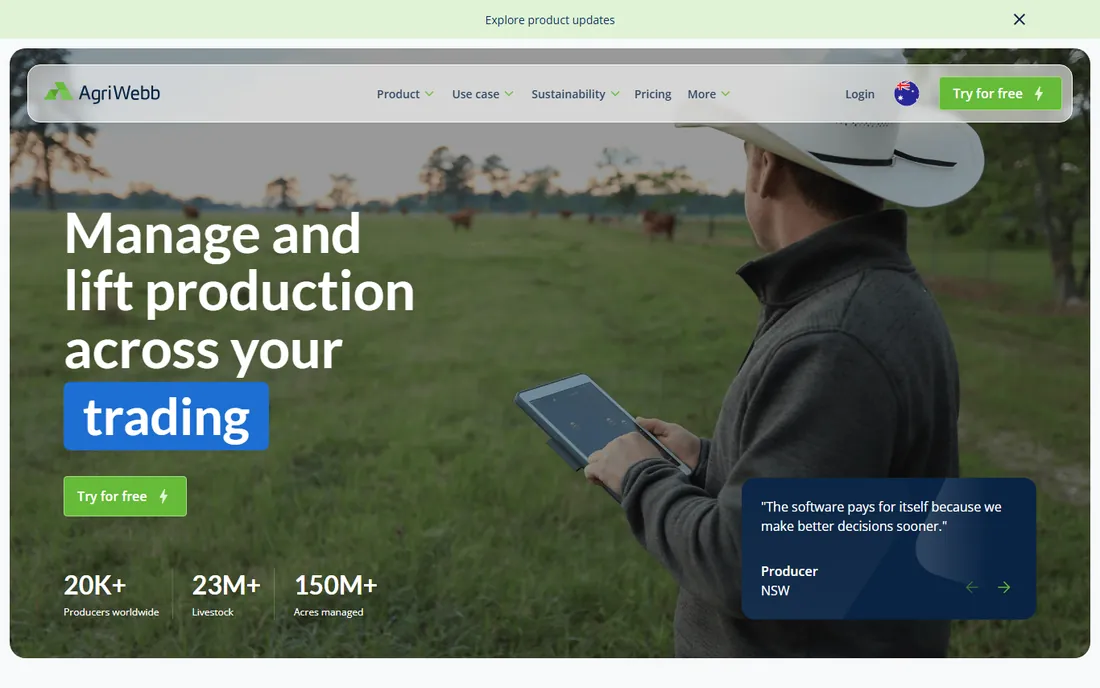
AgriWebb is the farm management platform livestock producers mention first. It handles the realities of ranch life: mob movements, grazing rotations, individual animal records, treatments, and weights, all from a phone that works without cell signal. Reviewers in Australia, the UK, and the US praise how quickly daily record-keeping becomes habit rather than chore.
Pricing is customized to the operation rather than published, so expect a sales conversation. The platform's center of gravity is clearly livestock; broadacre cropping gets coverage but not the same depth as the grazing tools. For cattle and sheep operations that want one system for the whole ranch, AgriWebb is the benchmark.
What we like- Purpose-built for cattle and sheep operations
- Grazing and mob management are genuinely strong
- Offline-capable mobile app for remote paddocks
Watch out for- Pricing is quote-based and scales with operation size
- Cropping features are lighter than livestock depth
Starting priceSee website
Free planNo
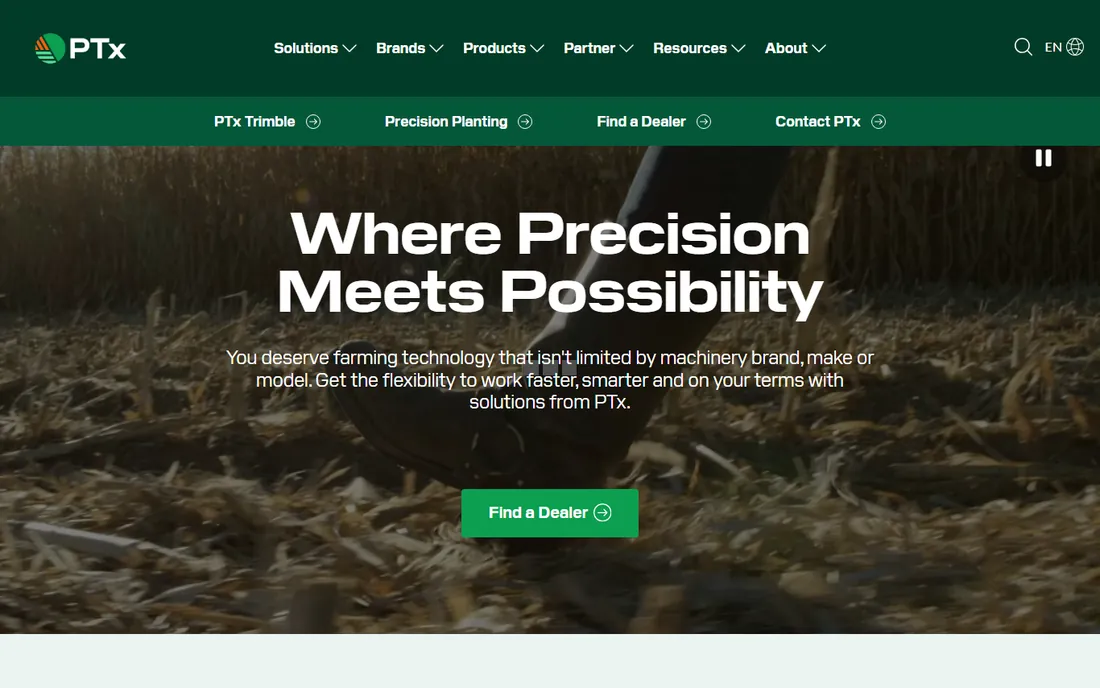
PTx Trimble, the precision agriculture business formed from Trimble's agriculture division with AGCO, sells the technology layer that makes machines smarter: guidance, autosteer, variable-rate application, and the data platform behind them. Its defining trait is mixed-fleet compatibility, so a farm running three tractor brands can still get consistent precision tools. The digital side includes farm operations management and record-keeping.
This is primarily a hardware and dealer story. Farmers buy through PTx Trimble dealers, and pricing follows equipment-style quoting rather than SaaS plans. Software-only shoppers comparing cloud farm management tools will find less here. For operations investing in precision hardware, PTx Trimble is one of the two names that matter.
What we like- Guidance, steering, and application control that work across equipment brands
- Strong dealer network
- Farm data management included
Watch out for- Hardware-centric, so software-only buyers get less value
- Pricing runs through dealers
#3
Granular Insights
Best for: row-crop farms starting with field-level profitability
Visit granular.ag
Starting priceSee website
Free planYes
Granular Insights is Corteva's digital farm platform, and its free tier is the easiest on-ramp in this category: connect machine data and get field-level profitability analysis without an upfront commitment. Paid tiers add directed scouting, deeper agronomics, and the full Granular Business financial suite. Reviewers like the satellite imagery cadence and the clean profit-by-field views.
The product line has been consolidating, with Granular Business capabilities moving toward the Traction family, so buyers should ask what the current packaging looks like during evaluation. The free Insights tier remains the sensible starting point for a row-crop farm that wants to see whether field-level data actually changes decisions before spending.
What we like- Free entry tier for field-level profit analysis
- Strong satellite imagery and agronomic analytics
- Backed by Corteva Agriscience
Watch out for- Deeper features sit in paid Granular Business tiers
- US row-crop focus is strongest
Starting priceSee website
Free planNo
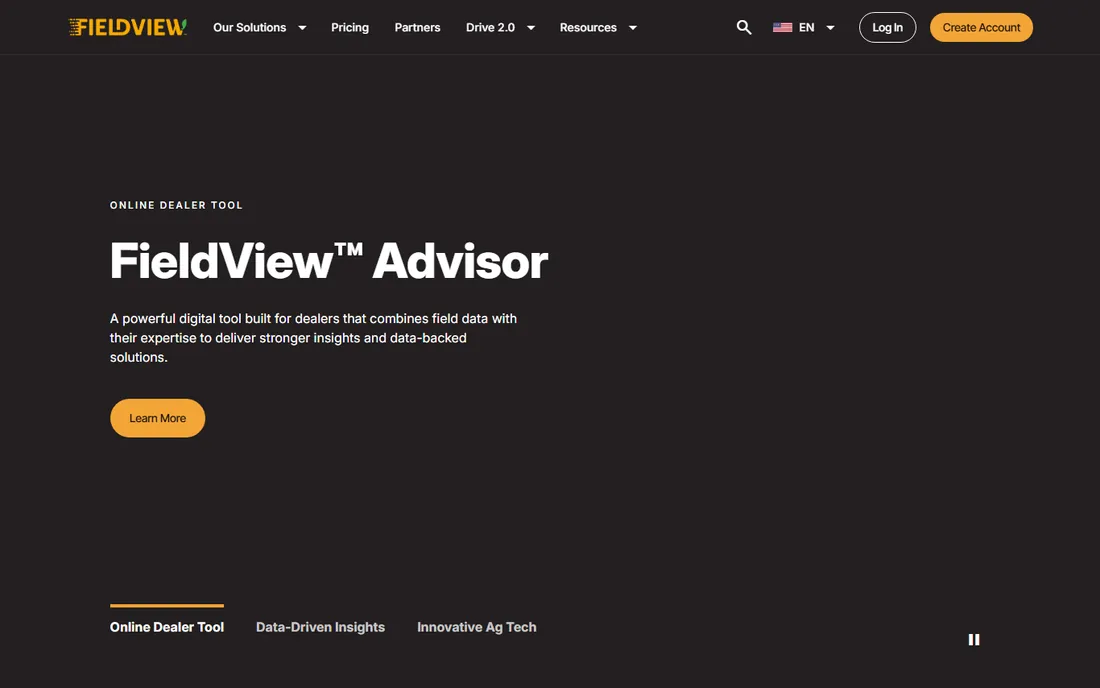
Climate FieldView is Bayer's digital farming platform and the most widely adopted field-data tool in row crops. The FieldView Drive hardware streams machine data into clean maps, and the software turns it into seed scripts, trial comparisons, and in-season scouting views. Reviewers praise how much equipment it talks to and how little manual data entry it requires.
Pricing is subscription-based and scales with acres, so large operations should model the full cost rather than the per-acre headline. The platform is also deepest for corn and soybean systems, with other crops getting less attention. For a row-crop farm that wants the industry-standard data layer, FieldView is the default shortlist entry.
What we like- Massive equipment compatibility and data integrations
- Strong scripting and trial analysis tools
- 60-plus partner connections
Watch out for- Subscription pricing adds up across large acreage
- Best value tied to the Bayer ecosystem
Starting priceSee website
Free planNo
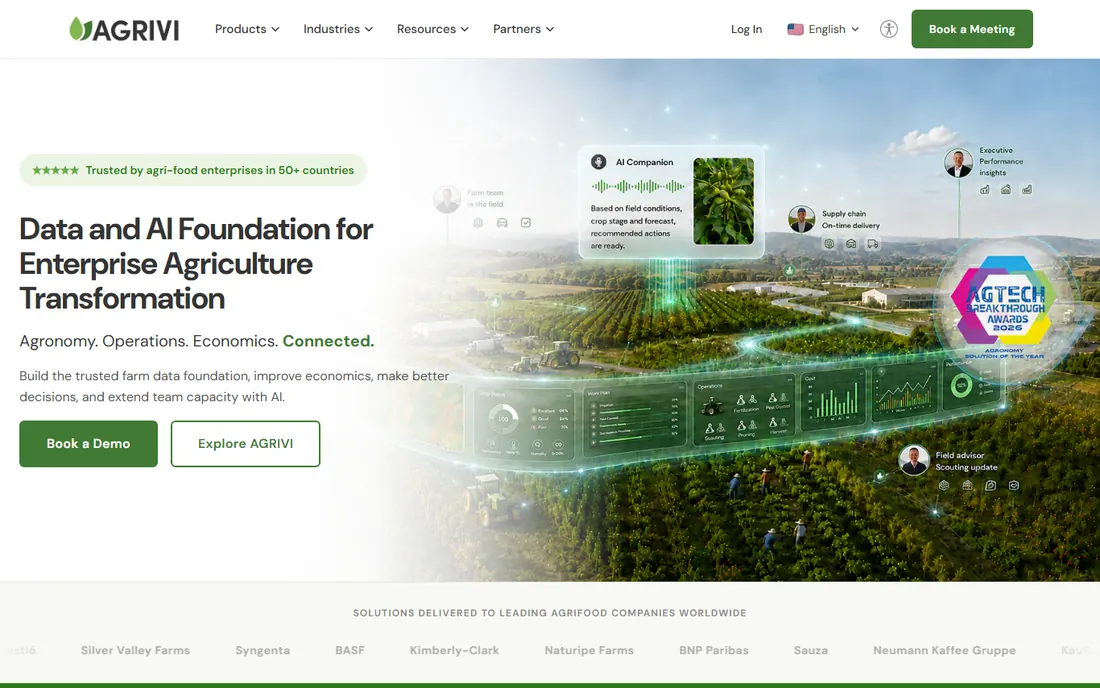
Agrivi builds farm management software for scale: large farms, cooperatives, and agri-food companies managing complex operations across regions. It covers crop planning, field activities, inventory, finance, and traceability, with the compliance and sustainability reporting that enterprise buyers and their retail customers require. The company reports deployments in more than 50 countries.
This is not software for a 500-acre family farm. Pricing is quote-based and the sales process is enterprise-shaped, with demos and scoping rather than self-serve signup. Reviewers at large operations value the depth; smaller growers find simpler tools a better fit. Choose Agrivi when the operation's complexity, not its acreage alone, demands enterprise software.
What we like- Strong for large and multi-site operations
- Traceability and compliance features
- Supports 200-plus crop types
Watch out for- Enterprise positioning means higher cost and longer sales cycles
- Overkill for small family farms
#6
Agworld
Best for: collaborative farm and agronomist record-keeping
Visit agworld.co
Starting priceSee website
Free planNo
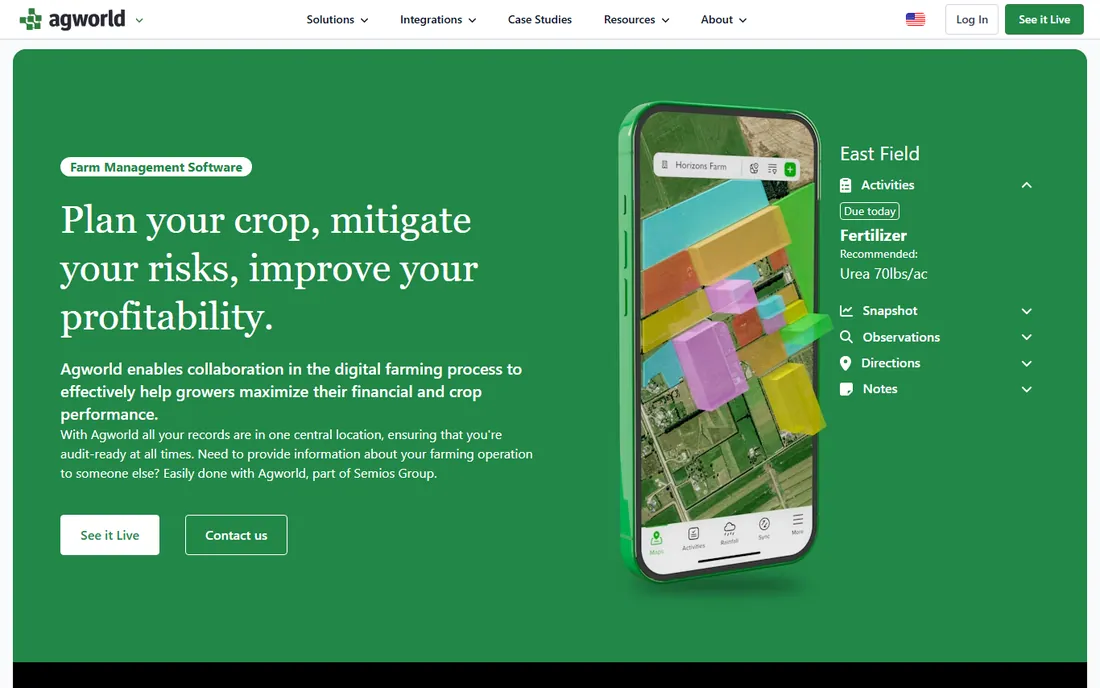
Agworld's insight is that farm records get better when everyone works in the same system. Farmers, agronomists, contractors, and input suppliers share one standardized database, so a spray recommendation becomes a spray record becomes a compliance report without re-entry. Reviewers particularly praise the spray record-keeping and the audit-ready reporting it produces.
The network effect is also the limitation. Agworld delivers its full value when the farm's advisors are on the platform too; a farmer using it alone gets a good record-keeping tool but misses the collaboration payoff. Pricing is quote-based. For operations where the agronomist relationship drives decisions, Agworld's shared-workspace model is distinctive.
What we like- Standardized data model shared across farmers, agronomists, and contractors
- Strong spray and compliance records
- Independent and privately owned
Watch out for- Pricing is quote-based
- Collaboration value depends on advisors using it too
Starting priceSee website
Free planNo
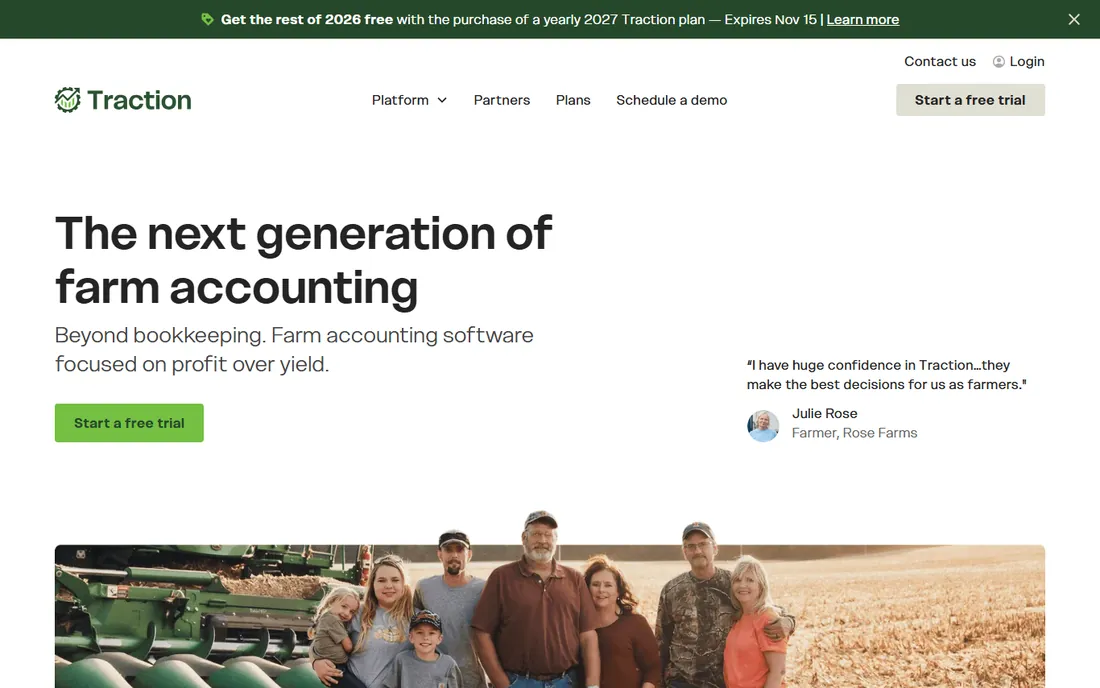
Traction Ag does one thing the general accounting tools do not: it thinks in crop years. Income, expenses, inventory, and profitability all tie to the season that produced them, which is how farmers actually evaluate performance. It handles Schedule F reporting, 1099s, bank feeds, and integrates with Climate FieldView and John Deere Operations Center to pull field data into the books. Reviewers rate its farm-specific accounting highly.
Note the consolidation: Traction has acquired Conservis, bringing that enterprise farm management platform into the Traction family. Buyers evaluating enterprise-scale tools should ask how the product lines fit together. Traction's own pricing page lists plan tiers without public prices, so expect a sales conversation. For farms whose books live in spreadsheets or generic accounting software, Traction is the purpose-built upgrade.
What we like- Accounting built around crop years, not calendar years
- Schedule F and 1099 support
- Integrates with FieldView and John Deere Operations Center
Watch out for- No public pricing on the plans page
- Livestock tracking is financial only, not per-animal
#8
John Deere Operations Center
Best for: Deere equipment owners centralizing machine data
Visit deere.com
Starting priceSee website
Free planYes
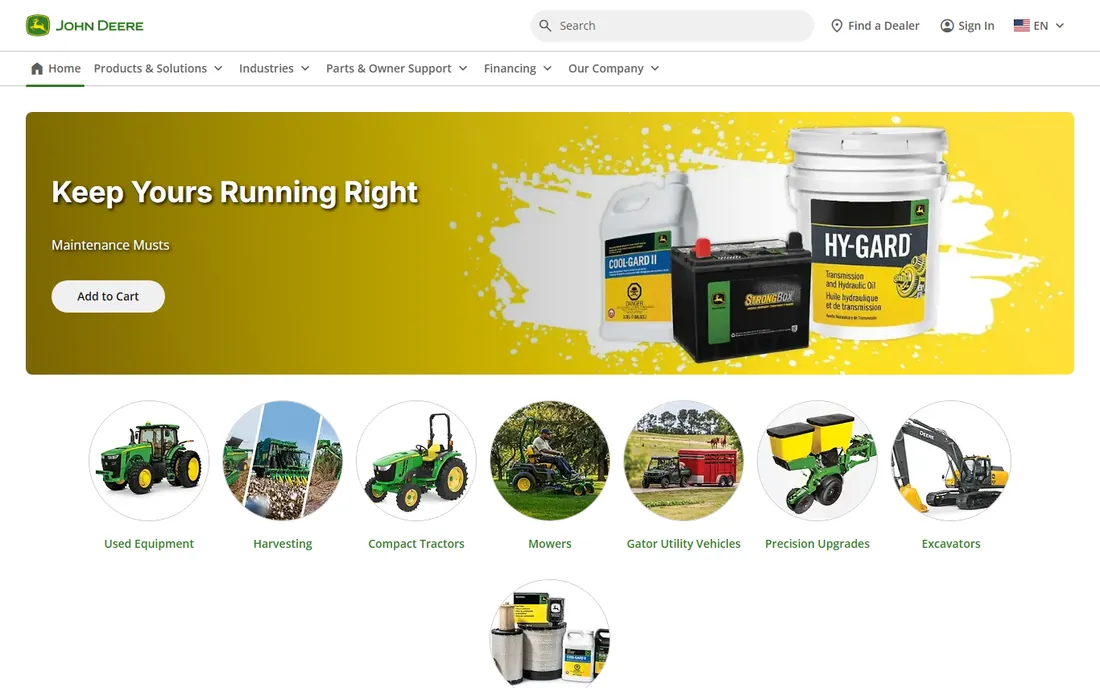
John Deere Operations Center is the free cloud hub for Deere equipment data: machine locations, field operations, yield maps, and work planning flow in automatically from connected machines. Farmers can set up fields, plan work, and analyze results without additional software cost, and dealers can provide remote support through the same platform. For a Deere-heavy fleet, it is the path of least resistance to digital records.
The obvious boundary is the brand on the machines. Mixed fleets get partial value, since non-Deere equipment needs manual data import or third-party bridges. Some advanced analytics and services run through dealers rather than self-serve. It costs nothing to start, which makes it the easiest first step for Deere owners before buying anything else.
What we like- Free account with deep integration to Deere equipment
- Machine and agronomic data in one place
- Large dealer support network
Watch out for- Full value requires Deere connected machines
- Advanced features may need dealer services
Starting priceSee website
Free planNo
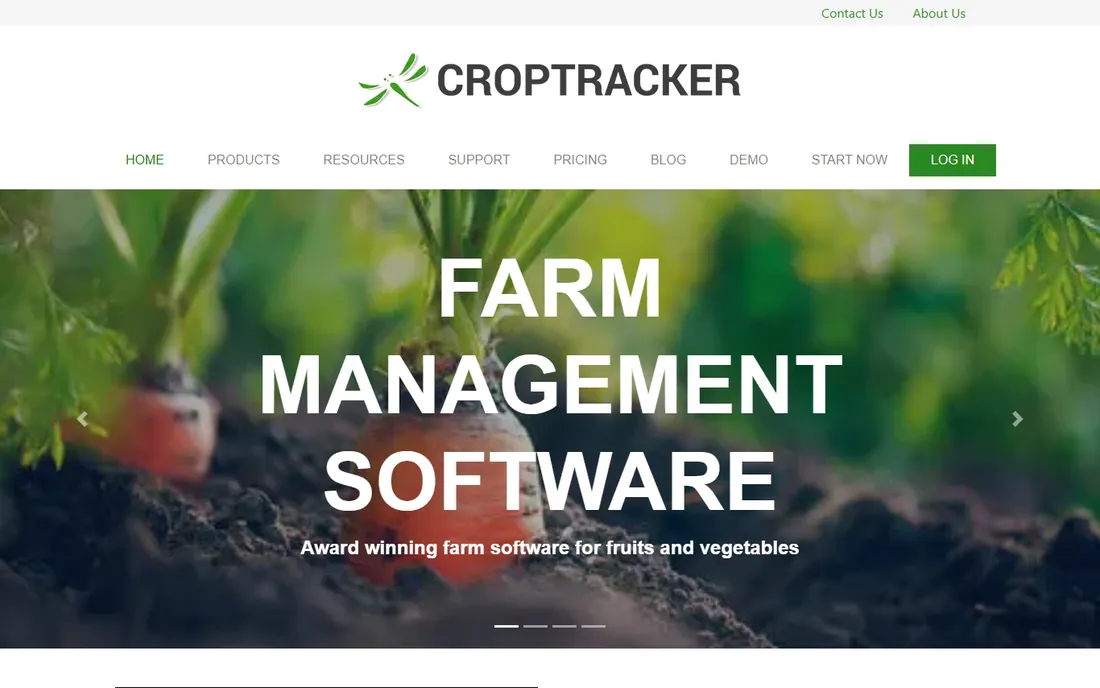
Croptracker is built for the compliance-heavy world of fruit and vegetable production. Its spray record-keeping tracks products, rates, restricted-entry intervals, and pre-harvest intervals, then generates the audit reports that food-safety certifications demand. Harvest tracking, labor records, and traceability round out a package shaped around specialty crops rather than adapted from row-crop software.
Pricing is modular and quote-based, so buyers pay for the records they need. Row-crop and livestock farms will find the feature set off-center for their work. For orchards, vineyards, and vegetable operations where an audit can make or break a sales contract, Croptracker is the specialist pick.
What we like- Spray records built for audit and food-safety compliance
- Harvest and labor tracking included
- Modular pricing by feature
Watch out for- Quote-based pricing
- Row-crop and livestock operations get less depth
How we chose
We selected farm management platforms that working farms actually buy, covering the category's main jobs: field records and agronomy, livestock, farm accounting, and equipment data. Candidates came from ag-tech coverage, extension service software lists, and reviews on G2, Capterra, and farming forums. We verified each product exists today under its current name and homepage, accounting for recent consolidation: Traction's acquisition of Conservis and Corteva's Granular Business changes. Pricing is quote-based for most of the list, so we report "See website" rather than repeating third-party figures. We did not test the software hands-on.
Understanding farm software pricing
Farm software pricing follows the farm, not the seat. Most vendors price by acres, head count, modules, or operation size, which is why so few publish a simple per-user number. Expect a discovery call where the vendor scopes your acreage, crops, and users before quoting. Model the full cost across your actual operation: a per-acre price that looks small can become significant at 5,000 acres, and modular pricing means the compliance or accounting add-on you need may not be in the base quote.
Free tiers are worth using where they exist. Granular Insights lets a row-crop farm test field-level profitability analysis without commitment, and John Deere Operations Center costs nothing for Deere equipment owners. Use these to learn what your data actually looks like in a system before paying for a full platform. Also ask about the hardware side: FieldView's Drive, PTx Trimble's displays, and Deere's connected machines all carry equipment costs beyond the software subscription, and dealers are the right people to quote that part.
What to verify during demos
Bring your own operation to the demo. Ask the vendor to set up one of your fields, one spray program, or one mob the way you would actually run it, and watch where the workflow gets awkward. Check offline behavior specifically: a mobile app that needs constant signal is a liability in rural areas, and AgriWebb, Agworld, and Croptracker all get reviewer credit for working where coverage does not. Confirm how machine data gets in: automatic sync from your equipment brands, or manual file uploads you will abandon by July.
Compliance and accounting integrations deserve direct questions. If you sell to buyers requiring food-safety audits, have the vendor generate a sample audit report in the demo. If the books matter, confirm the accounting export actually maps to your chart of accounts rather than dumping into generic categories. Finally, ask about data ownership and exit terms. Your historical field data is valuable; confirm you can export complete records in usable formats if you ever leave.
Frequently asked questions
What is the best farm management software for a small farm?
Start with the free options that fit your equipment: John Deere Operations Center for Deere owners, Granular Insights for row-crop farms wanting profit analysis. For livestock, AgriWebb's focused toolset usually beats a generic platform. Buy the smallest tier that covers your actual records need.
Do I need farm software if I already use QuickBooks?
QuickBooks handles the books but not the field. Traction Ag bridges the two with crop-year accounting, while FieldView, Operations Center, or Agworld handle the agronomic records QuickBooks cannot. Many farms run both: accounting software for finance, farm software for operations.
How does precision ag software differ from farm management software?
Precision ag tools like PTx Trimble focus on the machine layer: guidance, autosteer, and variable-rate application. Farm management platforms like Agrivi or Agworld focus on records, planning, and financials. Many operations use both, with data flowing from the machines into the management system.
Can farm software work without internet in the field?
The better ones can. Reviewers specifically praise offline-capable mobile apps for recording work where there is no signal, with sync when connectivity returns. Verify this in the demo rather than assuming it, since offline depth varies widely.
What should a fruit grower prioritize?
Spray records and audit readiness, since food-safety certifications directly affect market access. Croptracker is built for this. Also confirm harvest and labor tracking, because labor compliance is the second audit risk most specialty-crop growers face.
How do I choose between FieldView and Operations Center?
If your fleet is mostly John Deere, start with Operations Center since it is free and deeply integrated. FieldView earns its subscription with broader equipment compatibility and stronger trial and scripting analytics. Many farms run both, using each where it is strongest.
Sources we checked (10)
- https://agriwebb.com/
- https://ptxtrimble.com/
- https://granular.ag/
- https://climate.com/
- https://agrivi.com/
- https://agworld.co/
- https://tractionag.com/
- https://www.deere.com/en/
- https://www.croptracker.com
- https://www.corteva.com/us/press-releases/granular-launches-free-tool-to-help-farmers-easily-measure-field-level-profitability.html
Is your product missing or out of date?
We review this list regularly. Vendors can request a listing, send updated pricing or ask about featured placement.

Shihab Mia · Founder, Rankite
Shihab has spent more than a decade helping SaaS and e-commerce brands grow through search. He writes Rankite's software buying guides from pricing pages, documentation and public user reviews. More about Shihab.