How we make this list: we compare pricing pages, product documentation and public user reviews. Rankite is independent; if a vendor ever pays for a featured spot, that listing is clearly labeled Partner.
Key takeaways
- Grocery stores need POS software that handles weighted items, deli scales, EBT and SNAP, and PLU codes natively. General retail systems can work, but often need add-ons.
- Square and Epos Now offer the lowest entry cost, while IT Retail is the only pick built exclusively for grocery workflows.
- Lightspeed and Shopify suit stores that sell online as well as in store, but both cost more once you add the tiers that matter.
- Toast fits grocerants and food-forward stores better than traditional supermarkets.
Quick comparison
| Tool | Best for | Starting price | Free plan |
|---|
 Square Square | New or small grocery stores on a budget | Free ($0); Plus from $49/month per location | Yes |
 IT Retail IT Retail | Independent grocers wanting grocery-native tools | $49/month (software only) | No |
 Lightspeed Retail Lightspeed Retail | Specialty grocers with complex inventory | $89/month (billed annually) | Free trial (14 days) |
 Shopify POS Shopify POS | Grocers selling online as well as in store | $39/month Shopify plan plus $89/month per location for POS Pro | Free trial |
 Clover Clover | Stores wanting affordable hardware bundles | From $14.95/month | Free trial |
 Epos Now Epos Now | Budget-conscious independents | $39/month (software only) | Free trial (30 days) |
 Toast Toast | Grocerants and food-focused hybrid stores | $90/month per location (Basic Retail) | Free trial |
Is your product missing or out of date?
We review this list regularly. Vendors can request a listing, send updated pricing or ask about featured placement.
The best software for grocery store owners
Starting priceFree ($0); Plus from $49/month per location
Free planYes
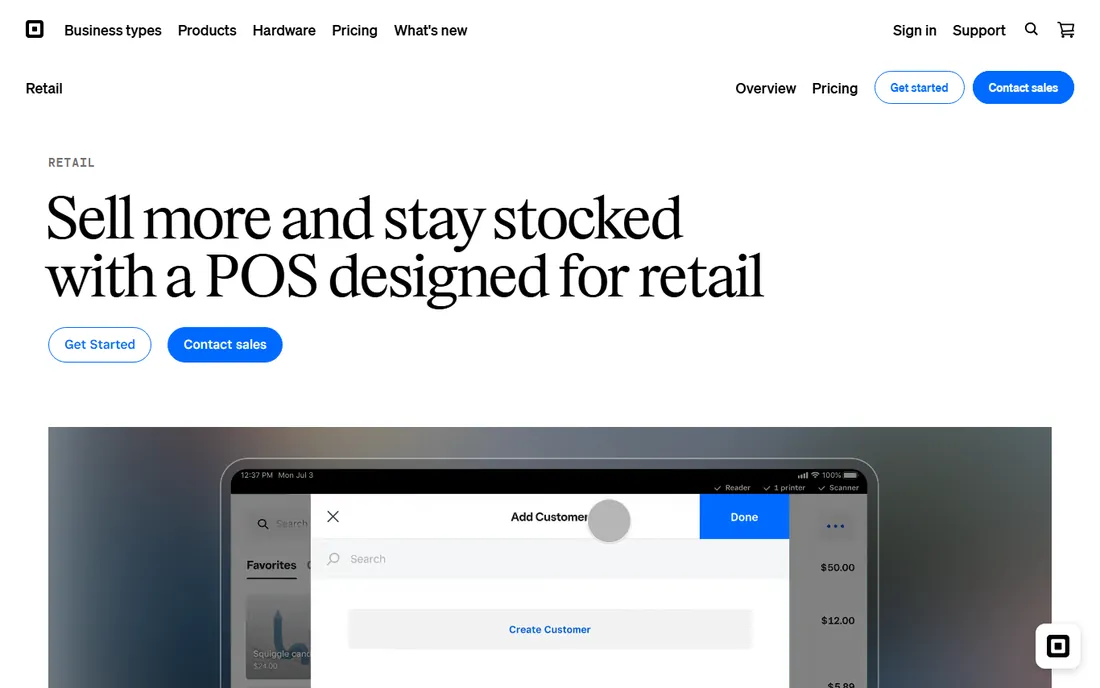
Square remains the easiest way for a small grocery or corner market to start taking cards this week. The free plan covers checkout, basic inventory tracking, and an online storefront at zero monthly cost, which is why so many new independents begin here. Setup is fast, the hardware is inexpensive, and there is no contract to sign.
What stands out for grocery use is how much comes in the box. Low-stock alerts, item libraries, and purchase orders (on Plus) keep staples on the shelf without a back-office degree. The integrated payments mean one vendor for software and processing, which simplifies support when the Saturday rush hits.
The honest catch is that Square was not built for grocery. Weighted items from deli scales, EBT auto-separation, and SNAP-eligible basket splitting are not native strengths. Stores with a serious deli, meat counter, or produce department will feel the gaps. Processing at 2.6% plus 15 cents in person on the free plan is also on the high side, so high-volume stores often end up paying for Plus anyway, at which point a grocery-native option deserves a look.
What we like- Genuine free plan with no monthly fee
- No long-term contracts
- Built-in online store and payment processing
Watch out for- Advanced inventory tools sit behind the Plus plan
- Processing rates are higher than some rivals
- Grocery-specific needs like scale integration require workarounds
Starting price$49/month (software only)
Free planNo
IT Retail has sold POS to independent grocers since 1993, and the focus shows. Deli and scanner scales integrate for by-the-pound pricing, EBT cash and food benefits auto-separate at the register with split tenders, and purchase orders with low-stock reports keep reordering on track. These are the exact workflows that general systems handle with add-ons or not at all.
The back office is cloud-based while the register keeps running offline, a practical detail for stores with shaky internet. The company also publishes a Build and Price tool and starts software plans at $49 a month, which keeps it within reach of single-store operators.
The catch is transparency at scale. Entry pricing is published, but larger setups with multiple lanes, self-checkout, or deli scales move to custom quotes. IT Retail is also a specialist, so if you later want deep integrations outside grocery, the ecosystem is thinner than Square or Shopify. For a store that lives and dies by its fresh departments, though, the grocery-first design is hard to beat.
What we like- Built only for grocery: deli scales, EBT, PLU codes and weighted items are native
- 24/7 support team
- Mobile inventory app for stock edits on the floor
Watch out for- Pricing beyond the entry tier is quote-led
- Smaller brand with thinner non-grocery integrations
- Bundled hardware plans start higher at $99/month
Starting price$89/month (billed annually)
Free planFree trial (14 days)
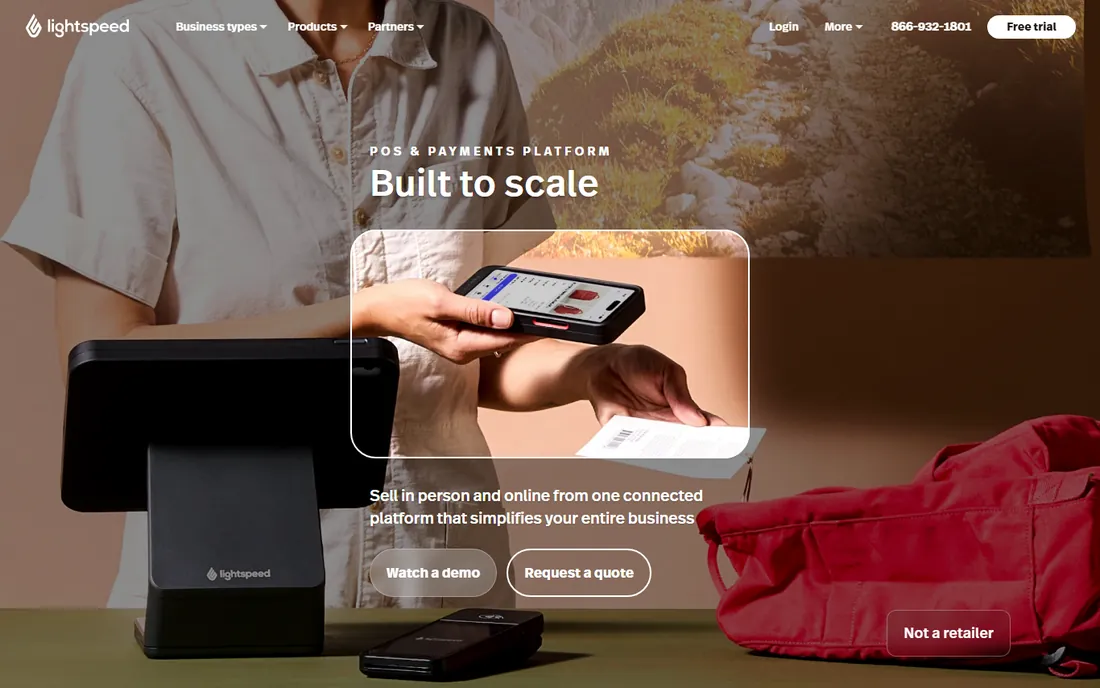
Lightspeed Retail is the inventory nerd of this list. Matrix SKUs, serial tracking, purchase order workflows, and vendor catalog integration handle the kind of catalog complexity that trips up simpler systems. For a specialty grocer or natural foods store with thousands of SKUs across supplements, bulk bins, and local products, that depth matters.
Every plan includes built-in eCommerce, so a store can sell online without bolting on a separate platform. Loyalty and CRM arrive at the Core tier, and the reporting goes far beyond daily totals, with sell-through and margin analysis that help buyers make better orders.
The catch is cost and complexity. Basic starts at $89 a month billed annually, and the features most growing stores want sit in Core at $149 or Plus at $289. Lightspeed also expects you to use its own payments; bringing your own processor adds a monthly fee. A straightforward neighborhood grocery will find this overkill. A multi-department specialty store will find it worth the money.
What we like- Deep inventory tools with matrix SKUs, purchase orders and vendor catalogs
- Built-in eCommerce on every plan
- Loyalty and CRM from the Core tier up
Watch out for- Among the priciest options here
- More complex than a simple store needs
- Extra monthly fee if you use a third-party processor
Starting price$39/month Shopify plan plus $89/month per location for POS Pro
Free planFree trial
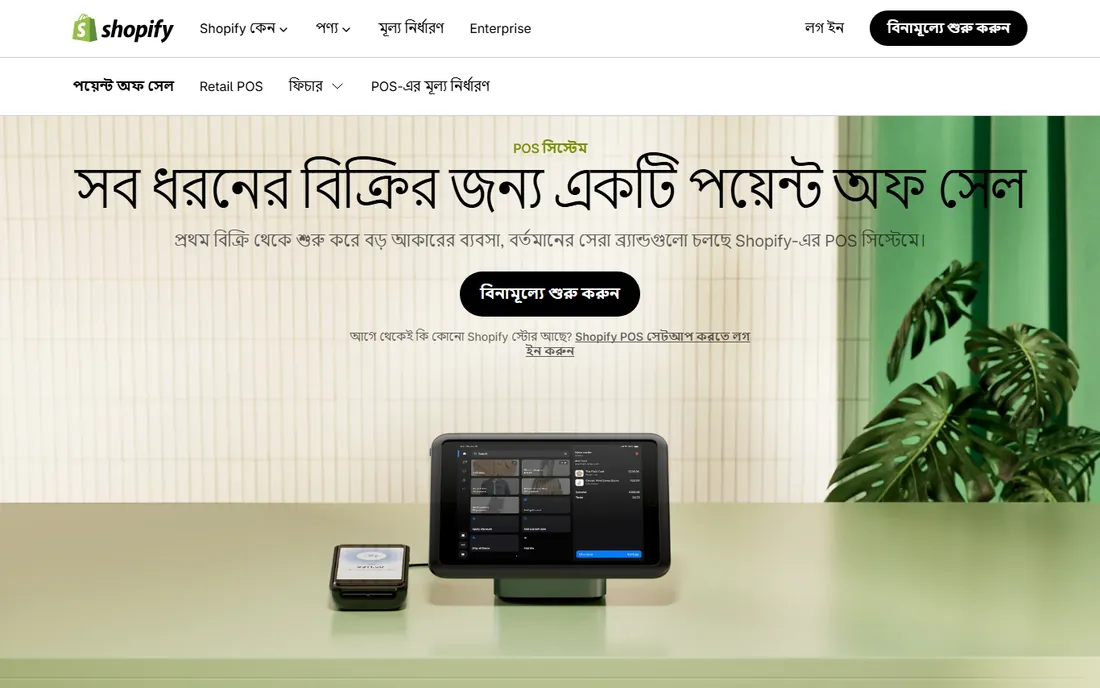
If your grocery already sells online, or plans to, Shopify POS earns its place. Inventory, customers, and orders sync across the website and the checkout counter, so a product sold on the site at noon does not show as available in the aisle at one. Buy online, pick up in store works out of the box with POS Pro.
The hardware lineup is polished and the app store fills most gaps, from loyalty to delivery. Staff permissions, smart inventory, and in-store analytics come with the Pro add-on, and the platform rarely goes down.
The catch is the math. You pay for a Shopify plan and then $89 per location per month for POS Pro to get the retail features that matter. Grocery-native capabilities such as scale integration and EBT handling depend on third-party apps. For a grocer whose online channel is real, the unified system justifies it. For an in-store-only market, the same money buys more grocery depth elsewhere.
What we like- One catalog and customer record across online and in-store sales
- Huge app ecosystem
- Reliable hardware and 99.9% platform uptime
Watch out for- POS Pro is a paid add-on per location
- Grocery-native features like scales and EBT need apps
- Monthly cost stacks up quickly
Starting priceFrom $14.95/month
Free planFree trial
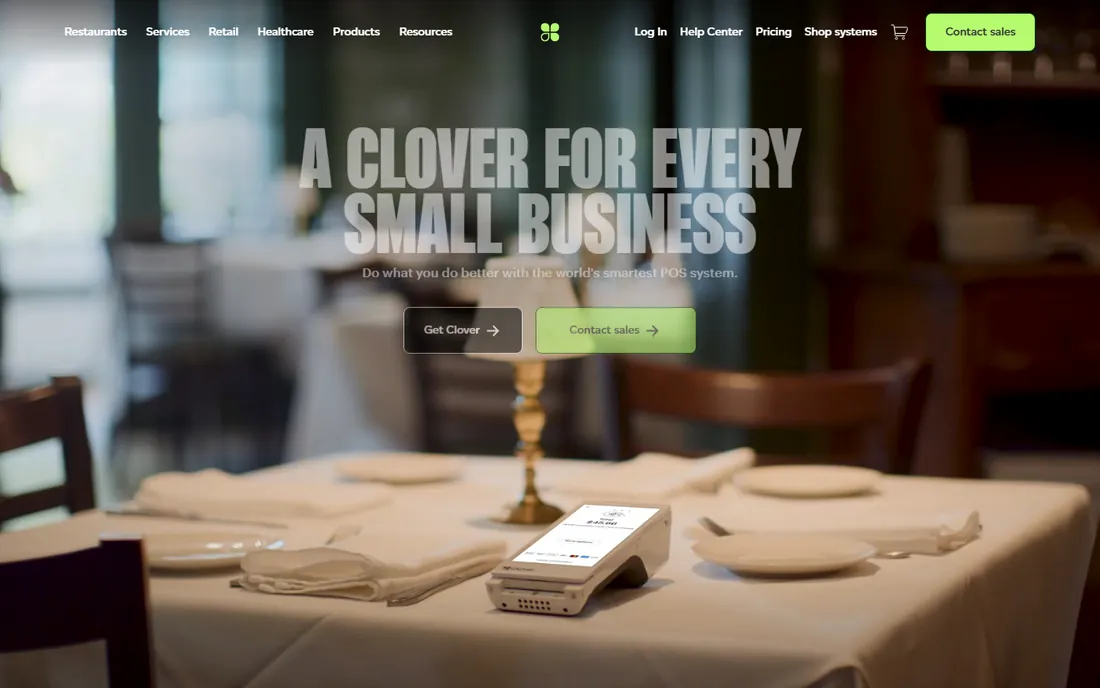
Clover is the Fiserv-owned system you have seen on counters everywhere. Software plans for retail start near $15 a month, and the hardware range runs from the pocketable Go to the dual-screen Station Duo, often sold as bundles. For a small market that wants a clean countertop setup without enterprise pricing, the entry point is attractive.
The App Market lets stores add capabilities like scale integration, loyalty, and employee management, so a basic setup can grow. In-person processing around 2.3 to 2.6% plus 10 cents is competitive with Square and Lightspeed.
The catch is the buying experience. Clover sells through banks and resellers, and terms, pricing, and contract lengths vary between them. The hardware is proprietary, so switching systems later means replacing equipment. Read the actual agreement, confirm the software tier and processing rate in writing, and buy from a source you trust.
What we like- Low software entry price
- Wide hardware range from handheld to full station
- App Market adds scales and grocery tools
Watch out for- Sold through many resellers with varying terms
- Proprietary hardware locks you in
- Software fees rise steeply on higher tiers
Starting price$39/month (software only)
Free planFree trial (30 days)
Epos Now is a UK-born cloud POS that competes on price and simplicity. Software-only plans start at $39 a month, the interface is easy enough that new cashiers learn it in a shift, and the app store connects to QuickBooks, Xero, Mailchimp, and delivery platforms. Complete systems bundle hardware from around $399 upfront plus $84 a month.
For a small grocery or convenience store that needs reliable checkout, stock tracking, and real-time reporting without a big upfront bill, it covers the essentials. Multi-location support is included for growing operators.
The catch is in the fine print. Epos Now commonly sells on one to five year contracts, and round-the-clock support is a paid extra. You are also largely tied to its own payments at 2.6% plus 10 cents in person. Before signing, confirm the contract length and the total monthly cost with every add-on you need. The headline price is real, but the commitment is too.
What we like- Low monthly software price
- More than 100 app integrations including accounting tools
- Staff can be trained in minutes
Watch out for- Contracts of one to five years are common
- 24/7 support costs extra
- Limited payment processor choice
Starting price$90/month per location (Basic Retail)
Free planFree trial
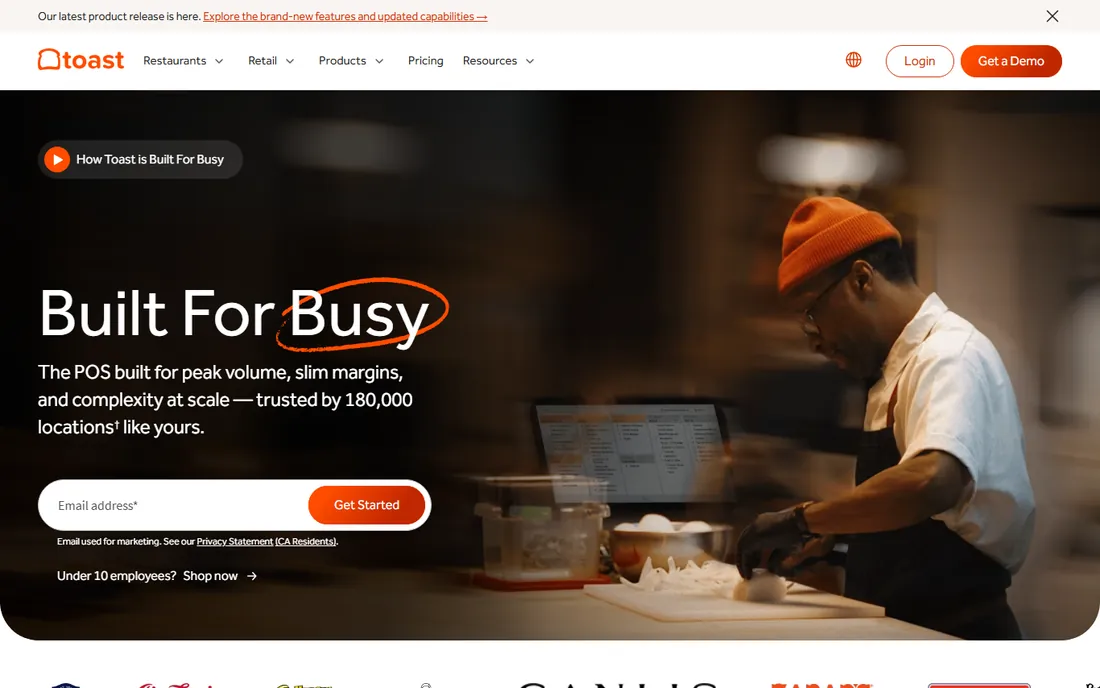
Toast built its name in restaurants, and that shows in the product. For the growing grocerant format, part grocery and part prepared foods, Toast handles both sides: retail checkout plus online ordering, delivery, kitchen display, and loyalty. Toast publishes retail bundles starting at $90 a month per location for Basic Retail and $240 for Pro Retail.
Offline functionality keeps supported sales running through internet interruptions, and the ecosystem of add-ons covers payroll, marketing, and gift cards. For a store where prepared food is the margin driver, the restaurant DNA is an asset.
The catch is fit. A traditional supermarket with deli scales, EBT volume, and weighted produce will find Toast less grocery-native than IT Retail. The module stack also inflates the bill: online ordering, loyalty, and marketing each add monthly fees. And Toast contracts often run two years with auto-renewal. Price the full stack you need, not just the base tier.
What we like- Deep food-service roots with kitchen and ordering tools
- Offline mode keeps sales going during outages
- Strong online ordering and delivery options
Watch out for- Restaurant-first design fits grocerants better than traditional supermarkets
- Add-on modules stack up fast
- Contracts commonly run two years
How we chose
We compared pricing pages, feature documentation, and public reviews on G2, Capterra, and Trustpilot, plus grocery-industry coverage from the National Grocers Association and trade press. We prioritized grocery-relevant capabilities: weighted items and scale integration, EBT and SNAP handling, PLU support, purchase orders, and multi-location management. We weighed starting price and contract terms for small and mid-size US operators, and favored vendors with published pricing or clearly documented entry tiers. We did not claim hands-on testing of any system.
What to check before you sign
A grocery POS decision comes down to a handful of practical tests. Run each one before you commit.
Confirm your non-negotiables work natively
EBT and SNAP acceptance, scale integration, PLU code support, and label printing should work out of the box. If a vendor demos these through a third-party app, ask what happens when that app has an outage, and what it costs per month.
Price the register, not the brochure
Add the software tier you actually need, the hardware for every lane, payment processing at your volume, and every add-on (loyalty, online ordering, gift cards). A $39 plan that needs four $50 add-ons is a $239 plan.
Ask about the contract
Some vendors are month to month. Others lock in one to five years with auto-renewal and early termination fees. Get the term, the renewal clause, and the exit cost in writing before the hardware ships.
Test the offline story
Grocery stores cannot stop selling when the internet drops. Ask exactly which functions keep working offline: just card payments, or inventory and EBT too? Then test it during the trial.
Plan the data migration
Moving item files, PLU codes, vendor lists, and customer records takes longer than vendors admit. Ask who does the migration, what it costs, and how long your store runs on two systems during the switch.
When a general POS beats a grocery POS
A grocery-specific system is not always the answer. If your store is small, sells mostly packaged goods, and does real volume online, a general platform like Square or Shopify can be the better buy. You get modern eCommerce, a bigger app ecosystem, and simpler pricing in exchange for grocery depth you may not need.
The break-even point usually arrives with fresh departments. Once the deli, meat counter, or produce section drives real margin, native scale integration, weighted pricing, and EBT handling start paying for themselves. Until then, keep the generalist and spend the savings on inventory.
Frequently asked questions
What is the best POS software for a small grocery store?
For a small store on a budget, Square's free plan or Epos Now's $39 a month software plan are the lowest-cost starts. If the store has a deli, scales, or meaningful EBT volume, IT Retail's grocery-native design at $49 a month is worth the step up.
Do grocery stores need special POS software?
Stores selling weighted items, accepting EBT or SNAP, or running deli and meat counters benefit from grocery-native software with scale integration and PLU support. Packaged-goods-only stores can run fine on general retail POS systems.
How much does grocery store POS software cost?
Entry plans run from free to about $49 a month, mid-tier systems run $89 to $149 a month per location, and grocery-native or multi-lane setups often reach $240 a month or custom quotes once hardware, processing, and add-ons are included.
Can Square handle EBT payments?
Square supports EBT card payments in limited form, but it lacks the native auto-separation of SNAP-eligible items and split-tender workflows that grocery-specific systems like IT Retail provide. High EBT-volume stores should verify the exact workflow before committing.
What is the cheapest grocery POS system?
Square's free plan has no monthly fee, though processing rates are higher. Among paid plans, Epos Now software starts at $39 a month and IT Retail at $49 a month. Always compare the total with hardware, processing, and add-ons.
Should I buy POS hardware from the vendor or separately?
Vendor bundles simplify support because one company owns the whole stack, but proprietary hardware locks you in. If you buy separately, confirm compatibility with your exact scale, scanner, and printer models before ordering.
Sources we checked (14)
- https://squareup.com/us/en/point-of-sale/retail/
- https://www.nerdwallet.com/business/software/reviews/square-for-retail
- https://www.lightspeedhq.com/
- https://www.posusa.com/lightspeed-retail-review/
- https://www.shopify.com/pos
- https://www.nerdwallet.com/business/software/learn/shopify-pricing
- https://www.clover.com/
- https://www.comparisun.com/credit-card-processing/reviews/clover-pos/
- https://eposnow.com/
- https://www.posusa.com/epos-now-review/
- https://www.itretail.com
- https://www.itretail.com/pos-comparisons
- https://pos.toasttab.com/blog/on-the-line/supermarket-pos-systems
- https://www.bluebookservices.com/study-shows-independent-grocers-resilience-amid-economic-uncertainty/
Is your product missing or out of date?
We review this list regularly. Vendors can request a listing, send updated pricing or ask about featured placement.

Shihab Mia · Founder, Rankite
Shihab has spent more than a decade helping SaaS and e-commerce brands grow through search. He writes Rankite's software buying guides from pricing pages, documentation and public user reviews. More about Shihab.