How we make this list: we compare pricing pages, product documentation and public user reviews. Rankite is independent; if a vendor ever pays for a featured spot, that listing is clearly labeled Partner.

Key takeaways
- Anaplan and Workday Adaptive Planning are the enterprise picks for connected, multi-department modeling; both are quote-priced and need dedicated model builders.
- Vena and Datarails keep finance teams inside Excel while adding a controlled database behind it; Vena leans on the Microsoft ecosystem, Datarails on broad ERP connectors.
- Jirav (from $100/month) and Fathom are the practical SMB choices: driver-based models, three-statement forecasting and QuickBooks or Xero sync without enterprise overhead.
- Pigment is the modern mid-market option for collaborative, real-time planning, though pricing is quote-only.
Quick comparison
| Tool | Best for | Starting price | Free plan |
|---|
 Anaplan Anaplan | Large companies running connected planning at scale | See website (custom quote) | No |
 Vena Vena | Finance teams that live in Excel | See website (custom quote) | No |
 Datarails Datarails | Finance teams that want to stay in Excel with automation | See website (custom quote) | No |
 Jirav Jirav | SMBs needing driver-based models without enterprise overhead | $100/month (low end of vendor-published $100-$750/month range) | No |
 Fathom Fathom | Accounting firms and SMBs wanting reporting plus forecasting | See website | No |
 Pigment Pigment | Mid-market companies wanting collaborative real-time planning | See website (custom quote) | No |
 Workday Adaptive Planning Workday Adaptive Planning | Companies already running Workday | See website (custom quote) | No |
Is your product missing or out of date?
We review this list regularly. Vendors can request a listing, send updated pricing or ask about featured placement.
The best software for financial modeling
Here is the uncomfortable truth about financial modeling software: the model is rarely the problem. The problem is the three weeks it takes to rebuild that model every month, the version named final_v7 that nobody trusts, and the forecast that breaks the moment headcount changes. The seven tools below attack that problem from different angles, from enterprise planning platforms to SMB-friendly modelers that sync with your accounting software.
#1
Anaplan
Best for: Large companies running connected planning at scale
Visit anaplan.com
Starting priceSee website (custom quote)
Free planNo
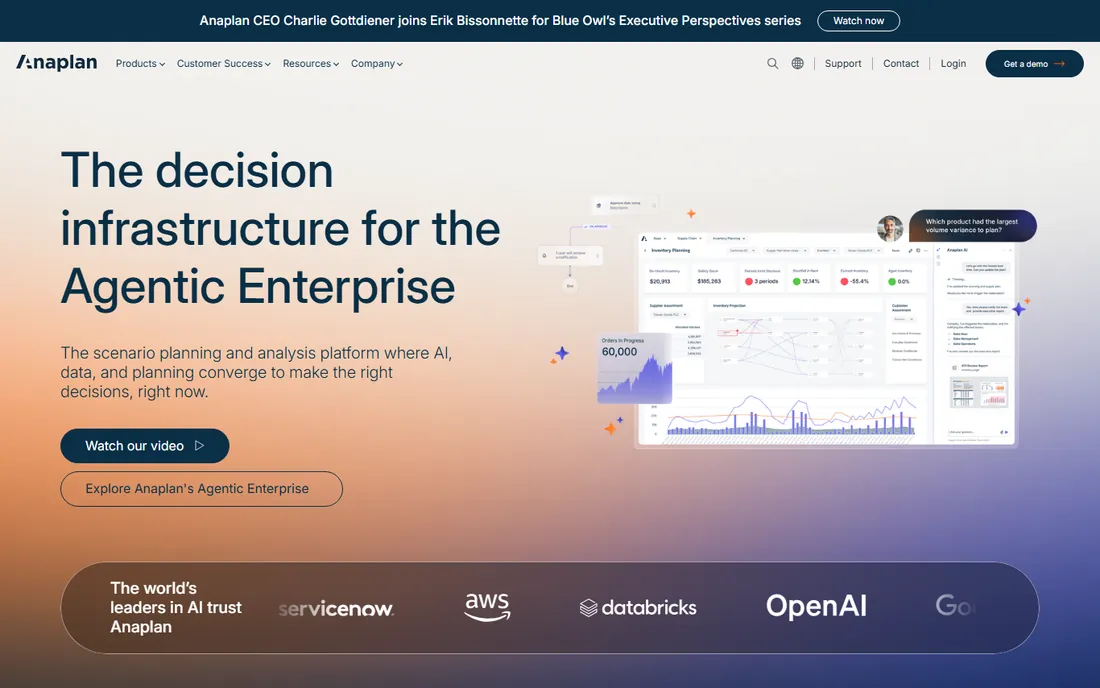
Anaplan is the enterprise standard for a reason: it models the whole company, not just the finance department. Revenue plans, headcount plans, supply chain scenarios and sales capacity all connect in one engine, so a change in hiring assumptions flows through to the cash forecast. The vendor now positions it as decision infrastructure for AI-assisted planning, with 48% of the Fortune 50 on the platform.
The price of that power is complexity and cost. Anaplan publishes no pricing, deals are enterprise-size, and you will need trained model builders on staff or on contract. Mid-market companies often buy more platform than they use. If you run planning across departments at scale, it earns its keep; if you need a better budget model, start further down this list.
What we like- Multi-dimensional modeling across finance, sales, supply chain and workforce
- AI-assisted scenario planning on a deterministic calculation engine
- 48% of the Fortune 50 are customers per the vendor
Watch out for- Enterprise pricing with nothing published
- Genuinely needs skilled model builders to reach its potential
Starting priceSee website (custom quote)
Free planNo
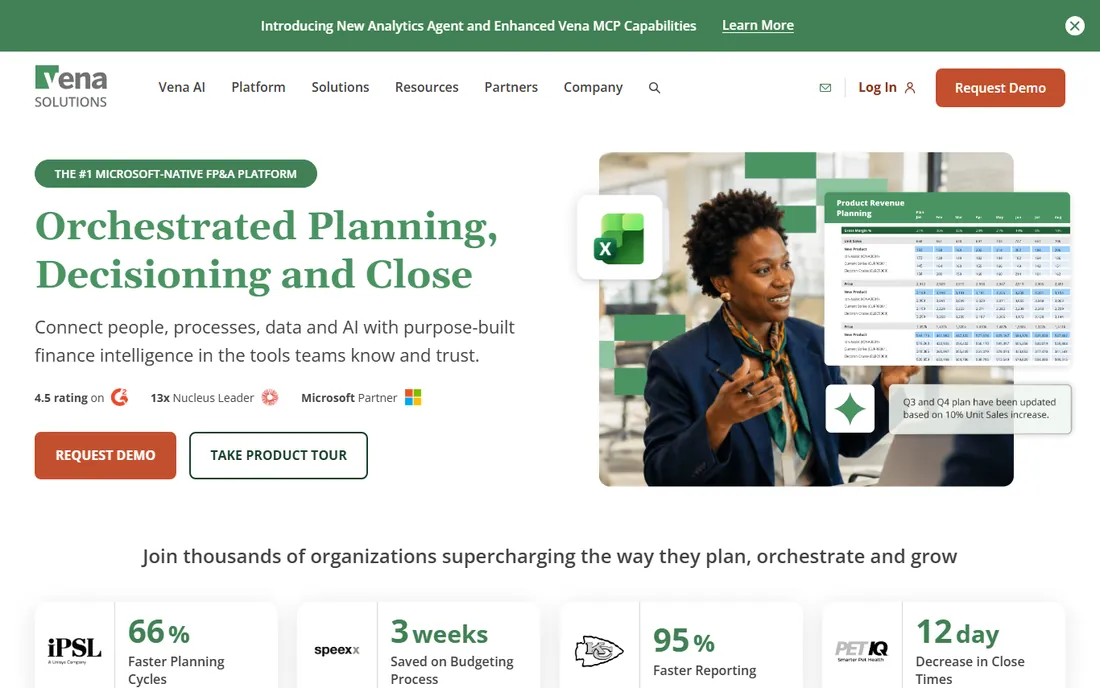
Vena's pitch is simple: your team already knows Excel, so keep Excel and fix everything around it. Models are built in the familiar grid, but the numbers live in a governed database with workflows, version control and audit trails instead of email attachments. The Microsoft integration runs deep, from Excel to Teams to Power BI dashboards, and the newer AI agents draft forecasts and reports inside those tools.
The catch is the ecosystem bet. If your company runs on Microsoft 365, Vena feels native; if you live in Google Sheets, much of the magic fades. Pricing is quote-based, which puts it in the mid-market and up bracket. For Excel-loyal finance teams that have outgrown shared workbooks, it is the least disruptive upgrade on this list.
What we like- Native Excel interface backed by a controlled central database
- Deep Microsoft 365 integration including Teams and Power BI
- AI agents for planning, reporting and scenario work
Watch out for- Microsoft-centric design is a weaker fit for Google Workspace shops
- No public pricing
#3
Datarails
Best for: Finance teams that want to stay in Excel with automation
Visit datarails.com
Starting priceSee website (custom quote)
Free planNo
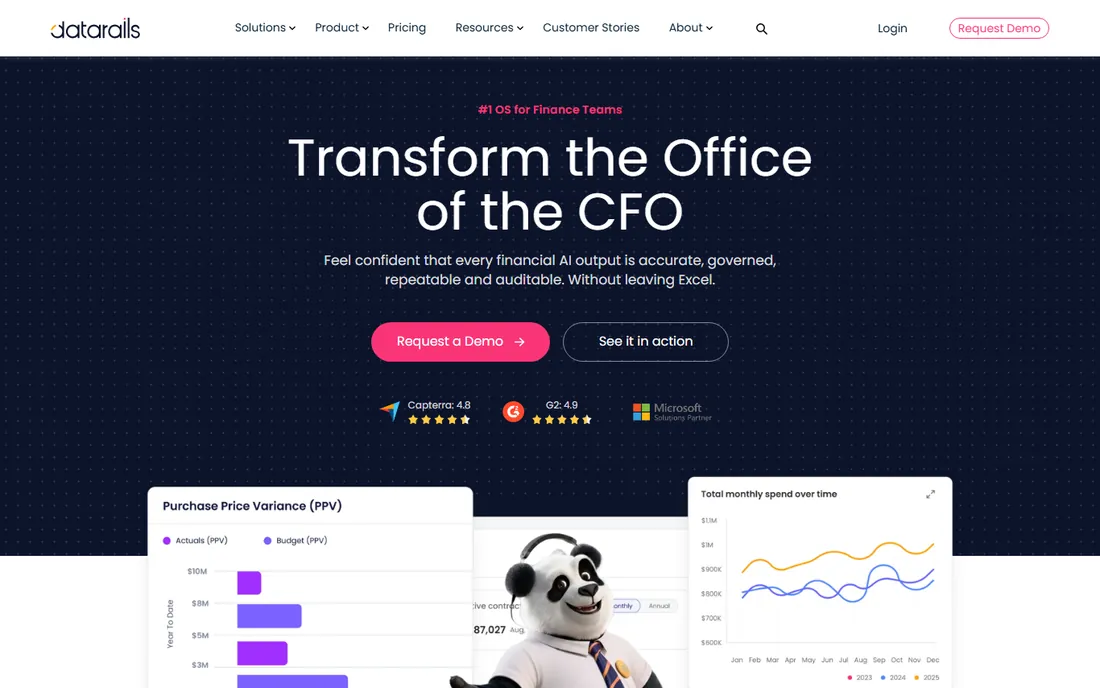
Datarails takes the same Excel-first philosophy as Vena but aims it squarely at the CFO's office workflows: consolidation, budgeting, forecasting and month-end close. Your team keeps working in spreadsheets while Datarails automates the data collection, version control and report building underneath. The connector list is broad, covering major ERPs, accounting platforms, CRMs and banks.
It is less of a modeling workbench than Anaplan and more of an automation layer over the close and forecast cycle. Companies choosing between Datarails and Vena usually decide on ecosystem: Microsoft shops lean Vena, mixed-ERP shops lean Datarails. Either way, expect a sales-led purchase with no public price list.
What we like- Excel-native FP&A with automated consolidation and reporting
- 200+ connectors to ERPs, accounting systems and banks
- AI finance layer for analysis on governed data
Watch out for- Quote-based pricing with no public tiers
- Narrower scope than full enterprise performance suites
#4
Jirav
Best for: SMBs needing driver-based models without enterprise overhead
Visit jirav.com
Starting price$100/month (low end of vendor-published $100-$750/month range)
Free planNo
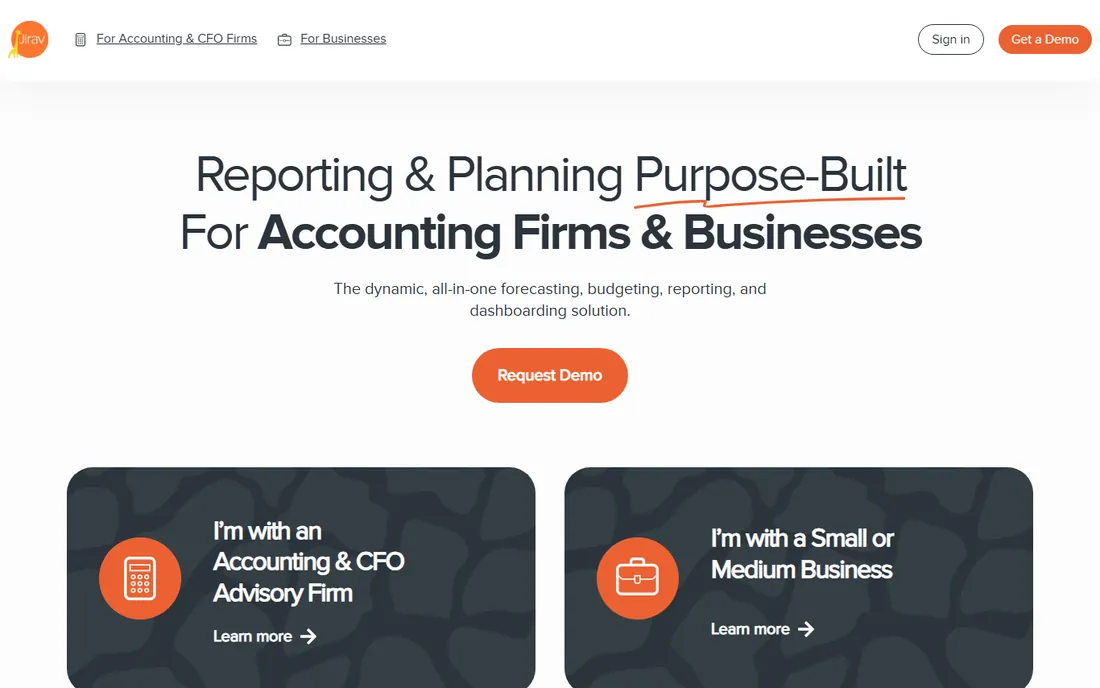
Jirav is what happens when financial modeling software is designed for companies without an FP&A department. You connect your accounting data, pick from industry templates, and get driver-based budgets and forecasts with actuals-versus-plan reporting, without hiring a model builder. It also serves accounting firms that productize FP&A advisory for clients.
The honest limitation is scale. Multi-entity consolidations and deeply custom models belong on the enterprise tools above. But for a 20 to 200-person company that needs rolling forecasts, scenario plans and investor-ready reporting, Jirav delivers most of the value at a fraction of the cost and implementation time.
What we like- Pre-built industry templates for KPIs, reporting and models
- Driver-based three-statement forecasting (P&L, balance sheet, cash flow)
- Direct integrations with QuickBooks, Xero and NetSuite
Watch out for- Not built for complex multi-entity enterprise consolidations
- Higher tiers climb toward $750/month
#5
Fathom
Best for: Accounting firms and SMBs wanting reporting plus forecasting
Visit fathomhq.com
Starting priceSee website
Free planNo
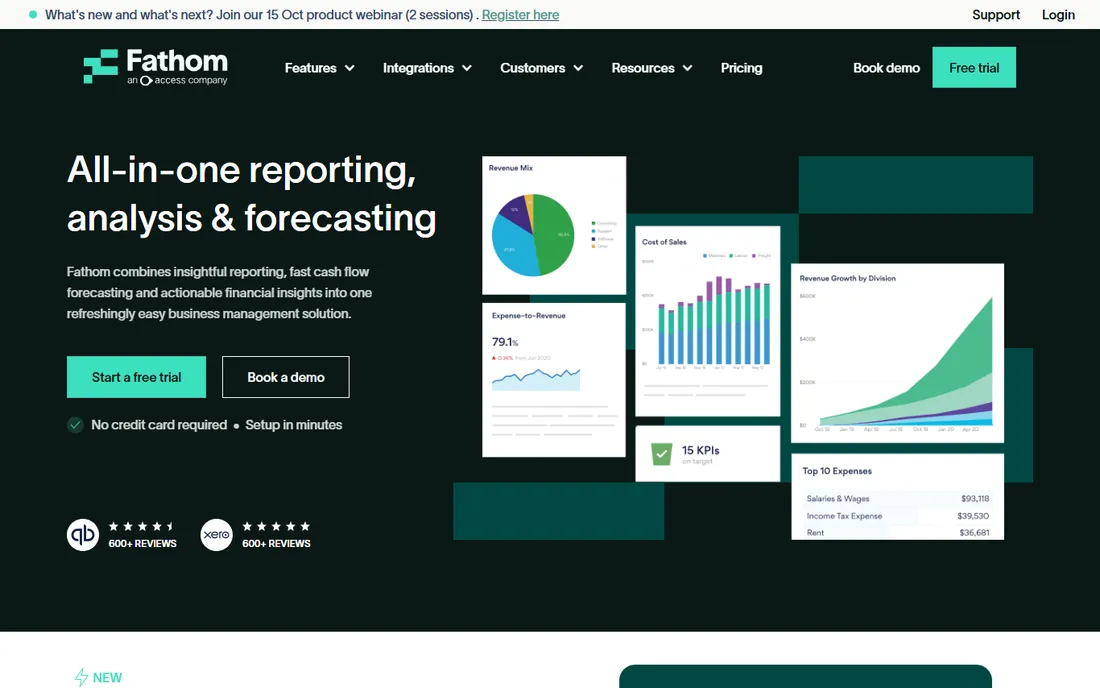
Fathom starts where your accounting software ends. It pulls the chart of accounts from QuickBooks, Xero, MYOB or Sage and turns it into management reports, KPI dashboards and driver-based forecasts that look board-ready without design work. The three-way forecasting links profit, balance sheet and cash flow, and multi-entity consolidation handles groups and franchises.
The boundary is the data source: Fathom only talks to accounting platforms, so sales, marketing and operations data arrives via spreadsheet import. For accounting firms serving many small clients, that focus is a strength, and the per-company pricing model fits the client-based business. Pure modeling flexibility is thinner than Jirav or Pigment, but the reporting polish is the best in this price band.
What we like- 50+ pre-built financial KPIs with polished visual reporting
- Three-way cash flow forecasting up to several years out
- Multi-entity consolidation and benchmarking
Watch out for- Connects only to accounting software, so operational data needs manual import
- No public pricing
#6
Pigment
Best for: Mid-market companies wanting collaborative real-time planning
Visit pigment.com
Starting priceSee website (custom quote)
Free planNo

Pigment is the modern answer to Anaplan: connected planning without the 2010s enterprise software feel. Multiple teams model in the same live environment, scenarios rebuild in real time, and the visualizations make plan reviews genuinely readable. It has found traction with growth-stage and mid-market companies that outgrew spreadsheets but find the incumbents heavy.
Youth cuts both ways. The partner and template ecosystem is thinner than Anaplan's or Workday's, and pricing is quote-only, which usually signals mid-market-plus budgets. But for companies that want collaborative planning their teams will adopt without a fight, Pigment is the strongest new entrant in years.
What we like- Real-time collaborative modeling with strong visualization
- Flexible enough for finance, sales and workforce planning in one platform
- Modern interface teams actually enjoy using
Watch out for- No public pricing
- Younger vendor with a smaller implementation partner network than incumbents
#7
Workday Adaptive Planning
Best for: Companies already running Workday
Visit workday.com
Starting priceSee website (custom quote)
Free planNo

Workday Adaptive Planning makes the most sense as a sentence: if you run Workday, plan in Adaptive. Headcount, compensation and hiring plans flow from the same system that runs HR, and financial models inherit that data without integration projects. The modeling itself covers budgeting, forecasting and what-if scenarios at enterprise depth.
Outside the Workday world, the case weakens. It is priced and sold as enterprise software, implementation is a real project, and standalone buyers often get more flexibility from Anaplan or Pigment. But for the large installed base of Workday customers, it is the path of least resistance to connected planning, and resistance matters in enterprise software decisions.
What we like- Tight integration with Workday HCM and financials
- Strong workforce and headcount planning
- Proven scenario modeling at enterprise scale
Watch out for- Enterprise pricing with no public numbers
- Much of the value depends on being in the Workday ecosystem
Stay in spreadsheets while one person owns the model, the company is under ~50 people, and the forecast updates monthly without drama. Excel is free, flexible and everybody knows it. The tools above earn their price when the spreadsheet breaks: multiple editors, version chaos, a forecast that takes weeks, or actuals that never reconcile.
The middle path is real. Vena, Datarails and Fathom all keep Excel or accounting data at the center and add control around it, which suits teams not ready to abandon the grid. Full platforms like Anaplan and Pigment replace the spreadsheet as the system of record, which is a bigger change bet. Switch when the pain is version control and cycle time, not when someone demos a pretty dashboard.
How we chose
We started with the searches buyers run: financial modeling software, FP&A software and budgeting and forecasting software. For each candidate we opened the vendor's own site to check current positioning and pricing, cross-checked against public reviews on G2 and Capterra and practitioner discussion on Reddit, and judged fit for company size: enterprise platforms, mid-market suites and SMB modelers. Where a vendor publishes no price we wrote "See website" rather than repeating third-party estimates.
How to choose financial modeling software
Match the tool to the modeling you actually do. If your planning spans departments with shared drivers, you need a connected platform: Anaplan, Pigment or Workday Adaptive. If one finance team builds the budget and forecast, an SMB modeler like Jirav or Fathom is enough, and the enterprise tools will slow you down.
Then check the data plumbing. Every tool here syncs with accounting software, but the depth varies: Datarails and Vena pull from ERPs broadly, Fathom only from accounting platforms, and Jirav sits in the middle with QuickBooks, Xero and NetSuite. List the systems your model must read from, and confirm each one before shortlisting.
Finally, price the people, not just the software. Anaplan and Workday need model builders; Jirav and Fathom are built to run without them. A cheaper license that needs a consultant often costs more than a pricier one your controller can run. Ask each vendor who operates the system day to day at companies your size.
Frequently asked questions
How much does financial modeling software cost?
Jirav starts around $100 a month for small companies. The rest of this set is quote-priced: mid-market tools like Vena, Datarails and Pigment typically land in the low five figures annually, while Anaplan and Workday Adaptive Planning are enterprise deals. Always get the per-user and implementation costs in writing before comparing.
Can I build financial models in Excel instead?
Yes, and many companies should. Excel handles models for small teams with one owner and simple drivers. The paid tools earn their price when models need multiple contributors, version control, automated actuals and audit trails. Vena and Datarails are built for teams that want to keep Excel as the interface while fixing everything around it.
What is the difference between FP&A software and financial modeling software?
They overlap heavily. Financial modeling usually means building the forecast model itself: drivers, assumptions and scenarios. FP&A software covers the wider cycle: budgeting, consolidation, reporting and analysis. Most tools on this list do both, with Fathom leaning toward reporting and Anaplan toward enterprise-wide planning.
How long does implementation take?
SMB tools like Jirav and Fathom can be live in days to weeks, especially with QuickBooks or Xero data. Mid-market platforms like Vena, Datarails and Pigment typically take several weeks with vendor help. Enterprise deployments of Anaplan or Workday Adaptive Planning run into months. Ask for a reference customer your size and their actual timeline.
Do these tools integrate with QuickBooks and NetSuite?
Yes across the board, with differences in depth. Jirav, Fathom and Datarails connect directly to QuickBooks; Jirav and Datarails also cover NetSuite and Xero. Vena integrates through the Microsoft ecosystem plus major ERPs. Anaplan, Pigment and Workday connect via ETL tools and APIs at enterprise scale. Confirm your exact accounting version before buying.
Sources we checked (9)
- https://anaplan.com/
- https://venasolutions.com/
- https://datarails.com/
- https://jirav.com/
- https://www.fathomhq.com
- https://www.pigment.com
- https://www.workday.com/en-us/products/financial-management/adaptive-planning.html
- https://www.g2.com/categories/financial-planning
- https://www.capterra.com/financial-planning-software/
Is your product missing or out of date?
We review this list regularly. Vendors can request a listing, send updated pricing or ask about featured placement.

Shihab Mia · Founder, Rankite
Shihab has spent more than a decade helping SaaS and e-commerce brands grow through search. He writes Rankite's software buying guides from pricing pages, documentation and public user reviews. More about Shihab.