How we make this list: we compare pricing pages, product documentation and public user reviews. Rankite is independent; if a vendor ever pays for a featured spot, that listing is clearly labeled Partner.
Key takeaways
- Shopify is the default for most online stores: easiest to launch, biggest app ecosystem, scales from startup to enterprise.
- BigCommerce suits larger catalogs and B2B with strong built-in features and no transaction fees.
- WooCommerce is the pick for WordPress sites and owners who want full control without platform fees.
- Wix and Squarespace are simplest for small stores where design matters and catalogs are modest.
- Adobe Commerce serves enterprises with complex, customized commerce requirements.
Quick comparison
| Tool | Best for | Starting price | Free plan |
|---|
 Shopify Shopify | most online stores | See website | Free trial |
 BigCommerce BigCommerce | larger catalogs and B2B | See website | Free trial |
 WooCommerce WooCommerce | WordPress stores | See website | Yes |
 Wix Wix | simple small stores | See website | Free trial |
 Squarespace Squarespace | design-led small stores | See website | Free trial |
 Adobe Commerce Adobe Commerce | enterprise commerce | See website | No |
 Ecwid Ecwid | adding a store to any site | See website | Yes |
 Shift4Shop Shift4Shop | feature-rich free-leaning plans | See website | Yes |
 Duda Duda | agency-built client stores | See website | Free trial |
Is your product missing or out of date?
We review this list regularly. Vendors can request a listing, send updated pricing or ask about featured placement.
The best software for ecommerce websites
Starting priceSee website
Free planFree trial

Shopify is the default recommendation for a reason: sign up, pick a theme, add products, and sell the same day. The app store covers everything from subscriptions to print-on-demand, and Shopify Plus takes brands to enterprise scale without replatforming.
The costs to watch are transaction fees on third-party gateways and app subscriptions that stack up. For most stores, the speed and ecosystem outweigh the fees.
Shopify's true cost includes apps: audit the app store subscriptions you will need for your specific requirements before comparing plans. Many merchants find the monthly total is double the plan price once essential apps are added.
What we like- Fastest path from idea to selling
- 8,000+ app ecosystem
- Scales to enterprise with Shopify Plus
Watch out for- Transaction fees unless you use Shopify Payments
- Customization needs Liquid or apps
Starting priceSee website
Free planFree trial

BigCommerce competes with Shopify by including more out of the box: no transaction fees, built-in multi-currency, and B2B features like customer groups and quote management. Stores with large catalogs or wholesale operations get more without apps.
The design ecosystem is smaller and the interface less polished. For growing merchants who resent fee stacking, BigCommerce is the principled alternative.
BigCommerce's no-transaction-fee policy is the headline to verify against your payment setup: confirm your preferred gateway qualifies and model the savings against Shopify at your order volume. The difference compounds quickly.
What we like- No transaction fees on any plan
- Strong built-in B2B features
- Good for large catalogs
Watch out for- Theme and design flexibility trails Shopify
- Smaller app ecosystem
Starting priceSee website
Free planYes
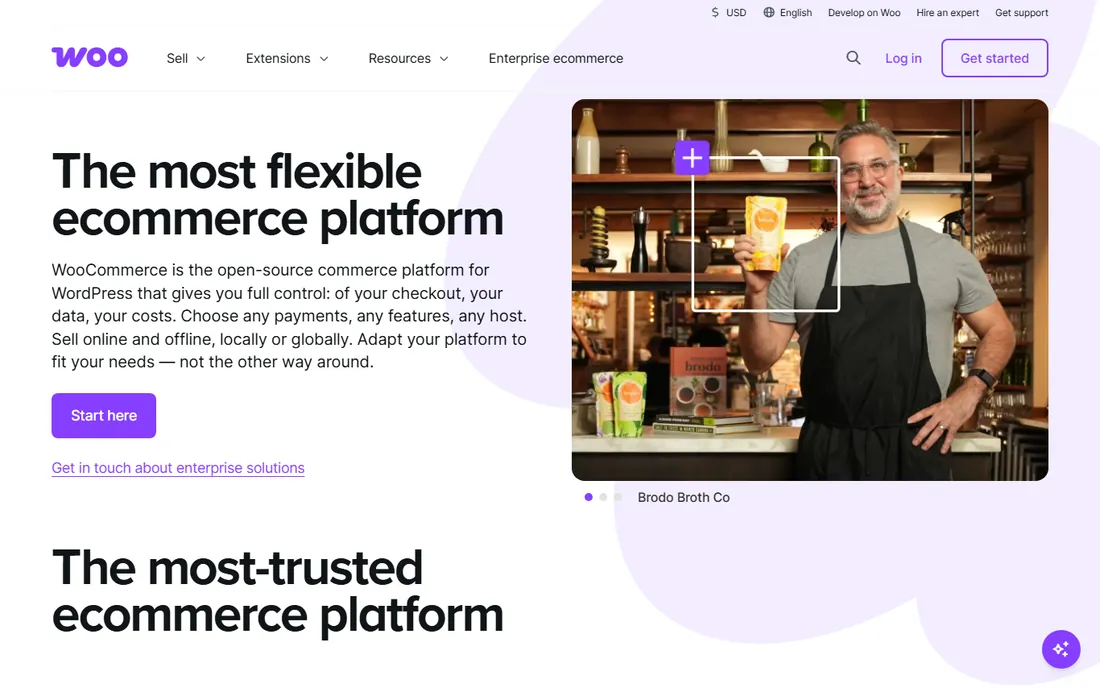
WooCommerce turns WordPress into a store for free: the core plugin costs nothing, and you own the site, the data and the customer relationships outright. Thousands of extensions add subscriptions, bookings, marketplaces and more.
Ownership means responsibility: hosting, backups, security and updates are yours. Stores already on WordPress, or owners who refuse platform lock-in, accept the tradeoff.
WooCommerce's free core is only the start: budget for quality hosting, a good theme, essential extensions and maintenance. The total often rivals hosted platforms, but you keep full ownership of everything.
What we like- Free core plugin on your WordPress site
- Full ownership and no platform fees
- Huge extension library
Watch out for- You manage hosting, security and updates
- Costs shift to hosting and extensions
Starting priceSee website
Free planFree trial

Wix is the simplest way to put a small store online: drag, drop, publish. For boutiques, artists and side businesses with modest catalogs, it covers products, payments and shipping without any learning curve.
It is not built for scale. Large catalogs, complex variants and serious growth push against its limits, and leaving Wix means rebuilding. Start here if small and simple describes your store.
Wix's simplicity is genuine for small catalogs, but test the limits before committing: add your full product range with variants during the trial and confirm the management experience stays pleasant at your real scale.
What we like- Easiest drag-and-drop builder
- Good for stores under 100 products
- Affordable entry plans
Watch out for- Less scalable for large catalogs
- Migrating away is painful
Starting priceSee website
Free planFree trial

Squarespace wins on design: the templates look expensive, which matters for fashion, art, food and lifestyle brands. Commerce features cover the essentials: products, inventory, checkout, shipping and basic marketing.
Serious merchants outgrow it. But for small stores where the brand experience is the differentiator, Squarespace delivers the look with minimal effort.
Squarespace's templates do heavy lifting for brand perception, so evaluate it on design quality as much as features. For businesses where the site is the brand, the aesthetic advantage translates directly to conversion.
What we like- Best-looking templates out of the box
- Good for brands where aesthetics sell
- Simple inventory and checkout
Watch out for- Ecommerce features trail Shopify
- Limited payment gateway options
Starting priceSee website
Free planNo
Adobe Commerce, the former Magento, is the enterprise open-source commerce platform: multi-store, multi-currency, B2B quoting, and customization without practical limits. Large retailers and manufacturers run complex operations on it.
It demands developers, hosting and budget. Below enterprise scale, the total cost makes no sense. For complex commerce that hosted platforms cannot model, it remains the answer.
Adobe Commerce demands a realistic implementation budget: development, hosting, extensions and ongoing maintenance typically dwarf the license cost. Get the full project quote, not just the software price, before deciding.
What we like- Deep customization for complex catalogs and B2B
- Strong multi-store and international features
- Adobe ecosystem integration
Watch out for- Requires developers and significant budget
- Overkill below enterprise scale
Starting priceSee website
Free planYes
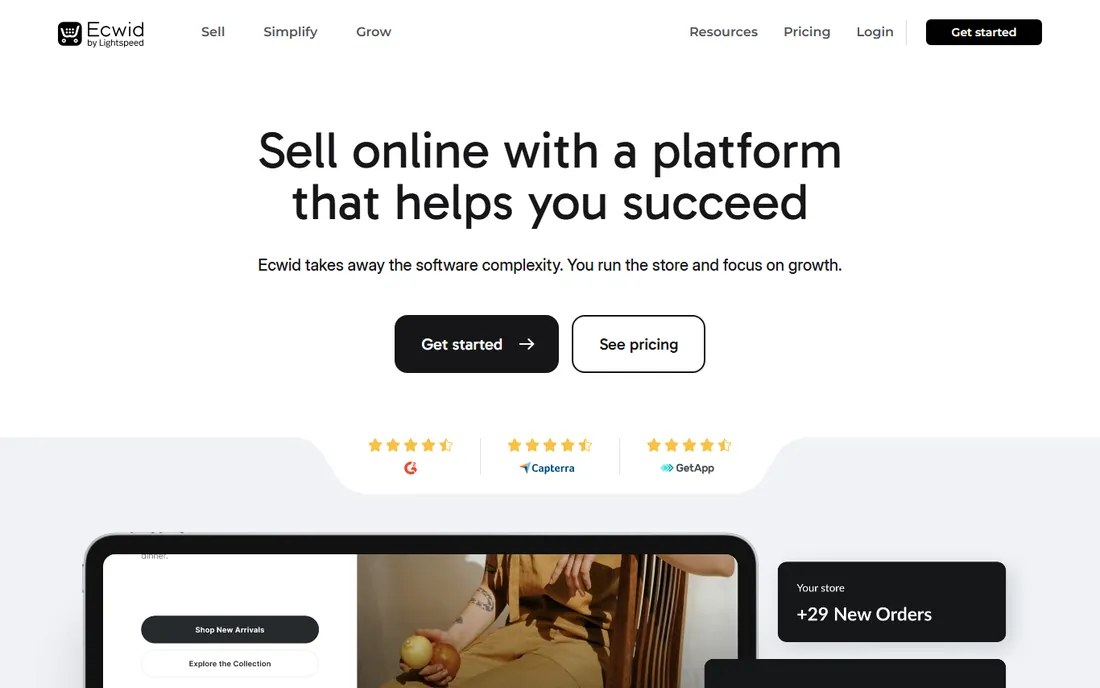
Ecwid is the add-a-store button for existing sites: embed products on your WordPress, Wix, or static site and sell without rebuilding. The free plan covers up to a handful of products, and paid plans stay affordable.
As a primary store platform it is thinner than Shopify. But for businesses with a site that just needs to sell a few things, Ecwid is the path of least resistance.
Ecwid's free plan is ideal for testing commerce on an existing site: embed products and take real orders before spending anything. Upgrade when the product count or feature needs exceed the free tier.
What we like- Embed a store in any existing website
- Free plan for tiny catalogs
- Social and marketplace integrations
Watch out for- Less powerful as a standalone store
- Design control is limited
Starting priceSee website
Free planYes

Shift4Shop, formerly 3dcart, packs enterprise-grade features, CRM, email marketing, marketplace integrations, into plans that undercut the big names, with a free-leaning tier for US merchants using Shift4 payments.
The interface and templates show their age next to Shopify. For budget-conscious merchants who want features over polish, the value is real.
Shift4Shop's pricing rewards US merchants using Shift4 payments specifically: confirm the payment terms match your setup before counting on the free-leaning tier. The feature depth at the price remains the selling point.
What we like- Generous feature set including a free-leaning plan
- No transaction fees with Shift4 payments
- US-based support
Watch out for- Templates feel dated
- Smaller ecosystem than Shopify
Starting priceSee website
Free planFree trial
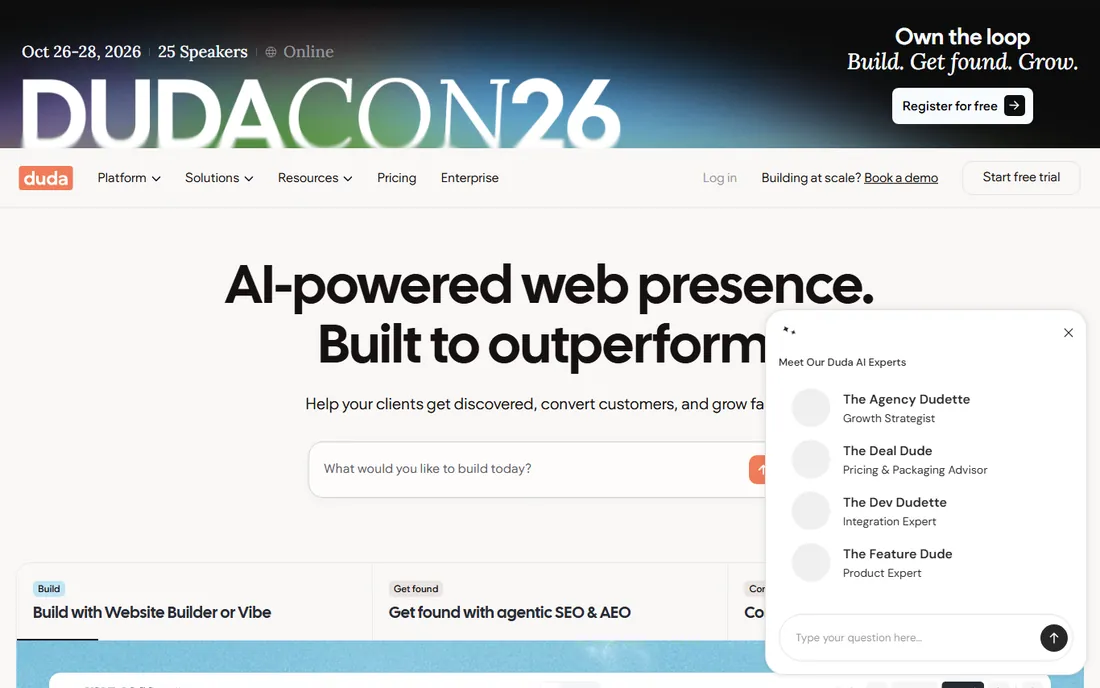
Duda is the agency platform: build client websites and stores fast, manage them all from one dashboard, and hand clients a white-labeled editor. The commerce features cover standard small-business stores.
Direct merchants get better ecommerce value from Shopify or BigCommerce. Agencies delivering client stores at volume choose Duda for the workflow.
Duda's agency workflow is the evaluation focus: trial the client management dashboard, white-labeling and site duplication with a real client project. The per-site economics only work at agency volume.
What we like- Built for agencies managing client sites
- Clean editor with team collaboration
- White-label client management
Watch out for- Consumer pricing is less competitive
- Ecommerce depth trails specialists
Hosted or self-hosted?
Go hosted with Shopify, BigCommerce, Wix or Squarespace when you want to sell, not to manage technology. Hosting, security, updates and checkout compliance are handled. You pay monthly and accept the platform's limits.
Go self-hosted with WooCommerce or Adobe Commerce when ownership matters: your data, your code, no platform fees or lock-in. You manage hosting and maintenance. Most small stores do better hosted; most developers and control-focused owners prefer self-hosted.
What to check before you buy
Transaction fees and payment processing shape the real cost. Compare the platform subscription plus gateway fees plus app costs at your expected order volume, not just the sticker price.
Then check the catalog fit: product variants, digital products, subscriptions, whatever you sell. Test checkout on mobile yourself. Confirm shipping, tax and multi-currency support for your markets. And check the exit: can you export products, customers and orders if you leave?
Finally, price the second year, not just the first: renewal rates, app subscriptions and transaction fees all rise with order volume. A platform that looks cheap at launch can become expensive at scale, so model the total cost at your target revenue before committing.
How we chose
We selected ecommerce platforms covering hosted, self-hosted, enterprise and agency approaches, all live products in 2026. Vendor URLs were corroborated through sibling research files during a browser service outage. No vendor pricing pages were individually verified, so all prices list see website.
Frequently asked questions
What is the best ecommerce platform for beginners?
Shopify for hosted simplicity, Wix for the easiest builder, WooCommerce if you are already on WordPress. All three get a store selling quickly.
Shopify vs WooCommerce: which is better?
Shopify is simpler: hosted, supported, and fast to launch, with monthly fees and transaction fees. WooCommerce is cheaper and fully owned but requires managing hosting and maintenance.
How much does it cost to build an ecommerce website?
From free (WooCommerce core, Ecwid free plan) to $30-80 a month for hosted platforms, to thousands for enterprise builds on Adobe Commerce. Add payment fees and apps to the subscription.
Can I sell on my existing website?
Yes. Ecwid embeds a store in any site, and WooCommerce adds commerce to WordPress. You do not need to rebuild to start selling.
What is the best ecommerce platform for large businesses?
BigCommerce for hosted scale, Adobe Commerce for complex enterprise requirements, Shopify Plus for brands that want managed infrastructure at scale.
Do I need a developer to run an online store?
Not for hosted platforms: Shopify, BigCommerce, Wix and Squarespace are built for non-technical owners. WooCommerce needs some technical comfort; Adobe Commerce needs real developers.
Sources we checked (9)
- https://www.shopify.com
- https://bigcommerce.com
- https://woocommerce.com
- https://www.wix.com
- https://squarespace.com
- https://business.adobe.com/products/commerce.html
- https://www.ecwid.com
- https://shift4shop.com/
- https://duda.co/
Is your product missing or out of date?
We review this list regularly. Vendors can request a listing, send updated pricing or ask about featured placement.

Shihab Mia · Founder, Rankite
Shihab has spent more than a decade helping SaaS and e-commerce brands grow through search. He writes Rankite's software buying guides from pricing pages, documentation and public user reviews. More about Shihab.