How we make this list: we compare pricing pages, product documentation and public user reviews. Rankite is independent; if a vendor ever pays for a featured spot, that listing is clearly labeled Partner.
Key takeaways
- Shopify ($39/month, or $29 billed annually) remains the all-around pick for a serious online store, with the largest app ecosystem and the best-converting checkout.
- WooCommerce is free to install but needs hosting ($20 to $200/month); it wins when you want full control and already run WordPress.
- Etsy charges no subscription but takes 6.5% per sale plus listing and payment fees, which makes it great for testing products and expensive at scale.
- Square Online starts free (3.3% + 30c per transaction) and Ecwid starts at $5/month, so both work for adding a small store to an existing site cheaply.
Quick comparison
| Tool | Best for | Starting price | Free plan |
|---|
 Shopify Shopify | Anyone serious about running an online store | $39/month ($29/month billed annually, Basic plan) | Free trial |
 WooCommerce WooCommerce | WordPress users who want full control and ownership | Free plugin (hosting typically $20-$200/month) | Yes (core plugin free) |
 BigCommerce BigCommerce | Growing stores that want built-in features without app costs | $39/month ($29/month billed annually, Standard plan) | Free trial (15 days) |
 Wix Wix | Beginners who want a website and store in one drag-and-drop builder | $29/month (Core plan, billed annually) | No (free website builder, but selling needs a paid plan) |
 Squarespace Squarespace | Design-led brands and solo founders | $19-$29/month (billed annually; 0% transaction fee from the Core plan) | Free trial (14 days) |
 Etsy Etsy | Handmade, vintage and craft sellers | Free (no subscription; fees per sale) | Yes (no subscription required) |
 Square Online Square Online | Brick-and-mortar businesses expanding online | Free (payment processing fees apply) | Yes |
 Ecwid by Lightspeed Ecwid by Lightspeed | Adding a store to an existing website or social profile | $5/month (Starter plan, billed annually; 10 products) | Yes (free plan with limited products) |
 Sellfy Sellfy | Creators selling digital products and print-on-demand | $29/month ($22/month billed annually, Starter plan) | Free trial (14 days) |
Is your product missing or out of date?
We review this list regularly. Vendors can request a listing, send updated pricing or ask about featured placement.
"What is the best platform to sell online?" has no single answer, because the right choice depends on what you sell and where you start. A handmade seller testing products needs something different from a brand scaling to seven figures. These nine platforms cover the real options: full store builders, WordPress commerce, website builders with stores, marketplaces, and creator-focused tools.
Starting price$39/month ($29/month billed annually, Basic plan)
Free planFree trial

Shopify is the default answer to "best platform to sell online" for a reason: it does the most things well without requiring technical skill. In 2026 the Basic plan costs $39/month ($29 on annual billing), Grow is $105/month and Advanced is $399/month, with Plus starting at $2,300/month for high-volume merchants. Every plan includes unlimited products, hosting and a full checkout.
The fee structure matters. Using Shopify Payments removes the platform transaction fee entirely; third-party gateways add 0.5% to 2% depending on plan. Most stores also spend on apps, so budget $50 to $200/month beyond the subscription. For paid-traffic businesses, Shopify's checkout conversion is the strongest argument: it is where revenue is made or lost.
What we like- The largest app ecosystem in ecommerce (8,000+ apps)
- Checkout converts better than industry average with Shop Pay
- Unlimited products and secure hosting on every plan
Watch out for- 2% transaction fee on Basic if you skip Shopify Payments
- App costs add $50 to $200/month for most real stores
- Advanced features require plan upgrades
Starting priceFree plugin (hosting typically $20-$200/month)
Free planYes (core plugin free)
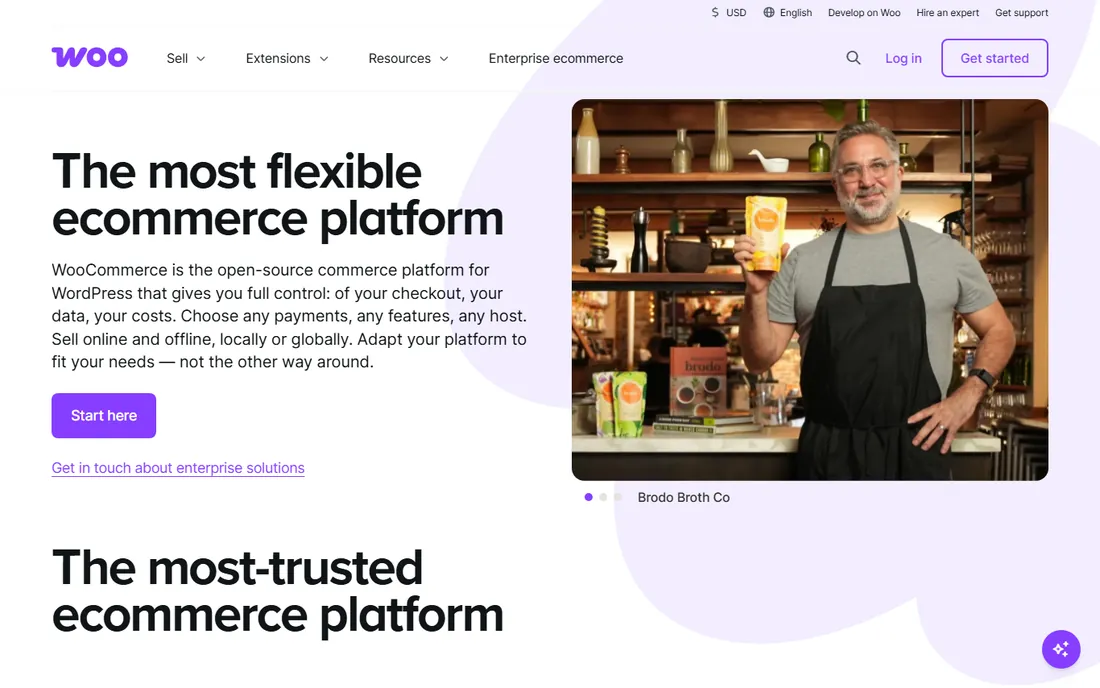
WooCommerce turns any WordPress site into a store for free. The plugin itself costs nothing and charges no transaction fee; WooPayments takes the standard 2.9% + $0.30 per US transaction, like any processor. The real cost is hosting, which WooCommerce estimates at $25 to $350/month depending on traffic, plus paid extensions for subscriptions, bookings or advanced shipping.
The trade is responsibility. You own everything, including security patches and backups, but you also control everything: no plan limits, no forced upgrades, no revenue thresholds. Content-driven businesses already on WordPress usually find it the cheapest serious option long-term.
What we like- No platform subscription and no platform transaction fees
- Full SEO control through WordPress
- You own the code, data and hosting
Watch out for- You manage hosting, security, updates and backups
- Costs hide in extensions, themes and developer time
- Steeper learning curve than hosted builders
#3
BigCommerce
Best for: Growing stores that want built-in features without app costs
Visit bigcommerce.com
Starting price$39/month ($29/month billed annually, Standard plan)
Free planFree trial (15 days)
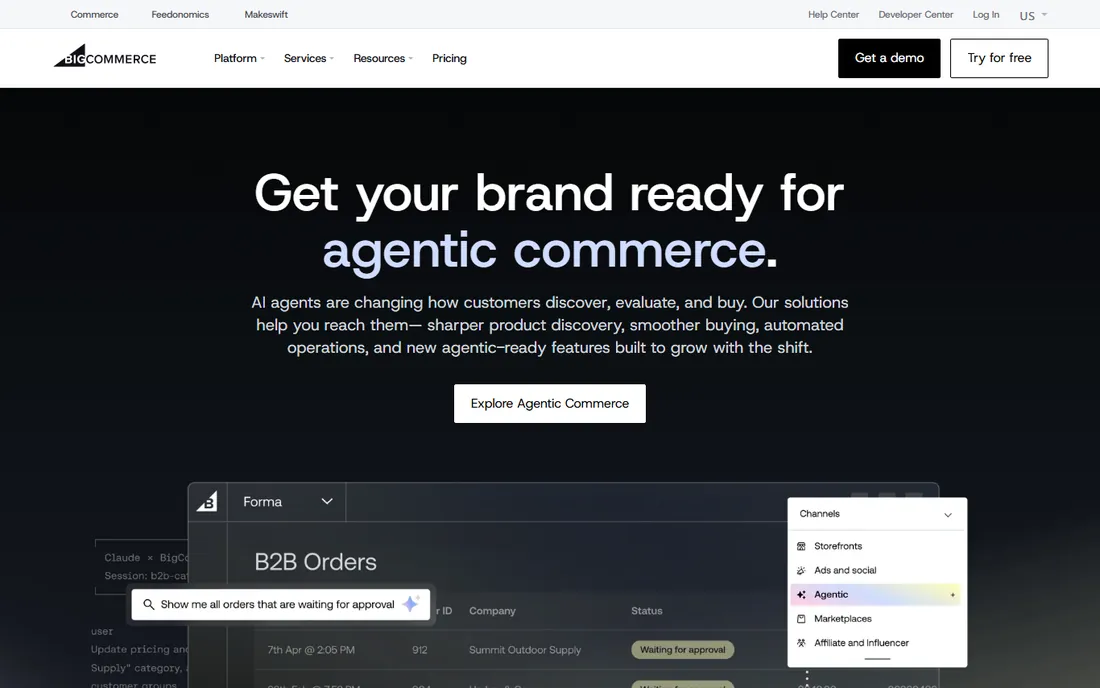
BigCommerce matches Shopify's $39/month entry but plays a different game: no platform transaction fees ever, and features that Shopify sells as apps come built in. For stores doing real volume, the math often favors BigCommerce once Shopify's app stack costs are counted.
The catch is the sales threshold. Standard covers up to $30K in yearly online sales, then the platform auto-upgrades you to Plus, which changes the price. B2B sellers and international stores get more here than on Shopify at the same price. Design-first brands may find the theme ecosystem thinner.
What we like- Zero platform transaction fees on every plan
- More native features (no app needed for basics like reviews and gift cards)
- Strong multi-currency and B2B capabilities
Watch out for- Standard plan caps at $30K yearly sales before forced upgrades
- Themes and design flexibility lag Shopify
- Third-party gateways can carry an Open Payment Provider fee up to 2%
#4
Wix
Best for: Beginners who want a website and store in one drag-and-drop builder
Visit wix.com
Starting price$29/month (Core plan, billed annually)
Free planNo (free website builder, but selling needs a paid plan)

Wix is the beginner-friendly online selling platform. The Core plan at $29/month (billed annually) is the first tier that accepts payments, and Wix charges no platform transaction fee, only processor fees. Building the site is genuinely easy, and the template quality is high for small catalogs.
It is not a scaling platform. Stores with hundreds of SKUs, complex shipping or serious SEO ambitions outgrow Wix, and advanced ecommerce features are thinner than Shopify's app ecosystem. For a small business selling dozens of products with a beautiful site, it is often enough, and often the fastest path to a first sale.
What we like- Very easy drag-and-drop building with strong templates
- 0% platform transaction fees
- App market for add-ons without coding
Watch out for- Limited advanced SEO compared to WordPress
- Less scalable for large catalogs
- The $17 Light plan cannot take payments
Starting price$19-$29/month (billed annually; 0% transaction fee from the Core plan)
Free planFree trial (14 days)

Squarespace wins on design. For brands where the site is the brand, photographers, boutiques, studios, the templates look better out of the box than anything else at this price. Plans start around $19 to $29/month on annual billing, with 0% transaction fees from the Core plan up; the cheapest tier takes a 2% store fee.
The commerce depth is shallower: fewer apps, fewer advanced shipping and discount options, and less B2B functionality. Solo founders and small design-led stores rarely hit those limits. If the catalog grows past a few hundred products, re-evaluate.
What we like- The best-looking templates of any platform here
- Simple, coherent admin
- 0% transaction fees on Core and above
Watch out for- A 2% store fee on the cheapest Basic plan
- Smaller app ecosystem
- Fewer advanced commerce features than Shopify or BigCommerce
Starting priceFree (no subscription; fees per sale)
Free planYes (no subscription required)
Etsy is not a store builder, it is a marketplace, and that distinction is the whole pitch. You pay nothing monthly; instead Etsy takes 6.5% of each sale plus a $0.20 listing fee and payment processing. For testing whether products sell, nothing beats starting where buyers already shop.
The fees compound. At volume, Etsy's cut exceeds what a Shopify subscription plus processor fees would cost, and you never own the traffic or the customer data. The standard playbook: validate on Etsy, then move your winners to your own store. Treating Etsy as permanent infrastructure is the expensive mistake.
What we like- Instant access to millions of buyers searching for handmade goods
- No monthly subscription to start
- Built-in trust and payment handling
Watch out for- 6.5% transaction fee plus $0.20 listing fee plus payment processing per sale
- You do not own the customer relationship
- Marketplace competition on price
Starting priceFree (payment processing fees apply)
Free planYes
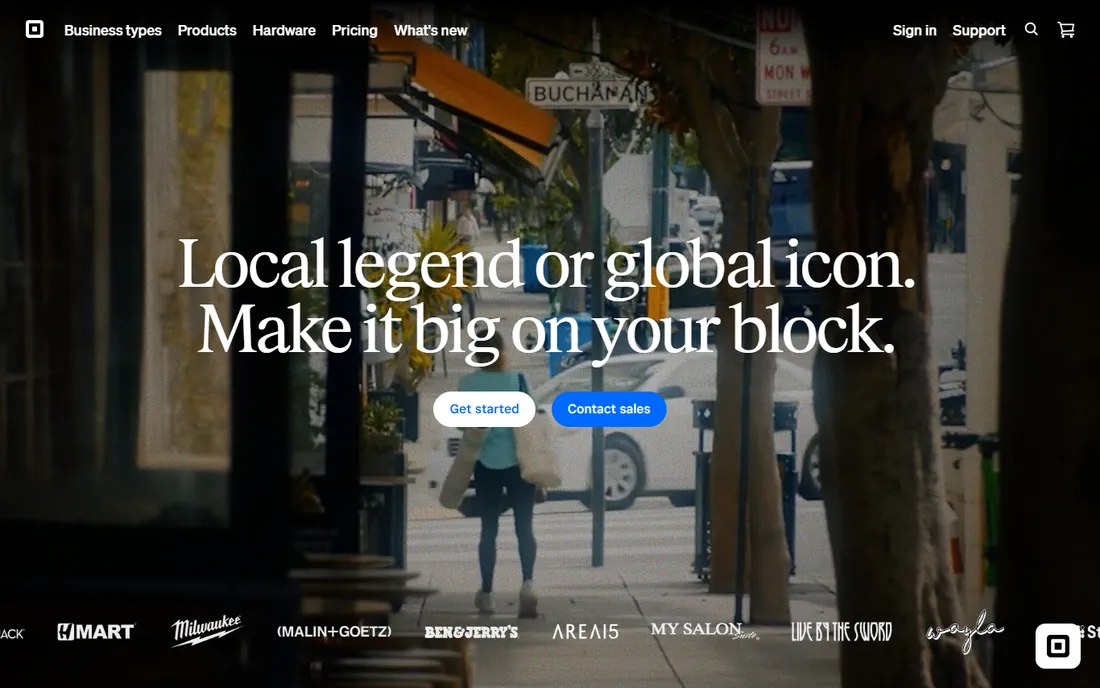
Square Online is the fastest free way to sell online, and it is built for businesses that already take payments through Square. The free plan charges 3.3% + $0.30 per online transaction; paid plans (from $29/month) lower processing to 2.9% + $0.30 and add features. Inventory syncs between the physical register and the online store.
It is a simple platform: fine for restaurants, cafes and small retailers adding online ordering, thin for brands that need advanced marketing, subscriptions or complex catalogs. If you already run Square in-store, the integration alone justifies it.
What we like- Genuinely free plan to start
- Inventory syncs with Square POS for physical stores
- Quick setup for restaurants and retailers
Watch out for- 3.3% + $0.30 per online transaction on the Free plan
- Paid plans from $29/month to lower fees
- Less flexible than dedicated ecommerce platforms
#8
Ecwid by Lightspeed
Best for: Adding a store to an existing website or social profile
Visit ecwid.com
Starting price$5/month (Starter plan, billed annually; 10 products)
Free planYes (free plan with limited products)
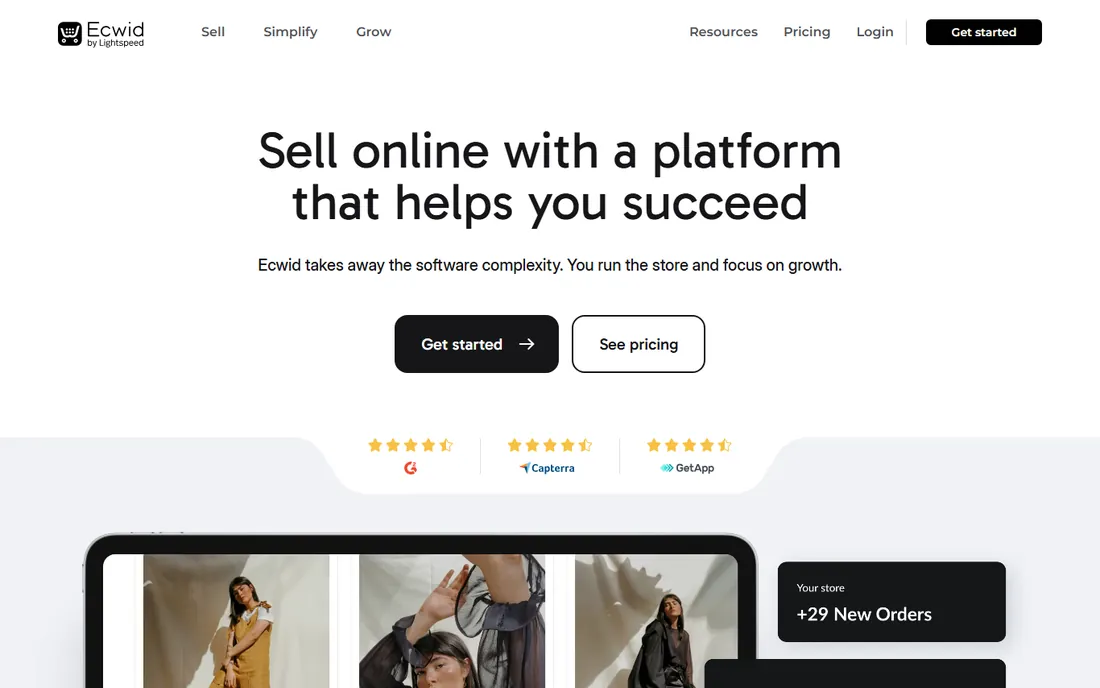
Ecwid answers a specific question: "I already have a website, how do I sell on it?" Instead of rebuilding on Shopify, you embed Ecwid's store into your current site, blog or social pages. The Starter plan at $5/month (billed annually) covers 10 products; higher tiers raise limits and add features.
The widget approach is both the strength and the limit. Setup is fast and there is no migration, but the store never feels as native as a purpose-built platform. For creators, bloggers and small businesses testing ecommerce on an existing audience, it is the lowest-friction entry.
What we like- Embeds a store into any existing site without migrating
- Free plan to start
- 0% platform transaction fees on any plan
Watch out for- Starter caps at 10 products
- The store lives as a widget, which limits design control
- Advanced features need the higher tiers (up to $99/month)
#9
Sellfy
Best for: Creators selling digital products and print-on-demand
Visit sellfy.com
Starting price$29/month ($22/month billed annually, Starter plan)
Free planFree trial (14 days)
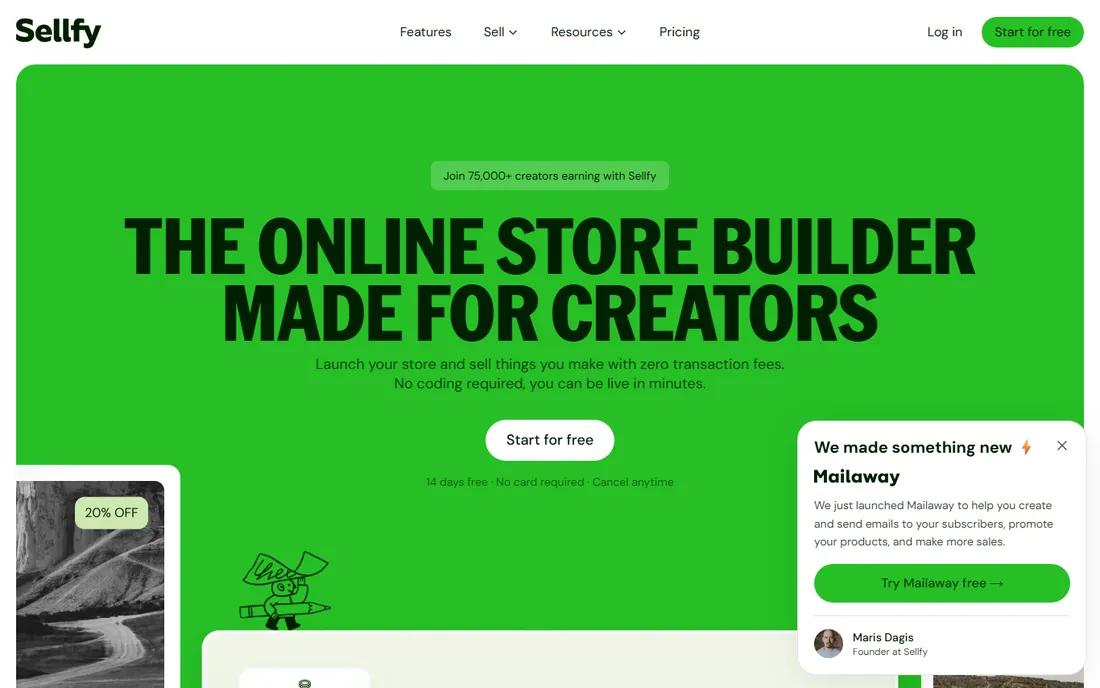
Sellfy is the creator's selling platform: digital products, memberships, streaming video and print-on-demand, all without the complexity of a full ecommerce suite. The Starter plan at $29/month ($22 annual) covers up to $10K in yearly sales, with higher tiers raising the cap.
If you sell courses, ebooks, presets or merch via print-on-demand, Sellfy removes the friction that makes Shopify feel heavy. If you sell hundreds of physical SKUs with complex shipping, it is the wrong tool. Pick it when the product is digital or made-to-order.
What we like- Built for digital downloads, subscriptions and print-on-demand in one place
- No platform transaction fees
- Simple storefront setup for creators
Watch out for- Starter caps yearly sales at $10K
- Not built for large physical-product catalogs
- Smaller ecosystem than the major platforms
How we chose
We picked platforms that real businesses use to sell online in 2026, covering store builders, WordPress commerce, website builders, marketplaces and creator tools. We verified entry prices from vendor pricing pages and recent third-party pricing checks (Toolgrowth, Fulfill and Hostinger, all updated mid-2026), including transaction fees, because the subscription price is only half the cost. We excluded platforms with no current public presence.
The real cost: subscriptions plus transaction fees
The monthly price is the smaller half of the bill. Shopify Basic at $39/month also takes 2% per sale unless you use Shopify Payments; on $20K monthly sales through a third-party gateway, that is $400/month in fees, ten times the subscription. BigCommerce charges no platform fee but enforces sales thresholds that force upgrades. Etsy looks free until the 6.5% per-sale cut compounds at volume.
Do the fee math on your expected sales before comparing subscriptions. A $29/month platform with 2% fees costs more than a $79/month platform with 0% fees once monthly sales pass about $2,500. And budget apps: most Shopify stores spend $50 to $200/month on apps, which belongs in the comparison.
Marketplace versus your own store
Marketplaces (Etsy, Amazon) give you buyers on day one and take a cut of every sale forever. Your own store (Shopify, WooCommerce, BigCommerce) costs a subscription and requires you to find traffic, but you keep the margin and own the customer data. Most successful sellers do both in sequence: validate products on a marketplace, then move proven winners to their own store where the economics work at scale. Running both permanently is fine too, as long as the marketplace cut is priced into the product margin.
Frequently asked questions
What is the best platform to sell online for beginners?
Wix ($29/month) and Squarespace ($19-$29/month) are the easiest store builders for beginners. Square Online is free to start. If you already have a WordPress site, adding Ecwid ($5/month) or WooCommerce (free) avoids rebuilding.
How much does it cost to sell online?
Hosted platforms run $19 to $39/month at entry, plus payment processing (about 2.9% + $0.30) and sometimes platform transaction fees (0 to 2%). WooCommerce is free but needs $20 to $200/month in hosting. Marketplaces like Etsy charge no subscription but take about 6.5% per sale plus fees.
Is Shopify or WooCommerce better?
Shopify is better if you want a managed platform with no technical work; WooCommerce is better if you want full control, already use WordPress, or want to avoid platform fees and plan limits. Shopify costs more in subscriptions and apps; WooCommerce costs more in hosting, extensions and maintenance time.
Can I sell online for free?
Yes: Square Online and Ecwid have free plans, WooCommerce's plugin is free (hosting still costs), and Etsy charges no subscription. Free plans limit products or features and still charge payment processing fees, so they suit testing and very small catalogs.
Should I sell on Etsy or my own website?
Start on Etsy to validate products with existing buyer traffic, then move winners to your own store for better margins and customer ownership. Etsy's 6.5% transaction fee plus listing and processing fees get expensive at scale, while your own store costs a flat subscription.
Which platform has no transaction fees?
BigCommerce, Wix, Ecwid and Sellfy charge no platform transaction fees on their paid plans. Shopify waives its fee if you use Shopify Payments. All platforms still pass through payment processor fees (around 2.9% + $0.30).
Sources we checked (12)
- https://www.shopify.com/pricing
- https://www.woocommerce.com/pricing/
- https://www.bigcommerce.com/pricing/
- https://www.wix.com/pricing/
- https://www.squarespace.com/pricing/
- https://www.etsy.com/sell/
- https://www.squareup.com/online-store/pricing/
- https://www.ecwid.com/pricing/
- https://www.sellfy.com/pricing/
- https://toolgrowth.com/best-ecommerce-platforms-for-small-business-2026/
- https://www.Fulfill.com/blog-posts/the-top-ecommerce-platforms-to-use-in-2025
- https://www.hostinger.com/in/tutorials/best-ecommerce-platforms/
Is your product missing or out of date?
We review this list regularly. Vendors can request a listing, send updated pricing or ask about featured placement.

Shihab Mia · Founder, Rankite
Shihab has spent more than a decade helping SaaS and e-commerce brands grow through search. He writes Rankite's software buying guides from pricing pages, documentation and public user reviews. More about Shihab.