How we make this list: we compare pricing pages, product documentation and public user reviews. Rankite is independent; if a vendor ever pays for a featured spot, that listing is clearly labeled Partner.
Key takeaways
- PIM pricing spans from free (Plytix free tier, Akeneo and Pimcore open source) to six-figure enterprise contracts (Salsify, inRiver, Syndigo).
- Plytix (from 149 euros per month) is the best value for growing ecommerce teams that need PIM without enterprise sales cycles.
- Akeneo (from around 35,000 euros per year) remains the enterprise open-source standard for complex catalogs.
- Brands selling into major retail chains should evaluate Salsify and Syndigo for syndication depth, not just PIM features.
- SKU count, channel count, and digital asset volume drive price more than user seats; model all three before requesting quotes.
Quick comparison
| Tool | Best for | Starting price | Free plan |
|---|
 Akeneo Akeneo | Enterprise complex catalogs | From ~€35,000/year (Community Edition free) | Yes (open source Community Edition) |
 Salsify Salsify | Brands selling into retail chains | See website (custom quote) | No |
 Pimcore Pimcore | Developer-led open source builds | Free (Community); from $9,900/year (Professional) | Yes (open source Community Edition) |
 Plytix Plytix | Growing ecommerce teams | Free plan; from €149/month | Yes |
 inRiver inRiver | Large B2B manufacturers | See website (custom quote) | No |
 Sales Layer Sales Layer | Fast marketplace syndication | See website (custom quote) | No |
 Syndigo Syndigo | Retail data syndication at scale | See website (custom quote) | No |
 Pimberly Pimberly | Supplier-heavy enterprise catalogs | From ~$36,000/year | No |
 Catsy Catsy | B2B manufacturers, print catalogs | See website | No |
Is your product missing or out of date?
We review this list regularly. Vendors can request a listing, send updated pricing or ask about featured placement.
The top pim software
Every product you sell lives in a dozen places: your website, Amazon, retailer portals, print catalogs, sales decks. When specifications, images, or prices disagree between them, customers lose trust and retailers delist you. Most companies manage this chaos in spreadsheets until the SKU count or channel count makes spreadsheets actively dangerous. Product information management software creates one governed source of truth and syndicates it everywhere.
The category confuses buyers because "PIM" covers very different products. At one end are lightweight catalog tools for small ecommerce teams; at the other are enterprise platforms handling millions of SKUs across global supply chains. The best product information management software for a 500-SKU Shopify brand shares almost nothing with the right choice for a manufacturer selling through 40 retail chains. This guide covers both ends with current pricing signals.
Starting priceFrom ~€35,000/year (Community Edition free)
Free planYes (open source Community Edition)
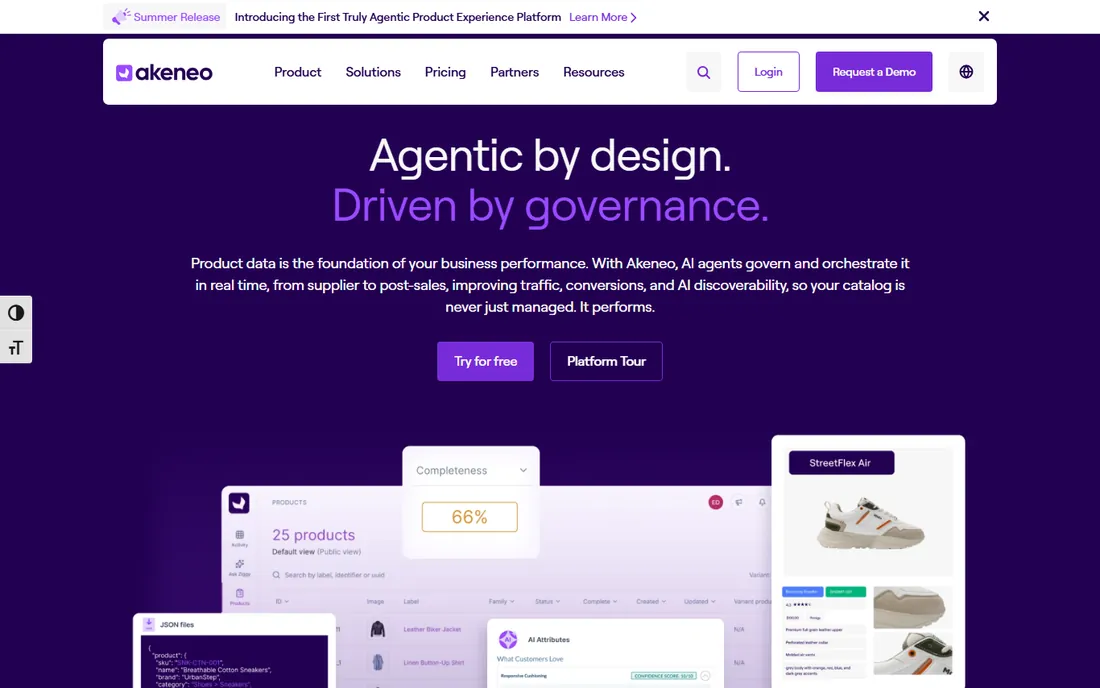
Akeneo is the name most enterprises evaluate first, and its open-source Community Edition is genuinely free and capable, which is why developers love it. The paid Growth and Enterprise tiers add SaaS hosting, advanced workflows, and support, with pricing reportedly starting around 35,000 euros per year and enterprise deals running far higher. Data modeling handles the gnarly catalog structures (configurable products, localized attributes, channel-specific assortments) that break simpler tools.
The costs beyond licensing are real: implementations typically run three to six months with partner help, and AI enrichment features sit in premium add-ons. But for large catalogs with complex requirements and teams that want open-source flexibility, Akeneo remains the benchmark. Start with Community to prove the concept; buy Growth when you need SaaS convenience.
What we like- Most mature open-source PIM with a huge community
- Strong data modeling for complex catalogs
- Proven at enterprise scale
Watch out for- Paid tiers start in the tens of thousands annually
- Implementations take months
- AI features cost extra as add-ons
Starting priceSee website (custom quote)
Free planNo

Salsify is less a PIM than a product experience platform for brands whose business depends on retail shelves, physical and digital. Beyond centralizing product data, it syndicates content to hundreds of retailer portals, monitors digital shelf performance (are your images right, are you losing the buy box), and gives marketing teams tools to improve conversion per retailer. That is why major consumer brands pay for it.
Pricing is enterprise-custom, with reported deals typically from $50,000 to well over $150,000 per year. DTC-only brands should not be here; the value is in the retail network. But if Walmart, Target, or Amazon retail operations can make or break your quarter, Salsify syndication and analytics justify the investment in ways a pure PIM cannot.
What we like- Deepest retail syndication network
- Digital shelf analytics show how products perform
- Strong content collaboration workflows
Watch out for- Enterprise pricing rarely below $50,000 per year
- Long implementations
- Overkill for DTC-only brands
Starting priceFree (Community); from $9,900/year (Professional)
Free planYes (open source Community Edition)
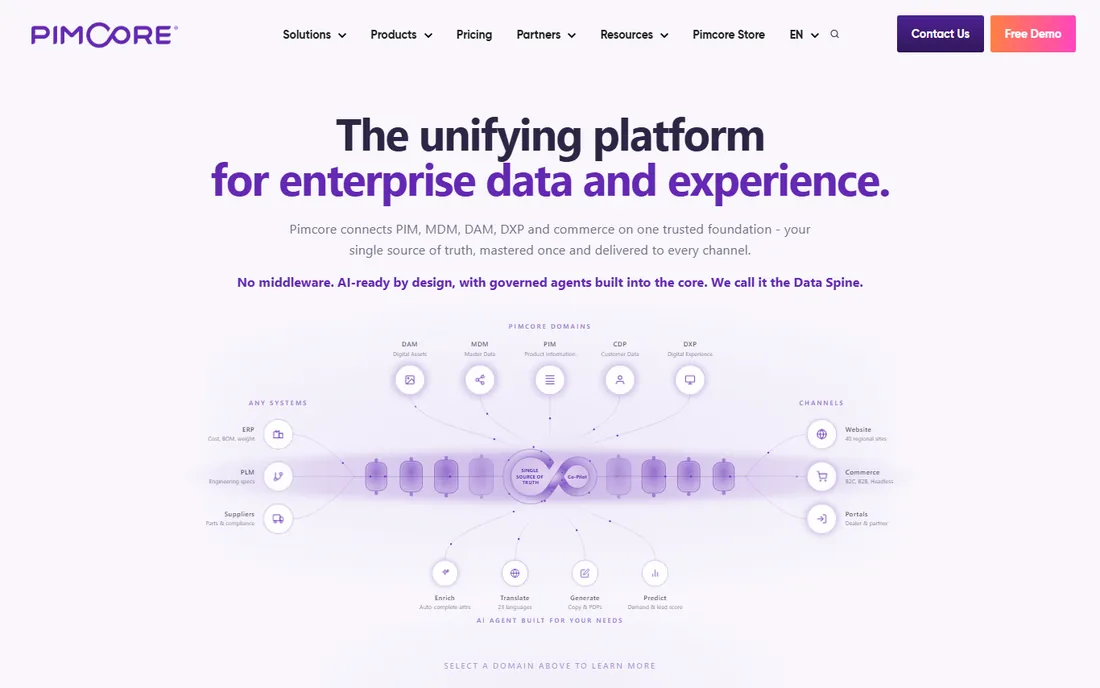
Pimcore is the open-source platform for teams that want PIM, digital asset management, and master data management in one system they fully control. The Community Edition is free; paid tiers run from $9,900 per year (Professional) to $29,900 (Enterprise) and up for cloud hosting. For organizations with engineering capacity, it is the most flexible option in this guide by a wide margin.
The flexibility is the cost: without developers, Pimcore is a framework, not a product. Implementation, hosting, security patching, and upgrades all fall on your team, and published analyses note that total cost of ownership without in-house engineering can exceed enterprise SaaS. Choose Pimcore when you have the engineering team and want maximum control; choose SaaS when you want someone else to run the infrastructure.
What we like- PIM plus DAM plus MDM in one open platform
- No license cost for Community
- Extremely customizable for engineering teams
Watch out for- Needs real developers to implement and run
- Total cost of ownership can exceed SaaS without in-house engineering
Starting priceFree plan; from €149/month
Free planYes
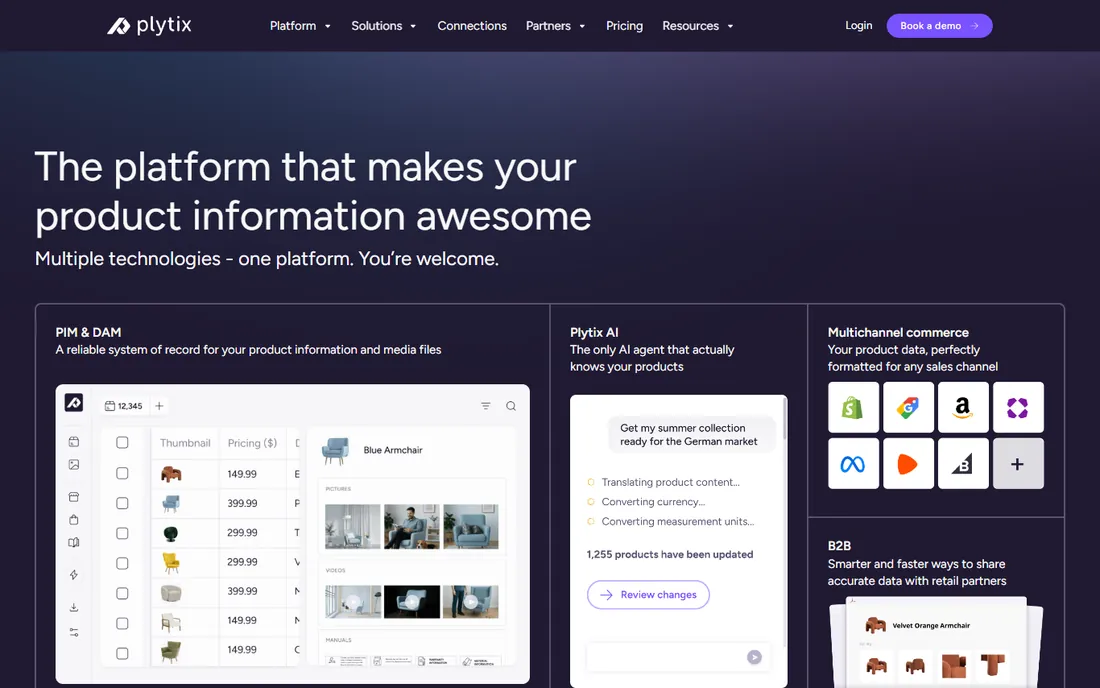
Plytix is the value leader for small and midsize ecommerce teams: a free tier covers up to 500 SKUs, paid plans start at 149 euros per month, and every plan includes AI features and unlimited users. The interface is spreadsheet-familiar, onboarding takes days rather than months, and integrations cover Shopify, Amazon, and the usual suspects.
It is not an enterprise PIM: million-SKU catalogs with complex governance will outgrow it. But most growing brands never reach that complexity, and paying enterprise prices for it in advance is wasteful. For teams moving off spreadsheets into their first real PIM, Plytix offers the gentlest path with pricing that stays sane as you grow.
What we like- Free tier for small catalogs
- AI features included in every plan
- Unlimited users with no per-seat fees
Watch out for- Less suited to the most complex enterprise catalogs
- DAM features are lighter than specialists
Starting priceSee website (custom quote)
Free planNo
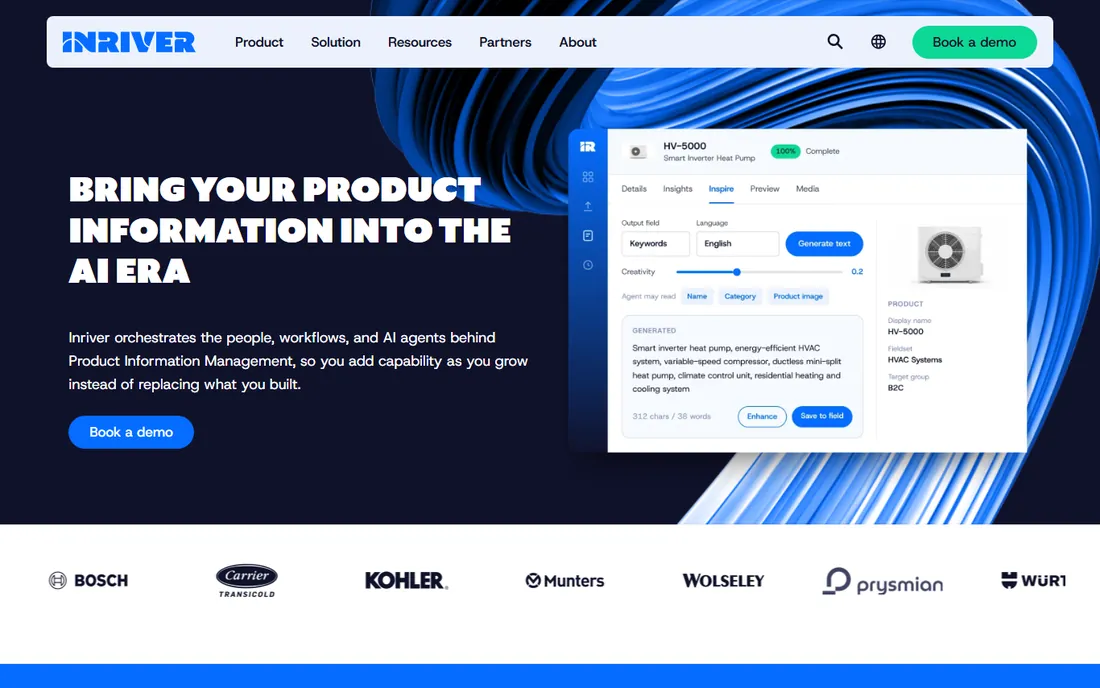
inRiver serves manufacturers and distributors whose product data originates in engineering and ERP systems rather than marketing. Its strength is the product lifecycle: guiding complex products from creation through enrichment to syndication, with workflows that match how industrial companies actually work. SAP-centric enterprises are its natural habitat.
Pricing is enterprise-custom with reported starting ranges around 30,000 to 50,000 euros per year and large deployments far higher. This is not a tool for small ecommerce brands. But for B2B manufacturers with deep, technical catalogs and SAP in the stack, inRiver is purpose-built in ways the ecommerce-first PIMs are not.
What we like- Strong product lifecycle and guided onboarding workflows
- Proven with SAP-centric enterprises
- Handles complex B2B catalogs
Watch out for- Enterprise pricing (reportedly €30,000-plus per year)
- Implementations are major projects
- Less DTC focus
Starting priceSee website (custom quote)
Free planNo
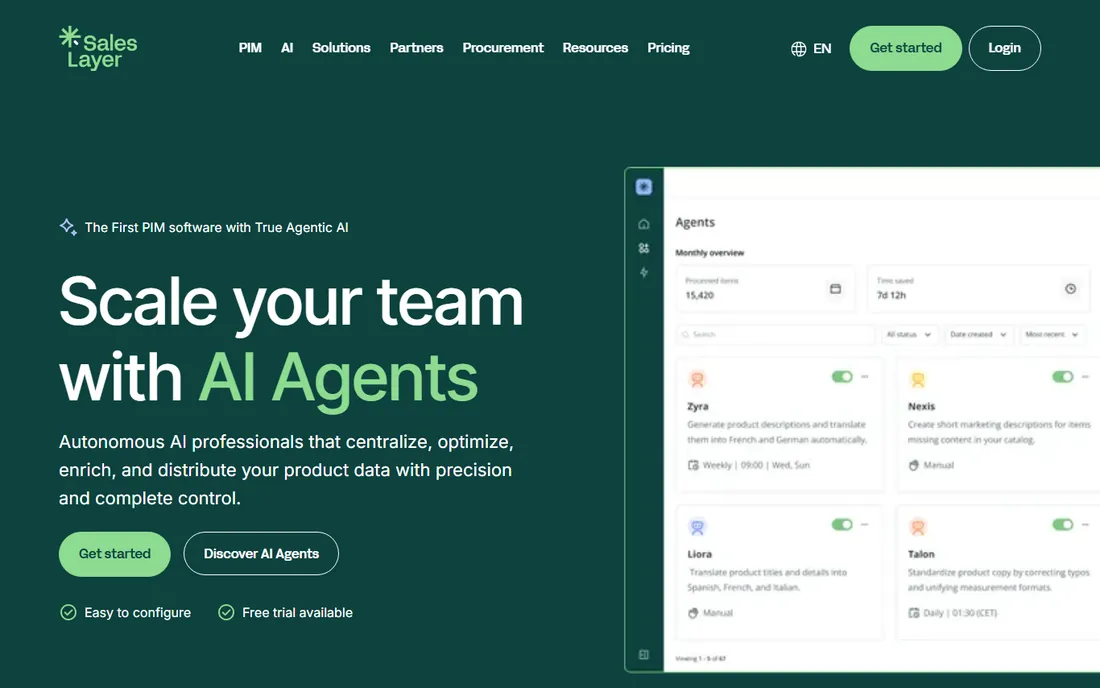
Sales Layer built its reputation on speed: API-first design and onboarding measured in weeks rather than quarters, which stands out in a category known for long implementations. European marketplace syndication is a particular strength, making it popular with brands selling across Amazon, Bol, Cdiscount, and similar channels.
Pricing is custom-quote, reportedly starting around $1,000 per month for smaller deployments. The company is less known in the US than Akeneo or Salsify, which matters for reference customers and partner ecosystems. For European mid-market brands that need real PIM plus syndication without an enterprise project, Sales Layer deserves a demo.
What we like- API-first architecture
- Very fast onboarding for a PIM
- Strong European marketplace syndication
Watch out for- Custom-quote pricing
- Smaller brand presence outside Europe
- Less analyst coverage than giants
Starting priceSee website (custom quote)
Free planNo
Syndigo (formed from the merger of Riversand and Syndigo businesses) dominates the data syndication layer between brands and retailers: GDSN compliance, nutrition and regulatory data, and content distribution to thousands of retail endpoints. Large CPG and grocery brands rely on it to keep product data accurate across the retail ecosystem.
The PIM capabilities exist but syndication is the heart of the product; buyers wanting PIM-first should look at Akeneo or Pimcore. Enterprise licensing is complex and pricing typically starts around $75,000 per year. If your problem is "our product data must be perfect at 500 retailers," Syndigo is the answer. If it is "organize our catalog," start elsewhere.
What we like- Massive retailer network reach including GDSN
- Content syndication at genuine scale
- Strong for CPG and grocery
Watch out for- Enterprise licensing complexity
- Pricing typically $75,000-plus per year
- PIM is secondary to syndication
Starting priceFrom ~$36,000/year
Free planNo
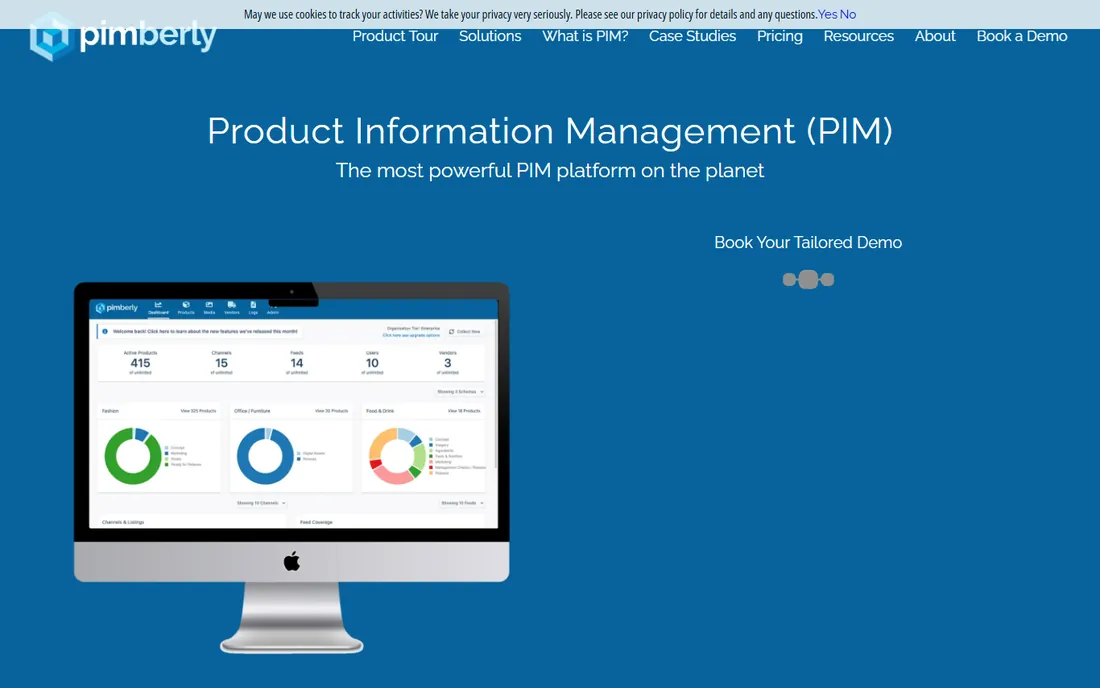
Pimberly focuses on the supplier side of PIM: onboarding thousands of suppliers, validating their product data, and enriching it into channel-ready content. Distributors and retailers managing marketplace-style assortments from many suppliers get particular value. Pricing is reported from around $36,000 per year.
It lacks Akeneo open-source community and US market presence, which affects partner availability. But for the specific problem of supplier-driven catalogs at enterprise scale, Pimberly workflows are more purpose-built than generalist alternatives. Evaluate it when your catalog complexity comes from supplier count rather than product complexity.
What we like- Strong supplier onboarding workflows
- Handles large SKU counts well
- Good for distributor models
Watch out for- Enterprise pricing
- Smaller community than Akeneo
- Less US presence
Starting priceSee website
Free planNo
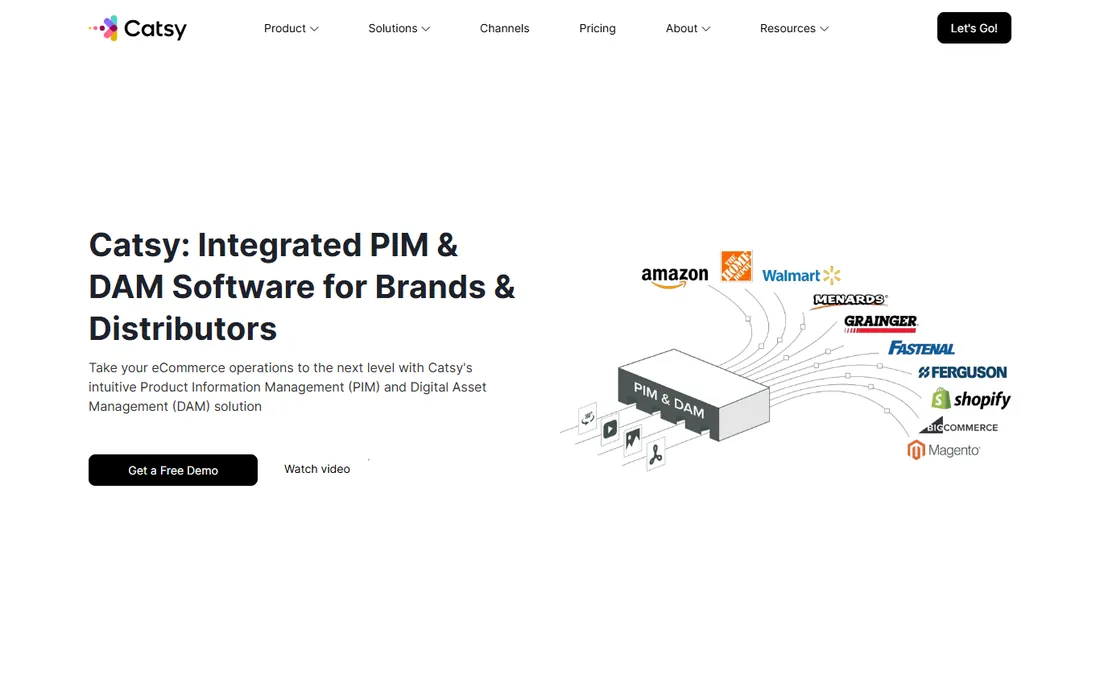
Catsy occupies a distinctive niche: B2B manufacturers that still sell substantially through print catalogs. Its standout feature generates beautiful print catalogs directly from the product database, eliminating the manual layout work that consumes marketing teams at industrial companies. Customer satisfaction ratings are among the highest in the category.
The digital commerce and syndication features are less deep than Salsify or Akeneo, and pricing is not published. But for manufacturers straddling print and digital, Catsy solves the actual problem: one database feeding both the catalog and the website. It is the best pim tools option for the print-to-digital transition specifically.
What we like- Excellent print catalog generation from product data
- Strong for B2B manufacturers
- High customer satisfaction ratings
Watch out for- No published pricing
- Smaller company
- Digital commerce features less deep than rivals
How this shortlist was assembled
We selected platforms with meaningful adoption in 2026 across SMB, mid-market, and enterprise segments, based on buyer guides, analyst evaluations, and practitioner discussion. Pricing signals were drawn from vendor pages and published third-party research; where vendors price by custom quote, that is stated and reported ranges are labeled as third-party estimates.
We weighted syndication capabilities, catalog complexity handling, and total cost of ownership alongside core PIM features, since the right PIM depends on where your product data goes. No hands-on testing was performed.
What to check before you buy
Start by mapping your product data journey: where data originates (suppliers, ERP, PLM), who enriches it, and every channel it must reach (website, marketplaces, retailers, print). That map determines whether you need syndication depth (Salsify, Syndigo), supplier onboarding (Pimberly), print output (Catsy), or just clean centralization (Plytix, Akeneo).
Next, model total cost realistically: license plus implementation (typically 50 to 200 percent of first-year license for enterprise tools), data migration and cleansing, integrations, and ongoing administration. Open-source options shift cost from licenses to engineering; make sure you count it. Then verify the three technical essentials: data model flexibility for your catalog structure, DAM capabilities for your asset volume, and API quality for your integration needs.
Finally, run a pilot on a real product category before committing. PIM implementations fail most often on data quality and organizational adoption, not software features. A 500-SKU pilot reveals both within weeks and costs little.
Open source vs SaaS PIM: the real trade-off
Open-source PIM (Akeneo Community, Pimcore Community) eliminates license fees but not costs: hosting, implementation, upgrades, and the engineering time to run it all still get paid, just to different vendors or your own payroll. Analyses consistently show that without in-house engineering, open-source TCO can exceed SaaS subscriptions.
SaaS PIM (Plytix, Akeneo Growth, Salsify) bundles hosting, upgrades, and support into the subscription, which suits teams without deep engineering. The trade-off is less customization control and ongoing subscription cost that grows with your catalog.
The decision rule: choose open source when you have the engineering team and need deep customization or data control; choose SaaS when you want to focus on products rather than platforms. Either way, budget implementation honestly: it is always the largest cost after the license.
Frequently asked questions
What is PIM software?
Product information management software centralizes all product data (descriptions, specifications, images, prices, translations) in one governed system and syndicates it to every sales channel. It replaces spreadsheet-based product data management and ensures consistency everywhere products appear.
How much does PIM software cost?
From free (open-source Community editions, Plytix free tier) to $300-$500 per month for SMB SaaS, $10,000-$40,000 per year for mid-market, and $50,000 to $300,000-plus per year for enterprise platforms. Implementation typically adds 50 to 200 percent on top of the first-year license for enterprise tools.
Do small businesses need PIM software?
Once you sell the same products on more than two or three channels, or your SKU count passes a few hundred, spreadsheets start causing real errors: wrong prices, missing images, inconsistent descriptions. Plytix free tier and affordable SaaS plans make starting cheap; the cost of product data errors usually exceeds the software cost quickly.
What is the difference between PIM and DAM?
PIM manages structured product information (attributes, specifications, descriptions, prices); DAM (digital asset management) manages unstructured files (images, videos, documents). Many PIM platforms include basic DAM, but companies with heavy rich-media needs often pair a PIM with a dedicated DAM.
How long does PIM implementation take?
SaaS SMB tools: days to weeks. Mid-market platforms: one to three months. Enterprise platforms: three to nine months with partner help. Data cleansing and migration is usually the longest phase; the software is rarely the bottleneck.
Can PIM software syndicate to Amazon and other marketplaces?
Yes, syndication is a core PIM function, but depth varies enormously: Salsify and Syndigo offer the deepest retailer networks, while SMB tools cover the major marketplaces adequately. Verify your specific channels are supported natively before buying, and ask how listing errors are reported back.
Sources we checked (6)
- https://www.plytix.com/blog/best-pim/
- https://apimio.com/how-much-pim-system-costs
- https://nordicwebteam.com/ecommerce/guides/pim-systems-comparison
- https://www.softwareworld.co/top-pim-software/
- https://codeless.co/best-pim-software/
- https://odoopim.com/blog/pim-software-comparison/
Is your product missing or out of date?
We review this list regularly. Vendors can request a listing, send updated pricing or ask about featured placement.

Shihab Mia · Founder, Rankite
Shihab has spent more than a decade helping SaaS and e-commerce brands grow through search. He writes Rankite's software buying guides from pricing pages, documentation and public user reviews. More about Shihab.