How we make this list: we compare pricing pages, product documentation and public user reviews. Rankite is independent; if a vendor ever pays for a featured spot, that listing is clearly labeled Partner.
Key takeaways
- Cin7 Core ($349 per month) is the most capable published-price option for multichannel sellers with real operational complexity.
- Zoho Inventory (free plan; paid from $29 per month) and Veeqo (free shipping tools) cover small sellers at minimal cost.
- Linnworks, Brightpearl, NetSuite, and Extensiv price by quote; expect serious annual contracts once you pass mid-market volume.
- Fishbowl ($229 per month billed annually) and inFlow ($99 per month billed annually) serve manufacturers and B2B wholesalers well.
- Order limits, not user counts, usually decide the real price: check orders-per-year allowances before comparing headline figures.
Quick comparison
| Tool | Best for | Starting price | Free plan |
|---|
 Cin7 Cin7 | Multichannel product businesses | $349 per month (Core Standard) | Free trial (14 days) |
 Linnworks Linnworks | High-volume multichannel retail | See website (quote-based) | No |
 Brightpearl Brightpearl | Retail operations on Sage | See website (quote-based) | No |
 NetSuite NetSuite | Mid-market to enterprise ERP | See website (quote-based) | No |
 Extensiv Extensiv | Omnichannel fulfillment | See website (quote-based) | No |
 Veeqo Veeqo | Amazon-first sellers | Free (shipping); see website for inventory | Yes (shipping) |
 Zoho Inventory Zoho Inventory | Startups and small sellers | Free plan; from $29 per month | Yes |
 Fishbowl Fishbowl | Manufacturers and warehouses | From $229 per month (billed annually) | No |
 inFlow inFlow | B2B and wholesale | From $99 per month (billed annually) | Free trial (14 days) |
Is your product missing or out of date?
We review this list regularly. Vendors can request a listing, send updated pricing or ask about featured placement.
The best order management software
Selling on three channels sounds like growth until the operational reality hits: an order comes in on Shopify, stock does not sync to Amazon, someone sells inventory you do not have, and the warehouse ships the wrong variant. Oversells, split shipments, and stockouts are not just embarrassments; they trigger marketplace penalties and one-star reviews that compound. Order management software exists to make every channel draw from one accurate picture of inventory and orders.
The buying trap is buying for the business you have instead of the one you are becoming. A free tool handles 50 orders a month beautifully and collapses at 500. Enterprise platforms handle 500,000 orders but cost more than a small seller gross margin. The best order management software for you sits at the intersection of your current order volume, your channel mix, and how much operational complexity (warehouses, manufacturing, B2B) you actually have.
This guide compares nine platforms from free to enterprise, with current pricing where vendors publish it.
Starting price$349 per month (Core Standard)
Free planFree trial (14 days)
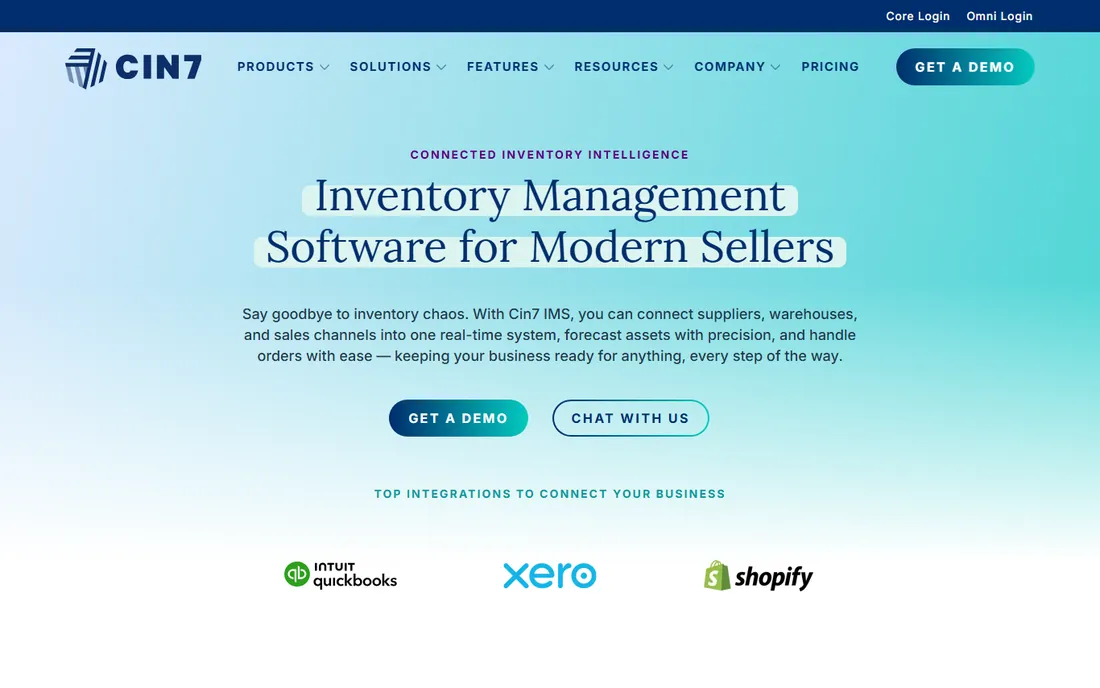
Cin7 (Core for SMBs, Omni for larger operations) is the most fully featured order and inventory platform with transparent pricing. Core Standard at $349 per month covers 5 users, 2 integrations, and 6,000 orders per year, scaling through Pro ($599) and Advanced ($1,199) as order volume grows. The integration library (700-plus connections across ecommerce platforms, marketplaces, 3PLs, and accounting) means most sellers can connect their stack without custom development.
The honest assessment: this is serious operational software, and the price reflects it. Sellers under a few hundred orders a month will find Zoho or Veeqo far cheaper, and the order caps mean growing businesses should model costs at 2x current volume. But for multichannel brands with warehouses, purchasing workflows, or B2B alongside DTC, Cin7 is the strongest published-price option in 2026.
What we like- Published pricing rare at this capability level
- 700+ integrations
- Built-in EDI and demand forecasting
Watch out for- $349 entry is steep for small sellers
- Order caps per tier need watching
- Implementation effort is real
Starting priceSee website (quote-based)
Free planNo
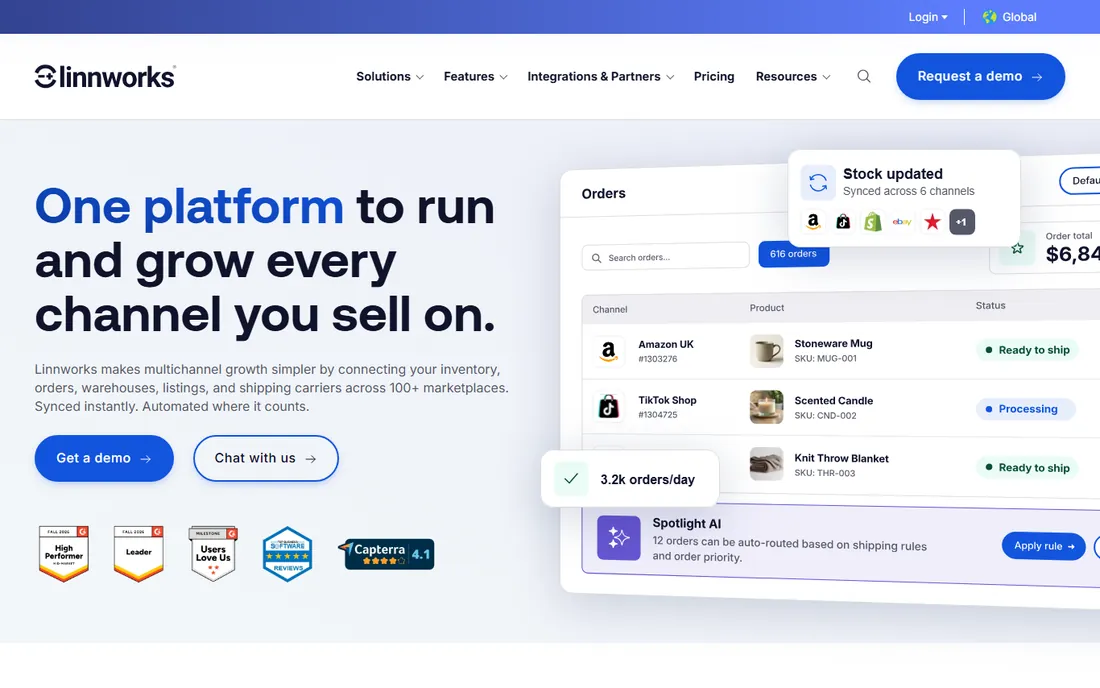
Linnworks has powered high-volume multichannel retailers for over a decade, and its automation engine is the reason: complex order routing, listing management, and warehouse rules that handle the edge cases smaller tools choke on. Pricing is based on monthly order volume rather than revenue, and plans include unlimited users.
The buying experience is the friction. There is no published price list; everything is quote-based, with reported implementation costs ranging widely by complexity. This is software for established sellers doing thousands of orders a month, not for startups. If that is you, Linnworks deserves a demo against Cin7 and Brightpearl. If you are smaller, the quote process alone will tell you it is not your tool yet.
What we like- Built for serious multichannel volume
- Strong automation rules engine
- Unlimited users on plans
Watch out for- Quote-only pricing with no public list
- Implementations can be expensive
- Smaller sellers get little attention
Starting priceSee website (quote-based)
Free planNo
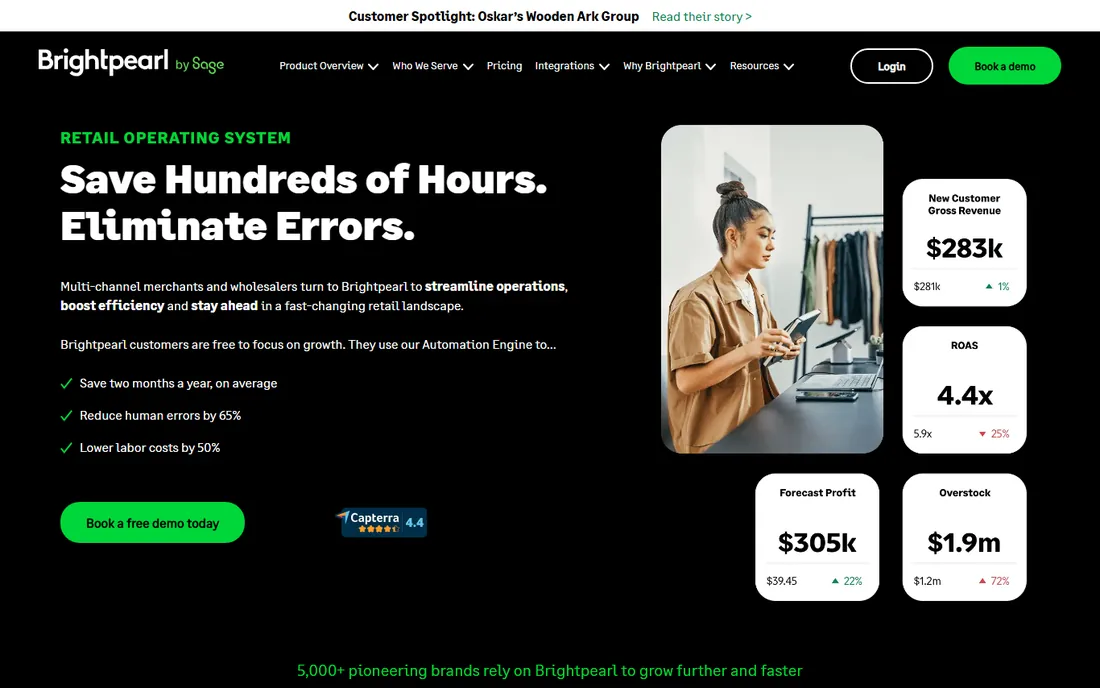
Brightpearl (now part of Sage) is the retail operations platform for brands that have outgrown entry-level tools: order management, inventory, warehousing, and accounting-aware workflows designed around how retailers actually work. Unlimited users on every plan removes the seat-tax anxiety as teams grow, and the Sage connection gives it accounting credibility few competitors match.
Pricing scales with revenue and is quote-based, which means growing brands should model costs carefully: success makes the bill bigger. Implementations are measured in months, not weeks. Brightpearl fits established retail brands, particularly those on Sage accounting, that need retail-native operations. Smaller or non-retail sellers will find better value elsewhere.
What we like- Retail-specific workflows (it is built for retailers, not adapted)
- Sage ownership means accounting depth
- Unlimited users on every plan
Watch out for- Quote-based pricing that scales with revenue
- Implementations typically run 90 to 120 days
- Best inside the Sage ecosystem
Starting priceSee website (quote-based)
Free planNo
Oracle NetSuite is not really order management software; it is an ERP that includes excellent order management. For companies that have outgrown point solutions and need financials, inventory, order management, and CRM on one database, NetSuite eliminates the integration sprawl that plagues growing businesses. The automation and reporting depth reward the investment.
The investment is substantial: quote-based licensing, multi-month implementations, and consulting costs that can exceed the first-year license. Companies under roughly $5-10 million in revenue rarely justify it. But when the business needs one system of record rather than six connected apps, NetSuite is the standard answer, and its order management is stronger than most standalone tools.
What we like- Full ERP (financials, inventory, orders, CRM) in one system
- Scales to genuine enterprise complexity
- Huge partner ecosystem
Watch out for- Quote-based enterprise pricing
- Implementations take months and real consulting budgets
- Overkill below mid-market
Starting priceSee website (quote-based)
Free planNo
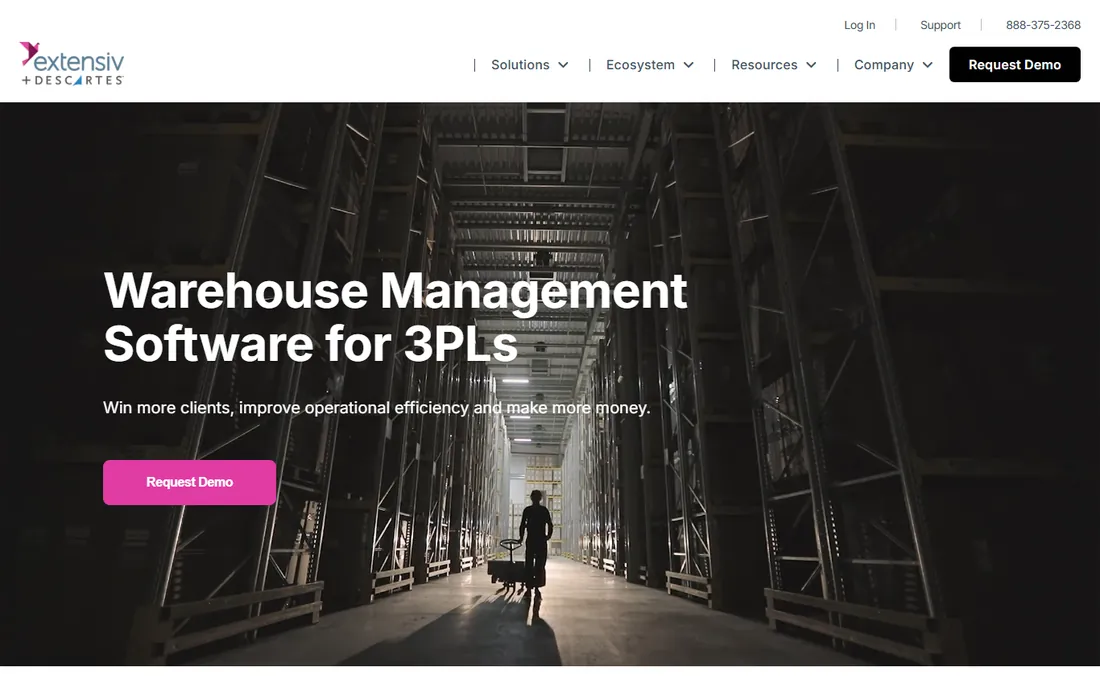
Extensiv (which absorbed Skubana) serves the fulfillment-heavy end of the market: 3PL warehouses managing many clients, and omnichannel brands with complex logistics. Its warehouse management, automated dropshipping, and marketplace connection depth go beyond what generalist OMS platforms offer. If your business is logistics as much as sales, this specialization matters.
Like its peers at this level, pricing is quote-based and the sales process assumes serious volume. Simple DTC brands selling from one warehouse will find it heavy and expensive. But for 3PLs and brands where fulfillment complexity is the business, Extensiv is purpose-built in a way the generalists are not.
What we like- Purpose-built for 3PLs and high-volume omnichannel sellers
- Strong warehouse management
- Automated dropshipping workflows
Watch out for- Quote-based pricing
- Complexity exceeds what simple DTC brands need
- Sales process is enterprise-style
Starting priceFree (shipping); see website for inventory
Free planYes (shipping)
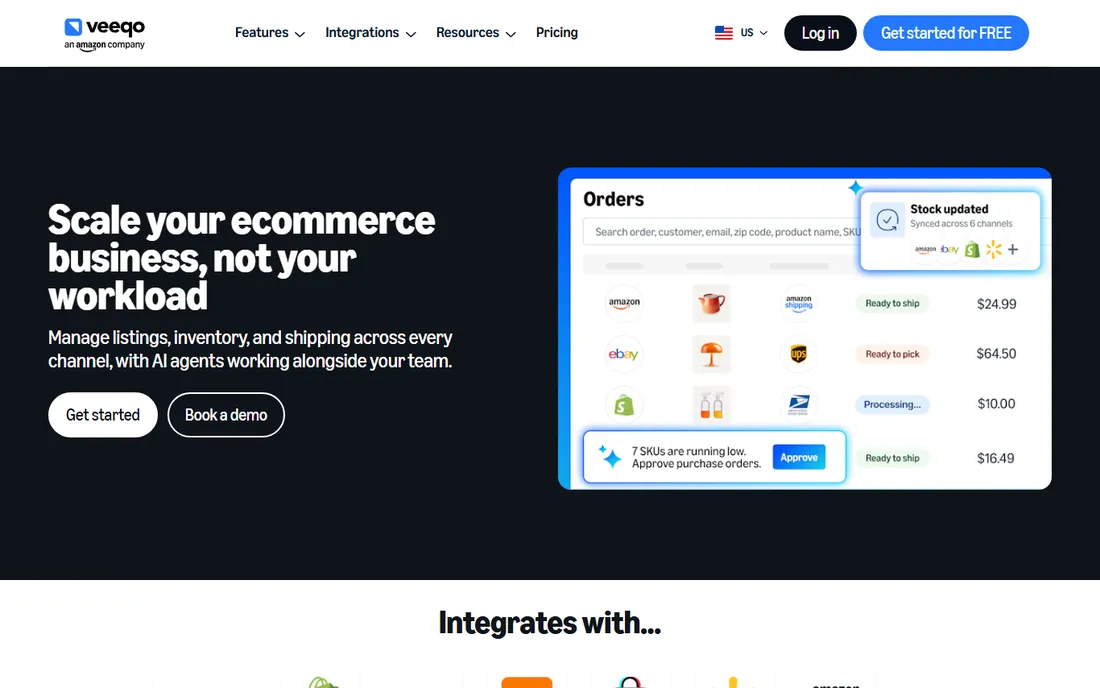
Veeqo is Amazon shipping management software that grew into inventory management, and the free shipping tier remains its killer feature: print labels with discounted carrier rates at no cost. Amazon-first sellers get deep integration with Seller Central, account health awareness, and a platform built by people who understand Amazon logistics intimately.
The inventory management tier is paid (quotes based on order bands), and the Amazon ownership cuts both ways: superb for Amazon sellers, but multichannel sellers sometimes prefer independence from the marketplace they also compete with. For Amazon-heavy businesses that mainly need excellent shipping plus basic inventory sync, starting with Veeqo free tier is the obvious move.
What we like- Free shipping tools with discounted carrier rates
- Amazon-owned with deep Amazon integration
- Unlimited users
Watch out for- Full inventory features cost extra
- Amazon-centricity worries multichannel sellers
- Support is Amazon-style
Starting priceFree plan; from $29 per month
Free planYes
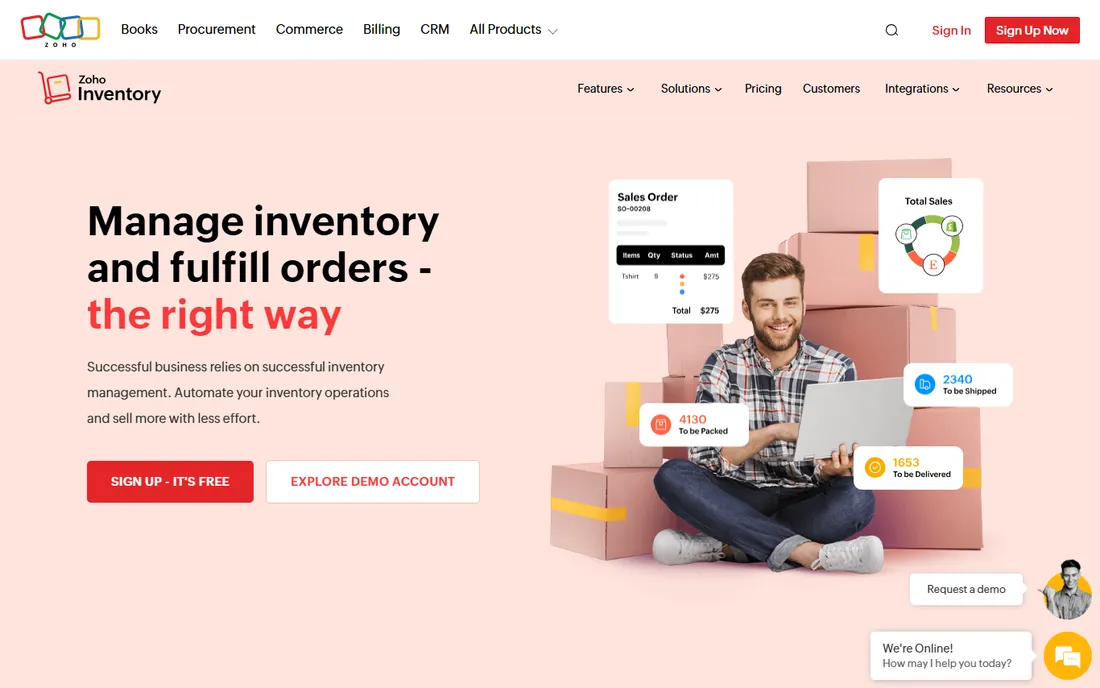
Zoho Inventory is the best starting point for small sellers: the free plan handles 50 orders a month with real stock sync, and paid plans from $29 per month stay affordable well into the hundreds of orders. Bundling, kitting, and multi-warehouse basics are included, and sellers already using Zoho Books or Zoho CRM get a unified stack.
The ceilings are real: order allowances per tier mean growing sellers upgrade regularly, and the automation depth does not match Cin7 or Linnworks. But as a first order management system, Zoho Inventory hits the sweet spot of free-to-start with a graceful paid path. Most sellers should start here and only move up when the order caps or missing features actually bite.
What we like- Genuinely useful free plan (50 orders a month)
- Cheapest credible paid tiers
- Integrates with the Zoho ecosystem
Watch out for- Order caps arrive quickly
- Advanced warehousing and automation lag specialists
- Support is Zoho-standard
Starting priceFrom $229 per month (billed annually)
Free planNo
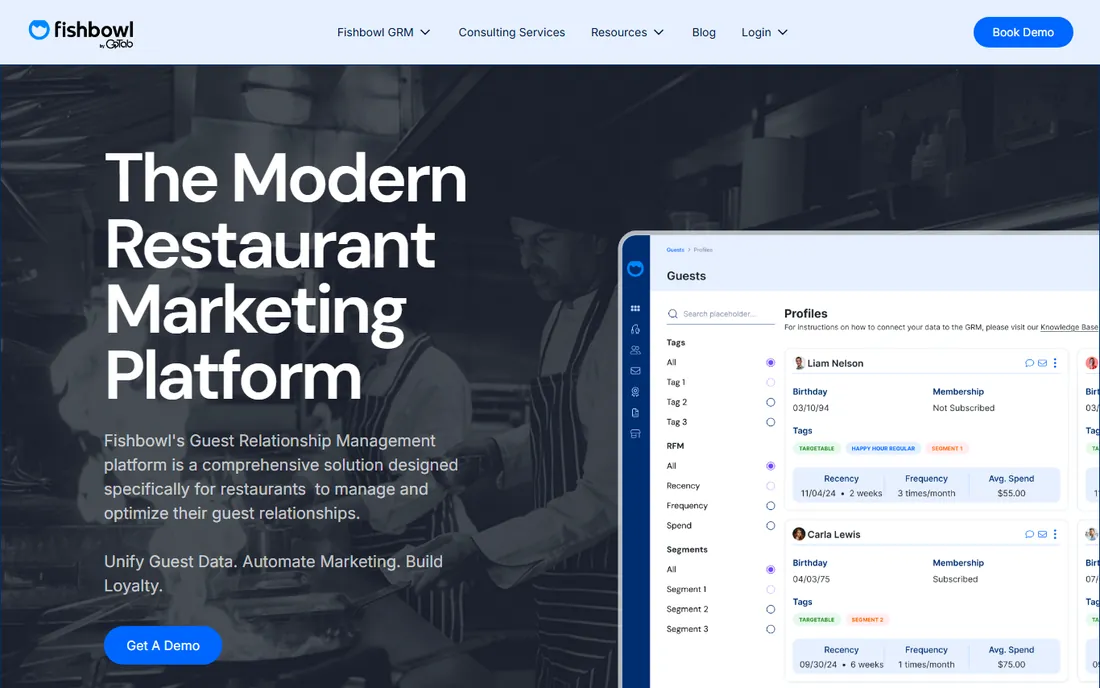
Fishbowl is the warehouse-and-manufacturing specialist: bills of materials, work orders, assembly tracking, and barcode-driven warehouse workflows that generalist tools approximate poorly. Its long-standing QuickBooks integration made it the default inventory upgrade for QuickBooks-based manufacturers, and the real-time tracking suits operations where materials move constantly.
The $229 per month entry (billed annually) prices out casual sellers, and the interface reflects its age. Pure ecommerce brands without manufacturing should look at Cin7 or Zoho instead. But if you build, assemble, or kit products and run a real warehouse, Fishbowl operational depth justifies the cost many times over.
What we like- Deep manufacturing and warehouse features (bills of materials, assemblies)
- QuickBooks integration heritage
- Real-time tracking
Watch out for- Interface feels dated
- $229 entry is high for small operations
- Implementation needs effort
Starting priceFrom $99 per month (billed annually)
Free planFree trial (14 days)
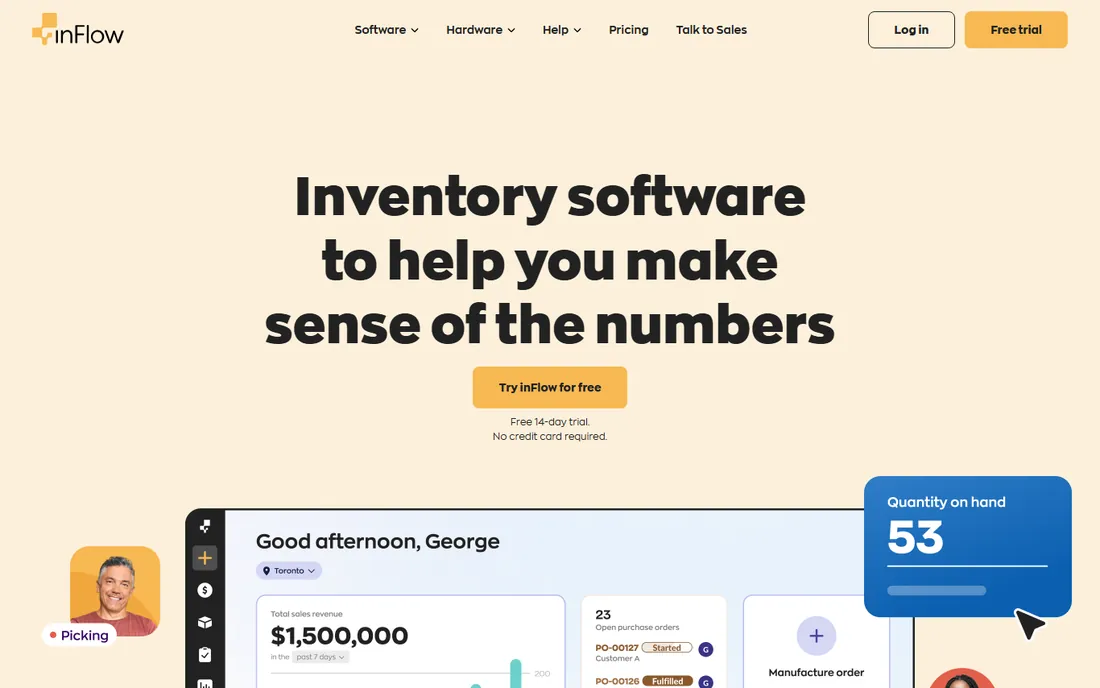
inFlow carved out the B2B wholesale niche: customer showrooms where wholesale buyers place orders, invoicing automation, and purchasing workflows that consumer-focused tools treat as afterthoughts. At $99 per month billed annually, it delivers real operational depth for less than Cin7 entry tier.
Ecommerce-first sellers will find the marketplace integrations and DTC features thinner than competitors. But for distributors, wholesalers, and B2B brands whose orders come through reps and showrooms rather than shopping carts, inFlow is purpose-built. It is the rare tool that treats wholesale as the main event rather than a feature checkbox.
What we like- B2B showrooms and wholesale workflows
- Strong purchasing management
- Affordable for its depth
Watch out for- DTC and marketplace features thinner than ecommerce-first tools
- Smaller integration library
How this shortlist was assembled
We selected platforms with meaningful adoption in 2026 across the full range from free to enterprise, based on ecommerce operations guides, review platforms, and practitioner discussion. Pricing was checked against vendor pricing pages and dated third-party comparisons; where vendors price by quote, that is stated rather than estimated.
We weighted order-volume economics, channel coverage, and operational depth (warehousing, manufacturing, B2B) over generic feature lists, since the right OMS depends on how you sell and fulfill. No hands-on testing was performed.
What to check before you buy
Start with honest volume math: current monthly orders, realistic 18-month projection, number of sales channels, warehouses, and SKUs. Price each candidate at the projected volume, not today numbers, because OMS migrations are painful and you want room to grow. Pay special attention to order allowances per tier; overage fees are where cheap plans become expensive.
Next, verify every integration you depend on natively: your ecommerce platform, marketplaces, 3PL, accounting software, and shipping carriers. "Integrates with" can mean a native two-way sync or a fragile third-party connector; ask which, and ask for reference customers using your exact stack. Then assess fulfillment reality: barcode scanning, multi-warehouse transfers, returns processing, and kitting all need to work the way your warehouse actually operates.
Finally, plan the migration: how historical orders and stock levels move over, how long you run old and new systems in parallel, and what happens during peak season. Never migrate OMS software in Q4 if you sell retail. The best time to switch is your slowest quarter, with the old system running as backup.
When you have outgrown your OMS
The signs are consistent: daily manual workarounds for things the system should automate, stock sync delays causing oversells, reporting that requires spreadsheet exports to answer basic questions, and new channels you cannot add without breaking something. Most businesses feel these at 3x to 5x the volume their current tool was bought for.
When upgrading, resist the urge to jump two tiers at once. Moving from Zoho to Cin7 is a sensible step; moving from Zoho to NetSuite usually means paying for complexity you cannot yet operate. The right next tool handles your projected volume with 50 percent headroom and matches your operational model (DTC, wholesale, manufacturing). And budget the migration properly: data cleanup, staff retraining, and parallel running typically cost as much as the first year of the new license.
Frequently asked questions
What is order management software?
Order management software centralizes orders from all sales channels, manages inventory across warehouses, and orchestrates fulfillment (picking, packing, shipping) from one system. It prevents oversells, syncs stock levels everywhere you sell, and gives one view of every order lifecycle.
How much does order management software cost?
Free options (Zoho free tier, Veeqo shipping) cover very small sellers. Small-business tools run $29 to $99 per month. Mid-market platforms like Cin7 start around $349 per month. Enterprise and quote-based platforms (Linnworks, Brightpearl, NetSuite, Extensiv) typically cost thousands per month all-in.
Do I need OMS if I only sell on Shopify?
Probably not at first; Shopify handles single-channel orders fine. You need OMS when you add channels (Amazon, Walmart, wholesale), warehouses, or volume that makes manual stock sync unreliable. The usual trigger is the first serious oversell incident.
What is the difference between OMS and inventory management software?
Inventory management tracks stock levels; order management handles the full order lifecycle (capture, routing, fulfillment, returns) across channels. Modern platforms do both, and the terms are often used interchangeably. Focus on whether the tool covers your actual workflows rather than the label.
Can OMS handle Amazon, eBay, and my website together?
Yes, that is its core job. All the multichannel tools here sync inventory and pull orders across marketplaces and ecommerce platforms. Verify your specific marketplaces are supported natively, and check how quickly stock syncs; delays cause the oversells you are trying to prevent.
How long does OMS implementation take?
Self-serve tools (Zoho, Veeqo) go live in days. Mid-market platforms (Cin7) typically take two to six weeks including data migration. Enterprise platforms (Brightpearl, NetSuite) take three to six months with consulting support. Data cleanup is usually the longest phase.
Sources we checked (5)
- https://www.cin7.com/blog/best-inventory-management-software-solutions/
- https://www.comparethecloud.net/articles/cin7-core-brightpearl-or-linnworks-for-a-growing-uk-multichannel-retailer
- https://www.softwareadvice.com/scm/order-management-system-comparison/
- https://www.selecthub.com/c/inventory-management-software/
- https://www.prediko.io/blog/omnichannel-inventory-management
Is your product missing or out of date?
We review this list regularly. Vendors can request a listing, send updated pricing or ask about featured placement.

Shihab Mia · Founder, Rankite
Shihab has spent more than a decade helping SaaS and e-commerce brands grow through search. He writes Rankite's software buying guides from pricing pages, documentation and public user reviews. More about Shihab.