How we make this list: we compare pricing pages, product documentation and public user reviews. Rankite is independent; if a vendor ever pays for a featured spot, that listing is clearly labeled Partner.
Key takeaways
- TikTok Shop and Whatnot are built for selling inside the feed, while Shopify and BigCommerce are storefronts that push products out to social channels.
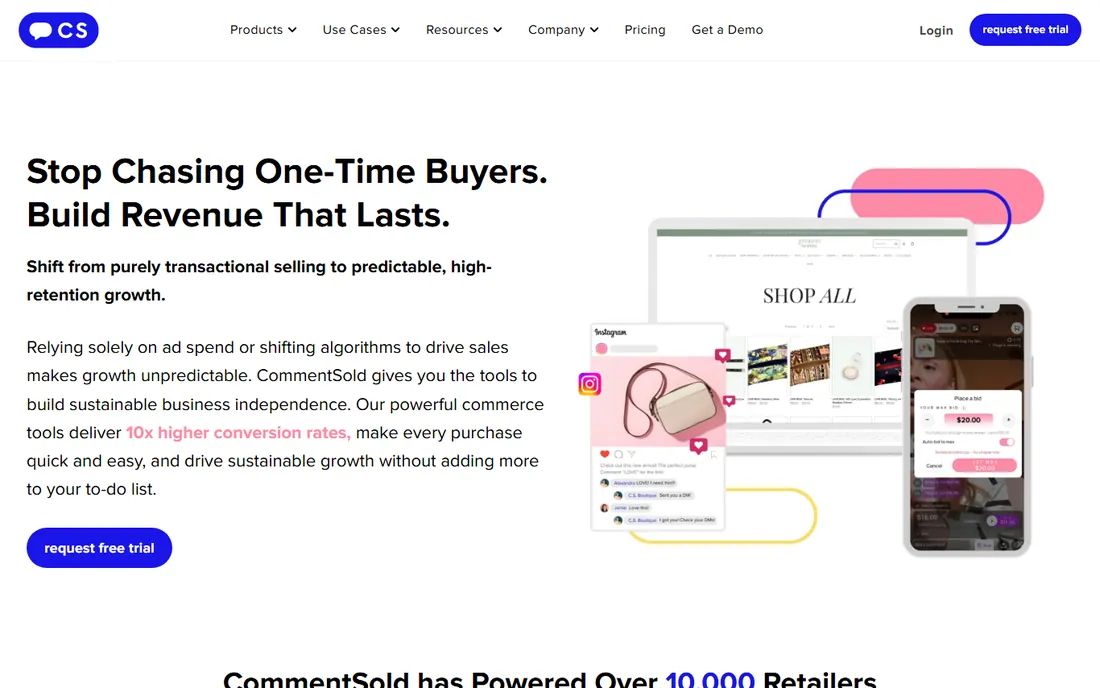
- CommentSold is the standout for boutiques that already sell through live video and want cart, invoicing and apps handled in one place.
- If you want to start free, TikTok Shop charges no setup cost and takes a referral fee per sale, and Ecwid and WooCommerce both offer usable free starting points.
- Match the platform to where your buyers already spend time. A Pinterest audience behaves nothing like a TikTok live audience.
A home decor shop in Ohio was getting steady traffic from its Instagram account, but almost none of it turned into orders. Followers tapped the link in bio, landed on the website, and left. The owner moved checkout into the feed itself with shoppable posts and a TikTok Shop, and within two months social channels produced a third of total revenue. That shift is what the best social commerce platforms are built for. They shorten the distance between seeing a product and buying it, which matters for any small business whose audience lives on social apps.
Quick comparison
| Tool | Best for | Starting price | Free plan |
|---|
 TikTok Shop TikTok Shop | sellers ready to sell through video and live streams | Free (6% referral fee on most categories) | Yes |
 Shopify Shopify | brands that want a store plus social channels in one place | $29 per month (billed annually) | Free trial (3 days) |
 CommentSold CommentSold | boutiques and retailers selling through live video | See website | Free trial |
 BigCommerce BigCommerce | established brands selling on many channels at once | $29 per month (billed annually) | Free trial (15 days) |
 WooCommerce WooCommerce | WordPress store owners who want to own the whole stack | Free (extensions vary) | Yes |
 Ecwid Ecwid | small businesses adding a store to an existing website or social page | $25 per month (billed annually) | Yes (free plan) |
 Whatnot Whatnot | sellers of collectibles, trading cards, fashion and niche goods via live auction | Free (commission per sale) | Yes |
 Pinterest Pinterest | brands whose products get discovered through search and inspiration | Free business account (ads extra) | Yes |
Is your product missing or out of date?
We review this list regularly. Vendors can request a listing, send updated pricing or ask about featured placement.
Starting priceFree (6% referral fee on most categories)
Free planYes
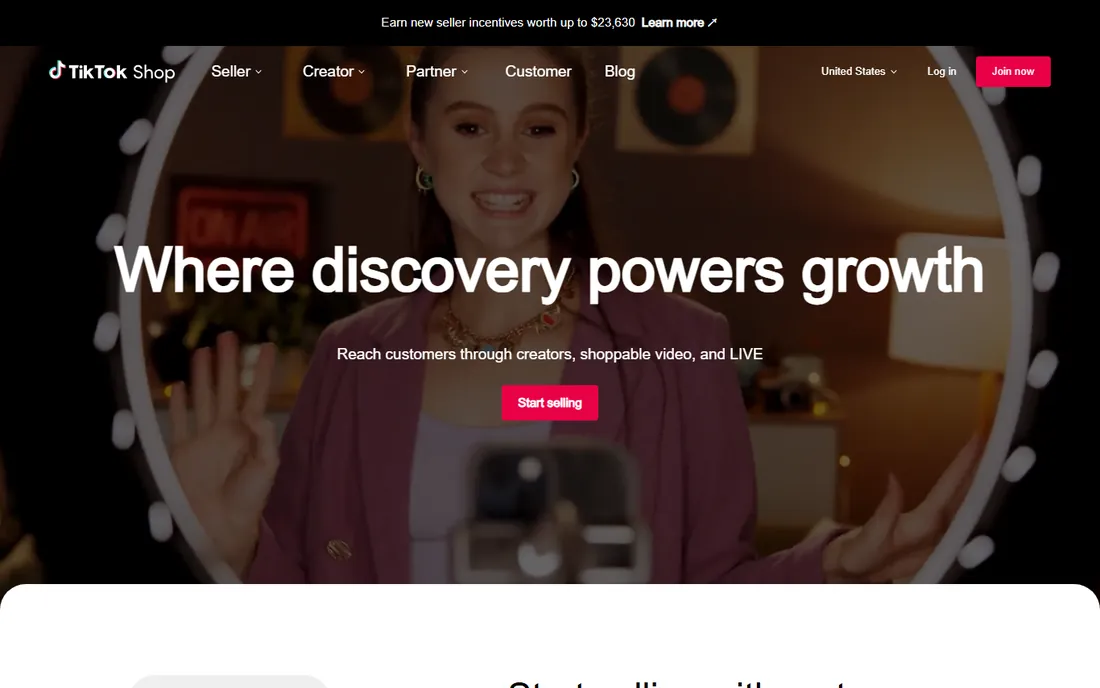
Opening a TikTok Shop costs nothing, and there is no follower minimum, which makes it one of the lowest-barrier ways to start social selling. The seller center walks you through identity verification, listing products, and linking a TikTok account so videos and live streams can carry product tags. That direct path from a viral clip to checkout is the entire point. Brands that post consistently tend to do better than brands that treat the shop as a static catalog.
The trade-off is that TikTok takes a referral fee on every sale, typically around 6% for most categories, and the platform sets strict shipping and content rules. Payouts arrive after orders complete and return windows pass. If your customers are on TikTok and your products show well on camera, this is the obvious first stop. If your audience is elsewhere, it will not help much.
What we like- No setup fees
- Built-in audience of buyers
- Creator affiliate tools that let others sell for you
Watch out for- Referral fee rises for some categories
- US-focused requirements
- Heavy dependence on one platform
#2
Shopify
Best for: brands that want a store plus social channels in one place
Visit shopify.com
Starting price$29 per month (billed annually)
Free planFree trial (3 days)

Shopify treats social channels as sales channels rather than side projects. From the admin you can connect TikTok Shop, Facebook and Instagram shopping, and Pinterest, syncing your catalog so products appear natively in feeds. Checkout on Meta surfaces can run on Shopify-powered direct checkout, so buyers never leave the app. For a small team, that single-catalog model saves a lot of manual listing work.
The cost structure needs attention. The Basic plan starts at $29 per month on annual billing, and the apps that make social selling work well often add $10 to $40 each per month. Businesses with thin margins should map the full stack before committing. Still, for stores that sell on their site and social at the same time, Shopify is the most complete option.
What we like- Direct integrations with TikTok, Instagram, Facebook and Pinterest
- Huge app store
- Reliable checkout
Watch out for- Monthly cost plus app subscriptions add up
- Transaction fees unless you use Shopify Payments
Starting price$29 per month (billed annually)
Free planFree trial (15 days)
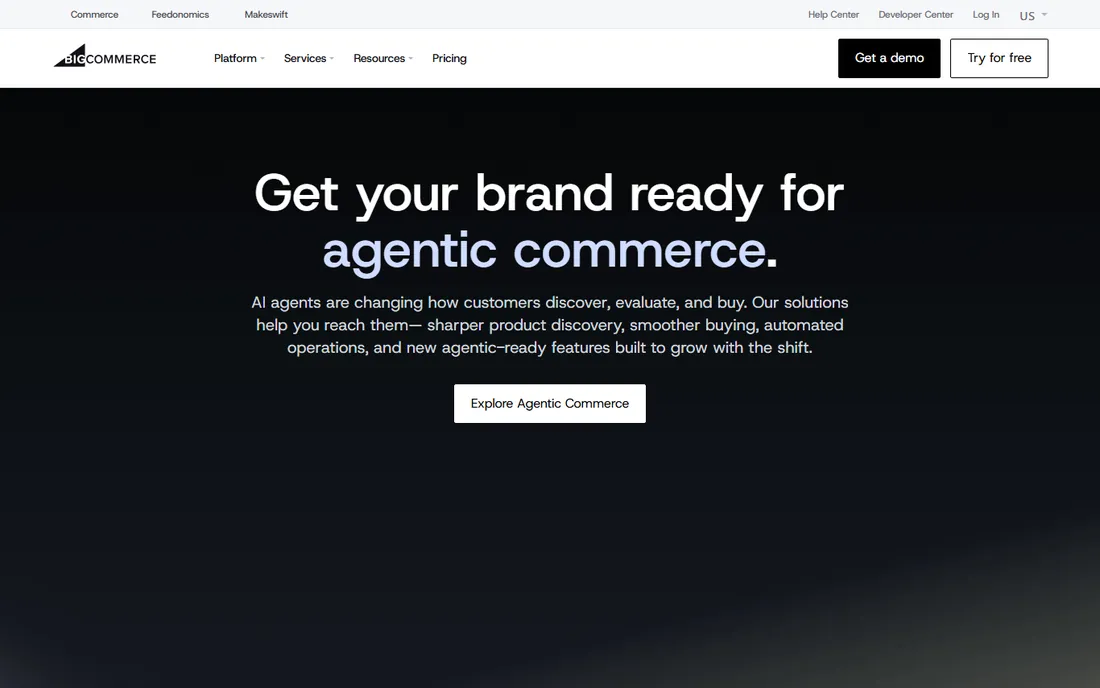
BigCommerce takes a feed-management approach to social commerce. Its acquisition of feed technology shows where the emphasis is: get the product catalog accurate once, then push it to TikTok, Meta, Pinterest, Google, and marketplaces with rules per channel. No transaction fees on any plan is a real advantage for higher-ticket products, where a percentage fee elsewhere would eat margin.
The platform asks more of the user up front than Shopify does. Theme choice is thinner, and some merchants miss the depth of the Shopify app store. But for a mid-size brand already doing $100K-plus a year and selling across several channels, the open API and catalog controls make it a strong pick.
What we like- Native multi-channel listings
- No transaction fees on any plan
- Strong B2B features
Watch out for- Fewer free themes than Shopify
- Smaller app ecosystem
Starting priceFree (extensions vary)
Free planYes
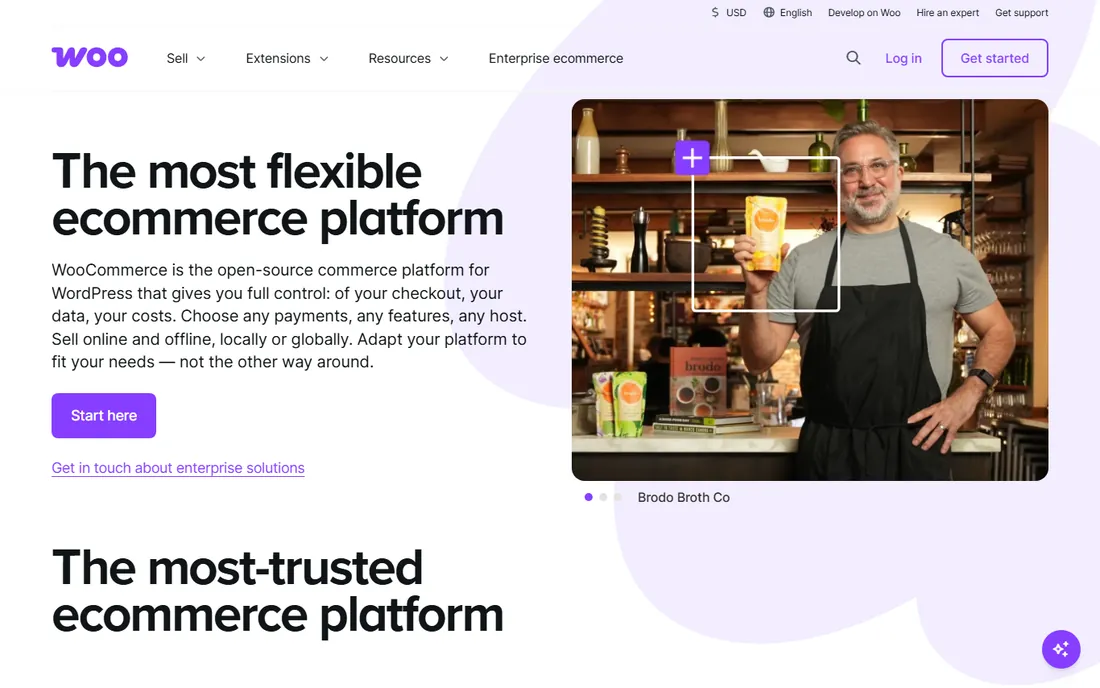
WooCommerce turns any WordPress site into a store, and its social commerce story runs through extensions and integrations. Official and third-party plugins connect catalogs to Facebook, Instagram, TikTok, and Pinterest, and there are live-selling add-ons for brands that want auction or stream features on their own domain. Because the code is open, a developer can build exactly the checkout flow a social campaign needs.
The freedom cuts both ways. Hosting, security patches, backups, and compatibility testing fall on you or your agency. A small shop on shared hosting can run cheaply, while a high-traffic store may spend more on hosting and premium extensions than a Shopify subscription would cost. WooCommerce suits businesses that already run WordPress and have someone technical available.
What we like- Core plugin is free and open source
- Enormous extension library
- No monthly platform fee
Watch out for- You manage hosting, security and updates
- Costs shift to extensions and hosting
#6
Ecwid
Best for: small businesses adding a store to an existing website or social page
Visit ecwid.com
Starting price$25 per month (billed annually)
Free planYes (free plan)
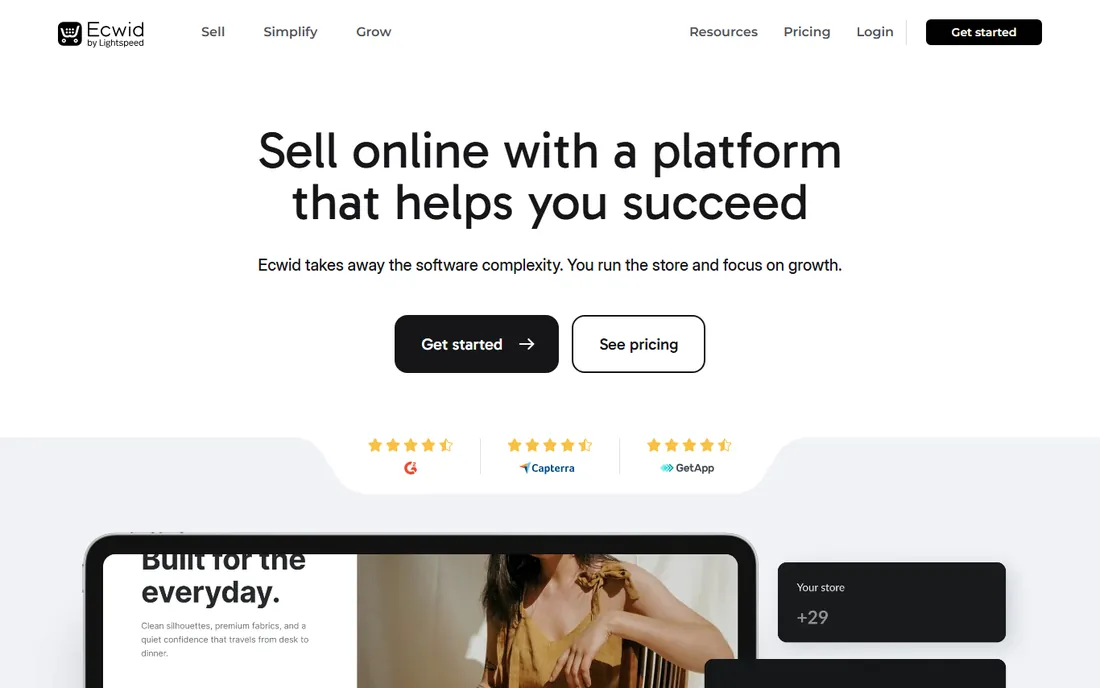
Ecwid (now part of Lightspeed) is the lightweight entry point. Instead of building a new store, you add Ecwid to your current website or sell directly through Facebook and Instagram shops, managing everything from one dashboard. The free plan covers a handful of products, which is enough to test whether social selling works for you before paying.
Paid plans add more products, discount tools, and marketplace connections like Amazon. The ceiling is lower than Shopify or BigCommerce: brands that outgrow it usually migrate. For a side business, a maker selling on Instagram, or a local shop testing the waters, that ceiling may never matter.
What we like- Embeds in any existing site
- Sells on Facebook and Instagram
- Free plan available
Watch out for- Product limits on lower tiers
- Design customization is limited compared to full platforms
#7
Whatnot
Best for: sellers of collectibles, trading cards, fashion and niche goods via live auction
Visit whatnot.com
Starting priceFree (commission per sale)
Free planYes
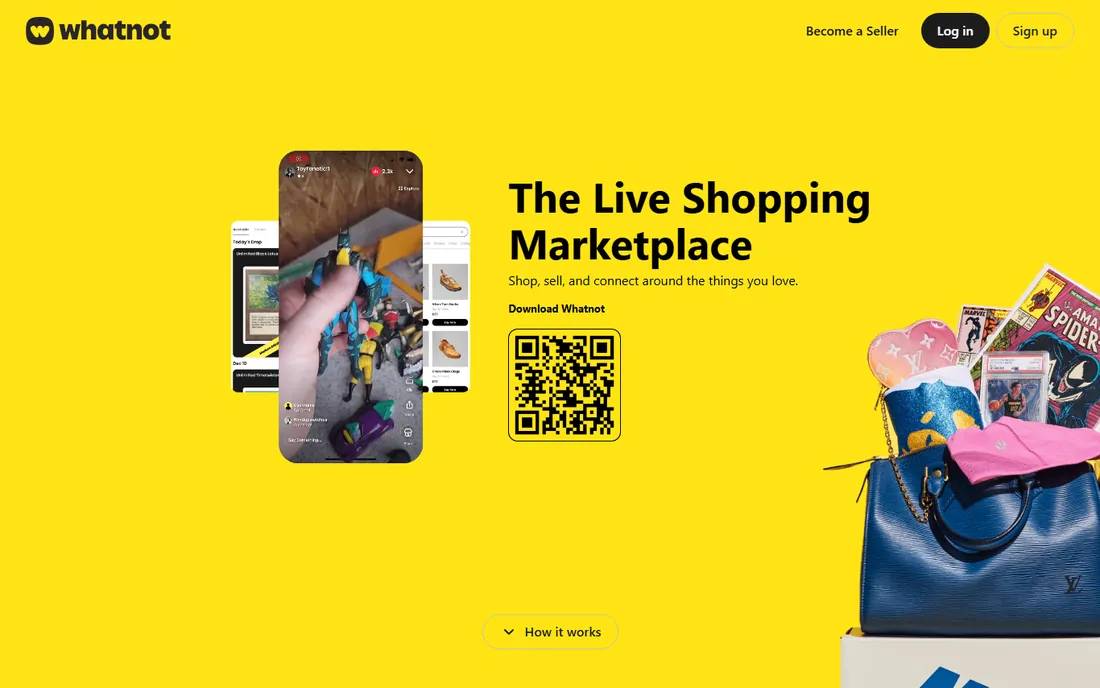
Whatnot is a marketplace first and a platform second. Sellers run live auction shows inside the app to an audience that arrived specifically to buy, which is a very different dynamic from posting shoppable content to followers. Categories like trading cards, sneakers, comics, and vintage fashion perform best. Joining is free, and the company takes a commission plus payment processing on each sale.
The catch is gatekeeping. You apply to sell, and approval depends on your category and track record. You also live entirely inside Whatnot's ecosystem: no branded storefront, no customer email list in the usual sense. For the right product types, though, the conversion rates of live auctions are hard to match anywhere else.
What we like- Huge built-in audience of live shoppers
- Auction format drives urgency
- Buyer protection included
Watch out for- Commission plus processing fees on every sale
- Seller application required
- Limited to supported categories
Starting priceFree business account (ads extra)
Free planYes
Pinterest sits at the discovery end of social commerce. Users plan purchases there, searching for ideas weeks before they buy, which makes it unusually strong for home decor, fashion, beauty, and DIY products. A free business account opens up product pins, catalogs, and analytics, and pins keep driving traffic for months rather than hours.
The limitation is that Pinterest is not where checkout happens. Shoppers click through to your site or store, so your landing pages have to convert. Treat it as a high-intent traffic channel with social features rather than a store, and pair it with a real checkout on Shopify, WooCommerce, or your own site.
What we like- Shoppers arrive with purchase intent
- Free product pins and catalogs
- Long content lifespan
Watch out for- Not a checkout platform
- Works best with consistent pinning
- Weaker for impulse categories
We started from vendor pricing pages and product documentation, then checked feature lists against what each platform actually does for social selling rather than what its marketing claims. Public reviews on G2, Capterra, and Reddit threads from sellers helped separate platforms that work day to day from ones that look good in a demo. We weighed fee structures, channel coverage, fit for small teams, and whether a platform gives you customer ownership or keeps buyers inside its own walls. We did not test any of these tools hands-on; everything here comes from published pricing, documentation, and seller feedback.
What to check before you commit
Start with where your buyers already are. A platform with brilliant live tools is useless if your audience does not watch live video, and a feed-management powerhouse is overkill if you sell in one place. List the two or three channels that already send you traffic and require any candidate to serve those well.
Then do the fee math on your actual numbers. A percentage referral fee beats a monthly subscription when volume is low, and the reverse is true once sales climb. Run both scenarios with your average order value before signing up.
Own your customer list if you can
Marketplaces like TikTok Shop and Whatnot keep the customer relationship. Your own store on Shopify, BigCommerce, or WooCommerce gives you emails, order history, and repeat-purchase marketing. Many sellers run both: the marketplace for discovery, the store for retention.
Watch the content workload
Social commerce runs on content. Live selling needs a schedule, short video needs regular posting, and Pinterest needs a steady pin cadence. Pick a platform whose content demands match what your team can actually sustain week after week.
Live selling or storefront selling: which fits you
Live selling suits products with energy: limited drops, auctions, try-ons, unboxings. It rewards personality and consistency, and tools like CommentSold and Whatnot are built around that rhythm. Storefront selling through social channels suits everything else, especially products people research before buying. Many brands end up with a hybrid, running live events on top of an always-on catalog, but pick your primary model first and let the platform choice follow.
Frequently asked questions
Do I need a website to sell on social media?
Not always. TikTok Shop and Whatnot let you sell entirely inside their apps with no website. But owning a store on a platform like Shopify or WooCommerce gives you customer data, branding control, and a fallback if a social channel changes its rules.
What are the fees on TikTok Shop?
Opening a shop is free. TikTok takes a referral fee on each sale, generally around 6% for most categories, and some categories and promotions differ. There are no monthly subscription fees.
Is CommentSold only for clothing boutiques?
It started with apparel and lifestyle retail, and that is still its strongest fit. Any business that sells through live video with a catalog of distinct items can use it, but the feature set and pricing make most sense for retailers running regular live shows.
Can I sell on Instagram without a Shopify store?
Yes. You can set up shops through Meta's commerce tools and connect various ecommerce platforms, not only Shopify. That said, Shopify's Meta integration is one of the most polished, with catalog sync and direct checkout built in.
Which platform is cheapest for a beginner?
TikTok Shop and Whatnot charge nothing upfront and only take a cut when you sell. Ecwid and WooCommerce offer free starting points with optional paid upgrades. The cheapest option depends on your sales volume and whether you value owning your customer list.
How long does it take to set up a social commerce store?
A TikTok Shop can be live within days once verification clears. Adding Ecwid to an existing site takes hours. A full Shopify or BigCommerce build with social channels connected usually takes one to three weeks for a small catalog.
Sources we checked (8)
- https://www.shopify.com
- https://www.bigcommerce.com
- https://woocommerce.com
- https://commentsold.com/
- https://www.ecwid.com
- https://seller.tiktok.com
- https://www.whatnot.com
- https://business.pinterest.com
Is your product missing or out of date?
We review this list regularly. Vendors can request a listing, send updated pricing or ask about featured placement.

Shihab Mia · Founder, Rankite
Shihab has spent more than a decade helping SaaS and e-commerce brands grow through search. He writes Rankite's software buying guides from pricing pages, documentation and public user reviews. More about Shihab.