How we make this list: we compare pricing pages, product documentation and public user reviews. Rankite is independent; if a vendor ever pays for a featured spot, that listing is clearly labeled Partner.
Key takeaways
- Already deep in iPhone, Android or Echo devices? Apple Home, Google Home and Alexa are free and the obvious starting points.
- Home Assistant (free, open source) is the most powerful platform available, but you maintain the server it runs on.
- Homey Pro ($399 one-time) is the best no-server hub: eight protocols, local control, no subscription.
- Hubitat Elevation is the privacy pick for Z-Wave and Zigbee households that want everything processed locally.
- Matter and Thread are making platforms interoperable; in 2026, your platform choice matters less than it did three years ago.
Quick comparison
| Tool | Best for | Starting price | Free plan |
|---|
 Apple Home Apple Home | iPhone and Mac households that value simplicity and privacy | Free | Yes |
 Google Home Google Home | Android households and anyone invested in Nest cameras and thermostats | Free | Yes |
 Amazon Alexa Amazon Alexa | Echo device owners and anyone wanting the widest device compatibility | Free | Yes |
 Samsung SmartThings Samsung SmartThings | Samsung device owners and easy multi-brand automation | Free | Yes |
 Home Assistant Home Assistant | Tinkerers and privacy advocates who want the most powerful free platform | Free | Yes |
 Hubitat Elevation Hubitat Elevation | Z-Wave and Zigbee households wanting local automation without a server | See website (hub hardware required) | Yes (no subscription; software is free with the hub) |
 Homey Pro Homey Pro | Households wanting a polished, powerful local hub with zero maintenance | $399 one-time (Homey Pro) | Yes (no subscription after purchase) |
 openHAB openHAB | Open-source purists and Java developers wanting a stable automation platform | Free | Yes |
Is your product missing or out of date?
We review this list regularly. Vendors can request a listing, send updated pricing or ask about featured placement.
Which smart home platform should you build on? If you have ever stood in the smart bulb aisle wondering whether the box that says "Works with Alexa" will also work with the app on your phone, you have felt the real cost of this decision. The good news: Matter and Thread have defanged most of the ecosystem wars. The platforms below are all viable in 2026; they differ in philosophy, privacy and how much tinkering they expect from you.
#1
Apple Home
Best for: iPhone and Mac households that value simplicity and privacy
Visit apple.com
Starting priceFree
Free planYes
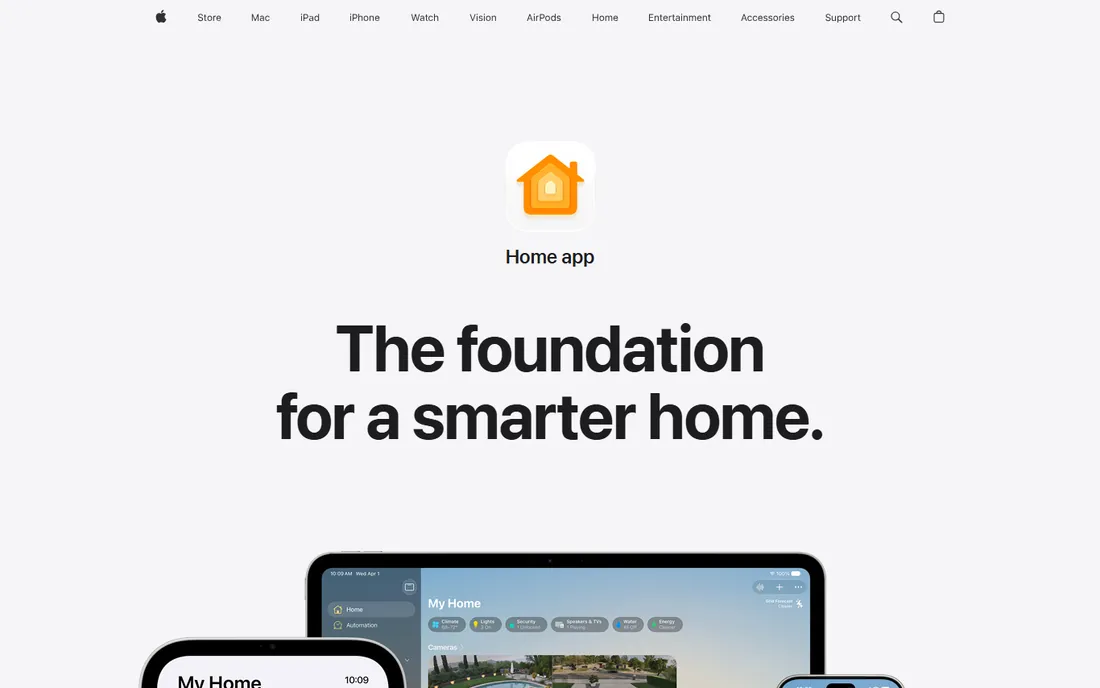
Apple Home is the platform you choose when you want the smart home to disappear. Setup is scanning a code, automations are built with plain language, and Apple processes as much as possible on your devices rather than in its cloud. For households already on iPhone, the friction is near zero: the Home app is already installed, Siri is already listening, and guests can be given limited access without new accounts.
The honest catch is choice. Fewer devices carry the HomeKit badge than work with Alexa or Google, though Matter has closed the gap substantially. You also need a home hub (Apple TV 4K or HomePod mini, around $99 to $129) for automations to run while you are away. If your household is split between iPhone and Android, look elsewhere.
What we like- Free and built into every iPhone, iPad and Mac
- Strongest privacy stance (processing on-device, no ad profiling)
- Cleanest interface of the big three
Watch out for- Smallest compatible-device catalog of the big three
- Remote access and automation need a home hub (Apple TV or HomePod)
#2
Google Home
Best for: Android households and anyone invested in Nest cameras and thermostats
Visit home.google.com
Starting priceFree
Free planYes
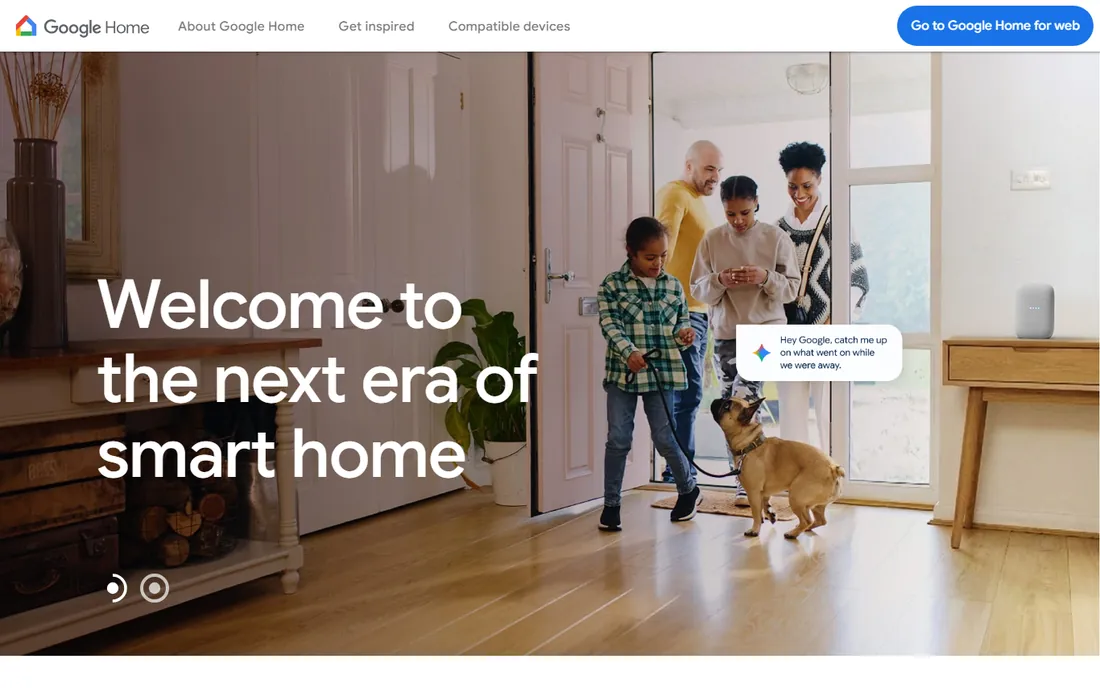
Google Home is the platform for people who talk to their house. Google Assistant still handles natural-language requests and multi-step routines better than Siri or Alexa, and if you own Nest cameras or a Nest thermostat, this is their native home. Setup is app-guided and painless, and most automations run without any hub hardware.
The honest catch is trust. Google has a graveyard of discontinued smart home products, and every Google Home owner has watched a feature they liked get "simplified" away. Privacy is the other asterisk: the business model is advertising, and the assistant is always a data collection surface. For Android households that live in Google services anyway, the convenience usually wins.
What we like- Free with the best voice assistant for questions and routines
- Deep Nest integration (cameras, doorbell, thermostat)
- Generous free tier with no hub required
Watch out for- Google's product-shuffling history makes long-term commitment nerve-wracking
- Privacy-conscious users dislike the data model
#3
Amazon Alexa
Best for: Echo device owners and anyone wanting the widest device compatibility
Visit amazon.com
Starting priceFree
Free planYes
Alexa remains the compatibility king: if a smart device exists, it probably works with Alexa. Echo speakers are cheap, the newer ones include Zigbee and Matter radios so many setups need no separate hub, and Alexa Routines handle surprisingly complex automation with a visual builder. For a household starting from zero, an Echo Dot and the free app get you running in an afternoon.
The honest catch is the business model showing through. Alexa nudges toward Amazon shopping, the app surfaces ads and offers, and voice recordings have been a recurring privacy controversy (you can delete them and opt out of human review, but you have to know to do it). If you want maximum device choice at minimum cost and can tolerate the commerce layer, Alexa delivers.
What we like- Free with the largest compatible-device ecosystem
- Echo speakers double as Zigbee and Matter hubs
- Routines are powerful and easy to build
Watch out for- Ad and shopping integrations can feel intrusive
- Privacy concerns around voice recordings and data use
#4
Samsung SmartThings
Best for: Samsung device owners and easy multi-brand automation
Visit smartthings.com
Starting priceFree
Free planYes
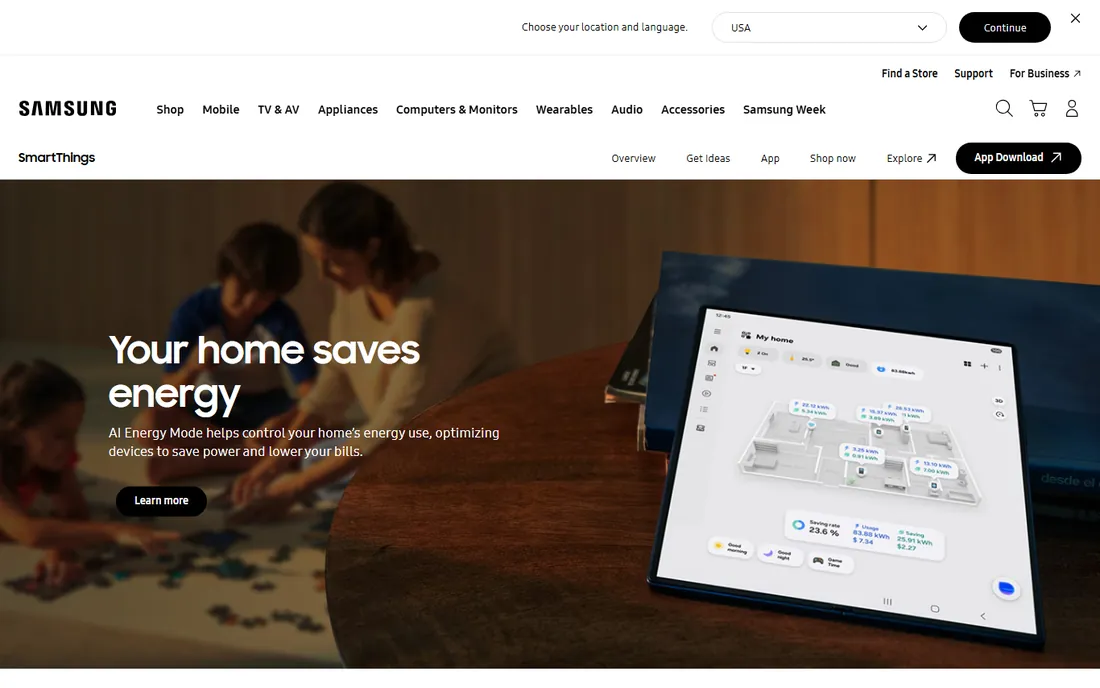
SmartThings is the quiet competent choice: a free platform that speaks Zigbee, Z-Wave and Matter, ties together Samsung TVs and appliances natively, and offers an automation builder normal humans can use. For the household with a Samsung TV, a few sensors and a smart lock, it just works, with energy monitoring as a genuinely useful bonus.
The honest catch is the ceiling. Power users eventually want the scripting depth of Home Assistant, and Samsung's move away from first-party hubs (the Aeotec partnership) confused the hardware story. It is also a cloud-tethered Samsung service. For mainstream multi-brand homes that do not want a hobby, it hits the sweet spot.
What we like- Free platform with broad Zigbee, Z-Wave (via hub) and Matter support
- Excellent Samsung appliance and TV integration
- Approachable automation builder
Watch out for- Advanced users hit ceilings that Home Assistant does not have
- Hub hardware situation has shifted to partners (Aeotec)
#5
Home Assistant
Best for: Tinkerers and privacy advocates who want the most powerful free platform
Visit home-assistant.io
Starting priceFree
Free planYes
Home Assistant is what the smart home looks like without corporate compromises: free, open source, local-first, and compatible with practically everything through thousands of community integrations. Automations can be as simple as "lights on at sunset" or as complex as presence-fused, multi-condition scripts with templating. Your data never leaves your house unless you allow it.
The honest catch is maintenance. You run the server (a Raspberry Pi, an old PC, or the $149 Home Assistant Green), you apply the updates, and when an integration breaks at 11 p.m., you fix it. The learning curve is real, though the onboarding has improved enormously. For the technically inclined, nothing else offers this much power for free; for everyone else, it is a hobby that happens to control the lights.
What we like- Free and open source with the deepest automation capabilities anywhere
- Fully local control with no cloud dependency
- Thousands of integrations maintained by a huge community
Watch out for- You are the IT department: updates, backups and debugging are your job
- Learning curve is steep for non-technical users
#6
Hubitat Elevation
Best for: Z-Wave and Zigbee households wanting local automation without a server
Visit hubitat.com
Starting priceSee website (hub hardware required)
Free planYes (no subscription; software is free with the hub)
Hubitat Elevation is the hub for people who want Home Assistant's local-control philosophy without running a server. Automations execute on the hub itself, so lights respond instantly and keep working when the internet drops. There are no subscriptions: you buy the hub, and the software, mobile app and community are included. The built-in apps cover most automation needs without coding.
The honest catch is the purchase. The hub is the product, and pricing varies by model (the C-8 generation), so check the vendor's site for the current number. The dashboards and mobile app are also utilitarian next to Apple Home or Homey. For Z-Wave and Zigbee loyalists who value privacy and reliability over polish, it is the rational pick.
What we like- All automation processed locally on the hub for speed and reliability
- No subscription fees ever
- Strong Z-Wave and Zigbee support with a helpful community
Watch out for- Hub hardware must be purchased (check hubitat.com for current model pricing)
- Interface is functional rather than beautiful
#7
Homey Pro
Best for: Households wanting a polished, powerful local hub with zero maintenance
Visit homey.app
Starting price$399 one-time (Homey Pro)
Free planYes (no subscription after purchase)
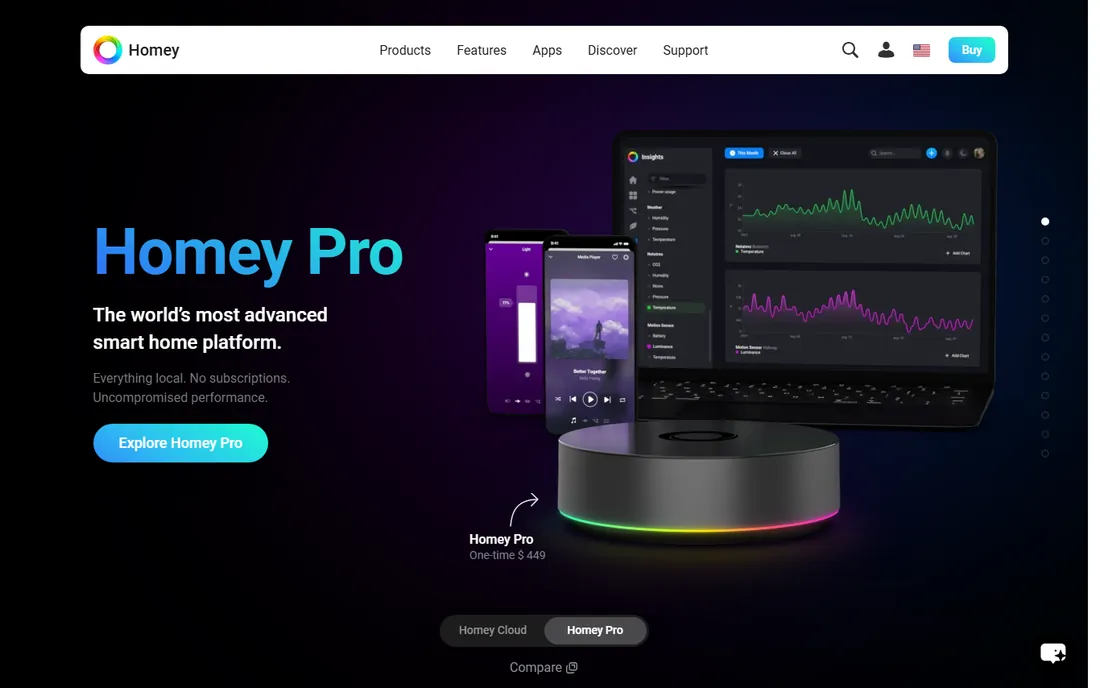
Homey Pro is the hub for people who want it all without becoming hobbyists. One $399 device speaks eight protocols, runs everything locally, and offers Advanced Flow, a visual automation builder that handles real-world complexity (multiple triggers, branching logic) without code. There is no subscription: buy it once, use it forever, with support committed into the next decade.
The honest catch is the price and a few edges. At $399 it costs more than every alternative here except a loaded Home Assistant server, Ethernet requires an adapter, and the hub's app storage caps how many integrations you can install. For a busy household that wants reliability without a server closet, though, it is the most complete single purchase in smart home.
What we like- $399 price published on homey.app
- Eight wireless protocols in one hub (Zigbee, Z-Wave, Matter, Thread, Bluetooth, Wi-Fi, 433 MHz, infrared)
- Everything local with Advanced Flow visual automation
Watch out for- $399 is the highest entry price here
- Ethernet needs a $29 adapter
- App storage limits how many apps you can install
#8
openHAB
Best for: Open-source purists and Java developers wanting a stable automation platform
Visit openhab.org
Starting priceFree
Free planYes
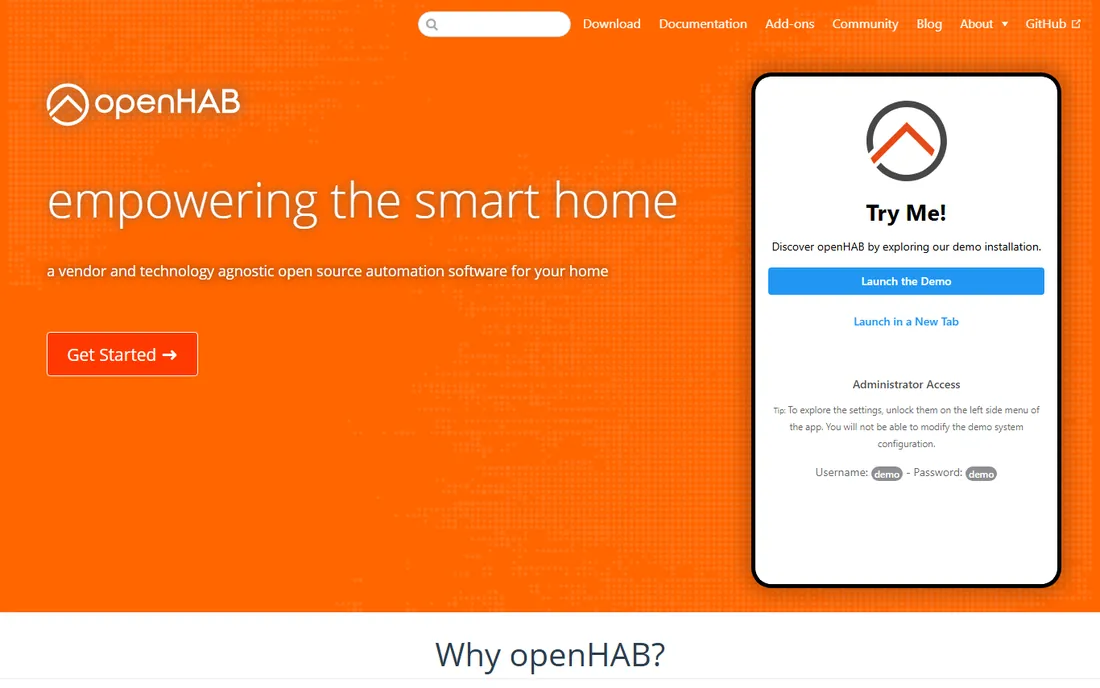
openHAB is the veteran open-source automation platform: free, Java-based, and running reliably in homes for over a decade. Its binding library covers an enormous range of devices, including obscure and legacy hardware the bigger platforms ignore, and the rules engine handles complex automation logic well. Like Home Assistant, it is fully local.
The honest catch is momentum. Home Assistant's community is larger and faster-moving, which means more integrations, more tutorials and quicker fixes. openHAB suits users who prefer its architecture or already run it; new open-source adopters generally find Home Assistant's ecosystem easier to enter. Both are free, so the choice costs nothing to revisit.
What we like- Free and open source with a long, stable track record
- Huge binding library covering obscure devices
- Strong rules engine for complex automation
Watch out for- Steeper learning curve than Home Assistant with a smaller community
- Interface modernization lags behind
What to check before you choose
Start with the phones in your house. An all-iPhone household should default to Apple Home; an all-Android household to Google Home; an Echo-filled household to Alexa. Platform loyalty matters less than household consensus: the best platform is the one everyone can use without a tutorial.
Then check your devices against Matter. In 2026, most new smart home gear speaks Matter and Thread, which work across Apple, Google, Amazon, Samsung, Homey and Home Assistant. That means your platform choice is increasingly about the app experience and automation depth, not about which light bulbs you can buy. Audit what you own, confirm Matter support, and stop worrying about lock-in.
Finally, decide how much hobby you want. Apple Home, Google Home, Alexa and SmartThings are appliances: set up and forget. Homey Pro and Hubitat are appliances with depth: set up, then grow. Home Assistant and openHAB are hobbies that reward the time you put in. Be honest about which person you are; the wrong answer here is the only real mistake.
How we chose
We started with the platforms homeowners actually evaluate: Apple Home vs Google Home vs Alexa, SmartThings, Home Assistant, Hubitat and Homey. For each we checked the vendor's own site for pricing and plan structure, then cross-checked capabilities against documentation and practitioner discussion on Reddit and smart home press. Platforms requiring discontinued hardware or with no viable purchase path were excluded. Where hub pricing was not published on the vendor's page, we wrote "See website."
Frequently asked questions
What is the best smart home platform for beginners?
Apple Home for iPhone households, Google Home for Android, Alexa if you want the widest device choice. All three are free, need no hub for basic use, and set up in an afternoon. Add a hub later only if you want automations to run while you are away.
Do I need a hub in 2026?
Often no. Matter and Thread devices can connect directly through border routers you may already own (Apple TV, HomePod, Echo, Nest Hub). You need a dedicated hub for Z-Wave devices, for fully local processing (Hubitat, Homey Pro), or for the deepest automation (Home Assistant).
Which smart home platform is best for privacy?
Home Assistant and openHAB: free, open source, fully local, no cloud account required. Among commercial options, Apple Home processes the most on-device, and Hubitat and Homey Pro keep automation local. Alexa and Google Home are the weakest on privacy by design.
Can I mix devices from different platforms?
Yes, thanks to Matter. A Matter-certified bulb works with Apple Home, Google Home, Alexa, SmartThings, Homey and Home Assistant simultaneously in many cases. Check for the Matter logo when buying new devices and the platform wars mostly disappear.
What is the cheapest way to start a smart home?
A $25 to $35 smart speaker (Echo Dot or Nest Mini) plus the free Alexa or Google Home app, then Matter-compatible bulbs and plugs as needed. Total starter cost can stay under $100. Avoid buying a hub until you know you need one.
Is Home Assistant hard to set up?
It is the hardest option here, but easier than its reputation. The guided installer on a Raspberry Pi or Home Assistant Green takes under an hour; the learning curve comes later with advanced automations. Non-technical users who want power without the hobby should look at Homey Pro instead.
Sources we checked (2)
- https://homey.app/en-us/news/introducing-homey-pro-2026/
- https://www.the-ambient.com/versus/homey-vs-aqara-which-smart-home-hub-is-right-for-you/
Is your product missing or out of date?
We review this list regularly. Vendors can request a listing, send updated pricing or ask about featured placement.

Shihab Mia · Founder, Rankite
Shihab has spent more than a decade helping SaaS and e-commerce brands grow through search. He writes Rankite's software buying guides from pricing pages, documentation and public user reviews. More about Shihab.