How we make this list: we compare pricing pages, product documentation and public user reviews. Rankite is independent; if a vendor ever pays for a featured spot, that listing is clearly labeled Partner.
Key takeaways
- Semrush Pro ($139.95 per month) is the best all-around marketing intelligence buy: SEO, ads, traffic and content data in one subscription.
- SpyFu Basic ($39 per month) is the cheapest serious competitor-ad spy: unlimited searches on a budget.
- Adbeat Standard ($249 per month) owns display and native ad creative intelligence, with a limited free plan to test coverage first.
- Similarweb's Starter is widely reported around $199 per month, but the vendor publishes no prices, so every number above Starter needs a sales call.
- Crayon, Klue and Kompyte are battlecard platforms for sales teams: powerful, but expect custom quotes and annual contracts.
Quick comparison
| Tool | Best for | Starting price | Free plan |
|---|
 Semrush Semrush | Marketing teams that want competitor SEO, PPC and traffic data in one subscription | $139.95/month (Pro plan) | Yes (limited free account) |
 Similarweb Similarweb | Marketers and analysts benchmarking competitor website traffic and audience behavior | See website (Starter widely reported around $199/month) | Yes (limited free tier) |
 Crayon Crayon | Enterprises that want automated competitor tracking feeding sales battlecards | See website (custom quote) | No |
 Klue Klue | Product marketers building a competitive enablement program for sales | See website (custom quote) | No |
 SpyFu SpyFu | Small businesses and freelancers doing competitor keyword and ad research on a budget | $39/month (Basic plan) | No |
 Adbeat Adbeat | Media buyers and agencies spying on competitor display and native ad creatives | $249/month (Standard plan) | Yes (limited free plan) |
 BuiltWith BuiltWith | Sales and marketing teams building prospect lists from website technology data | $295/month (Basic plan) | No |
 Kompyte Kompyte | Mid-market teams wanting automated competitor alerts without enterprise overhead | See website (custom quote) | No |
Is your product missing or out of date?
We review this list regularly. Vendors can request a listing, send updated pricing or ask about featured placement.
The best marketing intelligence software
Most marketing intelligence purchases fail the same way: a team buys a $15,000 annual platform, logs in twice, and goes back to guessing. The fix is to match the tool to the question you actually ask every week. If that question is "what are competitors bidding on," you need SpyFu, not an enterprise battlecard platform. These eight tools cover the real buying options, from $39-a-month ad spies to the custom-quoted platforms that serve entire sales orgs.
#1
Semrush
Best for: Marketing teams that want competitor SEO, PPC and traffic data in one subscription
Visit semrush.com
Starting price$139.95/month (Pro plan)
Free planYes (limited free account)
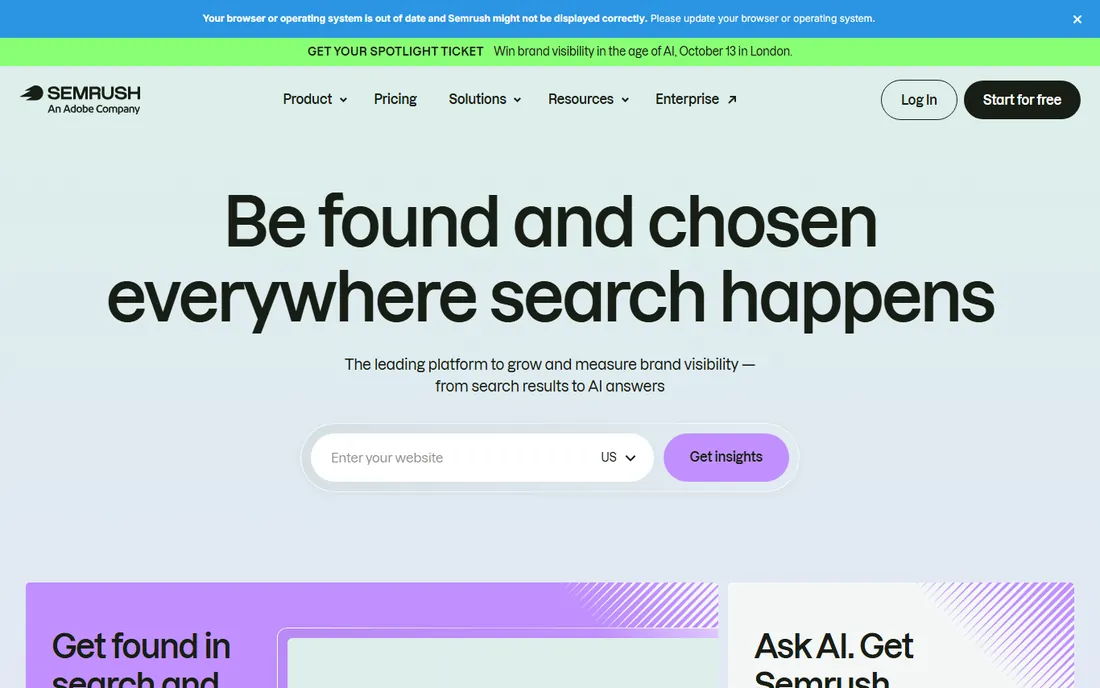
Semrush is the default marketing intelligence purchase for a reason: one Pro subscription answers the questions that otherwise require three tools. Traffic Analytics estimates competitor visits and sources, Advertising Research shows their ad copies and budgets, and Keyword Gap finds the terms they rank for that you do not. At $139.95 per month with a limited free account to test, it is the cheapest way to get credible competitor data across channels.
The honest catch is precision. Semrush models traffic from panels and crawls, so numbers for smaller sites can swing; use it for direction and share, not for exact visitor counts. Heavy users also hit Pro's project limits fast. If your whole job is competitor research, pair it with a specialist like Adbeat or Similarweb rather than expecting one tool to do everything.
What we like- Broadest data set per dollar: keyword gaps, ad copies, traffic analytics and backlink gaps in one login
- Published transparent pricing with monthly billing
- Large integration ecosystem including Google Analytics and Search Console
Watch out for- Traffic estimates are modeled, not measured, so treat small-site numbers as directional
- Pro project and keyword limits push active teams toward Guru quickly
#2
Similarweb
Best for: Marketers and analysts benchmarking competitor website traffic and audience behavior
Visit similarweb.com
Starting priceSee website (Starter widely reported around $199/month)
Free planYes (limited free tier)
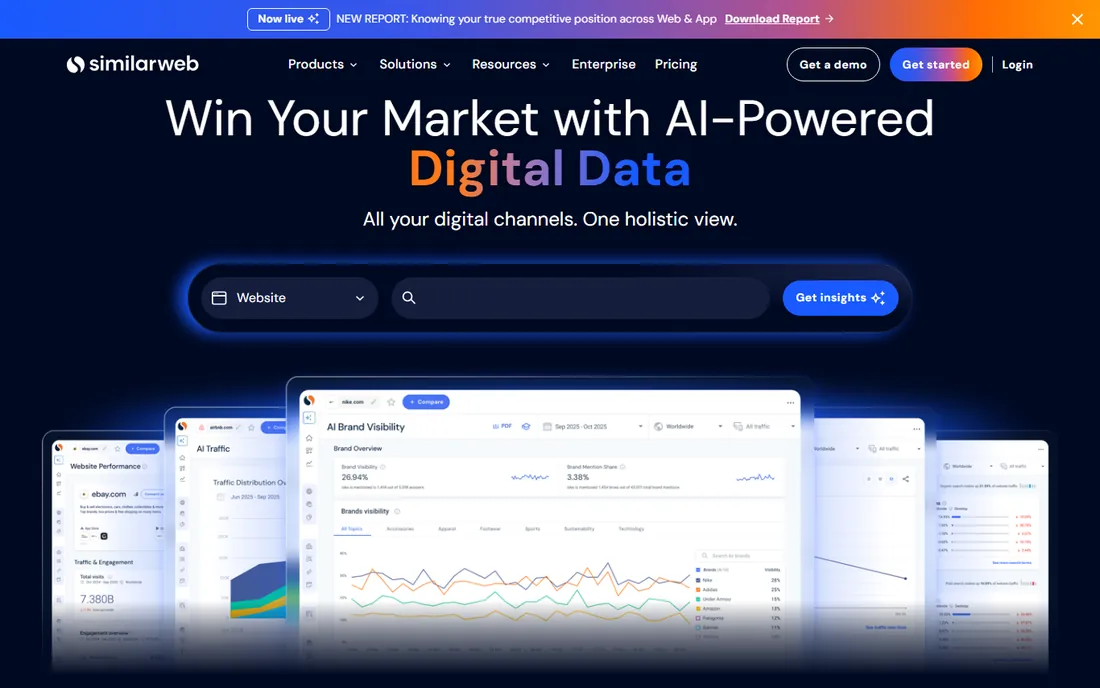
Similarweb is what analysts mean when they say "competitive traffic data." Its panel-based estimates cover traffic sources, audience geography, engagement and app rankings at a depth no SEO tool matches. The free tier gives real numbers for popular sites, which makes it useful even before you pay. For agencies and enterprises doing market sizing, it is the reference dataset.
The honest catch is the price curve. The Starter tier is the only self-serve option; everything above it (Team, Business, Enterprise) is custom-quoted and runs into five and six figures annually, with add-on modules for AI traffic and market research sold separately. Small businesses should start with the free tier and Semrush, and only talk to Similarweb sales when the business case is concrete.
What we like- Deepest website traffic and audience dataset in the category
- Genuinely usable free tier for quick checks on major sites
- Industry and app intelligence modules for market sizing
Watch out for- No published pricing beyond the self-serve tier, so costs escalate through sales calls
- Upper tiers run $14,000-plus per year, which prices out small teams
#3
Crayon
Best for: Enterprises that want automated competitor tracking feeding sales battlecards
Visit crayon.co
Starting priceSee website (custom quote)
Free planNo
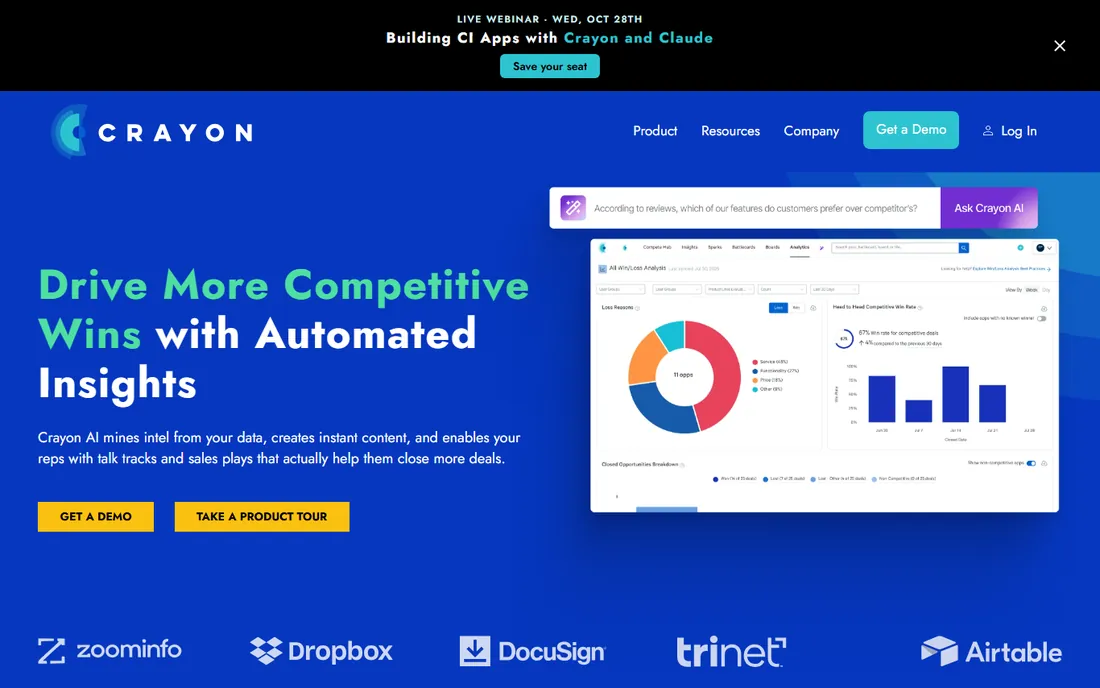
Crayon solves a different problem from the traffic tools: it watches competitors for you. Its crawlers track website changes, pricing updates, review shifts and messaging pivots, then analysts curate the noise into battlecards that land in your CRM. For product marketing teams supporting a sales org, that automation replaces hours of manual monitoring every week.
The honest catch is the commercial model. There is no self-serve tier and no published price; you talk to sales and sign an annual contract. If your team is five marketers doing their own research, Crayon is the wrong shape. If you have fifty sellers who need to answer "how do we beat competitor X" on calls, it earns its keep.
What we like- Automated capture of competitor website, pricing and messaging changes with human-curated insight
- Battlecards delivered inside Salesforce and Slack where sellers work
- Strong coverage of mid-market and enterprise software markets
Watch out for- Custom pricing means a sales process and annual contract
- Overkill and overpriced for teams that just need ad or keyword data
#4
Klue
Best for: Product marketers building a competitive enablement program for sales
Visit klue.com
Starting priceSee website (custom quote)
Free planNo

Klue is Crayon's closest rival and the choice of product marketers who think in programs, not dashboards. The platform combines automated competitor monitoring with a structured workflow for building, distributing and measuring battlecards, tying competitive content to CRM stages and win rates. Its enablement methodology is a real differentiator: Klue teaches you how to run the program, not just how to use the software.
The honest catch is the same as Crayon's: custom quotes, annual contracts, and a product whose ROI lives or dies on seller adoption. Buying Klue without a plan to drive usage is buying an expensive library nobody opens. It fits companies with a dedicated product marketer and a sales team big enough to need systematic enablement.
What we like- Purpose-built battlecard workflow with win/loss and CRM integration
- Curated intel from analyst-curated sources plus your own field input
- Strong adoption playbooks for competitive programs
Watch out for- Custom pricing with no self-serve option
- Value depends on sales team adoption, which requires internal change management
#5
SpyFu
Best for: Small businesses and freelancers doing competitor keyword and ad research on a budget
Visit spyfu.com
Starting price$39/month (Basic plan)
Free planNo
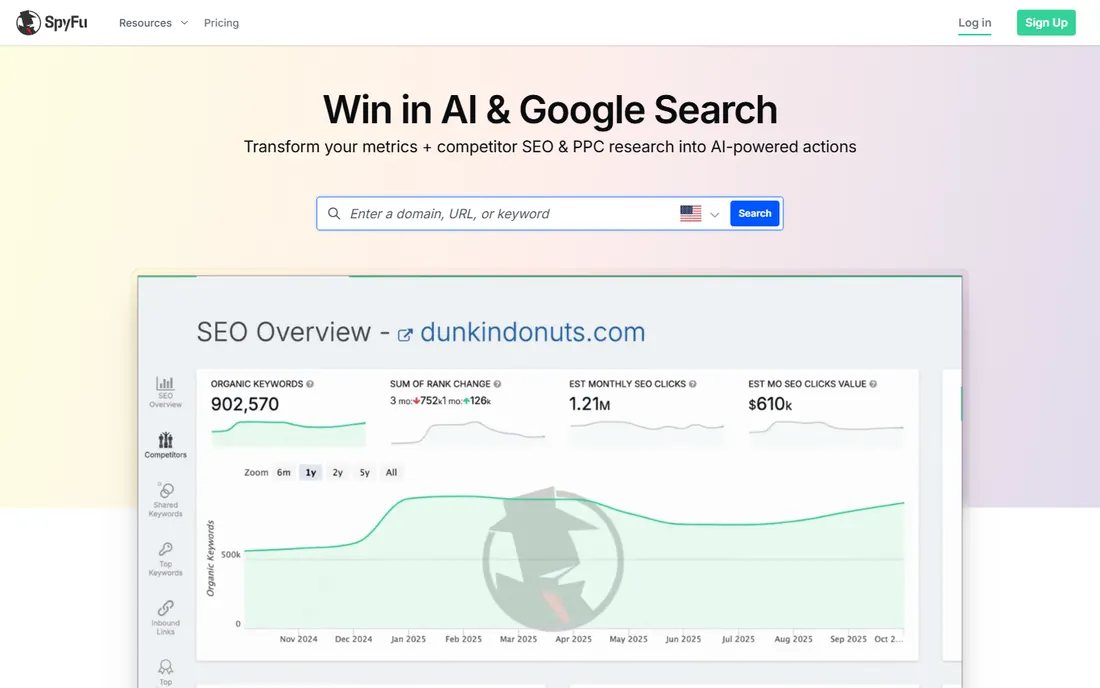
SpyFu is the budget pick that refuses to die, because $39 per month buys unlimited competitor keyword and ad history searches with data stretching back over a decade. For a freelancer auditing a client's competitors or a small business checking who bids on their keywords, it answers the core questions without the core-enterprise price. The Kombat feature (keyword overlap between domains) is genuinely useful for quick gap analysis.
The honest catch is scope. SpyFu covers Google Ads and organic keywords well and little else: no traffic estimates, no display creative, no audience data. It is a specialist, not a platform. At $39 per month it does not need to be more, but buyers expecting Semrush breadth will be disappointed.
What we like- Lowest-priced serious competitor research tool with unlimited searches on paid plans
- Deep historical AdWords and SEO data going back years
- Simple interface with no training required
Watch out for- Data depth and freshness trail Semrush and Similarweb
- No traffic estimation or display ad creative coverage
#6
Adbeat
Best for: Media buyers and agencies spying on competitor display and native ad creatives
Visit adbeat.com
Starting price$249/month (Standard plan)
Free planYes (limited free plan)
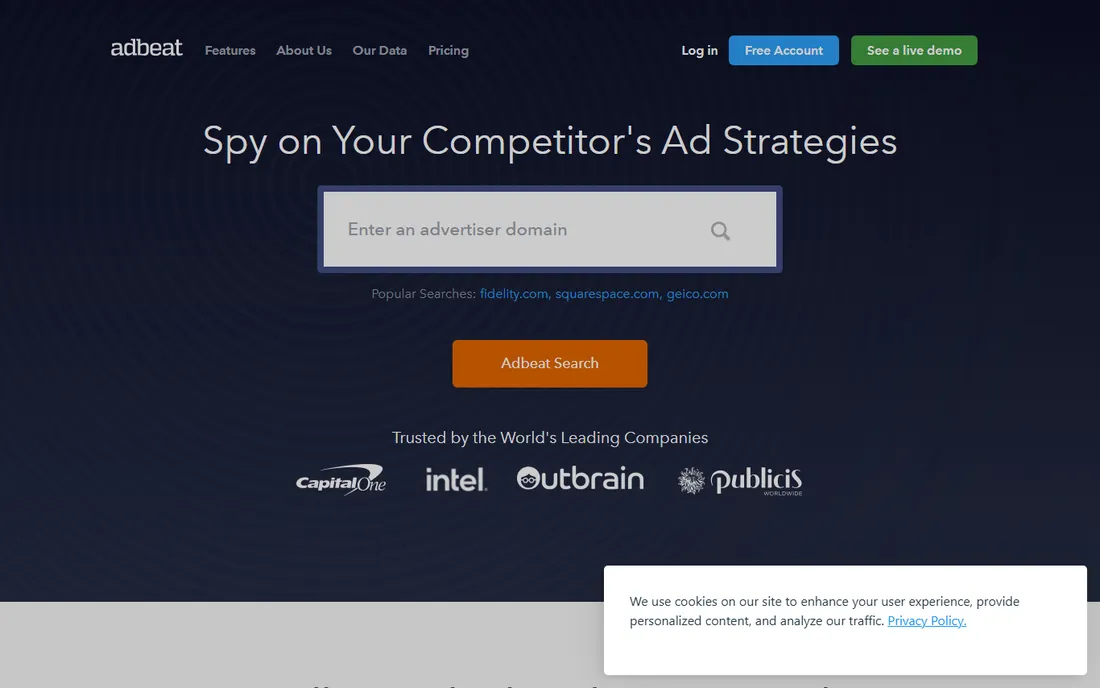
Adbeat is the tool media buyers open when they need to see what competitors are actually running: the creatives, the landing pages, the publishers, the networks. Standard at $249 per month covers display and native ads across 30-plus countries with 90 days of history; Advanced at $399 adds a year of data and competitor alerts. The limited free plan is a real advantage: you can confirm Adbeat tracks your competitors before spending anything.
The honest catch is the price-to-use-case fit. If your competitors live on Google Search, SpyFu at $39 does the job. Adbeat earns its $249 when display and native are the battleground: affiliate-heavy verticals, DTC brands and anyone buying programmatic. Agencies should also note the data exports cleanly to client reports.
What we like- Best display, native and programmatic creative coverage in the category
- Shows actual ad creatives, landing pages and publisher placements
- Free tier lets you verify coverage before paying
Watch out for- $249 per month is steep if you only run search ads
- Interface feels dated and takes time to learn
#7
BuiltWith
Best for: Sales and marketing teams building prospect lists from website technology data
Visit builtwith.com
Starting price$295/month (Basic plan)
Free planNo
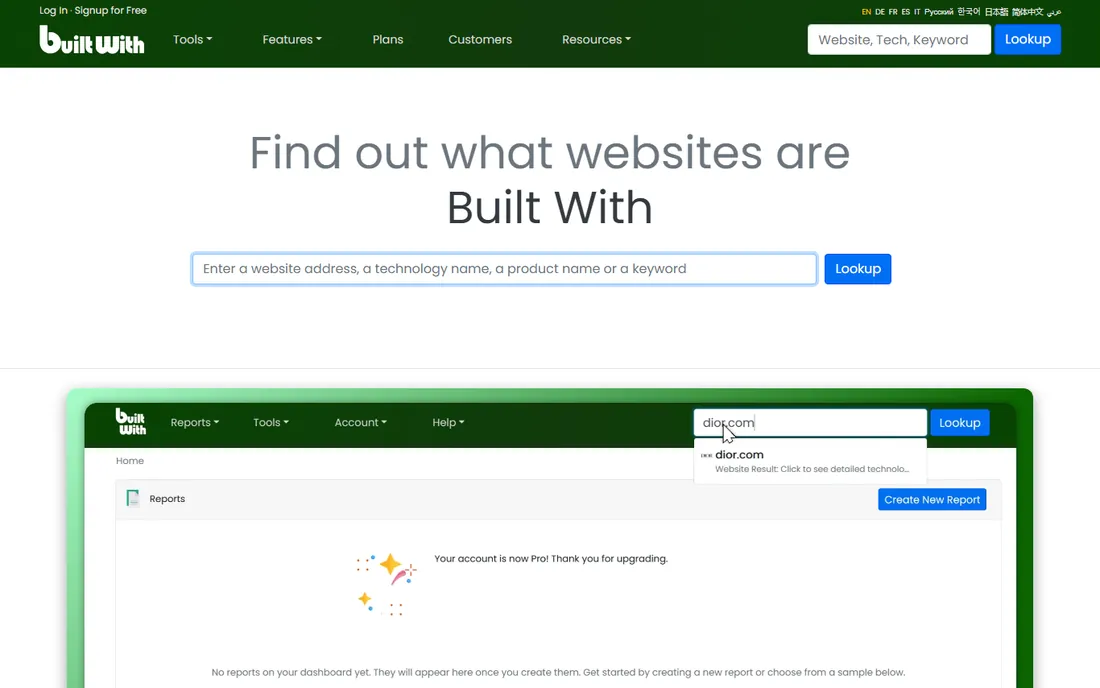
BuiltWith answers "which companies use this technology," which makes it a prospecting tool disguised as an intelligence tool. Basic at $295 per month builds lists from two technologies with 2,000 upload credits; Pro at $495 includes unlimited technologies. The vendor's own knowledge base publishes these prices plainly, a rarity in this category. Eighteen years of historical data also makes it the best source for technology adoption trends.
The honest catch is the two-technology cap on Basic, which makes the entry plan a teaser for most prospecting workflows, and the absence of contact data: you get the companies, not the people. Pair it with a contact database or accept the extra step. For technographic market sizing and "who uses our competitor's stack" questions, nothing else matches its history.
What we like- Largest technology profile database, tracking over 100,000 technologies across hundreds of millions of domains
- Historical trend data shows technology adoption over time
- Detailed per-site lookups available on the $144-per-year Advanced plan
Watch out for- Basic plan covers only two technologies, so real prospecting starts at Pro ($495 per month)
- No free trial, and list building needs contact data from elsewhere
#8
Kompyte
Best for: Mid-market teams wanting automated competitor alerts without enterprise overhead
Visit kompyte.com
Starting priceSee website (custom quote)
Free planNo
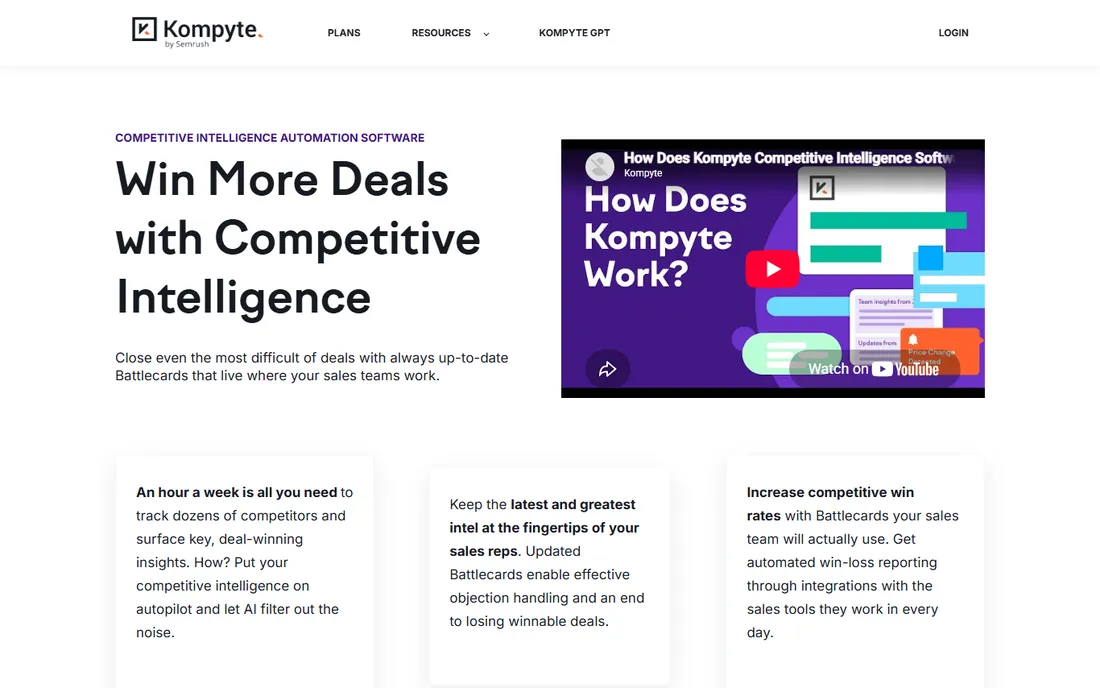
Kompyte sits between the self-serve spies and the enterprise battlecard platforms: automated competitor monitoring across traffic, keywords, ads and social, delivered as alerts and benchmark dashboards, without the full enablement apparatus of Crayon or Klue. For mid-market marketing teams that want "tell me when competitors move" without hiring a product marketer to run the program, that middle ground fits.
The honest catch is opacity. Pricing is custom-quoted, the public review base is thinner than for Semrush or Crayon, and the feature set overlaps heavily with both cheaper and more expensive options. Shortlist it against Crayon if you need battlecards, or against Semrush if you need data; make it win on the specific workflow, not the pitch.
What we like- Automated tracking of competitor web traffic, ads, keywords and social with digest alerts
- Lighter implementation than Crayon or Klue
- Side-by-side competitor benchmarking dashboards
Watch out for- Custom pricing with no published tiers
- Smaller analyst and integration ecosystem than the category leaders
What to look for before you buy
Start with the question, not the tool. "What keywords do competitors bid on" is a $39 SpyFu question. "What does their display creative look like" is a $249 Adbeat question. "How much traffic do they get and where from" is a Similarweb question. "What changed on their pricing page last Tuesday" is a Crayon or Klue question. Most buyers overbuy because they shop by feature list instead of by the three questions they will ask every week.
Then check data freshness and coverage for your market. Traffic estimators are weakest on small sites and non-US markets; ad spies are weakest outside their covered networks and countries. Use every free tier and trial to look up your actual competitors before paying: if the tool has no data on the five companies you care about, its feature list is irrelevant.
Finally, model the total cost. Similarweb, Crayon, Klue and Kompyte all escalate through sales-led tiers, and the quote you get in month one is rarely the price in month thirteen. Get renewal terms in writing, ask what the add-on modules cost (Similarweb sells several separately), and confirm how many seats are included before you compare per-month numbers.
Self-serve vs sales-led: picking your buying model
This category splits cleanly in two. Semrush, SpyFu, Adbeat and BuiltWith publish prices and let you buy with a credit card today. Similarweb (above Starter), Crayon, Klue and Kompyte sell through demos, custom quotes and annual contracts. Neither model is better in the abstract; they serve different buyers.
Self-serve wins when one marketer needs answers this week. You can expense $39 to $295 per month, test for a quarter, and cancel if the data does not help. Sales-led wins when the intelligence has to reach a whole sales team reliably: battlecards in the CRM, curated alerts, adoption support. That delivery layer is what the custom quote pays for.
The mistake is buying sales-led software for a self-serve problem. A solo marketer does not need an annual Crayon contract; a 50-person sales org cannot run on five SpyFu logins. Match the buying model to the number of people who must act on the intelligence, and the right tier usually picks itself.
How we chose
We started with the searches buyers use: marketing intelligence software, competitive intelligence tools, ad spy tools and competitor analysis software. For each candidate we checked the vendor's own pricing page or knowledge base for prices and plan limits, then cross-checked capabilities against documentation and practitioner reviews on G2, Capterra and Reddit. Where the vendor publishes no price, we wrote "See website" rather than repeating reviewer estimates as fact. Enterprise-only platforms without transparent evaluation paths were excluded.
Frequently asked questions
What is marketing intelligence software?
Software that collects and organizes data about competitors' marketing: their ad creatives and spend, keyword rankings, website traffic, pricing changes and messaging. Teams use it to benchmark performance, find gaps and brief sales. It ranges from $39-per-month ad spies to enterprise battlecard platforms.
Which marketing intelligence tool is best for small businesses?
Semrush Pro at $139.95 per month is the best all-rounder: SEO, PPC and traffic data in one subscription. On a tight budget, SpyFu at $39 per month covers competitor keywords and ads. Both publish prices and can be bought self-serve today.
How is marketing intelligence different from market intelligence?
Marketing intelligence tracks competitors' marketing activity (ads, keywords, traffic, messaging). Market intelligence is broader: industry trends, market sizing and customer research. The tools here do the first; firms like Gartner or IDC do the second.
Is Similarweb worth the price?
For enterprises doing traffic benchmarking and market sizing, yes: its dataset is the category reference. For small teams, the value is harder to justify once you pass the Starter tier into custom-quoted plans at $14,000-plus per year. Start with the free tier and confirm it has data on your actual competitors first.
Can I get competitor ad data for free?
Partially. Adbeat's limited free plan shows some display and native data, SpyFu and Semrush offer limited free lookups, and Similarweb's free tier covers traffic for major sites. Full creative libraries, historical data and exports all sit behind paid plans.
Do I need a battlecard platform like Crayon or Klue?
Only if you have a sales team that needs systematic competitive enablement. Both are custom-quoted annual contracts built for product marketers supporting sellers. If you are a marketer doing your own research, self-serve tools answer the same questions for a tenth of the cost.
Sources we checked (1)
- https://kb.builtwith.com/general-questions/plans-and-pricing-explained/
Is your product missing or out of date?
We review this list regularly. Vendors can request a listing, send updated pricing or ask about featured placement.

Shihab Mia · Founder, Rankite
Shihab has spent more than a decade helping SaaS and e-commerce brands grow through search. He writes Rankite's software buying guides from pricing pages, documentation and public user reviews. More about Shihab.