How we make this list: we compare pricing pages, product documentation and public user reviews. Rankite is independent; if a vendor ever pays for a featured spot, that listing is clearly labeled Partner.
Key takeaways
- On a tight budget, start free: Zoho Inventory has a free forever plan (50 orders a month) and Veeqo's shipping tools cost nothing, with inventory management from $19 a month.
- Multichannel brands outgrowing spreadsheets usually land on Cin7 (from $349 a month) for warehouse depth or Katana for manufacturing, both with direct Shopify sync.
- If you run your own warehouse, SKULabs (from $299 a month) and ShipHero (custom quote) manage the pick, pack and ship workflow, not just stock counts.
- Planning is a separate job from tracking: Fabrikatör (from $79 a month billed annually) forecasts demand and builds purchase orders for Shopify stores.
- Finale Inventory (now Descartes Finale) starts at $499 a month, so it only makes sense once order volume justifies a barcode-driven warehouse operation.
Quick comparison
| Tool | Best for | Starting price | Free plan |
|---|
 Cin7 Cin7 | Multichannel brands selling on Shopify, Amazon and wholesale that need warehouse-level control | From $349/month | No (trial available) |
 Zoho Inventory Zoho Inventory | Small stores that want real inventory software at the lowest possible cost | $29/month billed annually (Standard plan) | Yes (free forever: 50 orders a month, 1 user, 1 location) |
 Veeqo Veeqo | Sellers on Amazon and other marketplaces who also run Shopify | Inventory management from $19/month (shipping tools free) | Yes (shipping software free; inventory management is paid) |
 Katana Katana | Brands that manufacture or assemble their own products | See website (custom-quoted Advantage plans) | No (free exploration tier) |
 inFlow inFlow | Wholesalers, distributors and B2B sellers with structured purchasing | $129/month billed annually (Entrepreneur plan) | No (14-day free trial) |
 Fabrikatör Fabrikatör | Shopify brands that keep running out of stock or over-ordering | From $79/month billed annually (Seed plan) | No (14-day free trial) |
 Finale Inventory Finale Inventory | High-volume brands fulfilling in-house from their own warehouse | From $499/month (Essentials plan) | No (demo-based sales process) |
 SKULabs SKULabs | Ecommerce brands running their own pick, pack and ship operation | $299/month (Starter plan) | No (30-day money-back guarantee) |
 ShipHero ShipHero | 3PLs and high-volume brands that need a serious WMS | See website (custom quote) | No (free demo) |
Is your product missing or out of date?
We review this list regularly. Vendors can request a listing, send updated pricing or ask about featured placement.
The best Shopify apps for inventory management
Shopify's built-in inventory tracking covers one store with simple needs: quantities per location, transfers and purchase orders. It starts breaking the moment you add a second warehouse, sell wholesale, or list on Amazon too. Stock counts drift between channels, a hot SKU oversells, and reordering lives in a spreadsheet someone updates on Fridays. The nine tools below sit on top of Shopify and fix different parts of that problem, from free stock tracking to full warehouse management. The right pick depends on where your pain actually is: counting stock, planning purchases, or running a warehouse.
#1
Cin7
Best for: Multichannel brands selling on Shopify, Amazon and wholesale that need warehouse-level control
Visit cin7.com
Starting priceFrom $349/month
Free planNo (trial available)
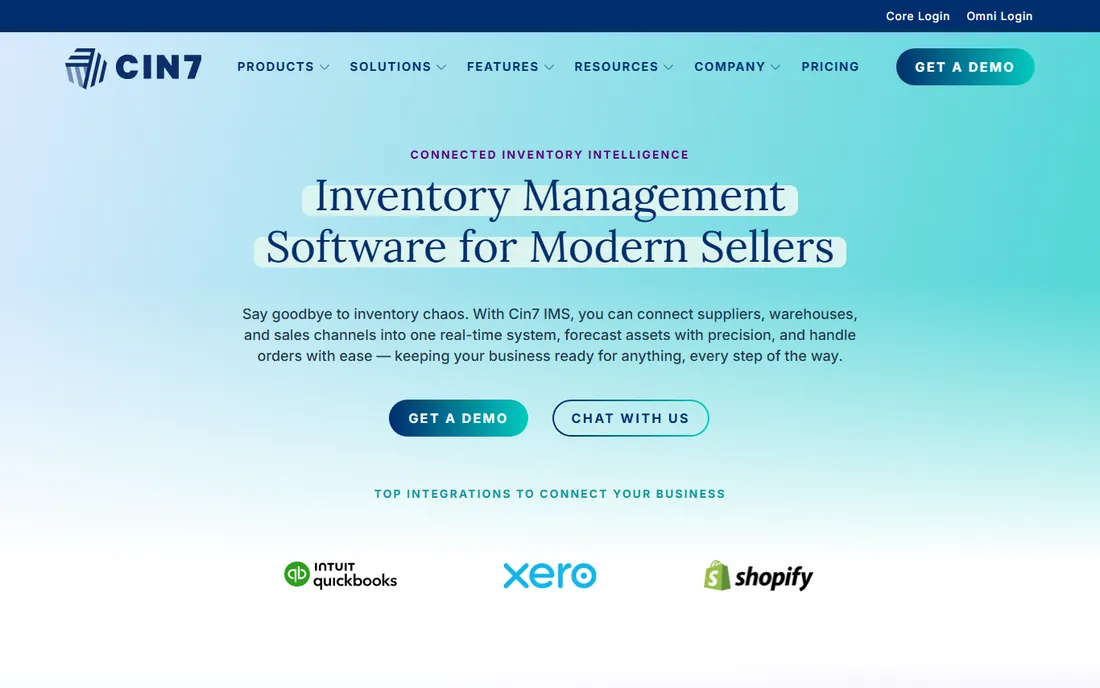
Cin7 is the heavyweight on this list. It connects Shopify, Amazon, wholesale and retail POS into one inventory record, with built-in warehouse management and manufacturing so a growing brand does not need a separate ERP yet. Purchase orders, stock transfers, landed cost tracking and 3PL integrations are all native, and the accounting sync covers QuickBooks and Xero.
The trade is cost and complexity. At $349 a month to start, Cin7 costs more than most Shopify apps combined, and implementation takes real effort. It earns that price for brands doing serious volume across channels or running light manufacturing. A single-channel Shopify store doing under a few hundred orders a month will not use half of it.
What we like- Real-time stock visibility across every channel, location and warehouse
- Built-in manufacturing with bills of materials and production tracking
- Deep integrations with 3PLs, marketplaces and accounting tools
Watch out for- $349 a month starting price rules out small stores
- Buying runs through a sales process rather than self-serve signup
#2
Zoho Inventory
Best for: Small stores that want real inventory software at the lowest possible cost
Visit zoho.com
Starting price$29/month billed annually (Standard plan)
Free planYes (free forever: 50 orders a month, 1 user, 1 location)
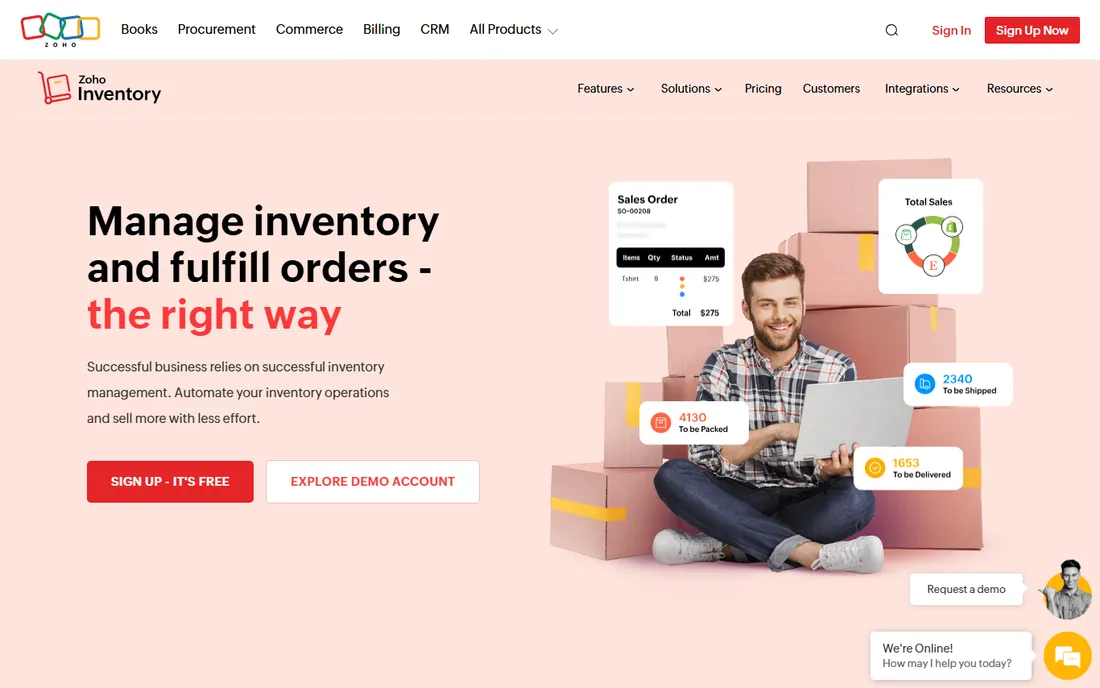
Zoho Inventory is the value pick. The free plan covers 50 orders a month with one user, which handles a surprising number of side businesses, and the $29 Standard plan adds 500 orders, three users and two locations. You get composite items, dropshipping, backordering and native Shopify sync without paying per seat, plus barcode and batch support as you climb tiers.
The caps are the catch. Growing past 500 orders a month pushes you to Premium at $79, and multi-warehouse brands climb to Plus or Enterprise. Zoho also rewards ecosystem loyalty: the product shines brightest alongside Zoho Books or Zoho CRM. As a standalone inventory tool at this price, though, nothing else on this list comes close.
What we like- Genuine free forever plan, not just a trial
- Per-organization pricing instead of per-user fees
- Tight integration with the rest of the Zoho suite
Watch out for- Free and Standard tiers cap orders, users and locations
- Serial and batch tracking need higher plans
#3
Veeqo
Best for: Sellers on Amazon and other marketplaces who also run Shopify
Visit veeqo.com
Starting priceInventory management from $19/month (shipping tools free)
Free planYes (shipping software free; inventory management is paid)
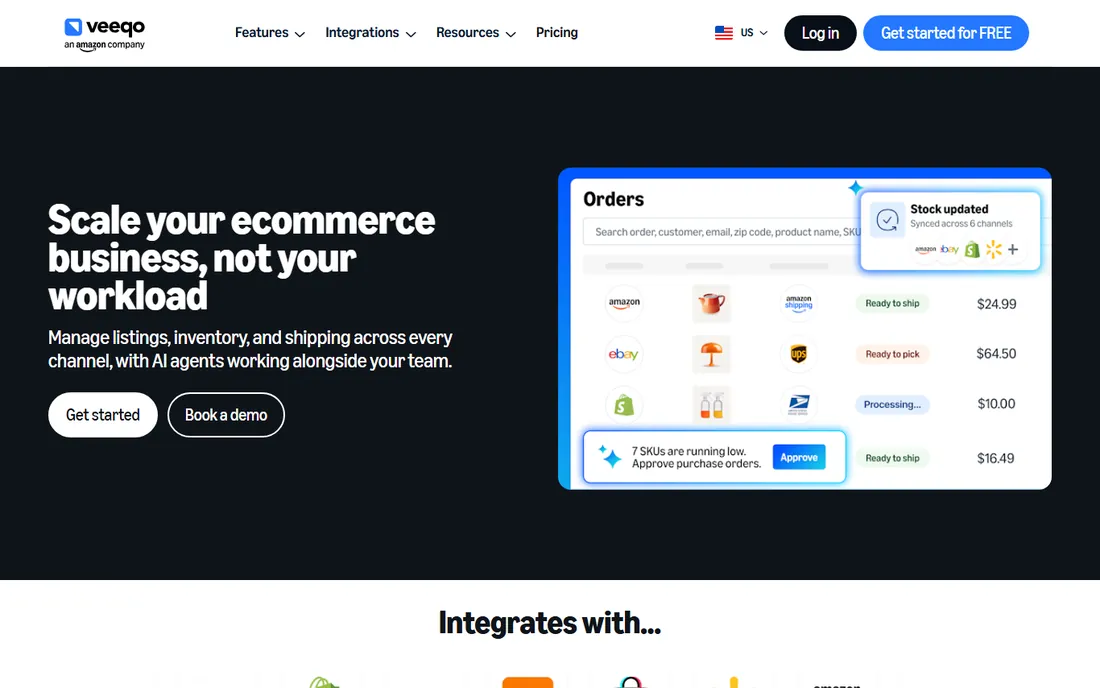
Veeqo, owned by Amazon, is really two products. The shipping side is free: connect Shopify, Amazon, eBay and others, print labels at discounted rates, and manage every order in one dashboard. That alone replaces a paid shipping app for many sellers. The paid inventory plan, from $19 a month, adds automated stock sync, demand forecasting and unlimited multichannel listings.
The catch is the split. If you only need inventory tracking and already have shipping covered, the free tier does little for you. And while Veeqo connects to non-Amazon channels, its roadmap clearly favors the Amazon ecosystem. For a seller whose volume lives on Amazon plus Shopify, the free shipping plus cheap inventory math is hard to beat.
What we like- Free multichannel shipping with discounted carrier rates
- Amazon account health tools built in
- Order management across dozens of channels
Watch out for- Inventory sync and forecasting sit on the paid plan
- Amazon-centric, so non-Amazon sellers get less value
Starting priceSee website (custom-quoted Advantage plans)
Free planNo (free exploration tier)
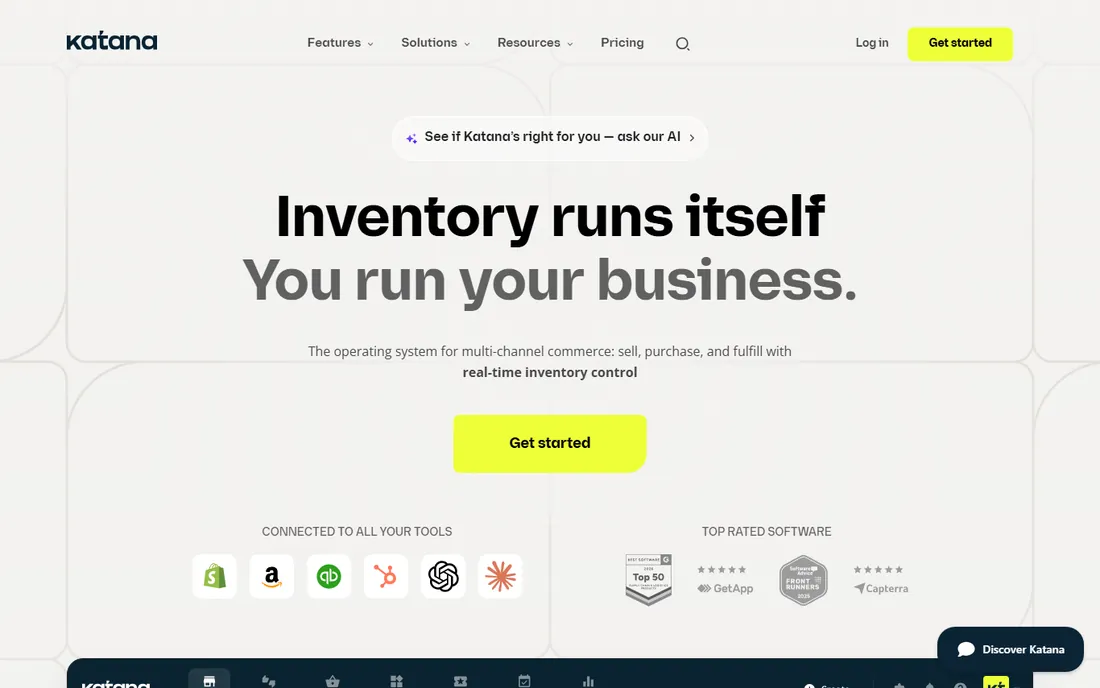
Katana is built for product businesses that make things. Raw materials, work orders and finished goods live in one visual system: sell a unit on Shopify and Katana deducts both the finished product and its components, then flags what to reorder. Multi-level bills of materials, batch tracking and shop-floor priorities come standard, which generic inventory apps handle poorly.
The pricing page now leads with custom Advantage builds instead of the old fixed tiers, so expect a quote based on your operation. That puts Katana in the serious-tool bracket: worth it for a growing manufacturer, heavy for a brand assembling ten units a month. If you only resell finished goods, the manufacturing depth is wasted and a cheaper tracker fits better.
What we like- Visual production planning tied directly to inventory
- Lot and serial traceability from raw material to finished good
- Live Shopify, Amazon and WooCommerce sync
Watch out for- No published pricing, so budgeting requires a sales conversation
- Paid tiers have historically been expensive for very small makers
Starting price$129/month billed annually (Entrepreneur plan)
Free planNo (14-day free trial)
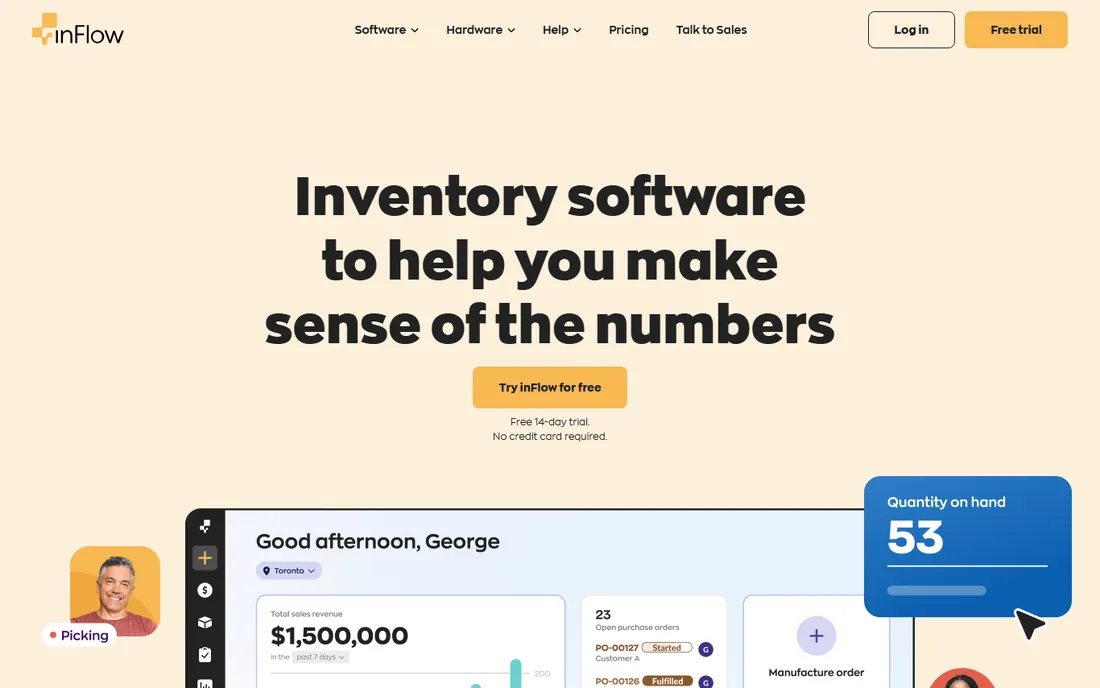
inFlow suits businesses where purchasing is the job: distributors and wholesalers juggling suppliers, purchase orders and reorder points. Every plan includes unlimited purchase orders, barcode support and reporting without usage caps, plus Shopify and Amazon order pull-in. The built-in B2B showroom lets wholesale customers order from a live catalog instead of emailed price lists.
The pricing model is tiered plus add-ons, so the $129 entry price can climb with API access, serial numbers or extra integrations. inFlow also sells a separate Manufacturing edition from $179 a month for light assembly. It is more structured than Zoho and less industrial than Cin7, which is exactly where most distributors live.
What we like- Unlimited purchase orders and report downloads on every plan
- Barcode and serial support
- B2B showroom for wholesale ordering
Watch out for- API access and serial tracking cost extra as add-ons
- Entry price is high next to Zoho
#6
Fabrikatör
Best for: Shopify brands that keep running out of stock or over-ordering
Visit fabrikator.io
Starting priceFrom $79/month billed annually (Seed plan)
Free planNo (14-day free trial)
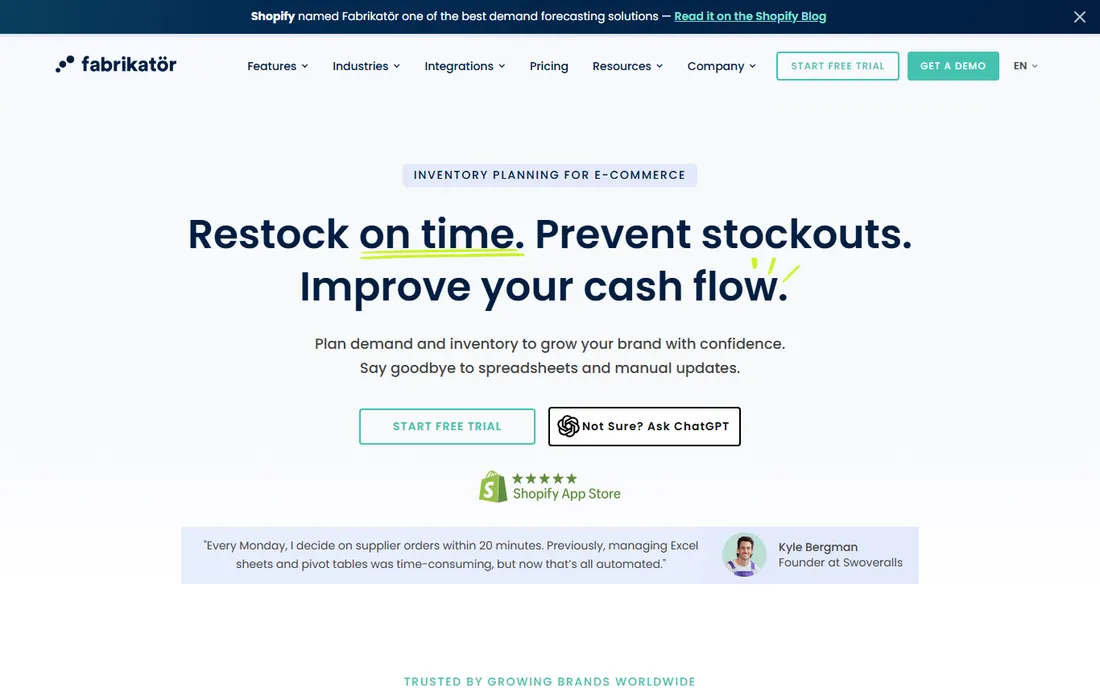
Fabrikatör does one job the trackers skip: telling you what to buy and when. It reads your Shopify sales history, forecasts demand per SKU, and turns the forecast into supplier-ready purchase orders. Backorders and pre-orders tie into incoming stock with estimated arrival dates, so you can keep selling through a stockout instead of losing the sale.
Watch the metered billing. The Seed plan starts at $79 a month billed annually for stores up to $500K revenue, but backorders cost $0.75 each beyond the included 50, and heavy backorder users report bills several times the base price. It is a planning layer, not a warehouse system: pair it with a WMS or a tracker like Zoho if you need pick and pack.
What we like- Demand forecasting built specifically for Shopify sales data
- Purchase orders generated from forecasts
- Backorder and pre-order workflows included
Watch out for- $0.75 per backorder usage fees can add up fast
- Pricing scales with your revenue tier
Starting priceFrom $499/month (Essentials plan)
Free planNo (demo-based sales process)
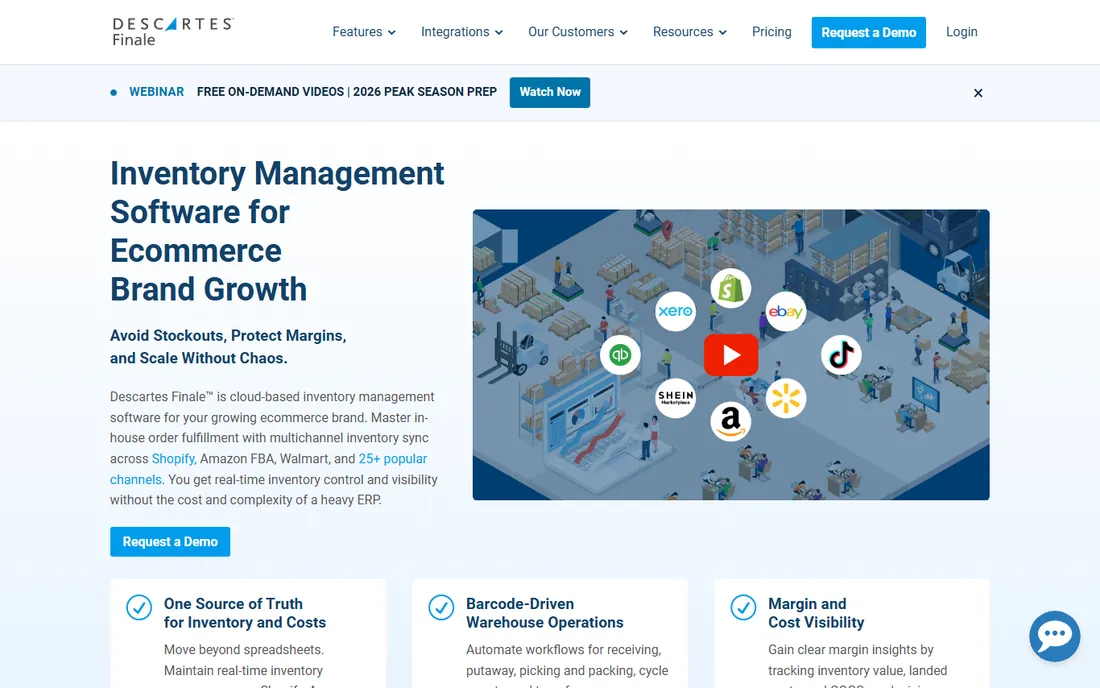
Finale Inventory, now part of Descartes, is for brands that outgrew app-level tracking and run their own warehouse. Mobile barcode scanning guides receiving, putaway, picking and transfers, while the accounting side tracks landed costs and margins per SKU and channel. It syncs Shopify, Amazon FBA, Walmart and dozens more marketplaces into one stock record.
This is professional software with a professional price: Essentials starts at $499 a month and most teams land on Growth at $799. Implementation takes weeks with onboarding help, and there is no trial tier. If you ship from a 3PL or a spare room, it is overkill. If you run a real warehouse with staff, the error reduction usually pays for it.
What we like- Barcode-driven receiving, picking and cycle counts
- Landed cost, COGS and margin visibility per channel
- Dozens of sales channel integrations with QuickBooks and Xero sync
Watch out for- $499 a month starting price
- Onboarding runs through sales, not self-serve
#8
SKULabs
Best for: Ecommerce brands running their own pick, pack and ship operation
Visit skulabs.com
Starting price$299/month (Starter plan)
Free planNo (30-day money-back guarantee)
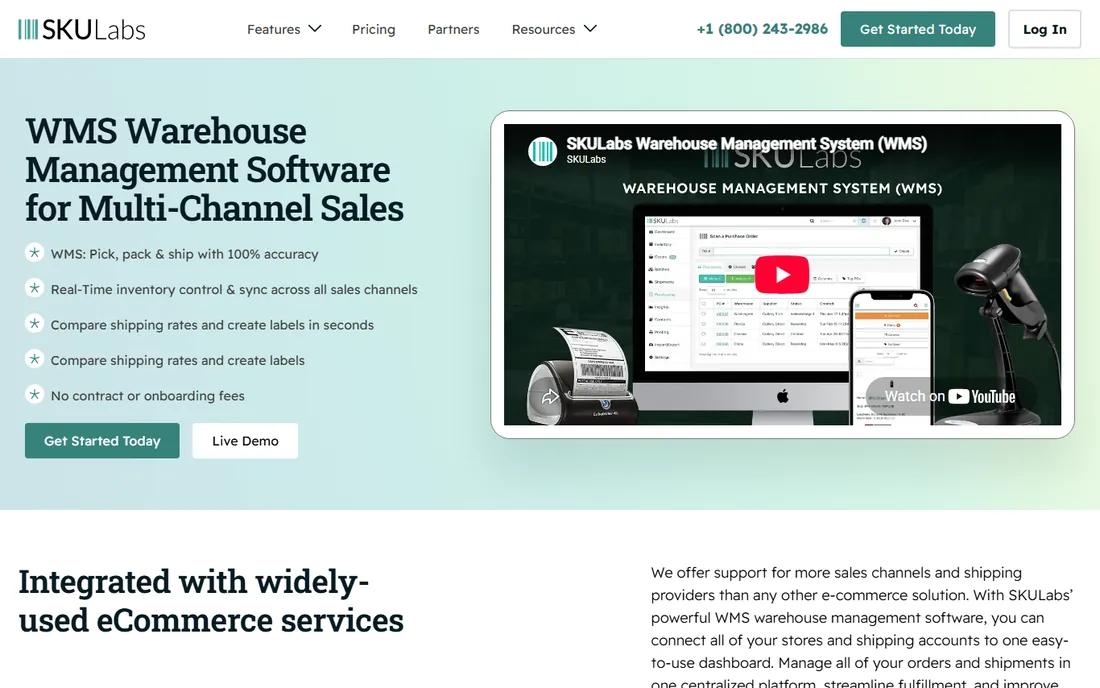
SKULabs is a warehouse management system priced for growing brands rather than enterprises. Orders from Shopify, Amazon, eBay and other channels flow into one dashboard where barcode scanning verifies every pick and pack, and built-in rate shopping prints discounted labels. The standout policy is zero label fees: USPS, UPS and FedEx labels cost nothing beyond postage on every plan.
The $299 Starter plan covers 1,000 orders, 3 users, 2 sales channels and 2 warehouses, with overages billed per order past that. Higher tiers add multi-warehouse tracking, batch picking, forecasting and API access up to the $1,999 Enterprise plan. No contracts and a 30-day money-back guarantee keep the risk low. It is the most approachable true WMS on this list.
What we like- Zero per-label fees on USPS, UPS and FedEx
- Barcode-guided picking, packing and shipping in one dashboard
- No contracts or onboarding fees
Watch out for- Usage overages apply past plan limits ($0.20 per extra order on Starter)
- Forecasting and automation need higher tiers
#9
ShipHero
Best for: 3PLs and high-volume brands that need a serious WMS
Visit shiphero.com
Starting priceSee website (custom quote)
Free planNo (free demo)
ShipHero plays in a different league: warehouses and 3PLs moving serious volume. The WMS covers AI-guided picking, packing stations with hardware add-ons, rate shopping, returns and 3PL client billing, with integrations across Shopify Plus, Amazon, NetSuite and major carriers. It also offers its own outsourced fulfillment for brands that want to stop running a warehouse entirely.
There is no pricing page and no self-serve signup; you request a quote and talk to sales. That is normal at this level, but it means ShipHero only makes sense once warehouse labor and error rates are big enough to justify an enterprise WMS. Smaller brands should start with SKULabs or Veeqo and graduate here.
What we like- Built for 3PL and high-volume brand warehouses
- AI picking, pack-to-light hardware and automation rules
- Deep integration ecosystem across carts, carriers and ERPs
Watch out for- No public pricing at all, everything goes through a quote
- Far more system than a small store needs
How we chose
We started with the searches buyers run: best Shopify inventory app, Shopify inventory management software and Shopify stock management. For each candidate we opened the vendor's homepage and pricing page, checked Shopify App Store listings for app-native tools, and compared feature depth, channel coverage and company-size fit. Where a price could not be verified on the vendor's own page we wrote "See website" rather than guessing. We excluded Shopify's own Stocky, which Shopify is sunsetting in favor of built-in inventory tools, and replaced it with Fabrikatör.
What to check before you pay
First, how stock syncs. Real-time sync updates every channel the moment a sale happens; scheduled sync runs every 15 minutes or hourly, which is enough to oversell a hot SKU. Ask which one you are getting. Second, count your locations honestly: a second warehouse, a retail shelf and an Amazon FBA bin are three locations, and most plans charge or cap by location.
Third, separate tracking from planning. Tracking tells you what you have; planning tells you what to order. Tools like Fabrikatör plan, tools like Zoho track, and only the expensive ones do both well. Fourth, check the barcode story: if your team picks and packs, you need mobile scanning, not a desktop grid. Finally, model the full price. Per-order overages, per-backorder fees and per-user charges turn a $79 plan into a $300 bill. Price your actual order volume, not the marketing tier.
When you need a WMS instead of an inventory app
An inventory app answers "how many do I have and where." A warehouse management system answers "who picks it, from which bin, in what order, and how does it ship cheapest." If you fulfill from your own space with staff, you eventually need the second answer. The signs: picking errors climbing, packers walking the warehouse without a system, and shipping decisions made on gut feel.
SKULabs and ShipHero are the WMS options here, with Finale covering the warehouse-heavy middle. Everyone else on this list manages the numbers; the WMS tools manage the work. Buying a WMS too early just adds software your team will not use, so a common path is Zoho or Veeqo for tracking now, then SKULabs when the warehouse gets real, then ShipHero at true scale.
Frequently asked questions
Does Shopify have built-in inventory management?
Yes. Shopify tracks stock quantities, transfers between locations and purchase orders natively, and Shopify is folding its old Stocky app into those built-in tools. The built-ins cover one store with simple needs. Multichannel selling, demand forecasting, barcode warehouse workflows and accounting-grade costing are where the apps above earn their keep.
What is the cheapest way to manage Shopify inventory?
Zoho Inventory's free plan (50 orders a month) costs nothing, and Veeqo's shipping tools are free with inventory management from $19 a month. Between the two, Zoho is the stock-first pick and Veeqo is the shipping-first pick. Either beats a spreadsheet up to a few hundred orders a month.
Which tool is best if I manufacture my own products?
Katana. It ties raw materials, work orders and finished goods together so a sale deducts components automatically, with lot and serial traceability built in. inFlow's Manufacturing edition is the budget alternative. Pure resellers do not need either.
Do these tools sync with Amazon, eBay and other channels?
Most do. Cin7, Finale, SKULabs, Veeqo and Zoho all sync stock across multiple marketplaces, which is the main reason to buy them instead of relying on Shopify alone. Check your specific channels before committing, since marketplace coverage varies by tool.
How much should a small Shopify store budget for inventory software?
From $0 to about $130 a month. Free tiers cover the smallest stores, Zoho Standard ($29) or Veeqo inventory ($19) cover early growth, and inFlow ($129) or Fabrikatör ($79) fit once purchasing gets serious. Past $300 a month you are buying warehouse software, not just tracking.
Sources we checked (9)
- https://cin7.com/
- https://www.fabrikator.io
- https://katanamrp.com
- https://finaleinventory.com/pricing
- https://www.skulabs.com/pricing
- https://shiphero.com/
- https://veeqo.com/
- https://www.zoho.com/inventory/
- https://inflowinventory.com/
Is your product missing or out of date?
We review this list regularly. Vendors can request a listing, send updated pricing or ask about featured placement.

Shihab Mia · Founder, Rankite
Shihab has spent more than a decade helping SaaS and e-commerce brands grow through search. He writes Rankite's software buying guides from pricing pages, documentation and public user reviews. More about Shihab.