How we make this list: we compare pricing pages, product documentation and public user reviews. Ratings come from G2, Capterra or Trustpilot, with the date we checked them.
Key takeaways
- Segment is the most widely integrated customer data platform here, now under Twilio, and suits teams that need hundreds of destinations from one pipeline.
- RudderStack and Jitsu give engineering-led teams warehouse-first pipelines, with open-source options that avoid vendor lock-in.
- Snowplow suits teams that want event-level data they own, with custom schemas and real-time delivery to their own warehouse.
- Stape and Addingwell are the practical routes to server-side Google Tag Manager, with Stape cheaper and Addingwell stronger on monitoring and EU compliance.
- Tealium and CustomerLabs suit larger or marketing-led teams that need consent, identity resolution, and ad-platform signal in one managed layer.
Quick comparison
| Tool | Best for | Starting price | Free plan |
|---|
 Segment | Teams that need one pipeline feeding many analytics and ad tools | Free | Yes |
 RudderStack | Data teams that want warehouse-first customer data with governance | Free | Yes |
 Snowplow | Teams that want full control over event schemas and owned data | Free | Yes |
 Jitsu | Small teams that want open-source event loading into a warehouse | Free | Yes |
 Tealium | Enterprises that need consent, identity, and real-time activation together | See website | No |
 Stape | Teams and agencies that run server-side Google Tag Manager on a budget | $17 per month | Yes |
 Addingwell | EU and enterprise teams that need monitored, compliant server GTM hosting | Free | Yes |
 CustomerLabs | Marketing teams that want first-party ad signal without GTM work | See website | Free trial |
Is your product missing or out of date?
We review this list regularly. Vendors can request a listing, send updated pricing or ask about featured placement.
#1Segment
Best for: Teams that need one pipeline feeding many analytics and ad tools4.5/5 on
G2 (565 reviews, checked Oct 2026)
Visit segment.com
Starting priceFree
Free planYes
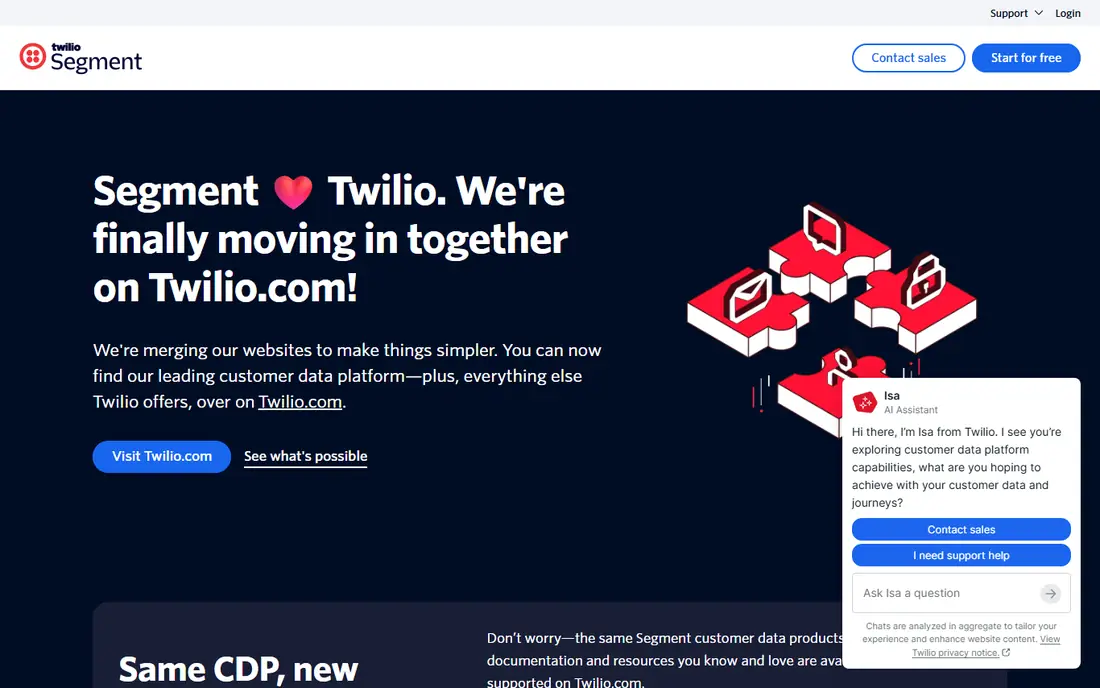
Segment, now part of Twilio, collects first-party data from websites, apps, and servers, cleans and unifies it into customer profiles, and routes it to warehouses and hundreds of destinations. For a team tired of adding a new pixel for every tool, that single pipeline is the main benefit: instrument once, then turn destinations on and off without code changes. Its homepage now notes that Segment products live on Twilio.com, so buyers should confirm current plan names there.
The cost model needs care. Segment bills by monthly tracked users in many comparisons, with a free tier at low volume and paid plans rising from there, so a high-traffic site can face a large bill. It also needs engineering time for tracking plans and governance. Choose Segment when you run many tools and need one governed pipeline. Choose an open-source tool when warehouse loading alone is the job.
What we like- Hundreds of destinations
- Unified customer profiles
- Strong governance and transformation features
Watch out for- Pricing is usage-based on tracked users and rises with scale
- Now presented under Twilio, so check current product pages
- Needs engineering for full setup
#2RudderStack
Best for: Data teams that want warehouse-first customer data with governance4.7/5 on
G2 (52 reviews, checked Oct 2026)
Visit rudderstack.com
Starting priceFree
Free planYes
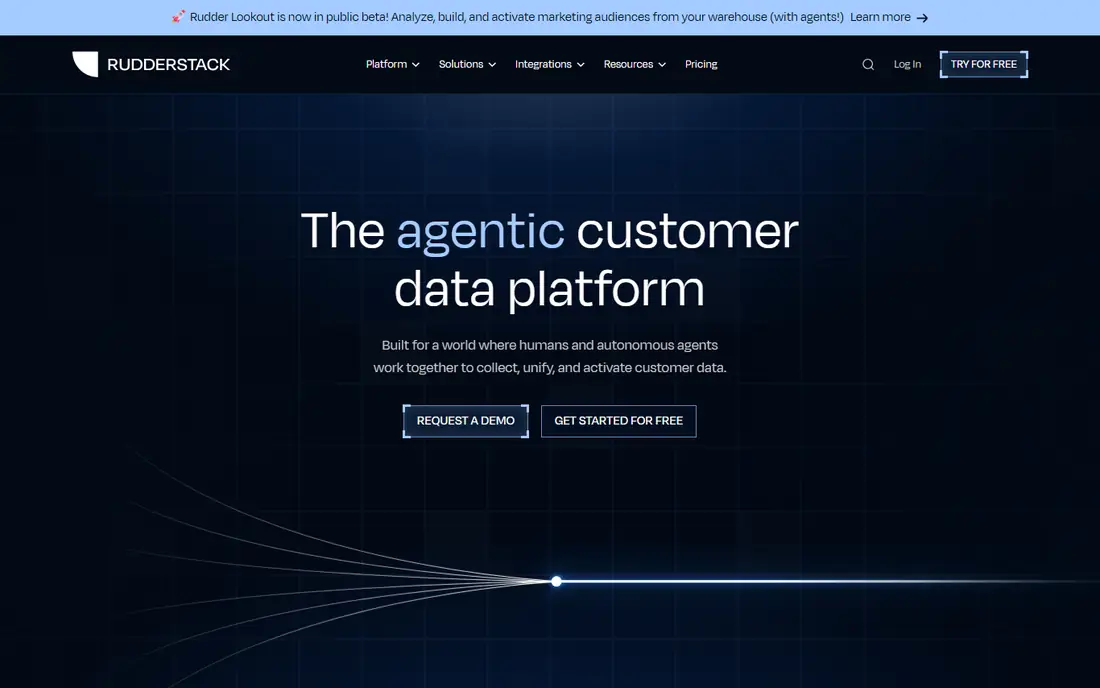
RudderStack positions itself as a customer data platform built for data teams, collecting events from web, mobile, and server sources and routing them in real time to warehouses, streaming systems, and business tools. Its governance features, including schema management, event validation, consent automation, and PII handling, help teams trust the data that reaches downstream tools. Infrastructure-as-code support suits teams that manage pipelines like software.
The trade-off is technical depth. A marketing team without engineering support will find RudderStack harder to run than CustomerLabs or Stape, and its profile and identity features need deliberate setup. For an engineering-led team that already uses a warehouse as the source of truth, RudderStack is one of the strongest, most flexible choices here.
What we like- Strong warehouse and streaming destinations
- Event validation and consent controls
- Infrastructure-as-code and API access
Watch out for- Learning curve for non-engineers
- Paid features add cost at scale
- Identity and profiles need setup to use well
#3
Snowplow
Best for: Teams that want full control over event schemas and owned data
Visit snowplow.io
Starting priceFree
Free planYes
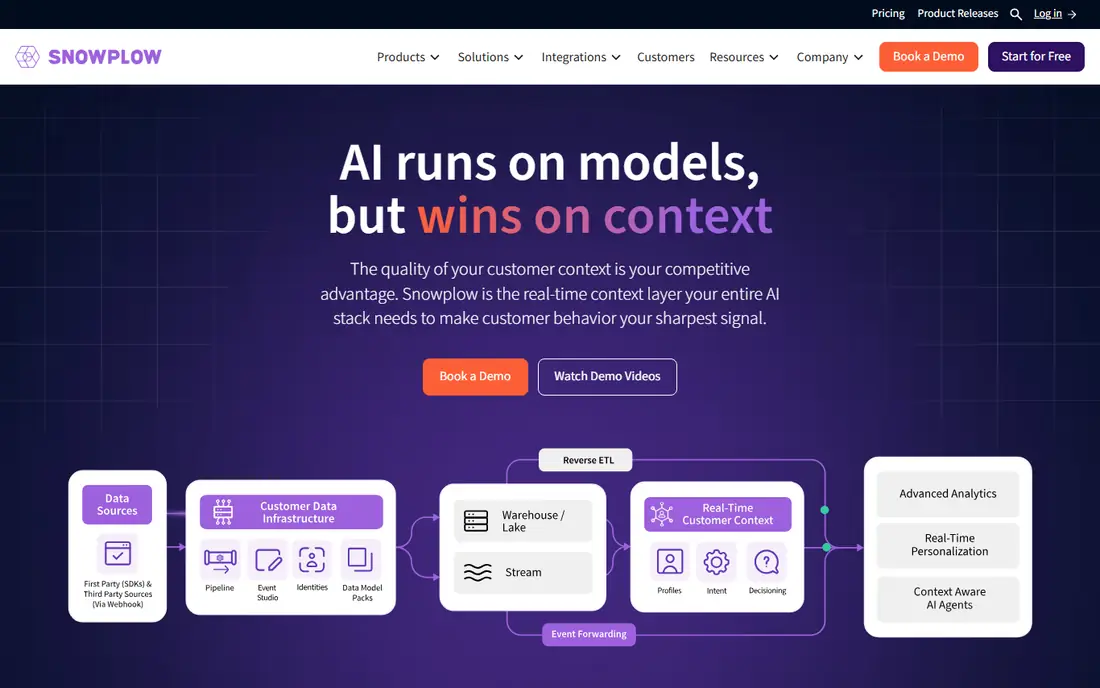
Snowplow is the data-ownership pick in this list. Instead of forcing events into a vendor schema, it lets teams define custom, validated schemas, enrich events in real time, and stream event-level data to their own warehouse, lake, or stream. That control matters for AI and analytics teams that need granular behavioral data, including distinguishing human visitors from AI agents, which Snowplow now highlights.
That control costs engineering effort. Snowplow is not a plug-and-play tag manager, and a small marketing team will struggle without data support. Its open-source core is free to run, while managed cloud options are priced by conversation. Choose Snowplow when your warehouse is central and data quality is a board-level concern. Choose Stape or CustomerLabs when ad signal, not warehouse modeling, is the goal.
What we like- Custom, validated event schemas
- Real-time delivery to your warehouse, lake, or stream
- No vendor schema lock-in
Watch out for- Requires data engineering to run well
- Open-source setup is more work than a managed tool
- Paid cloud pricing is quote-based
#4
Jitsu
Best for: Small teams that want open-source event loading into a warehouse
Visit jitsu.com
Starting priceFree
Free planYes
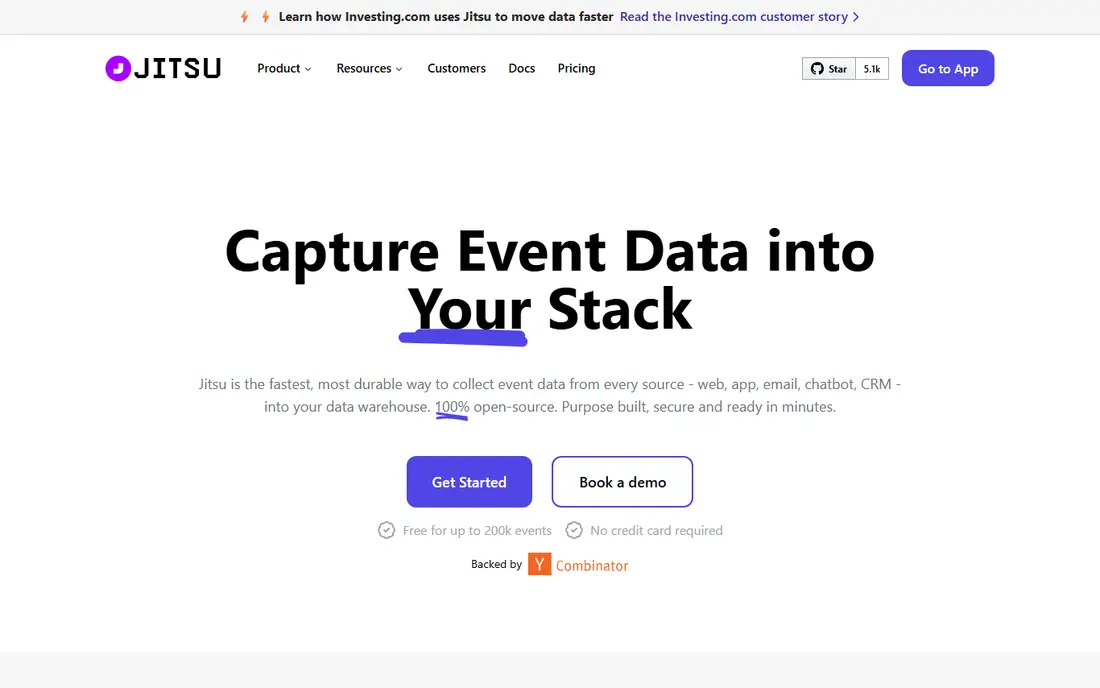
Jitsu is the lightest open-source option here, and its pitch is simple: add a tag, collect events from web, app, email, chatbot, and CRM sources, and load them into your warehouse in real time. Its homepage offers a free tier up to 200,000 events, and its functions feature lets developers filter, enrich, or modify events in JavaScript before storage. A built-in ClickHouse option removes the need to pick a warehouse at first.
The limit is breadth. Jitsu covers warehouse loading well, but it does not match Segment or RudderStack on destination count, governance, or identity features. That is fine if your goal is a clean warehouse table to query with SQL. Jitsu suits a small technical team that wants open-source control without the weight of Snowplow.
What we like- Fully open source and self-hostable
- Free cloud tier up to 200,000 events
- Simple tag-based setup with functions for transformation
Watch out for- Fewer destinations than Segment or RudderStack
- Smaller community
- Warehouse choice affects setup effort
#5Tealium
Best for: Enterprises that need consent, identity, and real-time activation together4.3/5 on
G2 (478 reviews, checked Oct 2026)
Visit tealium.com
Starting priceSee website
Free planNo
Tealium is the enterprise platform in this list, built around one idea: every team should work from the same customer truth, delivered with consent enforced at each step. It collects data from every source, resolves identity in real time, enriches it, and routes it to warehouses, channels, and AI platforms such as Amazon Bedrock, OpenAI, and Vertex AI. For a large company with compliance, marketing, and AI teams pulling in different directions, that central layer has real value.
The cost and effort rule out small teams. Tealium pricing is quote-based, onboarding is a project, and a simple server-side tagging job does not need its full platform. Choose Tealium when you are an enterprise with regulated data, many systems, and a need for consent-aware activation at scale. A smaller business will get faster results from Stape, Addingwell, or CustomerLabs.
What we like- Real-time identity resolution
- Consent enforced through activation
- Broad enterprise integrations including AI platforms
Watch out for- Enterprise pricing is quote-based
- Implementation needs a project, not self-service
- Overkill for a small site
#6
Stape
Best for: Teams and agencies that run server-side Google Tag Manager on a budget
Visit stape.io
Starting price$17 per month
Free planYes
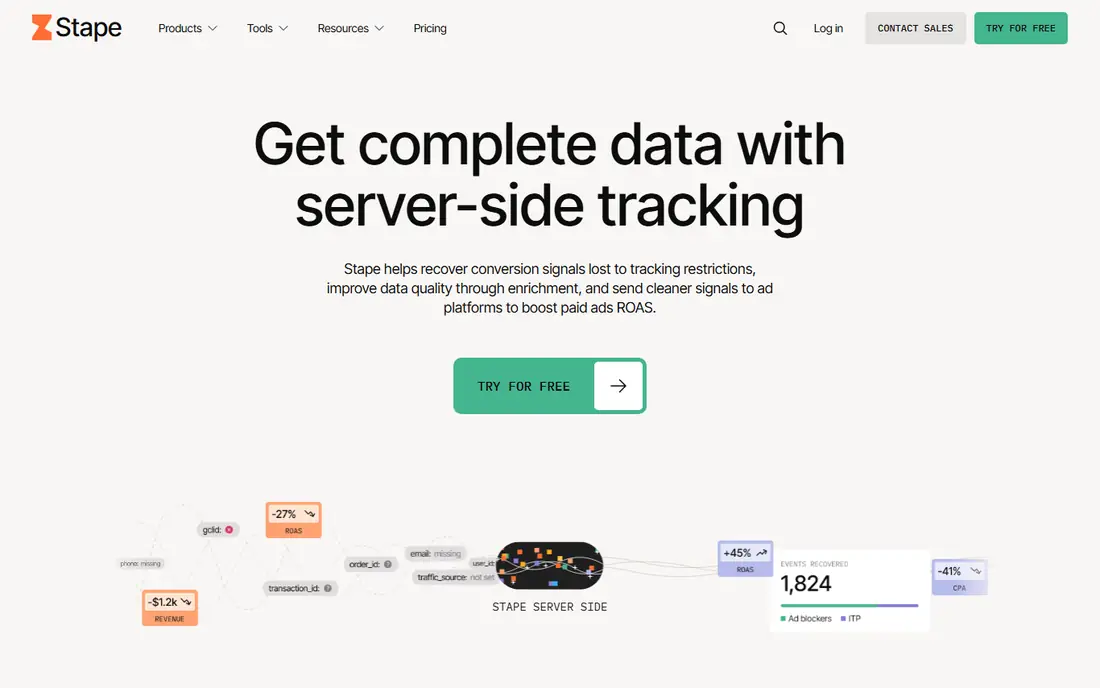
Stape is the most popular managed host for server-side Google Tag Manager, and its model is easy to grasp: it runs your server container, so you do not manage Google Cloud yourself. Paid plans start at $17 per month billed annually for 500,000 requests, with a free tier up to 10,000 requests, and power-ups add cookie keeping, bot detection, and enrichment. Dedicated gateways offer a simpler, single-platform server path before moving to full server GTM.
The work does not disappear. You or your agency still build, debug, and publish web and server containers, and setup or care services cost extra. Stape is infrastructure, not a finished tracking product, so it suits technical teams and agencies comfortable in GTM. If nobody on your team works in GTM, CustomerLabs will be faster, even at a higher price.
What we like- Managed server GTM hosting without running your own cloud
- Free tier up to 10,000 requests per month
- Gateways for single-platform server delivery
Watch out for- You still build and maintain GTM tags
- Setup help costs extra
- Request-based pricing rises with traffic
#7
Addingwell
Best for: EU and enterprise teams that need monitored, compliant server GTM hosting
Visit addingwell.com
Starting priceFree
Free planYes
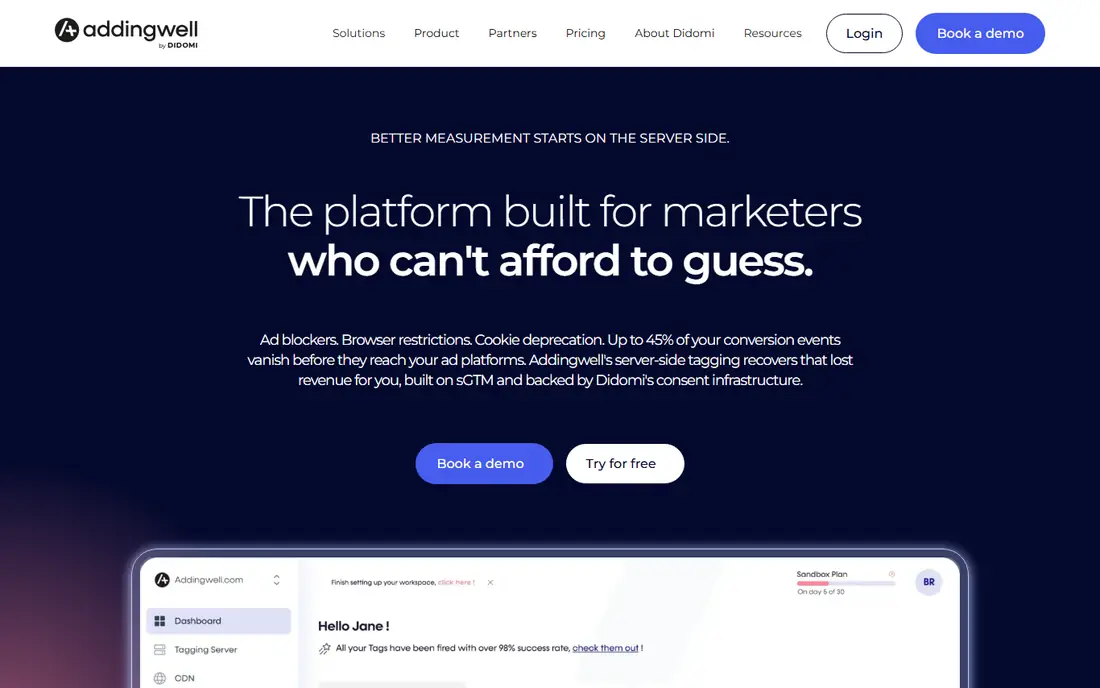
Addingwell, now part of Didomi, is the premium managed alternative to Stape for server-side GTM. It runs on multi-zone Google Cloud infrastructure with a stated 99.99 percent uptime, and its tag health monitoring alerts you in real time when a tag drops below full success, which catches broken tracking before it costs a week of data. Consent travels with the data through Didomi integration, which matters for EU businesses facing strict privacy rules.
The free tier covers 100,000 requests, more generous than Stape, but paid plans cost more, with comparisons putting around one million requests near 90 euros per month. Addingwell suits EU companies, enterprises, and agencies where uptime and monitoring justify the premium. A small US site with modest traffic will usually do fine on Stape for less.
What we like- Free tier up to 100,000 requests
- Real-time tag health monitoring and alerts
- EU infrastructure and consent-aware data flows as part of Didomi
Watch out for- Paid plans cost more than Stape
- Still requires GTM knowledge
- Enterprise focus may exceed small-site needs
#8
CustomerLabs
Best for: Marketing teams that want first-party ad signal without GTM work
Visit customerlabs.com
Starting priceSee website
Free planFree trial
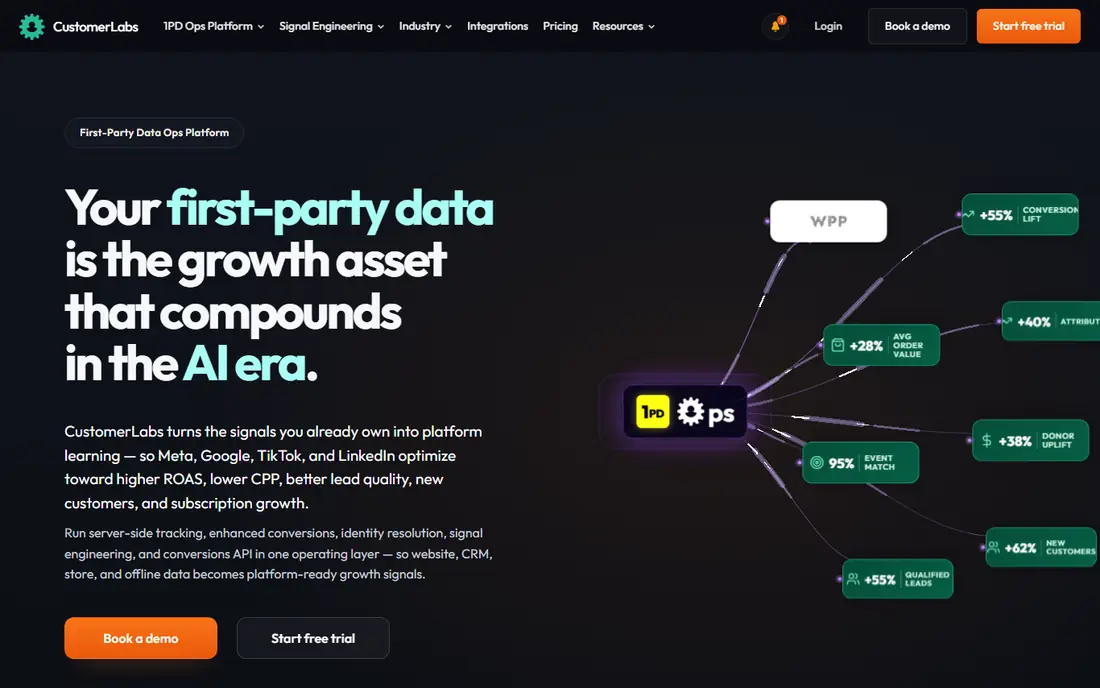
CustomerLabs takes a different route from the GTM hosts: it is a first-party data operations platform that turns website, CRM, store, and offline data into signals for Meta, Google, TikTok, and LinkedIn, with server-side tracking, identity resolution, and conversions APIs in one layer. Its comparison tables highlight automatic browser-server dedup, first-party cookies on your own domain, and CRM and offline conversion sync, which are the features marketing teams actually struggle with in GTM.
The gap is transparency on price, which is trial-based rather than published, so budgeting needs a sales conversation. It also focuses on ad signal rather than warehouse modeling, so a data team should pair it with a warehouse tool if analysis matters. Choose CustomerLabs when your goal is better ad optimization with minimal engineering, and choose Stape or Addingwell when you want full GTM control.
What we like- No-code server-side tracking and conversions APIs
- Identity resolution and offline conversion sync
- Built-in dedup between browser and server events
Watch out for- Pricing is quote-based with only a trial published
- Marketing-led focus means less warehouse depth
- Setup quality still needs review
How we chose
We compared pricing pages, product documentation, and public reviews, and we checked each vendor homepage to confirm the product still exists and offers server-side tracking. We favored tools with a clear hosting model, a stated free tier or entry price, and a defined job, whether warehouse loading, GTM hosting, or ad signal. Where pricing is quote-based or varies by currency, we listed it as "See website" rather than publishing a figure we could not verify.
We also separated three jobs that buyers often mix up. Warehouse pipelines move events to your own data store. GTM hosts run server containers for tag management. Ad signal platforms turn first-party data into conversions APIs. Picking the wrong category wastes money, even if the tool itself is good, so match the tool to the job before comparing prices.
Avoiding the common server-side mistakes
Use one domain and one event ID
Run your server container on your own subdomain, not a default cloud domain, so it can set first-party cookies that survive browser restrictions. When you send the same event from browser and server, share an event ID so platforms can dedupe instead of counting twice. These two settings fix a large share of broken server setups.
Respect consent on the server, not just in the browser
Server-side tags must check consent before firing, just like browser tags. A server that sends data for visitors who declined consent creates a compliance problem that no performance gain justifies. Test with consent accepted and declined, and check each destination in its test events view before going live.
Monitor tags like production systems
A broken tag fails quietly, losing data for days before anyone notices. Set up alerts for tag health, event volume drops, and error rates, and review them weekly. Addingwell builds this monitoring in, Stape offers logs and power-ups, and CDP tools offer delivery alerts. Whatever you choose, assign an owner for monitoring, or the server will rot.
Frequently asked questions
What is server-side tracking?
Server-side tracking sends events from your server to analytics and ad platforms, instead of only from the visitor browser. That makes data more complete when browsers block cookies, ad blockers run, or tracking prevention limits browser storage. It does not remove consent rules: you still need a lawful basis and consent handling for the data you send.
Do I need server-side tracking for a small site?
Not always. A small content site with modest ad spend will usually do fine with browser tracking plus a privacy-first analytics tool. Server-side tracking pays off when ad spend is significant, conversion data is incomplete, or you need first-party data for optimization. Start with a free tier from Stape or Addingwell and measure recovered events before committing.
What is the difference between Stape and Segment?
Stape hosts a server-side Google Tag Manager container, so you build tags in GTM and Stape runs the infrastructure. Segment is a customer data platform that collects, unifies, and routes customer data to hundreds of destinations without GTM. Choose Stape for GTM-based ad and analytics tagging, and Segment for a governed, multi-destination customer data pipeline.
Is server-side tracking enough for privacy compliance?
No. Server-side tracking improves data completeness, but it does not make tracking compliant by itself. You still need consent management, data minimization, retention limits, and destination controls, especially in the EU under GDPR. Tools such as Tealium and Addingwell help enforce consent through the pipeline, but legal review remains necessary.
How much does server-side tracking cost?
Hosting alone can start free or at $17 per month on Stape, while managed platforms and CDPs rise with volume and users. The larger cost is usually setup and maintenance: building containers, routing each platform, checking consent, and monitoring tags. Budget for that time, whether in-house or through an agency, before judging a tool by its hosting price alone.
Can I self-host server-side tracking?
Yes. Google Tag Manager server-side can run on your own Google Cloud account, and open-source tools such as Jitsu, RudderStack, and Snowplow can run on your infrastructure. Self-hosting gives full control and avoids vendor fees, but you take on uptime, scaling, security, and updates. Managed hosting suits most small teams better than self-hosting.
Sources we checked (9)
- https://segment.com
- https://www.rudderstack.com
- https://snowplow.io
- https://jitsu.com
- https://tealium.com
- https://stape.io
- https://addingwell.com
- https://www.customerlabs.com
- https://www.customerlabs.com/blog/best-server-side-tracking-tools-software/
Is your product missing or out of date?
We review this list regularly. Vendors can request a listing, send updated pricing or ask about featured placement.

Shihab Mia · Founder, Rankite
Shihab has 5+ years in B2B and SaaS SEO. He writes Rankite's software buying guides from pricing pages, documentation and public user reviews. More about Shihab.