How we make this list: we compare pricing pages, product documentation and public user reviews. Rankite is independent; if a vendor ever pays for a featured spot, that listing is clearly labeled Partner.
Key takeaways
- Most serious forecasting tools do not publish prices: Gong, Aviso, InsightSquared, Anaplan, Pigment, Ebsta and Backstory all require a sales conversation.
- The two with public pricing are Weflow ($19/user/month billed annually) and Forecastio ($249/month billed annually, includes 2 seats).
- Teams living in Salesforce should shortlist Gong, Ebsta and Backstory for activity-based forecasting; finance-led planning teams should look at Anaplan and Pigment.
- Former category leader Clari now redirects to Salesloft, and People.ai has rebranded as Backstory: verify you are evaluating the current product, not an old review.
Quick comparison
| Tool | Best for | Starting price | Free plan |
|---|
 Gong Gong | Revenue teams wanting call-based deal intelligence | See website (no public pricing) | No |
 Aviso Aviso | Enterprises wanting AI-guided forecasting | See website (no public pricing) | No |
 InsightSquared InsightSquared | Salesforce shops wanting prebuilt analytics | See website (no public pricing) | No |
 Anaplan Anaplan | Finance-led connected planning at scale | See website (no public pricing) | No |
 Pigment Pigment | Modern alternative to legacy planning tools | See website (no public pricing) | No |
 Weflow Weflow | Salesforce teams wanting published pricing | $19/user/month (billed annually) | No |
 Backstory Backstory | Leaders wanting answers from activity data | See website (no public pricing) | No |
 Forecastio Forecastio | SMBs wanting simple AI forecasting | $249/month (billed annually, includes 2 seats; additional seats $49/month) | No |
 Ebsta Ebsta | Salesforce teams wanting forecast accuracy guarantees | See website (no public pricing) | No |
Is your product missing or out of date?
We review this list regularly. Vendors can request a listing, send updated pricing or ask about featured placement.
The best sales forecasting software
Every sales leader has lived the same Monday: the CRM says the quarter is covered, the forecast call says otherwise, and nobody can explain the gap until it is too late. Forecasting software exists to close that gap, but the category splits hard. Some tools predict from rep-entered CRM data. Others read every call, email and meeting and forecast from what actually happened. The second group is more accurate and more expensive, and most of it hides pricing behind a demo request. These nine cover both approaches, with the two public prices noted and the rest marked honestly.
#1
Gong
Best for: Revenue teams wanting call-based deal intelligence
Visit gong.io
Starting priceSee website (no public pricing)
Free planNo
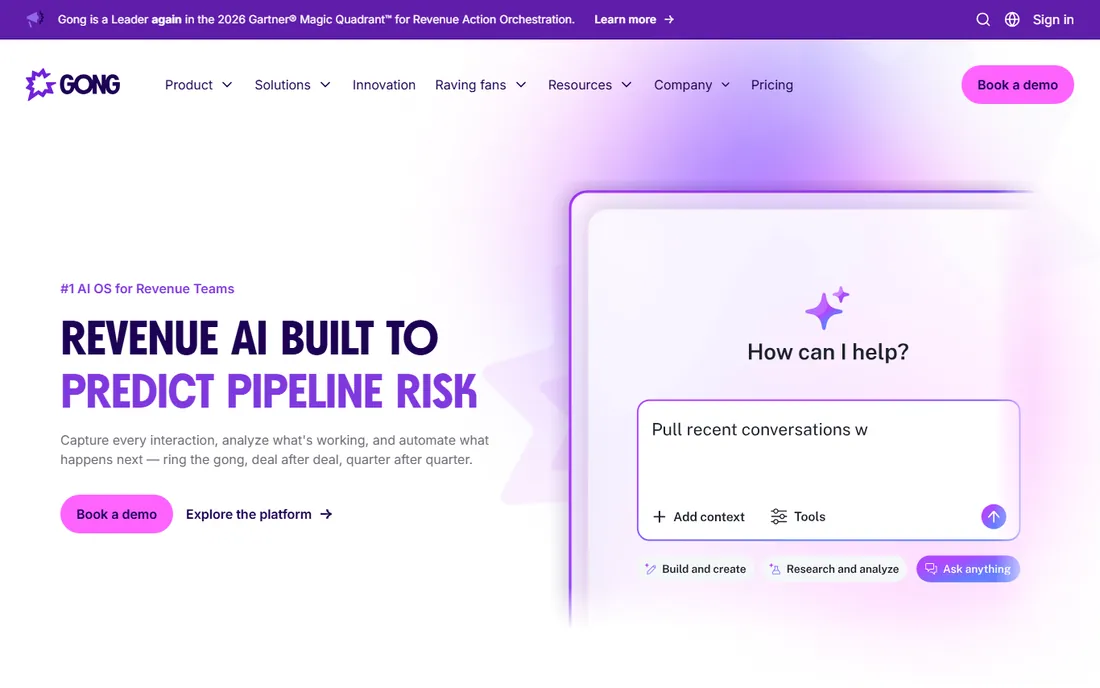
Gong built the revenue-intelligence category by doing one thing well: recording what happens in sales conversations and turning it into forecast signal. Instead of asking reps how a deal feels, Gong reads the calls and emails: who engaged, what was discussed, whether the economic buyer showed up. Its forecasting layer rolls that activity into pipeline health and deal risk views that managers use on forecast calls.
The honest catch is access. Gong publishes no prices, and the product is designed for teams with real pipeline volume; a five-person startup will pay enterprise money for signal it cannot act on. Implementation takes weeks, not days. If your forecast problem is "reps do not update the CRM," Gong fixes the data problem first and the forecast second.
What we like- Captures and analyzes sales calls, emails and meetings automatically
- Deal warnings based on actual buyer engagement, not rep optimism
- Strong Salesforce and HubSpot integrations
Watch out for- No published pricing, expect an enterprise sales process
- Priced for teams, not solo founders or tiny startups
#2
Aviso
Best for: Enterprises wanting AI-guided forecasting
Visit aviso.com
Starting priceSee website (no public pricing)
Free planNo
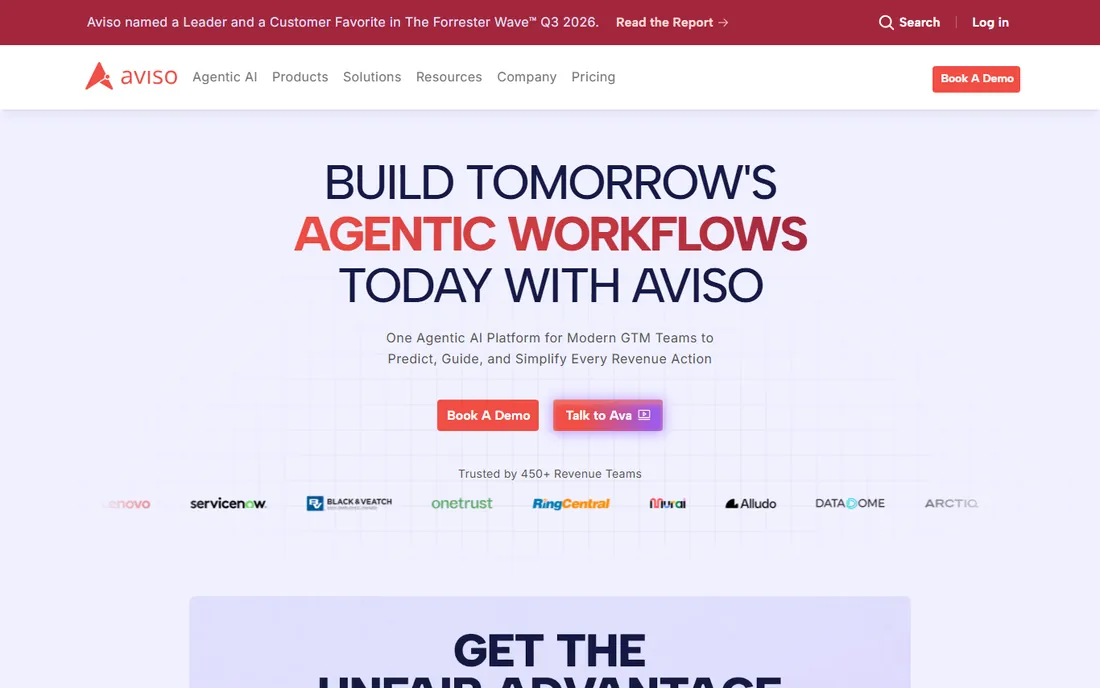
Aviso pitches itself as the AI-first forecaster, and the product matches: every opportunity gets a predictive win score, and reps get next-step guidance generated from patterns in closed deals. For enterprises running complex, multi-stage sales with long cycles, the model-based approach beats spreadsheet rollups. It connects to Salesforce, Microsoft Dynamics and major email and calendar systems.
The catch is the weight. Aviso is an enterprise platform with enterprise onboarding; a 20-person sales team will find it heavy. Pricing is quote-only, and total cost includes implementation services. Shortlist it when your forecast process spans regions, currencies and business units. Skip it if you just need a better pipeline view.
What we like- AI models trained on large deal datasets, with win-score predictions per opportunity
- Guided selling prompts that tell reps the next best action
- Multi-currency and multi-entity support for global teams
Watch out for- Enterprise-grade complexity and onboarding
- Pricing is entirely quote-based
Starting priceSee website (no public pricing)
Free planNo
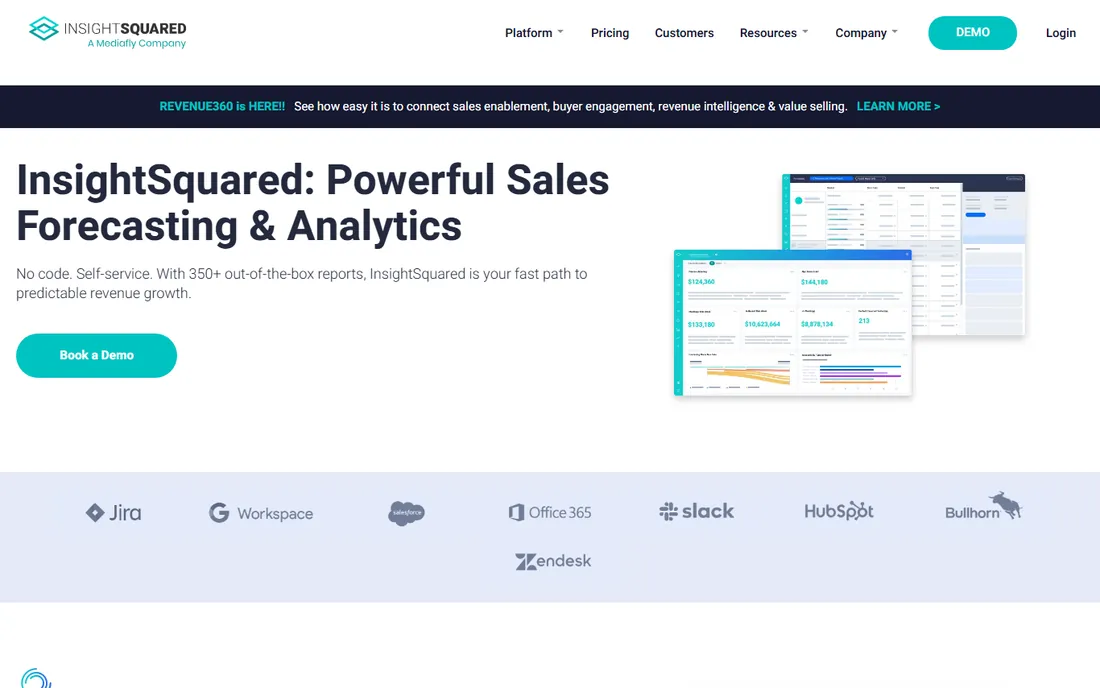
InsightSquared is the pragmatic pick for Salesforce teams that want forecasting without building it. The library of prebuilt reports covers pipeline, activity, conversion and forecast accuracy out of the box, and the forecasting module layers historical trends over current pipeline. Because it is purpose-built on Salesforce data, setup is faster than a general planning platform.
The catch is the ecosystem bet. If you run HubSpot or Dynamics, much of the value evaporates. Pricing is not published, and the product sits in the mid-market-to-enterprise band. It is the right choice when your CRM is Salesforce, your team is 20 to 200 sellers, and you want answers this quarter, not next year.
What we like- Hundreds of prebuilt Salesforce reports and dashboards, so value comes fast
- Forecasting with historical trend analysis
- Solid activity capture from email and calendar
Watch out for- Salesforce-centric, weaker for HubSpot or Dynamics shops
- Pricing hidden behind sales
Starting priceSee website (no public pricing)
Free planNo
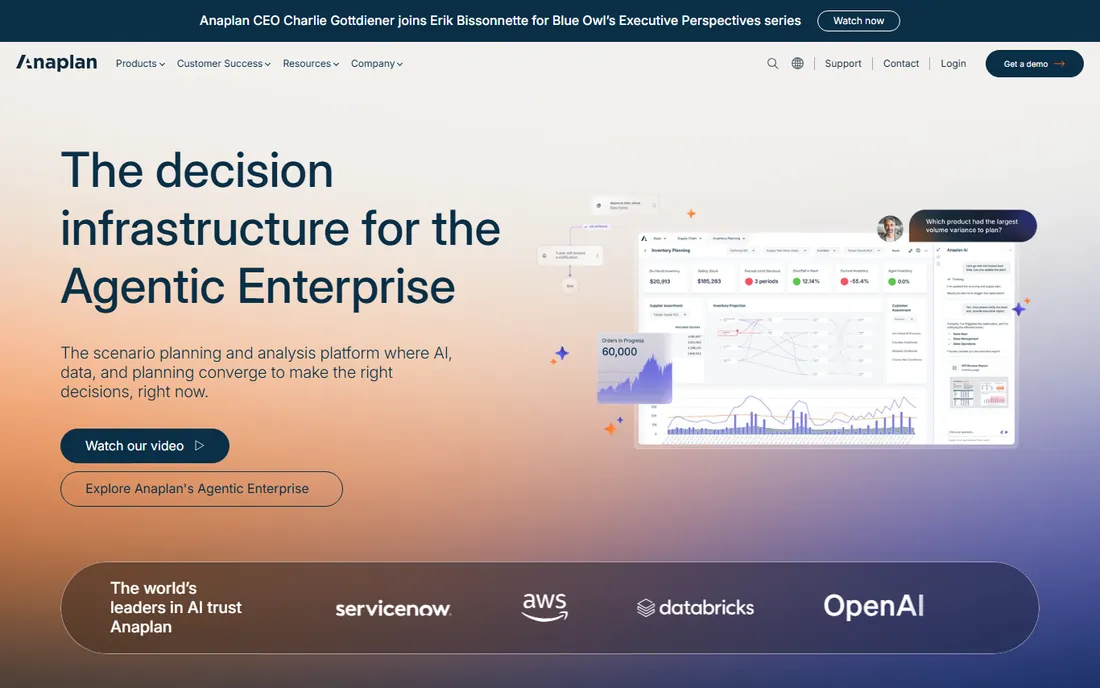
Anaplan is not really a sales tool; it is a planning platform that sales forecasting plugs into. Finance teams use it to connect the sales forecast to headcount plans, territory models, quota setting and commission calculations in one system. When the forecast changes, every downstream plan updates. For companies where the forecast drives the whole operating plan, that connection is the point.
The catch is everything else. Anaplan implementations are measured in months and require specialists to build and maintain. A sales leader who just wants to know whether the quarter is real should not buy Anaplan. A CFO who needs the forecast, the hiring plan and the board model to agree should.
What we like- The standard for connected sales, finance and operations planning
- Handles territory, quota and commission modeling alongside forecasting
- Proven at very large scale
Watch out for- Significant implementation effort and cost
- Overkill for a straightforward pipeline forecast
Starting priceSee website (no public pricing)
Free planNo
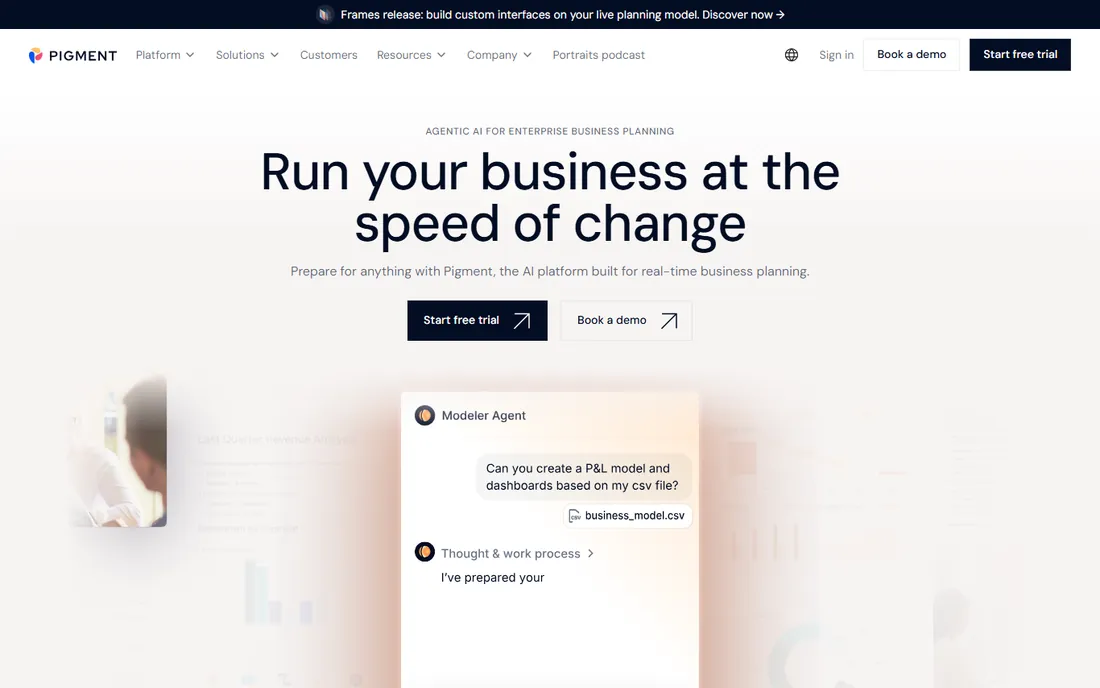
Pigment is what Anaplan would be if designed this decade: a connected planning platform with a modern interface, real-time collaboration and strong what-if modeling. Sales forecasting lives alongside workforce planning and financial modeling, so the number the CRO commits and the number finance plans from are the same number. Implementation is measured in weeks rather than quarters.
The catch is maturity. The partner and template ecosystem is smaller than Anaplan's, and very complex global deployments may still favor the incumbent. Pricing is not published. It fits growth-stage companies that outgrew spreadsheets but do not want a legacy planning implementation.
What we like- Modern interface that finance teams actually enjoy using
- Strong scenario modeling for what-if forecasting
- Faster implementation than legacy planning platforms
Watch out for- Younger vendor with a smaller partner ecosystem
- Pricing is quote-based
#6
Weflow
Best for: Salesforce teams wanting published pricing
Visit weflow.ai
Starting price$19/user/month (billed annually)
Free planNo
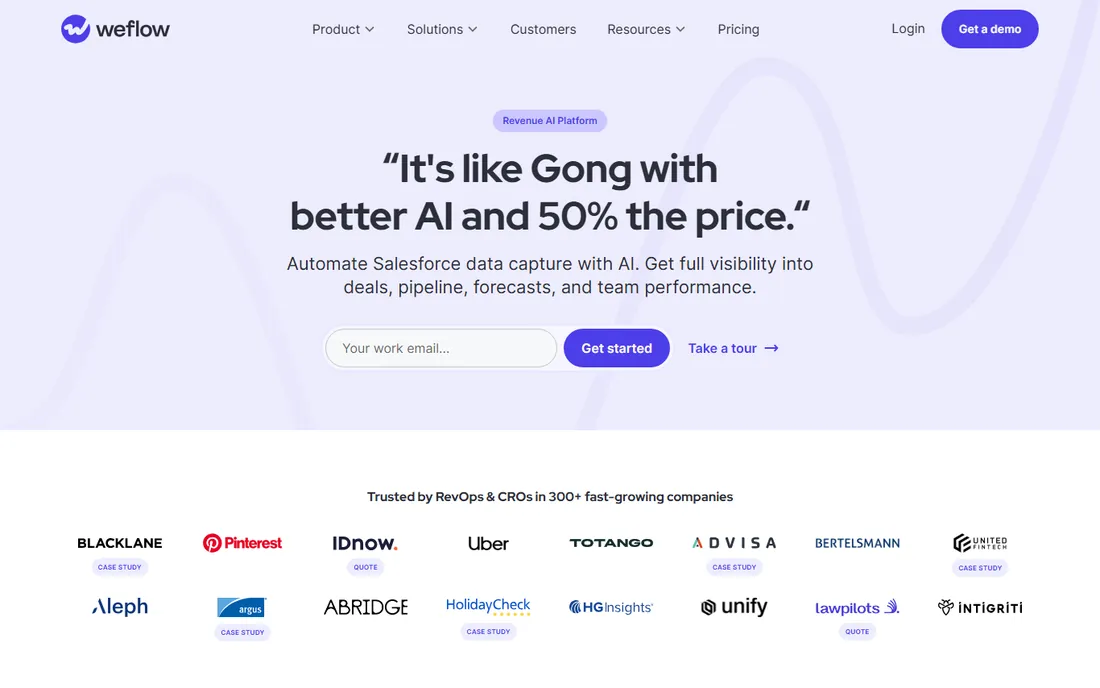
Weflow is the transparent option in an opaque category. Its own pricing page lists plans from $19/user/month billed annually, with higher tiers for forecasting process control and team coaching features. The product is Salesforce-native: pipeline boards, activity capture, AI summaries of deal activity and forecasting workflows that sales managers run weekly. For a Salesforce team that wants forecasting without an enterprise procurement cycle, the published price is the differentiator.
The catch is the single-CRM bet and the per-user math. A 50-person team at $19/user/month is $11,400/year before higher tiers, so model the full seat count. If you are not on Salesforce, stop here. If you are, Weflow is the fastest path from "no forecast process" to "weekly forecast cadence."
What we like- Public pricing from $19/user/month, rare in this category
- Salesforce-native pipeline management and forecasting
- Activity insights and AI summaries built in
Watch out for- Salesforce-only, no HubSpot or Dynamics support
- Higher tiers climb quickly per user
#7
Backstory
Best for: Leaders wanting answers from activity data
Visit people.ai
Starting priceSee website (no public pricing)
Free planNo
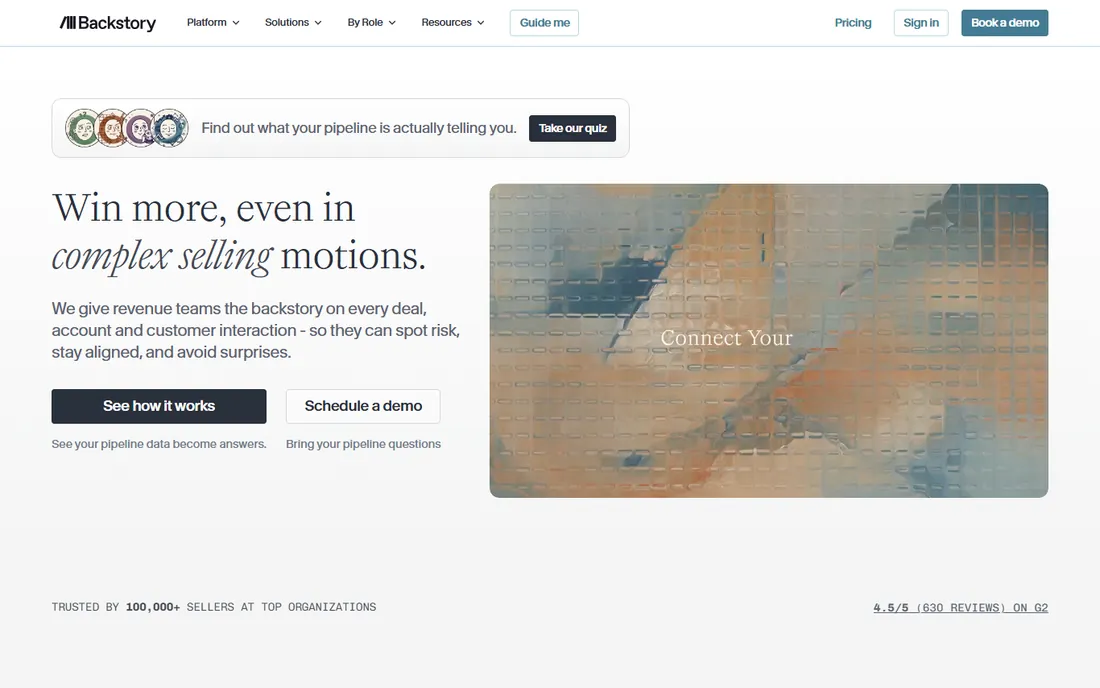
Backstory is the new name for People.ai, and the rebrand reflects a sharper pitch: direct answers for revenue leaders, built on complete activity data. The platform captures every customer interaction automatically, matches it to accounts and opportunities, and produces forecast views, waterfall charts and risk headlines from what actually happened. Its own site notes that most forecasting tools predict from CRM data, which is whatever reps remembered to log.
The catch is the transition. Reviews written for People.ai describe data infrastructure; the Backstory positioning is answers and AI delivery. Evaluate the current product, not the old coverage. Pricing is not published, and the product targets CROs and VPs of Sales at mid-market and enterprise companies, not small teams.
What we like- Captures every email, meeting and call automatically and matches it to deals
- Forecast views built from actual activity rather than rep-entered data
- Answers surface in the CRM and in AI assistants
Watch out for- Rebranded from People.ai, so older reviews describe a different-positioned product
- No public pricing
Starting price$249/month (billed annually, includes 2 seats; additional seats $49/month)
Free planNo
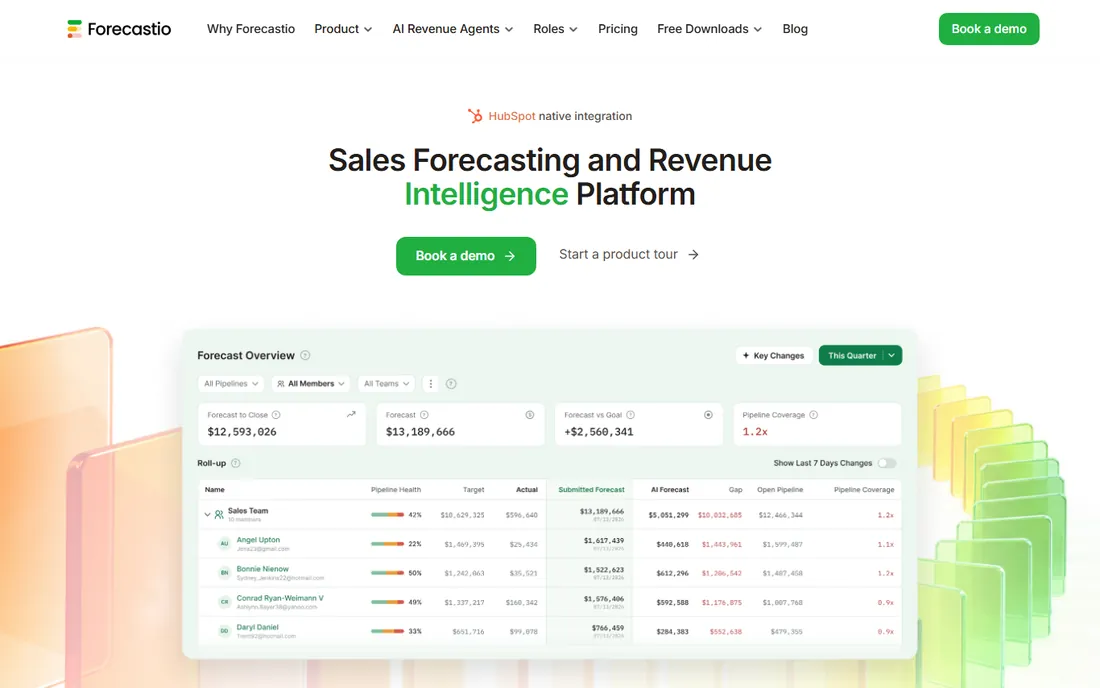
Forecastio targets the gap the enterprise tools ignore: small sales teams that want AI forecasting without an enterprise contract. Its pricing page lists $249/month billed annually including 2 seats, with additional seats at $49/month. The product scores deals, flags risks and helps managers run forecast reviews from a single view. For a 5-to-15-person sales team, it is the only AI forecaster here with a price you can evaluate today.
The catch is the floor. At $249/month, a three-person team is paying real money, and the product is younger with less third-party validation than Gong or Aviso. Book the demo and ask specifically how the AI scores are computed and how often they are right. If the answers are vague, the price is not justified.
What we like- Published pricing aimed at smaller teams
- AI deal scoring with risk identification
- Faster to deploy than enterprise platforms
Watch out for- $249/month is steep for very small teams
- Younger product with less analyst coverage
#9
Ebsta
Best for: Salesforce teams wanting forecast accuracy guarantees
Visit ebsta.com
Starting priceSee website (no public pricing)
Free planNo
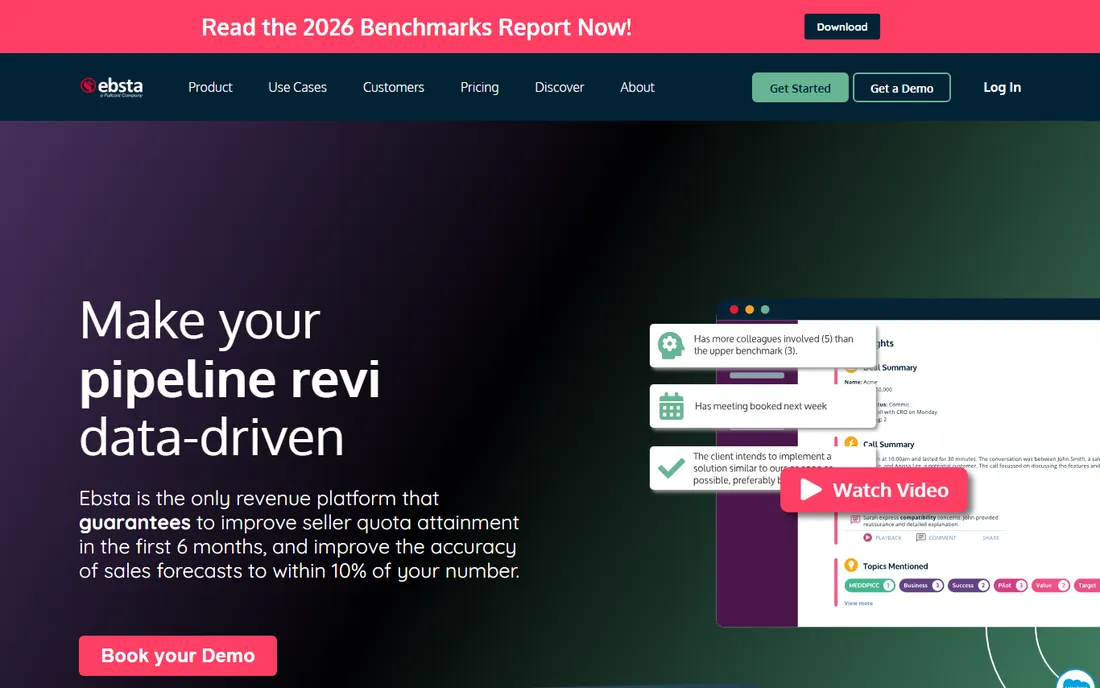
Ebsta's pitch is the guarantee: its own site promises to improve forecast accuracy to within 10% of the number within six months, plus quota attainment improvement and a 30-day implementation. The product learns from every interaction and deal, guiding sellers through qualification, pipeline reviews and forecast calls, with Salesforce as the system of record and Slack for in-flow alerts.
The catch is that guarantees in enterprise software always carry conditions, so read the terms before treating it as insurance. Pricing is not published, and the sales process will determine whether the guarantee applies to your deal size. It belongs on the shortlist for Salesforce teams where forecast accuracy is a board-level problem and the vendor is willing to put its fee behind the promise.
What we like- Guarantees forecast accuracy within 10% in the first 6 months, a bold commercial promise
- Learns from wins and losses to guide pipeline reviews
- Salesforce-native with Slack integration
Watch out for- The guarantee has conditions, read them before relying on it
- No public pricing
How we chose
We started with the searches buyers run: sales forecasting software, AI sales forecasting, and forecast accuracy tools. For each candidate we opened the vendor's own site and pricing page. Seven of the nine publish no prices, which we mark as "See website" rather than repeating third-party estimates. We verified two corporate changes directly: clari.com now serves Salesloft content (Clari was absorbed), and people.ai now serves the rebranded Backstory. We favored tools with a genuine forecasting workflow over generic BI dashboards.
What to look for before you buy
First, decide what your forecast is built from. Rep-entered CRM data is cheap and systematically optimistic. Activity data (calls, emails, meetings captured automatically) costs more and is systematically more accurate. Gong, Backstory and Ebsta sell the second kind. If your problem is reps not updating the CRM, buy activity capture first; a prettier dashboard on bad data changes nothing.
Second, match the tool to who owns the number. If the CRO owns forecasting and the question is "will we hit the quarter," buy a revenue-intelligence tool (Gong, Aviso, Backstory, Ebsta, Forecastio). If finance owns planning and the question is "how does the forecast change hiring and spend," buy a planning platform (Anaplan, Pigment). Buying a planning platform for a sales-execution problem, or vice versa, is the most expensive mistake in this category.
Third, interrogate the AI. Every vendor here claims AI forecasting. Ask: what data trains the model, how is accuracy measured, and what happens when the model is wrong. Vendors with guarantees (Ebsta) or published methodology deserve more trust than vendors with adjectives. Run a pilot on one quarter of historical data before signing a multi-year deal.
The pricing reality of forecasting software
This is one of the least transparent categories in sales tech, and that is worth understanding before you engage. Seven of nine tools here publish no prices, which means every evaluation starts with a demo request and ends with a negotiated quote. Expect annual contracts, per-user or platform fees, and implementation services bundled into year one.
The two published prices set the range: Weflow at $19/user/month (billed annually) for Salesforce-native forecasting, and Forecastio at $249/month (billed annually, 2 seats included) for small-team AI forecasting. Use these as anchors. If a quoted price is an order of magnitude higher, the vendor should be able to explain exactly what the extra accuracy, coverage or service is worth in your forecast cadence.
One more caution: the category is consolidating. Clari, long the best-known name, now redirects to Salesloft, and People.ai became Backstory. When evaluating, confirm you are looking at the current product and current pricing, not a review from two acquisitions ago. Ask every vendor for customer references in your industry and deal size, and call them.
Frequently asked questions
How much does sales forecasting software cost?
From $19/user/month (Weflow, billed annually) or $249/month (Forecastio, billed annually) at the published end, to custom enterprise quotes for Gong, Aviso, Anaplan and the rest. Budget at least five figures annually for any serious deployment.
What is the difference between sales forecasting and revenue intelligence?
Forecasting predicts whether you will hit the number. Revenue intelligence (Gong, Backstory) captures the underlying activity data, calls, emails, meetings, that makes the forecast accurate. Most modern forecasting tools include revenue-intelligence data capture.
Can small businesses use sales forecasting software?
Yes, but the enterprise tools will be overkill. Weflow ($19/user/month) and Forecastio ($249/month) are the accessible options here. Teams under 10 sellers should also consider whether disciplined pipeline reviews in their CRM solve the problem for free first.
How accurate is AI sales forecasting?
Vendors claim high accuracy, and Ebsta publicly guarantees within 10% in six months. Real-world accuracy depends on data quality: tools that capture actual sales activity outperform tools that rely on rep-entered CRM data. Always pilot against a historical quarter before trusting a number.
Does sales forecasting software replace the CRM?
No. Every tool here integrates with a CRM (usually Salesforce) rather than replacing it. The CRM remains the system of record; the forecasting tool reads its data, adds activity capture and analytics, and presents the forecast.
What happened to Clari?
Clari's website now redirects to Salesloft, indicating the brand was absorbed following consolidation in the sales tech category. Evaluate Salesloft's current offering if you were considering Clari, and treat older Clari reviews as historical.
Sources we checked (9)
- https://www.gong.io/
- https://www.aviso.com/
- https://www.insightsquared.com/
- https://www.anaplan.com/
- https://www.pigment.com/
- https://www.weflow.ai/pricing
- https://people.ai/
- https://forecastio.ai/pricing
- https://ebsta.com/
Is your product missing or out of date?
We review this list regularly. Vendors can request a listing, send updated pricing or ask about featured placement.

Shihab Mia · Founder, Rankite
Shihab has spent more than a decade helping SaaS and e-commerce brands grow through search. He writes Rankite's software buying guides from pricing pages, documentation and public user reviews. More about Shihab.