How we make this list: we compare pricing pages, product documentation and public user reviews. Rankite is independent; if a vendor ever pays for a featured spot, that listing is clearly labeled Partner.
Key takeaways
- Apollo and ZoomInfo win for teams that need contact data and outreach in a single workflow, while Clay wins for teams that want deep enrichment and custom lead scoring before a single email goes out.
- Gong and Fireflies solve different problems: Gong gives managers deal intelligence and coaching insight, Fireflies gives every rep clean notes and CRM updates from calls.
- Lavender and Regie.ai are the two most approachable AI writing tools; Lavender improves individual emails, Regie.ai builds entire outbound sequences and personas.
- Salesloft is the established cadence platform for larger teams, and HubSpot Sales Hub makes sense when the CRM, marketing, and sales data already live in HubSpot.
- Almost every vendor publishes pricing except Gong, ZoomInfo, and Salesloft, which keep numbers behind a sales conversation; free plans exist for most of the list but not for Gong or Salesloft.
Your reps are drowning in manual work. Researching accounts, writing first drafts, logging calls, scoring leads, all of it eats the hours that should go to conversations. Sales AI software promises to take the repetitive parts off their plates, but the category is crowded and every vendor claims the same outcomes. The reviews tell a clearer story: buyers consistently praise tools that remove one specific bottleneck, and they punish tools that add complexity without removing work. This guide compares nine of the most reviewed options, covering what each one actually automates, who it fits, and where reviewers say it falls short.
Quick comparison
| Tool | Best for | Starting price | Free plan |
|---|
 Apollo Apollo | outbound teams that want prospecting data and engagement in one platform | See website | Yes |
 Clay Clay | teams that want deep enrichment and lead scoring before outreach | See website | Yes |
 Gong Gong | sales managers who need deal visibility and coaching insight | See website | No |
 Lavender Lavender | individual reps who want better emails without changing tools | See website | Yes |
 Fireflies Fireflies | teams that need reliable call notes and CRM updates | See website | Yes |
 ZoomInfo ZoomInfo | enterprise teams that need premium contact and company data | See website | Yes |
 Salesloft Salesloft | larger teams running structured outbound cadences | See website | No |
 Regie.ai Regie.ai | teams that want AI to build complete outbound sequences | See website | Yes |
 HubSpot Sales Hub HubSpot Sales Hub | companies already running on HubSpot CRM | See website | Yes |
Is your product missing or out of date?
We review this list regularly. Vendors can request a listing, send updated pricing or ask about featured placement.
The best sales AI software
#1
Apollo
Best for: outbound teams that want prospecting data and engagement in one platform
Visit apollo.io
Starting priceSee website
Free planYes
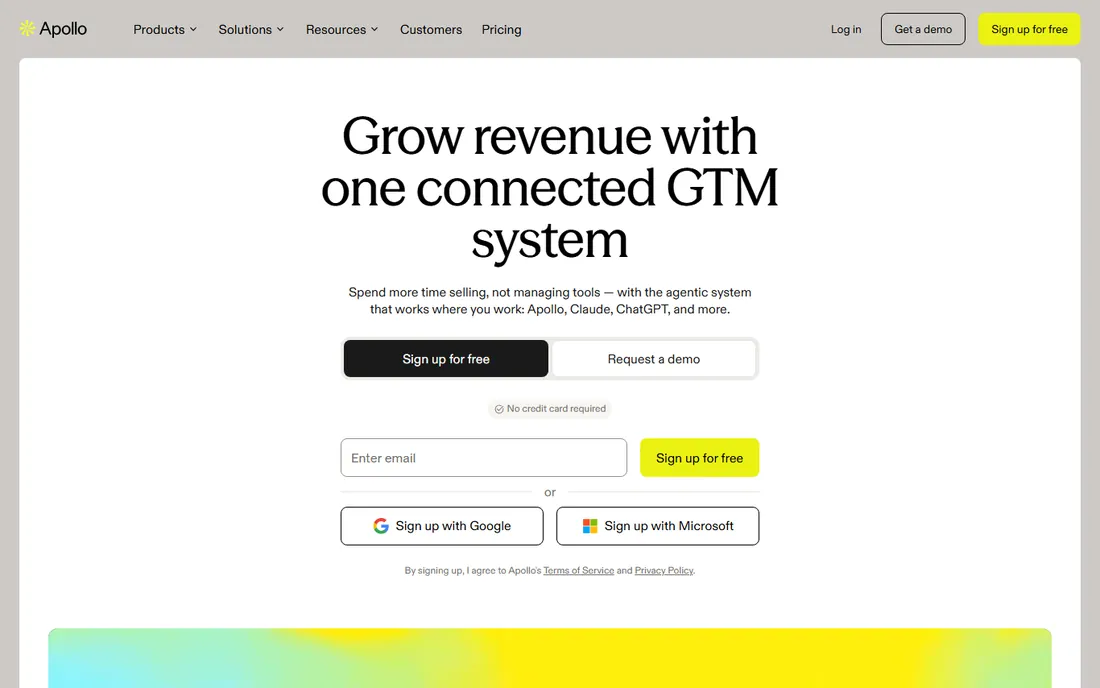
Apollo combines a B2B contact database with sequences, dialing, and analytics, so a small outbound team can run its whole motion without buying three separate tools. Reviewers like that the free plan is genuinely usable, not a demo in disguise, and that getting started takes hours rather than weeks. The AI features focus on practical work: scoring leads, drafting outreach, and surfacing buying signals.
The catch is one reviewers mention often. Contact data is not perfect, and Apollo is no exception. Teams that sell into niche verticals or outside North America report lower match rates and should budget time for verification. Apollo works best when you treat it as a starting point for pipeline, then let your reps qualify.
What we like- Large contact database with built-in engagement tools
- Generous free plan for small teams
- Straightforward setup compared with legacy data vendors
Watch out for- Data accuracy varies by industry and region
- Email deliverability needs careful domain setup
#2
Clay
Best for: teams that want deep enrichment and lead scoring before outreach
Visit clay.com
Starting priceSee website
Free planYes
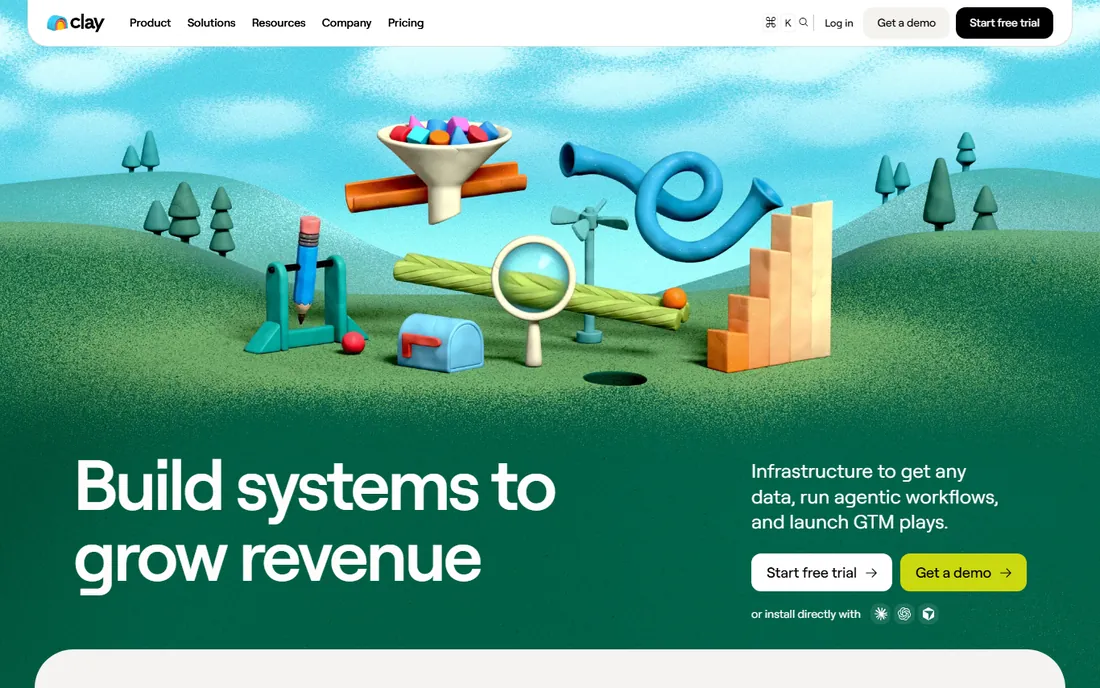
Clay is the tool buyers mention when their lists are stale and generic. Instead of one database, it pulls from many providers and lets you build waterfall enrichment, custom scoring, and AI-generated personalization in one canvas. Growth teams at startups use it to turn vague ICPs into precise, researched prospect lists.
It is not a plug-and-play database. Reviewers warn that Clay rewards people who enjoy building systems and frustrates those who want a simple search bar. Usage-based pricing means a team running large enrichment jobs needs to watch credits. If you have someone who likes tinkering with data, Clay can replace a lot of manual research.
What we like- Flexible enrichment from dozens of data providers
- Strong for building targeted lists and scoring models
- Popular with technically minded growth teams
Watch out for- Learning curve is real
- Costs can climb with heavy enrichment usage
#3
Gong
Best for: sales managers who need deal visibility and coaching insight
Visit gong.io
Starting priceSee website
Free planNo
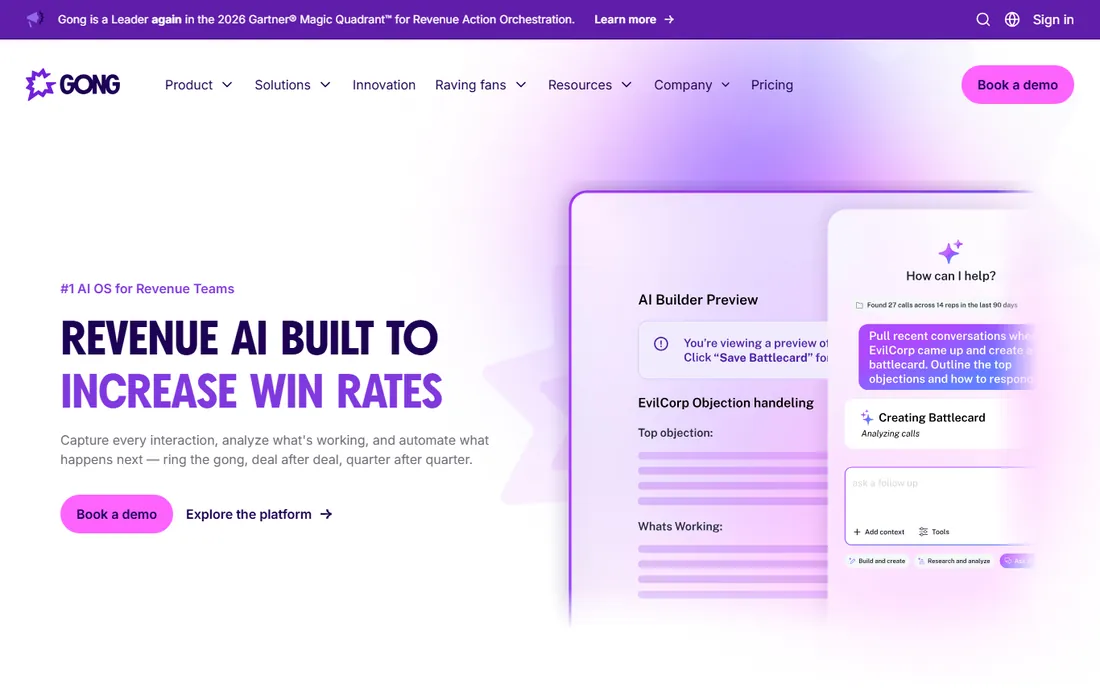
Gong records, transcribes, and analyzes sales calls, then turns them into coaching moments, deal risk flags, and forecast inputs. Managers describe it as the first time they could actually see what happens on calls at scale. The AI summaries and topic tracking are the features reviewers cite most, because they replace hours of call shadowing.
Pricing is the barrier. Gong does not publish prices, and reviewers consistently describe it as an enterprise purchase with annual contracts. It also only pays off if reps actually record calls and managers actually review the output. Teams that buy it and never build a coaching habit end up with an expensive transcription service.
What we like- Detailed conversation intelligence across calls
- Strong deal analytics and forecasting signals
- Widely praised by enablement teams
Watch out for- Pricing is quote-only and expensive for small teams
- Requires consistent call recording adoption
#4
Lavender
Best for: individual reps who want better emails without changing tools
Visit lavender.ai
Starting priceSee website
Free planYes
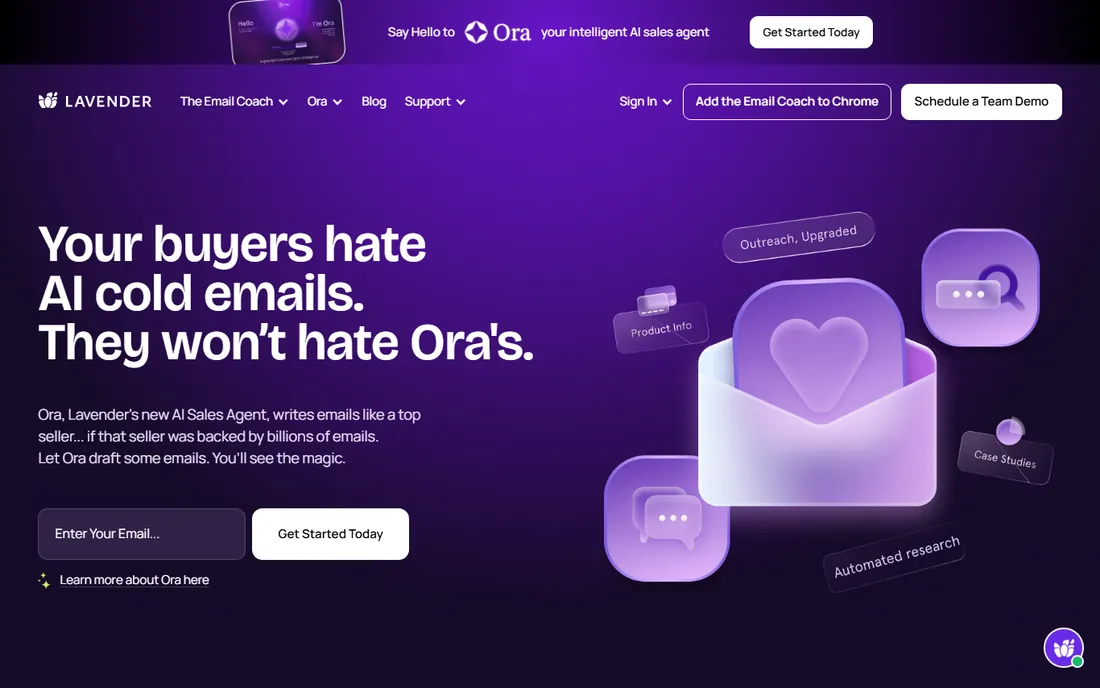
Lavender sits inside the inbox and scores each email as the rep writes it, flagging long sentences, weak personalization, and tone problems. Reviewers say it feels like a writing coach rather than another dashboard, and reps actually use it because it lives where they already work. The free plan covers a small monthly email volume, enough for an individual rep to test.
It will not run your outbound motion. Lavender improves the emails you write, but it does not build lists, manage cadences, or track deals. Buyers pair it with a sequencer or CRM and treat it as a quality layer. For teams whose reply rates are the problem, that narrow focus is the point.
What we like- Works inside Gmail and Outlook as a coaching sidebar
- Concrete email scores with specific fixes
- Low friction adoption
Watch out for- Focused on email only, not a full sales platform
- Free plan has monthly email limits
#5
Fireflies
Best for: teams that need reliable call notes and CRM updates
Visit fireflies.ai
Starting priceSee website
Free planYes
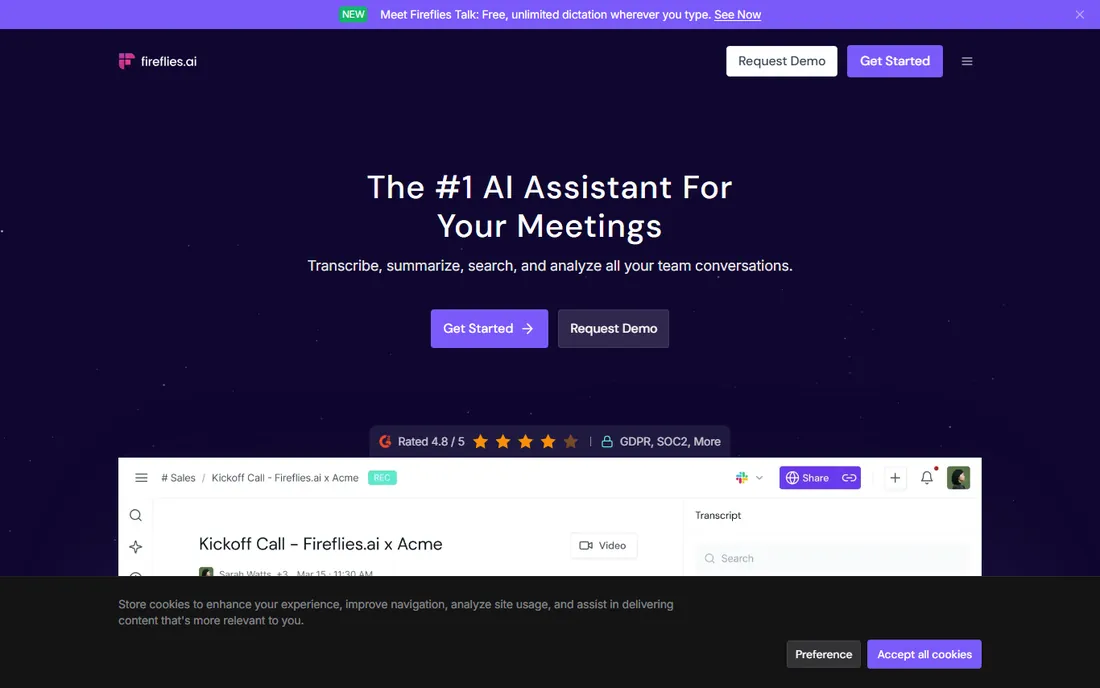
Fireflies is the meeting assistant that shows up, records, transcribes, and files the notes where they belong. Reviewers like that setup is simple: connect the calendar and the bot handles the rest. The AI summaries and action items get particular praise from teams that run high call volumes and hate manual note-taking.
It is a step below Gong in analytical depth. Fireflies tells you what was said and agreed; it does less of the deal-risk scoring and coaching analytics that justify Gong's price. For most small and mid-size teams, that tradeoff is fine. The free plan covers limited transcription minutes, and the paid tiers stay cheap per seat.
What we like- Joins calls automatically and produces searchable transcripts
- Solid CRM integrations
- Affordable paid tiers
Watch out for- Transcription accuracy dips with heavy accents or crosstalk
- Some reviewers note occasional bot-join hiccups
#6
ZoomInfo
Best for: enterprise teams that need premium contact and company data
Visit zoominfo.com
Starting priceSee website
Free planYes
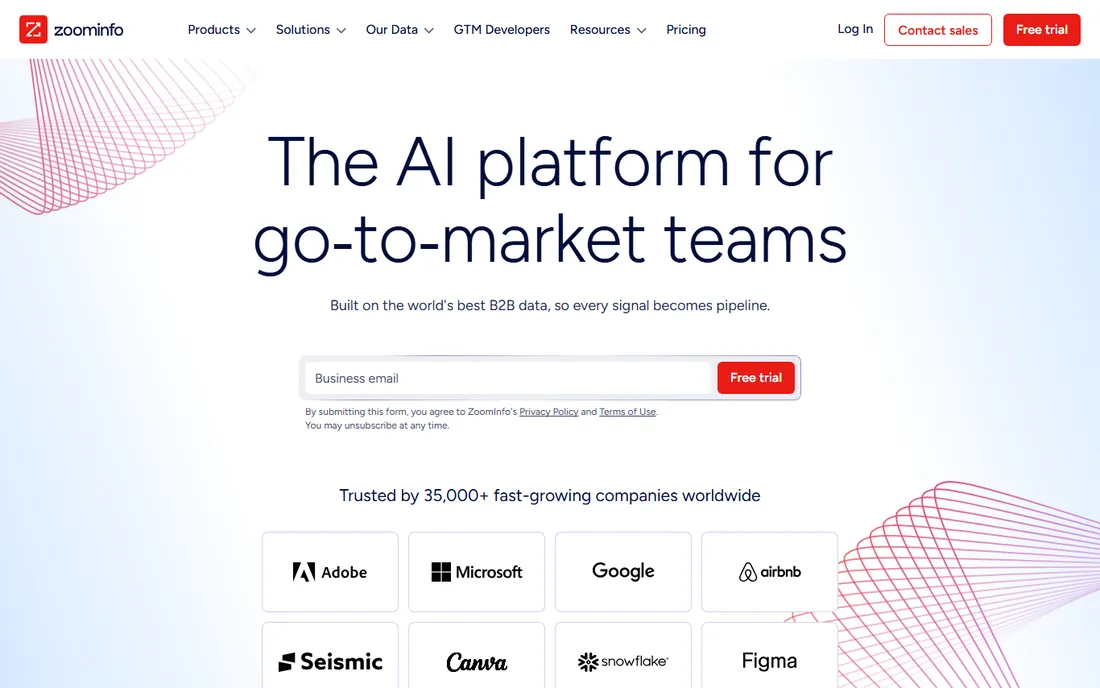
ZoomInfo remains the default answer for companies that want the biggest B2B database with intent signals layered on top. Enterprise buyers praise the org charts, technographics, and the way intent data feeds account prioritization. The Lite free tier exists, though reviewers describe it as limited compared with paid plans.
The reviews also carry a consistent warning about cost and contracts. ZoomInfo is a significant annual commitment, and several reviewers describe aggressive renewal terms. Smaller teams often find Apollo or Clay deliver enough data at a fraction of the price. ZoomInfo fits when data volume and intent signals directly drive an enterprise pipeline.
What we like- Large, frequently updated B2B database
- Strong intent data and org charts
- Deep Salesforce integration
Watch out for- Contracts are expensive with annual commitments
- Data freshness complaints persist in some segments
Starting priceSee website
Free planNo
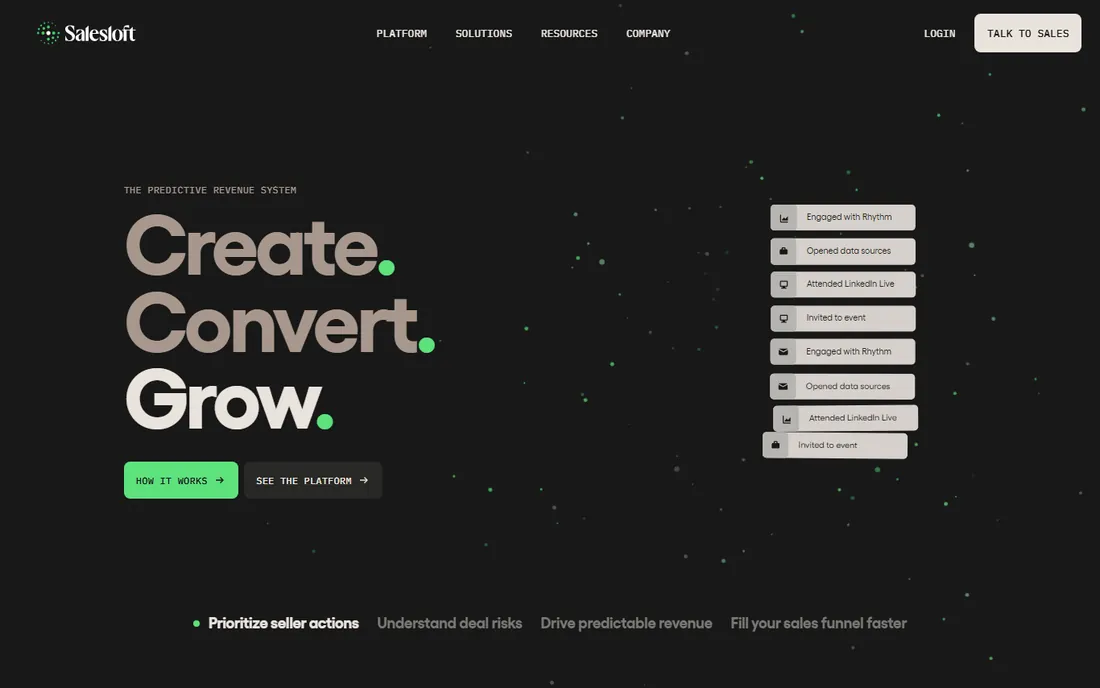
Salesloft is the sales engagement platform many mid-market and enterprise teams standardized on before AI features became the headline. Its AI additions now cover email drafting, call summaries, and deal scoring, layered onto cadence management that reviewers call dependable. Managers value the analytics on rep activity and sequence performance.
It is built for teams with process. Reviewers at small companies say Salesloft can feel like too much platform for a five-person team, and pricing starts with a sales conversation rather than a signup page. If your outbound motion already has defined cadences and you want AI layered onto a proven system, Salesloft is a natural fit.
What we like- Mature cadence and workflow automation
- Strong analytics for managers
- Deep ecosystem of integrations
Watch out for- Quote-only pricing aimed at larger deals
- Can feel heavy for small teams
#8
Regie.ai
Best for: teams that want AI to build complete outbound sequences
Visit regie.ai
Starting priceSee website
Free planYes
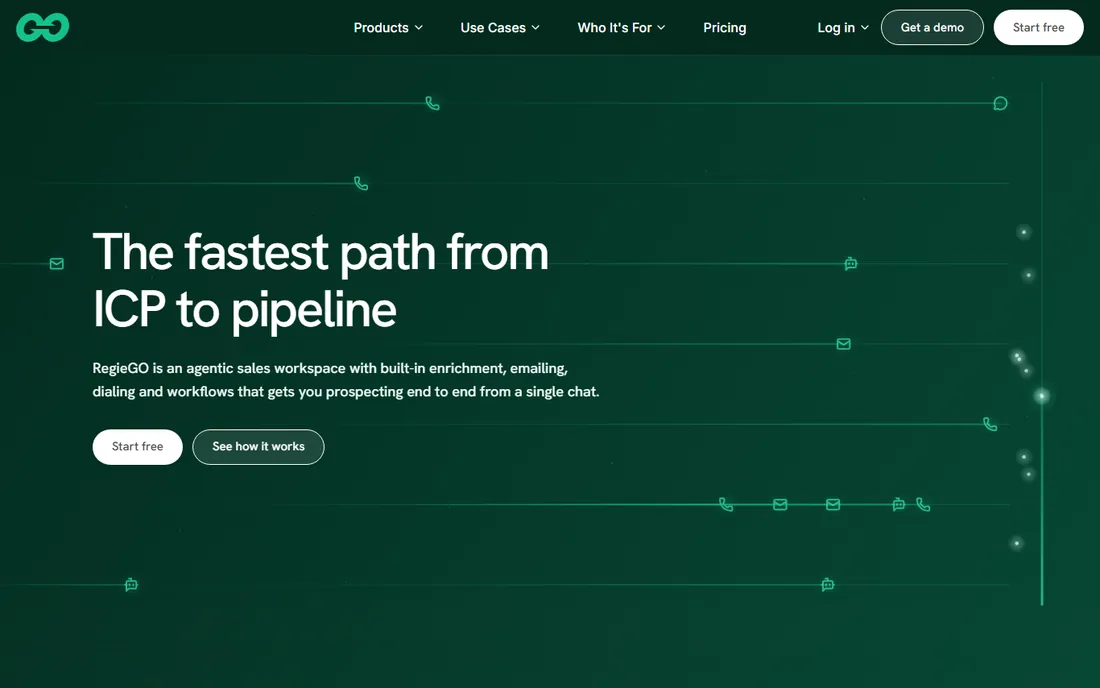
Regie.ai takes a different angle from email coaches: you describe your product and audience, and it builds the personas, value props, and multi-step sequences. Reviewers say it compresses a week of campaign planning into an afternoon. The free plan lets teams test the generation quality before paying.
The output is a starting draft, not a finished campaign. Reviewers who get the best results treat Regie.ai as a junior copywriter: fast, useful, and in need of review. Teams that send its output untouched report the generic feel that buyers punish. Used with a human editor, it is one of the quickest ways to stand up outbound.
What we like- Generates full sequences, personas, and messaging from minimal input
- Fast to get campaigns running
- Well reviewed for ease of use
Watch out for- Generated copy still needs human editing
- Smaller ecosystem than established sequencers
#9
HubSpot Sales Hub
Best for: companies already running on HubSpot CRM
Visit hubspot.com
Starting priceSee website
Free planYes
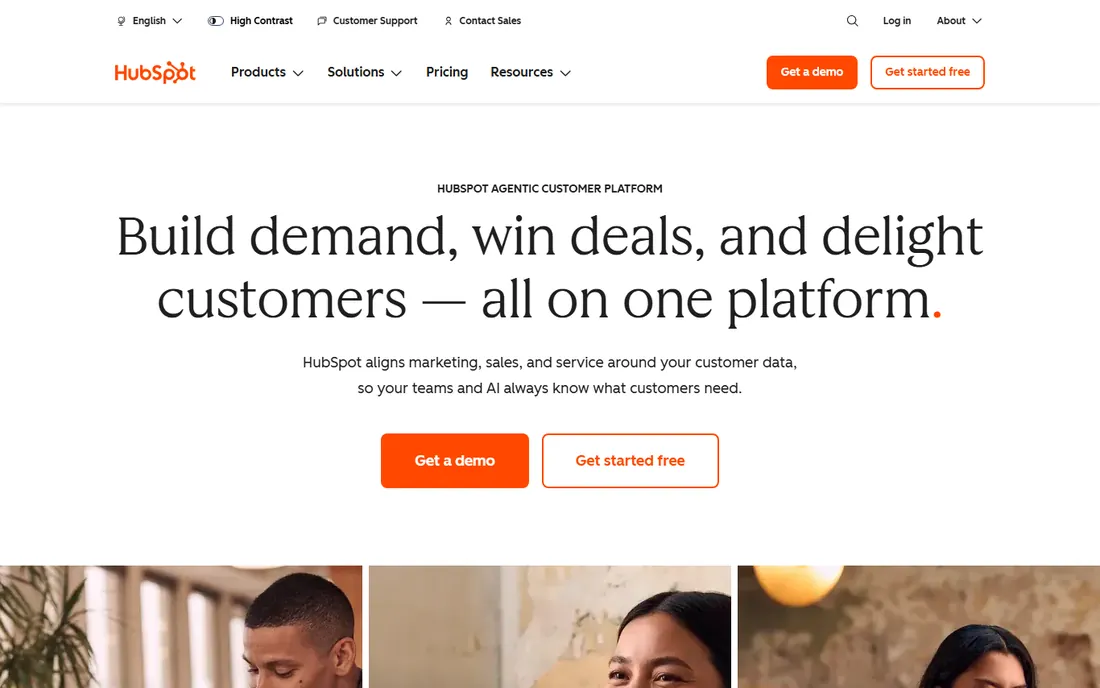
HubSpot Sales Hub adds sequences, meeting scheduling, AI email writing, and prospecting tools on top of the free HubSpot CRM. Reviewers who already live in HubSpot say the appeal is obvious: one database, one login, and AI features that draw on the full customer record. The free tier makes it easy to start.
The tradeoff is ecosystem lock-in. Teams not on HubSpot CRM get less of the benefit, and the more capable AI features require paid tiers that climb with seats. Reviewers also note that HubSpot's AI is competent rather than best-in-class at any single job. It wins on cohesion, not on any one standout capability.
What we like- Native fit with HubSpot CRM and marketing data
- AI prospecting and email tools included
- Free CRM tier lowers the entry cost
Watch out for- Best value requires the HubSpot ecosystem
- Advanced AI features sit on higher tiers
How we chose
We started with the tools that appear most often in buyer shortlists and review roundups, then checked each one against public review sources including G2, Capterra, and Reddit threads where practitioners compare notes. Every product on this list exists today, serves sales teams directly, and has a current, verifiable homepage. We read vendor pricing pages and documentation to confirm what is included in free plans versus paid tiers, and we noted where vendors keep pricing behind a sales call. We did not test the products hands-on and we did not accept vendor claims at face value; where reviewers consistently reported a weakness, we included it.
What reviewers actually reward
Reading hundreds of reviews across these nine tools, a pattern shows up. The highest-rated products do one job with little friction. Lavender improves emails inside the inbox. Fireflies takes notes without being asked. Clay builds lists that are actually researched. The tools with the most mixed reviews are the ones that ask buyers to change their workflow first and promise payoff later. Before you buy, identify the single bottleneck costing your team the most hours, then pick the tool that removes it with the least behavior change.
Contract terms deserve the same scrutiny as features. Gong, ZoomInfo, and Salesloft all price through sales conversations, and reviewers repeatedly mention annual commitments and renewal surprises. Ask for the renewal terms in writing, find out what happens to your data if you leave, and confirm which AI features are included in the base price versus gated behind higher tiers. Free plans are worth testing seriously: Apollo, Clay, Lavender, Fireflies, Regie.ai, and HubSpot all let you run real work before paying, which is the cheapest due diligence available.
Integration fit decides more purchases than feature lists suggest. A tool that syncs cleanly with your CRM and existing sequencer will outperform a more capable tool that needs manual exports. Check whether call recordings flow into the CRM automatically, whether email tools work in the inbox your reps actually use, and whether data enrichment writes back to lead records or lives in a separate silo. The best sales AI software for your team is the one your reps will still be using in six months, and that almost always comes down to fit, not feature count.
Pricing reality check
Published pricing exists for most of this list, but the three enterprise names keep numbers private. Treat quote-only pricing as a signal about who the product is built for: if a vendor will not show a price, the deal size they expect is larger than a credit-card signup. Free plans are genuinely useful for Apollo, Clay, Lavender, Fireflies, Regie.ai, and HubSpot, and testing two or three of them in parallel is a reasonable way to compare. Budget beyond the subscription too. Data tools like Clay charge for enrichment usage, and any tool that needs CRM integration work or deliverability setup carries implementation cost in staff time even when the software price looks low.
Frequently asked questions
Which sales AI software is best for a small team?
Apollo or HubSpot Sales Hub usually fit best, because both combine usable free plans with enough built-in functionality to run a real outbound motion. Add Lavender for email quality and Fireflies for call notes, and a team of five can cover most of the workflow for little or no cost.
Do I need conversation intelligence if I already record calls?
Recording is only useful if someone reviews the output. Gong adds value through coaching insight, deal risk flags, and searchable trends across calls. If managers will not build a review habit, Fireflies gives you transcripts and summaries at a much lower price.
How accurate is AI-generated sales data?
Good enough to start from, not good enough to trust blindly. Reviewers report that Apollo, ZoomInfo, and Clay all have gaps in niche verticals and regions. Verify contact data for high-value accounts and expect some bounce on cold outreach regardless of provider.
Can AI write my outbound emails for me?
It can draft them, and tools like Regie.ai and Lavender do this well. Reviewers consistently say the best results come from human editing of AI drafts. Sending unedited AI output tends to produce the generic feel that gets emails ignored.
What should I ask on a sales call for quote-only pricing?
Ask for the per-seat price at your team size, the contract length, renewal terms, and which AI features are included versus add-ons. Ask what happens to your data and integrations if you cancel. Get the answers in writing before signing.
Is it worth replacing several tools with one platform?
Sometimes. Apollo and HubSpot both aim to consolidate data, engagement, and reporting. Consolidation works when the all-in-one tool is good enough at each job your team actually does. It fails when you give up a best-in-class capability, like Clay's enrichment or Gong's analytics, for convenience.
Sources we checked (13)
- https://www.apollo.io/
- https://clay.com/
- https://gong.io/
- https://lavender.ai/
- https://fireflies.ai/
- https://www.zoominfo.com/
- https://salesloft.com/
- https://regie.ai
- https://hubspot.com/
- https://regie.ai/pricing
- https://fireflies.ai/pricing
- https://blog.hubspot.com/sales/hubspot-sales-hub-pricing
- https://aisdr.com/blog/best-ai-for-sales-prospecting/
Is your product missing or out of date?
We review this list regularly. Vendors can request a listing, send updated pricing or ask about featured placement.

Shihab Mia · Founder, Rankite
Shihab has spent more than a decade helping SaaS and e-commerce brands grow through search. He writes Rankite's software buying guides from pricing pages, documentation and public user reviews. More about Shihab.