How we make this list: we compare pricing pages, product documentation and public user reviews. Rankite is independent; if a vendor ever pays for a featured spot, that listing is clearly labeled Partner.
Key takeaways
- Outreach and Salesloft are the enterprise sales engagement standards; both are custom-quoted and built for teams with dedicated sales ops.
- Apollo combines a 240M+ contact database with sequences and a dialer, so small teams can prospect and engage in one subscription.
- Reply, Lemlist, Klenty, Mixmax and Woodpecker publish friendlier pricing for smaller teams; Reply and Lemlist both offer free trials with no credit card required.
- Pricing in this category is per seat plus usage: count your seats, your monthly email volume and your data needs before comparing.
Quick comparison
| Tool | Best for | Starting price | Free plan |
|---|
 Outreach Outreach | Enterprise revenue teams running full-cycle engagement | See website (custom quote) | No |
 Salesloft Salesloft | Revenue teams wanting engagement plus forecasting | See website (custom quote) | No |
 Apollo Apollo | Small teams wanting data plus outreach in one tool | $0 (Free plan); $49/user/month (Basic, billed annually) | Yes (free plan) |
 Reply.io Reply.io | Teams wanting multichannel sequences with AI agents | See website | Free trial (no credit card required) |
 Lemlist Lemlist | Teams wanting personalized multichannel outreach | See website | Free trial (14 days) |
 Klenty Klenty | SDR teams doing high-volume calling cadences | See website | No (no free trial advertised) |
 Mixmax Mixmax | Teams living in Gmail who want sequences inside it | See website | Yes (free plan, no credit card) |
 Close Close | SMBs wanting CRM plus calling and email in one | See website | No |
 Woodpecker Woodpecker | Agencies and teams focused on cold email deliverability | See website | Free trial (14 days) |
Is your product missing or out of date?
We review this list regularly. Vendors can request a listing, send updated pricing or ask about featured placement.
The best sales acceleration software
Most teams do not have a pipeline problem. They have a follow-up problem. Reps send one email, make one call, and move on, while the data says deals close after five to eight touches. Sales acceleration software exists to make those touches happen automatically: sequences across email, phone, LinkedIn and SMS, with the busywork handled and the rep stepping in when a human reply arrives. These nine tools do that job, from enterprise platforms to focused cold-email tools.
#1
Outreach
Best for: Enterprise revenue teams running full-cycle engagement
Visit outreach.io
Starting priceSee website (custom quote)
Free planNo
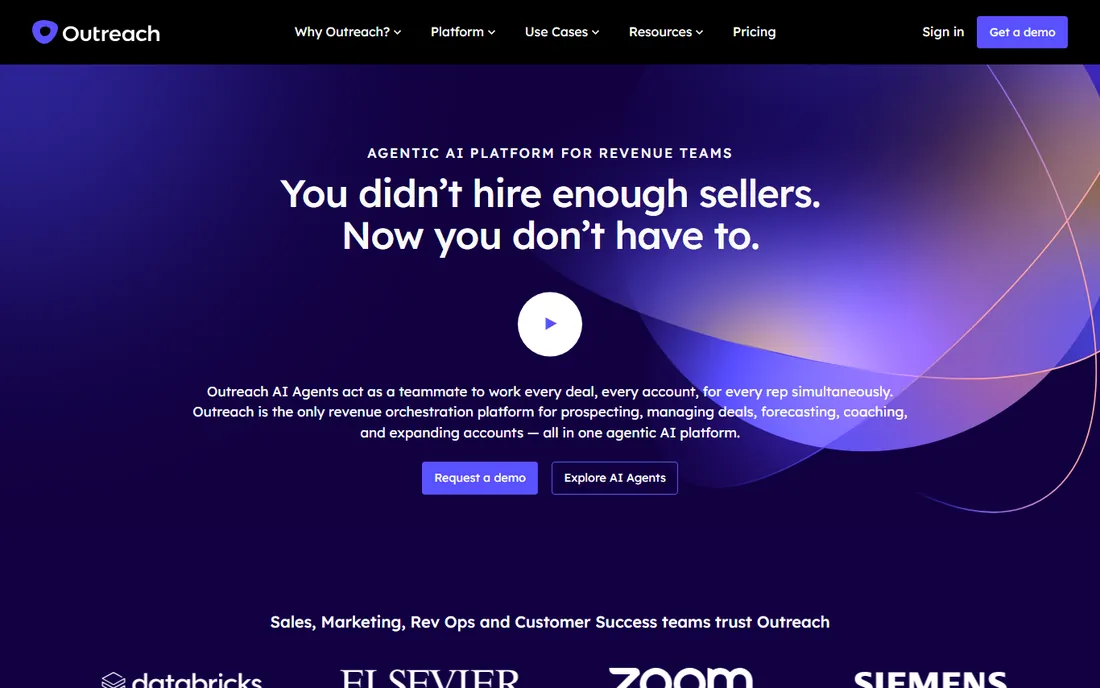
Outreach is the name most enterprise buyers start with, and for good reason: it covers the full revenue cycle, from prospecting sequences through deal management, forecasting and coaching, now with AI agents positioned as teammates for every rep. The platform's depth in enterprise workflows, governance and integrations is what keeps large revenue organizations on it.
The price of that depth is opacity and overhead. Pricing is custom-quoted, buying goes through sales, and getting value out of the platform realistically needs someone in sales ops running it. Teams under twenty reps will pay enterprise prices for features they never open. For large revenue organizations, it is the standard. For everyone else, the tools below cost less and start faster.
What we like- The category-defining sales engagement platform
- Covers prospecting, deal management, forecasting and coaching in one
- Deep enterprise integrations and AI agents
Watch out for- Custom pricing with an enterprise sales process
- Implementation needs sales ops support
- Overkill and overpriced for small teams
Starting priceSee website (custom quote)
Free planNo
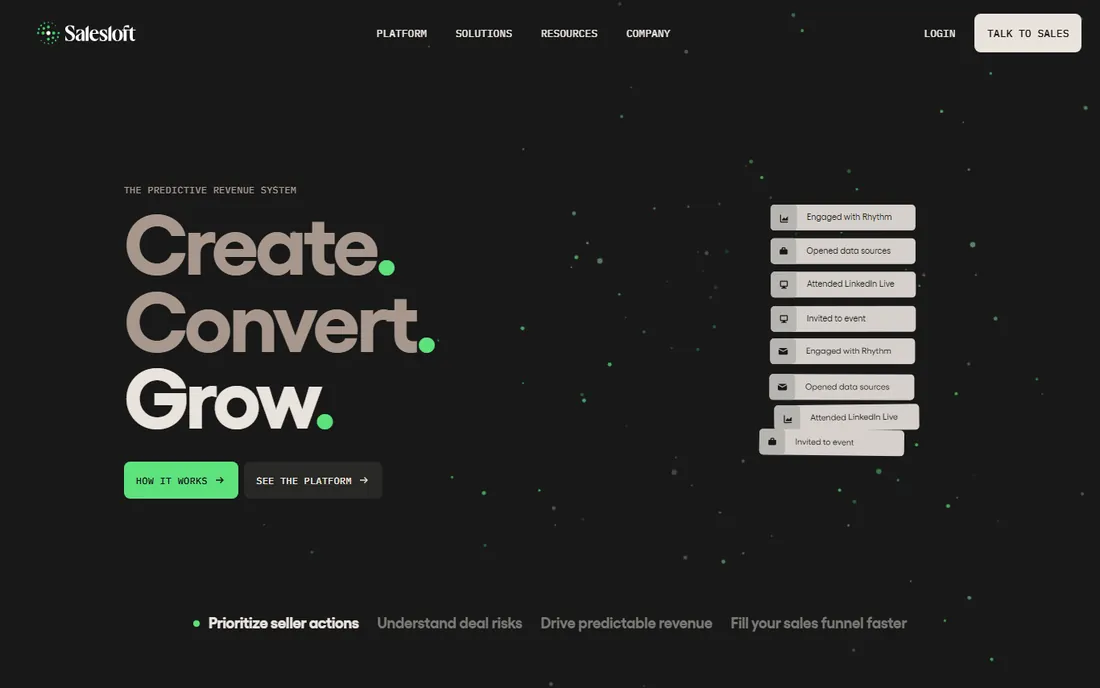
Salesloft spent years as Outreach's chief rival and has repositioned as a revenue orchestration platform: sequences and cadences plus conversation intelligence, deal management and forecasting, with AI turning buyer signals into prioritized actions. For teams that want engagement and forecasting from one vendor, the breadth is the argument.
Two caveats. Pricing is custom-quoted through an enterprise sales process. And Salesloft announced a merger agreement with Clari in August 2025, so buyers should ask hard questions about the combined roadmap before signing a multi-year deal. The product is real and current; the corporate future is the open question.
What we like- Full revenue orchestration: engagement, conversations, deals and forecasting
- Strong buyer-signal and AI guidance
- Trusted by thousands of organizations per the vendor
Watch out for- Custom pricing
- Announced a merger with Clari in 2025, so the long-term product direction is in flux
- Enterprise buying process
#3
Apollo
Best for: Small teams wanting data plus outreach in one tool
Visit apollo.io
Starting price$0 (Free plan); $49/user/month (Basic, billed annually)
Free planYes (free plan)
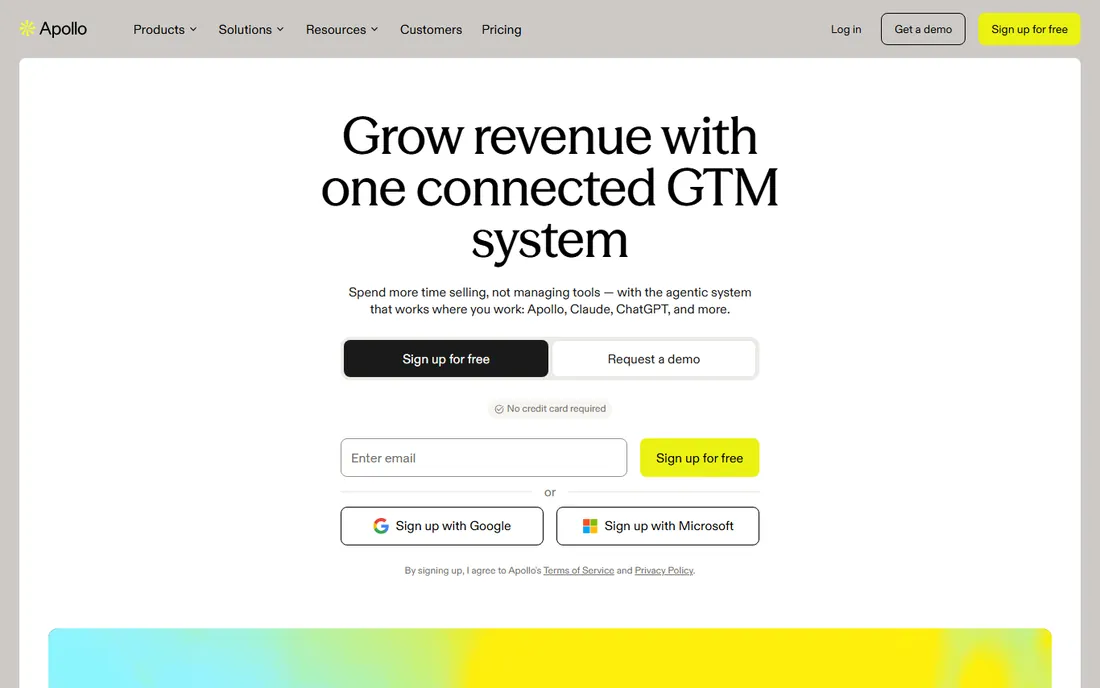
Apollo's trick is bundling: a B2B contact database (the vendor cites 240M+ contacts), multichannel sequences, a dialer, buying signals and AI agents in one product. A three-person team can find prospects, enrich them, run sequences and make calls without buying four tools. Pricing is published: Free at $0, Basic at $49 per user per month billed annually, then $79 and $119 tiers, which makes Apollo the easiest starting point in this guide to evaluate.
The honest catch is the one every database carries: contact accuracy varies by industry and seniority, so verify before you scale. Credits for enrichment and higher sending limits sit on paid tiers, and the per-seat price multiplies across the team. For prospecting-heavy small teams, though, the value per dollar is hard to beat.
What we like- Contact database, sequences, dialer and AI agents in one subscription
- Published pricing with a genuinely free plan
- 200+ integrations and CRM-friendly design
Watch out for- Data accuracy varies by segment, as with any database
- Credits and sending limits gate the cheaper tiers
- Support quality is a common reviewer gripe
#4
Reply.io
Best for: Teams wanting multichannel sequences with AI agents
Visit reply.io
Starting priceSee website
Free planFree trial (no credit card required)
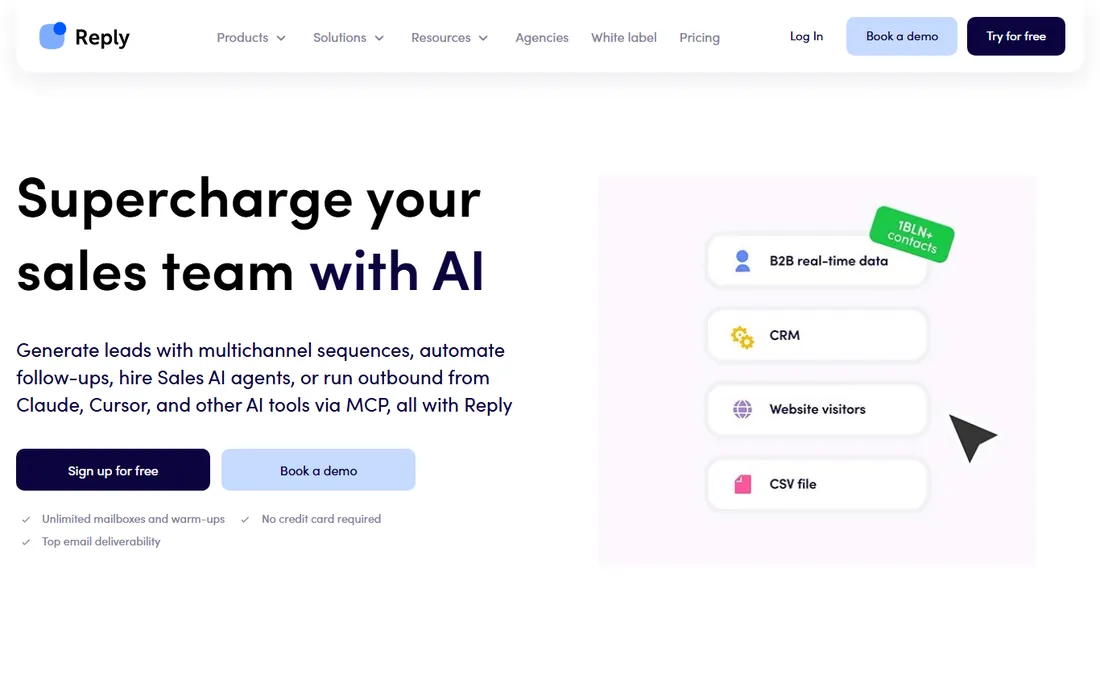
Reply.io builds its case on multichannel execution: email, LinkedIn, WhatsApp, calls and SMS in one sequence, with AI writing personalized variants per prospect. The infrastructure story is strong too: unlimited mailboxes, automatic warm-up, and the option to buy pre-warmed domains and mailboxes inside the product, with SPF, DKIM and DMARC configured automatically.
Pricing is where buyers need to look closely. The homepage shows add-on prices (LinkedIn automation, calls, email validation, extra mailboxes) but the core plan prices sit behind the pricing page, so get the full quote including add-ons before comparing. Signup is free with no credit card required, which makes evaluation painless.
What we like- Multichannel sequences across email, LinkedIn, WhatsApp, calls and SMS
- Built-in mailbox warm-up and deliverability tooling
- AI SDR agents for hands-off outbound
Watch out for- Main plan prices not published on the homepage
- Add-ons (LinkedIn, calls, validation, extra mailboxes) stack up
- Newer AI agent features are still maturing
#5
Lemlist
Best for: Teams wanting personalized multichannel outreach
Visit lemlist.com
Starting priceSee website
Free planFree trial (14 days)
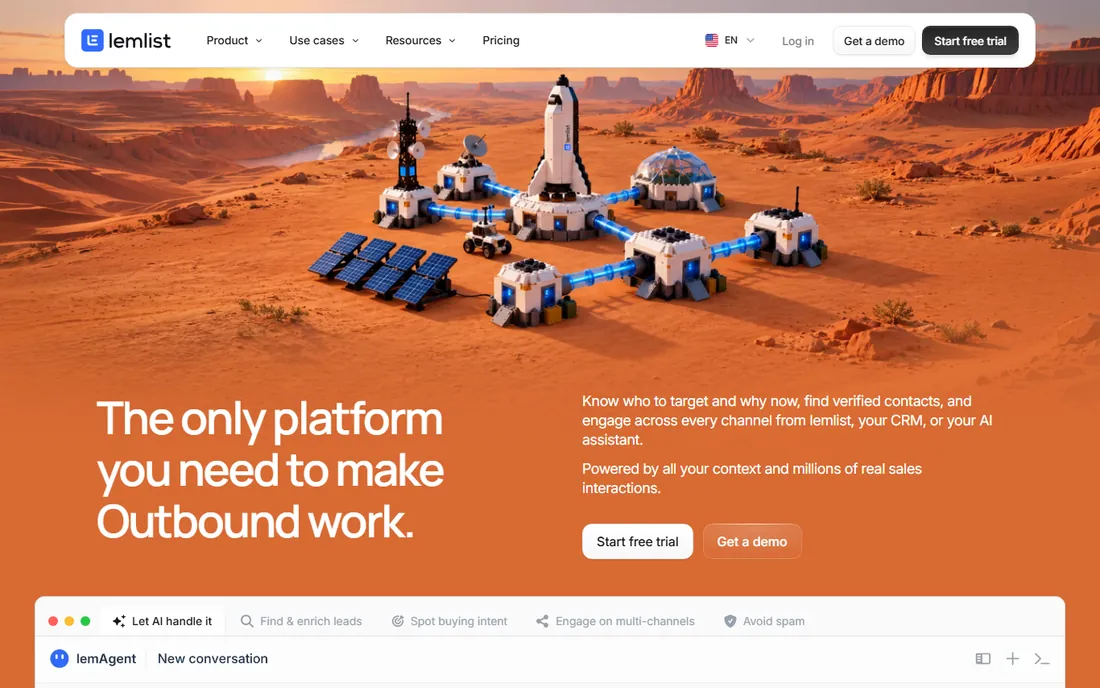
Lemlist made its name on personalization: AI variables, personalized images and videos, and custom landing pages that make bulk outreach feel one-to-one. The current platform adds lead discovery from a large database, enrichment, intent signals and multichannel sequences, plus a deliverability hub with the lemwarm warm-up tool built into every seat.
The 14-day free trial is genuinely useful for testing deliverability and reply rates on your own lists. Plan prices are not published on the homepage, so shortlist on features and get the quote. Teams that live on personalization quality over sheer volume tend to prefer lemlist to the plainer cadence tools.
What we like- Strong personalization features including AI variables and custom landing pages
- Multichannel campaigns across email, LinkedIn, calls, WhatsApp and SMS
- Built-in deliverability tools with lemwarm
Watch out for- Plan prices not published on the homepage
- Personalization features take setup time to use well
- Advanced data and intent features cost extra
#6
Klenty
Best for: SDR teams doing high-volume calling cadences
Visit klenty.com
Starting priceSee website
Free planNo (no free trial advertised)
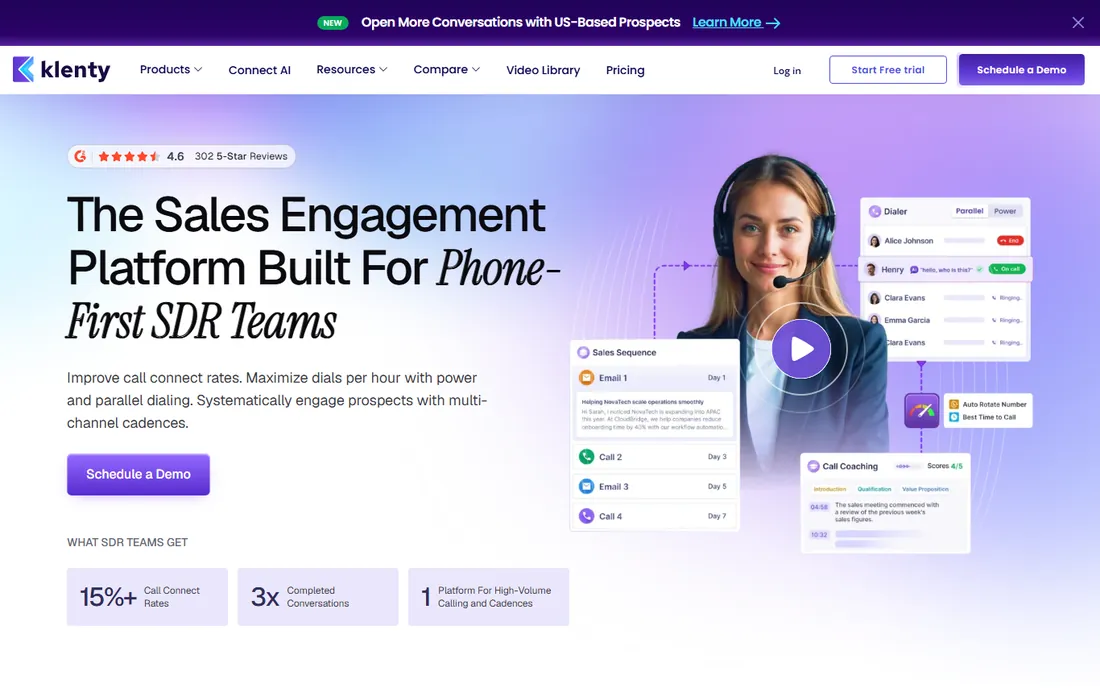
Klenty is built for phone-first SDR teams: an AI parallel and power dialer, local-presence number rotation and connect-rate infrastructure sit next to multichannel cadences across email, LinkedIn and SMS. The pitch is simple: maximize live conversations per hour, not activities logged. AI call coaching scores reps against talk tracks, which matters to managers running calling floors.
Pricing is not published on the homepage, so get a quote before comparing with Outreach or Salesloft. Klenty's differentiation is the calling stack, and teams that live on the phone should shortlist it. Email-only teams will find cheaper options that do the sequencing job just as well.
What we like- AI parallel and power dialer built for phone-first teams
- Local-presence rotation and connect-rate infrastructure
- Multichannel cadences plus AI call coaching
Watch out for- No published pricing on the homepage
- Calling-heavy focus means email-only teams overpay
- Smaller vendor than the enterprise incumbents
#7
Mixmax
Best for: Teams living in Gmail who want sequences inside it
Visit mixmax.com
Starting priceSee website
Free planYes (free plan, no credit card)
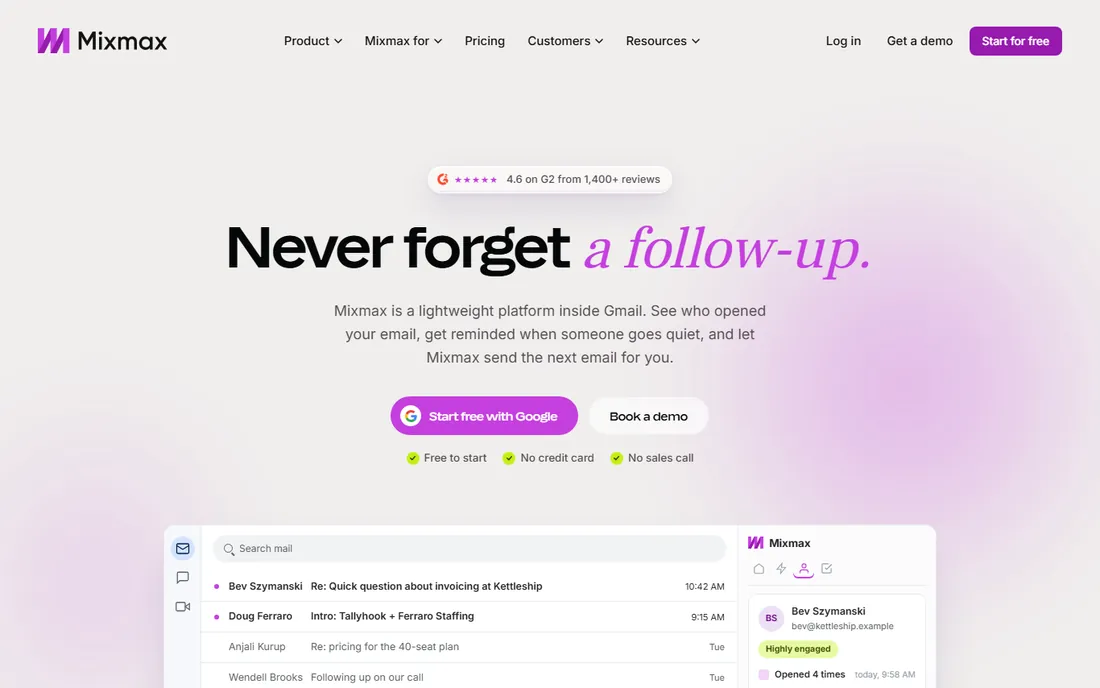
Mixmax lives inside Gmail as a Chrome extension: sequences, follow-ups, open tracking, meeting scheduling and LinkedIn steps run from the inbox reps already use. Setup is famously fast. Add the extension, connect Gmail, send. No onboarding call, no IT ticket, and it works with or without a CRM. Emails go out through the rep's real Gmail, which helps deliverability.
The free plan requires no credit card, which makes evaluation painless. The trade-off is scope: Gmail-centric teams love it, but companies needing deep CRM-native workflows or enterprise governance will outgrow it. For founders and small teams doing founder-led sales, it is the pragmatic pick.
What we like- Runs inside Gmail as a Chrome extension, so reps never leave the inbox
- Famously fast setup with no onboarding call
- Free plan with no credit card required
Watch out for- Gmail-centric by design, so non-Gmail teams are out
- Less depth in CRM-native workflows and enterprise governance
- Advanced features need paid tiers
#8
Close
Best for: SMBs wanting CRM plus calling and email in one
Visit close.com
Starting priceSee website
Free planNo
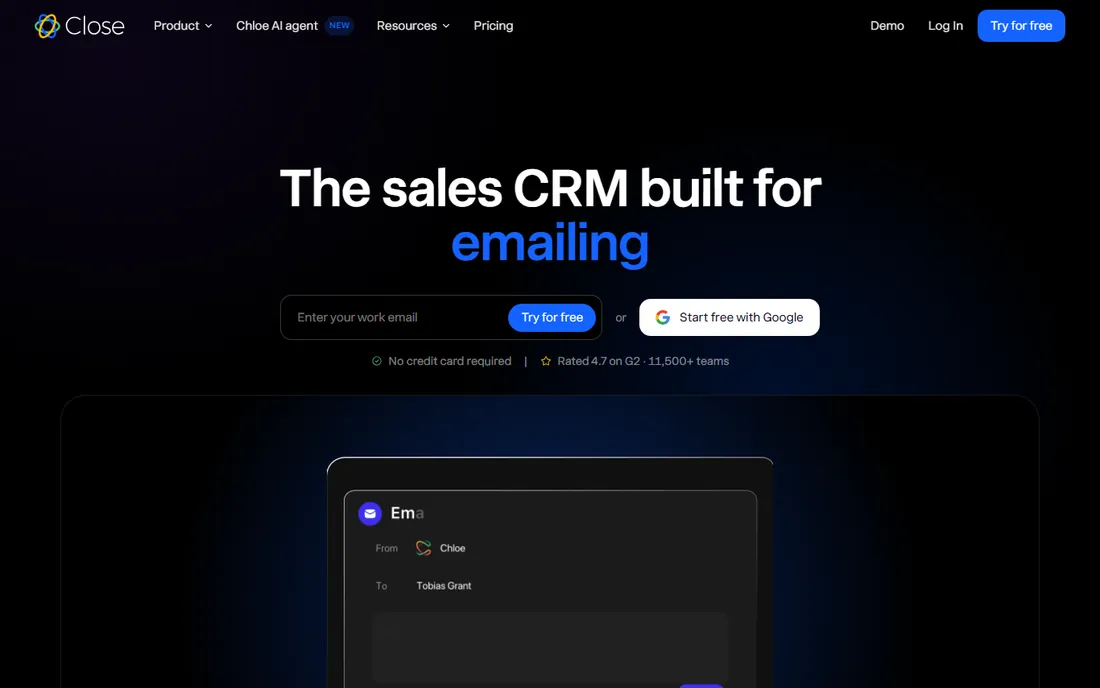
Close is a CRM with sales engagement built in, not the other way around: pipeline management plus built-in calling, SMS, email sequences and a power dialer in one inbox. High-velocity inside sales teams run their whole workflow without leaving the app, and activity logging happens automatically instead of relying on reps to update records.
Pricing could not be verified on the vendor's page at research time, so confirm the per-seat price for your team size before comparing. The trade-off is that it is a CRM first: teams already committed to Salesforce or HubSpot who just need sequencing will prefer a dedicated engagement tool that plugs into their stack.
What we like- CRM with built-in calling, SMS, email sequences and power dialer in one inbox
- Built for high-velocity inside sales
- No separate sequencer to integrate
Watch out for- Pricing not verifiable on the vendor page at research time
- It is a CRM first, so teams wanting a best-in-class standalone sequencer may prefer a specialist
#9
Woodpecker
Best for: Agencies and teams focused on cold email deliverability
Visit woodpecker.co
Starting priceSee website
Free planFree trial (14 days)
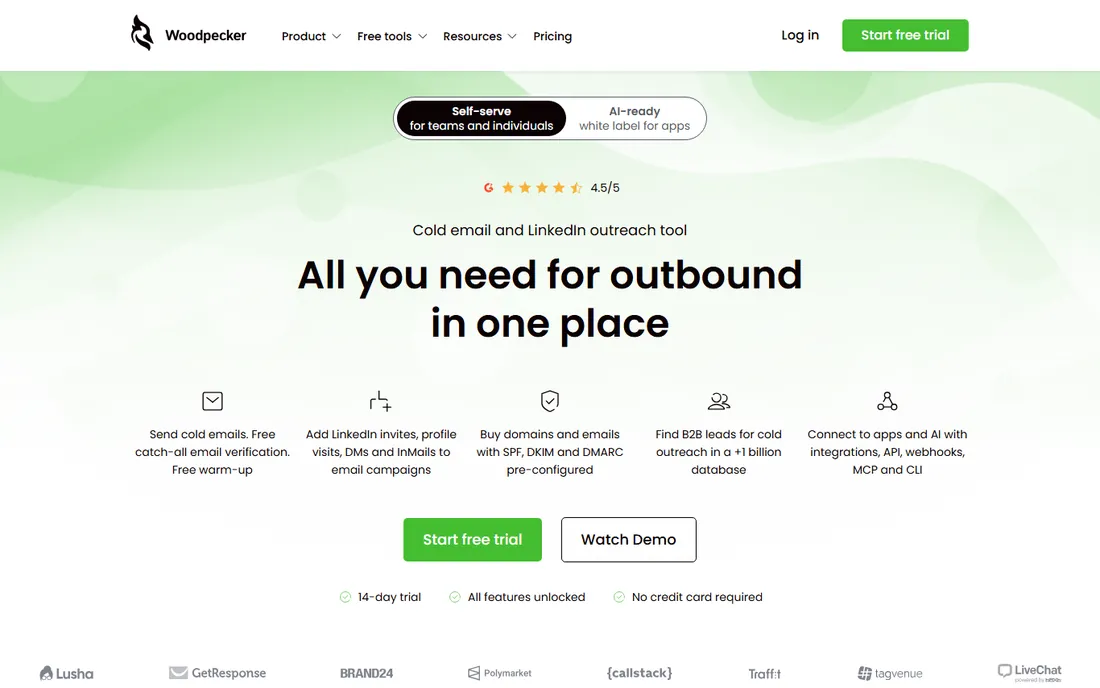
Woodpecker is the deliverability-first cold email tool: campaigns, LinkedIn steps, email verification, warm-up, adaptive sending and domain checks in one outbound workflow. Agencies like it because client work lives in separate workspaces with separate sending reputations, so one client's problem never burns another's domain.
The free trial runs 14 days or 100 cold emails, whichever comes first, per the vendor's own site. Plan prices sit behind the pricing page. Woodpecker's scope is narrower than the engagement platforms: no dialer, no forecasting. But for teams whose job is cold email done safely, that focus is the point.
What we like- Deliverability-first: verification, warm-up, adaptive sending and domain checks built in
- LinkedIn steps alongside cold email
- Agency-friendly separate workspaces
Watch out for- Plan prices sit behind the pricing page
- Narrower scope than engagement platforms (no dialer, no forecasting)
- Built for outbound, not full-cycle sales
How we chose
We started with the categories buyers search: sales acceleration software, sales engagement software and sales prospecting tools. For each candidate we opened the vendor's own site, checked pricing pages where prices are published, and weighed features, channel coverage and company-size fit against public reviews on G2 and Capterra and practitioner discussion on Reddit. Where a price could not be verified on the vendor's page we wrote "See website" rather than guessing. We mixed enterprise engagement platforms with smaller focused tools so the list covers real team sizes and budgets.
The hidden costs: seats, limits and data
The sticker price in this category is never the whole price. Almost everything is per seat, so multiply by headcount before comparing: a $49 per user plan for ten reps is $490 a month. Then check the sending and data limits. Email sending caps, enrichment credits and dialer minutes are metered on most plans, and overage charges or forced upgrades appear exactly when outbound starts working.
Data is the second hidden cost. Tools with built-in contact databases charge for enrichment credits, and heavy prospecting burns them fast. Tools without a database assume you bring your own list, which means a separate data subscription. Add-ons stack up too: LinkedIn automation, extra mailboxes, phone numbers and validation are commonly billed separately. Get the all-in quote for your seat count, volume and data needs, not the headline per-seat number.
Start with channels. If your team sells by phone, a dialer and local presence matter more than LinkedIn automation. If you sell by email, deliverability tooling (warm-up, verification, domain health) matters more than AI writing. Match the tool to the motion instead of buying the longest feature list.
Then check deliverability seriously. Ask how the tool handles mailbox warm-up, sending limits per mailbox, and domain reputation monitoring. Tools that let you rotate multiple mailboxes and buy pre-warmed infrastructure protect your main domain. Whatever you buy, never run high-volume cold outreach from your company's primary domain.
Finally, confirm the CRM story. Some tools replace the CRM for small teams (Close, Apollo), some live inside Gmail (Mixmax), and some expect Salesforce or HubSpot underneath (Outreach, Salesloft, Klenty). The wrong pairing means double data entry, which kills adoption. Run the trial on your real list, measure reply rates and meetings booked, and compare those numbers, not the demo.
Frequently asked questions
What is sales acceleration software?
Software that speeds up the sales process by automating repetitive prospecting work: multichannel outreach sequences, follow-ups, lead prioritization, calling and meeting scheduling. It sits between the contact database and the CRM, making sure every prospect gets consistent touches while reps spend their time on live conversations.
How much does sales acceleration software cost?
Enterprise platforms (Outreach, Salesloft) are custom-quoted and run highest. Mid-market tools publish per-seat pricing: Apollo starts at $0 for its free plan and $49 per user per month for Basic billed annually. Most other vendors in this guide keep prices behind their pricing pages, so get a quote. Remember the total: seats times per-seat price, plus data credits, add-ons and phone costs.
What is the difference between sales engagement and sales acceleration?
The terms overlap heavily. Sales engagement usually means the outreach sequences themselves (email, calls, LinkedIn cadences). Sales acceleration is the broader category, covering engagement plus the surrounding speed-ups: lead prioritization, dialers, AI assistance and analytics. Vendors use the labels interchangeably, so evaluate features, not terminology.
Will these tools get my domain flagged as spam?
They can if you misuse them. High-volume cold email from a new domain with no warm-up is the classic way to burn deliverability. The safer tools build in warm-up, verification and sending limits, and let you use separate sending domains. Whatever you buy, warm up new domains gradually, keep lists clean, and never send bulk cold email from your company's primary domain.
Do I need a separate contact database?
It depends on the tool. Apollo bundles a large B2B database with its outreach features, so small teams can skip a separate data vendor. Outreach, Salesloft, Klenty and the email-focused tools generally assume you bring your own list or buy data separately. Factor the data subscription into the total cost when comparing a bundled tool against an unbundled one.
Can a small team use enterprise tools like Outreach?
Technically yes, but it is usually a bad deal. Enterprise platforms are priced and implemented for teams with sales ops support, and small teams pay for depth they never use. Tools like Apollo, Reply, Lemlist, Mixmax and Woodpecker are built for smaller teams with faster setup and friendlier pricing. Move up to enterprise platforms when the team and process outgrow the smaller tools.
Sources we checked (11)
- https://outreach.io/
- https://www.salesloft.com
- https://apollo.io/
- https://reply.io/
- https://lemlist.com/
- https://klenty.com/
- https://mixmax.com/
- https://www.close.com
- https://woodpecker.co
- https://www.g2.com/categories/sales-acceleration
- https://www.capterra.com/sales-acceleration-software/
Is your product missing or out of date?
We review this list regularly. Vendors can request a listing, send updated pricing or ask about featured placement.

Shihab Mia · Founder, Rankite
Shihab has spent more than a decade helping SaaS and e-commerce brands grow through search. He writes Rankite's software buying guides from pricing pages, documentation and public user reviews. More about Shihab.