How we make this list: we compare pricing pages, product documentation and public user reviews. Rankite is independent; if a vendor ever pays for a featured spot, that listing is clearly labeled Partner.
Key takeaways
- RFP response is a team sport with a deadline; the software's real job is routing questions, reusing approved answers and keeping SMEs on schedule.
- Loopio and Responsive lead the dedicated RFP category, both quote-based; choose Loopio for usability, Responsive for enterprise scale.
- If you need published pricing, Better Proposals ($13/user/mo), Proposify ($35/user/mo) and Qwilr ($35/user/mo) are the transparent options.
- Proposal tools (PandaDoc, Proposify, Qwilr) and RFP platforms (Loopio, Responsive, Qvidian) solve different problems; know which one you have.
Quick comparison
| Tool | Best for | Starting price | Free plan |
|---|
 Loopio Loopio | mid-market teams formalizing RFP responses | See website | No |
 Responsive Responsive | enterprises with high-volume RFP operations | See website | No |
 QorusDocs QorusDocs | Microsoft 365-centric organizations | See website | No |
 Qvidian Qvidian | enterprise proposal automation with governance | See website | No |
 Ombud Ombud | large revenue teams needing AI assistance | See website | No |
 RocketDocs RocketDocs | regulated industries needing compliance | See website | No |
 PandaDoc PandaDoc | sales teams wanting proposals plus e-signature | See website | No |
 Proposify Proposify | design-conscious proposal teams | $35/user/mo (billed annually) | No |
 Better Proposals Better Proposals | affordable, fast proposal creation | $13/user/mo (billed annually) | No |
 Qwilr Qwilr | interactive web-based proposals | $35/user/mo (billed annually) | No |
Is your product missing or out of date?
We review this list regularly. Vendors can request a listing, send updated pricing or ask about featured placement.
The best rfp response software
Starting priceSee website
Free planNo
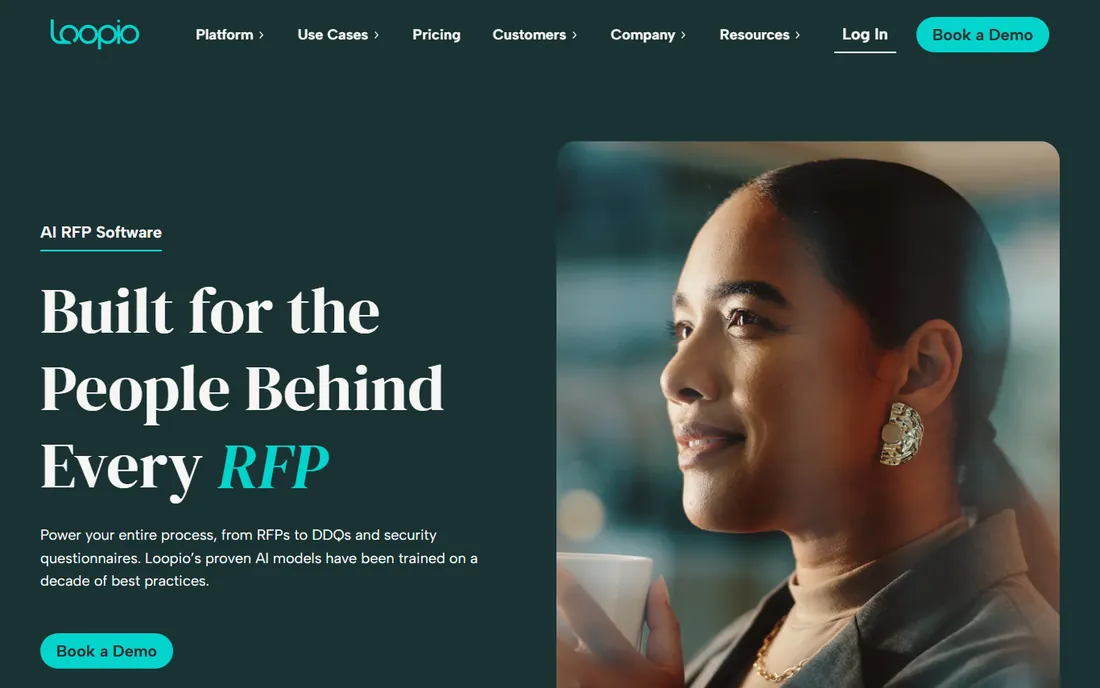
Loopio is the RFP platform most teams buy first, and the reason is adoption. Where enterprise RFP tools overwhelm, Loopio's interface, content library and collaboration workflows are designed so that sales teams and subject matter experts actually use them, which is the entire battle in RFP response.
The platform automates the core loop: RFP intake with automatic question detection, a searchable library of approved answers, AI-assisted drafting for repetitive questions, project workflows with SME assignments and deadlines, and analytics on content performance. Integrations cover Salesforce, Slack and the usual enterprise stack.
Pricing is quote-based, with third-party reports starting around $20,000 per year. The AI "Magic" features handle repetitive questions well but struggle with nuanced multi-part queries. For mid-market teams formalizing RFP operations for the first time, Loopio is the safest choice and the best rfp response software for usability.
What we like- The easiest dedicated RFP platform to adopt
- Strong content library and collaboration
- Excellent customer support reputation
Watch out for- Quote-based pricing (reported from ~$20K/year)
- AI features lag the newest AI-native tools
Starting priceSee website
Free planNo
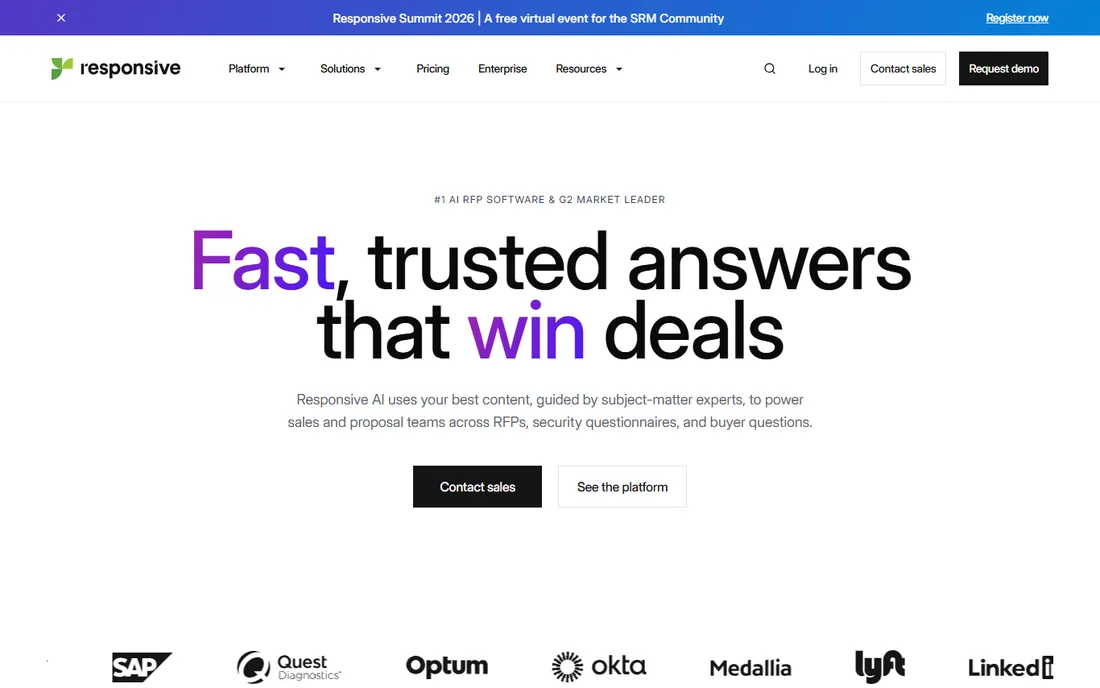
Responsive, formerly RFPIO, is the enterprise heavyweight of RFP response. Founded in 2015 and now serving more than 25 Fortune 100 companies, it handles RFPs, RFIs, DDQs and security questionnaires at a scale the rest of this list cannot match.
The platform combines a centralized knowledge base with AI that automates first drafts, extracts key requirements and flags content gaps before submission. Integrations run deep: Salesforce, Microsoft Dynamics, Slack, SharePoint and more, with collaboration features like approval workflows and real-time commenting. Multi-language support covers global operations.
The trade-offs are enterprise-standard: complex implementation, a steep learning curve and pricing that grows with add-ons. This is the tool for organizations managing hundreds of RFPs across regions with dedicated proposal operations. Smaller teams will find Loopio or the AI-native newcomers more approachable.
What we like- The enterprise leader, used by 25-plus Fortune 100 companies
- Deep AI automation and integrations
- 23-language support
Watch out for- Quote-based pricing that escalates with add-ons
- Complex setup and steep learning curve
Starting priceSee website
Free planNo
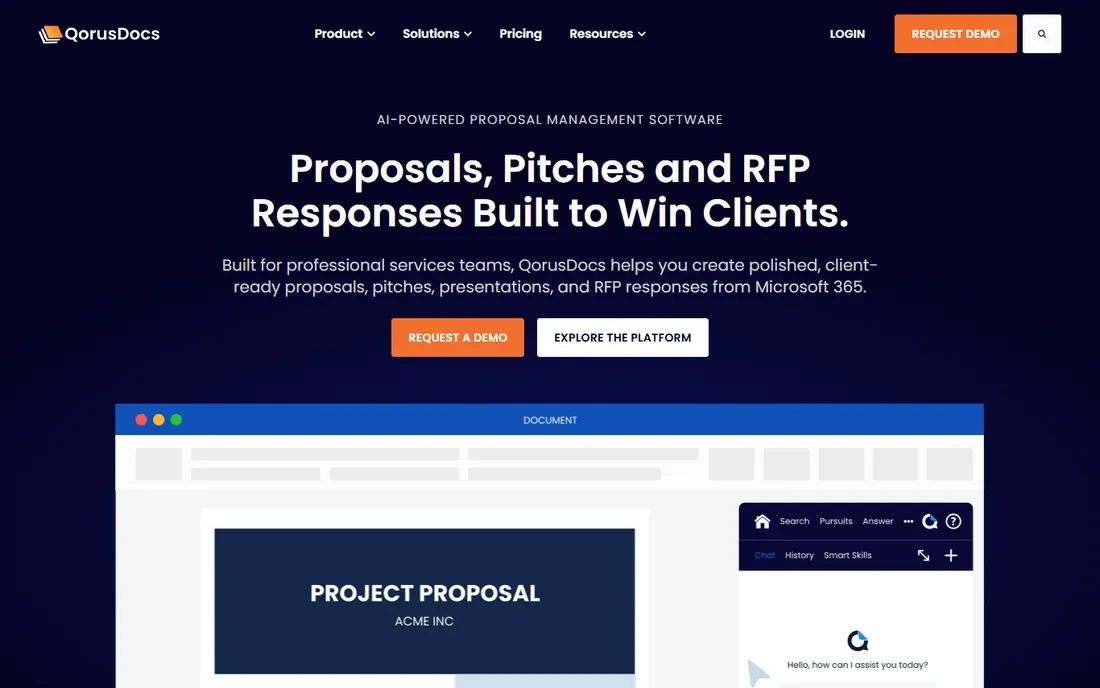
QorusDocs is the RFP tool for organizations that live in Microsoft 365. Instead of asking proposal teams to work in yet another web app, it brings automation into Word, PowerPoint and SharePoint directly: AI-assisted drafting, content library access and template management inside the documents people already use.
That positioning is the differentiator. For enterprises standardized on Microsoft, the adoption friction drops dramatically, because the workflow does not change, it just gets faster. The platform handles RFPs, RFIs, DDQs and security questionnaires with governance features like version control and permissions.
Pricing is quote-based. The obvious limitation is the flip side of the strength: Google Workspace organizations get less value. For Microsoft-centric enterprises, especially in regulated industries, QorusDocs is the most natural fit.
What we like- Works inside Word, PowerPoint and SharePoint where teams already live
- AI-powered proposal automation
- Strong template management
Watch out for- Quote-based pricing
- The Microsoft focus is a limitation for Google Workspace shops
Starting priceSee website
Free planNo
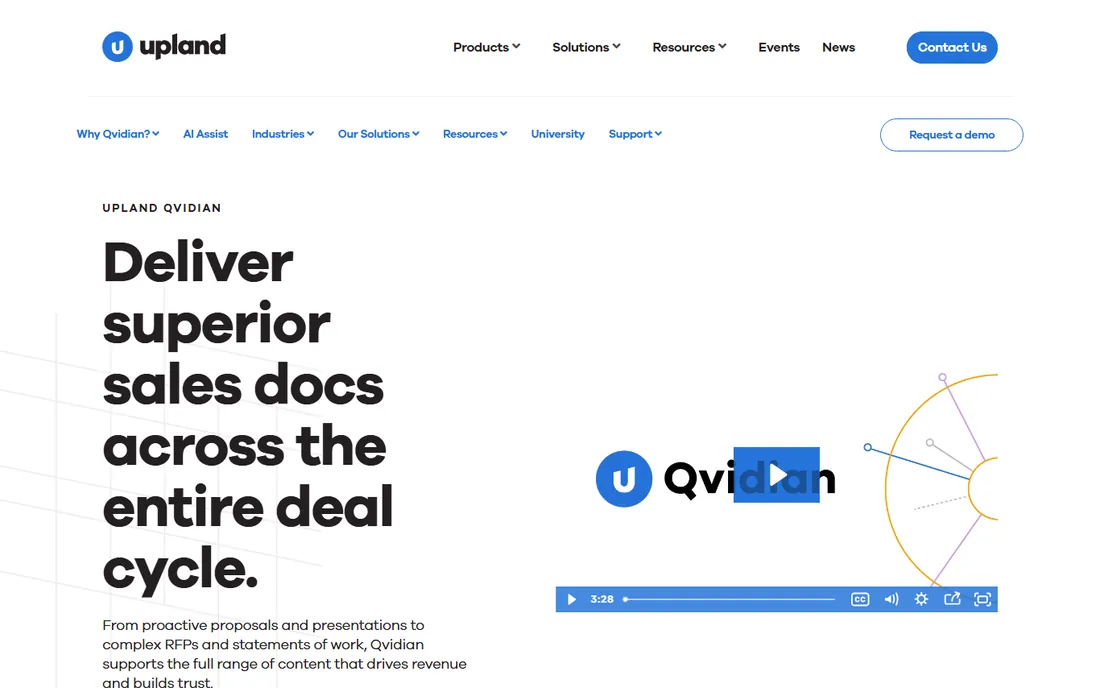
Qvidian is the old guard of proposal automation, and in enterprise sales cycles that is a credential. Now part of Upland Software, it offers cloud-based RFP and proposal automation built around a single trusted content library, with template management and governance controls that regulated industries require.
The strengths are centralization and compliance. Sales and proposal content lives in one managed library, collaboration happens in real time, version control and permissions keep auditors happy, and the document output is professional. For healthcare, financial services and government-adjacent enterprises, that governance matters more than AI novelty.
Pricing is quote-based and the user experience feels dated next to Loopio or the AI-native tools. But for large enterprises that need proven, governed proposal automation and already buy from Upland, Qvidian remains a solid choice.
What we like- Decades of enterprise proposal automation
- Strong template governance
- Part of the Upland software portfolio
Watch out for- Quote-based pricing
- The interface shows its age next to modern competitors
#5
Ombud
Best for: large revenue teams needing AI assistance
Visit ombud.com
Starting priceSee website
Free planNo
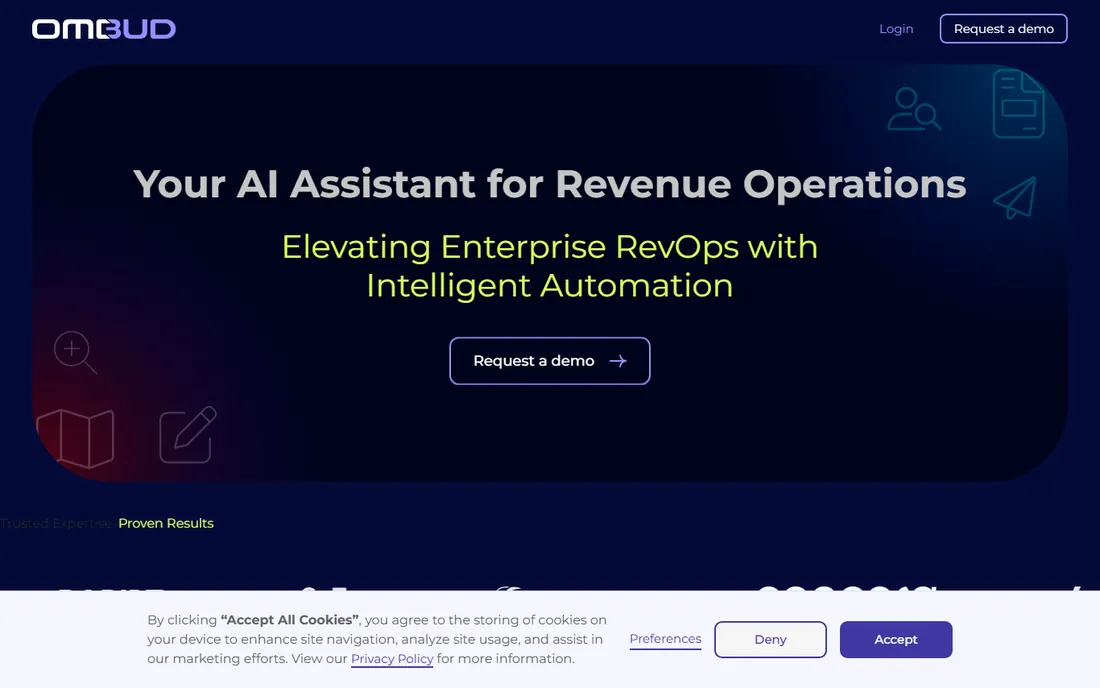
Ombud focuses on the revenue team rather than the proposal team. Founded in 2011, its response management platform pairs a content library with an AI companion that helps with the heavy lifting of creating, reviewing and submitting proposals and RFP responses.
The RevOps angle is the pitch. Instead of treating RFP response as a back-office function, Ombud positions it as part of the revenue workflow, with AI insights, CRM updates and analytics that connect proposal activity to pipeline. For sales-led organizations where the RFP response is owned by revenue rather than a dedicated proposal team, that framing fits.
Pricing is quote-based. Ombud does not have the market presence of Loopio or Responsive, which means fewer third-party reviews and reference customers to check. For AI-forward revenue teams, it is worth evaluating alongside the bigger names.
What we like- AI companion (Ombuddy) for drafting and reviewing
- Built for sales-led response workflows
- Strong RevOps positioning
Watch out for- Quote-based pricing
- Narrower brand recognition than Loopio or Responsive
Starting priceSee website
Free planNo
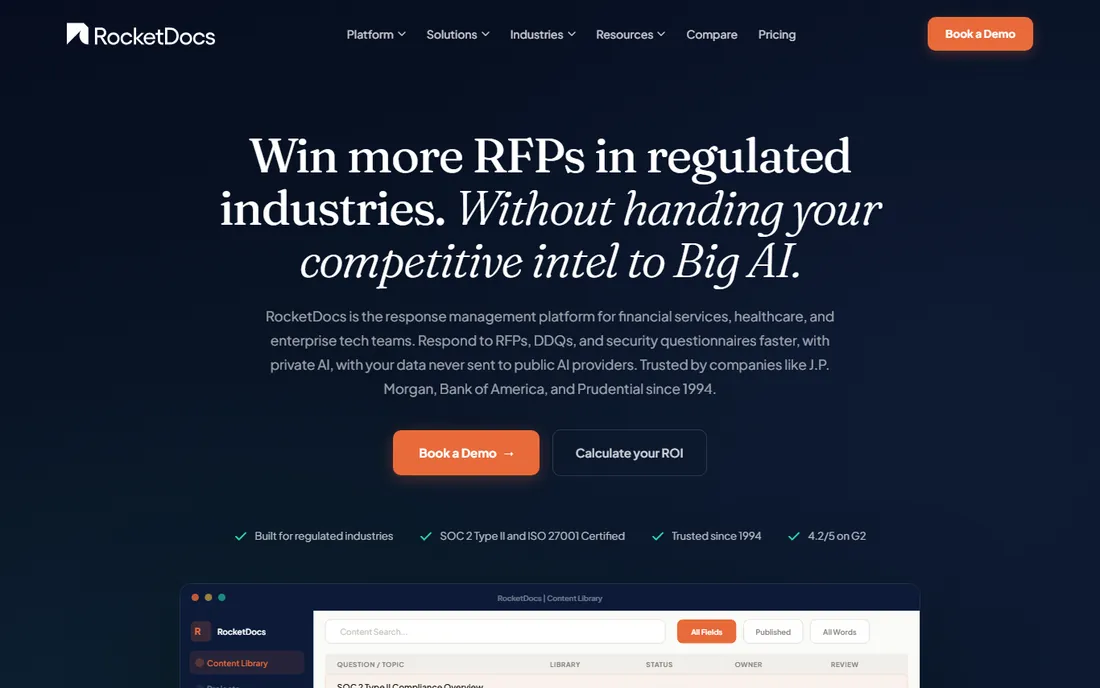
RocketDocs has been doing this since 1988, longer than anyone else on this list. The platform is a compliance-first proposal management solution: RFPs, RFIs, DDQs and security questionnaires handled with version control, permissions and audit trails that regulated teams demand.
The standout strength is SME collaboration. Assigning questions, tracking deadlines and sending automated reminders sounds basic, but it is the bottleneck that kills most RFP timelines, and RocketDocs handles it well. Custom workflows adapt to how the company operates rather than forcing process change.
Pricing is quote-based. RocketDocs does not chase the AI hype cycle as aggressively as newer entrants, which is either a weakness or a sign of maturity depending on your view. For mid-size and enterprise companies in regulated industries, the compliance pedigree is the reason to shortlist it.
What we like- Compliance-first design with airtight governance
- Excellent SME collaboration workflows
- Operating since 1988
Watch out for- Quote-based pricing
- Less AI marketing flash than newer competitors
Starting priceSee website
Free planNo
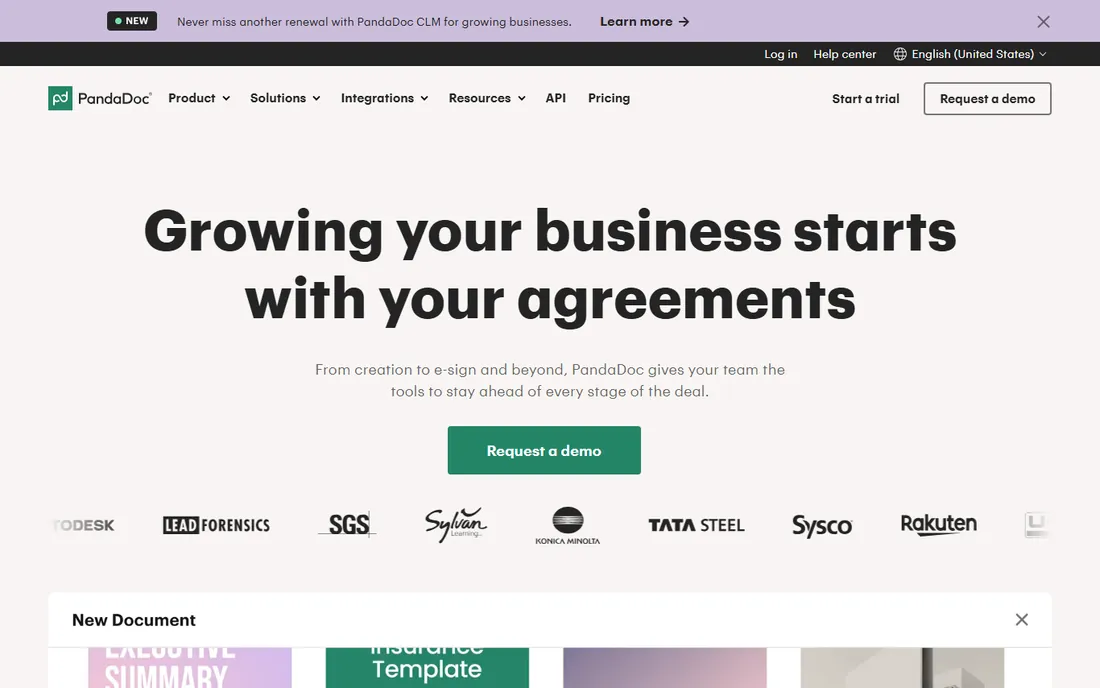
PandaDoc is the proposal tool most sales teams already know. The unicorn-status platform combines document creation, e-signature, payments and CRM integrations in one workflow, with templates, content library and analytics that cover the full proposal lifecycle.
For RFP response specifically, PandaDoc handles the assembly and sending well: conditional content, approval workflows, document analytics showing who viewed what, and integrated e-signature for the final signature. The 14-day free trial lets teams evaluate with real proposals.
The limitation is category. PandaDoc is a proposal and document automation platform, not a dedicated RFP response system; it lacks the question-shredding, SME routing and content-library governance of Loopio or Responsive. Pricing is not published on the site. For sales-led proposal creation, it is excellent. For high-volume RFP operations, pair it with or replace it by a dedicated RFP tool.
What we like- All-in-one proposals, contracts and e-signature
- Huge template library
- Strong CRM integrations
Watch out for- Pricing not published on the site
- More proposal tool than RFP platform
Starting price$35/user/mo (billed annually)
Free planNo
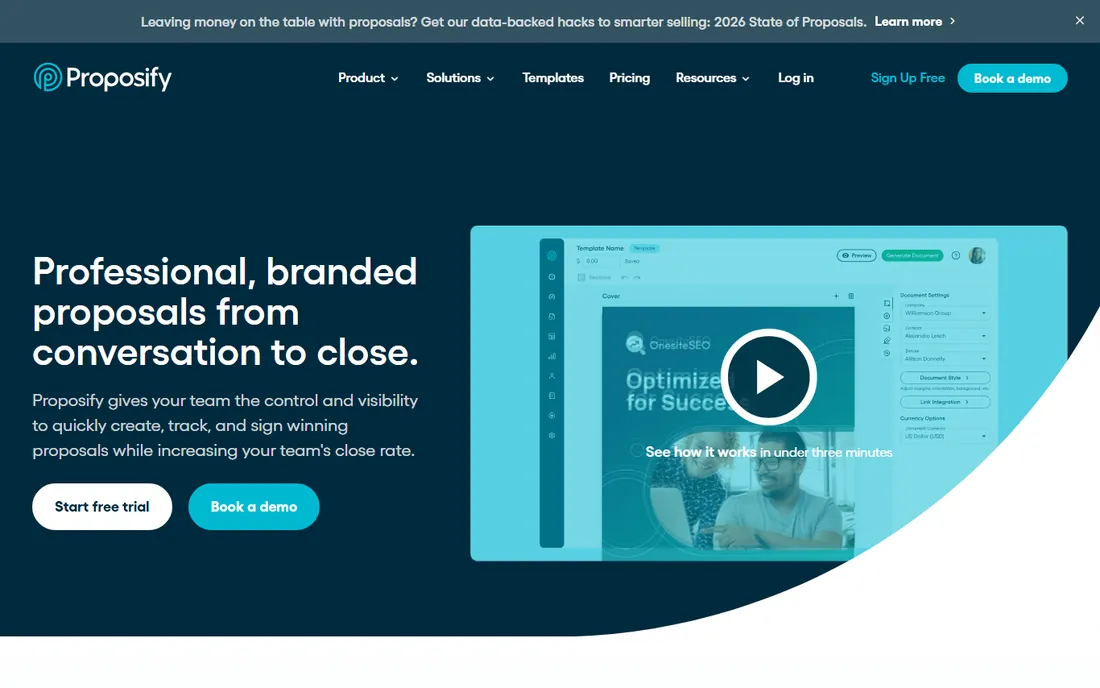
Proposify is the design-conscious proposal platform for sales teams. Pricing is transparent: Build starts at $35 per user per month billed annually ($49 monthly), with Scale at $1,066 per month for 10 seats. A 14-day free trial of the Team plan is available.
The product emphasizes visual quality and control. Drag-and-drop editing, interactive quoting with upsells, content library, document analytics showing time-to-view and section engagement, approval workflows and CRM integrations. The analytics help reps know exactly when to follow up.
Like PandaDoc, Proposify is a proposal tool rather than an RFP response platform; it does not shred RFPs into assignable questions or manage SME workflows. For teams whose problem is beautiful, trackable proposals rather than RFP compliance, it is one of the best values with honest pricing.
What we like- Published pricing from $35/user/mo annual
- Strong design control and templates
- Interactive quoting and analytics
Watch out for- Per-user pricing adds up for large teams
- More proposal tool than RFP platform
Starting price$13/user/mo (billed annually)
Free planNo
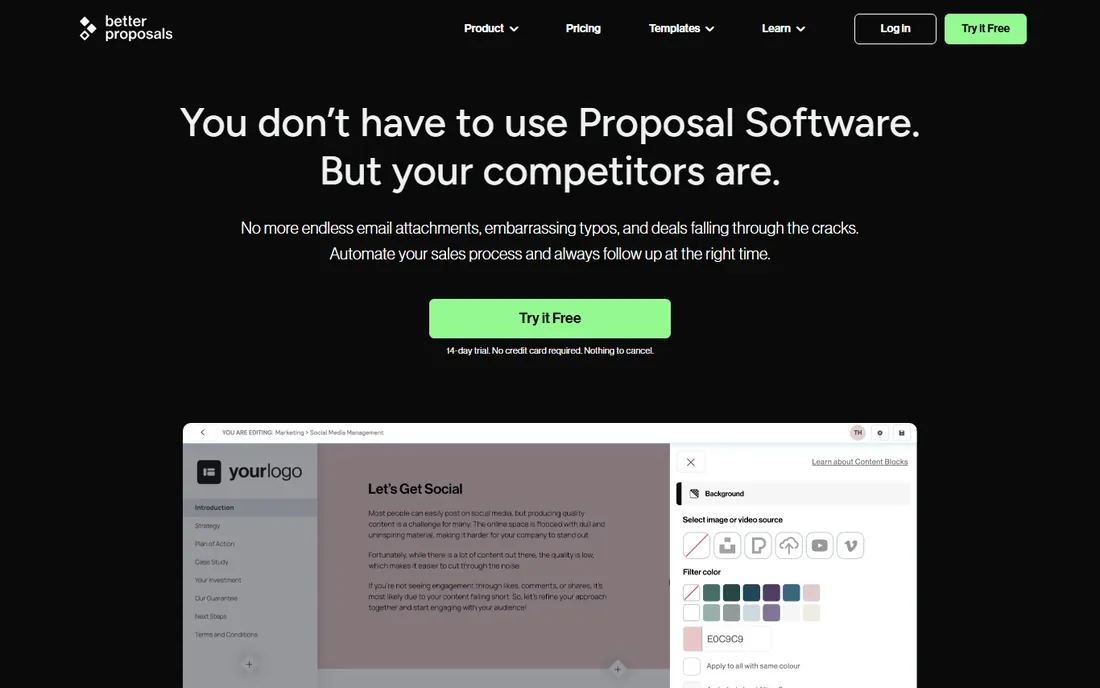
Better Proposals is the affordable, fast option. The Starter plan is $13 per user per month billed annually ($19 monthly), Premium $21 annual, Enterprise $42 annual, all with a 14-day free trial and no credit card required.
The product focuses on speed and beauty: high-converting web-based proposals with interactive pricing tables, legally binding signatures, payment integrations, content library and detailed analytics. Support claims a 2-minute human response time, 24 hours a day.
The Starter limits are real: 1 seat and 10 sends per month, so growing teams move to Premium quickly. And this is a proposal tool, not an RFP response platform. For freelancers, agencies and small sales teams that need professional proposals fast and cheap, Better Proposals is the best value on this list.
What we like- The cheapest published pricing here ($13/user/mo annual)
- Fast, beautiful web-based proposals
- 2-minute human support response claim
Watch out for- Starter limited to 1 seat and 10 sends per month
- Lighter RFP-specific features
Starting price$35/user/mo (billed annually)
Free planNo
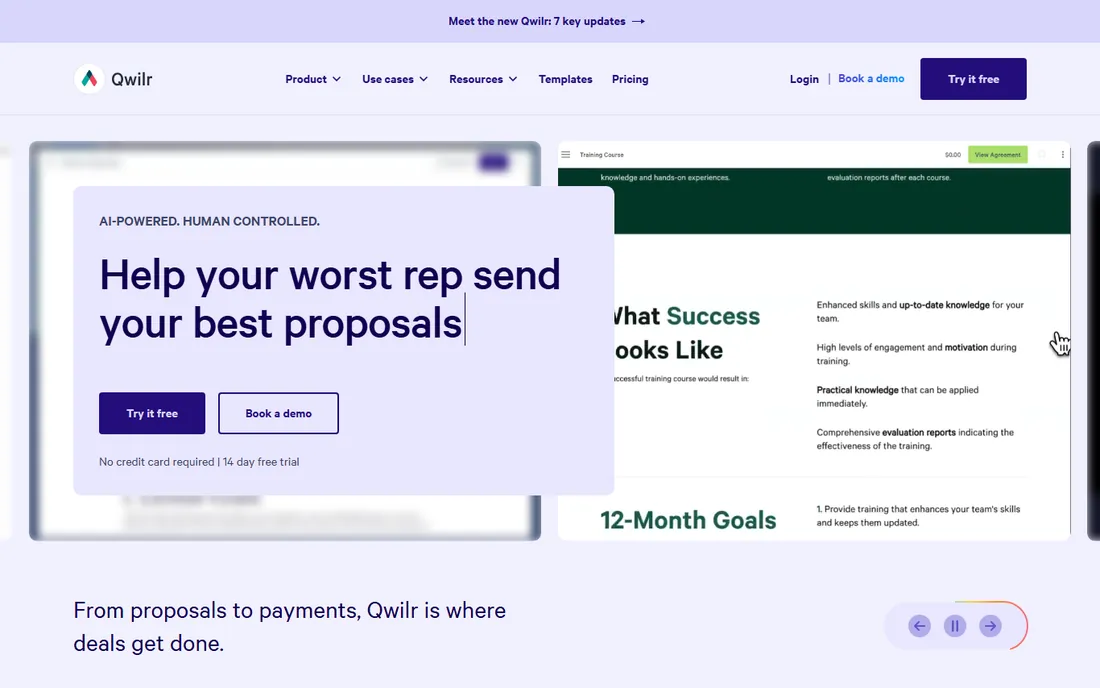
Qwilr replaces the PDF proposal with an interactive web page. Pricing is public: Starter from $35 per user per month billed annually ($49 monthly), Growth $275 per month for 5 users, Scale $750 per month for 10 users, with a 14-day free trial.
The format is the selling point. Instead of a static document, buyers get a responsive page with embedded video, interactive quotes, ROI calculators, one-click acceptance and payments. Analytics show exactly who viewed what and for how long, and the engagement data tells reps when to call.
The caveat is fit. Interactive pages impress in sales-led deals but do not suit formal RFP submissions that require specific document formats. For agencies, SaaS sales teams and anyone whose proposals compete on experience, Qwilr is the most distinctive option here.
What we like- Published pricing from $35/user/mo annual
- Interactive pages instead of PDFs
- Strong analytics and buyer engagement data
Watch out for- The web-page format is not right for formal RFP submissions
- Growth and Scale are annual-only
How we chose
We researched vendor documentation, product materials and RFP software comparisons in October 2026. Every price above comes from the vendor's own site; the dedicated RFP platforms (Loopio, Responsive, Qvidian, Ombud, RocketDocs, QorusDocs) are overwhelmingly quote-based, so where vendors do not publish pricing we say so. We included both dedicated RFP response platforms and proposal tools because buyers often confuse the two, and we weighted content library quality, SME workflow support and honest pricing over AI feature claims.
The distinction matters more than any feature list. RFP response platforms (Loopio, Responsive, Qvidian, QorusDocs, Ombud, RocketDocs) are built for the inbound problem: a 200-question RFP arrives, it must be shredded into assignable questions, answered from approved content, reviewed by SMEs and submitted by a deadline. Their core objects are questions, content libraries and workflows.
Proposal tools (PandaDoc, Proposify, Better Proposals, Qwilr) are built for the outbound problem: a rep needs a beautiful, trackable proposal to send a prospect. Their core objects are documents, templates and signatures. They handle RFP responses poorly because they were not designed for them.
If your pain is high-volume RFPs with compliance requirements, buy an RFP platform. If your pain is sales proposals that look amateur, buy a proposal tool. If you have both problems, you may need both tools; trying to stretch one category into the other is the most common disappointment in this market.
Why RFP content libraries fail
The first failure is the empty library. RFP software without maintained content is an expensive workflow tool. Before buying, audit how many approved answers you actually have and who will maintain them. The vendors sell AI drafting as the answer, but AI trained on a thin library produces thin answers. Budget maintenance time, not just license cost.
The second failure is SME abandonment. Subject matter experts are busy, and RFP platforms live or die on their participation. The tools with the best SME workflows (RocketDocs, Loopio) win here, but process matters more than software: assign owners, set SLAs for answers and make participation visible. A platform nobody's experts use is a platform nobody uses.
The third failure is measuring the wrong thing. Teams track RFPs completed and time saved, but the metric that matters is win rate on RFP-sourced deals. Instrument that from the start, tie it to content quality, and let it guide where you invest in the library. Software that does not improve your win rate is overhead.
Frequently asked questions
What is RFP response software?
RFP response software helps teams answer requests for proposal efficiently. It typically includes automatic question extraction from RFP documents, a searchable library of approved answers, AI-assisted drafting, workflows that assign questions to subject matter experts with deadlines, collaboration and approval tools, and analytics on response performance. The goal is faster, more consistent, more compliant responses that win more deals.
How much does RFP response software cost?
Dedicated RFP platforms (Loopio, Responsive, Qvidian, Ombud, RocketDocs, QorusDocs) are quote-based, with third-party reports ranging from roughly $15,000 to $150,000 per year depending on scale. Proposal tools publish pricing: Better Proposals from $13 per user per month billed annually, Proposify and Qwilr from $35 per user per month billed annually. AI-native newcomers like AutoRFP.ai list from around $899 per month.
What is the difference between Loopio and Responsive?
Both are leading RFP response platforms, but they target different buyers. Loopio is the usability leader, best for mid-market teams formalizing RFP operations for the first time, with strong adoption and support. Responsive (formerly RFPIO) is the enterprise leader, used by 25-plus Fortune 100 companies, with deeper automation, integrations and multi-language support for high-volume global operations. Loopio is easier to adopt; Responsive scales further.
Can AI write my RFP responses?
AI can draft first answers from your content library, and the newest tools do it well for repetitive questions. But AI output needs human review, especially for nuanced, multi-part or compliance-sensitive questions. The quality of AI responses depends entirely on the quality of the underlying content library. Treat AI as a drafting accelerator for your experts, not a replacement for them, and keep humans in the approval loop.
How long does RFP software take to implement?
Proposal tools (PandaDoc, Proposify, Better Proposals, Qwilr) can be live in days to weeks. Dedicated RFP platforms take longer: Loopio typically 4 to 8 weeks, Responsive and Qvidian 2 to 4 months including content library migration and workflow design. The content library build-out, not the software setup, usually determines the timeline. Start the content audit before you sign.
Sources we checked (13)
- https://www.loopio.com/
- https://www.responsive.io/
- https://www.qorusdocs.com/
- https://www.uplandsoftware.com/qvidian
- https://www.ombud.com/
- https://rocketdocs.com/
- https://www.pandadoc.com/
- https://www.proposify.com/
- https://www.proposify.com/pricing
- https://betterproposals.io/
- https://betterproposals.io/pricing
- https://qwilr.com/
- https://qwilr.com/pricing
Is your product missing or out of date?
We review this list regularly. Vendors can request a listing, send updated pricing or ask about featured placement.

Shihab Mia · Founder, Rankite
Shihab has spent more than a decade helping SaaS and e-commerce brands grow through search. He writes Rankite's software buying guides from pricing pages, documentation and public user reviews. More about Shihab.