How we make this list: we compare pricing pages, product documentation and public user reviews. Rankite is independent; if a vendor ever pays for a featured spot, that listing is clearly labeled Partner.
Key takeaways
- Responsive and Loopio lead the enterprise RFP platform category, with Loopio publishing a $20,000 per year starting point.
- AutoRFP.ai and 1up skip per-seat pricing entirely, which changes the math for teams that pull in many occasional contributors.
- Conveyor is the specialist for security questionnaires, while PandaDoc, Proposify and Better Proposals cover the proposal and signature side.
- Quote-based pricing dominates this category, so expect a sales conversation for anything beyond the entry tier.
Quick comparison
| Tool | Best for | Starting price | Free plan |
|---|
 Responsive Responsive | Large teams running complex RFP operations | See website (custom quote) | No |
 Loopio Loopio | Teams that need a structured content library | $20,000/year (Foundations, 10 seats) | No |
 Qvidian Qvidian | Regulated enterprises like banks and healthcare | See website (custom quote) | No |
 RocketDocs RocketDocs | Regulated industries needing private AI | See website (custom quote) | No |
 AutoRFP.ai AutoRFP.ai | Teams that want AI drafting without per-seat fees | $899/month (Scale, billed annually) | Free trial (30 days) |
 1up 1up | Sales teams answering questions inside Slack | $250/month (Starter) | Yes |
 Conveyor Conveyor | Security questionnaire automation | See website (custom quote) | Yes (trust center only) |
 PandaDoc PandaDoc | Proposals with built-in e-signatures | $19 per user/month (Essentials, billed annually) | Yes (5 documents/month) |
 Proposify Proposify | Branded proposals for agencies and sales teams | $19 per user/month (Basic, billed annually) | Free trial (14 days) |
 Better Proposals Better Proposals | Freelancers and small teams on a budget | $13 per user/month (Starter, billed annually) | Free trial (14 days) |
Is your product missing or out of date?
We review this list regularly. Vendors can request a listing, send updated pricing or ask about featured placement.
The best RFP automation software
Starting priceSee website (custom quote)
Free planNo
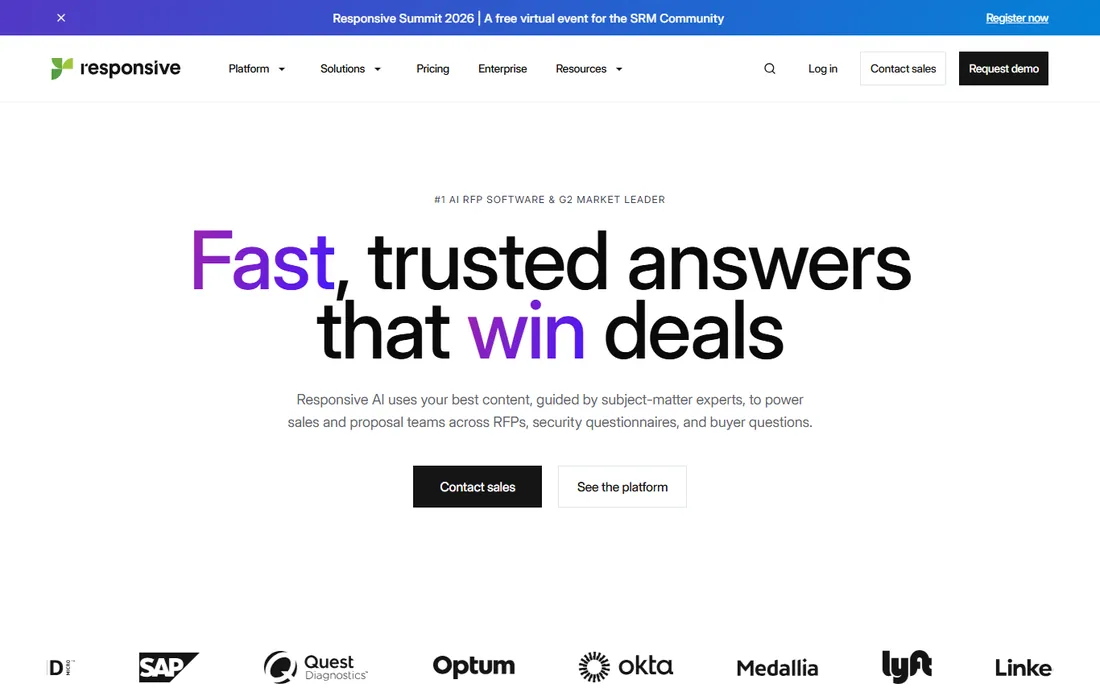
Responsive, formerly RFPIO, is the heavyweight of this category. It handles the full RFP lifecycle: intake, content library, assignments, collaboration, review cycles and analytics, with the governance controls large companies need. More than 2,000 companies use it, including two dozen of the Fortune 100. If your team answers hundreds of RFPs a year across departments, this is the platform built for that volume.
The catch is access. Pricing is custom and sales-led, so you will go through demos and scoping before you see a number. Smaller teams will find the platform and the process heavier than they need. But for a dedicated proposal department, the depth of workflow control is unmatched.
What we like- Deep workflow and project management for big response teams
- Strong reporting
- Trusted by large enterprises
Watch out for- Quote-only pricing with no public entry point
- Implementation takes time
- Overkill for small teams
#2
Loopio
Best for: Teams that need a structured content library
Visit loopio.com
Starting price$20,000/year (Foundations, 10 seats)
Free planNo
Loopio is the rare enterprise RFP platform that publishes a number: Foundations starts at $20,000 per year for 10 seats. That transparency makes budgeting easier than with most competitors. The platform centers on a structured content library with review cycles, so approved answers stay current and subject-matter experts get pulled in automatically. Most teams are running within 15 to 30 days.
Per-seat pricing is the tradeoff. Ten seats at the entry tier works for a focused team, but costs scale as you add contributors. Enhanced and Enterprise tiers are custom-quoted. Loopio fits teams that want proven RFP machinery with clear pricing, not the cheapest entry point.
What we like- Published starting price, rare in this category
- Mature content library with review workflows
- Strong customer support reputation
Watch out for- Priced per seat, so large teams pay more
- No free plan or trial
- AI features concentrate in higher tiers
Starting priceSee website (custom quote)
Free planNo
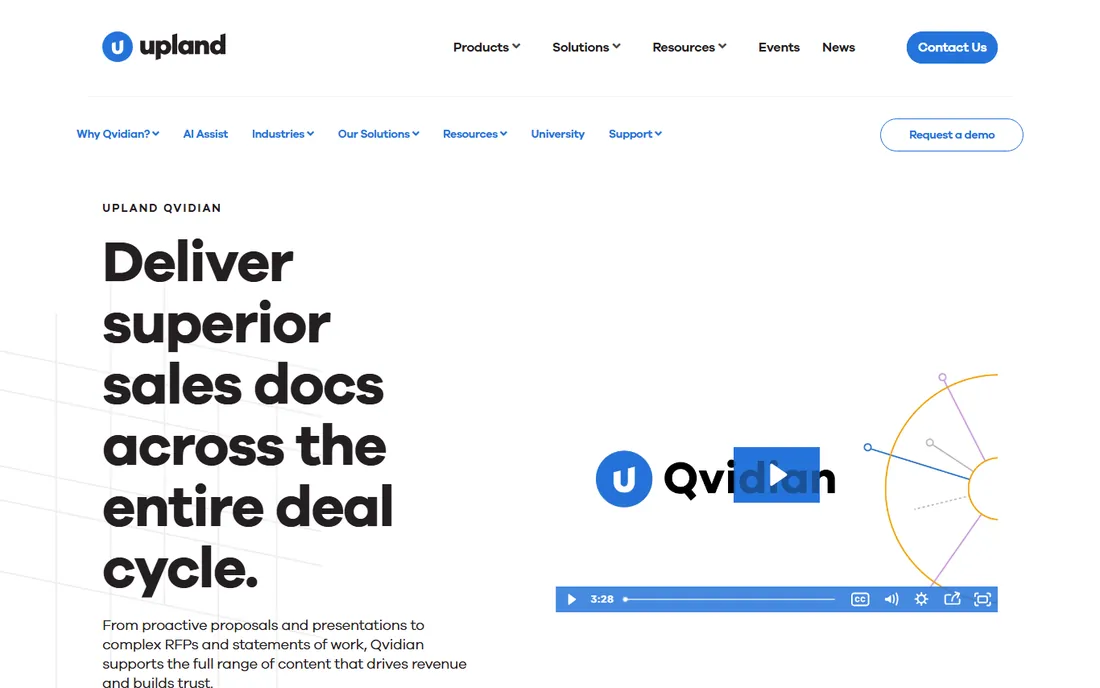
Qvidian, from Upland Software, is one of the oldest names in proposal automation, and it shows in the customer list: eight of the ten largest US banks use it. The platform automates RFP responses, DDQs and security questionnaires from a central content library, with autofill that inserts draft answers in bulk and tight integration with Word, Excel and PowerPoint.
Age brings both trust and baggage. Regulated industries value the compliance controls and audit history, but the buying process is fully sales-led with custom pricing. Teams that want a modern self-serve signup should look at the AI-native tools below. Teams in banking or healthcare that need a proven, governed platform will find Qvidian hard to beat.
What we like- Nearly 50 years in proposal automation
- Deep Microsoft Office integration
- Strong compliance and version control
Watch out for- Quote-only enterprise pricing
- Interface reflects its long history
- Sales-led buying process
Starting priceSee website (custom quote)
Free planNo
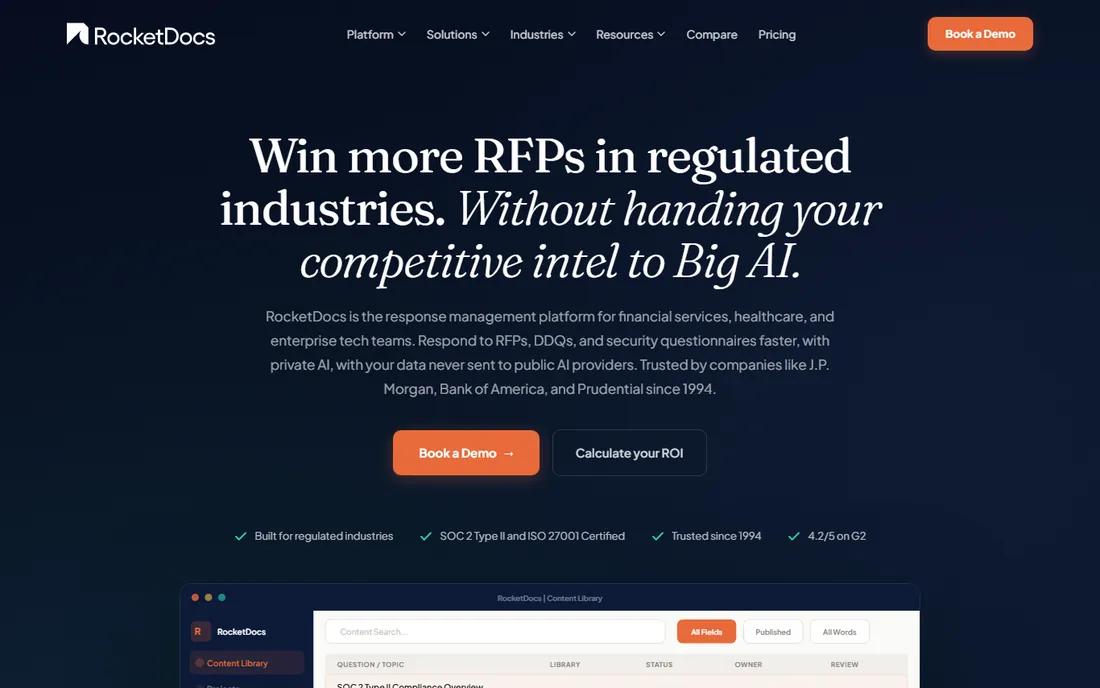
RocketDocs takes a different stance on AI: its private model never sends your data to public AI providers and never uses it for training. For banks, insurers and health plans answering DDQs with sensitive figures, that is the whole pitch. The platform parses uploaded RFPs automatically, drafts with three layers of AI, and exports finished documents with a complete audit trail. Most teams go live in about four weeks.
Pricing is custom, based on team size, content volume and modules. The regulated-industry focus means less breadth for general sales proposals than Responsive or Loopio. If data control is your top concern, RocketDocs is the specialist. If it is not, the generalists offer more for less process.
What we like- Private AI that never sends data to public models
- Built for financial services and healthcare
- Full audit trail by default
Watch out for- Custom pricing with no public numbers
- Enterprise sales cycle
- Narrower focus than general RFP platforms
#5
AutoRFP.ai
Best for: Teams that want AI drafting without per-seat fees
Visit autorfp.ai
Starting price$899/month (Scale, billed annually)
Free planFree trial (30 days)
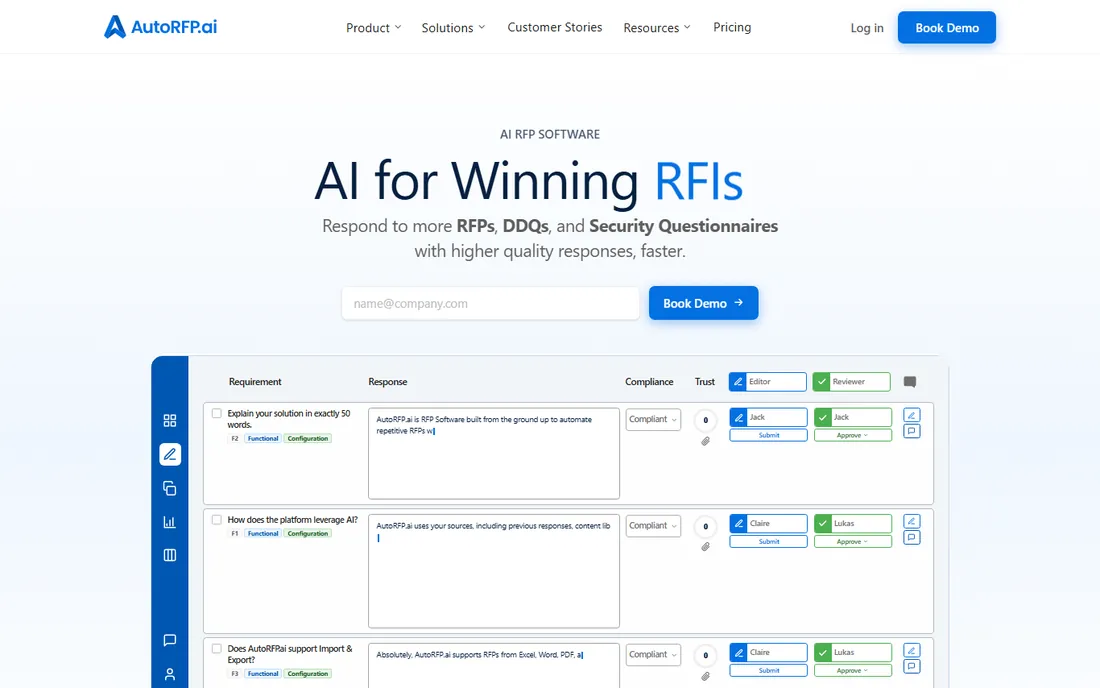
AutoRFP.ai prices by project, not by seat: Scale at $899 per month billed annually covers 24 projects a year with unlimited users, and Accelerate at $1,299 covers 50. Every plan includes all features, SSO and integrations, with no paid add-ons. For teams that pull in dozens of occasional contributors, avoiding per-seat fees can cut costs dramatically versus traditional platforms.
The model has edges. Unused project capacity does not obviously roll over, and heavy months can push you into a higher tier. Setup is fast, with first AI-drafted answers in about 48 hours, and the company backs it with a 30-day money-back guarantee. It is the best fit for teams that want AI-first drafting with predictable, seat-free pricing.
What we like- Unlimited users on every plan with no per-seat fees
- Project-based pricing is easy to budget
- 30-day money-back guarantee
Watch out for- Annual commitment required for published prices
- Project caps limit heavy users
- Younger company than the incumbents
#6
1up
Best for: Sales teams answering questions inside Slack
Visit 1up.ai
Starting price$250/month (Starter)
Free planYes
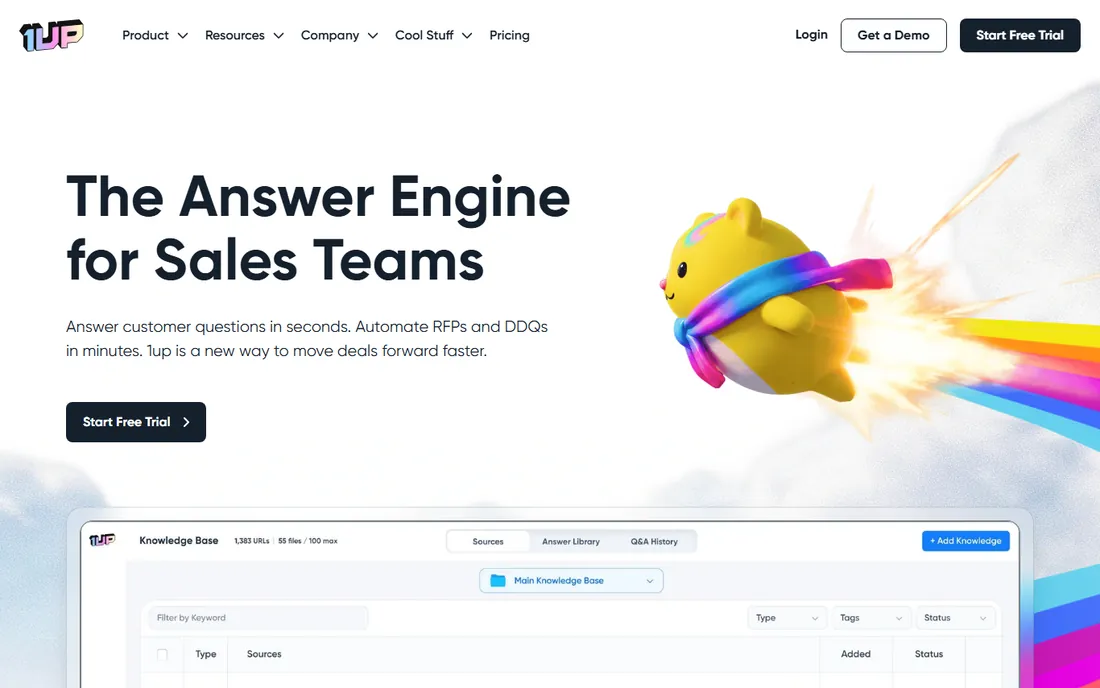
1up is the lightweight answer engine of this list. Instead of a project workspace, it connects your knowledge sources and answers RFP questions, DDQs and security questionnaires inside Slack, Teams, Google Chat or Salesforce. The free plan covers 50 answers a month, Starter starts at $250 per month, and setup takes minutes. SOC 2 Type II certification covers the security basics.
The tradeoff is scope. 1up answers questions brilliantly but does not manage complex proposal projects, multi-gate approvals or document assembly. Teams that outgrow questionnaires usually add a second tool. For presales teams drowning in repetitive questions, though, it is the fastest relief available, and the free plan makes evaluation painless.
What we like- Free plan with no credit card required
- Answers inside Slack, Teams and Salesforce
- Fully self-service setup
Watch out for- Not built for complex multi-document proposal workflows
- Limited approval and compliance features
- Usage-based costs can surprise
Starting priceSee website (custom quote)
Free planYes (trust center only)
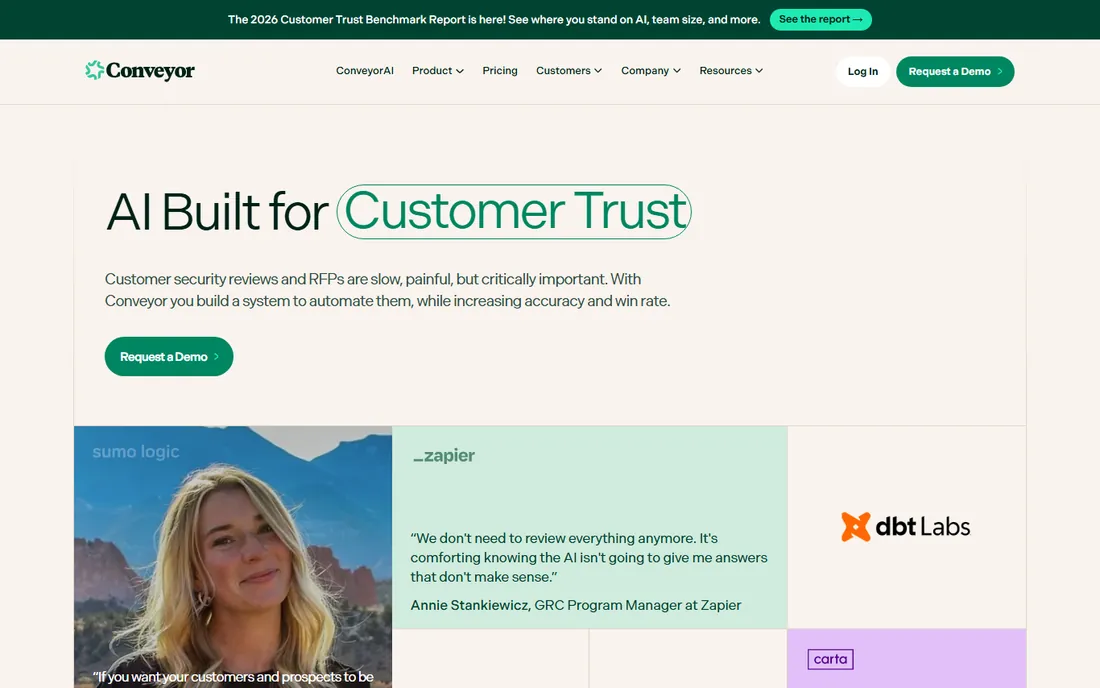
Conveyor started with security questionnaires and expanded into RFPs, and the security DNA shows. The platform combines a customer-facing trust center with AI that fills out questionnaires automatically, citing its sources. A free plan covers the trust center with monthly credits, which alone deflects a share of incoming questionnaires. Paid plans price on questionnaire volume, not seats.
Questionnaire automation sits on the Enterprise tier with custom pricing, so the free plan is a teaser, not a solution. The RFP drafting features are capable but younger than the security automation. For SaaS companies buried in vendor security reviews, Conveyor pays for itself. For pure sales RFPs, the dedicated platforms above fit better.
What we like- Free trust center plan to deflect questionnaires
- AI automation purpose-built for security reviews
- Usage-based, not per-seat
Watch out for- Questionnaire automation requires the paid Enterprise plan
- Pricing is custom
- RFP features are newer than the security side
Starting price$19 per user/month (Essentials, billed annually)
Free planYes (5 documents/month)
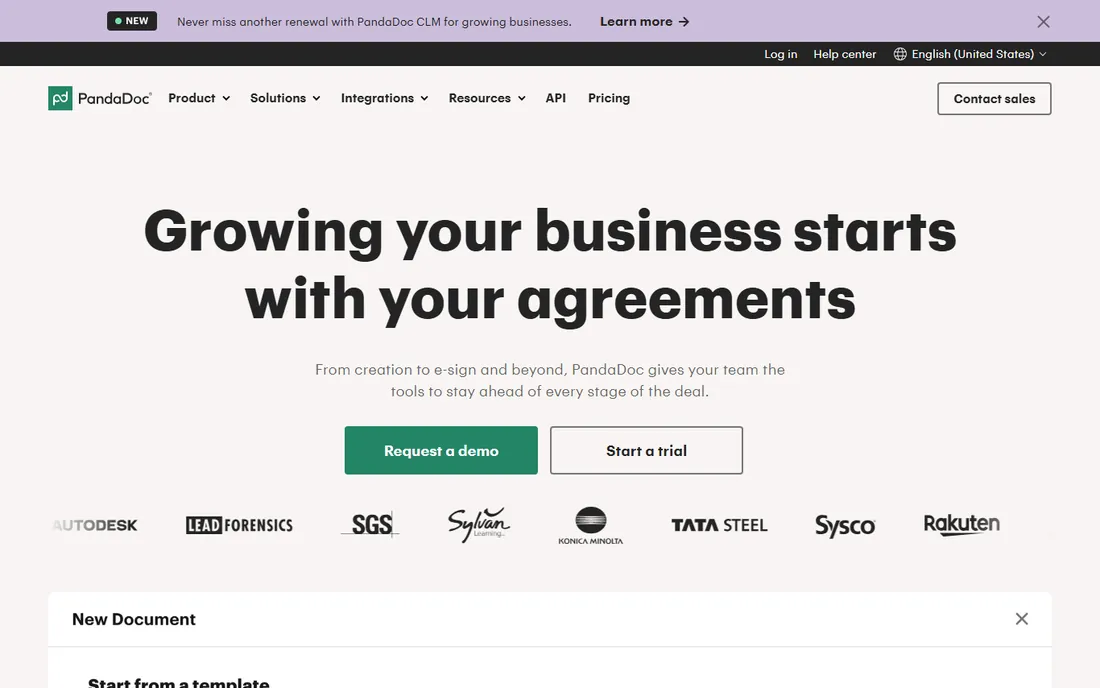
PandaDoc sits on the proposal side of this category: once your answers are written, it turns them into tracked, signed, paid documents. Essentials at $19 per user per month billed annually includes unlimited e-signatures, templates and a drag-and-drop editor. A free plan covers five documents a month, and a 14-day trial opens the paid tiers. CRM integrations with HubSpot, Salesforce and Pipedrive pull deal data straight into proposals.
It is not an RFP response platform. There is no content library for questionnaire answers or AI drafting from past RFPs. Pair it with a response tool, or use it alone if your bottleneck is producing and signing proposals rather than answering questionnaires. For document workflow, it is the most complete tool at this price.
What we like- Free plan with e-signatures included
- Full document workflow from draft to payment
- Deep CRM integrations
Watch out for- Per-user pricing adds up for large teams
- Advanced features need the Business tier
- More document tool than RFP platform
Starting price$19 per user/month (Basic, billed annually)
Free planFree trial (14 days)
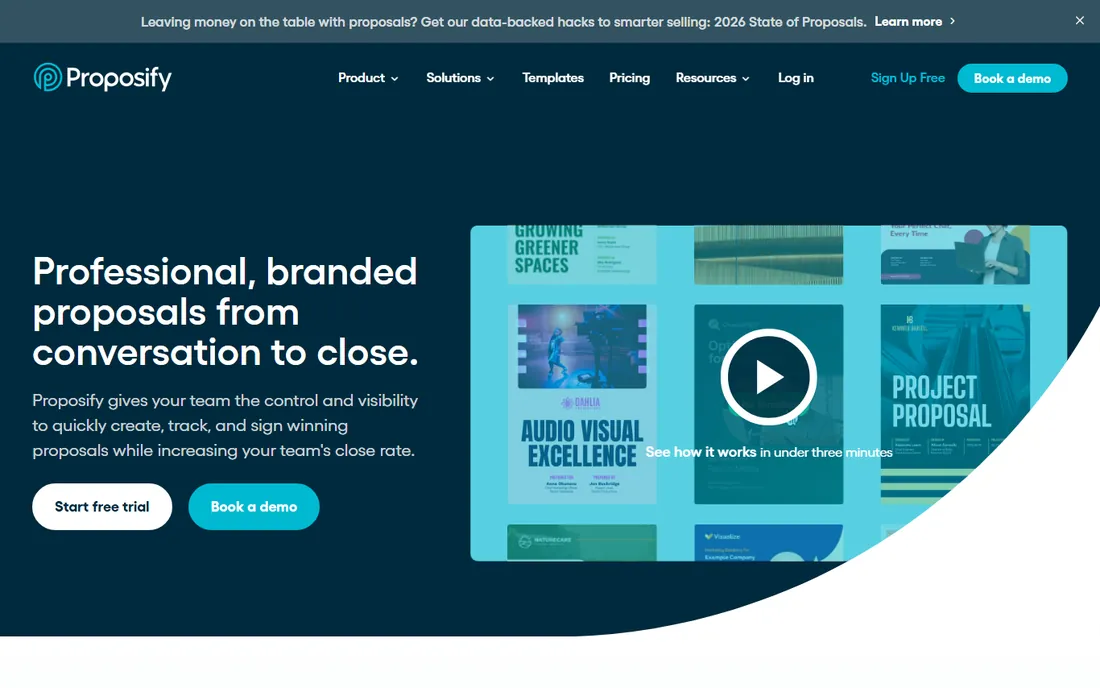
Proposify is built for teams whose proposals need to look expensive. Drag-and-drop templates, interactive pricing tables, embedded video and e-signatures produce documents that win on presentation. Basic at $19 and Team at $41 per user per month billed annually cover individuals through growing sales teams, with a 14-day trial and no credit card required. Engagement analytics show exactly which sections prospects read.
Like PandaDoc, it finishes proposals rather than automating questionnaire responses. Approval workflows and role-based section locking are the standout features for teams where reps cannot be trusted with pricing. Agencies, consultants and professional services firms get the most from it. Pure RFP teams should pair it with a response platform.
What we like- Beautiful branded templates
- Approval workflows with section locking
- Detailed engagement analytics
Watch out for- No free plan, only a 14-day trial
- Per-user pricing scales with headcount
- Limited RFP questionnaire features
Starting price$13 per user/month (Starter, billed annually)
Free planFree trial (14 days)
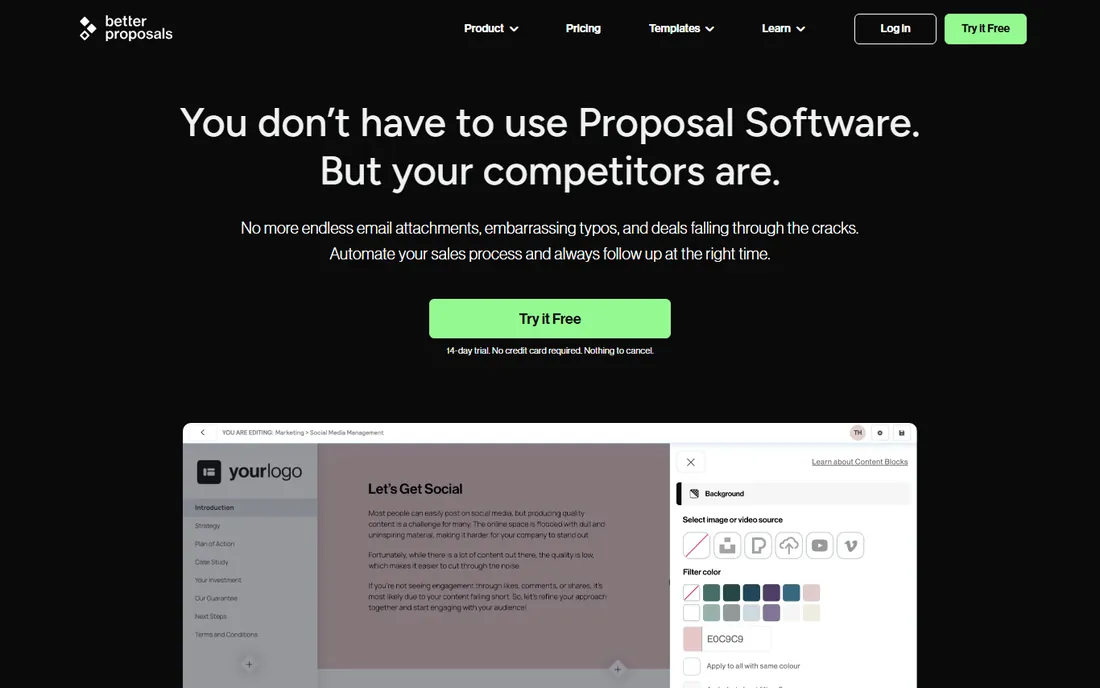
Better Proposals is the budget proposal tool that refuses to feel cheap. Starter at $13 per user per month billed annually includes e-signatures, payment collection and analytics, with Premium at $21 and Enterprise at $42. The company is bootstrapped, support is human and fast, and a 14-day trial needs no credit card. Annual billing saves up to 35 percent.
The feature set is narrower than PandaDoc or Proposify, and integrations are fewer. But for freelancers and small teams sending a handful of proposals a month, it covers the essentials at half the price of competitors. It will not automate your RFP responses, but it will get a professional proposal signed quickly.
What we like- Lowest entry price on this list
- Human support with fast response times
- No-nonsense pricing with annual discounts
Watch out for- Smaller template library than Proposify
- Fewer integrations
- No free plan beyond the trial
How we chose
I mapped the RFP automation category from buyer guides, G2 and Capterra rankings, and the tools proposal teams actually discuss on Reddit. Then I verified each vendor's current pricing page, confirmed free plans and trial terms, and read documentation to separate true RFP response platforms from proposal tools. Renamed products are listed under current names. No vendor paid for placement, and nothing here is based on hands-on testing.
How to choose RFP automation software
Start from your bottleneck, not the feature list. The category splits three ways, and buying the wrong type wastes the budget.
Response platforms versus proposal tools
Response platforms (Responsive, Loopio, Qvidian, RocketDocs, AutoRFP.ai, 1up, Conveyor) answer questionnaires: they store approved content, draft with AI and manage review workflows. Proposal tools (PandaDoc, Proposify, Better Proposals) produce the final document: design, pricing tables, e-signature and tracking. Many teams need one of each. Buying a proposal tool to fix a questionnaire backlog, or vice versa, solves nothing.
Pricing models that change the math
Most enterprise platforms price per seat or by custom quote, which punishes teams with many occasional contributors. AutoRFP.ai prices per project with unlimited users, 1up offers a free tier with usage-based upgrades, and Conveyor prices on questionnaire volume. Model your real usage: count contributors, not just core team members, and ask what happens in your busiest month.
Security and data control questions
RFP responses contain your pricing, architecture and security posture. Ask where AI processing happens, whether your data trains models, and what certifications the vendor holds. RocketDocs and AutoRFP.ai keep data out of public model training; 1up and Conveyor publish SOC 2 compliance. For regulated industries, get these answers in writing before the trial.
Common mistakes buyers make
The first mistake is buying for the demo instead of the workflow. Every platform drafts impressive answers from a clean sample; the real test is your messiest spreadsheet with merged cells and inconsistent formatting. Run the trial on a real RFP, not the vendor's example.
The second is underestimating content work. AI drafting is only as good as the library behind it. Budget time to curate approved answers in the first month, or the automation rate stalls and the team blames the tool.
The third is ignoring the contributor experience. Subject-matter experts who hate the interface will answer in email instead, and the platform becomes an expensive library nobody feeds. Pick the tool your busiest experts will actually open: for many teams, that is the one living inside Slack.
Frequently asked questions
What is RFP automation software?
RFP automation software stores your approved answers, drafts responses to RFPs, RFIs, DDQs and security questionnaires with AI, routes questions to experts and tracks projects to deadline. It replaces the copy-paste routine of hunting through old documents for each new bid.
How much does RFP software cost?
Entry points range from free (1up, Conveyor's trust center) to $250 per month (1up Starter) to $899 per month (AutoRFP.ai Scale). Enterprise platforms like Loopio start around $20,000 per year, and most others are custom-quoted. Proposal tools run $13 to $49 per user per month.
Is there free RFP software?
1up offers a free plan with 50 answers per month, and Conveyor offers a free trust center that deflects some questionnaires. PandaDoc has a free plan for five documents a month. Full RFP response automation, though, is a paid category with no complete free option.
What is the difference between RFP software and proposal software?
RFP software answers structured questionnaires from buyers, managing content libraries and review workflows. Proposal software creates the polished document you send: design, pricing tables, e-signature and tracking. Teams that both respond to RFPs and send proposals often use one of each.
How long does implementation take?
Lightweight tools like 1up go live in minutes and AutoRFP.ai produces first drafts within days. Mid-market platforms typically need two to six weeks including content migration. Enterprise deployments of Responsive, Qvidian or Loopio run longer, especially with complex approval workflows.
Sources we checked (10)
- https://www.responsive.io/
- https://loopio.com/pricing/
- https://uplandsoftware.com/qvidian/
- https://rocketdocs.com
- http://autorfp.ai/pricing
- https://1up.ai/compare/1up-vs-loopio
- https://www.conveyor.com/pricing
- https://www.pandadoc.com/blog/best-electronic-signature-software/
- https://www.proposify.com/blog/best-sales-closing-productivity-tools
- https://betterproposals.io/pricing
Is your product missing or out of date?
We review this list regularly. Vendors can request a listing, send updated pricing or ask about featured placement.

Shihab Mia · Founder, Rankite
Shihab has spent more than a decade helping SaaS and e-commerce brands grow through search. He writes Rankite's software buying guides from pricing pages, documentation and public user reviews. More about Shihab.