How we make this list: we compare pricing pages, product documentation and public user reviews. Rankite is independent; if a vendor ever pays for a featured spot, that listing is clearly labeled Partner.
Key takeaways
- QuickBooks Online remains the default for US small businesses, but Xero's unlimited-users model makes it cheaper once you have three or more people in the books.
- Wave and Zoho Books both offer genuinely free tiers that cover a freelancer's invoicing and bookkeeping with no monthly fee.
- FreshBooks is the best fit for consultants and agencies that bill by the hour; Patriot is the cheapest no-frills ledger at $20 per month.
- Oracle NetSuite and Sage Intacct serve multi-entity mid-market companies; both are quote-only, so budget for a sales process and implementation.
Quick comparison
| Tool | Best for | Starting price | Free plan |
|---|
 QuickBooks Online QuickBooks Online | US small businesses that want the biggest ecosystem | $38/month (Simple Start) | Free trial (30 days) |
 Xero Xero | Teams that need unlimited users without per-seat fees | $27/month (Early) | Free trial (30 days) |
 FreshBooks FreshBooks | Freelancers and agencies that bill clients for time or projects | $23/month (Lite) | Free trial (30 days) |
 Wave Wave | Freelancers who want core accounting without a monthly fee | $0/month (Starter) | Yes |
 Zoho Books Zoho Books | Small teams that want maximum value per dollar | $20/month (Standard, billed monthly) | Yes |
 Sage Accounting Sage Accounting | Businesses that want an established brand at a low entry price | See website | Free trial (30 days) |
 Oracle NetSuite Oracle NetSuite | Mid-market companies that have outgrown small-business accounting | See website | No |
 Patriot Accounting Patriot Accounting | Budget buyers who want simple, honest books | $20/month (Basic) | Free trial (30 days) |
 Sage Intacct Sage Intacct | Finance teams that need multi-entity consolidation and real reporting depth | See website | No |
Is your product missing or out of date?
We review this list regularly. Vendors can request a listing, send updated pricing or ask about featured placement.
The best accounting & finance software
Starting price$38/month (Simple Start)
Free planFree trial (30 days)
QuickBooks Online is the default choice for a reason: more US accountants know it than any competitor, and the app marketplace covers almost any workflow you will bolt on later. Simple Start at $38 per month covers invoicing, bank feeds, and basic reporting for one user. Essentials at $75 adds bill management and time tracking for three users. Plus at $115 brings inventory and project profitability for five users, and Advanced at $275 serves larger teams with custom roles and automation.
The honest catch is the total bill. Intuit raised prices across tiers in 2026, and payroll, live bookkeeping, and most integrations are separate subscriptions. A business that budgeted $75 for Essentials can easily land above $150 once payroll and apps are added. If your accountant lives in QuickBooks and you need deep US payroll integration, it is still the pragmatic pick. Just price the whole stack, not the plan.
What we like- Largest integration marketplace and US accountant network
- Strong inventory and project tracking on higher plans
- Intuit Assist AI for reconciliation
Watch out for- Prices have risen sharply, up 52 to 64 percent since 2020
- Payroll and many add-ons bill separately, inflating the real monthly cost
#2
Xero
Best for: Teams that need unlimited users without per-seat fees
Visit xero.com
Starting price$27/month (Early)
Free planFree trial (30 days)
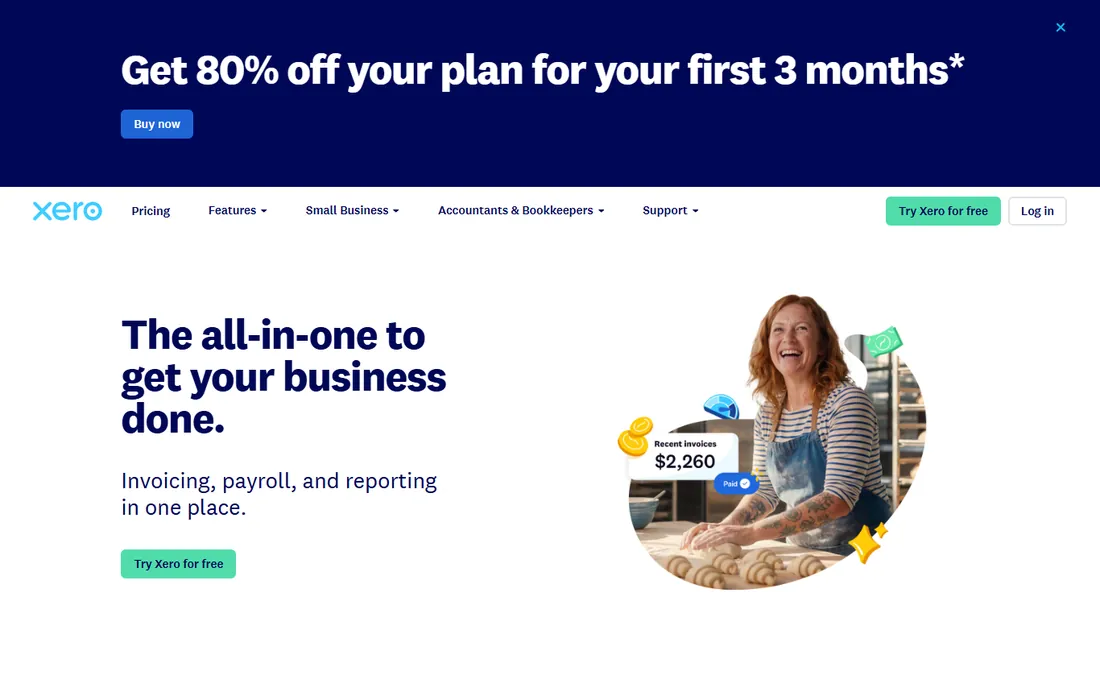
Xero is the strongest QuickBooks alternative, and its killer feature is commercial, not technical: every plan includes unlimited users. A five-person finance team pays the same subscription as a sole proprietor, while QuickBooks charges by seat. Plans are flat and simple: Early at $27 per month for up to 20 invoices and 5 bills, Growing at $59 for unlimited invoicing, and Established at $97 with multi-currency, project tracking, and expense claims. Note that US prices rose on October 1, 2026, so older reviews quote lower numbers.
The trade-offs are ecosystem-related. US payroll goes through Gusto at $49 per month plus $6 per person, and receipt capture and inventory often need marketplace apps. Reconciliation is widely considered the best in the category, and the 1,000-plus app marketplace is second only to QuickBooks. For teams of three to fifteen people who want flexibility without seat math, Xero is usually the better value.
What we like- Unlimited users on every plan
- Excellent bank reconciliation
- Multi-currency and project tracking on Established
Watch out for- US payroll runs through Gusto as a paid add-on
- Fewer US accountants know Xero than QuickBooks
#3
FreshBooks
Best for: Freelancers and agencies that bill clients for time or projects
Visit freshbooks.com
Starting price$23/month (Lite)
Free planFree trial (30 days)
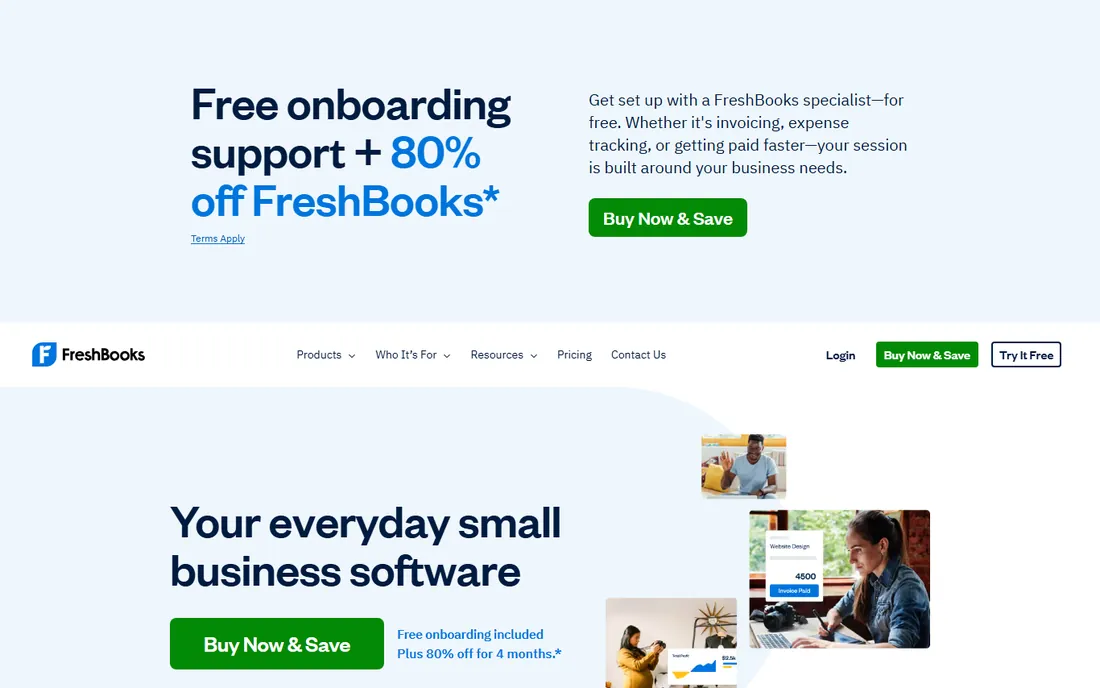
FreshBooks is built for people who sell hours, not products. Invoicing is the core: unlimited customized invoices, recurring billing, late-payment reminders, deposits, and client portals appear even on the $23 Lite plan. Time tracking is unlimited everywhere, and tracked hours flow onto invoices without retyping. Plus at $43 per month adds the real accounting layer, meaning chart of accounts, general ledger, and balance sheet, while Premium at $70 removes the client cap and adds project profitability.
Watch the two constraints. Lite allows only 5 billable clients, which forces many freelancers onto Plus faster than expected. And every plan is effectively a one-person plan: extra team members cost $11 per month each, so a three-person firm on Plus pays $65, not $43. For solo consultants and small agencies, though, the invoicing depth is unmatched at this price.
What we like- Deepest invoicing in its class with proposals and retainers
- Unlimited time tracking on every plan
- Hours flow straight onto invoices
Watch out for- Lite caps you at 5 billable clients
- Each extra team member costs $11 per month
- Inventory is light
#4
Wave
Best for: Freelancers who want core accounting without a monthly fee
Visit waveapps.com
Starting price$0/month (Starter)
Free planYes
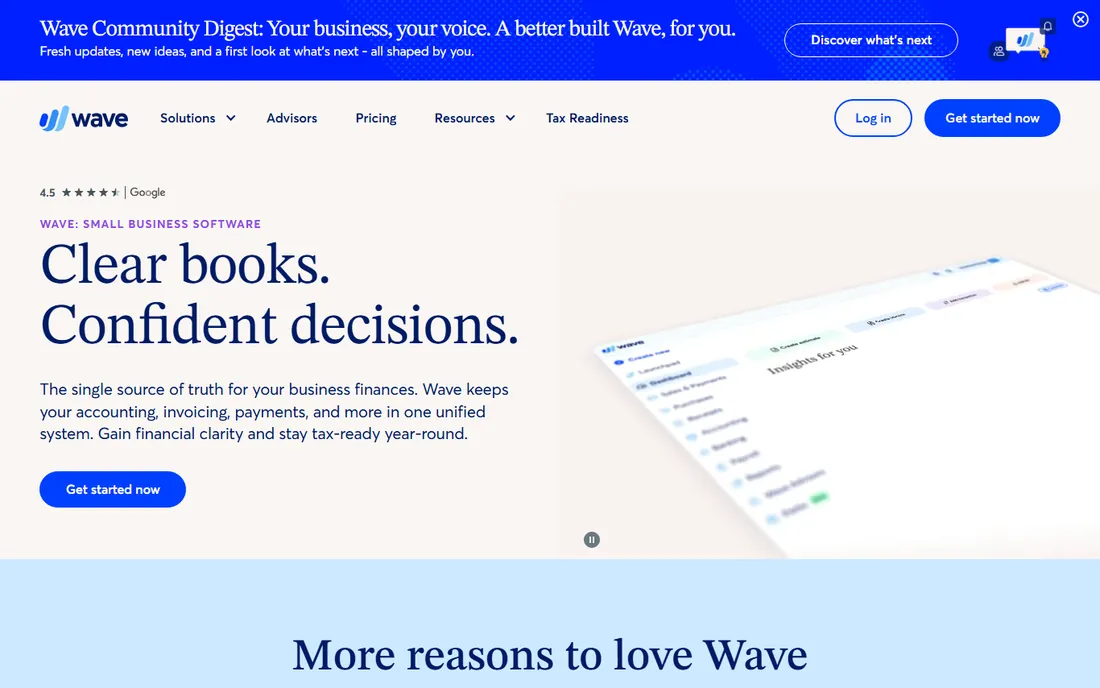
Wave is the only real free option in this list. The Starter plan costs $0 forever and covers unlimited invoices, estimates, expense tracking, double-entry books, and basic reports, with unlimited users. Pro at $19 per month or $190 per year adds automatic bank imports through Plaid, receipt scanning, and priority support. Payroll is a separate add-on at $40 per month plus $6 per employee.
The limits are clear: no inventory management, no native time tracking, and receipt scanning costs extra on Starter. Bank transactions must be entered manually unless you pay for Pro. But for a freelancer or service business with simple books, Wave delivers more at $0 than most competitors include at $30. Start free, upgrade to Pro when manual entry starts eating your afternoons.
What we like- Free Starter plan with unlimited invoices and users
- Clean, simple dashboard
- Manage multiple businesses under one login
Watch out for- Automatic bank import only on the paid Pro plan
- No inventory or time tracking
- Payroll limited in scope
#5
Zoho Books
Best for: Small teams that want maximum value per dollar
Visit zoho.com
Starting price$20/month (Standard, billed monthly)
Free planYes
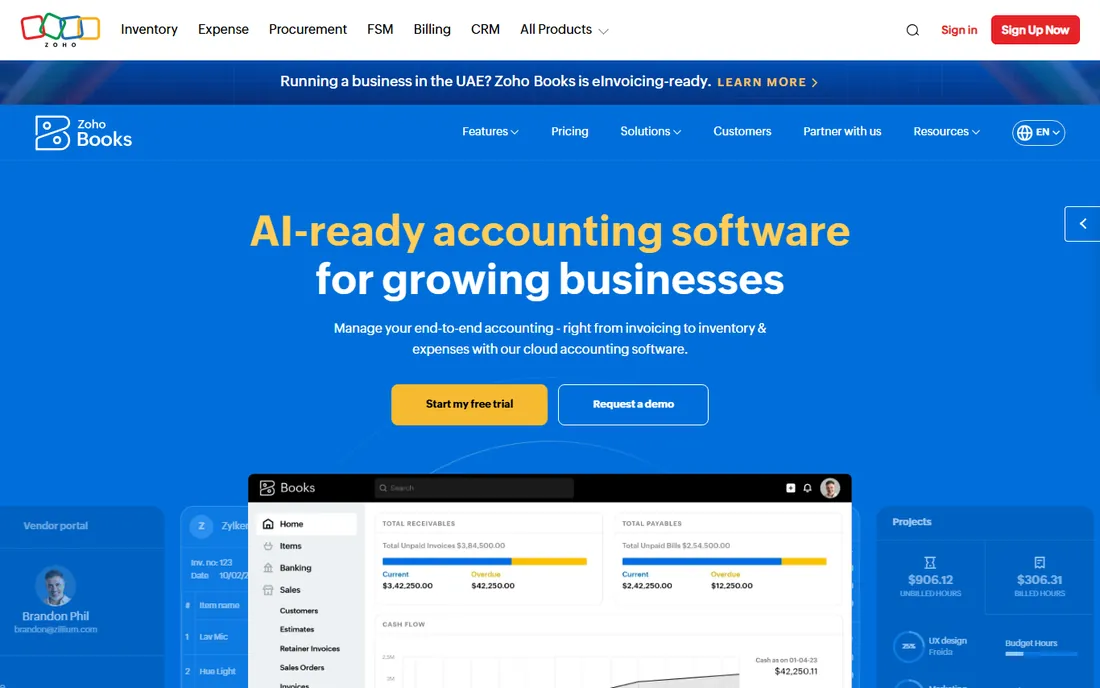
Zoho Books is the value pick, and the pricing structure explains why: you pay per organization, not per user. Standard at $20 per month billed monthly ($15 annually) covers 3 users, Professional at $50 covers 5, and Premium at $70 covers 10. The free plan is genuinely usable, with 1 user plus accountant access and up to 1,000 invoices per year, available as long as annual revenue stays under $50,000.
Feature depth is solid for the money: invoicing, bank reconciliation, inventory from Professional up, multi-currency, project billing, and the Zia AI assistant. Support includes phone, chat, and email on paid plans, which beats QuickBooks at comparable tiers. The weaknesses are US-specific: payroll runs through integrations, and fewer American accountants work in Zoho. If you already use Zoho CRM or other Zoho apps, the integration alone can justify the switch.
What we like- Free plan for businesses under $50K annual revenue
- Per-organization pricing instead of per-seat
- Deep Zoho ecosystem integration
Watch out for- US payroll needs a third-party integration
- Smaller US accountant network than QuickBooks
#6
Sage Accounting
Best for: Businesses that want an established brand at a low entry price
Visit sage.com
Starting priceSee website
Free planFree trial (30 days)
Sage has sold accounting software since 1981, and that history shows in a product that covers the fundamentals without fuss: invoicing, expense tracking, bank reconciliation, and financial reporting. Entry pricing in the US sits well below QuickBooks, which makes it attractive for lean single-user operations. A 30-day free trial lets you test the core before paying.
The honest catch is momentum. The integration marketplace is thinner than QuickBooks or Xero, the mobile app covers basics rather than impressing, and plan structures differ by country, which makes US pricing harder to pin down from reviews. Sage 50 desktop remains the stronger product for inventory-heavy businesses, but it costs considerably more. Choose Sage Accounting when reliability and low cost matter more than a sprawling app ecosystem.
What we like- Trusted name with decades in accounting
- Low-cost entry tiers
- 30-day free trial with no credit card
Watch out for- Smaller integration ecosystem than QuickBooks or Xero
- US pricing and plan names shift often, so confirm current tiers
#7
Oracle NetSuite
Best for: Mid-market companies that have outgrown small-business accounting
Visit netsuite.com
Starting priceSee website
Free planNo
NetSuite is the step up when QuickBooks or Xero cannot keep up: multiple entities, complex inventory, revenue recognition, and consolidated reporting across subsidiaries. As a full ERP, it combines accounting with order management, inventory, CRM, and ecommerce, so growing companies stop stitching point solutions together. Implementation partners are everywhere, and the platform scales from mid-market well into enterprise.
The price reflects that scope. NetSuite does not publish list pricing; deals are quoted per user plus modules, with typical mid-market deployments running well into five figures per year before implementation, which itself can cost $50,000 to $150,000. There is no free trial in the usual sense, only demos and sales-led evaluations. Buy NetSuite when the business genuinely needs ERP depth, not as a prestige upgrade from QuickBooks.
What we like- Full cloud ERP with financials, inventory, CRM, and ecommerce in one system
- Strong multi-entity and multi-currency support
- Huge partner ecosystem
Watch out for- Quote-only pricing with substantial implementation costs
- Overkill and overpriced for simple small-business books
Starting price$20/month (Basic)
Free planFree trial (30 days)
Patriot is the plain-spoken budget option: Accounting Basic at $20 per month covers unlimited customers, invoices, vendors, bank imports, and financial reports, while Premium at $30 adds estimates, recurring invoices, and user permissions. Pricing is flat and transparent, support is US-based and well reviewed, and the 30-day free trial needs no commitment. Businesses that also run Patriot payroll get a tidy single-vendor setup.
The limits are structural. There is no inventory management, no project costing worth the name, and no multi-currency, so product sellers and international businesses should look elsewhere. The interface is deliberately simple, which fans call a relief and critics call austere. For a US service business with straightforward books and a tight budget, Patriot does the job at half the price of QuickBooks.
What we like- Straightforward $20 Basic and $30 Premium plans
- US-based support with a strong reputation
- Pairs cleanly with Patriot payroll
Watch out for- No inventory management
- No multi-currency
- Plain interface that feels dated next to modern rivals
#9
Sage Intacct
Best for: Finance teams that need multi-entity consolidation and real reporting depth
Visit sageintacct.com
Starting priceSee website
Free planNo
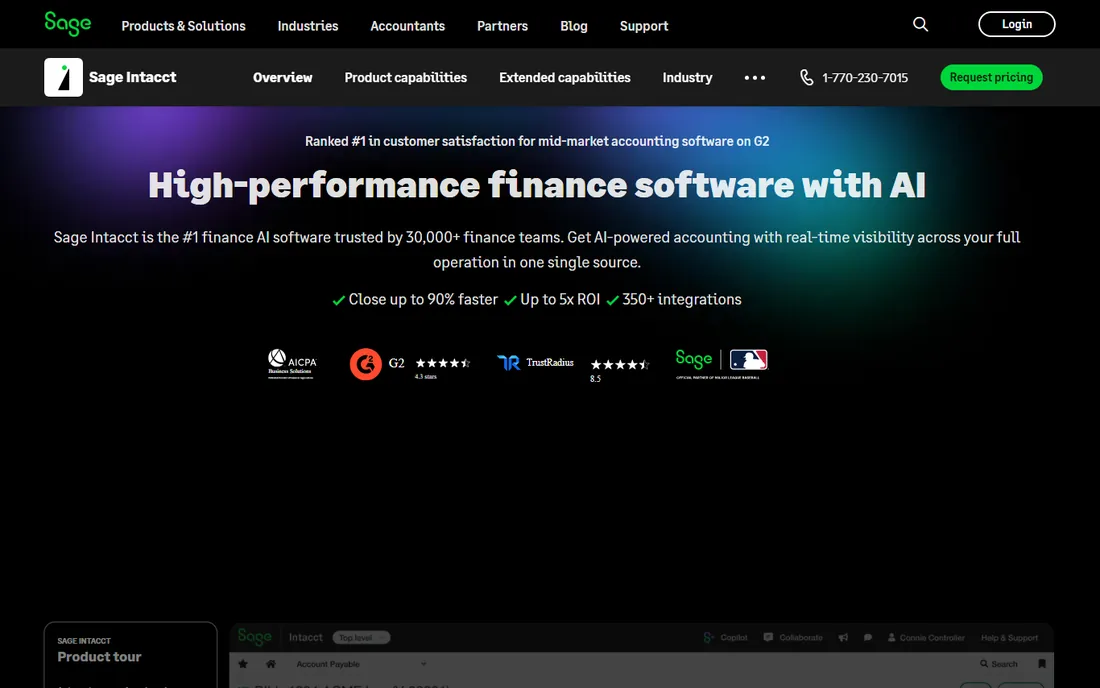
Sage Intacct sits between QuickBooks and NetSuite: deeper than any small-business ledger, narrower than a full ERP. Its strengths are finance-specific, including multi-entity consolidation, automated revenue recognition, dimensional reporting that slices numbers without a spreadsheet, and 350-plus pre-built integrations. Finance teams that close the books in Intacct typically close faster than they did in QuickBooks.
Sage publishes no list prices, and partner-reported ranges put typical mid-market deployments at $15,000 to $50,000 per year before implementation, which often adds as much again. Per-user licensing means costs climb as the finance team grows, and renewals have a reputation for sharp increases. Evaluate Intacct when you run multiple entities or need audit-grade controls; for a single-entity small business, it is more system than you need.
What we like- Dimensional chart of accounts and real-time dashboards
- Multi-entity consolidation built in
- AICPA-endorsed with 4,000-plus G2 reviews
Watch out for- No published pricing, everything is quoted
- Per-user and module costs escalate
- Implementations are expensive and partner-led
Picking the right fit for your business
Start with transaction volume and complexity, not brand names.
Match the software to how you sell
Hourly billers and project shops should shortlist FreshBooks for its time-to-invoice flow. Product sellers need real inventory, which points to QuickBooks Plus, Zoho Professional, or NetSuite as volume grows. Freelancers with simple service income can run on Wave or Zoho free for $0. Buying inventory features you will never use is the most common overspend in this category.
Count users before you compare prices
A $38 QuickBooks plan for one user is not cheaper than a $59 Xero plan for six users. Xero and Wave include unlimited users; FreshBooks charges $11 per extra seat; QuickBooks caps users by tier. Add up everyone who touches the books, including your bookkeeper and accountant, then compare the real totals.
Price payroll and add-ons on day one
Payroll is the add-on that breaks most budgets. QuickBooks, Xero (via Gusto), FreshBooks, and Wave all charge separately for payroll, typically $40-plus per month plus per-employee fees. If you have staff, get the payroll quote in the same conversation as the accounting quote, or your $23 plan becomes a $90 stack.
Think about migration before you need it
Every platform exports client lists and basic records, but chart-of-accounts history, custom reports, and integrations rarely transfer cleanly. If there is any chance you will outgrow the tool in two years, favor platforms with open APIs and a large migration partner ecosystem. The cheapest plan today is expensive if it costs $5,000 to leave.
How we chose
We reviewed each vendor's own pricing page and plan documentation, then verified plan limits, user caps, and add-on costs against public reviews on G2, Capterra, and SourceForge plus practitioner discussions on Reddit. We prioritized tools with published pricing, a real trial or free tier, and coverage of core workflows: invoicing, bank reconciliation, reporting, and payroll options. Where vendors changed prices during 2026, we used the most recent list prices and noted the change. We did not test-drive every product; this is a research comparison, not a hands-on review.
Mistakes that cost real money
Four errors show up again and again. First, buying too much software: a freelancer on QuickBooks Advanced is paying $275 for features a $0 Wave account covers. Second, ignoring seat math: per-user fees turn a cheap plan expensive the moment the team grows. Third, treating the subscription as the total cost: payroll, payment processing, receipt capture, and integrations routinely double the headline price. Fourth, choosing on price alone and then paying for migration: moving five years of books to a new platform costs far more than the price gap between plans. Write down your must-have features, count your users, price payroll, and only then compare.
Frequently asked questions
Do I need an accountant to set up accounting software?
Not necessarily, but it helps. Most platforms import bank history and walk you through the chart of accounts in under an hour. An accountant's real value is in the setup review: correct tax settings, clean opening balances, and a reconciliation workflow you will actually follow. Many accountants discount the software itself, so ask yours before you buy.
Can I switch accounting platforms later?
Yes, but it gets harder every year you wait. Invoices, customers, and vendors migrate fairly well; historical reconciliations, custom reports, and integrations do not. If you expect to outgrow a tool within two years, start on the bigger platform now rather than paying for a migration later.
Which of these handle inventory properly?
QuickBooks Plus and Advanced, Zoho Books Professional and up, and NetSuite all track stock with purchase and sales orders. FreshBooks, Wave, and Patriot do not do real inventory. If you carry stock, strike the simple tools off your list immediately.
What will payroll actually cost?
Budget $40 to $50 per month base plus $5 to $6 per employee on most platforms, whether native or through a partner like Gusto. Payroll is almost never included in the accounting subscription, and it is the add-on buyers most often forget to price.
Is the free plan really free?
Wave's Starter and Zoho's free tier are free indefinitely with real limits, not time-boxed trials. The trade is features: no automatic bank imports on Wave Starter, and Zoho's free plan requires annual revenue under $50,000. For a simple freelance practice, both are genuinely enough.
Sources we checked (13)
- https://costbench.com/software/accounting/quickbooks-online/
- https://www.nerdwallet.com/business/software/learn/quickbooks-pricing?trk_channel=web&trk_copy=How%20Much%20Does%20QuickBooks%20Cost%20in%202024?&trk_element=hyperlink&trk_elementPosition=4&trk_location=PostList&trk_subLocation=tiles
- https://www.flozic.ai/blog/reviews/xero-review
- https://ifeeltech.com/blog/xero-accounting-software-review
- https://cpaadvisor.us/articles/freshbooks-review/
- https://findstack.com/products/freshbooks/reviews?page=7
- https://cpaadvisor.us/articles/waveapps-review/
- https://cpaadvisor.us/articles/zoho-books-review/
- https://saasrat.com/products/zoho-books
- https://www.fahimai.com/sage
- https://www.softshortlist.com/software/patriot-accounting
- https://www.visdum.com/blog/what-is-sage-intacct
- https://www.dualentry.com/blog/best-sage-intacct-alternatives
Is your product missing or out of date?
We review this list regularly. Vendors can request a listing, send updated pricing or ask about featured placement.

Shihab Mia · Founder, Rankite
Shihab has spent more than a decade helping SaaS and e-commerce brands grow through search. He writes Rankite's software buying guides from pricing pages, documentation and public user reviews. More about Shihab.