How we make this list: we compare pricing pages, product documentation and public user reviews. Rankite is independent; if a vendor ever pays for a featured spot, that listing is clearly labeled Partner.
Key takeaways
- Salesloft (now combined with Clari) and Gong anchor the RevOps stack: one for pipeline execution and forecasting, the other for conversation intelligence.
- LeanData and Fullcast own the plumbing: lead routing, territory planning, and quota management that keep the CRM trustworthy.
- HubSpot Operations Hub is the practical pick for teams already on HubSpot, with data sync and automation at published per-seat prices.
- 6sense, Outreach, and Aviso layer AI over the top: intent data, agentic prospecting, and AI forecasting for teams with the volume to feed them.
Quick comparison
| Tool | Best for | Starting price | Free plan |
|---|
 Salesloft Salesloft | Teams unifying prospecting, forecasting, and deal execution | See website (quote-based) | No |
 Gong Gong | Turning every customer conversation into revenue insight | See website (quote-based) | No |
 LeanData LeanData | Complex lead routing and go-to-market orchestration | See website (quote-based) | No |
 HubSpot Operations Hub HubSpot Operations Hub | RevOps teams standardized on HubSpot | See website (Operations Hub tiers; Starter plans from low monthly per-seat pricing) | No |
 6sense 6sense | Account-based teams acting on buyer intent | See website (quote-based) | No |
 Outreach Outreach | Sales teams running coordinated multi-channel prospecting | See website (quote-based) | No |
 Fullcast Fullcast | Annual planning: territories, quotas, and compensation | See website (quote-based) | No |
 Aviso Aviso | AI-driven forecasting and deal-level guidance | See website (quote-based) | No |
Is your product missing or out of date?
We review this list regularly. Vendors can request a listing, send updated pricing or ask about featured placement.
The best revenue operations software
Revenue operations is the team that keeps the revenue engine honest: clean CRM data, leads routed in minutes not days, territories that make sense, forecasts the board can trust. The software below does that work at scale. Every one of these is an enterprise-style purchase with quote-based pricing, so this guide compares what they actually do differently and where each one disappoints.
#1
Salesloft
Best for: Teams unifying prospecting, forecasting, and deal execution
Visit salesloft.com
Starting priceSee website (quote-based)
Free planNo
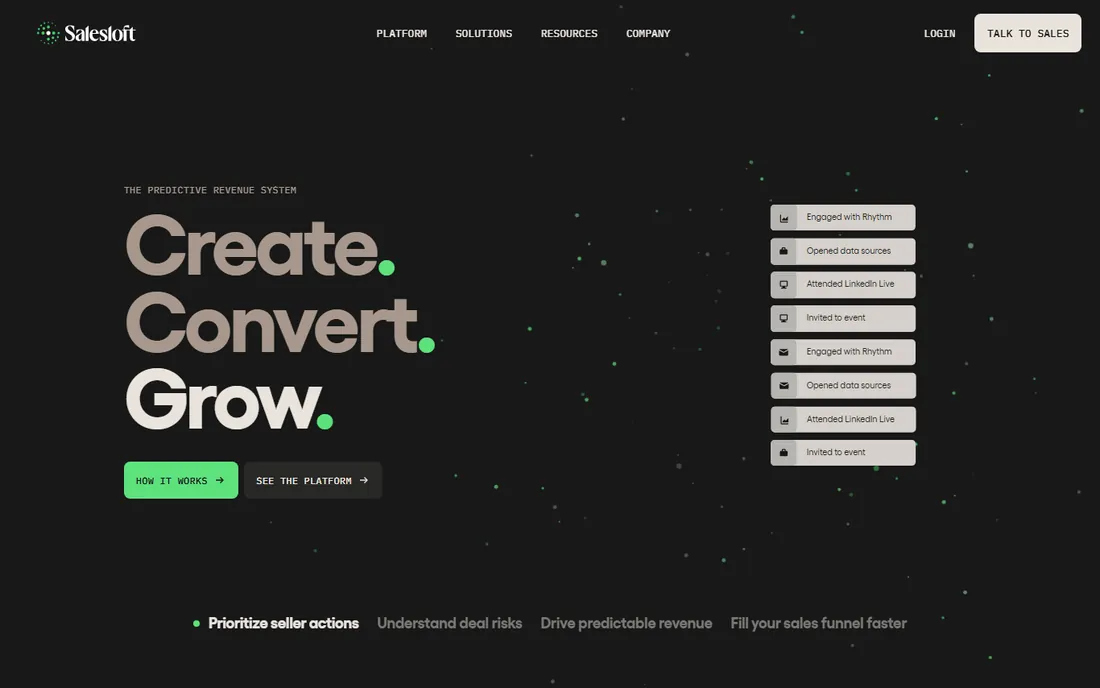
Salesloft absorbed Clari, and the combined company now sells what it calls a predictive revenue system: capture every signal across the stack, run it through forecasting and deal management, and push next steps to reps. For RevOps leaders, the appeal is consolidation: cadences, conversation data, forecasting, and pipeline inspection in one contract instead of four.
The merger is both the opportunity and the risk. Roadmaps are merging, which means some Clari forecasting depth paired with Salesloft execution breadth, but also the usual post-merger product churn. Pricing is quote-based and implementation is a real project. Teams choosing Salesloft are betting on the combined platform becoming the system of record for the revenue org.
What we like- Combined Salesloft and Clari platform covers the full revenue workflow
- Strong forecasting with deal inspection
- 4,000-plus sales teams on the platform
Watch out for- The Clari merger means the product suite is still settling
- Enterprise pricing and implementation effort
#2
Gong
Best for: Turning every customer conversation into revenue insight
Visit gong.io
Starting priceSee website (quote-based)
Free planNo
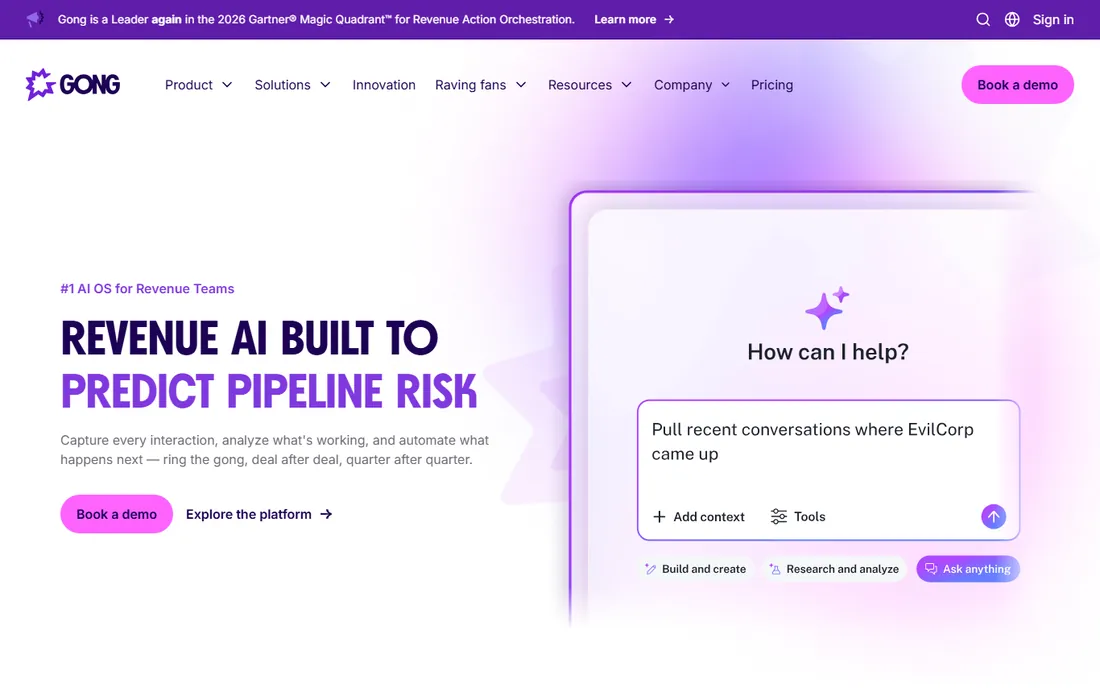
Gong records, transcribes, and analyzes customer interactions, then turns them into coaching, deal warnings, and forecast inputs. With more than 5,000 customers and a large review base, it has the deepest conversation dataset in the business, which is what makes its AI suggestions better than generic transcription tools. RevOps teams use it to answer questions CRM data cannot: why deals stall, which talk tracks correlate with wins, where forecast risk hides.
The cost is real and scales with every recorded seat, so finance will ask whether the insights justify the per-user price. Adoption is the other risk: Gong only pays off if managers coach from it and reps act on the deal signals. Bought as shelfware with a recording license, it is an expensive transcription service. Run properly, it becomes the qualitative half of the forecast.
What we like- Richest conversation dataset in the category with 5,000-plus customers
- AI agents act on call insights, not just transcribe
- Strong coaching and deal-risk features
Watch out for- Premium pricing that scales with recorded users
- Value depends on reps actually using the insights, not just being recorded
#3
LeanData
Best for: Complex lead routing and go-to-market orchestration
Visit leandata.com
Starting priceSee website (quote-based)
Free planNo
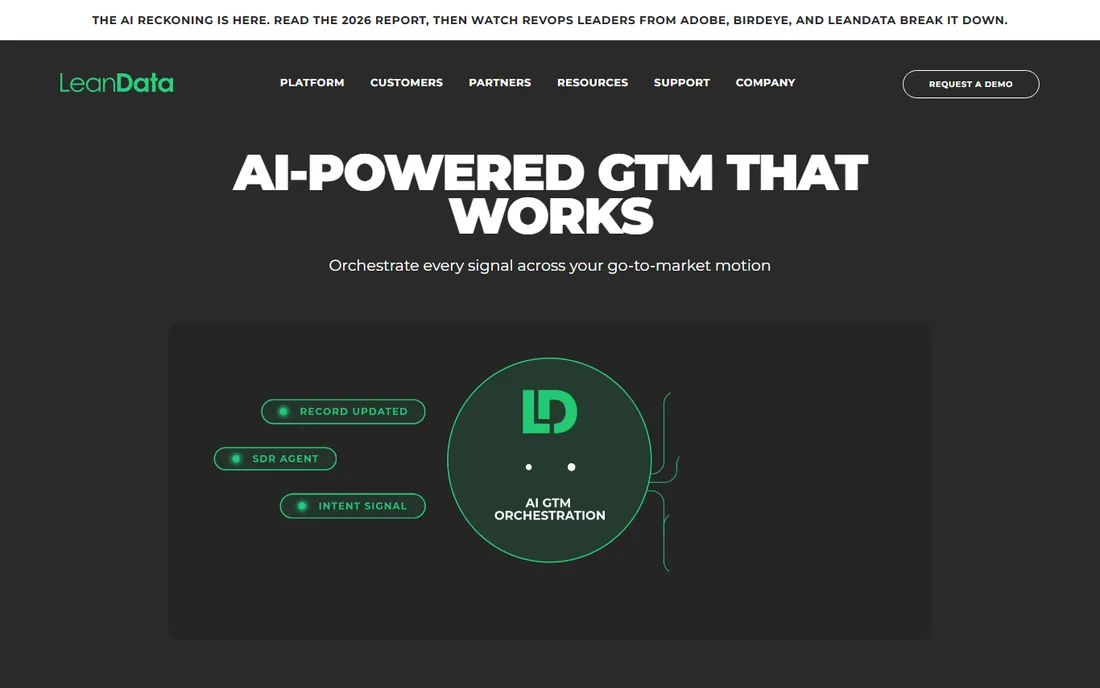
LeanData is the plumbing behind serious B2B go-to-market: when a lead arrives, LeanData decides who gets it, how fast, and with what context, across round-robins, territories, account hierarchies, and product lines. Its visual flow builder makes routing logic inspectable instead of a black box, which matters when sales and marketing argue about whose lead it was.
The honest catch is that routing engines create their own maintenance burden. Every territory change, every new product line, every exception becomes a flow to update, and someone in RevOps owns that permanently. Native Salesforce routing covers simple cases for free; LeanData earns its quote when the go-to-market motion has genuinely outgrown it. Price it against the cost of misrouted leads, not against free.
What we like- Visual, auditable routing logic for leads, accounts, and opportunities
- Handles the edge cases that break native CRM routing
- 1,000-plus B2B customers
Watch out for- Another layer on top of the CRM to maintain
- Pricing and complexity grow with routing sophistication
#4
HubSpot Operations Hub
Best for: RevOps teams standardized on HubSpot
Visit hubspot.com
Starting priceSee website (Operations Hub tiers; Starter plans from low monthly per-seat pricing)
Free planNo
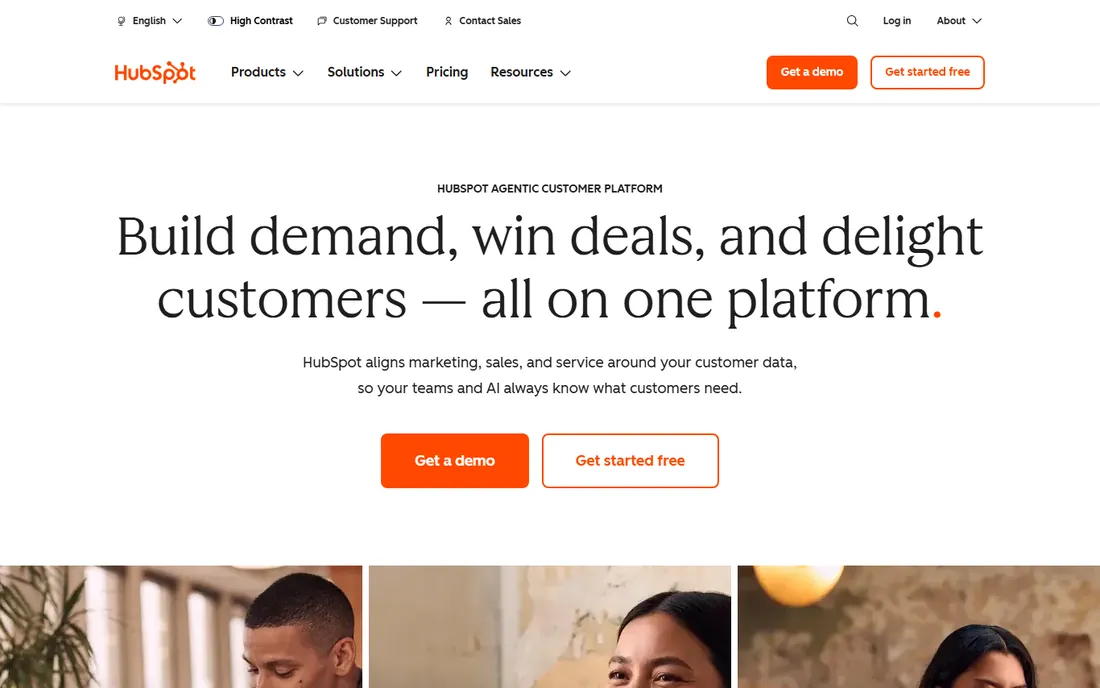
Operations Hub is HubSpot's answer to RevOps: data sync between HubSpot and other apps, programmable automation, data quality tools, and reporting, all inside the HubSpot account. For companies already running Marketing Hub and Sales Hub, it removes the integration tax: no middleware, no CSV uploads, one admin surface.
The limitation is the boundary of the ecosystem. Teams with Salesforce as the system of record, or with data infrastructure beyond HubSpot's connectors, will find Operations Hub narrower than a dedicated integration platform. Pricing follows HubSpot's tiered model (Starter, Professional, Enterprise), which keeps entry accessible but climbs with contacts and features. If HubSpot is your CRM, start here before buying anything else.
What we like- Native data sync, automation, and reporting inside HubSpot
- No integration middleware for HubSpot-centric stacks
- Approachable for smaller RevOps teams
Watch out for- Tied to the HubSpot ecosystem
- Advanced data operations still lag best-of-breed iPaaS tools
Starting priceSee website (quote-based)
Free planNo
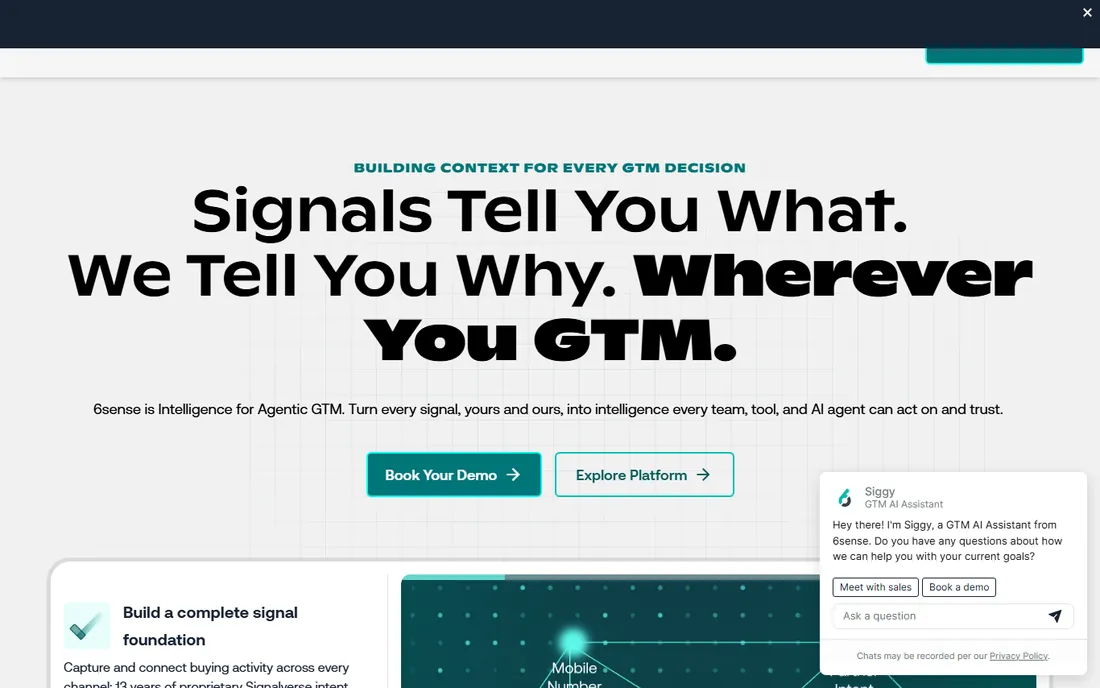
6sense tells B2B teams which accounts are researching their category right now, then orchestrates the response: ads to the buying committee, alerts to the rep, personalized web experiences. Its models combine third-party intent signals with your own website and CRM data to prioritize accounts and predict buying stages. For account-based teams, it replaces guesswork about where to aim limited sales attention.
Two caveats. Intent data is probabilistic, and its accuracy varies by industry and deal size; treat it as prioritization, not prophecy. And 6sense works best when there is somewhere to send the accounts: teams without ad budget, SDR capacity, or content to surround the account get a smart list they cannot act on. Price the platform plus the activation spend together.
What we like- Intent data plus predictive modeling identifies in-market accounts early
- Orchestration across ads, email, and sales from one canvas
- Conversational AI for revenue intelligence
Watch out for- Intent data quality varies by segment
- Requires meaningful ad and content spend to activate the full playbook
#6
Outreach
Best for: Sales teams running coordinated multi-channel prospecting
Visit outreach.io
Starting priceSee website (quote-based)
Free planNo
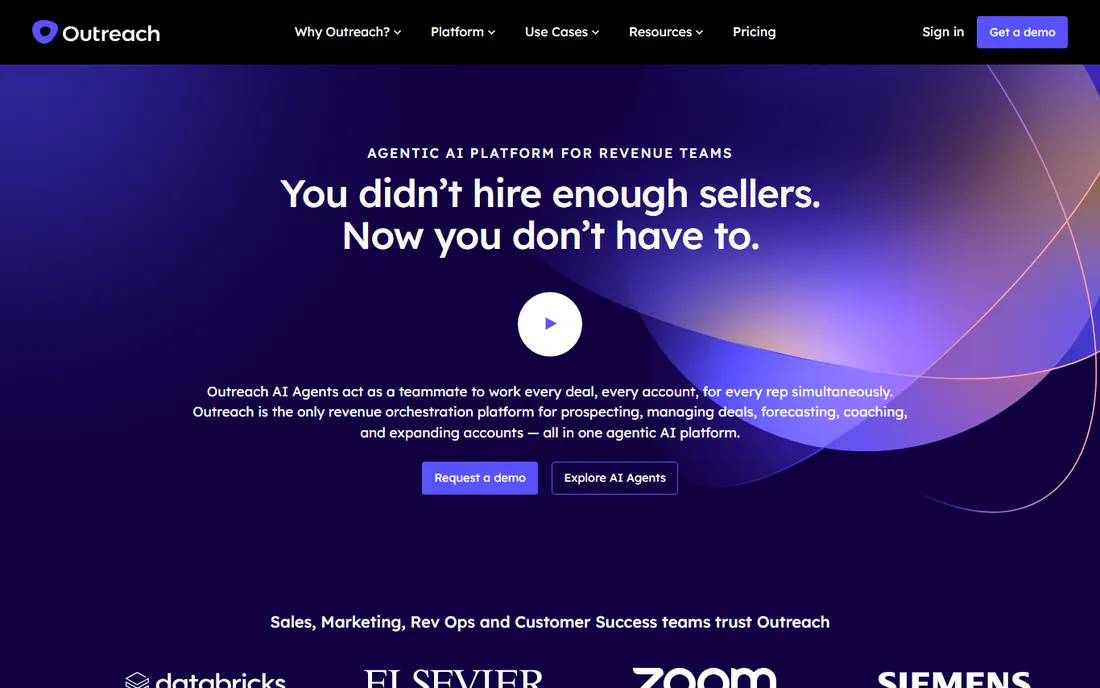
Outreach built the sales engagement category and has grown into a full revenue platform: prospecting sequences across email, phone, and social, deal management, forecasting, and conversation intelligence, now with AI agents that draft, summarize, and prep. RevOps teams like it because every touch is logged, measured, and attributable, which makes the top of the funnel finally measurable.
The risk is cultural, not technical. Outreach in undisciplined hands becomes a spam cannon that burns domains and sender reputation. Success needs list hygiene, message quality standards, and managers who inspect the data. Pricing is per-seat and quote-based, so model the cost at full sales-team deployment, not the pilot. Done right, it is the operating system for outbound; done wrong, it is expensive noise.
What we like- Deepest sales-execution workflow: sequences, calling, forecasting, and coaching in one
- Agentic AI features automate rep busywork
- Strong enterprise admin controls
Watch out for- Per-seat enterprise pricing adds up fast
- Teams need disciplined adoption or sequences become spam infrastructure
#7
Fullcast
Best for: Annual planning: territories, quotas, and compensation
Visit fullcast.io
Starting priceSee website (quote-based)
Free planNo
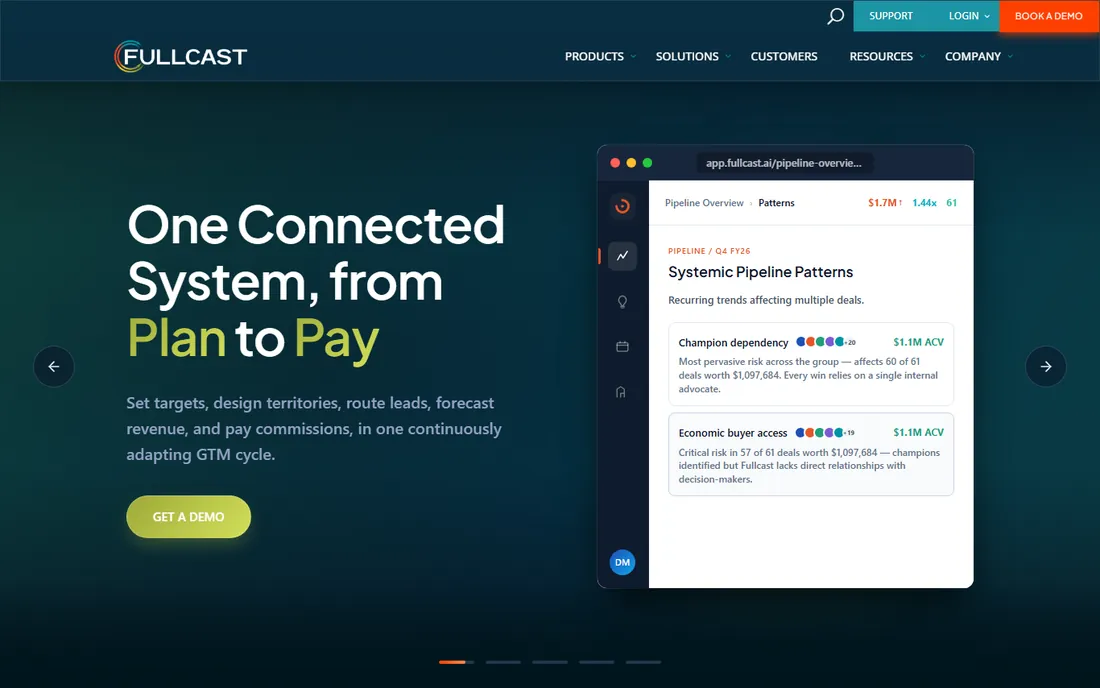
Fullcast attacks the most painful RevOps season: annual planning. Territories, quotas, headcount, and compensation plans usually live in spreadsheets that disagree with each other; Fullcast puts them on one engine so a territory change flows through to routing, forecast, and commission calculations automatically. Teams can start with one module (planning, revenue intelligence, or pay) and expand.
The trade-off is breadth versus depth. Fullcast does not try to be Gong or Outreach; it is the planning and orchestration layer underneath them. Its value compounds when you run multiple modules, which means the buying decision is really a platform commitment. For RevOps leaders drowning in planning spreadsheets every January, that commitment usually pays for itself in one cycle.
What we like- One engine connecting territory planning, routing, forecasting, and commissions
- Modular so teams can start with one piece
- Fast implementation for the category
Watch out for- Newer and narrower than the suite vendors
- Best value when you adopt multiple modules, which raises the commitment
#8
Aviso
Best for: AI-driven forecasting and deal-level guidance
Visit aviso.com
Starting priceSee website (quote-based)
Free planNo
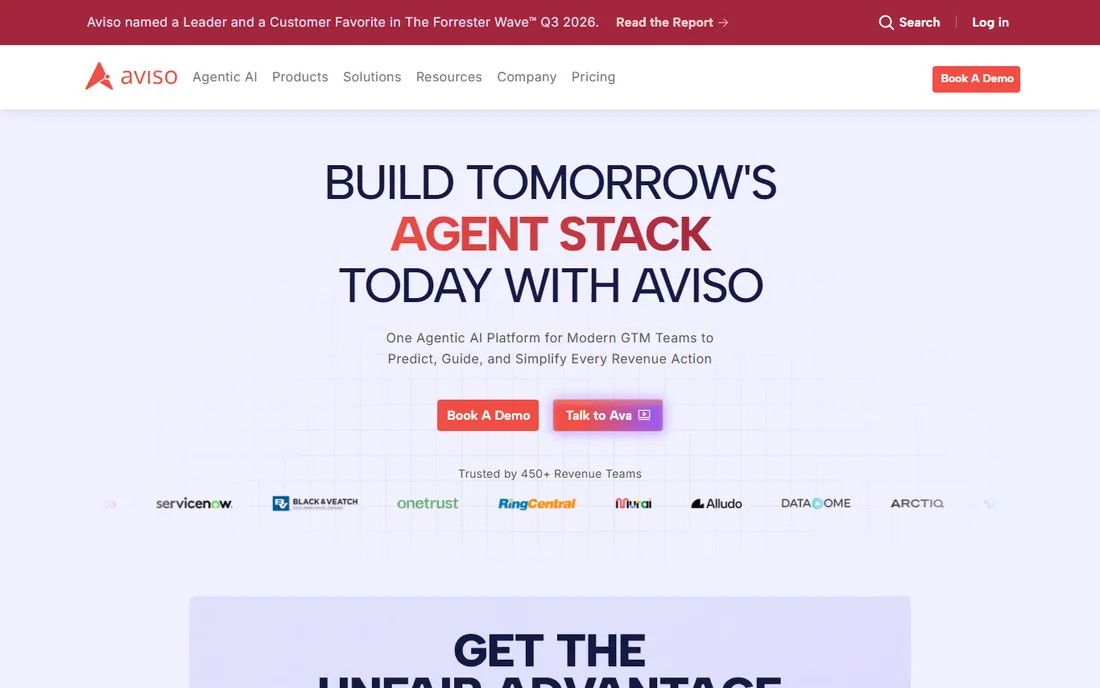
Aviso pitches an AI revenue platform: forecasting, pipeline inspection, deal guidance, conversation intelligence, and coaching in one place, used by more than 450 revenue teams. Its strength is the forecast: machine-learned deal scores, risk detection, and scenario modeling that give RevOps a number they can defend in front of the board, plus guidance that tells reps which deals need attention.
The dependency nobody can outsource is data quality. Aviso's models are only as good as the CRM data feeding them; teams with sloppy opportunity hygiene get confident-looking forecasts built on garbage. Evaluate it the same way you would any forecasting tool: run a parallel forecast for a quarter and compare against actuals before signing a multi-year deal.
What we like- Predictive forecasting with deal scoring and risk flags
- Conversation and relationship intelligence included
- Mobile app for field teams
Watch out for- Forecasting accuracy depends on CRM hygiene, which is the buyer's problem
- Crowded category means long evaluations against Gong and Clari-descended tools
What to ask on the demo call
Vendors demo the happy path, so bring your own questions. Ask how the product handles your specific CRM setup, including custom objects and the integrations you already pay for. Ask who does the implementation, how long it takes, and what happens to your data if you leave. Ask for the pricing model in writing: per-seat, platform fee, consumption, and what triggers overages. Finally, ask for two reference customers with your team size and sales motion, and actually call them. The answers to these five questions separate tools that fit from tools that merely demo well.
How we chose
We selected platforms that are live, actively sold, and recognizably part of the RevOps category in 2026, covering forecasting, routing, conversation intelligence, intent, and planning. We verified each vendor's homepage directly and noted the Clari-Salesloft combination as it stands today. All eight price by quote, which is standard for this market, so we report that plainly. We did not run trials; assessments reflect product documentation, public reviews, and each vendor's stated positioning.
Frequently asked questions
What does revenue operations software do?
It keeps the revenue process running cleanly: routing leads to the right reps, maintaining CRM data quality, planning territories and quotas, forecasting accurately, and giving managers visibility into pipeline health. RevOps software automates the operational work around selling.
How is RevOps software different from a CRM?
The CRM stores the data; RevOps software acts on it. Routing engines, forecasting AI, conversation intelligence, and planning tools sit on top of Salesforce or HubSpot and make the data useful. You need the CRM first.
How much does revenue operations software cost?
Nearly all of it is quote-based, priced by seats, data volume, or platform tier. Expect five figures annually for a mid-size team and six for enterprise deployments. Always get implementation costs broken out separately.
Do I need RevOps software with a small sales team?
Probably not yet. Under about ten reps, native CRM features and good process cover routing and forecasting. The tools on this list pay off when lead volume, territory complexity, or forecast scrutiny outgrow spreadsheets and native CRM workflows.
What is the difference between Salesloft and Outreach?
Both started in sales engagement and both now sell broader revenue platforms. Salesloft leans on its Clari-derived forecasting and revenue orchestration; Outreach leans on execution depth and agentic AI for reps. Evaluate both against your forecasting needs, not just sequencing features.
Can AI really forecast sales accurately?
AI forecasting beats gut feel when the underlying CRM data is clean and there is enough history to learn from. It does not fix bad data or unprecedented market shifts. Treat AI forecasts as a second opinion to interrogate, not a number to blindly report.
Sources we checked (8)
- https://salesloft.com/
- https://gong.io
- https://leandata.com/
- https://hubspot.com/
- https://6sense.com
- https://outreach.io/
- https://www.fullcast.io
- https://aviso.com/
Is your product missing or out of date?
We review this list regularly. Vendors can request a listing, send updated pricing or ask about featured placement.

Shihab Mia · Founder, Rankite
Shihab has spent more than a decade helping SaaS and e-commerce brands grow through search. He writes Rankite's software buying guides from pricing pages, documentation and public user reviews. More about Shihab.