How we make this list: we compare pricing pages, product documentation and public user reviews. Rankite is independent; if a vendor ever pays for a featured spot, that listing is clearly labeled Partner.
Key takeaways
- Jama Connect is the modern standard for requirements management in complex product development.
- IBM DOORS remains entrenched in aerospace, defense, and automotive where it has decades of history.
- Perforce ALM (formerly Helix ALM) covers requirements within a complete application lifecycle suite.
- Visure, Orcanos, and Kovair serve regulated industries needing traceability and compliance.
- Modern Requirements, ReqView, and Accompa offer lighter or more accessible approaches.
Quick comparison
| Tool | Best for | Starting price | Free plan |
|---|
 Jama Connect Jama Connect | Modern requirements platform | See website | No |
 IBM DOORS IBM DOORS | Regulated industry standard | See website | No |
 Perforce ALM Perforce ALM | Requirements in full ALM | See website | No |
 Visure Visure | Compliance-driven development | See website | No |
 Modern Requirements Modern Requirements | Azure DevOps-based RM | See website | No |
 ReqView ReqView | Lightweight requirements | See website | No |
 Orcanos Orcanos | Medical and regulated teams | See website | No |
 Kovair Kovair | Integrated ALM platform | See website | No |
 Accompa Accompa | Simple requirements management | See website | No |
Is your product missing or out of date?
We review this list regularly. Vendors can request a listing, send updated pricing or ask about featured placement.
Starting priceSee website
Free planNo
Jama Connect is the leading modern requirements management platform: define requirements, link them to tests and risks, track changes, and prove compliance with living traceability. Companies building complex products (medical devices, automotive systems, industrial equipment) use it to keep engineering aligned from concept to verification. The interface is more approachable than the legacy tools.
Pricing targets enterprises, and the tool amplifies good process rather than replacing it; teams without requirements discipline get expensive chaos. But for organizations serious about requirements-driven development, Jama Connect is the current standard others are measured against.
What we like- Purpose-built for requirements
- Strong traceability
- Good for complex products
Watch out for- Enterprise pricing
- Needs process discipline
Starting priceSee website
Free planNo
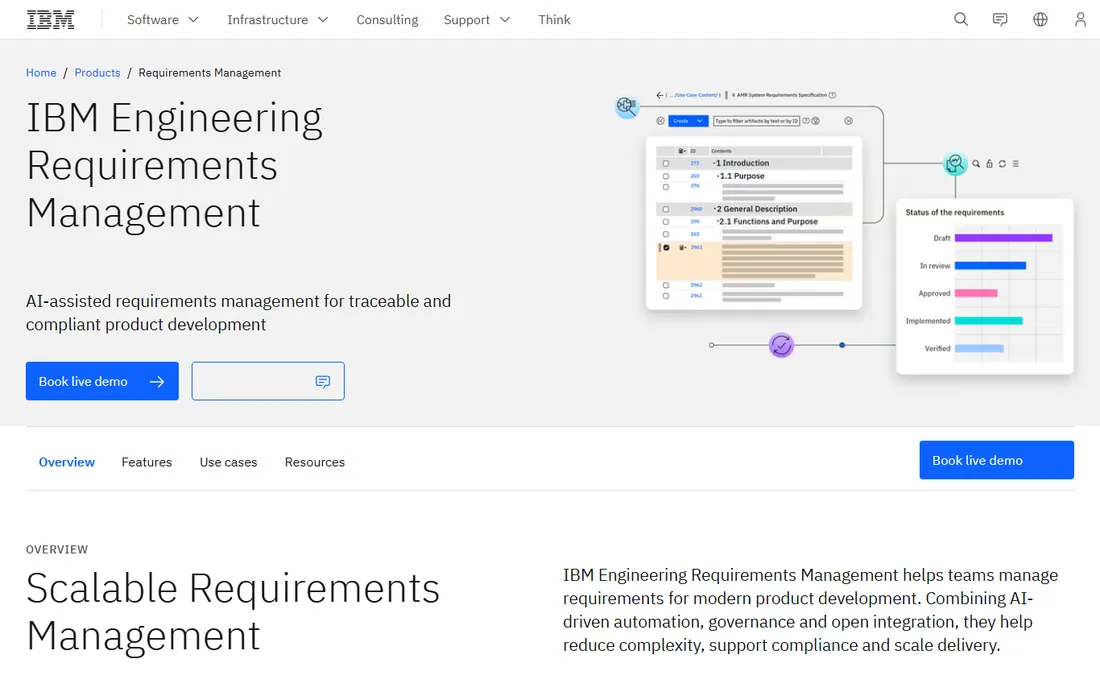
IBM's DOORS (now DOORS Next within the Engineering Requirements Management portfolio) has managed requirements for the world's most demanding programs for decades: aircraft, spacecraft, automobiles, and defense systems. The traceability, baselining, and change management are proven at scales few tools have seen. In regulated industries, "we use DOORS" still carries weight with auditors.
The interface reflects its age, costs are enterprise, and new users face a real learning curve. But entrenchment matters: entire supply chains standardize on DOORS, and switching costs are enormous. For programs where requirements failure is not an option, DOORS remains the safe choice.
What we like- Decades of validation
- Entrenched in aerospace and defense
- Powerful
Watch out for- Dated interface
- Expensive
- Steep learning curve
Starting priceSee website
Free planNo
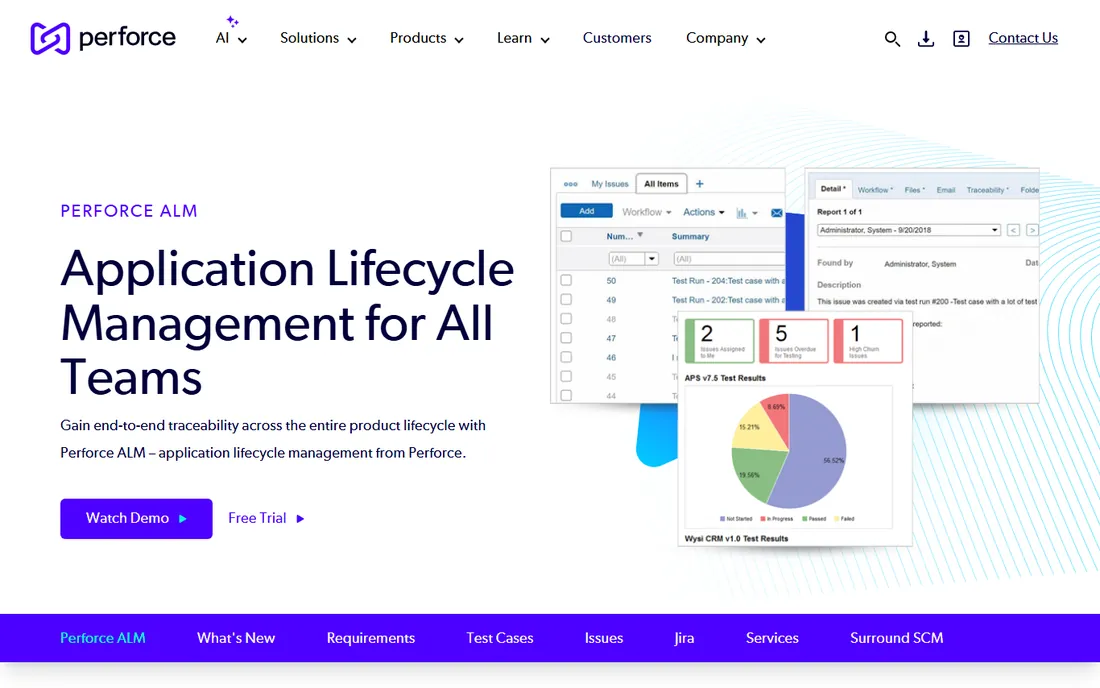
Perforce ALM (formerly Helix ALM, originally Seapine TestTrack) manages requirements alongside test cases and issues in one integrated suite. The strength is lifecycle traceability: see instantly which tests cover which requirements and which issues block them. Teams that want requirements, testing, and defect tracking unified find the integration practical.
As a standalone requirements tool it is less specialized than Jama; the value comes from the suite. The interface shows its heritage. But for organizations that prefer one ALM vendor over best-of-breed integration, Perforce ALM's requirements module within the full lifecycle is a solid, mature choice.
What we like- Requirements plus test and issue management
- Traceability across lifecycle
- Mature
Watch out for- Interface aging
- Best as a suite
Starting priceSee website
Free planNo
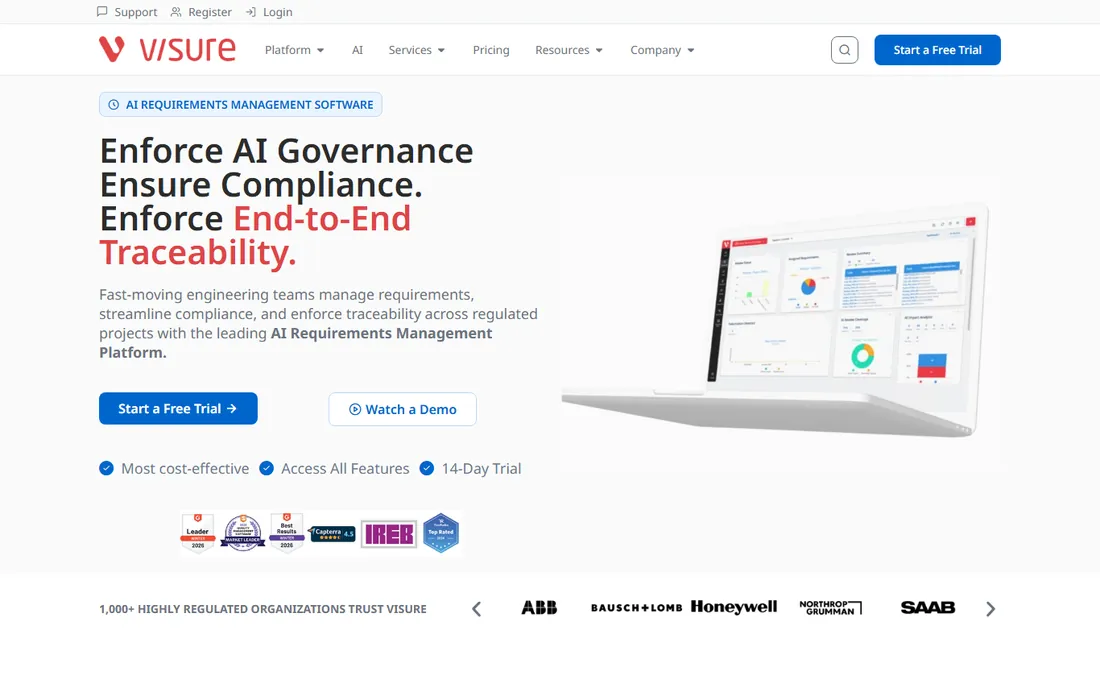
Visure Requirements focuses on regulated and safety-critical development: built-in templates and workflows for standards like ISO 26262, IEC 62304, and DO-178C help teams demonstrate compliance without building the process from scratch. End-to-end traceability from requirements through testing supports audits. The compliance-first design saves regulated teams significant setup effort.
Pricing targets enterprises and brand recognition is narrower than Jama or IBM. But for teams in automotive, medical, or aerospace who need compliance structure out of the box, Visure's templates and workflows address the exact burden these industries face.
What we like- Strong compliance templates
- Traceability
- Good for safety-critical
Watch out for- Enterprise pricing
- Narrower brand recognition
Starting priceSee website
Free planNo
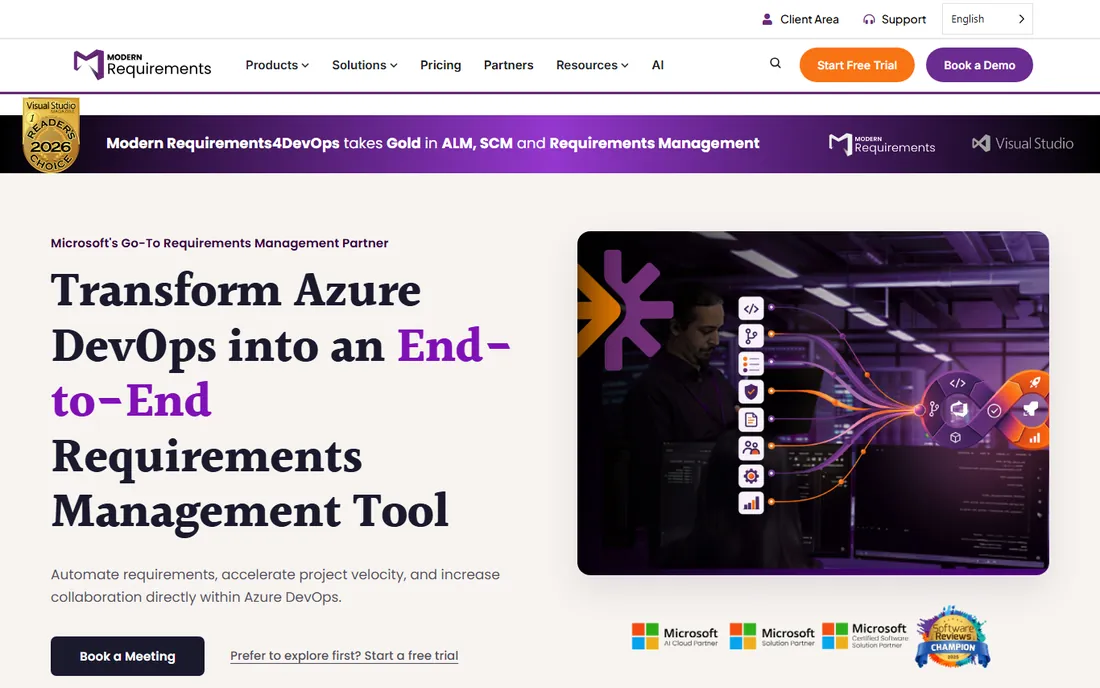
Modern Requirements (Modern Requirements4DevOps) brings real requirements management into Azure DevOps: smart documents, diagrams, traceability, and reviews without leaving the environment developers already use. Microsoft-centric organizations avoid the usual split between the requirements tool and the development tool. The approach reduces adoption friction dramatically.
It requires Azure DevOps, which limits its audience. Standalone depth trails the dedicated platforms. But for the many enterprises standardized on Microsoft's toolchain, requirements management that lives where the developers are beats a more powerful tool they never open.
What we like- Lives inside Azure DevOps
- Familiar for Microsoft shops
- Good traceability
Watch out for- Requires Azure DevOps
- Less standalone depth
Starting priceSee website
Free planNo
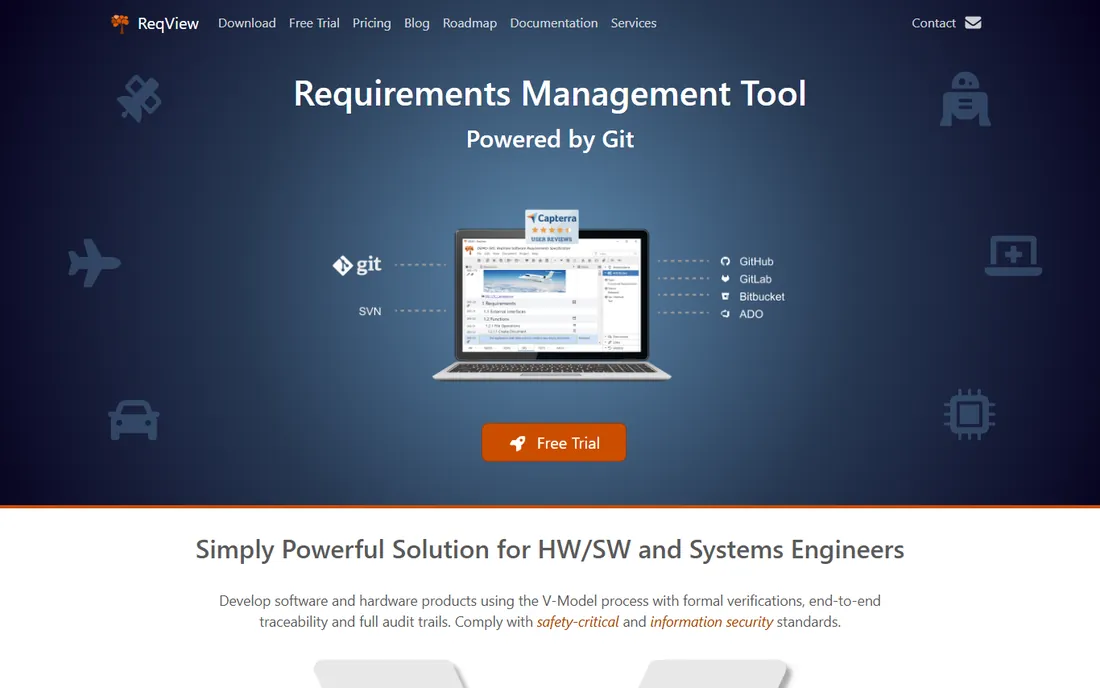
ReqView takes the opposite approach from the enterprise suites: a lightweight desktop application for capturing, organizing, and tracing requirements without servers, admins, or big budgets. Small teams and solo systems engineers get real requirements management (traceability, document generation) at an accessible price. The offline nature suits secure environments.
Large distributed teams need more: collaboration, web access, and enterprise integrations are thinner. But not every project needs Jama. For small teams that want requirements discipline without enterprise overhead, ReqView's simplicity is refreshing.
What we like- Simple and affordable
- Offline desktop app
- Quick to learn
Watch out for- Less for large teams
- Fewer enterprise features
Starting priceSee website
Free planNo
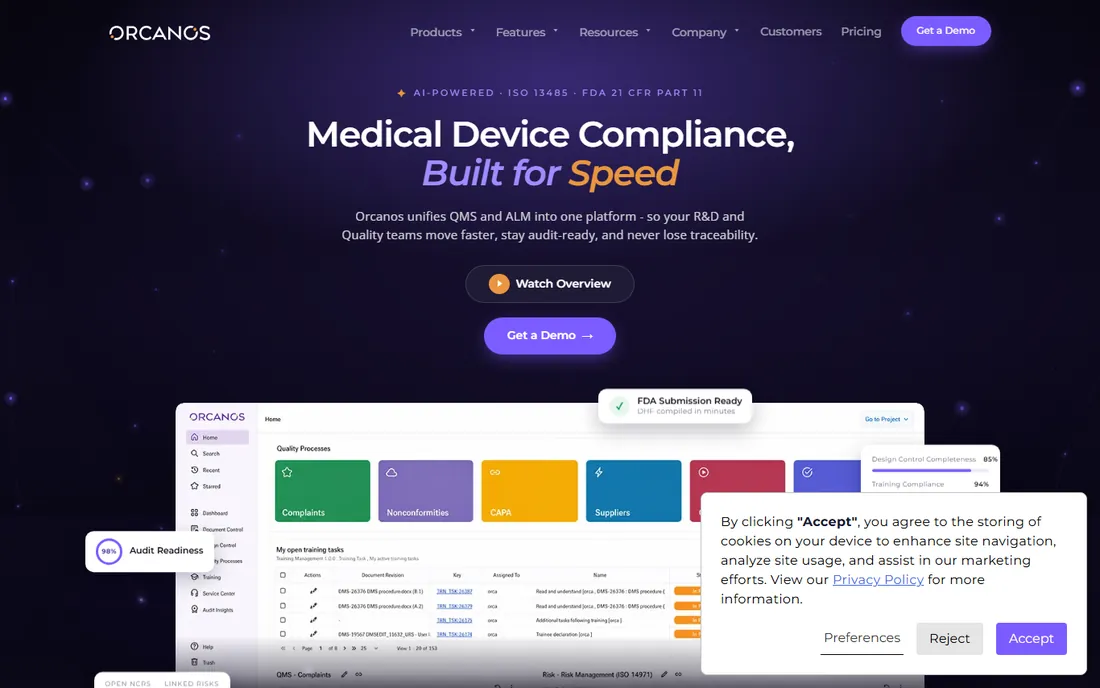
Orcanos combines requirements management with quality management (QMS) for medical device and other regulated teams: design controls, risk management, and traceability in one cloud platform. The integration of requirements with the quality system addresses exactly what FDA and EU auditors examine. Regulated startups get enterprise-grade compliance structure affordably.
The medical focus narrows its appeal outside regulated industries. Pricing assumes regulated-industry budgets. But for medical device companies navigating design controls, Orcanos's purpose-built integration of requirements and quality management is hard to match with generic tools.
What we like- Medical device focus
- Integrated QMS
- Compliance-ready
Watch out for- Niche focus
- Pricing for regulated budgets
Starting priceSee website
Free planNo
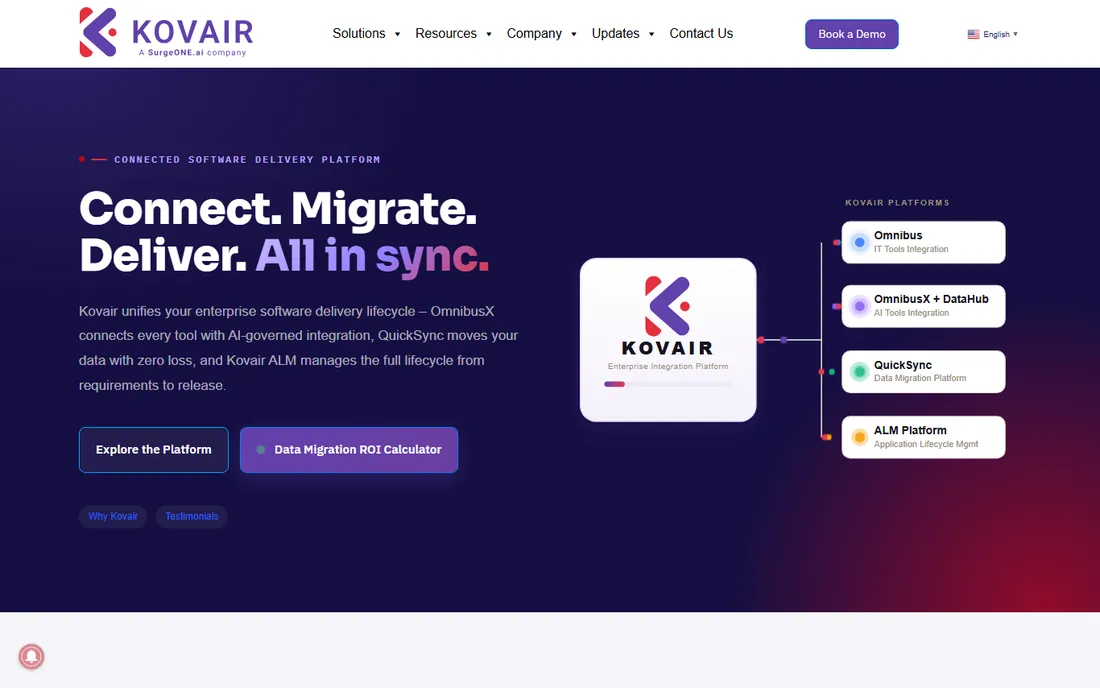
Kovair's ALM platform includes requirements management within a broad integration story: its Omnibus platform synchronizes data across dozens of development tools, so requirements in Kovair stay linked to work in Jira, code in Git, and tests elsewhere. Organizations with heterogeneous toolchains value the integration fabric.
The breadth brings complexity and a dense interface. Smaller teams may find it heavy. But for enterprises juggling many tools across departments, Kovair's ability to keep requirements connected to everything else addresses the fragmentation that undermines traceability.
What we like- Broad ALM integration
- Synchronizes many tools
- Flexible
Watch out for- Complexity
- Interface is dense
Starting priceSee website
Free planNo
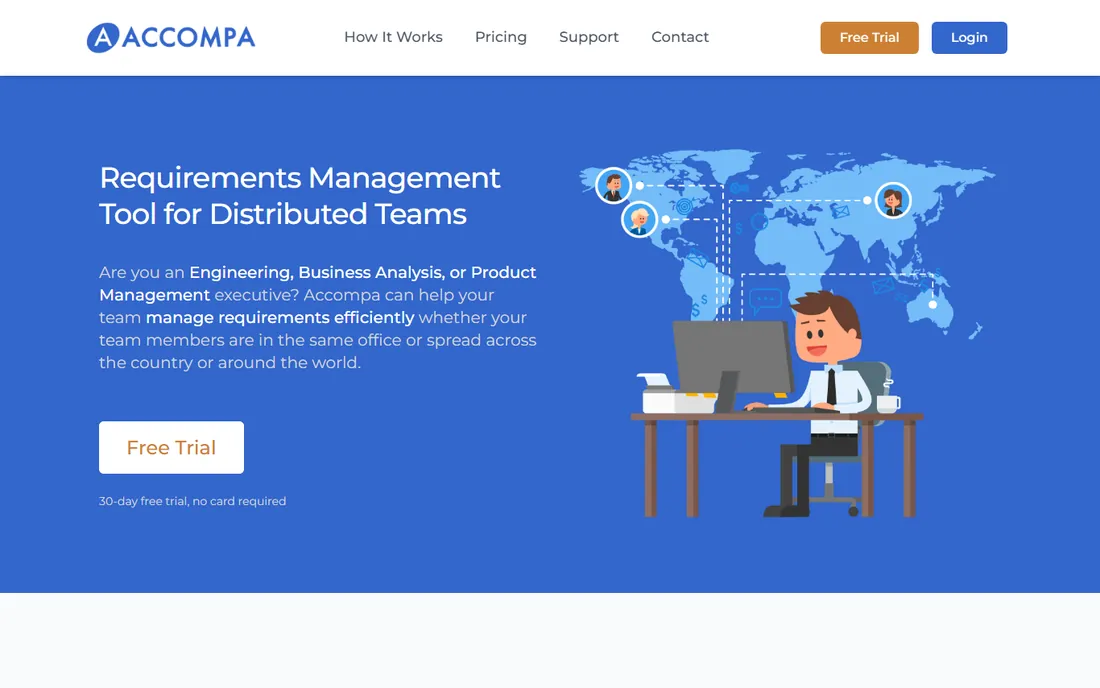
Accompa keeps requirements management simple: capture requirements, organize them, track changes, and generate documents, all through a clean web interface anyone can learn quickly. Small teams and non-technical stakeholders appreciate the approachability. Pricing is accessible and setup takes hours, not weeks.
Advanced traceability, compliance workflows, and enterprise integrations are limited. As a smaller company, its roadmap is less certain. But for teams that need basic requirements organization without the enterprise machinery, Accompa's simplicity delivers exactly what is needed and nothing more.
What we like- Very easy to use
- Affordable
- Quick setup
Watch out for- Limited advanced features
- Smaller company
Traceability is the whole game
Every tool on this list manages requirements; the differentiator is traceability. Real traceability means: every requirement links to its source, its design elements, its test cases, and its verification results; changes propagate visibly so impacted items get reviewed; baselines capture the approved state for audits. Without this, you have a document repository, not requirements management. When evaluating tools, test the traceability workflow specifically on a realistic sample of your own requirements. Vendors demo with clean data; your data is messier, and the tool's behavior on messy real-world requirements is what you will live with daily. create a requirement, link it forward and backward, change it, and watch what the tool flags. The quality of that experience predicts the quality of your audits.
What to check before you buy
Compliance requirements first
Regulated industries (medical, automotive, aerospace, defense) should start from the standards: which regulations must you demonstrate compliance with, and which tools have built-in support? Generic requirements tools can be configured for compliance, but purpose-built templates save months. Let the auditors' expectations drive the shortlist.
Integration with development tools
Requirements disconnected from development rot. Verify integrations with your issue trackers, test tools, and version control: bidirectional sync, not just import/export. Modern Requirements wins automatically for Azure DevOps shops; others need to prove their Jira and test-tool integrations actually work.
Team size and distribution
Small co-located teams can use ReqView or Accompa. Large distributed programs need Jama, DOORS, or Perforce ALM with proper access control, baselining, and review workflows. Do not buy enterprise process for a five-person team, and do not try to run a hundred-person program on a lightweight tool.
Migration from documents
Most teams start in Word, Excel, or Confluence. Ask each vendor about migration: how requirements import, how formatting survives, and what cleanup is needed. A painful migration delays value by months. Get a migration trial with your real documents before committing.
How we chose
We selected requirements management tools with real user bases in 2026, from enterprise platforms to lightweight options. We evaluated traceability features, compliance support, usability, integrations, and fit for different team types. We excluded generic project tools without requirements depth and discontinued products. No vendor paid for placement, and we did not run pilot projects.
Frequently asked questions
What is requirements traceability?
Traceability is the documented connection between requirements and everything they touch: source documents, design elements, code, test cases, and verification results. It answers "why does this exist" (backward to the source) and "what breaks if this changes" (forward to implementation). Auditors in regulated industries require it; good engineering teams want it regardless.
Jama vs DOORS: which should we choose?
Jama Connect suits organizations modernizing requirements practice: better usability, faster adoption, strong for complex products. DOORS suits programs where it is already the standard: aerospace, defense, and automotive supply chains with decades of DOORS artifacts. Switching an entrenched DOORS organization to Jama is possible but expensive; the ecosystem lock-in is real.
Do agile teams need requirements management tools?
Agile teams need requirements discipline more than they admit; user stories in a backlog tracker are requirements, just informally managed. Lightweight tools (ReqView, Modern Requirements) or ALM-integrated approaches suit agile teams better than heavyweight RM suites. Regulated agile teams (medical, automotive) genuinely need both agility and traceability, which is exactly what the modern tools address.
How do we get engineers to actually use the RM tool?
Make it the path of least resistance: integrate with the tools they already use, keep the process lightweight, and show value (impact analysis, change notifications) rather than just overhead. Engineers resist requirements tools that feel like paperwork; they adopt ones that answer "what do I need to build and what changed." Leadership must also use the data in decisions.
What does requirements management cost?
Lightweight tools run from hundreds to low thousands yearly. Enterprise platforms (Jama, DOORS, Perforce ALM) typically cost tens of thousands yearly depending on users and modules, plus implementation. Regulated-industry tools price accordingly. Model three years including implementation and training, not just licenses.
Sources we checked (9)
- https://www.jamasoftware.com
- https://www.ibm.com/products/requirements-management
- https://www.perforce.com/products/alm
- https://visuresolutions.com
- https://www.modernrequirements.com
- https://www.reqview.com
- https://www.orcanos.com
- https://www.kovair.com
- https://web.accompa.com/
Is your product missing or out of date?
We review this list regularly. Vendors can request a listing, send updated pricing or ask about featured placement.

Shihab Mia · Founder, Rankite
Shihab has spent more than a decade helping SaaS and e-commerce brands grow through search. He writes Rankite's software buying guides from pricing pages, documentation and public user reviews. More about Shihab.