How we make this list: we compare pricing pages, product documentation and public user reviews. Rankite is independent; if a vendor ever pays for a featured spot, that listing is clearly labeled Partner.
Key takeaways
- Most release pain is not a deployment problem, it is a control problem. LaunchDarkly and Unleash solve it with feature flags; Octopus, Argo CD and Spinnaker solve it with deployment pipelines.
- Argo CD, Spinnaker and GoCD are free and open source, which makes them the default shortlist for Kubernetes and budget-conscious teams.
- Octopus Deploy remains the strongest pick for hybrid shops that still run .NET and Windows workloads next to containers.
- Harness bundles the most into one platform, including AI-assisted verification, but pricing is quote-based and the platform can be more than a small team needs.
- Plutora and Copado serve niches the general tools ignore: enterprise release governance and Salesforce release pipelines.
Quick comparison
| Tool | Best for | Starting price | Free plan |
|---|
 LaunchDarkly LaunchDarkly | feature flags and controlled rollouts | See website | Free trial |
 Octopus Deploy Octopus Deploy | hybrid .NET and container deployments | See website | Free trial |
 Harness Harness | AI-assisted software delivery platform | See website | Free trial |
 Argo CD Argo CD | GitOps delivery to Kubernetes | Free | Yes |
 Spinnaker Spinnaker | multi-cloud continuous delivery at scale | Free | Yes |
 GoCD GoCD | open-source pipeline modeling | Free | Yes |
 Unleash Unleash | self-hosted feature flags | See website | Yes |
 Digital.ai Digital.ai | enterprise release orchestration | See website | No |
 Plutora Plutora | release governance for complex portfolios | See website | No |
 Copado Copado | Salesforce release management | See website | Free trial |
Is your product missing or out of date?
We review this list regularly. Vendors can request a listing, send updated pricing or ask about featured placement.
Release management is two jobs wearing one name
Starting priceSee website
Free planFree trial

LaunchDarkly is the category leader in feature management, and the pitch is simple: deploy code whenever you want, release features whenever you are ready. Flags target users by attribute, device, version or custom rules, and releases can be rolled back instantly without a redeploy. For product teams that ship daily, that separation is the difference between a calm release and a war room.
The honest catch is cost and hygiene. Pricing is tied to usage and climbs fast at scale, so get a quote against your actual evaluation volume before committing. And flags are technical debt with a toggle: without ownership and expiry rules, you will accumulate hundreds of stale flags that everyone is afraid to remove.
What we like- Decouples deploys from releases with real-time flag control
- 35+ SDKs with strong mobile and edge support
- Experimentation built in
Watch out for- Pricing scales with flag evaluations and gets expensive
- Flag sprawl needs real governance discipline
Starting priceSee website
Free planFree trial
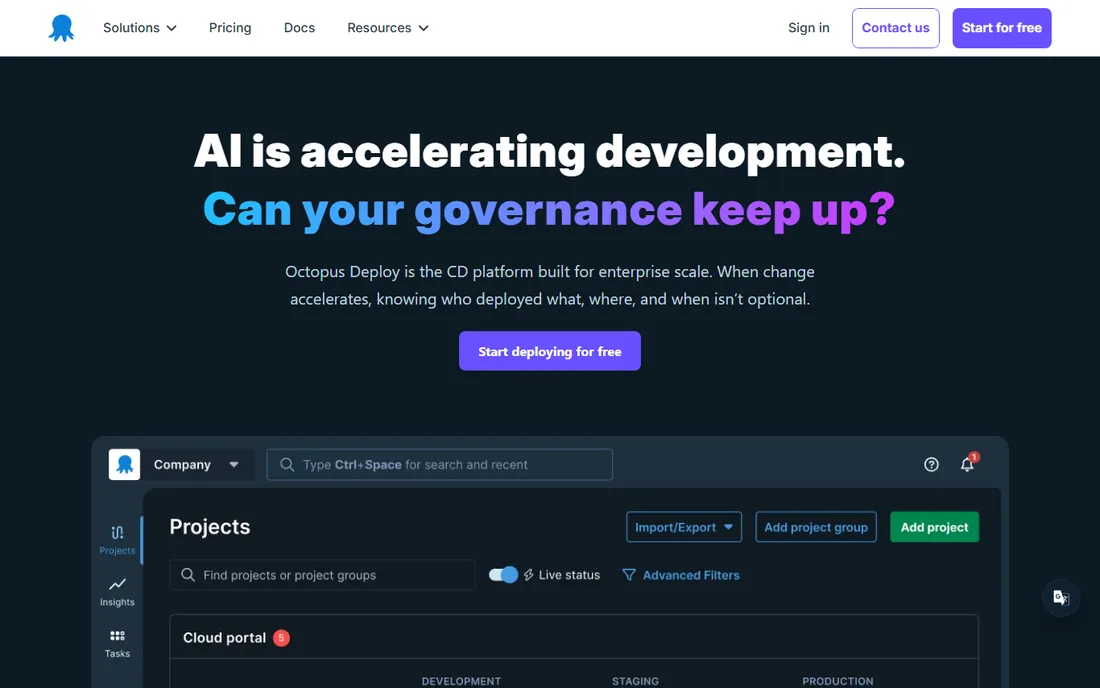
Octopus has been doing release automation since 2012 and it shows in the details. It handles the awkward middle that many teams live in: legacy .NET apps on Windows servers deploying next to containerized services. Environments, variables, approvals and runbooks for routine ops tasks all live in one place, with role-based access control that auditors actually accept.
The trade-off is architectural. Octopus grew up before Kubernetes, and while it supports modern targets, teams that are all-in on cloud-native GitOps will find Argo CD or Harness more idiomatic. Pricing is per deployment target, so count your servers honestly when budgeting, because that number is always bigger than you think.
What we like- Exceptional at Windows and .NET workloads alongside containers
- Runbook automation for ops tasks
- Mature permissions model
Watch out for- Less cloud-native than newer rivals
- Pricing per deployment target adds up
Starting priceSee website
Free planFree trial
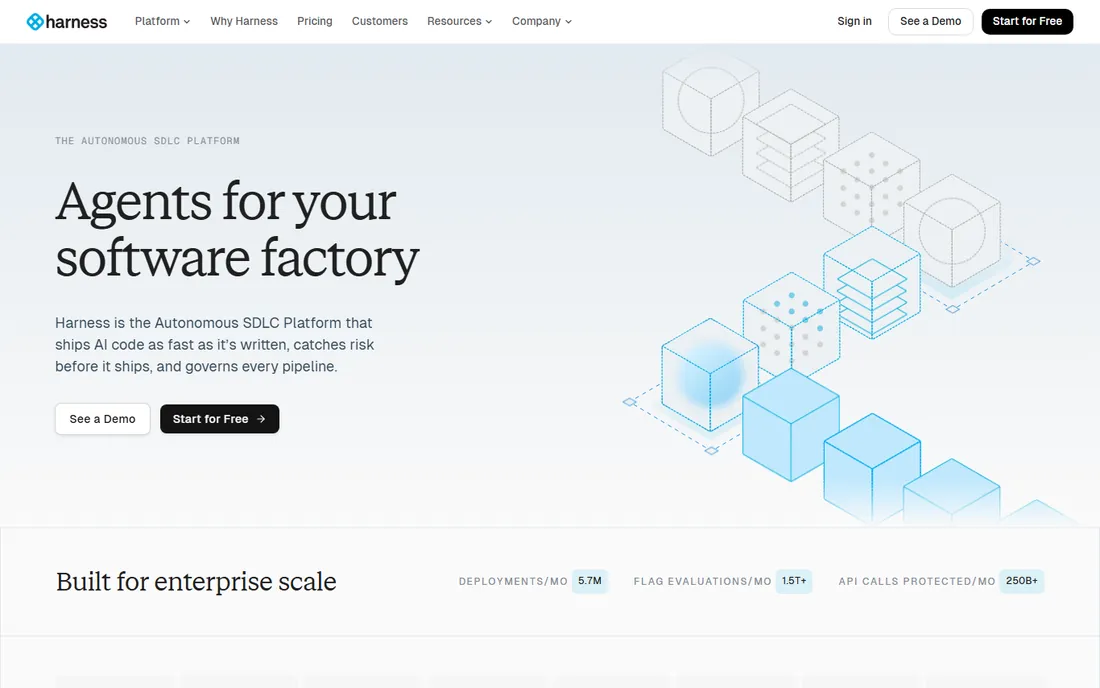
Harness wants to be the whole software delivery stack. Continuous integration, continuous delivery, GitOps, feature management, chaos engineering, cloud cost management and engineering productivity insights sit behind one login. Its standout feature is automated verification: machine learning watches deployment metrics and can pause or roll back a bad release before a human notices.
That breadth is also the risk. Smaller teams often use a fraction of the modules while paying enterprise-platform prices, and pricing is tied to the broader platform rather than published per tier. Evaluate it if you want to consolidate five DevOps tools into one contract. Skip it if you only need deployments and already like your CI.
What we like- Broad platform covering CI, CD, GitOps, feature flags and cost control
- AI-driven deployment verification
- Strong governance tooling
Watch out for- Quote-based pricing with limited transparency
- Platform breadth means a longer learning curve
Starting priceFree
Free planYes
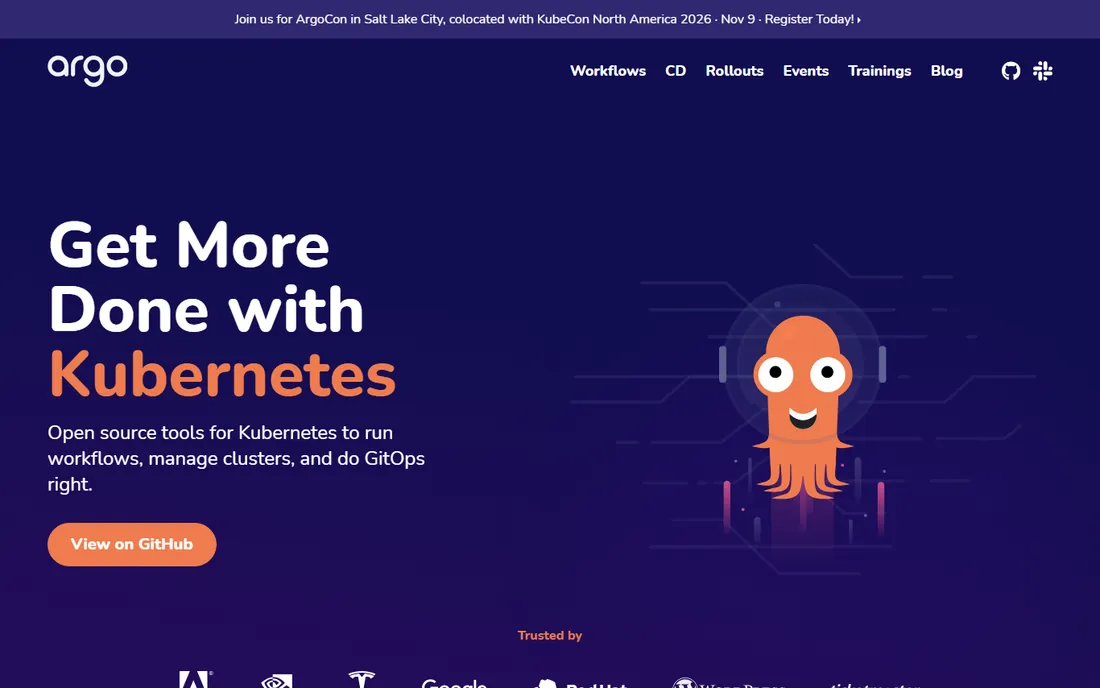
Argo CD is the default answer for Kubernetes delivery and it earned that position. You declare the desired state in Git, Argo CD syncs the cluster to match, and the web UI shows exactly what is running, what drifted and what failed. It is free, it is a CNCF graduated project, and the ecosystem of integrations is enormous.
The limitation is scope. If your estate includes VMs, serverless functions or legacy servers, Argo CD covers none of it. It also assumes your team is comfortable with GitOps concepts; the learning curve is real, and running it securely at scale across many clusters is a platform-engineering job in itself.
What we like- Free and open source under CNCF
- Declarative Git-as-source-of-truth model
- Excellent web UI for visualizing app state
Watch out for- Kubernetes-only, useless outside it
- Multi-cluster and multi-tenant setups need real expertise
Starting priceFree
Free planYes
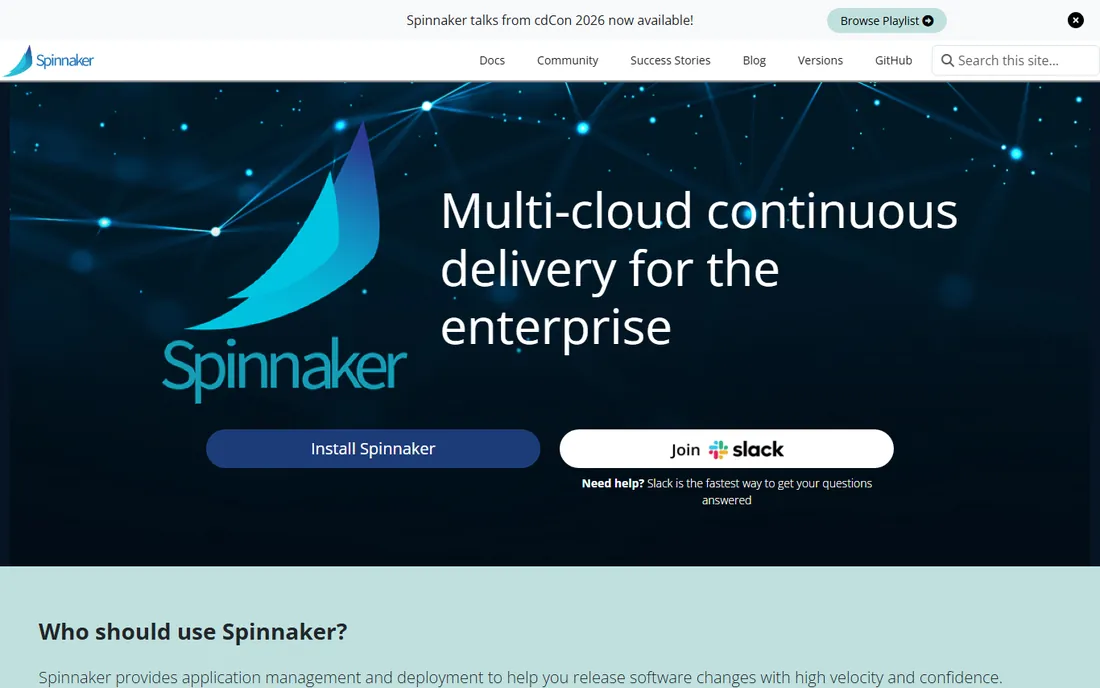
Born at Netflix and battle-tested across millions of deployments, Spinnaker remains the most powerful free option for multi-cloud delivery. Its pipeline model handles canary analysis, manual judgment stages and red/black deployments across AWS, GCP, Azure and Kubernetes from one control plane. For organizations deploying the same services to several clouds, little else matches it.
The price of free is operations. Spinnaker is famously heavy to install, upgrade and run; teams routinely dedicate engineers just to keeping it healthy. Managed offerings exist partly because self-hosting it is a commitment. Choose it for genuine multi-cloud scale, not for a single cluster, where Argo CD is simpler.
What we like- Free and open source
- Battle-tested multi-cloud pipelines from Netflix
- Sophisticated deployment strategies like canary and red/black
Watch out for- Heavy to install and operate
- UI feels dated
- Community momentum has slowed
Starting priceFree
Free planYes
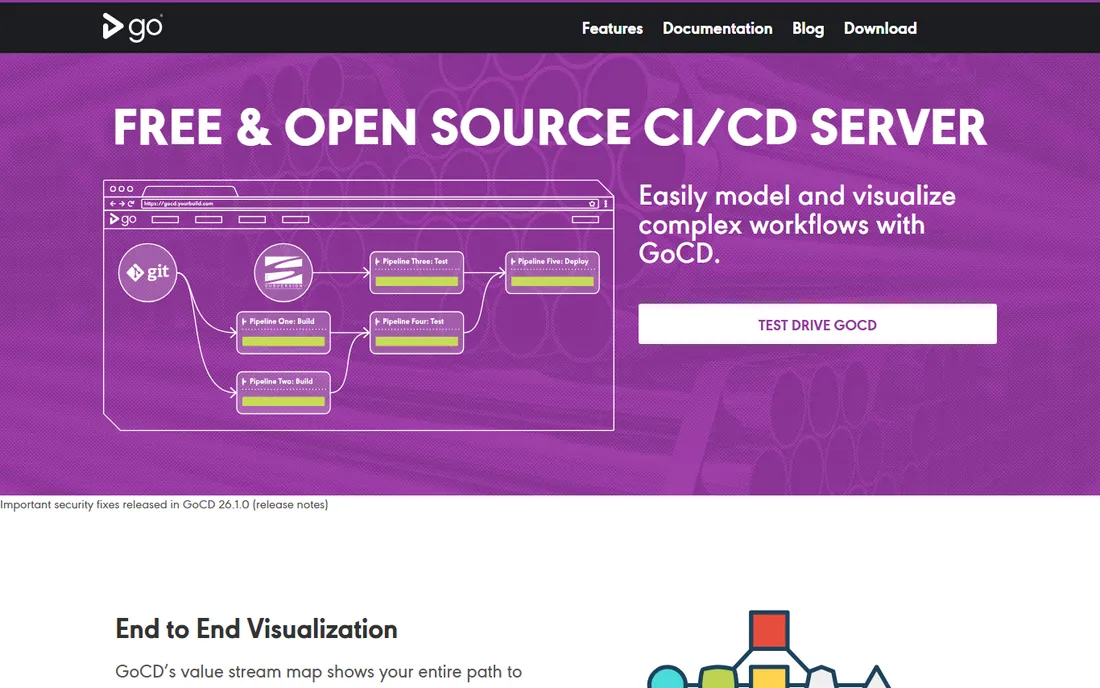
GoCD's killer feature is the value stream map: a visual trace from commit through every pipeline stage to production, which makes it obvious where a release is stuck. Its modeling of pipeline dependencies, with fan-in and fan-out, suits complex build-and-deploy graphs better than most CI tools that bolted on CD later.
It is a quieter project than its rivals, which shows in a smaller plugin ecosystem and less community content. But it is free, it runs anywhere, and for teams that want a proper continuous delivery server without Kubernetes lock-in, it deserves a spot on the shortlist next to Jenkins.
What we like- Free and open source
- Value stream maps show the whole pipeline
- Strong fan-in and fan-out dependency modeling
Watch out for- Smaller community than Jenkins or Argo
- UI and plugin ecosystem lag the leaders
Starting priceSee website
Free planYes
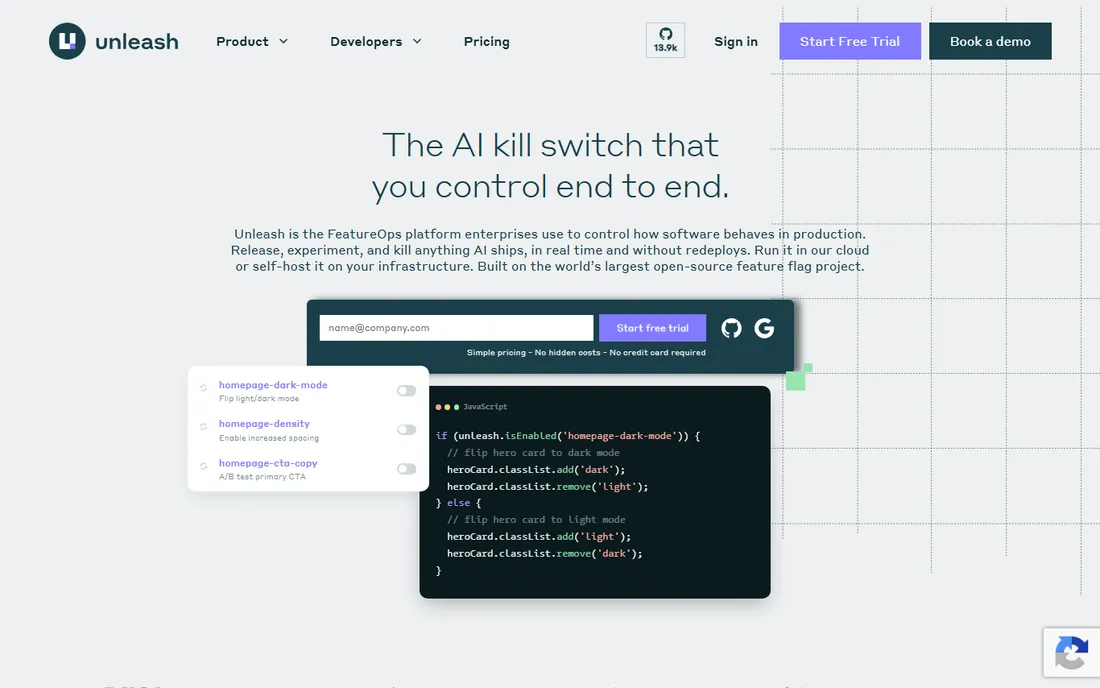
Unleash is the answer to "we want feature flags but not another SaaS bill or data concern." The open-source core runs in your own infrastructure, which satisfies security reviews that hosted flag services fail, and the paid tiers add the enterprise features growing teams need. For Java, .NET and polyglot shops alike, the SDK coverage is solid.
It is not as polished as LaunchDarkly in experimentation and analytics, and self-hosting shifts operational burden onto your team. The right framing is control versus convenience: pick Unleash when data residency, cost or lock-in worries dominate; pick LaunchDarkly when you want the most capable managed experience and can pay for it.
What we like- Open-source core you can self-host
- No vendor lock-in on flag data
- Simpler pricing story than LaunchDarkly
Watch out for- Experimentation and analytics lag LaunchDarkly
- Self-hosting means you own uptime
Starting priceSee website
Free planNo
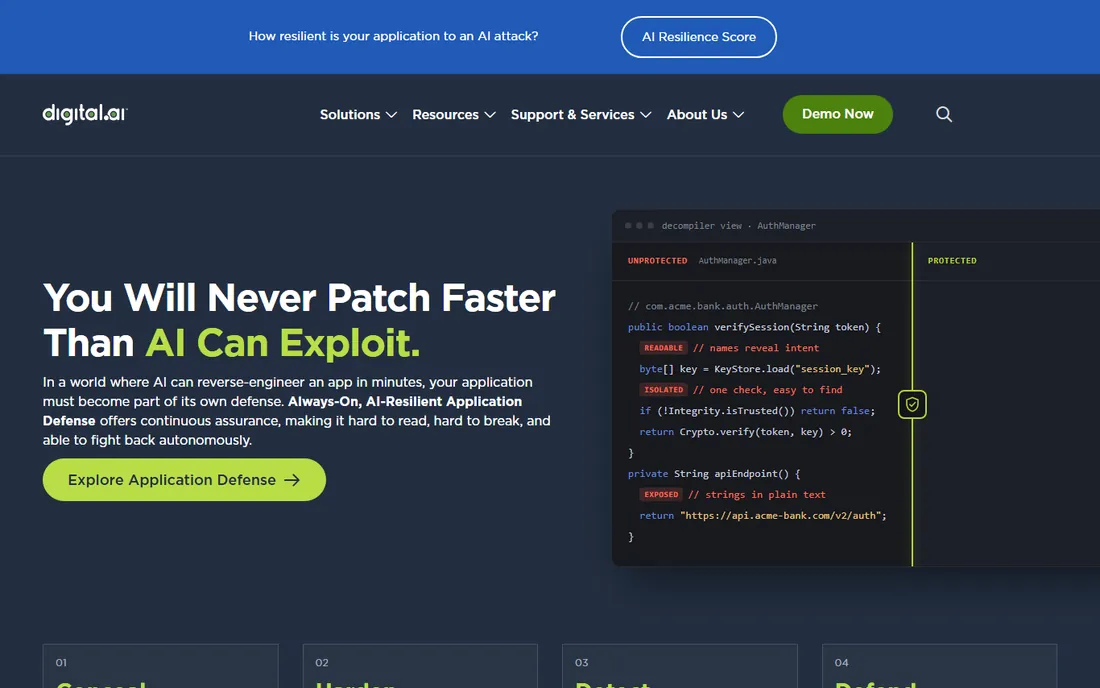
Digital.ai (the company behind the former XebiaLabs products Deploy and Release) targets organizations where releases need approvals, audit trails and segregation of duties. If your releases cross mainframes, packaged apps and cloud services under one governance model, its orchestration layer is built exactly for that world.
There is no free tier and no transparent pricing; this is a sales-led enterprise product. Mid-market teams will find it heavyweight and expensive for what they get. But in banking, insurance and other regulated sectors, the compliance story is the product, and Digital.ai tells it better than the developer-first tools.
What we like- Deep governance, audit and compliance tooling
- Strong in regulated industries
- Broad DevOps platform coverage
Watch out for- Enterprise pricing with no self-serve path
- Can feel heavy for mid-market teams
Starting priceSee website
Free planNo
Plutora serves the release manager's view of the world: which releases ship when, which environments they need, and what conflicts exist between them. For enterprises running dozens of applications with shared environments and change advisory boards, that coordination layer prevents the classic disaster of two releases colliding in staging.
It is a poor fit for a startup with one product and a CI pipeline. Pricing is enterprise and quote-based. But if your organization has a release management function with actual humans in it, Plutora is one of the few tools built for them rather than for developers.
What we like- Release calendar and environment management across many apps
- Change-advisory workflows
- Aimed at release managers, not just engineers
Watch out for- Niche positioning with premium pricing
- Less useful for small single-product teams
Starting priceSee website
Free planFree trial
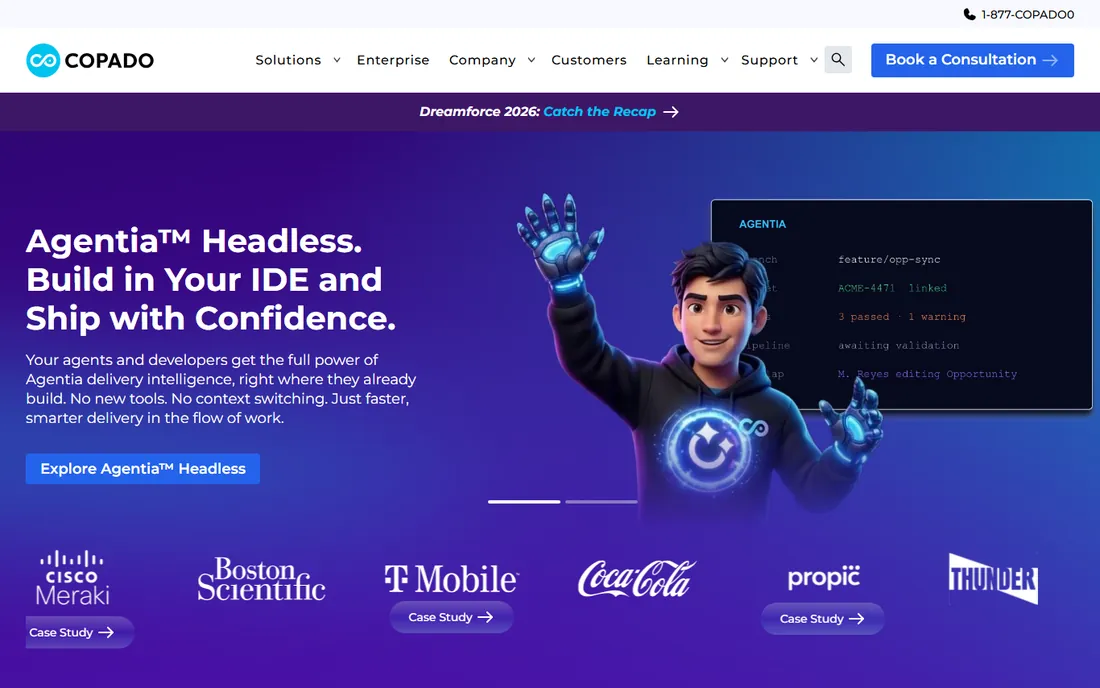
Salesforce releases are their own special problem: metadata, declarative changes and code all need to move between orgs without breaking production. Copado brings real DevOps practices, version control, automated testing and rollback, to a platform where many teams still deploy by change set and prayer.
The obvious limit is that it only does Salesforce. If your stack is Salesforce plus everything else, you will still need a general tool for the rest. Within its niche it is the established leader, and for Salesforce consultancies and enterprise admin teams the per-user pricing is easy to justify against one failed production deployment.
What we like- Purpose-built for Salesforce metadata deployments
- Version control and conflict resolution for Salesforce
- Compliance-friendly audit trails
Watch out for- Salesforce-only
- Pricing per user adds up on large admin teams
Start from your infrastructure, not from feature lists. If everything runs on Kubernetes, Argo CD covers deployments for free and the only question is whether you also need feature flags, which points to LaunchDarkly or Unleash. If you run .NET on Windows next to containers, Octopus Deploy is the pragmatic pick. Multi-cloud at serious scale keeps Spinnaker in the conversation despite its operational weight.
Then ask who owns releases. Developer-owned release processes favor the pipeline tools; organizations with release managers, change boards and audit requirements should look at Plutora or Digital.ai. Salesforce shops get Copado almost by default. And if your real problem is fear of shipping, that is a flag problem, not a pipeline problem, so start with feature management before buying a bigger deployment platform.
How we chose
We mapped the release management category as buyers actually experience it: deployment automation, GitOps delivery, feature flagging and enterprise release governance. We drew on vendor documentation, public comparisons and community discussion on G2, Capterra and Reddit to check how each tool behaves in production, not just on a features page. Pricing details come from vendor-published pages where available; several enterprise tools here are quote-only, which we state plainly rather than guessing. We did not run hands-on trials, and we excluded pure CI tools without release orchestration features.
Feature flags vs deployment automation: which do you actually need
These solve different fears. Deployment automation answers "how do we ship code safely and repeatably," while feature flags answer "how do we turn features on and off without shipping code." Many teams buy a bigger pipeline when their real problem is that every merge feels dangerous, and flags fix that fear directly. The mature setup uses both: pipelines move code through environments, flags control who sees what. If you can only buy one this year, pick the one that matches the incident you most want to avoid repeating.
Frequently asked questions
What is the difference between release management and CI/CD?
CI/CD builds and tests code and moves it through environments. Release management is the layer above: deciding what ships, when, to whom, with what approvals and rollback plan. The tools overlap, but a CI tool with a deploy button is not release management until it handles scheduling, governance and coordination.
Is Argo CD enough for a complete release process?
For Kubernetes-native teams, often yes for the deployment half. Argo CD handles GitOps delivery well, and paired with Argo Rollouts it covers progressive delivery. What it does not give you is feature flagging, cross-application release calendars or enterprise change governance, which is where the other tools on this list come in.
Do we need feature flags if we have good CI/CD?
You do not need them to deploy, but they change the risk profile of releasing. Flags let you merge incomplete work, test in production with a small cohort and kill a bad feature in seconds. Teams that release weekly or faster usually find flags pay for themselves in avoided incidents.
How much does release management tooling cost?
The open-source options, Argo CD, Spinnaker, GoCD and Unleash's core, cost nothing but your team's time to run. Commercial tools range from modest per-target or per-user pricing to enterprise contracts; LaunchDarkly scales with usage, Octopus with deployment targets, and Harness, Digital.ai and Plutora are quote-based. Budget the operational cost too, especially for self-hosted tools.
Can one tool cover both Salesforce and regular deployments?
Not well. Copado is purpose-built for Salesforce metadata and org management, while the general tools handle standard code deployments. Salesforce-centric organizations typically run Copado for the Salesforce side and a separate pipeline for everything else, with the release calendar tying them together.
What is GitOps and why does it matter for releases?
GitOps treats Git as the single source of truth for what should be running, and an operator like Argo CD continuously reconciles the cluster to match. For releases it means every deployment is versioned, reviewable and auditable through pull requests, which simplifies both rollbacks and compliance.
Sources we checked (10)
- https://launchdarkly.com
- https://octopus.com
- https://harness.io
- https://argoproj.io
- https://spinnaker.io
- https://www.gocd.org
- https://www.getunleash.io
- https://digital.ai
- https://www.plutora.com
- https://www.copado.com
Is your product missing or out of date?
We review this list regularly. Vendors can request a listing, send updated pricing or ask about featured placement.

Shihab Mia · Founder, Rankite
Shihab has spent more than a decade helping SaaS and e-commerce brands grow through search. He writes Rankite's software buying guides from pricing pages, documentation and public user reviews. More about Shihab.