How we make this list: we compare pricing pages, product documentation and public user reviews. Rankite is independent; if a vendor ever pays for a featured spot, that listing is clearly labeled Partner.
Key takeaways
- OpenGov, now including Cartegraph, is the broadest platform for agencies that want budgeting, permitting, and asset management from one vendor.
- Trimble Unity Maintain, formerly Cityworks, remains the GIS-first choice for agencies built around Esri, and the on-premises Cityworks version is being sunset in favor of the cloud platform.
- Brightly Asset Essentials, NEXGEN, iWorQ, and MaintStar cover the practical middle: work orders, preventive maintenance, and asset tracking without enterprise complexity.
- Catalis and Tyler Technologies fit agencies that want public works inside a wider government software suite, from payments to courts to citizen engagement.
- Infor EAM is the heavy-duty enterprise pick for large utilities and agencies with complex asset portfolios and strict compliance needs.
Most public works software buying goes wrong before the demo. An agency picks the tool with the longest feature list, then discovers its crews will not use half of it and its GIS data does not connect. The better question is simpler: which system will your field staff actually open every day, and which one treats your asset map as the source of truth rather than an afterthought. The nine platforms below are the names that come up most in municipal shortlists, from GIS-centric EAM suites to practical work-order systems built for small agencies.
Quick comparison
| Tool | Best for | Starting price | Free plan |
|---|
 OpenGov OpenGov | agencies wanting one cloud platform for budgets and assets | See website | No |
 Trimble Unity Maintain Trimble Unity Maintain | Esri-based agencies needing GIS-centric asset management | See website | No |
 Brightly Asset Essentials Brightly Asset Essentials | organizations needing proven maintenance management | See website | No |
 NEXGEN NEXGEN | mid-size agencies wanting configurable EAM | See website | No |
 Catalis Catalis | governments wanting public works in a wider suite | See website | No |
 iWorQ iWorQ | small agencies wanting simple, affordable work management | See website | No |
 MaintStar MaintStar | agencies wanting highly configurable asset management | See website | No |
 Infor EAM Infor EAM | large enterprises needing deep asset lifecycle control | See website | No |
 Tyler Technologies Tyler Technologies | local governments standardizing on Tyler systems | See website | No |
Is your product missing or out of date?
We review this list regularly. Vendors can request a listing, send updated pricing or ask about featured placement.
The best public works software
#1
OpenGov
Best for: agencies wanting one cloud platform for budgets and assets
Visit opengov.com
Starting priceSee website
Free planNo
OpenGov has become the consolidator in government software, and its acquisition of Cartegraph gave it the infrastructure asset management depth it previously lacked. Agencies can now run budgeting, capital planning, permitting, and Cartegraph-powered work orders and asset tracking in one cloud environment. For a city manager tired of five vendors and five logins, that consolidation is the pitch.
The tradeoff of buying a platform is uneven depth. Reviewers praise the budgeting and transparency tools most consistently, while the asset management side is still absorbing the Cartegraph integration. Pricing is enterprise and quote-based, sized for cities and counties rather than small towns. It fits agencies planning a multi-year digital transformation, not a department buying one work-order tool.
What we like- Broad suite covering budgeting, permitting, procurement, and asset management
- Cartegraph acquisition added deep infrastructure EAM
- Strong public-sector focus
Watch out for- Quote-only enterprise pricing
- Broad suite means some modules are stronger than others
#2
Trimble Unity Maintain
Best for: Esri-based agencies needing GIS-centric asset management
Visit cityworks.com
Starting priceSee website
Free planNo
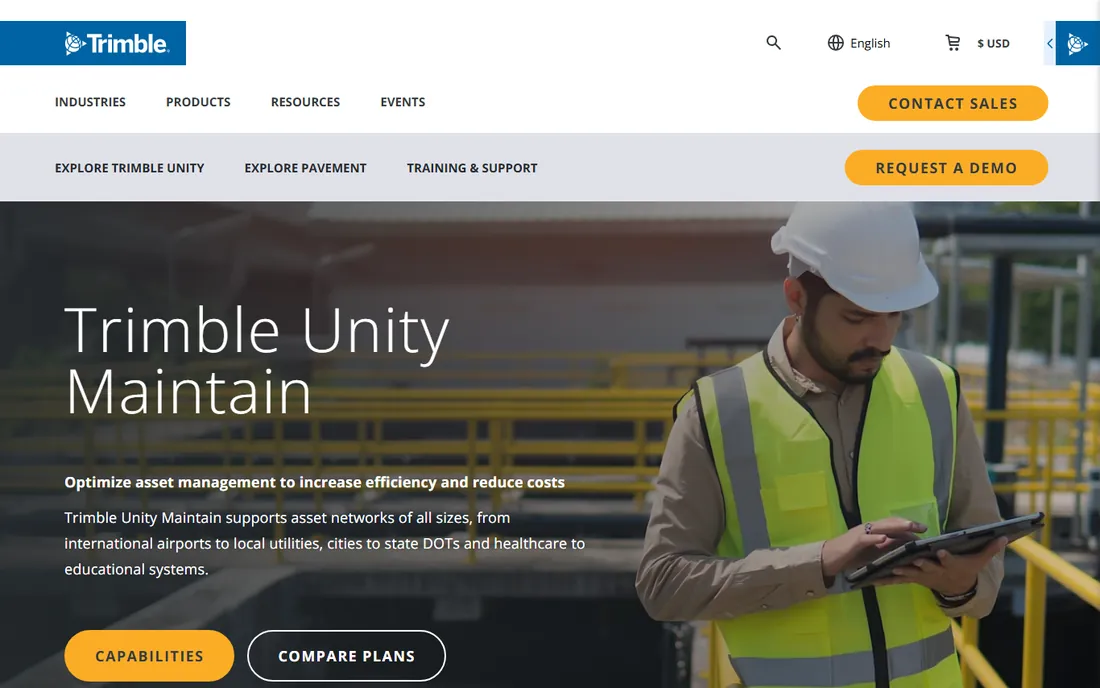
If your agency runs on Esri, Trimble Unity Maintain is the native choice. Work orders, inspections, and service requests attach directly to GIS features, so a crew sees the asset, its history, and its location in one view. Trimble has folded Cityworks, AgileAssets, and related products into the Unity Maintain cloud platform, which adds pavement management and predictive analytics to the core work management.
Buyers should know the transition is real. The on-premises Cityworks version is being sunset, so new purchases go to the cloud-based Unity Maintain. Agencies with heavy GIS investment generally welcome this, but it means planning a migration if you are on the legacy version. Pricing is quote-based and has historically been complex, so ask for clear per-user or per-asset terms.
What we like- Deep Esri ArcGIS integration
- Work orders tied directly to map assets
- Trusted by large utilities and municipalities
Watch out for- On-premises Cityworks is being sunset toward the cloud platform
- Historically complex licensing
Starting priceSee website
Free planNo
Brightly Asset Essentials, formerly Dude Solutions, is the workhorse CMMS that thousands of public agencies already run. It handles the fundamentals well: work orders, preventive maintenance schedules, asset histories, and inventory for parts. Facility and public works managers describe it as dependable rather than exciting, which for maintenance operations is a compliment.
Now part of Siemens, Brightly is investing in the platform, but reviewers note some screens feel dated compared with newer cloud tools. Pricing is quote-based and varies with user count and modules. It is a safe choice for agencies that want a proven system with a large peer community to learn from.
What we like- Mature work order and preventive maintenance workflows
- Large installed base across public sector
- Now backed by Siemens
Watch out for- Interface shows its age in places
- Pricing is quote-based
Starting priceSee website
Free planNo
NEXGEN positions itself as the configurable EAM for agencies that find the giants too heavy and the small tools too light. It covers assets, work orders, preventive maintenance, and capital planning, with GIS integration and mobile apps for field crews. Public works departments and utilities are its core audience, and reviewers like that implementations adapt to existing processes.
The honest catch is scale and ecosystem. NEXGEN does not have the partner network or third-party integration depth of Trimble or Infor, so unusual requirements may need vendor professional services. Pricing is quote-based. It fits mid-size agencies that want real EAM configurability without enterprise overhead.
What we like- Configurable workflows for public works and utilities
- GIS and mobile capabilities
- Aimed at mid-market buyers
Watch out for- Smaller vendor with less market visibility
- Enterprise depth below Infor or Trimble
Starting priceSee website
Free planNo
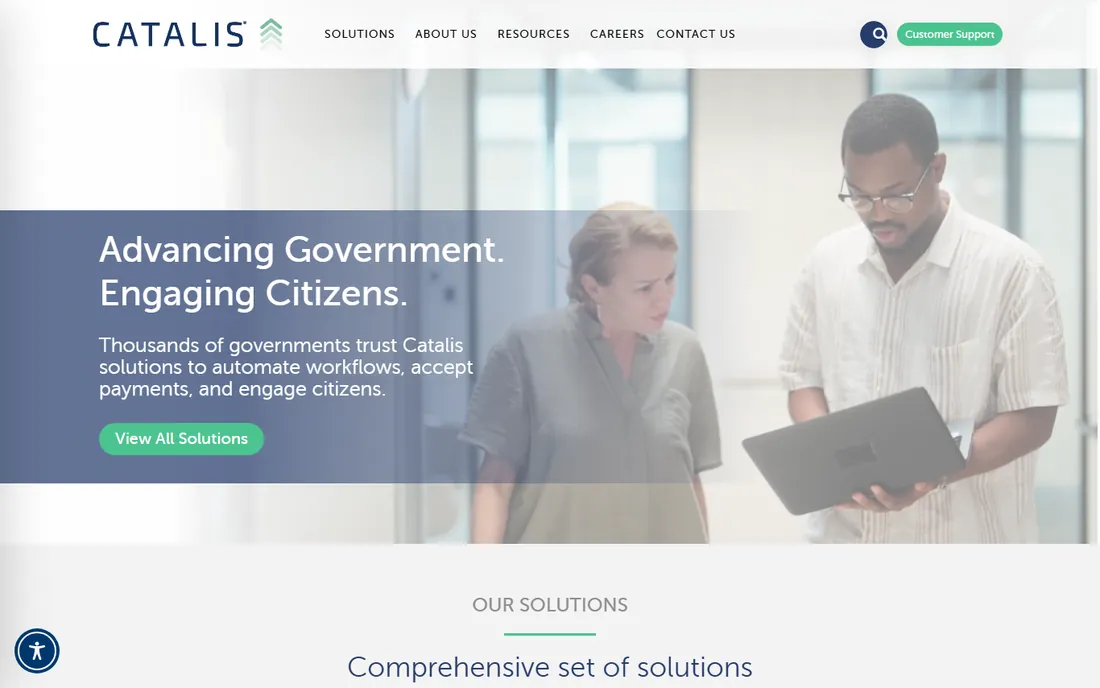
Catalis builds software for the full business of government: payments, tax and CAMA, courts, citizen engagement, and public works. For an agency that already uses Catalis for revenue collection or court workflows, adding the public works modules keeps everything on one platform with one vendor relationship. Small and mid-size municipalities are a particular focus.
Public works buyers should evaluate the modules on their own merits. Catalis is strongest where government administration meets citizen transactions; the asset management depth is lighter than Trimble or Infor EAM. Pricing is quote-based. It makes most sense as part of a broader Catalis footprint rather than a standalone EAM purchase.
What we like- Broad government portfolio including payments, courts, and tax
- Public works modules share one platform
- Serves all levels of government
Watch out for- Public works is one module among many, not the flagship
- Pricing is quote-based
#6
iWorQ
Best for: small agencies wanting simple, affordable work management
Visit iworq.com
Starting priceSee website
Free planNo
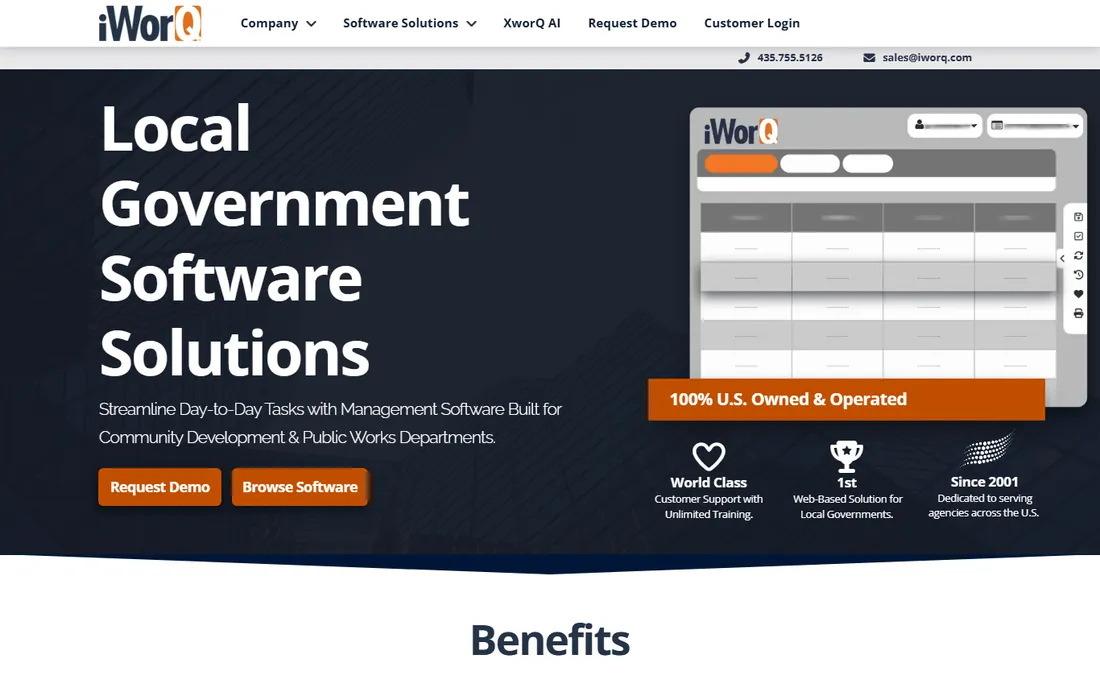
iWorQ is built for the small city or county that needs to get off paper without an enterprise project. Its public works applications cover work orders, asset management, citizen requests, and fleet, with a pricing model that avoids per-seat fees and includes unlimited training and support. Reviewers from small agencies consistently mention fast setup and genuinely helpful support staff.
It is not trying to be Infor EAM. Large agencies with complex linear assets, advanced GIS analytics, or strict regulatory reporting will find the ceiling quickly. But for the thousands of small governments that need work tracking, cost capture, and basic asset history, iWorQ's simplicity is the feature. Pricing is quote-based but positioned as affordable for small budgets.
What we like- Straightforward pricing with no per-seat licensing
- Unlimited support and training included
- Quick implementations
Watch out for- Less depth for large or complex asset portfolios
- Simpler reporting than enterprise EAM
#7
MaintStar
Best for: agencies wanting highly configurable asset management
Visit maintstar.com
Starting priceSee website
Free planNo
MaintStar has served public agencies for over 40 years with a configurability-first approach: screens, workflows, and fields adapt to how the agency works, without custom programming. Its enterprise asset management and work order suites cover public works, utilities, and facilities, and reviewers praise the knowledgeable, US-based support team.
The company's small size cuts both ways. Buyers get personal attention and a product shaped by decades of public-sector feedback, but the integration ecosystem and modern UI polish lag larger competitors. Pricing is quote-based and described by reviewers as competitive. It suits agencies that want the system molded to their processes rather than the other way around.
What we like- Deep configurability without custom code
- Public-sector-only focus
- US-based support with long-tenured staff
Watch out for- Smaller vendor with a dated web presence
- Less third-party integration breadth
#8
Infor EAM
Best for: large enterprises needing deep asset lifecycle control
Visit infor.com
Starting priceSee website
Free planNo

Infor EAM is the enterprise-grade pick for organizations where asset failure has serious consequences: utilities, transit agencies, airports, and large facilities portfolios. It covers the full lifecycle from procurement through preventive maintenance, reliability analysis, and decommissioning, with compliance reporting that regulated industries require. Reviewers in asset-intensive industries rate its depth highly.
Everything about it is enterprise-scale, including the project. Implementations are long, consulting-heavy, and priced accordingly, and small agencies should look elsewhere. For a large utility or county managing critical infrastructure with strict regulatory obligations, Infor EAM's depth justifies the investment.
What we like- Deep asset lifecycle, reliability, and compliance functionality
- Strong for utilities, transit, and facilities
- Global enterprise support
Watch out for- Significant implementation effort and cost
- Overkill for small agencies
#9
Tyler Technologies
Best for: local governments standardizing on Tyler systems
Visit tylertech.com
Starting priceSee website
Free planNo
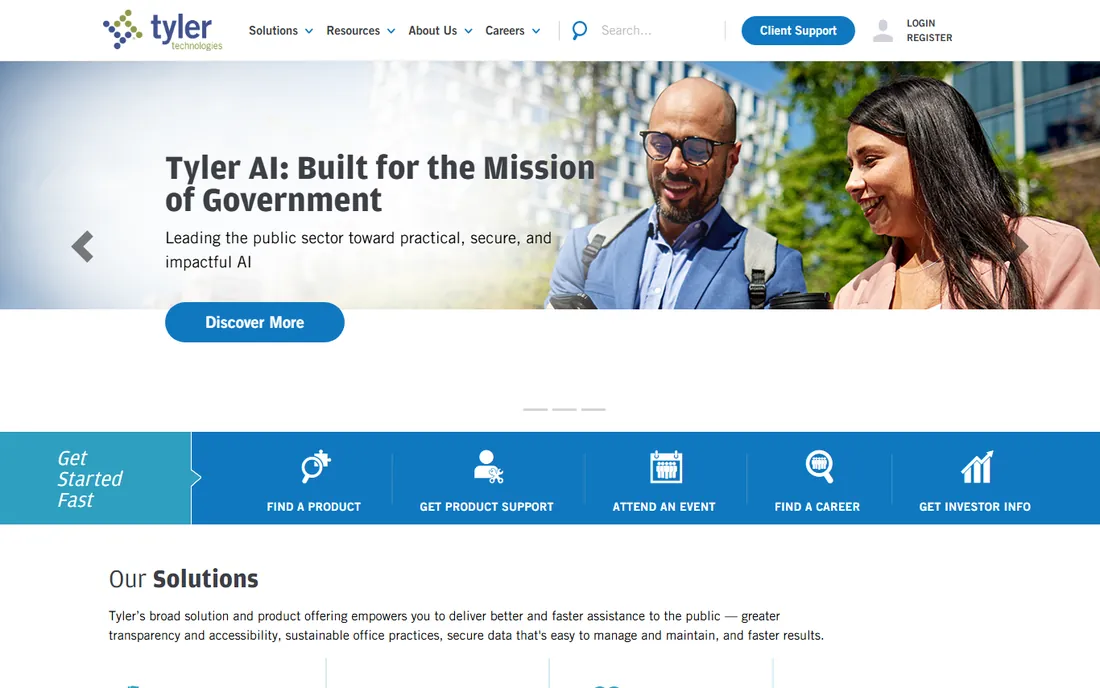
Tyler Technologies is the largest dedicated government software vendor in the US, and its enterprise asset management offerings sit inside a connected suite covering ERP, permitting, courts, and public safety. Agencies already running Tyler's Munis ERP or EnerGov permitting get natural data sharing with the asset management side. Vendor stability is a genuine selling point in a market full of acquisitions.
As with any suite vendor, buyers should demo the EAM functionality specifically rather than assuming it matches the strength of Tyler's financial systems. Pricing is quote-based through an enterprise sales process. It fits local governments pursuing a Tyler-standardized technology stack.
What we like- Massive public-sector installed base
- EAM within a connected government suite
- Strong long-term vendor stability
Watch out for- Suite breadth means evaluating the EAM module carefully
- Enterprise sales process
How we chose
We looked for software that public works departments, utilities, and municipal agencies actually evaluate for asset management, work orders, and infrastructure maintenance. Sources included municipal technology roundups, G2 and Capterra reviews from government buyers, and vendor documentation. Every product listed exists today: we confirmed current names and homepages, including Trimble's rebrand of Cityworks to Unity Maintain and OpenGov's absorption of Cartegraph. Pricing in this category is quote-based across the board, so we do not repeat third-party estimates. We did not test the products hands-on, and we weighted reviewer feedback from government users over vendor marketing claims.
What to check before you buy
Start with your GIS reality, not the feature list. If the agency runs Esri ArcGIS as its system of record, a GIS-centric platform like Trimble Unity Maintain will fit far better than a CMMS with GIS added on. Ask vendors to demo with your asset types, not their sample data, and watch how work orders attach to map features. Field usability decides adoption: have two crew members try the mobile app during the demo and time how long it takes to close a work order. If it takes ten taps, crews will keep using paper.
Procurement rules shape this market more than most. Many agencies must buy through RFPs or cooperative purchasing contracts, which favors established vendors like Tyler, OpenGov, and Infor that already hold contract vehicles. Ask about implementation services explicitly: who does the data migration, how GIS integration is configured, and what training is included. Small agencies should press iWorQ and MaintStar on total first-year cost, since their value proposition is affordability. Large agencies should press Trimble and Infor on migration paths, since both are consolidating legacy products into new cloud platforms.
Migration and consolidation notes
This market is consolidating fast, and buyers should plan for it. Cityworks customers are being moved toward Trimble Unity Maintain as the on-premises version sunsets; ask Trimble for the migration timeline and what happens to existing customizations. Cartegraph now lives inside OpenGov, so Cartegraph buyers are effectively OpenGov buyers going forward. Brightly is now part of Siemens, which has meant investment but also roadmap changes. None of this means avoiding these vendors, but it does mean asking direct questions about product futures during evaluation and getting commitments about support timelines for the version you would actually deploy.
Frequently asked questions
What is the difference between CMMS and EAM for public works?
CMMS focuses on maintenance execution: work orders, preventive schedules, and technician workflows. EAM covers the full asset lifecycle including capital planning, condition assessment, and replacement forecasting. Small agencies often need CMMS; large utilities with critical infrastructure need EAM.
How much does public works software cost?
Nearly every vendor prices by quote based on users, assets, and modules. Small agencies using iWorQ report affordable annual costs, while enterprise EAM from Infor or Trimble runs into six figures with implementation. Always get the implementation quote alongside the subscription price.
Do we need GIS integration?
If your agency maintains a GIS asset inventory, yes. GIS-centric tools like Trimble Unity Maintain treat the map as the system of record, which keeps asset data consistent. Without GIS integration, asset locations live in two places and drift apart.
How long does implementation take?
Reviewers report a few weeks for simpler tools like iWorQ, two to six months for mid-market EAM like NEXGEN or Brightly, and six to eighteen months for enterprise platforms like Infor EAM or Trimble Unity Maintain. Data migration and GIS configuration drive the timeline.
Can small towns afford this software?
Yes. iWorQ, MaintStar, and Catalis all target smaller governments with pricing to match. The key is buying for actual needs: a town with 5,000 residents does not need enterprise EAM, and reviewers from small agencies consistently say simpler tools get better adoption.
What about citizen request management?
Most platforms on this list include 311-style citizen request intake that converts requests into work orders. If constituent service is a priority, demo that workflow specifically and check whether residents get status updates without calling the office.
Sources we checked (10)
- https://opengov.com/
- https://www.cityworks.com/
- https://www.brightlysoftware.com/
- https://nexgenam.com/
- https://catalisgov.com
- https://www.iworq.com/
- https://maintstar.com/
- https://www.infor.com/
- https://www.tylertech.com/
- https://www.cartegraph.com/
Is your product missing or out of date?
We review this list regularly. Vendors can request a listing, send updated pricing or ask about featured placement.

Shihab Mia · Founder, Rankite
Shihab has spent more than a decade helping SaaS and e-commerce brands grow through search. He writes Rankite's software buying guides from pricing pages, documentation and public user reviews. More about Shihab.