How we make this list: we compare pricing pages, product documentation and public user reviews. Rankite is independent; if a vendor ever pays for a featured spot, that listing is clearly labeled Partner.
Key takeaways
- Product teams that live on customer feedback should demo Productboard against Aha! Roadmaps ($59/user/month).
- Teams already on Jira should check Jira Product Discovery before buying a separate tool: the idea-to-delivery link is built in.
- Cross-functional teams wanting one visual workspace should price Monday ($9/user/month) against ClickUp ($7/user/month).
- Small product teams that live in docs can run roadmaps in Notion (free to $10/user/month) without buying a dedicated PM tool.
Quick comparison
| Tool | Best for | Starting price | Free plan |
|---|
 Productboard Productboard | Product teams that live on customer feedback | See website (Essentials reported at $20/maker/month billed annually) | Yes (free Starter plan) |
 Aha! Roadmaps Aha! Roadmaps | Product organizations standardizing strategy, roadmaps and releases | $59/user/month (Premium); Enterprise $99; Enterprise+ $149 | No (30-day trial) |
 Jira Product Discovery Jira Product Discovery | Software teams already living in Jira | See website (verify current plan packaging on Atlassian's pricing page) | Check vendor page for current free tier limits |
 Monday Monday | Cross-functional teams wanting one visual workspace | $9/user/month billed annually | Yes (free tier for individuals; 14-day Pro trial) |
 ClickUp ClickUp | Teams wanting one workspace for tasks, docs and sprints at low cost | Free Forever; Unlimited $7/user/month billed annually ($10 monthly) | Yes (Free Forever with unlimited tasks and members) |
 Notion Notion | Small product teams that live in docs and want tasks alongside | Free; Plus $10/user/month billed annually ($12 monthly) | Yes (free for individuals; limited blocks for teams) |
 Craft.io Craft.io | Product teams wanting purpose-built planning without Aha!'s price | See website ($39/month reported; verify on vendor pricing page) | Check vendor page (trial offered) |
 ProdPad ProdPad | Product teams focused on discovery and idea triage | See website ($99/month reported; verify on vendor pricing page) | Check vendor page (trial offered) |
Is your product missing or out of date?
We review this list regularly. Vendors can request a listing, send updated pricing or ask about featured placement.
The best product management software
Product management tools split into two philosophies. The dedicated tools (Aha!, Productboard, Craft.io, ProdPad) believe product work deserves its own system: feedback in, prioritized roadmaps out. The flexible workspaces (Monday, ClickUp, Notion) believe product work is just work, and one adaptable tool beats five specialized ones. Neither side is wrong; they serve different teams. These eight tools cover both camps, with the pricing that decides between them.
Starting priceSee website (Essentials reported at $20/maker/month billed annually)
Free planYes (free Starter plan)
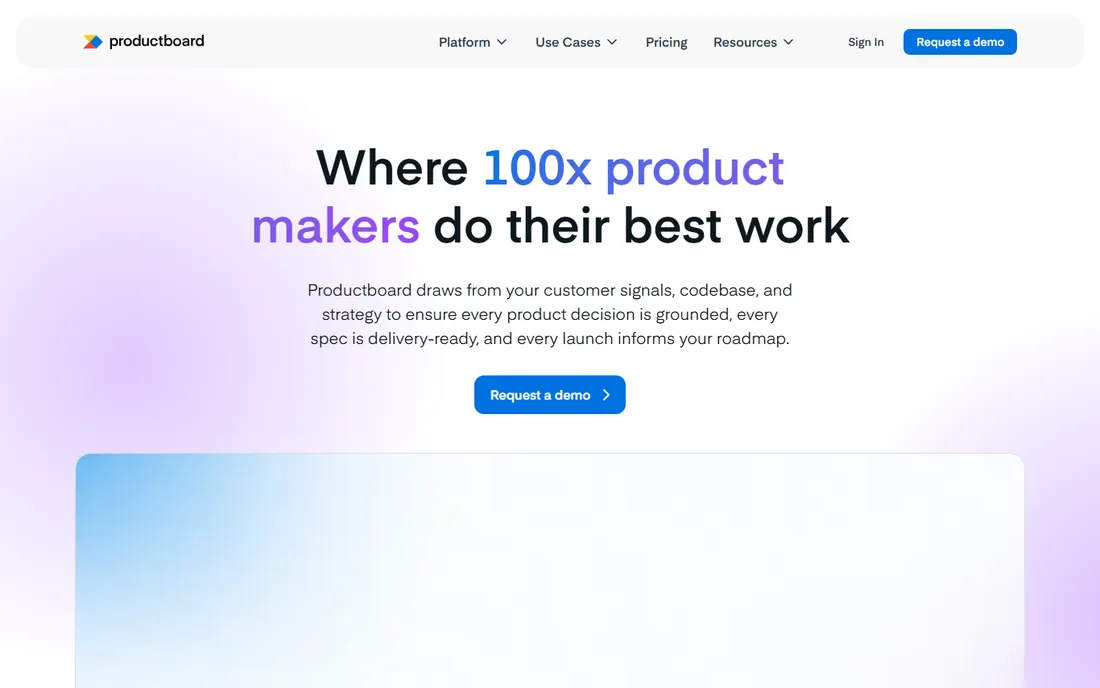
Productboard's core loop is insights to roadmap: feedback flows in from support tickets, sales calls and user interviews, gets organized into insights, and feeds prioritization and roadmaps that stakeholders can actually read. For a product team whose roadmap arguments are currently fought in Slack threads, this structure is the product.
The licensing needs attention. Per-maker pricing means you count who creates versus who views, and the tiers confuse buyers; verify the current numbers on the vendor page before budgeting. Onboarding takes real effort for non-PMs. But if customer feedback drives your roadmap, this is the most feedback-native tool on the list.
What we like- Customer feedback collection feeding directly into prioritization
- Interactive roadmaps that align stakeholders
- Strong integrations with Jira, GitHub and Salesforce
Watch out for- Pricing tiers and per-maker licensing confuse buyers
- Onboarding can be complex for non-PMs
- Insights tooling mixes customer and internal signals
#2
Aha! Roadmaps
Best for: Product organizations standardizing strategy, roadmaps and releases
Visit aha.io
Starting price$59/user/month (Premium); Enterprise $99; Enterprise+ $149
Free planNo (30-day trial)
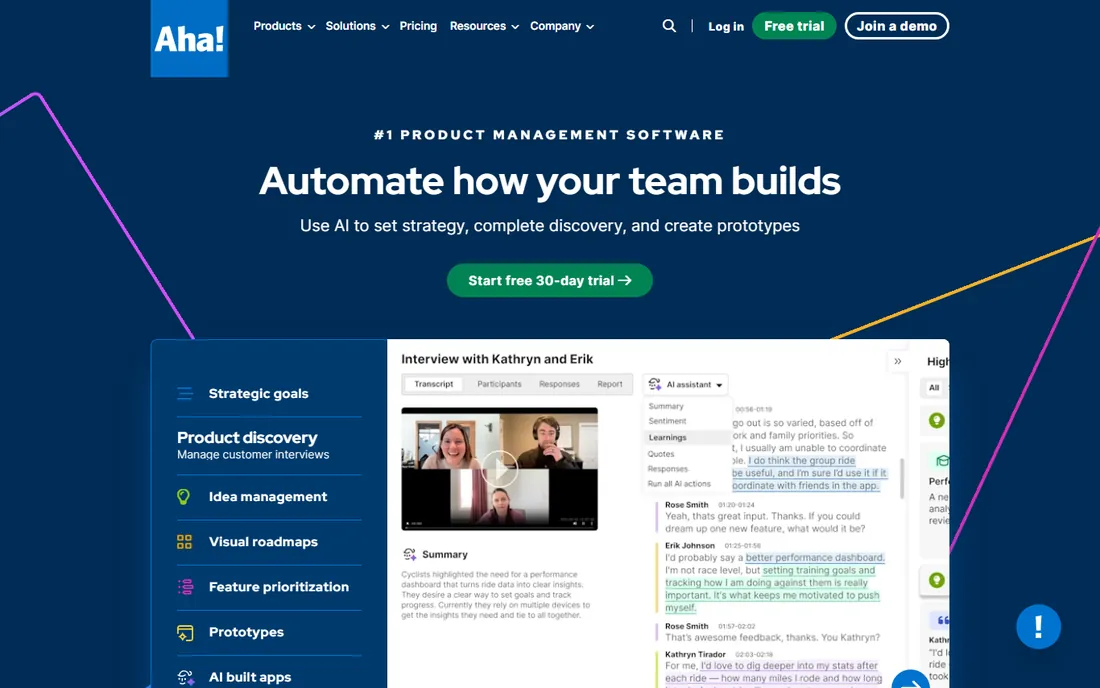
Aha! is the methodology in software form. Goals, initiatives, epics, features and releases connect in one hierarchy, roadmaps render beautifully for executive presentations, and the templates teach product discipline as you use them. For a product organization that wants everyone planning the same way, this is the standard.
The per-user cost is the conversation. At $59 per user per month on Premium, a 20-person product org pays over $14,000 a year before Enterprise tiers, and casual contributors still need seats. The learning curve is real for anyone outside product. Buy Aha! when standardization across the product org is the goal; buy lighter when one team just needs a roadmap.
What we like- Deepest strategy-to-roadmap feature set in the category
- Polished visual roadmaps and presentation views
- Strong templates and methodology guidance
Watch out for- $59 per user is pricey and scales fast
- Learning curve for casual users
- Enterprise tiers jump to $99-$149 per contributor
Starting priceSee website (verify current plan packaging on Atlassian's pricing page)
Free planCheck vendor page for current free tier limits
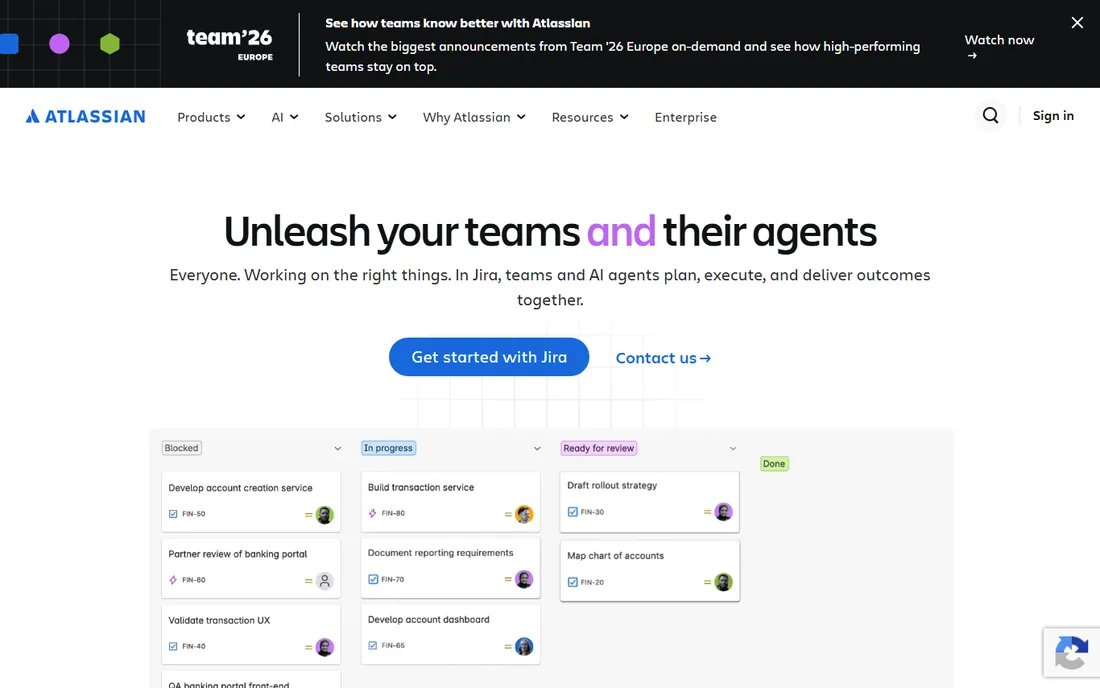
Jira Product Discovery answers a specific pain: the gap between "we have ideas" and "the team is building them." Ideas get captured, scored and prioritized in views product managers like, then flow into Jira delivery without re-entry or integration projects. For a team already on Jira, this is the path of least resistance.
Verify the packaging before you commit. Atlassian has changed the plan structure and limits over time, so check the current pricing page rather than old reviews. Outside the Atlassian ecosystem there is little reason to choose it over Productboard or Aha!. But for a Jira shop, the native idea-to-ticket link beats any integration.
What we like- Discovery ideas connect directly to Jira delivery work
- Natural fit for teams already on Jira
- Prioritization views like matrices and roadmaps
Watch out for- Best value only inside the Atlassian ecosystem
- Plan packaging and limits have shifted
- Less standalone depth than dedicated PM tools
#4
Monday
Best for: Cross-functional teams wanting one visual workspace
Visit monday.com
Starting price$9/user/month billed annually
Free planYes (free tier for individuals; 14-day Pro trial)
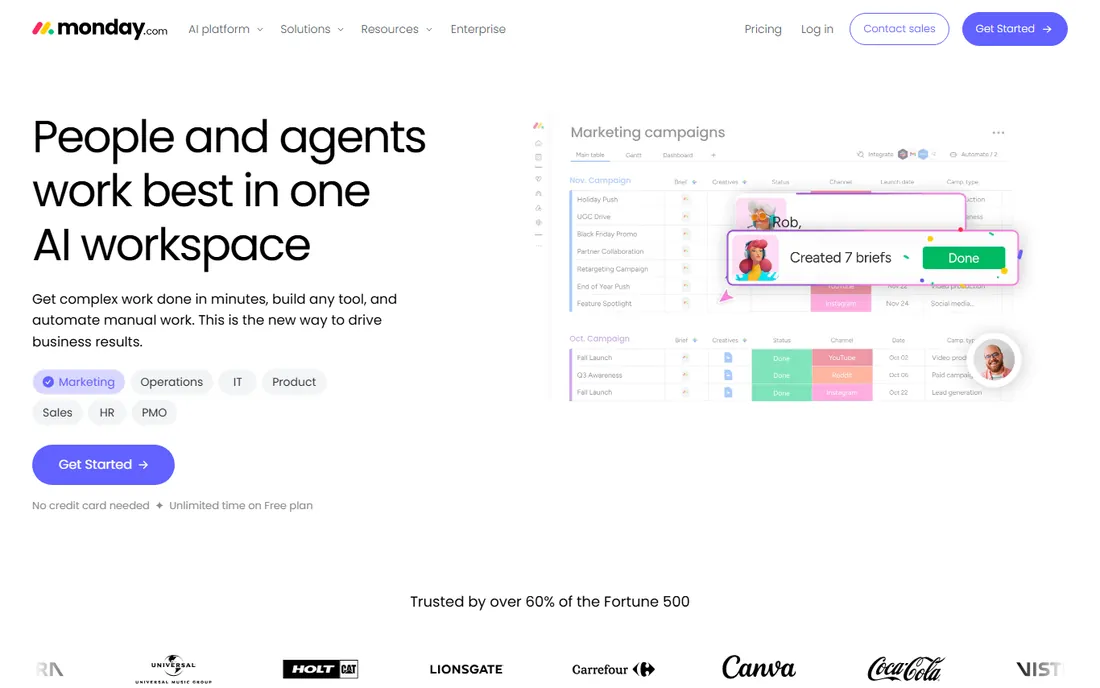
Monday wins on adoption. Boards, timelines and dashboards are visual enough that marketing, design and ops actually use them, which matters more than any feature checklist: a roadmap nobody opens is decoration. The template library covers product launches, sprints and roadmaps out of the box.
The trade is depth and cost. Feedback management and prioritization scoring are thinner than the dedicated PM tools, workspaces get messy without governance, and $9 per user per month adds up when half the company has a seat to view roadmaps. For a cross-functional team that needs one shared workspace more than product methodology, Monday is the pragmatic pick.
What we like- Visual boards and timelines that non-technical teams adopt fast
- Huge template library
- Flexible enough for roadmaps, sprints and launches
Watch out for- Per-user pricing adds up
- Product-specific features like feedback management are thinner than dedicated PM tools
- Can get messy without governance
#5
ClickUp
Best for: Teams wanting one workspace for tasks, docs and sprints at low cost
Visit clickup.com
Starting priceFree Forever; Unlimited $7/user/month billed annually ($10 monthly)
Free planYes (Free Forever with unlimited tasks and members)
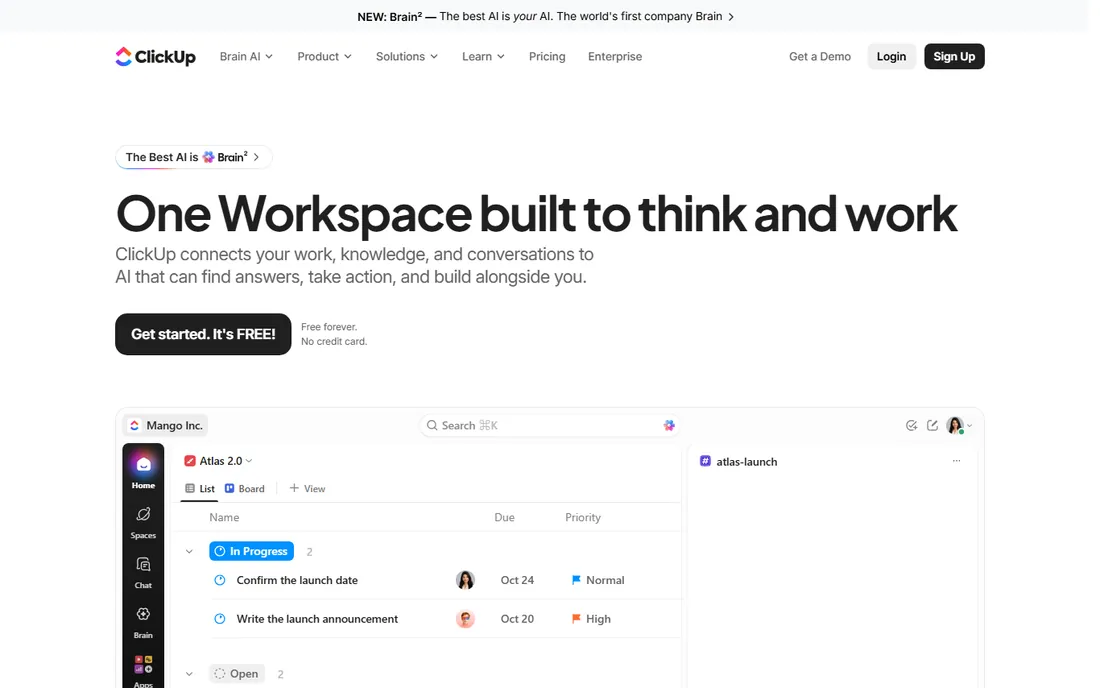
ClickUp's free plan is the most generous in this set: unlimited tasks and members, which means a small product team can run roadmaps, sprints, docs and goals at $0 for a long time. The paid tiers stay cheap at $7 per user, undercutting Monday while covering more surface area.
Complexity is the tax. Feature sprawl overwhelms new teams, performance can lag in huge workspaces, and the AI features cost extra per seat. Invest in setup conventions early or the flexibility becomes chaos. For a cost-conscious team that wants everything in one workspace and will put in the setup work, ClickUp is the value leader.
What we like- Generous free plan with unlimited tasks and members
- All-in-one docs, tasks, sprints and goals
- AI add-ons available per seat
Watch out for- Feature sprawl overwhelms new teams
- Performance can lag in huge workspaces
- AI costs extra on top of seats
#6
Notion
Best for: Small product teams that live in docs and want tasks alongside
Visit notion.so
Starting priceFree; Plus $10/user/month billed annually ($12 monthly)
Free planYes (free for individuals; limited blocks for teams)
Notion is where product specs already live for half the startups on earth, so running the roadmap there too removes a tool. PRDs, wikis, task databases and roadmap views share one canvas, the template community covers every product ritual, and the free tier is enough for a small team to start.
It is not a product management tool by design. Prioritization scoring, feedback management and backlog workflows are all DIY database builds, workspaces get messy at scale, and permissions frustrate larger teams. For a small team that thinks in documents, Notion is enough. For a product org that needs methodology, buy Aha! or Productboard.
What we like- Docs, wikis, tasks and databases in one flexible canvas
- AI bundled into the Business plan
- Huge template community
Watch out for- Not purpose-built for roadmapping or backlog management
- Workspaces get messy at scale
- Offline and permission limits frustrate larger teams
#7
Craft.io
Best for: Product teams wanting purpose-built planning without Aha!'s price
Visit craft.io
Starting priceSee website ($39/month reported; verify on vendor pricing page)
Free planCheck vendor page (trial offered)
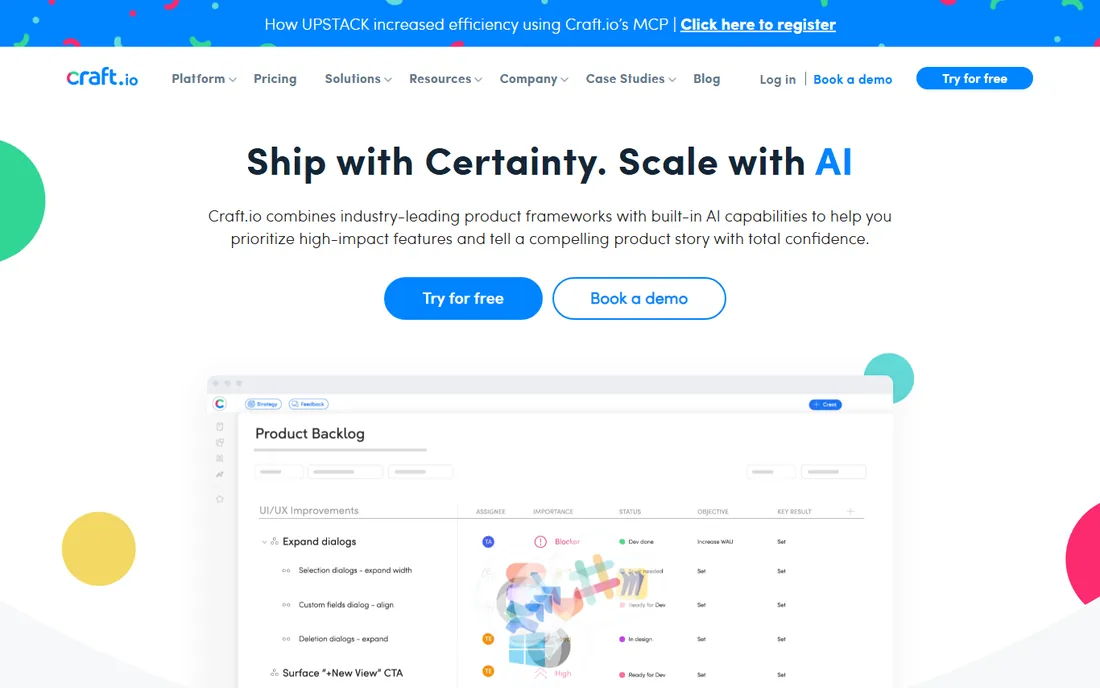
Craft.io is the middle path: purpose-built product planning, from personas and user stories through capacity planning to visual roadmaps, without Aha!'s per-user pricing. The Jira and Azure DevOps sync keeps delivery connected, and the prioritization views cover the core product rituals.
The trade-offs are ecosystem and price. The community and template library are smaller than the big names, brand recognition is lower for stakeholder buy-in, and the entry price sits above the general work tools. Verify current pricing on the vendor page. For a product team that wants real product workflows at a moderate price, Craft.io deserves a demo between the dedicated tools and the flex workspaces.
What we like- Product-centric with personas, user stories and capacity planning
- Visual roadmaps with prioritization
- Good Jira and Azure DevOps sync
Watch out for- Higher entry price than general work tools
- Smaller community and template library
- Less brand recognition for stakeholder buy-in
#8
ProdPad
Best for: Product teams focused on discovery and idea triage
Visit prodpad.com
Starting priceSee website ($99/month reported; verify on vendor pricing page)
Free planCheck vendor page (trial offered)
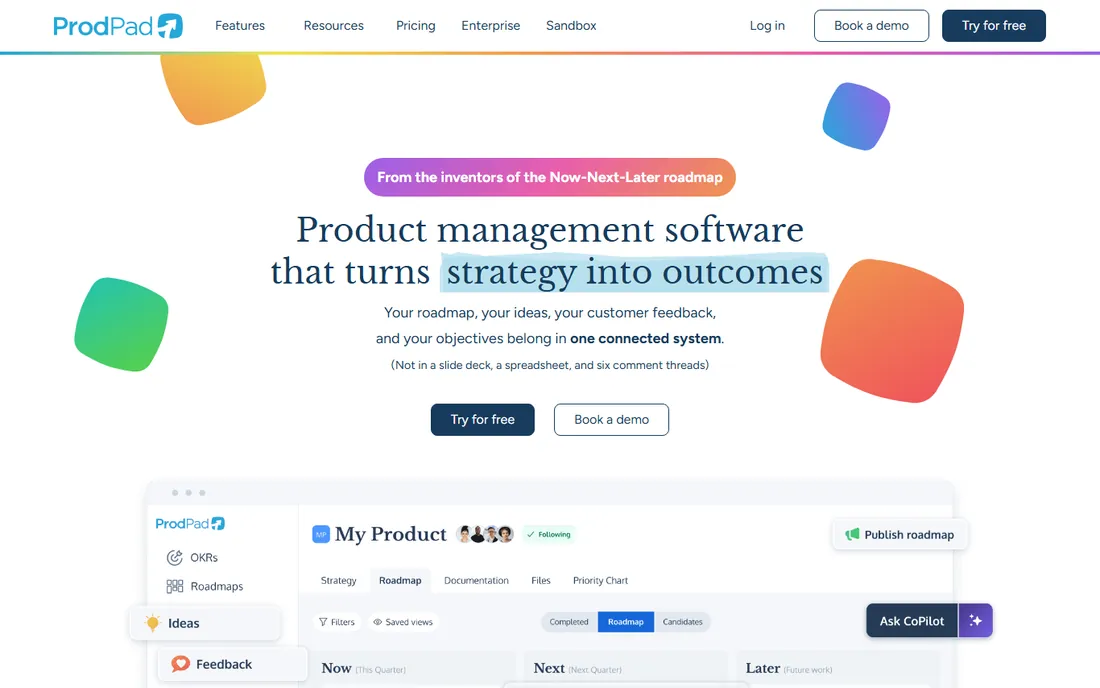
ProdPad focuses on the front of the product process: capturing ideas and feedback, triaging them, and turning the survivors into lean roadmaps tied to OKRs. The learning curve is gentle, which matters for teams that found Aha! overwhelming. Discovery-first teams get a tool shaped like their actual workflow.
The entry price is flat at a reported $99 per month regardless of team size, which is steep for a tiny team and cheap for a large one. Integrations are fewer than the bigger rivals, and delivery execution depth is thinner. Verify pricing on the vendor page. Buy ProdPad when discovery and idea triage are the job; buy elsewhere when delivery tracking matters more.
What we like- Idea management with feedback capture feeding prioritization
- Lean roadmaps and OKR support
- Simple learning curve for product teams
Watch out for- $99/month entry is steep for small teams
- Fewer integrations than bigger rivals
- Less depth on delivery execution
The decision comes down to team shape. Pick a dedicated PM tool (Aha!, Productboard, Craft.io, ProdPad) when product managers own the roadmap, feedback volume is high, and prioritization needs methodology. Pick a flexible workspace (Monday, ClickUp, Notion) when the roadmap is cross-functional, the team is small, or product work blends into everything else. Jira shops get a third option: Product Discovery for the best of both without leaving Atlassian. The most expensive mistake is buying methodology for a team that just needed a shared board, or buying a board for an org that needed methodology.
Frequently asked questions
What is the difference between product management and project management software?
Product management decides what to build and why: roadmaps, prioritization, feedback, strategy. Project management tracks the work of building it: tasks, sprints, deadlines. Aha! and Productboard are product tools; Jira Software and Asana are project tools. Many teams run both, connected by integrations.
How much does product management software cost?
Dedicated tools run $39 to $149 per user per month: Craft.io around $39, Aha! Premium $59, Enterprise tiers to $149. Flexible workspaces run $0 to $12: ClickUp free to $7, Monday $9, Notion free to $10. ProdPad charges a flat reported $99 per month. Productboard and Jira Product Discovery need a pricing-page check.
Is Notion good enough for product management?
For a small team, yes. Roadmaps, PRDs, backlogs and wikis all work as Notion databases, and the price is hard to argue with. It breaks down when you need real prioritization scoring, feedback workflows, or permissions at scale. Graduate to Productboard or Aha! when the DIY databases start creaking.
Which product management tool integrates best with Jira?
Jira Product Discovery, natively: ideas flow into Jira issues with no integration. Productboard, Aha! and Craft.io all have solid two-way Jira syncs. If the engineering team lives in Jira and will not move, prioritize the native option or the strongest sync, in that order.
Do I need OKRs in my product tool?
Only if the company actually runs OKRs. ProdPad and Aha! both support them, and tying roadmaps to objectives helps alignment in larger orgs. For a small team, OKR features are shelfware; a simple roadmap with clear priorities beats an objectives framework nobody maintains.
How we chose
We started with the categories buyers search: product management software, best product management tools, and product roadmap software. For each candidate we checked the vendor's own product and pricing pages, cross-checked capabilities and costs against public reviews on G2 and Capterra and practitioner discussion on Reddit, and compared product-specific depth, team-size fit and Jira integration quality. Where a price could not be verified on the vendor's page we wrote "See website" rather than guessing. The shortlist mixes dedicated PM tools with flexible workspaces, because a product org and a startup team are not buying the same thing.
Sources we checked (10)
- https://www.productboard.com/pricing/
- https://www.aha.io/pricing
- https://www.atlassian.com/software/jira/product-discovery
- https://monday.com/pricing/
- https://clickup.com/pricing/
- https://www.notion.so/pricing
- https://craft.io/
- https://www.prodpad.com/
- https://www.g2.com/categories/product-management
- https://www.capterra.com/product-management-software/
Is your product missing or out of date?
We review this list regularly. Vendors can request a listing, send updated pricing or ask about featured placement.

Shihab Mia · Founder, Rankite
Shihab has spent more than a decade helping SaaS and e-commerce brands grow through search. He writes Rankite's software buying guides from pricing pages, documentation and public user reviews. More about Shihab.