How we make this list: we compare pricing pages, product documentation and public user reviews. Rankite is independent; if a vendor ever pays for a featured spot, that listing is clearly labeled Partner.
Key takeaways
- If you want zero monthly cost, Gumroad (10% per sale), Payhip (free plan with a 5% fee) and Lemon Squeezy (5% + $0.50 per transaction) let you start free; you pay more per sale instead of a subscription.
- Course-first sellers get the most from Teachable, whose built-in checkout handles sales tax, VAT and GST in 45+ countries, or Podia, which bundles courses, email and community into one plan.
- Sellfy is the rare platform with 0% transaction fees on every plan; the catch is the monthly subscription plus revenue caps that push you to a higher tier.
- Social-first creators do better with Stan Store or Beacons, which pair a storefront with a link-in-bio page tuned for mobile buyers.
- Merchant-of-record platforms such as Lemon Squeezy and Payhip handle VAT and sales tax for you; checkout-link tools like SendOwl leave tax compliance in your hands.
Quick comparison
| Tool | Best for | Starting price | Free plan |
|---|
 Gumroad Gumroad | first-time creators selling a single download | Free (10% fee per sale) | Yes |
 Sellfy Sellfy | design-asset and video sellers who hate transaction fees | $22/month (billed annually) | Free trial (14 days) |
 Teachable Teachable | course creators selling across many countries | See website | Free trial (7 days) |
 Podia Podia | creators wanting courses, email and community on one bill | See website | Free trial (14 days) |
 Lemon Squeezy Lemon Squeezy | software sellers who dread tax paperwork | Free (5% + $0.50 per transaction) | Yes |
 Payhip Payhip | ebook and course sellers starting with no budget | Free (5% fee); Plus $29/month (2%) | Yes |
 SendOwl SendOwl | bloggers adding buy buttons to an existing site | See website | Free trial (30 days) |
 E-junkie E-junkie | long-time sellers of small files wanting flat pricing | See website | No |
 Stan Store Stan Store | creators selling through TikTok and Instagram bios | $29/month | Free trial (14 days) |
 Beacons Beacons | creators bundling a store with a link-in-bio page | See website | Yes |
 Ko-fi Ko-fi | artists and writers supported directly by fans | Free (0% platform fees) | Yes |
 Whop Whop | sellers of communities, Discord access and digital perks | See website | Yes |
Is your product missing or out of date?
We review this list regularly. Vendors can request a listing, send updated pricing or ask about featured placement.
Sellfy reports that more than 75,000 creators have earned over $165 million through its platform. That figure says something real about 2026: selling a PDF, a preset pack or a short course is now ordinary business, and the platform you pick decides how much of each sale you keep and how much admin work lands on you. The twelve tools below cover the full spread, from free-to-start marketplaces to subscription storefronts and course-first platforms.
Starting priceFree (10% fee per sale)
Free planYes
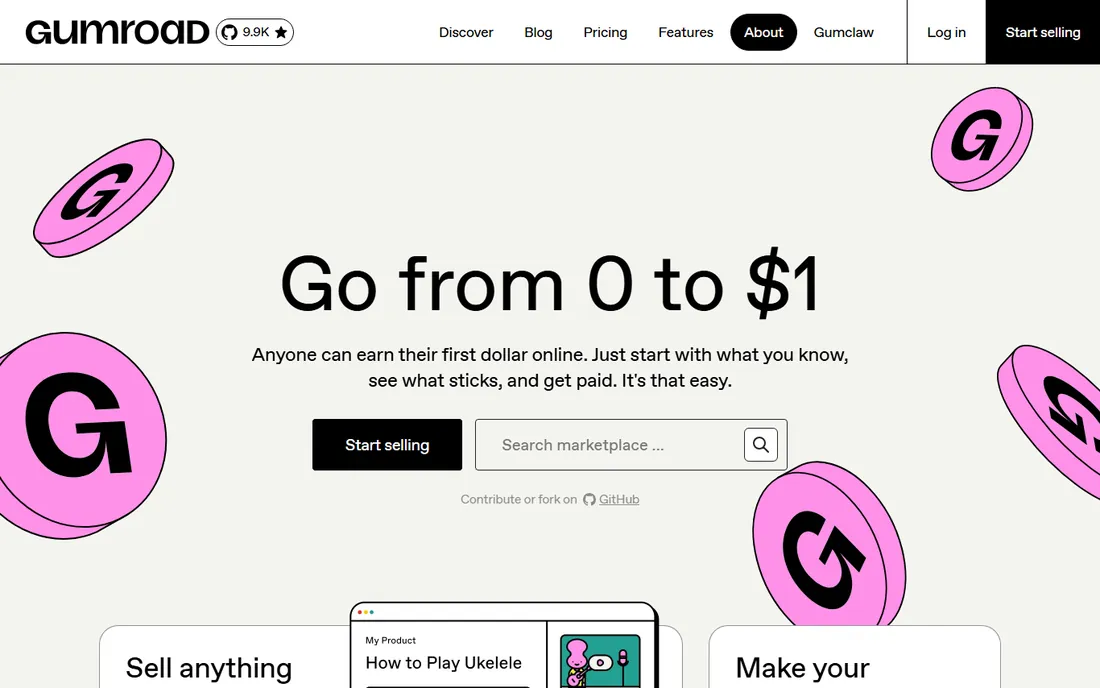
Gumroad is the shortest path between a finished file and a checkout page. Upload a PDF, set a price, share the link: that is the whole setup, and there is no monthly bill. The trade is the flat 10% cut on every sale, which feels painless on your first hundred dollars and hard to ignore once you pass five figures a month.
It suits experiments: a single ebook, a Notion template, a paid newsletter. If you want proof of demand before committing to a subscription, this is the cheapest place to get it.
What we like- No monthly fee
- Live in minutes
- Weekly payouts straight to your bank
Watch out for- 10% fee bites at scale
- Basic storefront design
- Weak built-in marketing
#2
Sellfy
Best for: design-asset and video sellers who hate transaction fees
Visit sellfy.com
Starting price$22/month (billed annually)
Free planFree trial (14 days)
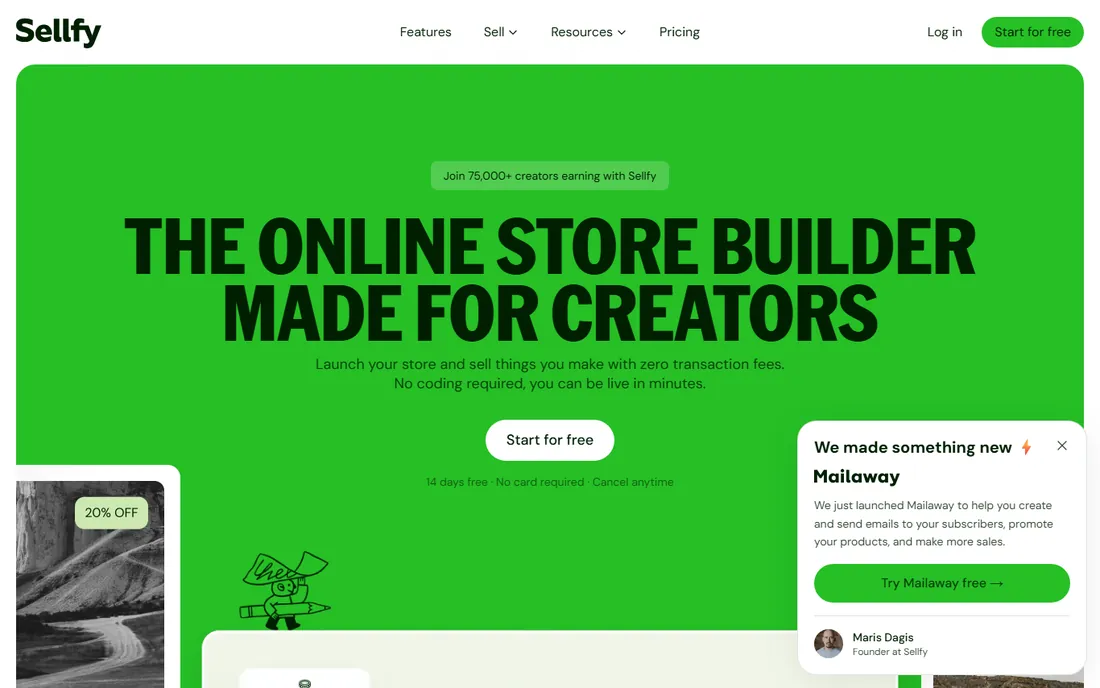
Sellfy flips the Gumroad model: instead of a cut of each sale, you pay a monthly subscription and keep everything. The Starter plan is $22 a month on annual billing ($29 month to month) and includes a 14-day trial. For a seller doing steady four-figure months, the math beats a 10% fee quickly.
The platform bundles email marketing, discount codes, upsells and print-on-demand alongside digital downloads, so one subscription covers the whole funnel. The honest catch is the revenue ceiling on each plan: outgrow your tier and you must upgrade, with a 2% fee on further sales if you refuse. Integrations are thinner than on bigger ecommerce platforms.
What we like- 0% transaction fees on all plans
- Built-in email marketing and upsells
- 10GB file limit on Starter
Watch out for- No free plan
- Revenue caps trigger forced upgrades
- Thin third-party integrations
Starting priceSee website
Free planFree trial (7 days)
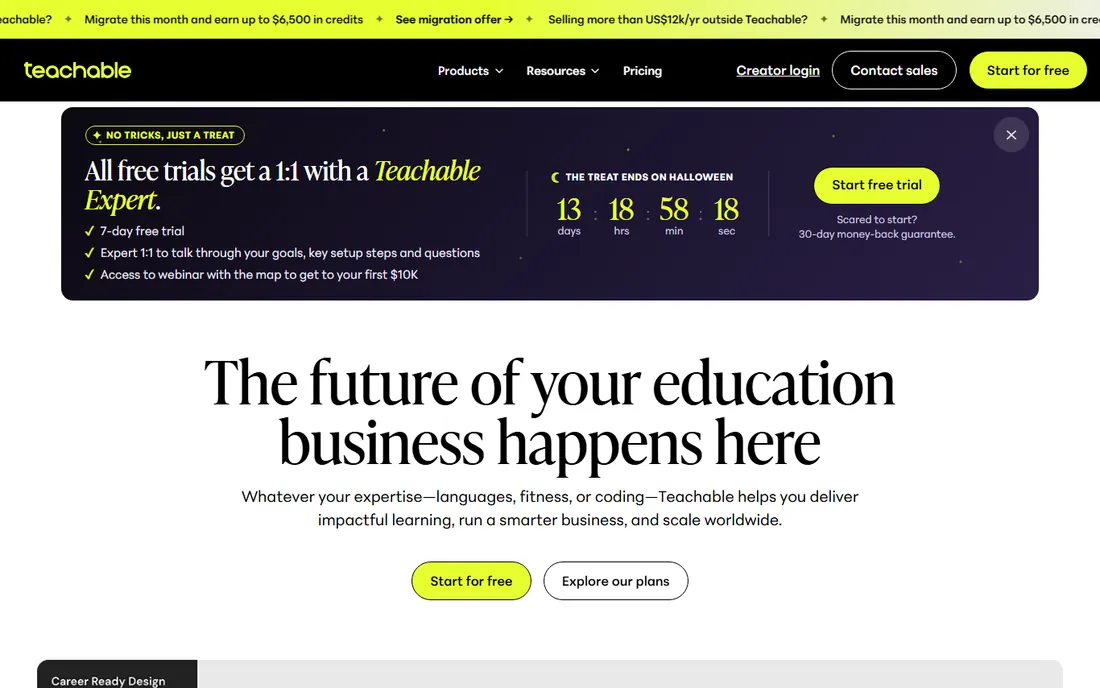
Teachable is built for people whose main product is learning: courses, coaching, memberships and digital downloads around them. Its strongest card is Teachable Payments, which collects and remits sales tax, VAT and GST across more than 45 countries, the kind of admin work that quietly eats a solo creator's week.
Every plan includes a 7-day free trial and a 30-day money-back guarantee, but there is no permanent free tier, and the Starter plan takes a 7.5% transaction fee. Builder and Growth plans drop that fee to zero. The platform can feel heavy if all you want to sell is one PDF.
What we like- Handles sales tax, VAT and GST in 45+ countries
- IOS and Android student apps
- 0% transaction fees on upper plans
Watch out for- No free plan
- 7.5% transaction fee on Starter
- Add-ons raise the real monthly cost
#4
Podia
Best for: creators wanting courses, email and community on one bill
Visit podia.com
Starting priceSee website
Free planFree trial (14 days)

Most creators end up paying for four tools: a course host, a community, an email service and a website. Podia replaces all four with one login and one subscription, and it executes that pitch well. The 14-day free trial needs no credit card, which makes it easy to test the full setup before paying anything.
Digital downloads work, but they are clearly not the center of the product; sellers with big file libraries or complex licensing get more from Gumroad, Payhip or Lemon Squeezy. Buy it for consolidation and simplicity, not for depth in any single feature.
What we like- Courses, community, coaching, email and site in one dashboard
- 14-day trial with no credit card
- No transaction fees on paid plans
Watch out for- Download selling is simpler than Gumroad or Payhip
- Design templates are plain
- Analytics stay basic
Starting priceFree (5% + $0.50 per transaction)
Free planYes
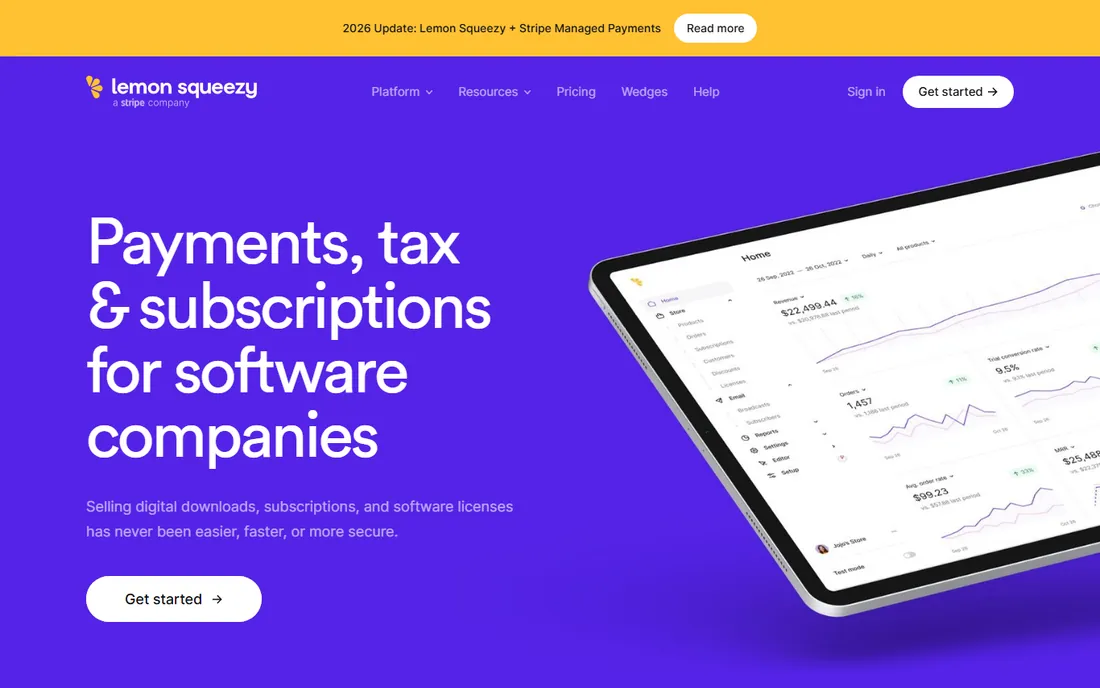
Lemon Squeezy acts as your merchant of record, a dry phrase for a real benefit: it handles VAT, sales tax, fraud checks and failed-payment recovery in every country you sell to. For an indie developer selling a Mac app or a design course, that removes the single most annoying part of going global.
There is no monthly fee; you pay 5% plus 50 cents per transaction. The fee is the honest catch, since it runs higher than a subscription platform once revenue is steady. It leans toward software; course builders get richer teaching tooling at Teachable or Podia.
What we like- Acts as merchant of record for global VAT and sales tax
- Built-in license key management
- No monthly fee
Watch out for- 5% plus 50 cents per sale is steep at volume
- Course features lag behind Teachable
- Storefront themes are limited
#6
Payhip
Best for: ebook and course sellers starting with no budget
Visit payhip.com
Starting priceFree (5% fee); Plus $29/month (2%)
Free planYes
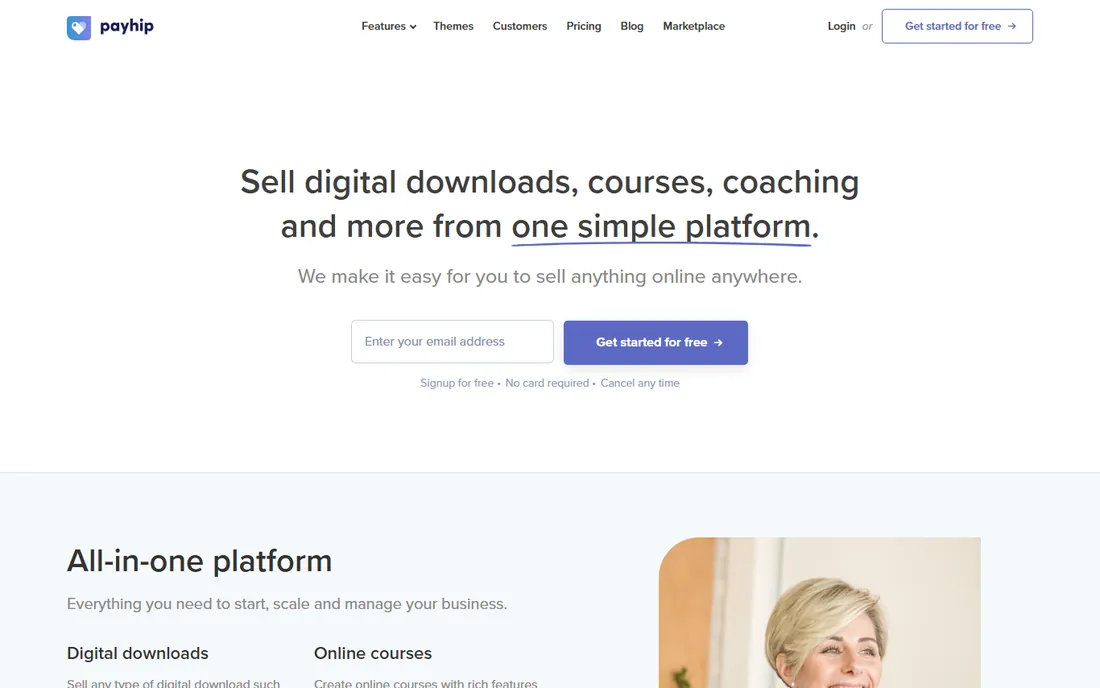
Payhip's free plan is not a demo; it is a working store with a 5% transaction fee, which makes it one of the few places you can start selling today with zero spend. Paid tiers cut the fee to 2% at $29 a month and to zero at the top tier, so the platform grows with you instead of punishing early traction.
It covers digital downloads, courses with quizzes and certificates, memberships, coaching bookings and even physical products, and it handles EU VAT for you. The trade-offs are a plain checkout with Payhip branding on the free plan and light analytics. The pattern is consistent: start free, upgrade when the fee math says so.
What we like- Genuinely usable free plan
- Handles EU VAT on digital sales
- Courses, memberships, coaching and physical goods
Watch out for- 5% free-plan fee compounds as you grow
- Payhip branding on free checkout
- Reporting is thin
#7
SendOwl
Best for: bloggers adding buy buttons to an existing site
Visit sendowl.com
Starting priceSee website
Free planFree trial (30 days)
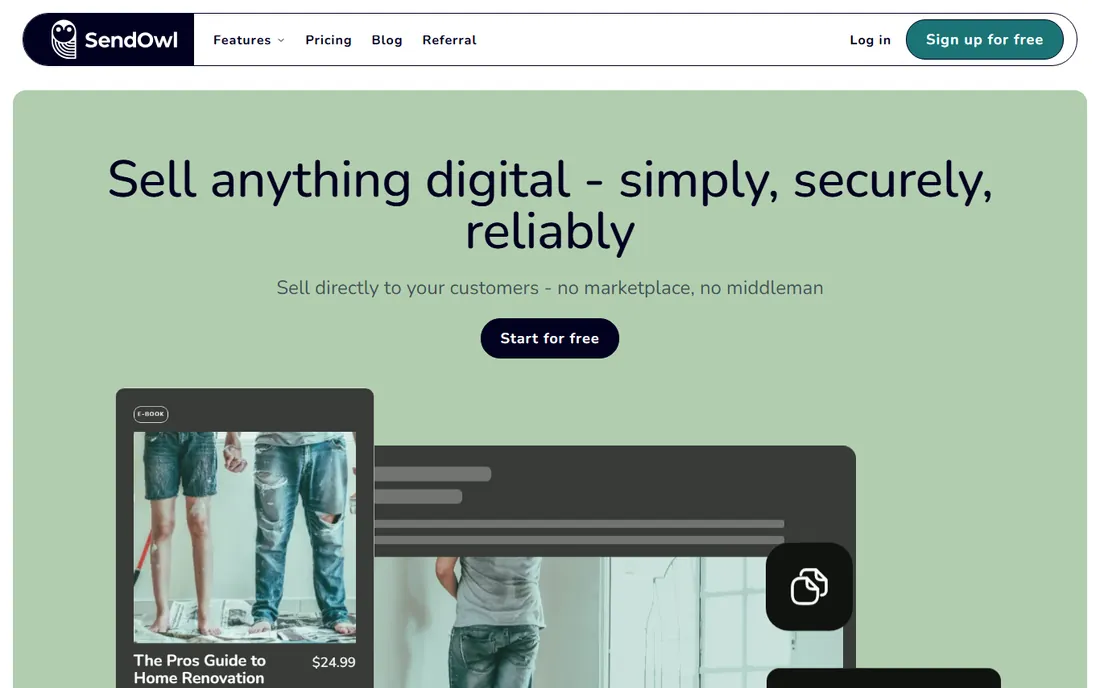
SendOwl is not a storefront; it is a checkout engine you bolt onto a blog or website you already run. You create a product, get a link or an embeddable button, and sell from your own pages, which keeps your branding and SEO exactly where they are.
Affiliate tools, one-click upsells and big-file delivery are stronger here than on most creator platforms. What you do not get is a hosted store, and tax compliance stays your problem. If you already have traffic and just need someone to take the money and deliver the file, that trade is fine.
What we like- Checkout links and buttons embed anywhere
- Strong affiliate and upsell tools
- Handles large files
Watch out for- No real storefront builder
- You handle your own taxes
- Dated dashboard
#8
E-junkie
Best for: long-time sellers of small files wanting flat pricing
Visit e-junkie.com
Starting priceSee website
Free planNo
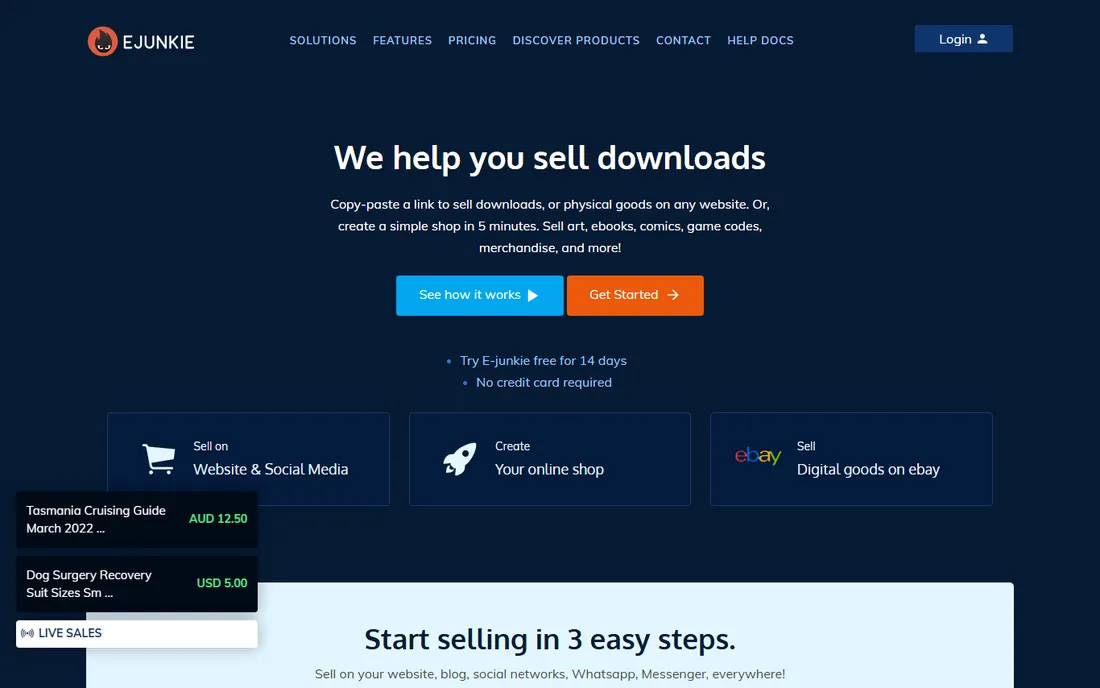
E-junkie has been selling digital downloads since before most competitors existed, and its model never changed: a flat monthly fee with no percentage taken from your sales. High-volume sellers of small files, stock assets or codes can end up paying far less here than on a percentage platform.
The dashboard is dated, marketing tools are minimal, and there is no free plan to test with. It is a workhorse for sellers who already have an audience and a site, not a growth platform for someone starting from zero.
What we like- Flat monthly pricing regardless of sales volume
- Tiny learning curve
- Reliable download delivery
Watch out for- Interface looks dated
- No free tier
- Limited marketing features
#9
Stan Store
Best for: creators selling through TikTok and Instagram bios
Visit stan.store
Starting price$29/month
Free planFree trial (14 days)
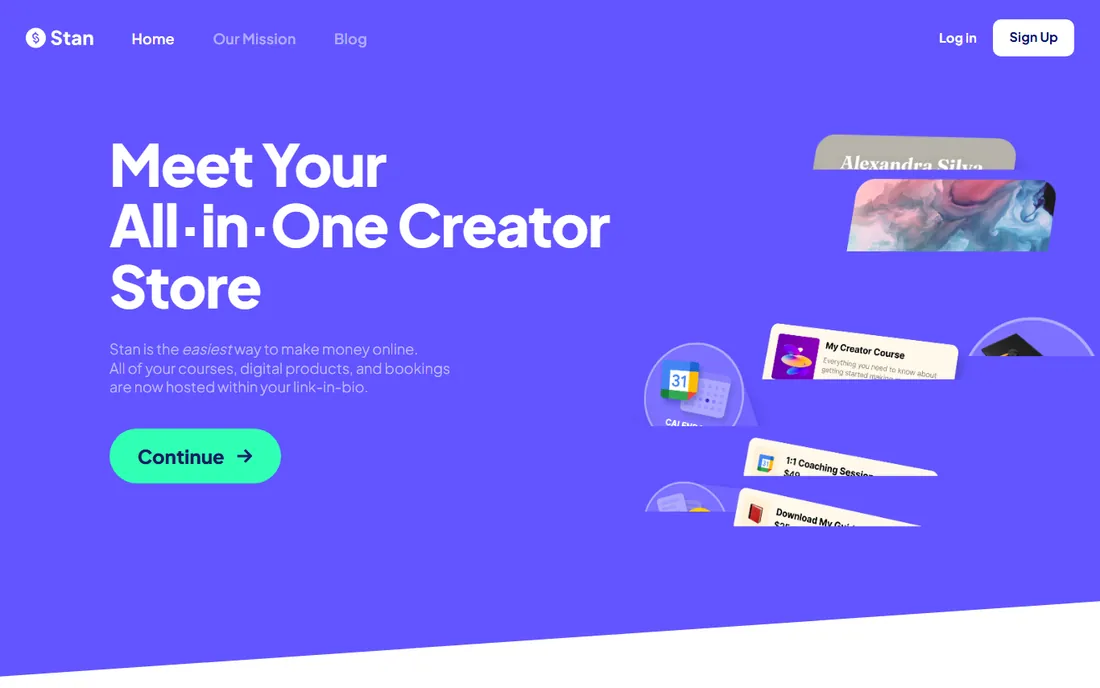
Stan Store starts from a simple observation: most creators' traffic lives in a single bio link on TikTok or Instagram. It turns that link into a mobile storefront with digital products, courses, bookings and email capture, and the checkout is tuned for thumbs, not desktops.
Plans start at $29 a month with a 14-day trial, and there is no free tier, which filters out dabblers. Customization is limited by design. If your audience finds you on social and buys on their phone, it fits. If your sales come from search and email, a fuller platform serves you better.
What we like- Storefront built for the link-in-bio slot
- One-tap mobile checkout
- Calendar bookings built in
Watch out for- Monthly fee with no free tier
- Limited customization
- Desktop experience is secondary
#10
Beacons
Best for: creators bundling a store with a link-in-bio page
Visit beacons.ai
Starting priceSee website
Free planYes
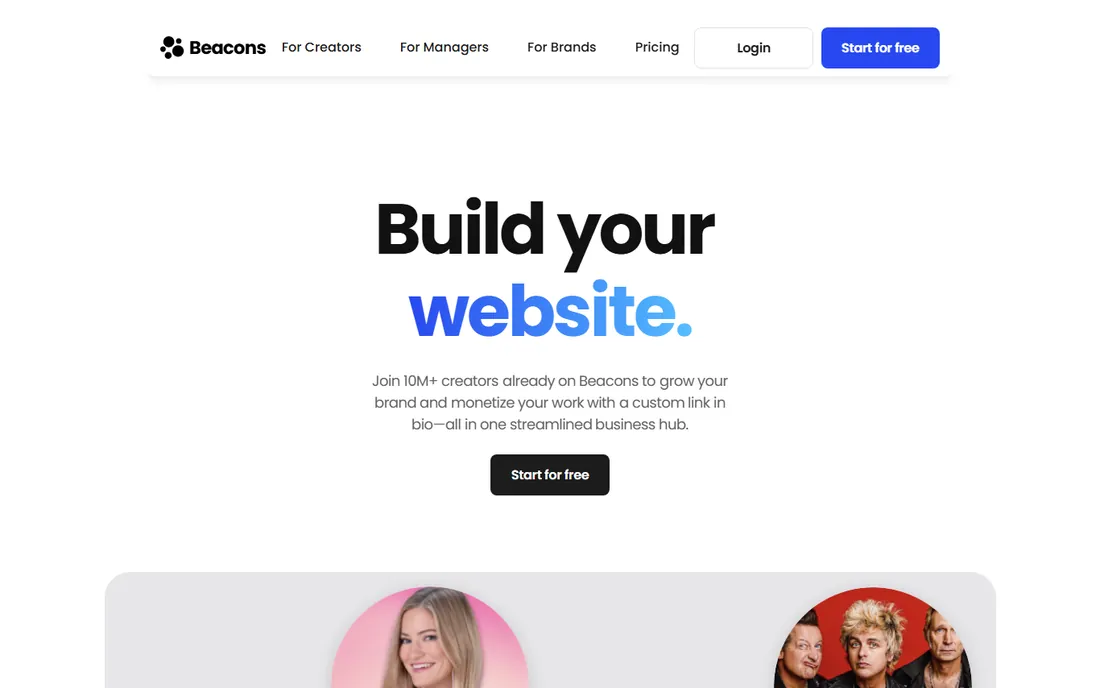
Beacons began as a link-in-bio tool and grew a store on top, which makes it a natural pick if your bio page is already your homepage. The free plan includes selling digital products alongside your links, with email marketing built in, so a new creator can run links, content and sales from one dashboard.
It is not as deep a selling platform as Gumroad or Sellfy, and the free plan carries transaction fees. The paid tier removes most of those limits. Choose Beacons when the bio page is the business; choose a dedicated platform when the catalog is.
What we like- Free plan includes a real store
- Link-in-bio page and store in one
- Email marketing built in
Watch out for- Store features are lighter than dedicated platforms
- Transaction fees on the free plan
- Advanced selling needs the paid tier
#11
Ko-fi
Best for: artists and writers supported directly by fans
Visit ko-fi.com
Starting priceFree (0% platform fees)
Free planYes
Ko-fi's headline feature is a number: zero. It takes no platform fee on shop sales, donations, memberships or commissions, which makes it the cheapest way to sell if your audience already follows you. Setup takes minutes, and supporters can tip or buy without creating accounts.
The shop itself is basic: product pages are simple, marketing tools are thin, and almost no one browses Ko-fi to discover new creators. For artists, writers and streamers with loyal followers, the 0% fee is hard to argue with.
What we like- 0% platform fees on shop sales and donations
- Simple setup
- Memberships and commissions built in
Watch out for- Basic shop design
- Fewer marketing tools
- Discovery is minimal
#12
Whop
Best for: sellers of communities, Discord access and digital perks
Visit whop.com
Starting priceSee website
Free planYes
Whop is the odd one out in this list, and deliberately so: it is built for selling access rather than files. Private Discord servers, trading groups, premium communities, software dashboards and course hubs all sell through Whop storefronts, with subscriptions as the default shape.
That focus brings a real marketplace where buyers browse, which few creator platforms offer. One-off file sellers get thinner tooling than on Gumroad or Payhip, and checkout carries Whop's branding. If your product is a door people pay to walk through each month, start here.
What we like- Built for access-based products like private Discords
- Marketplace discovery
- Handles subscriptions well
Watch out for- Less suited to one-off file sales
- Fee structure rewards volume
- Branding is Whop-first
How we chose
We read each vendor's pricing page and documentation, checked public reviews on G2, Capterra and Reddit, and compared feature lists, integrations and plan limits. We weighted the fee model heavily, because the difference between a 10% cut and a flat subscription decides profitability for most sellers. We also looked at who each platform is built for: course sellers, file sellers, software vendors and social creators have genuinely different needs. We did not run hands-on tests of any platform.
Start with your product shape, not the feature list. A single PDF and a 40-lesson course are different businesses, and the platform that serves one well can be awkward for the other.
Match the platform to the product
Course creators should shortlist Teachable and Podia: student management, drip content and certificates matter more than checkout speed. File sellers do better with Gumroad, Sellfy, Payhip or Lemon Squeezy. If your product is access to a community, Whop is built for exactly that.
Do the fee math at your real volume
A 10% fee is cheap at $200 a month and expensive at $20,000. Compare percentage platforms (Gumroad, Lemon Squeezy, Payhip's free plan) against subscriptions (Sellfy, Stan Store, Podia); most sellers cross break-even between $500 and $2,000 a month.
Check who handles tax
Cross-border digital sales create VAT and sales-tax obligations that surprise first-time sellers. Merchant-of-record platforms (Lemon Squeezy, Payhip, Teachable Payments) collect and remit for you; SendOwl and E-junkie leave compliance to you.
Fees compared: what you actually keep per sale
On a $50 sale, the take-home spread is wide. Ko-fi keeps the full $50 minus payment processing, since it charges no platform fee. Sellfy on a paid plan also keeps the full $50, because its 0% transaction fee means the subscription is your only cost. Gumroad takes $5 (10%). Lemon Squeezy takes $3 (5% + $0.50). Payhip's free plan takes $2.50 (5%).
These numbers ignore payment processing, which every platform passes through on top (usually around 3% + $0.30 via Stripe or PayPal). The pattern holds anyway: percentage platforms are cheapest below a few hundred dollars a month, and flat subscriptions win above that.
Frequently asked questions
Do I need a website to sell digital products?
No. Gumroad, Payhip, Stan Store, Beacons and Whop all give you a hosted storefront or product link, so you can sell from a social bio or a shared URL. You only need your own site for full branding control or SEO traffic; SendOwl or E-junkie bolt onto pages you already run.
Which platform is cheapest for beginners?
Payhip and Ko-fi. Payhip's free plan (5% fee), Ko-fi (0% fees) and Gumroad (10% per sale) all let you earn your first dollar before spending anything on software.
Which platform is best for selling online courses?
Teachable (deeper student tooling, mobile apps, automatic global tax handling) and Podia (courses plus email, community and coaching in one subscription) lead. Payhip and Stan Store sell courses with simpler student management.
How do transaction fees compare across platforms?
Ko-fi and Sellfy (on paid plans) charge 0%. Payhip's free plan and Lemon Squeezy charge 5% (Lemon Squeezy adds $0.50 per sale). Gumroad charges a flat 10%. Teachable charges 7.5% only on its Starter plan. Payment processing fees from Stripe or PayPal apply on top everywhere.
Can I sell internationally without worrying about VAT?
Yes on merchant-of-record platforms: Lemon Squeezy, Payhip and Teachable collect and remit VAT, GST and sales tax for you. On SendOwl, E-junkie or self-hosted checkouts, international tax compliance is your responsibility.
Should I pick a free plan or a paid subscription?
Stay on the free or percentage-fee plan until your revenue makes the subscription cheaper, roughly $500 to $2,000 a month depending on the fee. Revisit the math as you grow.
Sources we checked (12)
- https://gumroad.com/
- https://sellfy.com/
- https://teachable.com
- https://podia.com/
- https://lemonsqueezy.com/
- https://payhip.com/
- https://sendowl.com/
- https://e-junkie.com/
- https://stan.store/
- https://beacons.ai/
- https://ko-fi.com/
- https://whop.com/
Is your product missing or out of date?
We review this list regularly. Vendors can request a listing, send updated pricing or ask about featured placement.

Shihab Mia · Founder, Rankite
Shihab has spent more than a decade helping SaaS and e-commerce brands grow through search. He writes Rankite's software buying guides from pricing pages, documentation and public user reviews. More about Shihab.