How we make this list: we compare pricing pages, product documentation and public user reviews. Rankite is independent; if a vendor ever pays for a featured spot, that listing is clearly labeled Partner.
Key takeaways
- Most creator platforms take 5 to 10 percent of your revenue plus payment processing, so the fee structure matters more than the feature list at scale.
- Patreon and Substack both charge 10 percent, but Patreon is built for membership tiers and community while Substack is built for newsletters.
- Kajabi and Teachable charge monthly subscriptions instead of revenue shares, which gets cheaper than percentage fees once your income grows.
- Ko-fi, Gumroad and Buy Me a Coffee let you start free and only take a cut when money moves, which suits creators testing the waters.
- Ghost and Kit are for creators who want to own their audience and content rather than rent space on someone else's platform.
Picture a creator with 2,000 true fans willing to pay $8 a month. That is $16,000 a month in potential revenue, and the platform she picks decides whether she keeps $14,500 or $12,800 of it. Choosing among the best platforms for content creators is mostly a math problem wearing a branding costume.
This comparison covers ten creator platforms: membership tools, newsletter platforms, course builders, digital storefronts and tip jars. For each one I looked at what it actually costs to use, how the free tier works, and who it genuinely fits. A note on method: the browser service used to open vendor pricing pages went down during research, so starting prices are listed as See website and every homepage URL is flagged for re-verification in my report. Fee figures in the text come from the vendors' own published fee pages and current third-party comparisons, attributed where they appear.
Quick comparison
| Tool | Best for | Starting price | Free plan |
|---|
 Patreon Patreon | Membership tiers with a built-in audience | See website | Yes |
 Substack Substack | Paid newsletters with minimal setup | See website | Yes |
 Kajabi Kajabi | All-in-one course and membership business | See website | Free trial |
 Teachable Teachable | Selling online courses without coding | See website | No |
 Kit Kit | Email-first creators who sell digital products | See website | Yes |
 Ko-fi Ko-fi | Tips, memberships and shop with low fees | See website | Yes |
 Ghost Ghost | Owning your publication and subscriber data | See website | Yes |
 Gumroad Gumroad | Selling digital products with no monthly fee | See website | Yes |
 Buy Me a Coffee Buy Me a Coffee | Simple tips and memberships for small audiences | See website | Yes |
 Memberful Memberful | Memberships plugged into your own website | See website | No |
Is your product missing or out of date?
We review this list regularly. Vendors can request a listing, send updated pricing or ask about featured placement.
Starting priceSee website
Free planYes
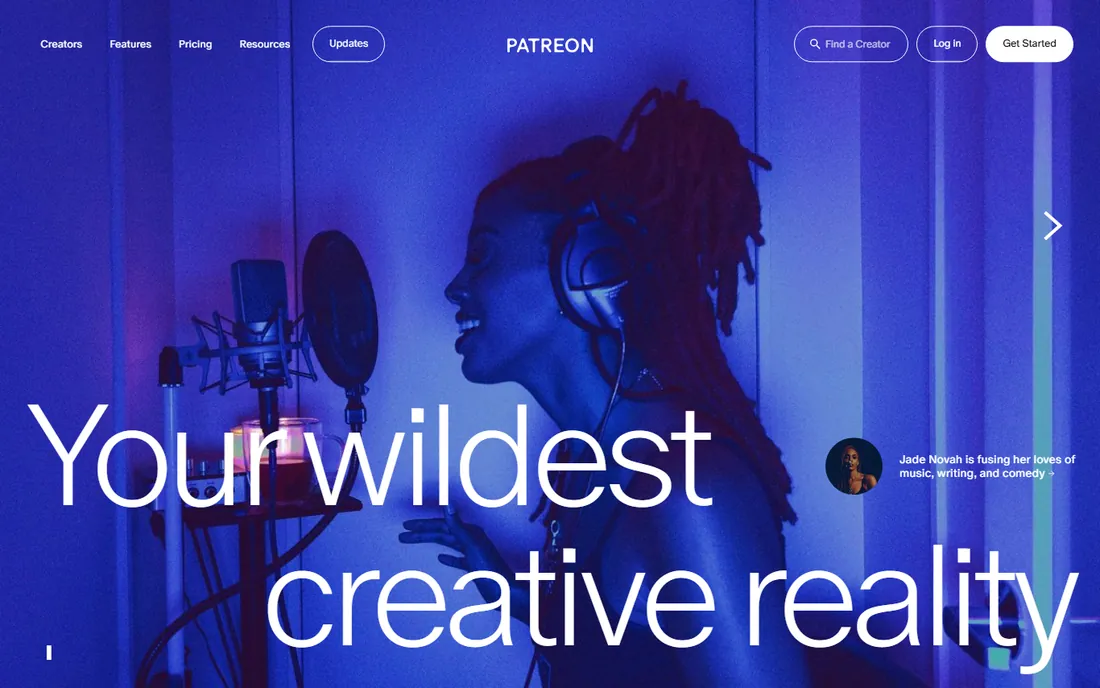
Patreon is the name most fans already know, and that recognition removes friction: people understand what "support me on Patreon" means without an explanation. Creators set up membership tiers with monthly or annual billing, publish audio, video, text and livestreams behind the paywall, and use community chats and Discord integrations to keep patrons engaged. Launching costs nothing; Patreon only earns when you do.
The fee is the catch. Since August 2025, all new creators pay a flat 10 percent platform fee, per current fee guides, with payment processing of about 2.9 percent plus $0.30 on top. Legacy creators on older plans keep their 5, 8 or 12 percent rates. There is no volume discount, so at $10,000 a month you are paying Patreon roughly $1,000 plus processing every month.
What we like- Enormous existing audience that already understands memberships
- Tiered subscriptions with community tools built in
- No upfront cost to launch
Watch out for- 10 percent platform fee for new creators plus processing
- Fee never drops as you grow
Starting priceSee website
Free planYes
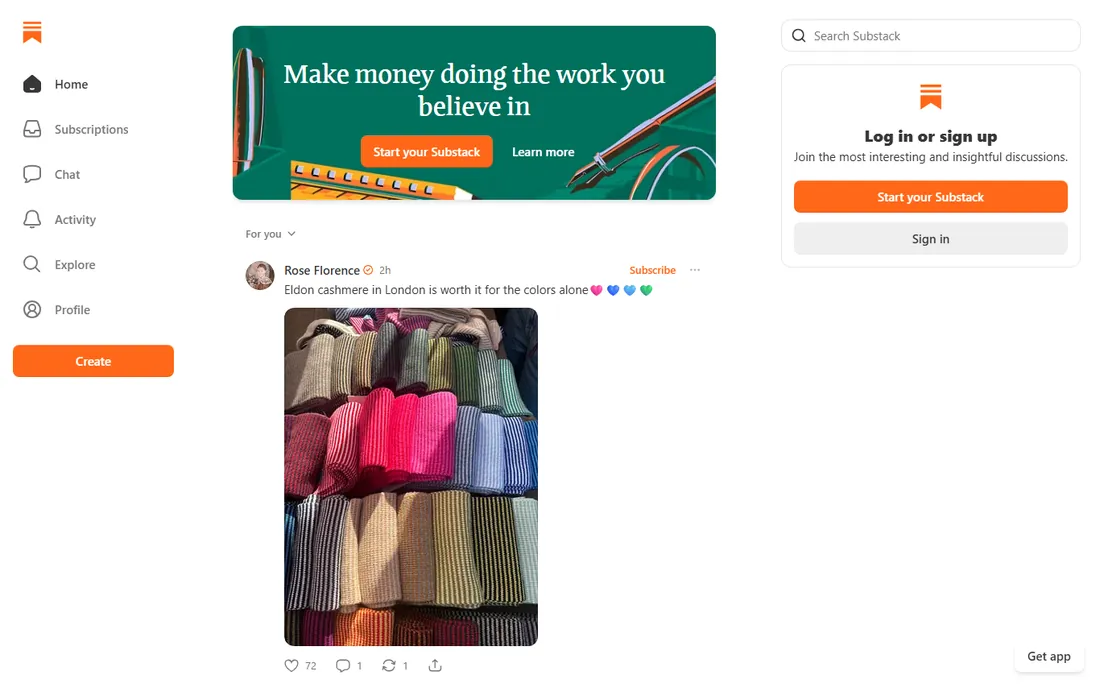
Substack is the fastest route from "I want to write a newsletter" to "people are paying for my newsletter." Publishing is free no matter how large your list grows, and you only pay when readers pay you. The Substack app and recommendation network can surface your publication to new readers, and paid subscriptions are handled for you.
Per Substack's own support page, the fee stack is 10 percent of each subscription payment to Substack, plus Stripe card processing of 2.9 percent plus $0.30, plus a 0.7 percent Stripe recurring billing fee. A custom domain costs a one-time $50. Like Patreon, the percentage never shrinks as you scale, which is why larger publications sometimes migrate to flat-fee email platforms.
What we like- Publishing is free at any list size
- Built-in reader network helps discovery
- Simplest path from writing to paid subscriptions
Watch out for- 10 percent fee on paid subscriptions plus Stripe charges
- Limited design and automation compared with email platforms
Starting priceSee website
Free planFree trial
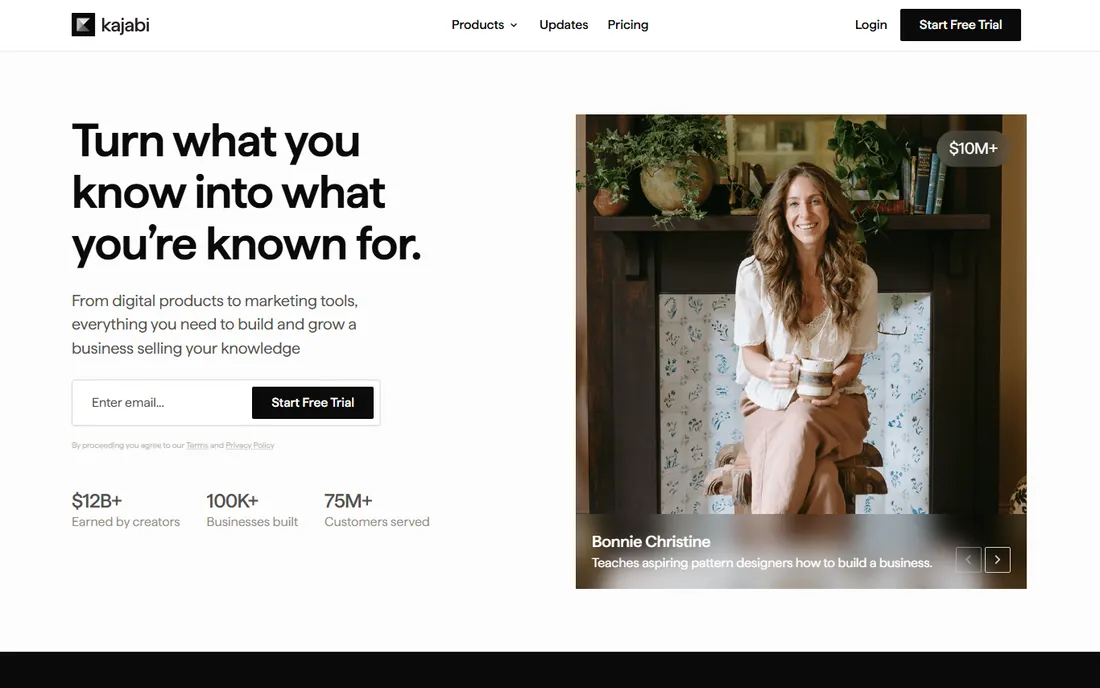
Kajabi is for creators who run their content as a business and want one login for all of it: online courses, coaching programs, memberships, email marketing, landing pages and a website. Per 2026 plan comparisons, the Basic plan runs $143 per month billed annually ($179 monthly), Growth is $199 per month billed annually, and Pro is $399 per month billed annually. There is no free plan, but a 14-day trial and a 30-day money-back guarantee soften the entry.
The pricing logic is the inverse of Patreon's: you pay a flat subscription and keep your revenue. Kajabi charges 0 percent platform transaction fee when you use Kajabi Payments (standard card processing of around 2.9 percent plus $0.30 still applies). That makes it cheaper than a 10 percent platform once you pass roughly $1,500 to $2,000 in monthly revenue.
What we like- Courses, email, website, funnels and community in one subscription
- 0 percent platform transaction fee on Kajabi Payments
- Polished templates
Watch out for- No free plan and the priciest entry point here
- Product and contact limits on the Basic plan
Starting priceSee website
Free planNo
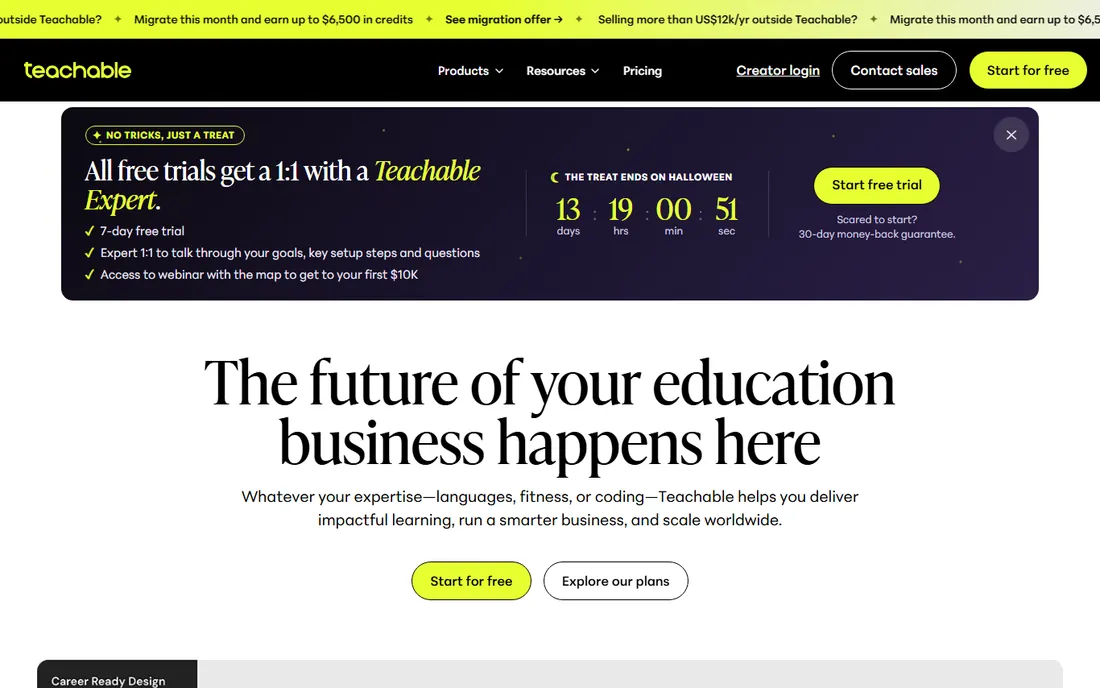
Teachable does one thing well: it lets anyone build and sell online courses, with video hosting, quizzes, certificates, student analytics and payment handling included. After its June 2025 restructure, per current comparisons, the plans are Starter at $29 per month ($39 monthly) with a 7.5 percent transaction fee, Builder at $69 per month ($89 monthly) with 0 percent, and Growth at $139 per month ($179 monthly) with 0 percent. The old free plan is gone.
That structure creates a clear upgrade path: start cheap and pay per sale, then move to Builder once your volume makes the flat fee cheaper than the percentage. Teachable is narrower than Kajabi, with less email and funnel depth, but it is also far cheaper to start on.
What we like- Purpose-built course builder with student management
- 0 percent transaction fee on higher plans
- Cheaper entry than Kajabi
Watch out for- No free plan since June 2025
- Entry plan carries a 7.5 percent transaction fee and tight product limits
#5
Kit
Best for: Email-first creators who sell digital products
Visit kit.com
Starting priceSee website
Free planYes
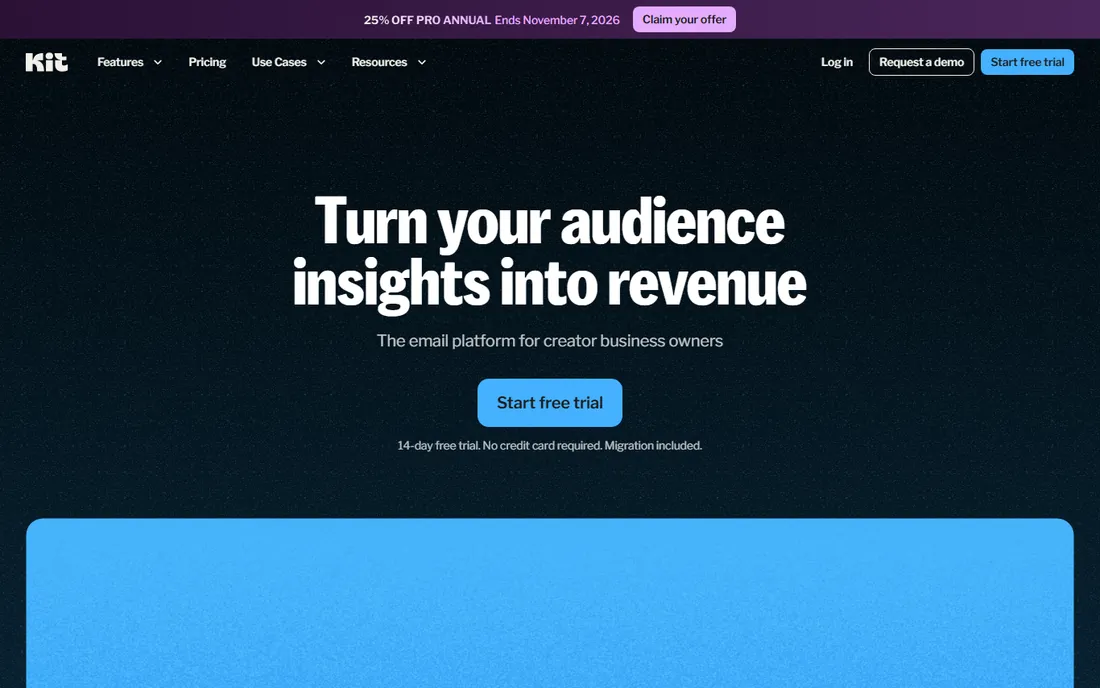
Kit, formerly ConvertKit, is the email platform built specifically for creators. The free plan covers the basics, and paid Creator plans add automations, sequences and deeper reporting as your list grows. Its philosophy is that the email list is the business, and everything else plugs into it.
For monetization, Kit's Commerce feature lets you sell digital products directly, charging 3.5 percent plus $0.30 per transaction according to Kit's Help Center as cited in current fee comparisons. That is meaningfully cheaper than the 10 percent platforms, though you handle your own tax compliance since Kit is not the merchant of record.
What we like- Free plan for starting out
- Email automation built for creators
- Commerce feature sells digital products from your emails
Watch out for- Transaction fee on Commerce sales
- Advanced automation and reporting sit on paid plans
Starting priceSee website
Free planYes
Ko-fi started as a virtual tip jar and grew into a full creator storefront: one link gives your audience tips, monthly memberships, a shop for digital and physical products, and commission requests. The free plan charges 0 percent on tips, which is unmatched for donation-style support, and 5 percent on shop and membership sales, per Ko-fi's pricing as cited in current comparisons.
The paid Gold plan, listed at $12 per month in current guides, drops the platform fee to 0 percent across the board. That makes Ko-fi one of the cheapest ways to run memberships at any scale: a flat $12 a month versus Patreon's 10 percent of everything. The trade-off is discovery, since Ko-fi has no built-in reader network, so it works best for creators who bring their own audience.
What we like- 0 percent platform fee on tips on the free plan
- One page for tips, memberships, shop and commissions
- Gold plan removes remaining fees cheaply
Watch out for- 5 percent fee on shop and membership sales on the free plan
- Smaller built-in audience than Patreon
#7
Ghost
Best for: Owning your publication and subscriber data
Visit ghost.org
Starting priceSee website
Free planYes
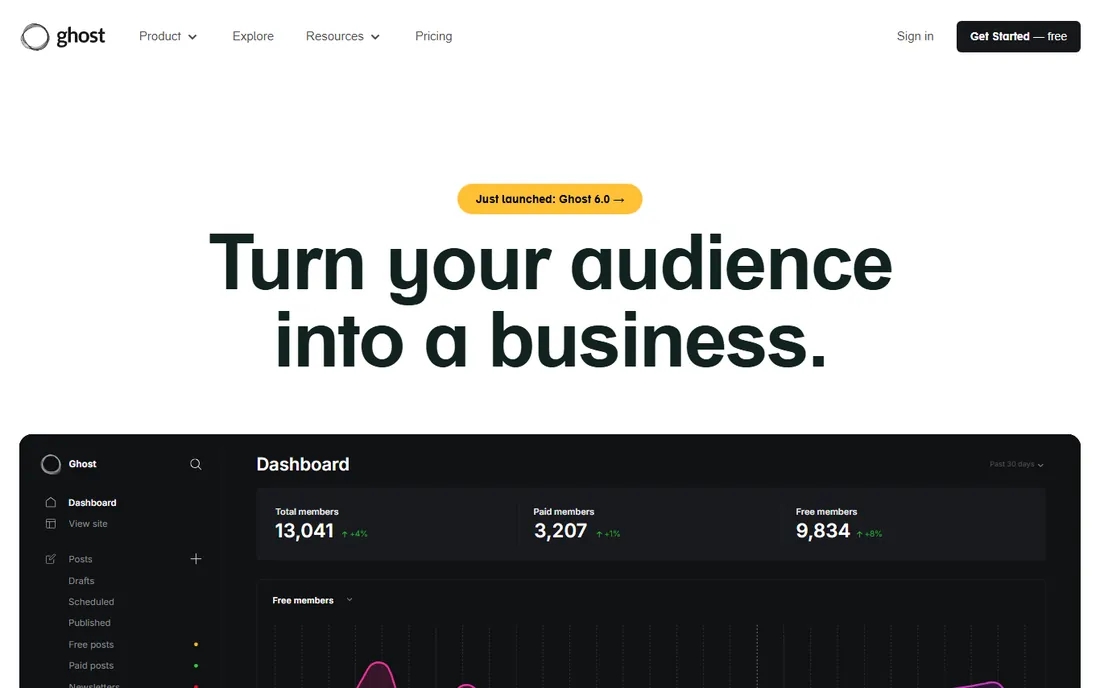
Ghost is the independence option: open-source publishing software for newsletters and membership publications that you can self-host at no software cost, or run on the hosted Ghost(Pro) service for a monthly fee. Either way, there is no platform revenue share. Stripe handles paid subscriptions directly, so your only percentage cost is standard card processing.
That ownership is the whole pitch. Your subscriber list, your content and your domain are yours, exportable and portable, with no algorithm between you and your readers. The cost is responsibility: self-hosting means updates, backups and troubleshooting are on you, and even Ghost(Pro) requires more setup than Substack's ten-minute launch.
What we like- Open-source software you can self-host free
- You own your content, list and data outright
- No revenue share on paid subscriptions
Watch out for- Self-hosting needs technical setup and maintenance
- The hosted Ghost(Pro) service is a monthly subscription
Starting priceSee website
Free planYes
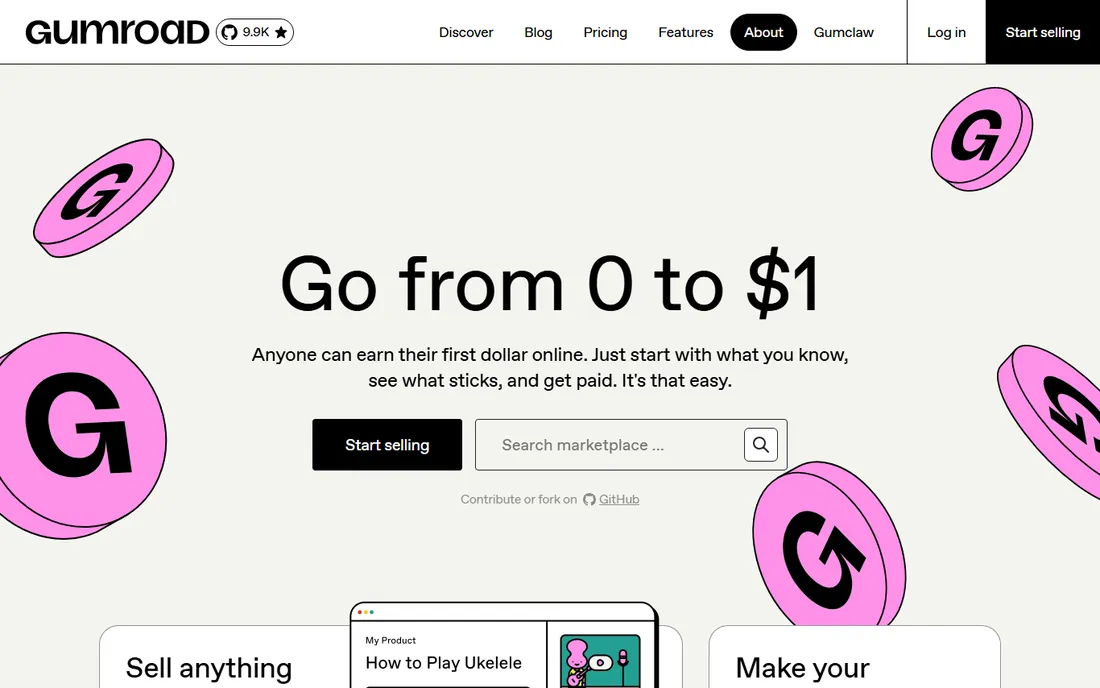
Gumroad is the simplest way to sell a digital product online: upload your ebook, course, template or music, share the link, and get paid. There is no subscription and no free-versus-paid tier decision. Per its pricing page as cited in current comparisons, Gumroad charges a flat 10 percent plus $0.50 per transaction, and it acts as the merchant of record, which means it handles global sales tax and VAT compliance for you.
That tax handling is a genuine advantage for solo creators selling internationally, and it partly justifies the fee. But 10 percent with no monthly option and no volume discount means high-earning sellers eventually pay more than they would on a flat-fee platform. Gumroad is perfect for launching your first product this afternoon and for creators with sporadic sales.
What we like- No monthly fee, you only pay when you sell
- Flat 10 percent plus $0.50 per transaction
- Handles global sales tax as merchant of record
Watch out for- 10 percent is steep at scale with no volume discount
- Storefront customization is limited
Starting priceSee website
Free planYes
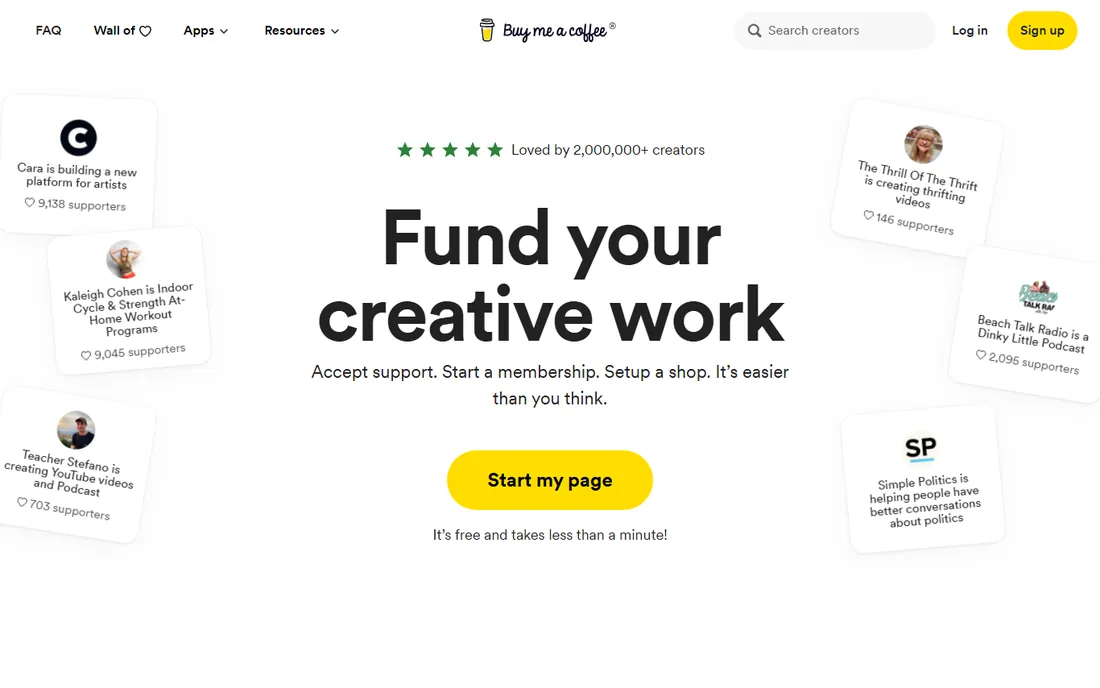
Buy Me a Coffee turns audience support into a small, friendly transaction: fans "buy you a coffee" for a few dollars, or join a monthly membership for ongoing support. Creators also get extras (exclusive content posts), a simple shop, and publishing tools on the same page. It is free to launch, and the platform takes a 5 percent fee on earnings plus payment processing.
The coffee metaphor does real work: asking for the price of a coffee feels lighter than asking for a subscription, which helps small creators convert casual followers. The limits show as you grow. Customization is thin, analytics are basic, and the 5 percent never drops, so larger creators often graduate to a flat-fee platform.
What we like- Free to start with no monthly fee
- One page for support, memberships, extras and shop
- Familiar tipping metaphor lowers the ask
Watch out for- 5 percent platform fee on all earnings
- Limited customization and fewer growth tools than larger platforms
Starting priceSee website
Free planNo
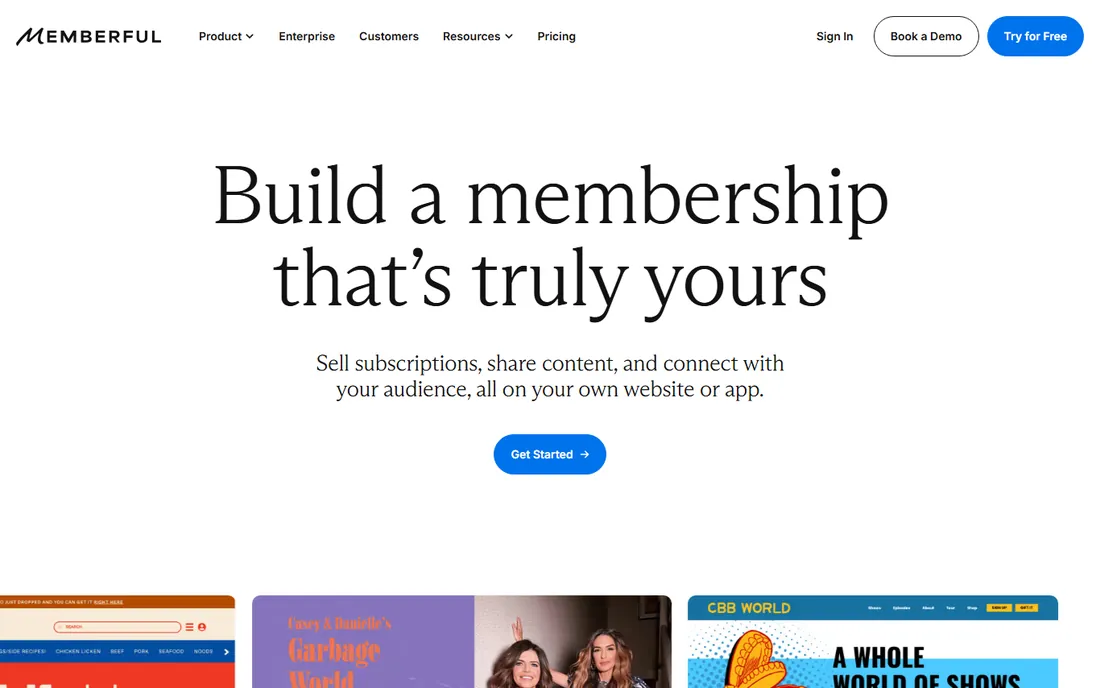
Memberful takes a different approach from Patreon: instead of hosting your membership on its platform, it bolts subscriptions onto your own website. You keep your domain, your design and your brand, and Memberful handles the member management, payments and access control behind the scenes. It integrates with WordPress and connects to Stripe for processing.
Memberful is owned by Patreon, which acquired it in 2023, and it continues to operate as a separate product for creators and publishers who already have a site. There is no free plan; pricing is subscription-based with a transaction fee on top, so it only makes sense once you have an audience to monetize.
What we like- Memberships integrate with your existing site and brand
- Owned by Patreon with ongoing development
- Works with WordPress and Stripe
Watch out for- No free plan
- You need your own website and audience first
How we chose
We compared these ten platforms on the economics that decide whether a creator keeps her money: platform fees, payment processing, free-tier limits, and whether pricing is a revenue share or a flat subscription. We also weighed ownership of the audience and content, the built-in discovery each platform offers, and how much technical setup each one demands. Fee figures come from the vendors' own published pricing and support pages and from current third-party fee comparisons. We did not claim hands-on testing. Because the browser service failed during this research pass, all starting prices are listed as See website and all homepage URLs are flagged for re-verification rather than asserted as address-bar confirmed.
If your income is tips and one-off support, Ko-fi and Buy Me a Coffee cost you nothing to try and take only a small cut when money moves. If your income is subscriptions, compare Patreon's and Substack's 10 percent against Ko-fi Gold's flat monthly fee or Ghost's zero revenue share.
Then consider scale. Percentage fees are cheap when you earn little and expensive when you earn a lot. Somewhere between $1,500 and $3,000 a month, flat subscriptions like Kajabi, Teachable's higher plans or Ghost(Pro) usually beat a 10 percent platform. Do the arithmetic at your current revenue and at double your revenue; the answer often changes.
Finally, decide how much you want to own. Substack and Patreon offer discovery and simplicity in exchange for a permanent cut. Ghost, Kit and Memberful give you ownership of your list and brand in exchange for more setup.
What the fees really add up to
A 10 percent platform fee is never just 10 percent. Payment processing of around 2.9 percent plus $0.30 per transaction applies on top, and on small payments the flat $0.30 bites hardest: a $3 tip can lose more than 20 percent to combined fees.
Watch for the fees that scale against you. A platform that takes 10 percent forever gets more expensive every year you grow, while a flat subscription gets cheaper per dollar earned. Also check who is the merchant of record: Gumroad handles your global sales tax, while Kit and Ghost leave tax compliance to you, which is a hidden cost of the cheaper headline fee.
Frequently asked questions
Which creator platform takes the smallest cut?
Ko-fi takes 0 percent on tips on its free plan, and its Gold plan removes platform fees across the board for a flat monthly fee. Ghost takes no revenue share at all if you self-host or use Ghost(Pro); you only pay Stripe processing.
Is Patreon or Substack better for a new creator?
It depends on what you make. Substack is better if your core output is writing and you want the simplest path to paid subscribers. Patreon is better if you produce varied content like video, audio or art and want tiered memberships with community features.
Can I start monetizing with no money upfront?
Yes. Patreon, Substack, Kit, Ko-fi, Gumroad and Buy Me a Coffee all let you launch free and only take a cut when you earn. Ghost can be self-hosted free if you have your own server. Kajabi and Teachable sell monthly subscriptions, and Memberful needs a paid plan from the start.
Should I use one platform or several?
Most working creators use more than one. A common setup is an owned home base, like Ghost or Kit, for the email list and core revenue, plus a discovery platform like Substack or a storefront like Gumroad for reach and one-off sales.
What happens to my audience if I leave a platform?
That is the ownership question, and the answers vary widely. Ghost and Kit let you export your subscriber list freely since you own it. Substack allows list exports too. Before committing, check the export policy: your email list is the one asset no platform should hold hostage.
Do I need a website before choosing a creator platform?
Not necessarily. Patreon, Substack, Ko-fi, Gumroad and Buy Me a Coffee all host your public page, so you can start without any site at all. Memberful is the exception: it adds memberships to a website you already run. Ghost and Kajabi can serve as your website themselves.
Sources we checked (17)
- https://www.patreon.com
- https://substack.com
- https://www.kajabi.com
- https://www.teachable.com
- https://kit.com
- https://ko-fi.com
- https://ghost.org
- https://gumroad.com
- https://www.buymeacoffee.com
- https://memberful.com
- https://support.substack.com/hc/en-us/articles/360037607131-How-much-does-Substack-cost
- https://www.gemlist.io/blog/how-much-does-patreon-take
- https://paprika.bot/blog/how-much-does-patreon-take/
- https://www.learningrevolution.net/kajabi-vs-teachable/
- https://www.clickfunnels.com/blog/kajabi-pricing/
- https://kourses.com/kajabi-vs-teachable/
- https://ceotudent.com/en/digital-product-pricing-ai-era
Is your product missing or out of date?
We review this list regularly. Vendors can request a listing, send updated pricing or ask about featured placement.

Shihab Mia · Founder, Rankite
Shihab has spent more than a decade helping SaaS and e-commerce brands grow through search. He writes Rankite's software buying guides from pricing pages, documentation and public user reviews. More about Shihab.