How we make this list: we compare pricing pages, product documentation and public user reviews. Rankite is independent; if a vendor ever pays for a featured spot, that listing is clearly labeled Partner.
Key takeaways
- Shopify is the safest all-round pick for a standalone online store, with the best app ecosystem and checkout.
- WooCommerce gives you the most control for the least software cost, if you can handle WordPress hosting.
- BigCommerce suits growing brands that need built-in B2B and multi-storefront features without apps.
- Wix and Squarespace are the easy starts for small catalogs where the website matters as much as the store.
- Etsy and Gumroad skip the store entirely: sell where the buyers already are, and pay per sale instead of monthly.
Quick comparison
| Tool | Best for | Starting price | Free plan |
|---|
 Shopify Shopify | the all-round online store | See website | Free trial |
 WooCommerce WooCommerce | maximum control on WordPress | Free (open source plugin) | Yes |
 BigCommerce BigCommerce | growing brands and B2B | See website | Free trial |
 Wix Wix | small stores with beautiful sites | See website | Yes (free site plan) |
 Squarespace Squarespace | design-led stores and creatives | $19/month | Free trial (14 days) |
 Adobe Commerce Adobe Commerce | enterprise commerce at scale | See website | See website |
 Etsy Etsy | handmade and vintage sellers | See website | No monthly fee (fees per sale) |
 Ecwid Ecwid | adding a store to an existing site | See website | See website |
 Gumroad Gumroad | digital products and creators | See website | No monthly fee (fees per sale) |
Is your product missing or out of date?
We review this list regularly. Vendors can request a listing, send updated pricing or ask about featured placement.
Starting priceSee website
Free planFree trial

Shopify earned its position by removing friction. You can launch a credible store in a weekend, the checkout converts better than anything else in its class, and the app store fills nearly every gap from subscriptions to wholesale. It scales from a first product to enterprise without forcing a replatform.
The cost structure deserves a hard look. You pay the monthly plan, and unless you use Shopify Payments, transaction fees stack on top. Apps that feel essential often carry their own subscriptions. For most sellers the math still works, but budget the real monthly total, not just the plan price.
What we like- Best-converting checkout in the business
- 21,000+ apps for any need
- Handles flash-sale traffic without breaking
Watch out for- Monthly cost plus transaction fees add up
- Deep customization needs Liquid skills or apps
Starting priceFree (open source plugin)
Free planYes
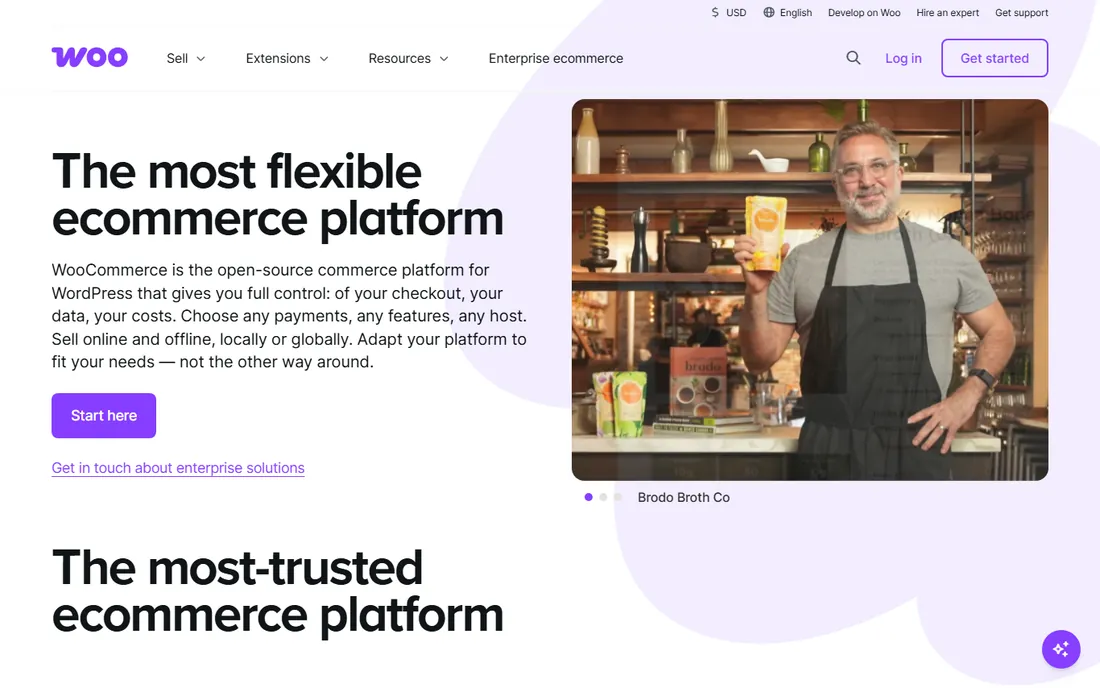
WooCommerce turns WordPress into a store, and it powers an enormous share of the web's ecommerce sites. The plugin is free, you own your data outright, and you can choose any host, any payment provider and any design. For sellers who already run on WordPress, it is the natural and cheapest path to selling.
Freedom has a maintenance bill. You are responsible for hosting quality, updates, backups and security, and the extensions that replicate Shopify's built-ins each carry their own price. Total cost of ownership can surprise people who expected "free" to mean free. If you are comfortable running WordPress, nothing beats the control per dollar.
What we like- The plugin itself is free and open source
- Total control over data, checkout and costs
- Huge extension marketplace
Watch out for- You manage hosting, security and updates
- Costs scatter across hosting and extensions
Starting priceSee website
Free planFree trial

BigCommerce positions itself as the platform you grow into without outgrowing. More features come built in than on Shopify, which means fewer paid apps, and the B2B edition handles quotes, custom pricing and company accounts that consumer platforms bolt on awkwardly. The free trial needs no credit card and gives you a real store to build in.
The tradeoff is ecosystem size. Fewer themes, fewer apps and fewer developers know it than Shopify. Plan tiers are also tied to annual online sales thresholds, so a breakout year can push you into a higher tier. For mid-market brands and B2B sellers, the built-in depth is worth it.
What we like- Strong built-in features reduce app dependence
- Good B2B and multi-storefront support
- No transaction fees on many payment providers
Watch out for- Theme and design flexibility trails Shopify
- Pricing tiers gate annual sales volume
Starting priceSee website
Free planYes (free site plan)
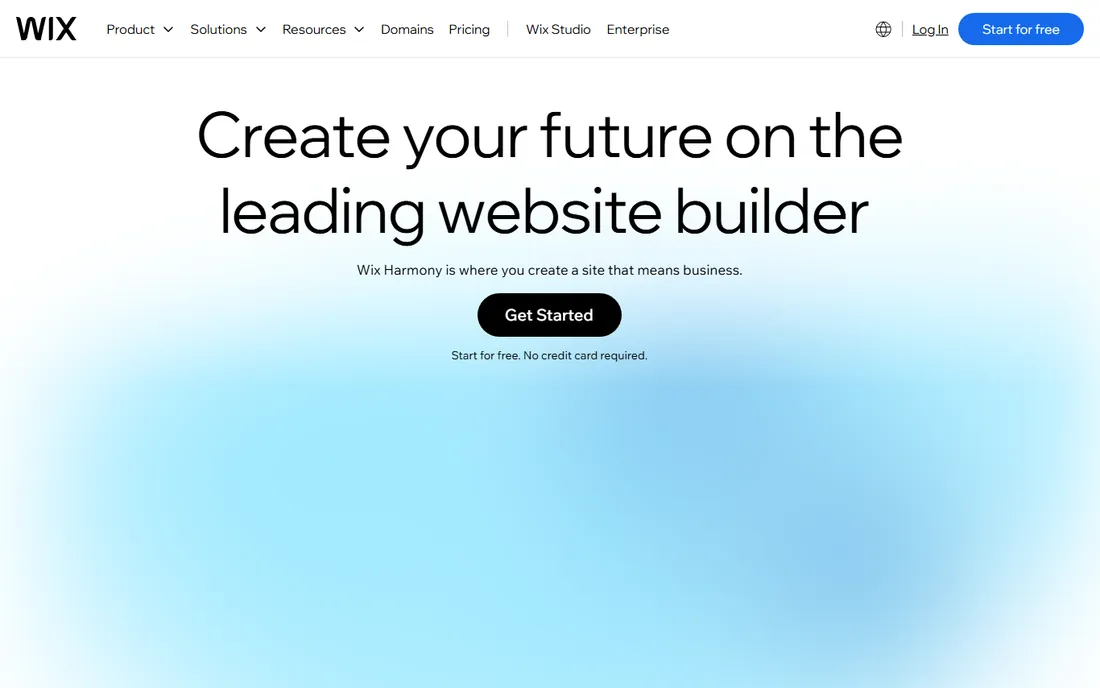
Wix wins on ease. The drag-and-drop builder, AI site generation and 2,000+ templates get a good-looking site live fast, and the eCommerce tools are built in rather than bolted on. You can start on the free plan and only pay when you are ready to accept payments.
It is a website builder that sells, not a commerce platform that designs. Product variants, inventory workflows and multi-channel selling are thinner than on Shopify or BigCommerce. For a small catalog where brand and design carry the sale, Wix is plenty. For a serious retail operation, it will feel small within a year.
What we like- Easiest path from idea to live site
- Free plan to start building
- ECommerce needs no plugins
Watch out for- Selling requires a paid plan
- Less suited to large catalogs or complex operations
Starting price$19/month
Free planFree trial (14 days)

Squarespace is where designers and creatives sell. The templates are the best in the business without hiring anyone, and the commerce features cover products, subscriptions, digital downloads and gift cards with clean checkout. Pricing is transparent: plans start at $19 a month after a 14-day trial.
The limits show as you scale. Inventory management, shipping rules and third-party integrations are simpler than Shopify's, and high-volume sellers will feel the ceiling. If your products are visual and your brand is the differentiator, Squarespace makes you look expensive. If your operation is complex, look elsewhere.
What we like- The best-looking templates out of the box
- Straightforward selling tools
- Transparent pricing from $19/month
Watch out for- Ecommerce depth is basic
- Fewer integrations than the commerce-first platforms
Starting priceSee website
Free planSee website
Adobe Commerce, formerly Magento, is the heavyweight option. It runs multi-brand, multi-region operations with millions of SKUs, complex B2B workflows and deep personalization, now with AI-driven merchandising and agentic commerce features. If your requirements include custom pricing engines, intricate promotions or global inventory, this is the platform class built for it.
Everything about it is enterprise: quote-based pricing, implementation partners, ongoing developer needs. There is also the free Magento Open Source edition for the self-hosted route, but that is a project, not a product. Choose Adobe Commerce when the business genuinely needs its depth; anything smaller should not pay the complexity tax.
What we like- Built for massive catalogs and complex B2B
- Deep Adobe ecosystem integration
- Handles huge traffic spikes
Watch out for- Enterprise pricing and implementation
- Needs experienced developers
Starting priceSee website
Free planNo monthly fee (fees per sale)
Etsy is a marketplace, not a store builder, and that is the point. Millions of buyers arrive looking for handmade, vintage and unique goods, so you skip the hardest part of ecommerce: getting traffic. Opening a shop costs nothing upfront; you pay listing and transaction fees when you sell.
The tradeoff is independence. Your shop lives inside Etsy's design, your margins carry their fees, and algorithm changes can move your revenue overnight. Serious sellers often run Etsy for discovery alongside their own Shopify or WooCommerce store. For starting out with handmade products, nothing gets you selling faster.
What we like- Built-in audience of buyers looking for unique goods
- No monthly fee to open a shop
- Simple to start
Watch out for- Fees on every sale add up
- You compete with millions of sellers
- Limited brand control
Starting priceSee website
Free planSee website
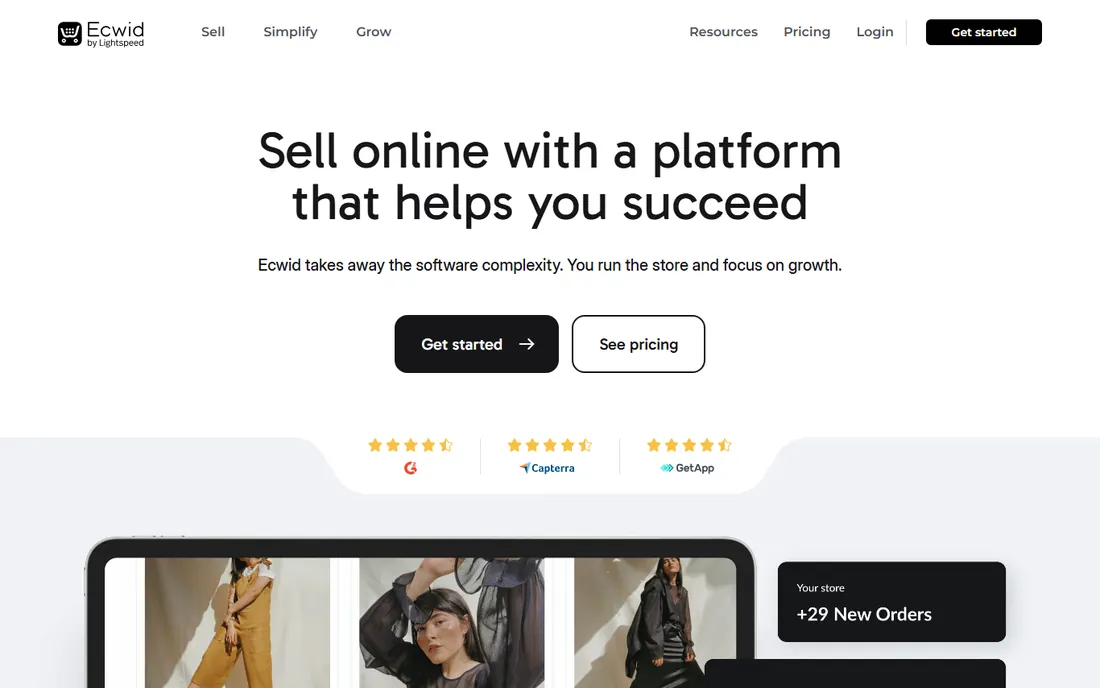
Ecwid takes the opposite approach from the store builders: instead of a new site, it adds a store to the site you already have. Embed the shop into WordPress, a static site or social pages, manage everything from one dashboard, and sell across channels. For businesses with an established web presence, it is the lowest-friction way to start selling.
As a standalone storefront it is thinner than Shopify or BigCommerce, and the design flexibility has limits. Check the current plan details on ecwid.com, since the free tier covers only a small catalog. If you already have traffic and just need a cart, Ecwid is the pragmatic pick.
What we like- Embeds into any existing website
- Works with WordPress, social and marketplaces
- Quick to launch
Watch out for- Less of a full storefront on its own
- Advanced features need higher tiers
Starting priceSee website
Free planNo monthly fee (fees per sale)
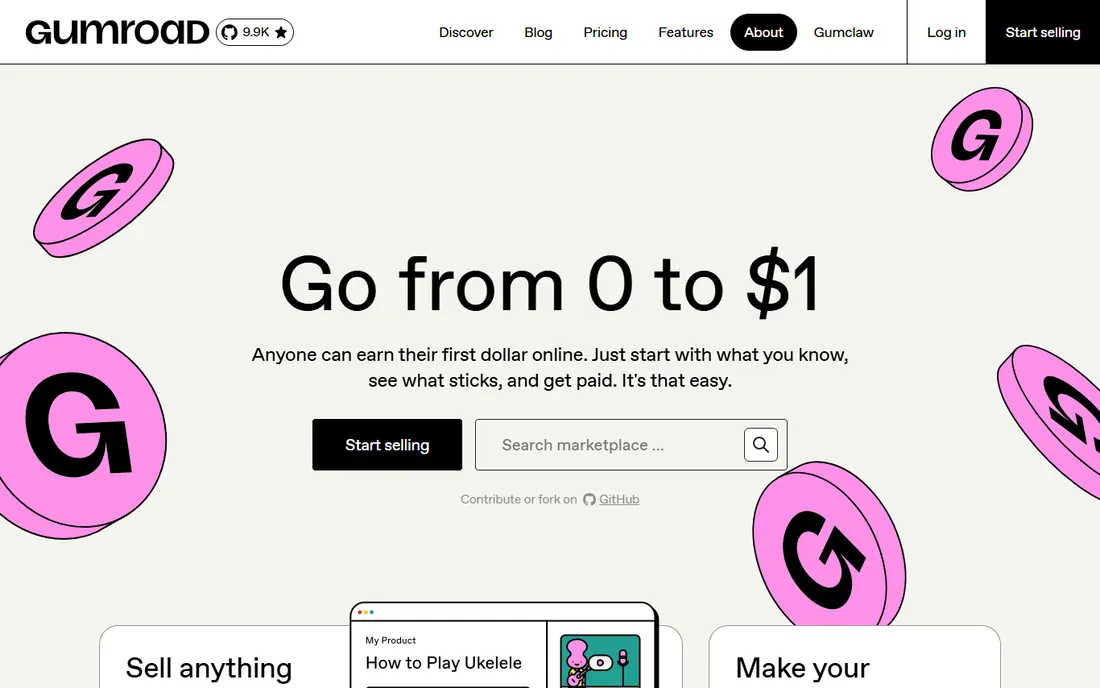
Gumroad is built for creators selling digital goods: ebooks, courses, presets, software, memberships. Upload a file, set a price, share the link, and Gumroad handles payments, delivery and even tax headaches. There is no monthly fee; the platform takes a cut of each sale.
That cut is the whole business model, so high-volume sellers eventually do the math and move to their own checkout. Customization is minimal and physical products are an afterthought. But for validating an idea or selling to an audience you already have, nothing is faster from zero to first sale.
What we like- Start selling digital products in minutes
- No monthly fee
- Handles payments, delivery and VAT
Watch out for- Percentage fee on every sale
- Limited customization
- Not for physical products at scale
How we compared them
We chose the platforms sellers actually shortlist: the hosted leaders, the open source option, the design-led builders, the enterprise platform and the marketplaces. For each one we opened the vendor site to confirm the product and current positioning, which verified details like Squarespace's $19 starting price and 14-day trial from its own FAQ. We weighed ease of launch, total cost structure, design quality, scalability and who the platform truly serves. We did not open test stores; this is a research comparison.
Physical products in volume point to Shopify, BigCommerce or WooCommerce, depending on your appetite for control versus convenience. Digital products point to Gumroad for speed or Shopify with a digital-delivery app for scale. Handmade and vintage goods should start on Etsy, where the buyers already browse.
Services, courses and memberships fit Wix or Squarespace, where the site experience matters as much as the transaction. Enterprise catalogs with complex B2B requirements belong on Adobe Commerce. And if you already have a website with traffic, Ecwid lets you add selling without rebuilding anything.
The real cost of selling online
The sticker price is never the full bill. Add payment processing fees, which run around 3% on most platforms, plus any platform transaction fees on top. Then add the apps and extensions that turn a basic store into your store: subscriptions, reviews, loyalty, advanced shipping. A $39 plan easily becomes $150 a month in practice.
Marketplaces flip the math: no monthly fee, but 5-10% or more of every sale goes to fees. At low volume that is cheaper than a hosted plan; at high volume it becomes the most expensive option. Run your actual numbers at your expected volume before choosing, and recheck yearly. The cheapest platform at $1,000 a month in sales is rarely the cheapest at $100,000.
Frequently asked questions
What is the easiest platform to start selling on?
Gumroad for digital products and Etsy for handmade goods get you selling the same day with no monthly fee. For your own store, Wix and Squarespace are the simplest builders; Shopify takes slightly longer but scales further.
Is Shopify or WooCommerce better?
Shopify is better if you want selling handled for you: hosting, security and updates included. WooCommerce is better if you want full control and already run WordPress. Shopify costs more monthly; WooCommerce costs more of your time.
Can I sell on Etsy and my own website at the same time?
Yes, and many sellers do. Etsy brings discovery traffic while your own store keeps the full margin and the customer relationship. Inventory tools can sync stock across both.
Do I need a paid plan to sell on Wix or Squarespace?
Yes. Both let you build for free, but accepting payments requires a paid plan. Squarespace plans start at $19 a month after a 14-day trial.
What fees does Gumroad charge?
Gumroad takes a percentage of each sale instead of charging a monthly fee. Check gumroad.com for the current rate, since fee structures change.
When does Adobe Commerce make sense over Shopify?
When your catalog, B2B workflows or multi-region operations exceed what hosted platforms handle cleanly: millions of SKUs, custom pricing engines, complex integrations. Below that threshold, Shopify or BigCommerce deliver more value per dollar.
Sources we checked (9)
- https://www.shopify.com
- https://woocommerce.com
- https://www.bigcommerce.com
- https://www.wix.com
- https://squarespace.com
- https://business.adobe.com/products/commerce.html
- https://www.etsy.com
- https://www.ecwid.com
- https://gumroad.com
Is your product missing or out of date?
We review this list regularly. Vendors can request a listing, send updated pricing or ask about featured placement.

Shihab Mia · Founder, Rankite
Shihab has spent more than a decade helping SaaS and e-commerce brands grow through search. He writes Rankite's software buying guides from pricing pages, documentation and public user reviews. More about Shihab.