How we make this list: we compare pricing pages, product documentation and public user reviews. Rankite is independent; if a vendor ever pays for a featured spot, that listing is clearly labeled Partner.
Key takeaways
- Printify's network lists over 1,300 products from around 141 print providers (DoDropshipping, 2026), the broadest catalog of any fulfillment service here.
- Marketplaces (Redbubble, Spring, Merch by Amazon) are free and bring their own traffic, but you accept lower margins and little brand control.
- Fulfillment services (Printful, Printify, Gelato, CustomCat) power your own store with better margins; Printful leads on branding, CustomCat on US speed.
- Creators with an existing audience should look at Fourthwall and Bonfire, which combine storefronts, memberships, and campaign tools.
- Almost every platform here is free to start; you pay per sale or upgrade for discounted base costs.
Quick comparison
| Tool | Best for | Starting price | Free plan |
|---|
 Printful Printful | Branded fulfillment | Free (Growth plan $24.99/month) | Yes |
 Printify Printify | Widest product catalog | Free (Premium $29/month) | Yes |
 Spring Spring | Creator storefronts | Free | Yes |
 Redbubble Redbubble | Marketplace discovery | Free | Yes |
 Spreadshop Spreadshop | Free custom merch shops | Free | Yes |
 Bonfire Bonfire | Campaign-based fundraising merch | Free | Yes |
 Merch by Amazon Merch by Amazon | Amazon's built-in audience | Free | Yes (approval needed) |
 Fourthwall Fourthwall | Creator businesses | Free | Yes |
 Gelato Gelato | Global and sustainable fulfillment | Free (Gelato+ $29.99/month) | Yes |
 CustomCat CustomCat | Fast US apparel fulfillment | Free (Pro $30/month) | Yes |
Is your product missing or out of date?
We review this list regularly. Vendors can request a listing, send updated pricing or ask about featured placement.
A market with 1,300 ways to print a t-shirt
Here is a number that frames the whole decision: Printify's network lists over 1,300 products from around 141 print providers, according to DoDropshipping's 2026 supplier roundup. The bottleneck in selling merch was never the printing. It is choosing the right business model: sell on a marketplace that brings traffic, plug a fulfillment service into your own store, or run campaigns to an audience you already have.
The ten platforms below cover all three models. Prices come from vendor and vendor-corroborated sources as of October 2026. Nearly all are free to start, so the real comparison is margins, control, and who handles the customer.
Starting priceFree (Growth plan $24.99/month)
Free planYes
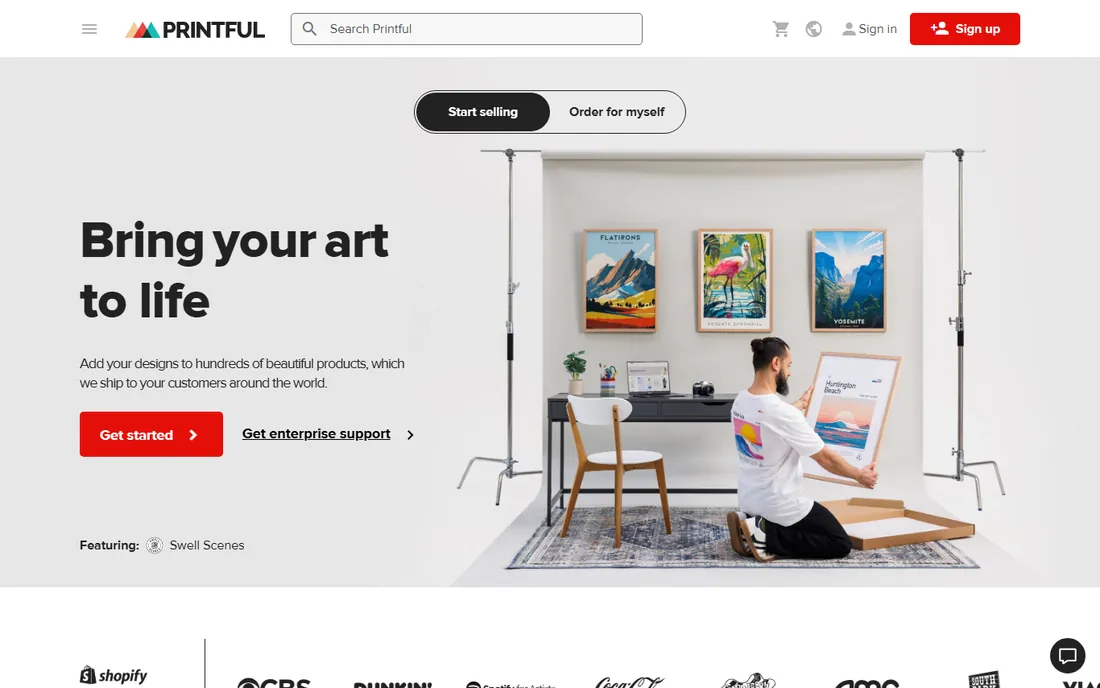
Printful owns its production facilities, and that is the whole pitch: consistent quality and the best white-label branding in the business, including custom inside and outside labels, packing inserts, and branded packaging. If the unboxing experience matters to your brand, nobody else here matches it.
The tradeoff is base cost, roughly $1 to $2 more per unit than the cheapest network options, which squeezes margins at low price points. The platform is free to start; the Growth plan at $24.99 a month (free above $12K in annual sales) cuts base costs by up to 33%. Printful connects to 20+ sales channels including Shopify, Etsy, and Amazon. Choose it when brand presentation beats raw margin.
What we like- Own factories mean consistent quality
- Best branding options (labels, inserts, packaging)
- 900+ products
Watch out for- Higher base costs than network competitors
- Free plan has fewer perks
Starting priceFree (Premium $29/month)
Free planYes
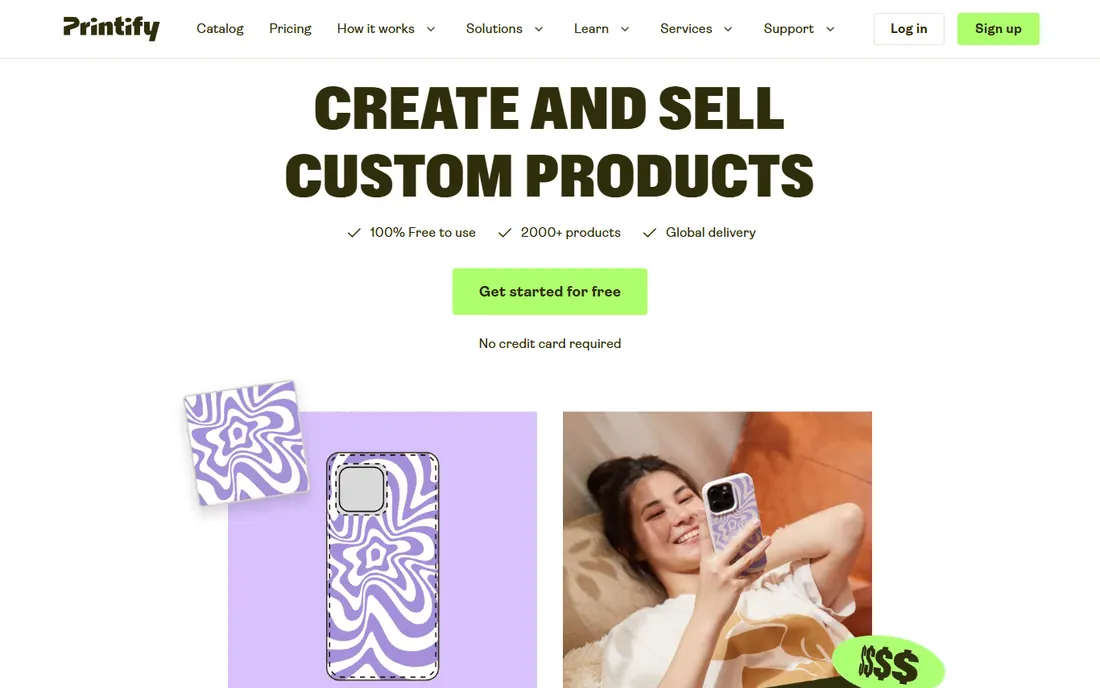
Printify is a marketplace of print providers rather than a printer itself, which is why the catalog dwarfs everyone else: over 1,300 products from around 141 providers. You pick the provider per product, balancing cost, location, and speed, which is how sellers squeeze the best margins in the business.
The honest catch is inconsistency. Quality and shipping speed differ between providers, so testing samples from each provider you use is mandatory, not optional. The free plan covers getting started; Premium at around $29 a month cuts base costs by up to 20%. Integrations span Shopify, Etsy, TikTok Shop, Amazon, eBay, Walmart, and more. Choose Printify when catalog breadth and margins matter more than hands-off simplicity.
What we like- Largest catalog (1,300+ products)
- Provider marketplace keeps base costs low
- Many sales-channel integrations
Watch out for- Quality varies by provider
- You must vet and test providers yourself
Starting priceFree
Free planYes
Spring (formerly Teespring) is built for creators who already have an audience. You design products, share your storefront link, and Spring handles printing, shipping, and customer support. There are no upfront costs and no monthly fees; you earn a margin on every sale.
What you give up is control. Product selection and branding options are narrower than a fulfillment service, and Spring does not bring you buyers the way a marketplace does. Your earnings track your audience size directly. For YouTubers, streamers, and podcasters who want merch without running a store, it is the simplest path from design to payout.
What we like- Free with no upfront costs
- Built for creators with audiences
- Handles production and support
Watch out for- Limited brand control
- You bring the traffic
Starting priceFree
Free planYes
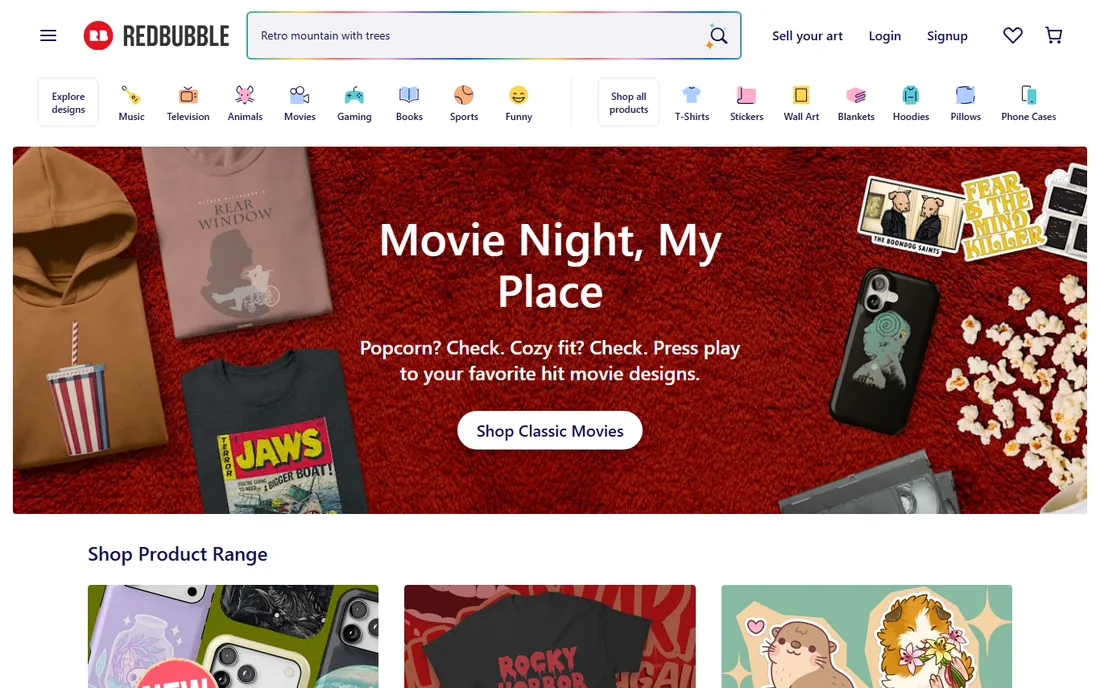
Redbubble is the marketplace end of the spectrum. Upload your art, set your markup above Redbubble's base prices, and sell to people already browsing the site. You never touch inventory, shipping, or customer service, and discovery happens without you buying ads.
The price of that convenience is margin and identity. Artist margins are thin, your work sits next to thousands of competitors, and buyers remember Redbubble, not you. It is a volume game that rewards artists with large portfolios and designs that match search demand. Treat it as a passive income channel, not a brand-building platform.
What we like- Built-in marketplace traffic
- Zero store to manage
- Huge existing buyer base
Watch out for- Thin artist margins
- No brand control
- Crowded categories
Starting priceFree
Free planYes
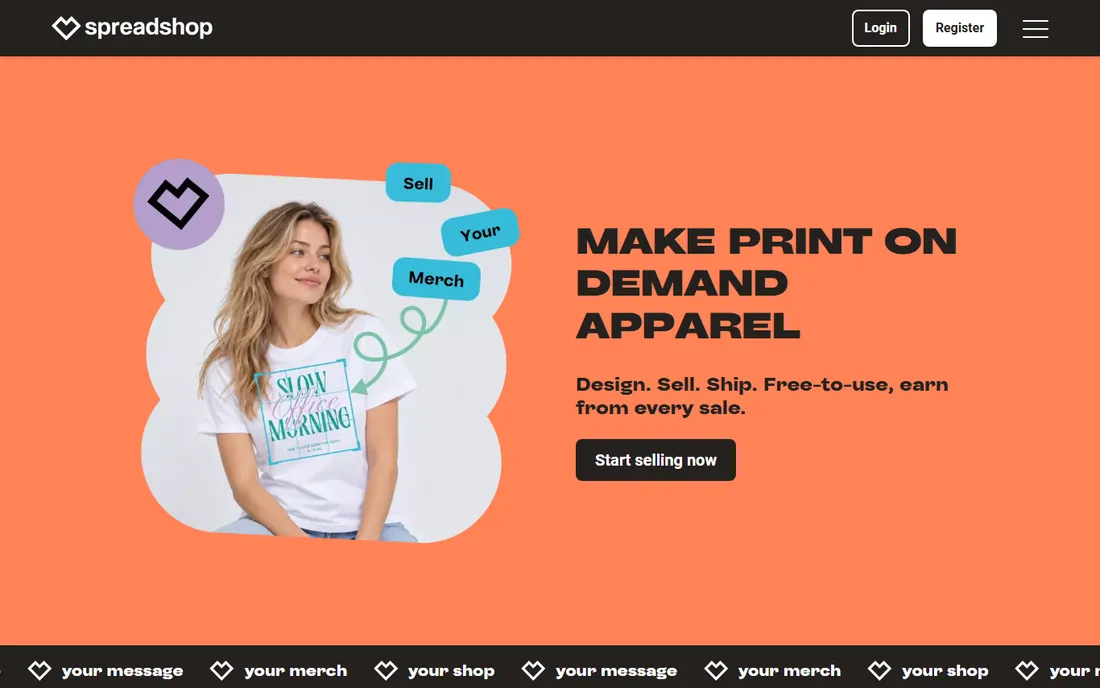
Spreadshop (from the Spreadshirt group) gives you a free online shop with your own branding, backed by their production in the US and Europe. You set your designs and retail prices, they print and ship. There are no subscription fees, and the shop actually looks like yours rather than a marketplace profile.
The limitation is traffic: Spreadshop does not have Redbubble's or Amazon's built-in audience, so you bring the buyers. The design tools are serviceable but basic compared to dedicated editors. For clubs, companies, and creators who want a branded shop without monthly costs or technical setup, it is a solid middle ground between marketplace and full store.
What we like- Free custom shop with your branding
- European and US production
- No monthly fees
Watch out for- Smaller audience than big marketplaces
- Design tools are basic
Starting priceFree
Free planYes
Bonfire runs on campaigns: you design a shirt, set a sales goal and deadline, and buyers order during the campaign window. Nothing prints until the campaign funds, so there is zero inventory risk. It is the platform of choice for fundraisers, nonprofits, school groups, and causes, where the story behind the shirt is the selling point.
The campaign model is also the limitation. Time-limited drops do not build a permanent store, and the ongoing storefront features are thinner than dedicated creator platforms. Payouts go to you or your cause after the campaign ends. If you are raising money or testing a design with your community, Bonfire's structure fits perfectly. For evergreen catalog sales, look elsewhere.
What we like- Campaign model with no inventory risk
- Built for fundraisers and causes
- Free to launch
Watch out for- Campaigns are time-limited
- Limited ongoing storefront features
Starting priceFree
Free planYes (approval needed)
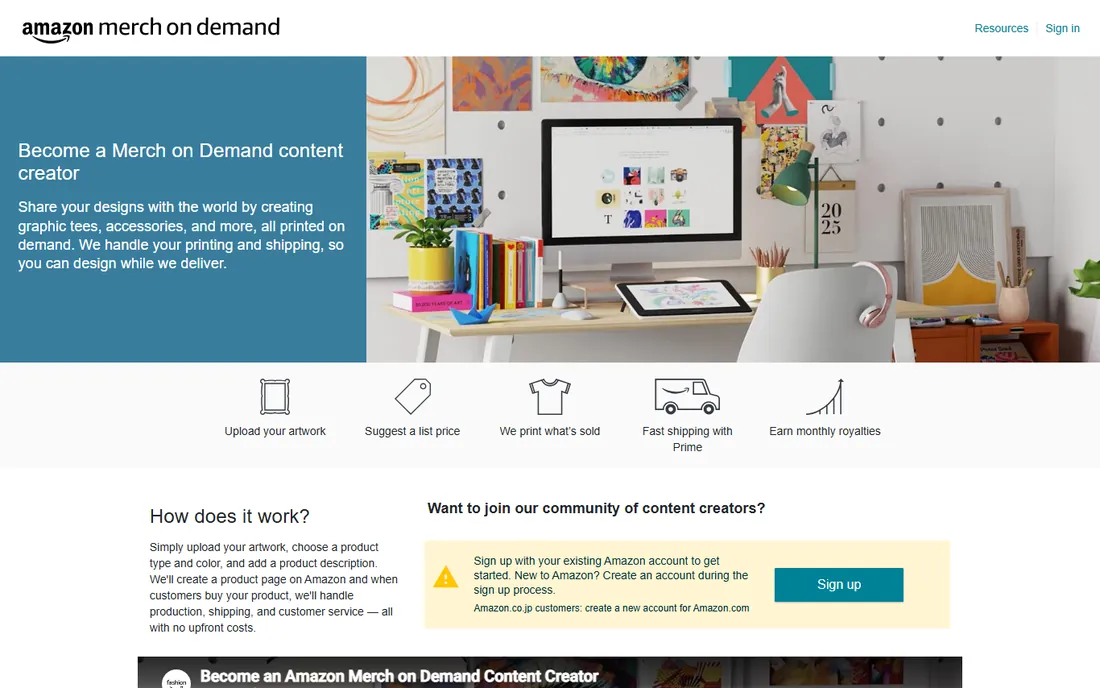
Merch by Amazon puts your designs in front of the largest ecommerce audience on earth. You upload artwork, set a price above Amazon's base cost, and Amazon handles printing, Prime shipping, and customer service. For designers, the appeal is obvious: traffic you could never buy yourself.
The catches are real. You need approval to join, and new accounts start with tiered upload limits that grow with sales. Royalties are a percentage set by Amazon's structure, which is less generous than running your own store. Product options are narrower than the fulfillment services. But for designers who can produce volume and rank in Amazon search, the traffic advantage is unmatched.
What we like- Access to Amazon's massive buyer base
- Amazon handles everything
- Trusted checkout
Watch out for- Approval required to join
- Royalty structure favors Amazon
- Limited product range
Starting priceFree
Free planYes
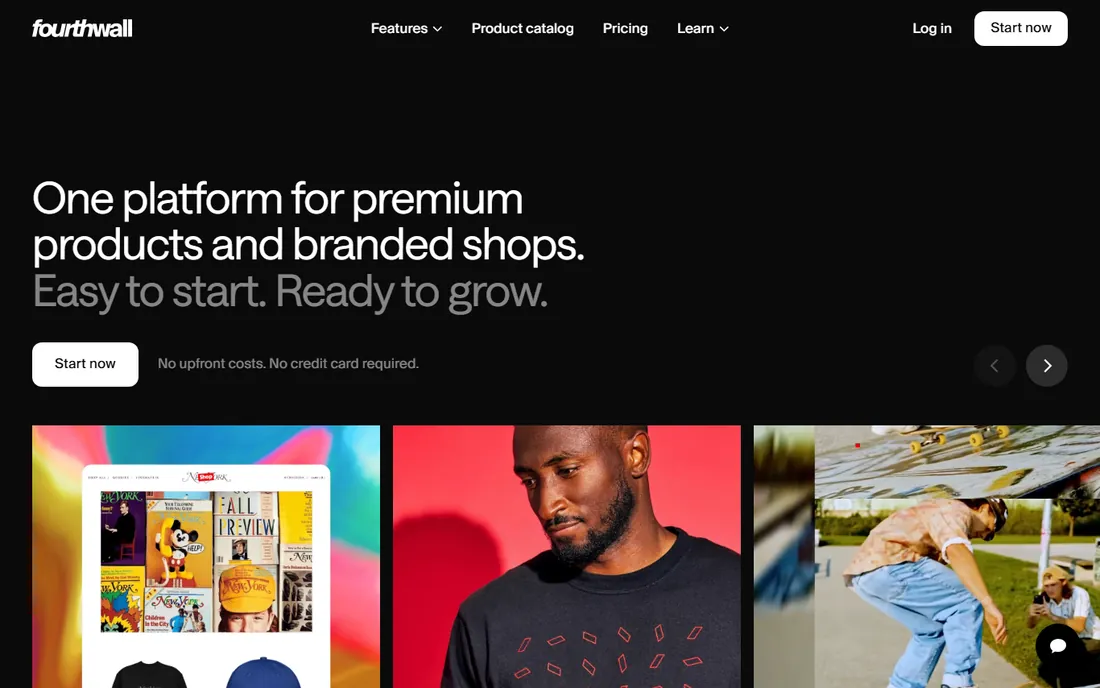
Fourthwall is the modern creator-commerce platform: a storefront for merch plus memberships, digital products, and community tools in one account. It is built for YouTubers, streamers, and podcasters who want more than a t-shirt link, letting fans support them through multiple revenue streams without juggling platforms.
Like Spring, it assumes you bring the audience; there is no marketplace discovery. The platform is free with revenue-share style pricing, so your costs scale with sales. It is newer than the incumbents, which means a smaller track record but also a more current feature set. If you are building a creator business rather than just selling shirts, Fourthwall's breadth is the draw.
What we like- Storefront plus memberships and digital products
- Built for creators
- No monthly fee
Watch out for- Best for creators with existing audiences
- Newer than incumbents
Starting priceFree (Gelato+ $29.99/month)
Free planYes
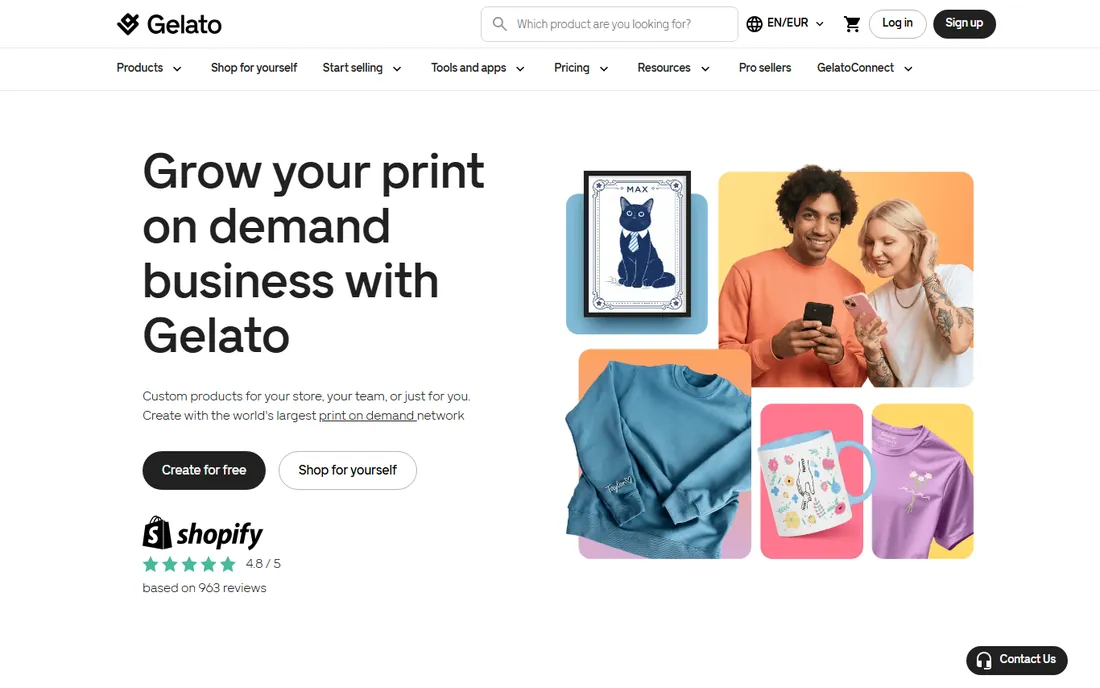
Gelato's differentiator is geography. Instead of shipping from one country, it routes orders to local production partners in over 30 countries, which cuts shipping times and costs for international sellers and supports a credible sustainability story around local production. For sellers with global audiences, that is a genuine advantage.
The free plan covers the basics; Gelato+ at $29.99 a month improves pricing and features. The catalog of 500+ products is smaller than Printify's, and quality depends on the partner network, though Gelato vets partners more tightly than an open marketplace. Choose Gelato when your buyers are spread across continents and shipping cost is eating your margins.
What we like- Local production in 30+ countries
- Lower shipping costs and times globally
- Sustainability angle
Watch out for- Catalog smaller than Printify
- Paid tier needed for best rates
Starting priceFree (Pro $30/month)
Free planYes
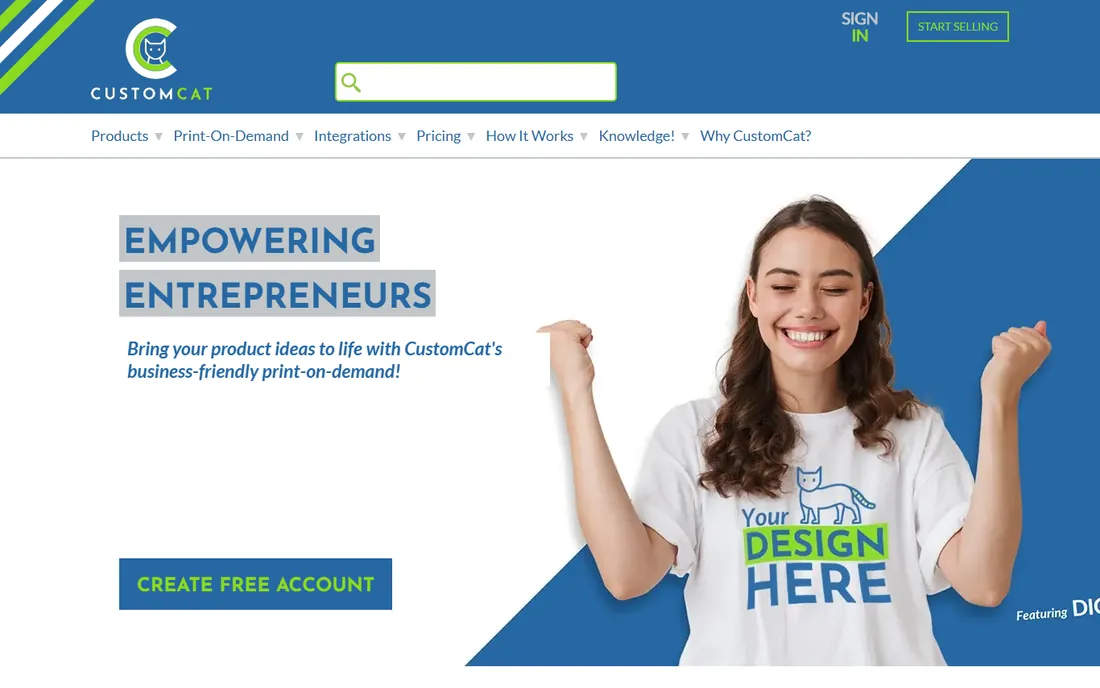
CustomCat prints everything in its own Detroit facility, which buys you two things: consistent quality with no provider roulette, and fast US fulfillment, typically 2-3 business days. The Lite plan is free; Pro at $30 a month (or $300 a year) cuts product costs by up to 40%, which pays for itself quickly at volume. Embroidery and specialty decoration methods round out an apparel-heavy catalog.
The limitations are geographic and brand-related. International orders ship from the US, which is slow and expensive, and there is no private-label branding, so manufacturer tags stay in. The 600-ish product catalog is apparel-focused. For US sellers whose business is shirts, hoodies, and embroidery, CustomCat's speed and consistency are hard to beat.
What we like- In-house Detroit facility
- Fast 2-3 day US turnaround
- Consistent quality
- Embroidery options
Watch out for- US-focused (slow international)
- No private-label branding
- Smaller catalog
Which model fits you
Marketplace (Redbubble, Merch by Amazon, Spring)
You get traffic and zero store management, but thin margins and no brand equity. Best for designers and artists who want passive income from existing artwork without marketing a store.
Fulfillment service (Printful, Printify, Gelato, CustomCat, Spreadshop)
You run your own storefront (usually Shopify or Etsy) and keep the brand and the customer relationship. Margins are better, but you handle marketing and store management. Best for anyone building a real brand.
Creator and campaign platforms (Fourthwall, Bonfire)
Built around audiences and causes rather than catalogs. Fourthwall suits creators building ongoing businesses; Bonfire suits time-limited campaigns and fundraisers. Both assume you bring the buyers.
How we chose
We reviewed vendor pricing pages and documentation, 2026 supplier roundups from DoDropshipping, Mockey, and Yuko, practitioner reviews on Trustpilot and Reddit, and the platforms' own published catalog figures. Every platform had to be live and accepting new sellers with a verifiable price structure. We never claim hands-on testing. The shortlist covers the three real business models in this market (marketplace, fulfillment, creator/campaign) across a range of seller profiles from solo artists to growing brands.
Frequently asked questions
What is the cheapest way to start selling merch?
Nearly every platform here is free to start: Redbubble, Spring, Merch by Amazon, Spreadshop, Bonfire, and Fourthwall charge nothing upfront, and Printful, Printify, Gelato, and CustomCat all have free tiers. You pay per sale through base product costs or revenue shares.
Should I use a marketplace or my own store?
Use a marketplace (Redbubble, Merch by Amazon) if you want built-in traffic and zero store management, accepting thinner margins. Use a fulfillment service (Printful, Printify) with your own Shopify or Etsy store if you want brand control, customer data, and better margins, accepting that you handle marketing.
How much money can you make selling merch?
Margins vary widely. Marketplace royalties are thin, often a few dollars per shirt. With your own store and a fulfillment partner, margins of $8 to $15 per shirt are realistic depending on base costs and pricing. Volume and audience size matter more than platform choice.
Do I need a large audience to sell merch?
Not on marketplaces: Redbubble and Merch by Amazon bring their own traffic, so good designs can sell without a following. For creator platforms like Spring and Fourthwall, your audience is the business. For your own store, you need a traffic plan (content, ads, or social) from day one.
Printful vs Printify: which is better?
Printful wins on consistent quality and branding options because it owns its factories, at higher base costs. Printify wins on catalog size and lower base costs through its provider network, at the cost of quality variance you must manage. Many sellers use both for different products.
Can I sell merch internationally?
Yes, but choose accordingly. Gelato produces locally in 30+ countries, and Printify's network includes international providers. CustomCat and most US-focused services ship internationally from the US, which is slower and pricier. Factor shipping times into your pricing and promises.
Sources we checked (6)
- https://dodropshipping.com/best-us-print-on-demand-suppliers/
- https://mockey.ai/blog/best-print-on-demand-sites
- https://yuko.so/blog/shopify-print-on-demand-apps/
- https://buddyxtheme.com/printify-vs-customcat/
- https://github.com/disruptiantechnologies/sales-skills-anthropic-/blob/HEAD/skills/sales-print-on-demand/SKILL.md
- https://apps.shopify.com/customcat-fulfillment?ref=x2click&
Is your product missing or out of date?
We review this list regularly. Vendors can request a listing, send updated pricing or ask about featured placement.

Shihab Mia · Founder, Rankite
Shihab has spent more than a decade helping SaaS and e-commerce brands grow through search. He writes Rankite's software buying guides from pricing pages, documentation and public user reviews. More about Shihab.