How we make this list: we compare pricing pages, product documentation and public user reviews. Rankite is independent; if a vendor ever pays for a featured spot, that listing is clearly labeled Partner.
Key takeaways
- Etsy gives you instant access to buyers searching for handmade goods, but the stacked fees ($0.20 listing plus 6.5% transaction plus payment processing) add up fast.
- Amazon Handmade charges a flat 15% referral fee with no listing fees and waives the $39.99 monthly plan for approved artisans.
- Big Cartel is the cheapest way to run your own storefront, with a free plan for up to 5 products and zero transaction fees on paid plans.
- Shopify, Squarespace, and Wix cost $27 to $39 per month but give you a branded store you fully control, which matters once you have repeat customers.
Quick comparison
| Tool | Best for | Starting price | Free plan |
|---|
 Etsy Etsy | Built-in audience of craft buyers | $0.20 per listing + 6.5% transaction fee | No (pay-per-sale fees) |
 Amazon Handmade Amazon Handmade | Artisans wanting Amazon traffic | 15% referral fee (no monthly fee for approved artisans) | No (application required) |
 Shopify Shopify | Your own branded craft store | $39/month (Basic, or $29/month billed annually) | No (free trial) |
 Big Cartel Big Cartel | Tiny shops with few products | Free (Gold plan, up to 5 products) | Yes |
 Squarespace Squarespace | Beautiful storefronts with no transaction fees | $36/month (Commerce Basic, or $27/month billed annually) | No (free trial) |
 Wix Wix | Drag-and-drop store builder | $29/month (Core, billed annually) | No (free trial) |
 WooCommerce WooCommerce | WordPress users wanting full control | Free (plugin; hosting and extensions extra) | Yes |
 ArtFire ArtFire | Low-fee handmade marketplace | $4.95/month (Standard) | No (free trial) |
Is your product missing or out of date?
We review this list regularly. Vendors can request a listing, send updated pricing or ask about featured placement.
You have two honest ways to sell crafts online, and they pull in opposite directions. Marketplaces like Etsy and Amazon Handmade bring you buyers on day one, then take a cut of every sale and control the customer relationship. Your own storefront on Shopify, Squarespace, or WooCommerce keeps every dollar of margin and every customer email, but you start with zero traffic and do your own marketing. Most successful craft sellers eventually use both: a marketplace for discovery and a personal store for repeat business. These eight platforms cover both paths.
Starting price$0.20 per listing + 6.5% transaction fee
Free planNo (pay-per-sale fees)
Etsy is where craft buyers already shop, and that is its entire pitch. Millions of shoppers arrive with "handmade" in mind, which means a new seller can make their first sale without running ads or building an audience. Listing is simple: photos, description, price, and your item is live in minutes. There is no monthly subscription, so a hobby seller with ten products pays nothing until something sells.
The fee structure needs a calculator, not a glance. Each listing costs $0.20, renewed every four months or on each sale of a multi-quantity listing. Etsy takes 6.5% of the total sale price including shipping, plus payment processing of 3% plus $0.25 per US order. On a $30 sale, that is roughly $2.70 in fees before shipping costs. Optional Etsy Ads and offsite ads can add more, and the offsite ad fee applies automatically once you pass $10,000 in annual sales.
The competition is the other reality. Popular categories like jewelry, printables, and wedding goods have thousands of established sellers with reviews and search history. New shops need sharp photography, good SEO on titles and tags, and patience. Etsy is the best discovery engine for handmade goods and the most expensive habit once you scale, which is why many sellers keep it as a sales channel rather than their only home.
What we like- Massive built-in audience searching specifically for handmade goods
- Simple listing process with no monthly fee
- Strong seller tools for shipping and ads
Watch out for- Stacked fees eat margin on low-priced items
- Intense competition in popular categories
Starting price15% referral fee (no monthly fee for approved artisans)
Free planNo (application required)
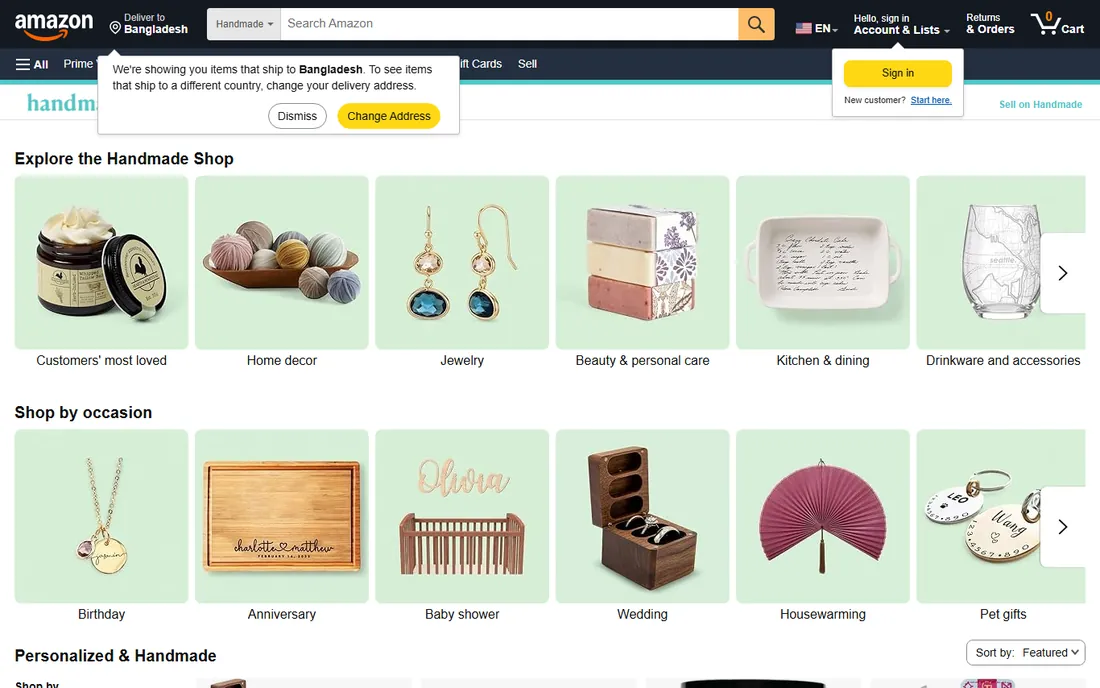
Amazon Handmade is Amazon's gated community for artisans, and the gate is the point. Every seller applies and gets reviewed, so buyers trust that products are genuinely handmade rather than mass-produced. In return, artisans sell inside the Amazon storefront with its one-click checkout, Prime shipping expectations, and hundreds of millions of customers. There are no listing fees, and Amazon waives the usual $39.99 per month Professional selling plan fee for approved Handmade sellers.
The cost is a flat 15% referral fee on each sale, with no monthly subscription underneath it. That is higher than Etsy's transaction fee but simpler to model: no listing fees, no renewal fees, no separate payment processing line. For higher-priced crafts, the math can beat Etsy's stacked fees; for low-priced items, 15% stings.
The application is a real filter. You describe your craft, your process, and your production methods, and Amazon verifies you make what you sell. Resellers and manufactured goods are rejected. Once approved, you operate under Amazon's rules and metrics, which are strict about shipping times and customer service. Handmade suits artisans whose products fit Amazon's buy-it-now shopping behavior and who can meet its fulfillment standards.
What we like- Access to Amazon's enormous customer base
- No listing fees
- The $39.99 Professional plan fee is waived for approved artisans
Watch out for- Flat 15% referral fee is steep
- Application process screens out resellers and mass-produced goods
Starting price$39/month (Basic, or $29/month billed annually)
Free planNo (free trial)

Shopify is the default answer for a craft business ready to own its storefront. You get a professional online store under your own domain, with your branding, your email list, and no marketplace taking a cut of the customer relationship. The Basic plan is $39 per month, or $29 per month billed annually, with payment processing at 2.9% plus 30 cents per US online transaction when you use Shopify Payments.
The app ecosystem is where Shopify pulls away for craft sellers. Print-on-demand integrations, wholesale channels, subscription boxes, local pickup scheduling, and craft-fair POS that syncs with your online inventory all exist as installable apps. The point-of-sale system is genuinely useful for sellers who do weekend markets: sell in person and online from one inventory.
The trade is traffic. Nobody finds your Shopify store by accident; every visitor comes from your marketing, social media, or search engine work. That makes Shopify a second step for most craft sellers, added once Etsy or Instagram proves the products sell. It is the best long-term home for a craft brand, and a lonely one until your marketing works.
What we like- Full control over branding, pricing, and customer data
- Huge app ecosystem for craft-specific needs
- Reliable checkout trusted by buyers
Watch out for- Monthly fee plus transaction fees unless you use Shopify Payments
- You drive all your own traffic
Starting priceFree (Gold plan, up to 5 products)
Free planYes
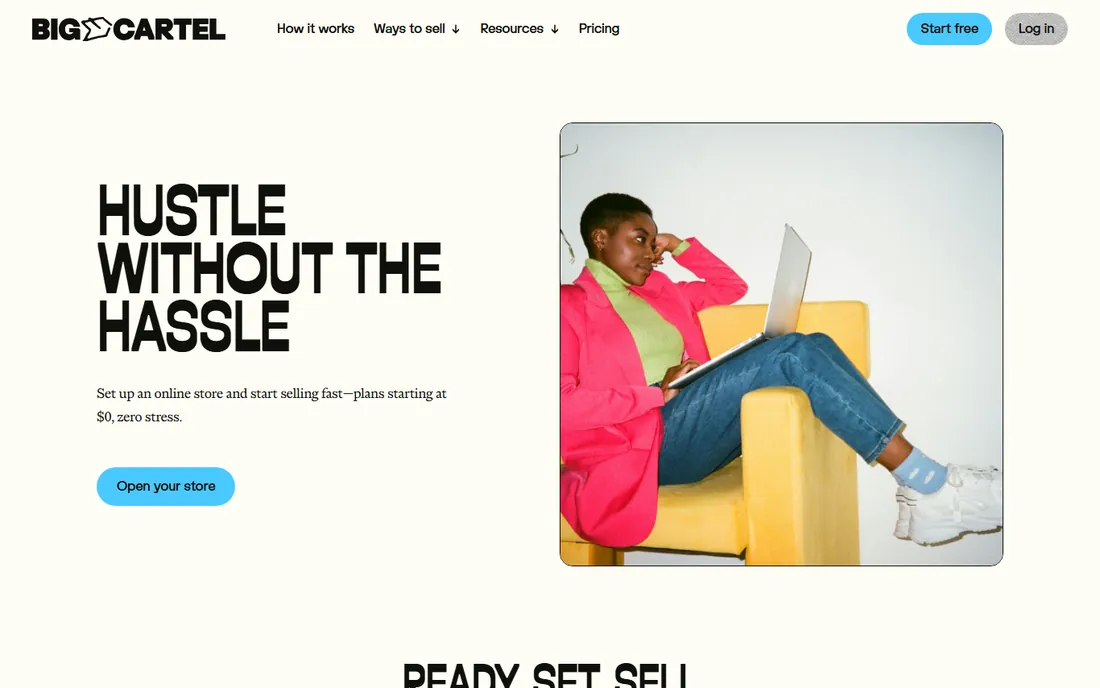
Big Cartel was built for independent makers selling a small catalog, and its pricing reflects that. The Gold plan is free for up to 5 products, Platinum is $15 per month for up to 50 products, and Diamond is $30 per month for up to 500. Big Cartel charges zero transaction fees on every plan; you only pay standard payment processing to Stripe or PayPal. For a potter selling twenty mug designs or a jeweler with a tight collection, it is the cheapest legitimate storefront available.
Setup is deliberately simple. Pick a theme, add products, connect payments, and you are selling. There is no app store to get lost in and no complex settings to misconfigure, which suits makers who would rather be in the studio than in a dashboard. The themes are clean and the checkout is straightforward.
The simplicity has edges. Inventory management, discounting, and marketing tools are basic compared with Shopify or Squarespace, and sellers with hundreds of SKUs will outgrow it. Big Cartel is not trying to be everything; it is trying to be the easy, honest storefront for small-batch makers, and at that job it is excellent.
What we like- Free plan for up to 5 products with no listing fees
- Zero transaction fees on all plans
- Simple setup a non-technical seller can finish in an hour
Watch out for- Limited features next to Shopify
- Small product catalogs only make sense on lower tiers
Starting price$36/month (Commerce Basic, or $27/month billed annually)
Free planNo (free trial)
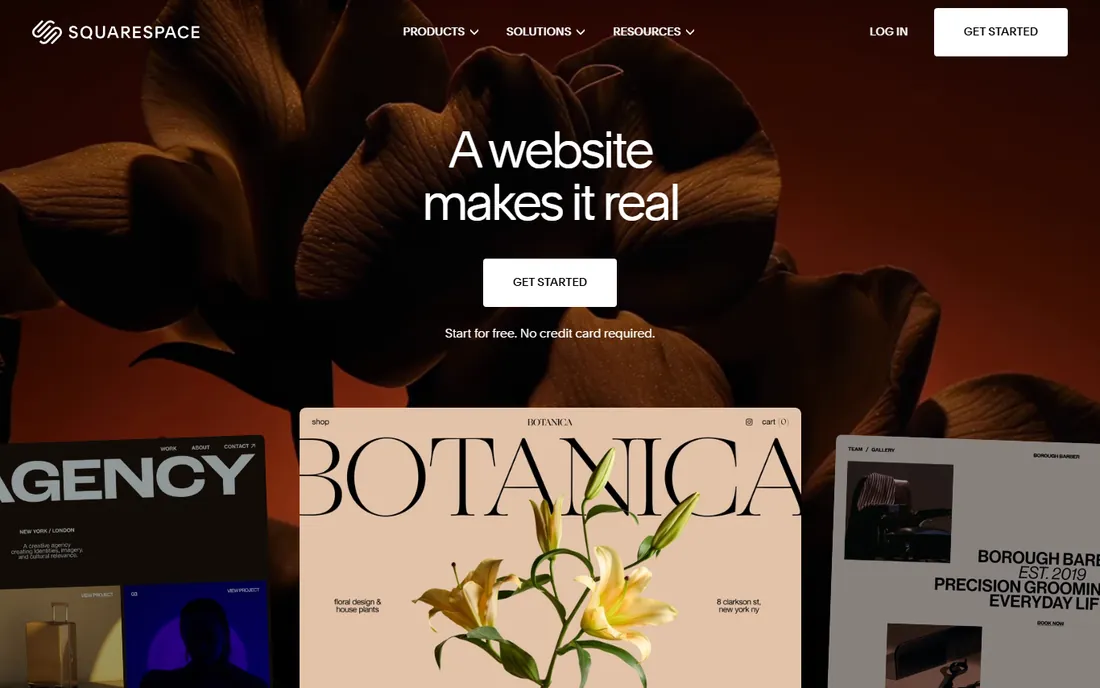
Squarespace is the choice for craft sellers whose brand is visual. The templates are the best-looking in the industry out of the box, which matters when your products are art, ceramics, textiles, or anything bought with the eyes. Commerce Basic is $36 per month or $27 per month billed annually, with zero transaction fees on commerce plans, just standard payment processing.
The built-in content tools are a quiet advantage for makers. Blogging, portfolios, and lookbooks live in the same system as the store, so the story behind your craft, process photos, studio notes, maker profiles, sits next to the products it sells. That storytelling converts browsers into buyers for handmade goods, where provenance is part of the value.
The ecommerce depth is shallower than Shopify's. The app and extension ecosystem is smaller, advanced shipping rules are limited, and multi-channel selling is less developed. Squarespace fits the maker whose catalog is curated, whose brand is aesthetic, and who wants one beautiful site instead of a patchwork of tools.
What we like- Zero transaction fees on commerce plans
- Award-level design templates
- Blogging and portfolio tools built in for storytelling
Watch out for- Fewer ecommerce apps than Shopify
- Monthly cost is fixed whether you sell or not
Starting price$29/month (Core, billed annually)
Free planNo (free trial)

Wix gives you the most design freedom of any hosted store builder: drag anything anywhere, which appeals to makers with a strong visual sense. Ecommerce starts on the Core plan at $29 per month billed annually, which undercuts Shopify's entry price while including a solid set of selling features: product pages, secure checkout, discount codes, and abandoned cart recovery on higher tiers.
The template library includes designs aimed at craft niches, from candle shops to fiber artists, so you start close to finished rather than from a blank page. The Wix app market adds bookings, events, and subscriptions, which suits makers who also teach workshops or sell craft kits on repeat. For a seller who wants a distinctive-looking store without hiring a designer, the editor delivers.
Two caveats matter. Once you pick a template and publish, you cannot switch to another template without rebuilding, so choose carefully. And while the ecommerce features cover standard selling well, complex needs like advanced inventory rules or wholesale channels are thinner than Shopify's. Wix is the design-first budget pick for craft storefronts.
What we like- True drag-and-drop design freedom
- Selling starts on the $29 per month Core plan
- Large template library for craft niches
Watch out for- Template cannot be switched after publishing
- Ecommerce features lag Shopify for complex stores
Starting priceFree (plugin; hosting and extensions extra)
Free planYes
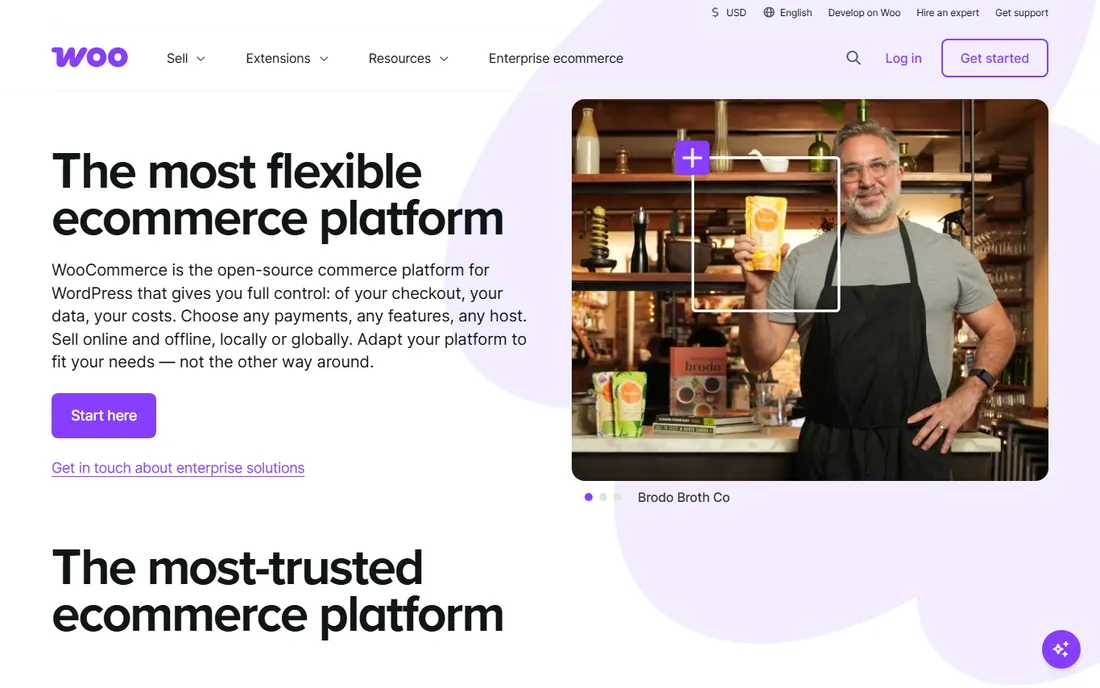
WooCommerce is the free, open-source ecommerce plugin for WordPress, and it powers a huge share of independent online stores. The core plugin costs nothing and charges no transaction fees; you pay only your hosting, typically $10 to $30 per month for a small store, plus payment processing and any premium extensions you choose. For a craft seller already running a WordPress site or blog, adding a store is natural.
Control is the reason to choose it. You own the software, the data, and the customer list outright, with no platform able to raise fees or change terms underneath you. The extension library covers everything from craft-specific shipping rules to wholesale pricing to subscription boxes, and the theme ecosystem means your store can look exactly like your brand.
The price of control is responsibility. You handle hosting, security updates, backups, and troubleshooting, or you pay someone who does. A managed WooCommerce host removes most of that burden for a monthly fee, which narrows the cost gap with hosted platforms. WooCommerce suits technically comfortable sellers and anyone whose craft business is built on content marketing through WordPress.
What we like- Free core plugin with no transaction fees
- Complete ownership of data and design
- Enormous extension library for any feature
Watch out for- You manage hosting, security, and updates
- Costs shift to hosting and paid extensions
Starting price$4.95/month (Standard)
Free planNo (free trial)
ArtFire is the quiet alternative marketplace for handmade sellers who dislike Etsy's fee stacking. Instead of commissions on every sale, shops pay a flat monthly fee starting at $4.95 for the Standard plan, with a free trial to test the waters. For a seller with steady volume, predictable flat pricing beats percentage fees, and the math favors ArtFire once monthly sales pass a few hundred dollars.
The marketplace positioning is familiar: handmade, vintage, and craft supplies, with shop pages sellers can customize. Setup is quick, listing is straightforward, and the fee simplicity makes bookkeeping easy. Sellers who left Etsy over fee increases often land here first when comparing alternatives.
The honest limitation is traffic. ArtFire's buyer audience is a fraction of Etsy's, so shops cannot rely on marketplace discovery alone and need their own marketing. The seller toolset and third-party integrations are also thinner. ArtFire works best as a low-cost marketplace presence alongside your own store or social selling, not as a sole sales channel.
What we like- Low flat monthly fee instead of per-sale commissions
- Marketplace audience for handmade goods
- Simple shop setup
Watch out for- Much smaller buyer traffic than Etsy
- Fewer seller tools and integrations
Marketplace or your own store: the real decision
The choice comes down to who owns the customer. On Etsy, Amazon Handmade, and ArtFire, the platform owns the relationship: buyers remember the marketplace, not your shop, and the platform sets the fees, the search rules, and the policies. In exchange, you get traffic from day one and a checkout buyers already trust. That trade favors new sellers, side hustles, and anyone testing whether products sell at all.
Your own storefront on Shopify, Squarespace, Wix, WooCommerce, or Big Cartel flips the deal. You keep the customer emails, the branding, and the full margin minus payment processing, but every visitor is your responsibility to attract. That trade favors established sellers with repeat buyers, social followings, or wholesale accounts.
Run the fee math for your price points before deciding. A $15 item loses a painful share to Etsy's stacked fees but barely notices Big Cartel's free plan. A $200 item makes Amazon's 15% hurt while barely registering on a flat monthly store subscription. Most craft businesses that last end up with both: a marketplace for discovery and a personal store where repeat customers buy directly.
How we chose
We focused on platforms where handmade and craft sellers actually operate, from marketplaces to hosted storefronts to open-source ecommerce. Every fee and plan above comes from the vendor's own pricing page, checked in October 2026, including listing fees, transaction percentages, and payment processing rates where published. We favored options a small craft business can realistically run: reasonable costs at low volume, no enterprise contracts, and no technical team required except where noted. We did not test products hands-on; we compared plan details, fee structures, seller documentation, and public reviews.
Frequently asked questions
Is Etsy worth it for a new craft seller in 2026?
For discovery, yes. No other platform puts handmade products in front of as many motivated buyers with zero upfront cost. Go in knowing the fees: $0.20 per listing, 6.5% transaction fee, and payment processing on every sale. Treat Etsy as your discovery channel while you build a direct audience elsewhere.
How much does it really cost to sell on Etsy?
On a $30 US sale, expect about $0.20 listing fee, $1.95 transaction fee at 6.5%, and $1.15 payment processing at 3% plus $0.25, totaling roughly $3.30 before shipping and any ad spend. Fees scale with price, so model your actual products rather than relying on averages.
Should I sell on Amazon Handmade or Etsy?
Amazon Handmade suits higher-priced crafts where the flat 15% referral fee beats Etsy's stacked fees, and where Amazon's buy-it-now shoppers match your product. Etsy suits lower-priced items, one-of-a-kind pieces, and sellers who benefit from Etsy's craft-focused search and community. Many artisans list on both.
What is the cheapest way to sell crafts online?
Big Cartel's free plan for up to 5 products, with zero transaction fees, is the cheapest legitimate storefront. WooCommerce is free as software but needs paid hosting. Among marketplaces, ArtFire's $4.95 flat monthly fee beats percentage-based fees once your volume grows.
Do I need my own website if I sell on Etsy?
Not on day one, but eventually yes. A personal store captures customer emails, protects you from marketplace policy changes, and keeps the full margin on repeat orders. Most lasting craft businesses run Etsy for discovery alongside a Shopify, Squarespace, or Big Cartel store for direct sales.
Can I sell crafts on social media instead of a platform?
Instagram, TikTok, and Facebook all support selling, and many makers start there. But social platforms change algorithms and policies without warning, and you still need checkout and payment processing. Use social for marketing and community, and let a real commerce platform handle the transactions.
Sources we checked (15)
- https://www.etsy.com/legal/fees/
- https://www.amazon.com/handmade/
- https://www.shopify.com/pricing/
- https://www.bigcartel.com/pricing/
- https://www.squarespace.com/pricing/
- https://www.wix.com/ecommerce/
- https://woocommerce.com/
- https://artfire.com/
- https://www.feeproofed.com/etsy-fees-2026/
- https://www.shopify.com/ng/amazon-handmade-vs-etsy/
- https://www.bushe.co/shopify-pricing/
- https://www.wiserreview.com/bigcartel-review/
- https://www.vendr.com/squarespace/
- https://www.wiksit.com/wix-ecommerce-review/
- https://www.pantrypetal.com/sites-like-etsy/
Is your product missing or out of date?
We review this list regularly. Vendors can request a listing, send updated pricing or ask about featured placement.

Shihab Mia · Founder, Rankite
Shihab has spent more than a decade helping SaaS and e-commerce brands grow through search. He writes Rankite's software buying guides from pricing pages, documentation and public user reviews. More about Shihab.