How we make this list: we compare pricing pages, product documentation and public user reviews. Rankite is independent; if a vendor ever pays for a featured spot, that listing is clearly labeled Partner.
Key takeaways
- There is no single best platform to promote affiliate links; the right choice depends on whether you own the traffic (a blog or email list) or borrow it (social channels).
- Link-management tools like Pretty Links and ThirstyAffiliates matter even if social is your main channel, because clean, tracked, updatable links protect your commissions.
- Geniuslink stands out for affiliates with international audiences, since it routes Amazon clicks to each visitor's local storefront automatically.
- Free channels (YouTube, Pinterest, Medium, Substack) all allow affiliate promotion with limits, so read each platform's current rules before building on it.
Quick comparison
| Tool | Best for | Starting price | Free plan |
|---|
 Pretty Links Pretty Links | WordPress bloggers managing many affiliate links | See website | Yes |
 ThirstyAffiliates ThirstyAffiliates | WordPress affiliates wanting automation | See website | Yes |
 Geniuslink Geniuslink | International Amazon affiliates | See website | Yes |
 Beacons Beacons | Creators using link-in-bio pages | $10/month | Yes |
 YouTube YouTube | Video creators reviewing products | Free | Yes |
 Pinterest Pinterest | Visual niches with shoppable inspiration | Free | Yes |
 Medium Medium | Writers publishing product roundups | See website | Yes |
 Substack Substack | Newsletter-first affiliates | See website | Yes |
Is your product missing or out of date?
We review this list regularly. Vendors can request a listing, send updated pricing or ask about featured placement.
Some affiliate marketers start with a blog full of product reviews and build everything around search traffic. Others never touch a website and make every commission through a video channel or a newsletter. Both approaches work, but they need different platforms, and the tools that support them are not interchangeable. Below are the eight we think cover the full range, from link management for site owners to the channels where affiliates find their audiences.
Starting priceSee website
Free planYes
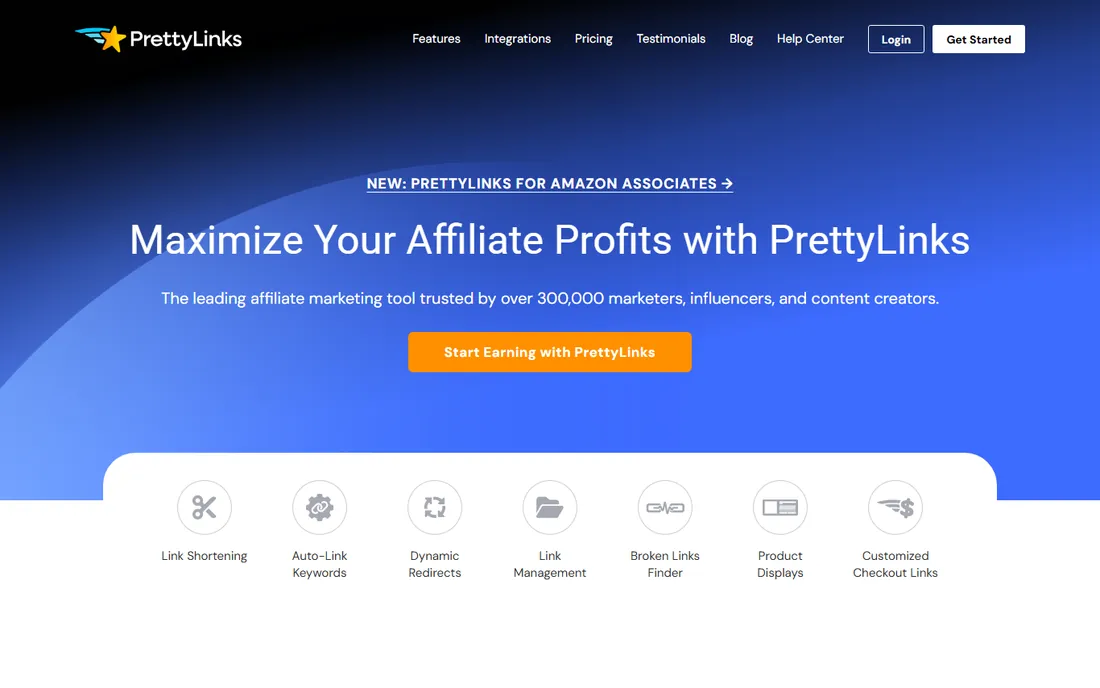
Pretty Links is the workhorse behind a lot of affiliate blogs. The idea is simple: instead of pasting long, ugly affiliate URLs into your posts, you create short branded versions on your own domain, then manage all of them from one dashboard. The auto-linking feature is what makes it worth the money for busy publishers, because it turns product mentions into affiliate links across your entire archive without you editing old posts one by one.
The product has grown beyond a simple cloaker. PrettyPay checkout links let you sell digital products from your links, product displays turn plain text links into visual cards, and LinkHealth scans for broken destinations. If a merchant changes its URL structure and your old links die, you find out from a dashboard alert instead of a dip in your monthly payout. The catch is that everything lives inside WordPress. If your promotion strategy is social-first, you will need a channel tool on top of this one.
What we like- Cloaks long affiliate URLs into branded links
- Auto-links keywords across your whole site
- Broken-link monitoring protects commissions
Watch out for- WordPress only
- Premium features need a paid plan
- Reporting depth trails dedicated analytics tools
Starting priceSee website
Free planYes
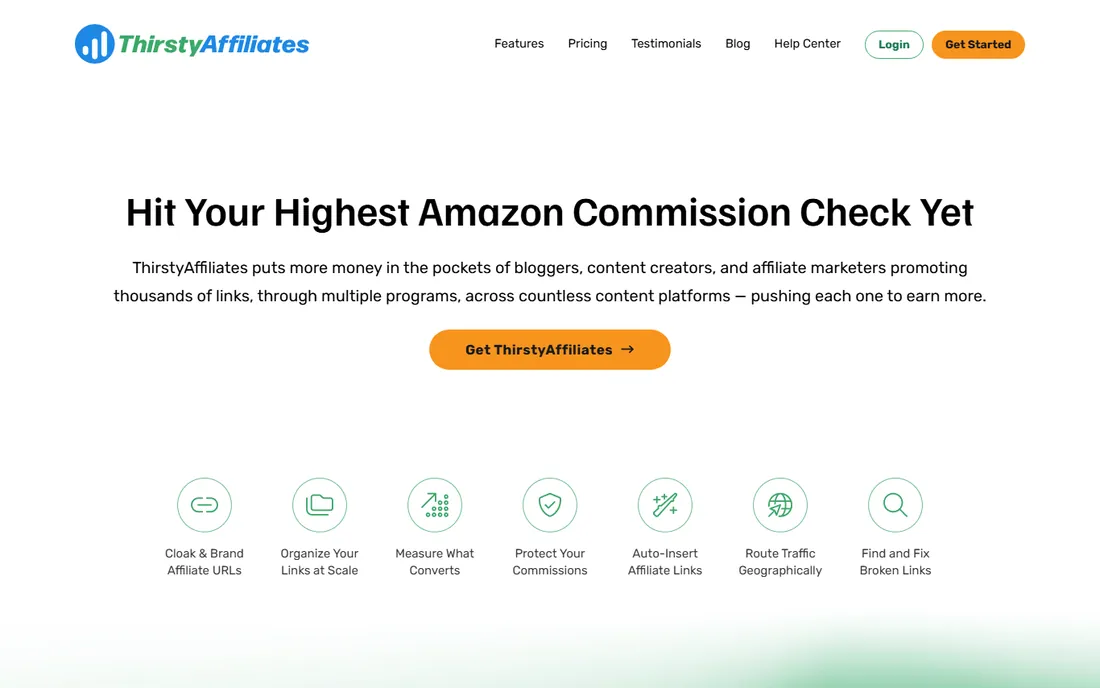
ThirstyAffiliates takes the same basic job as Pretty Links, managing and cloaking affiliate links on WordPress, and adds a layer of automation aimed at serious affiliates. Its keyword autolinker attaches your affiliate links to chosen keywords across every post you have ever published, and its geolocation redirects send international visitors to the right regional storefront. For Amazon Associates members, there is one-click product importing from Amazon's catalog and smart uncloaking that keeps you compliant with Amazon's rules while the rest of your library stays cloaked.
Conversion reports sit on top of automatic click tracking, so you can see which products actually earn and steer more traffic toward them. Between this and Pretty Links, the choice usually comes down to taste and which add-ons you need. ThirstyAffiliates leans harder into the Amazon workflow and product displays, while Pretty Links leans into checkout and QR features. Either one is a genuine upgrade over pasting raw affiliate URLs, which break, look untrustworthy, and give you zero data.
What we like- Amazon-specific features including smart uncloaking
- Keyword autolinker monetizes your full archive
- Geolocation redirects route international clicks
Watch out for- WordPress only
- The most useful add-ons are paid
- Interface can feel busy for beginners
Starting priceSee website
Free planYes
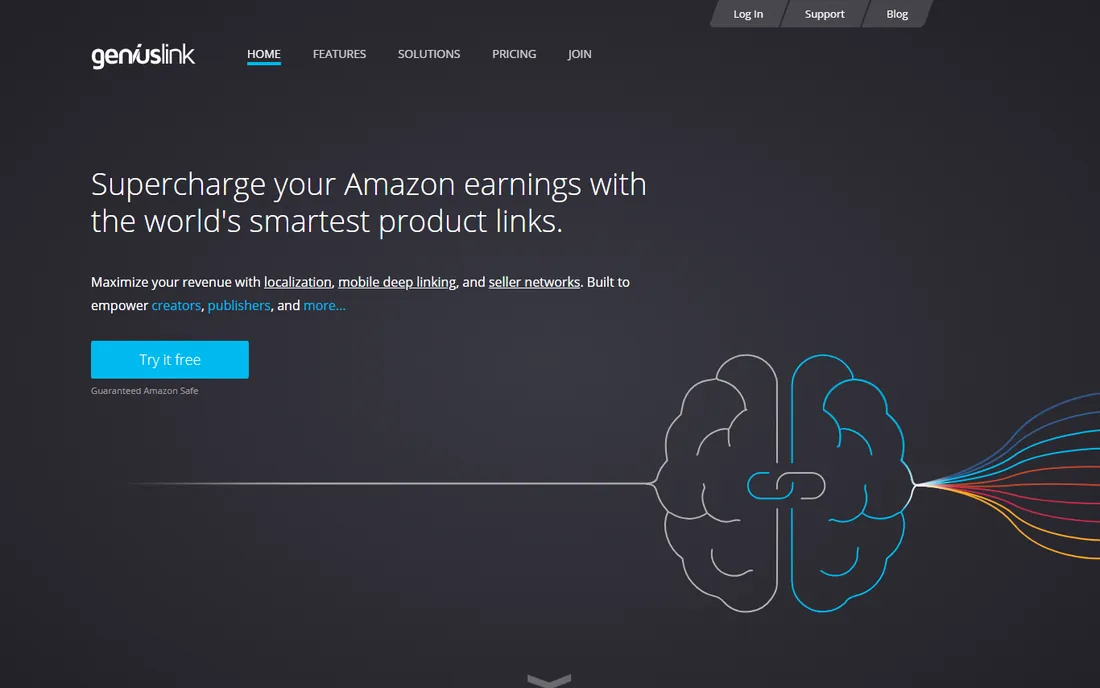
Geniuslink solves a problem that most affiliate tools ignore: your US affiliate link earns nothing when a UK visitor clicks through and lands on the wrong storefront. Geniuslink's geni.us links detect each visitor's country and route them to the matching Amazon store with your local tracking ID attached, which is where a lot of international commissions quietly leak away. For mobile traffic, its deep linking pushes shoppers into the Amazon app instead of stranding them in an in-app browser, where conversions are worse.
There are bulk utilities that make it practical at scale: a YouTube link optimizer that scans a whole channel and swaps outdated affiliate URLs across hundreds of video descriptions, a WordPress plugin that converts Amazon links on page load, and a browser extension for creating localized links as you browse. Choice Pages let one link offer multiple destinations so readers compare and pick, which suits comparison content. If your audience is entirely in one country and you only promote a handful of products, this is more machinery than you need. For publishers with global traffic, it is close to essential.
What we like- Automatic Amazon localization per country
- Mobile deep linking into the Amazon app
- Bulk tools for YouTube descriptions and WordPress
Watch out for- Paid plans for serious volume
- Setup takes some configuration
- Overkill if your audience is all in one country
Starting price$10/month
Free planYes
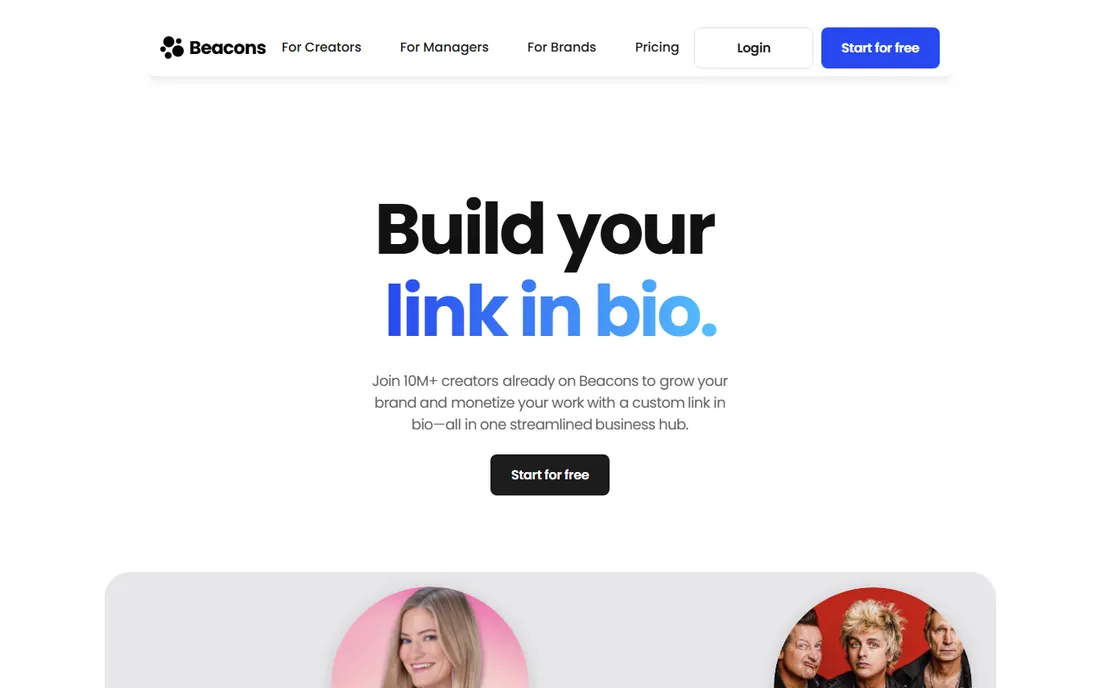
Beacons started as a link-in-bio page and grew into a full creator business hub. For affiliates, the appeal is that one free page can hold every offer you promote, your email signup, a small digital store, and a media kit for brand deals, all tracked in one dashboard. The free-forever plan is genuinely usable: unlimited links, customization, and on-page analytics, with the main tradeoff being a 9% fee on anything you sell through the page.
The platform's pitch is that creators should own their audience rather than rent it from social networks, and the email marketing suite is the practical expression of that idea. Automated DMs and an AI assistant that drafts brand outreach add polish, though affiliates who only need a link list will not use half of this. At $10/month, the Entrepreneur tier adds a custom domain, lower fees, and marketing integrations. If your affiliate strategy is "one link in bio, many offers," Beacons is one of the strongest free starting points available.
What we like- Unlimited affiliate links on the free plan
- Built-in store, email marketing, and media kit
- AI teammate Beam helps with strategy and brand deals
Watch out for- Selling on the free plan carries a 9% seller fee
- Brand recognition trails Linktree
- Advanced email features need paid tiers
Starting priceFree
Free planYes
For many affiliates, YouTube is not just a channel but the entire business. A thorough product review or comparison video can rank in both YouTube and Google search, then generate clicks for years from a single upload. Affiliate links live in the video description and in pinned comments, and they pair naturally with Geniuslink-style localization if your viewers are global. The format also converts well: people watch a real person unbox or test a product before they trust a recommendation.
Shorts have added a discovery layer for creators who find long-form growth too slow, and the algorithm can push a short review to thousands of viewers overnight. The honest catch is time. Channels usually need six to twelve months of consistent publishing before the traffic compounds, and thin "buy this" videos do not rank. Treat YouTube as a slow asset that pays for years, not as a quick traffic hack.
What we like- Product reviews rank in search and keep earning for years
- Affiliate links work in descriptions and pinned comments
- Shorts extend reach to new viewers
Watch out for- Building an audience takes months
- Affiliate-only content needs real value to rank
- Some networks limit how links can appear
Starting priceFree
Free planYes
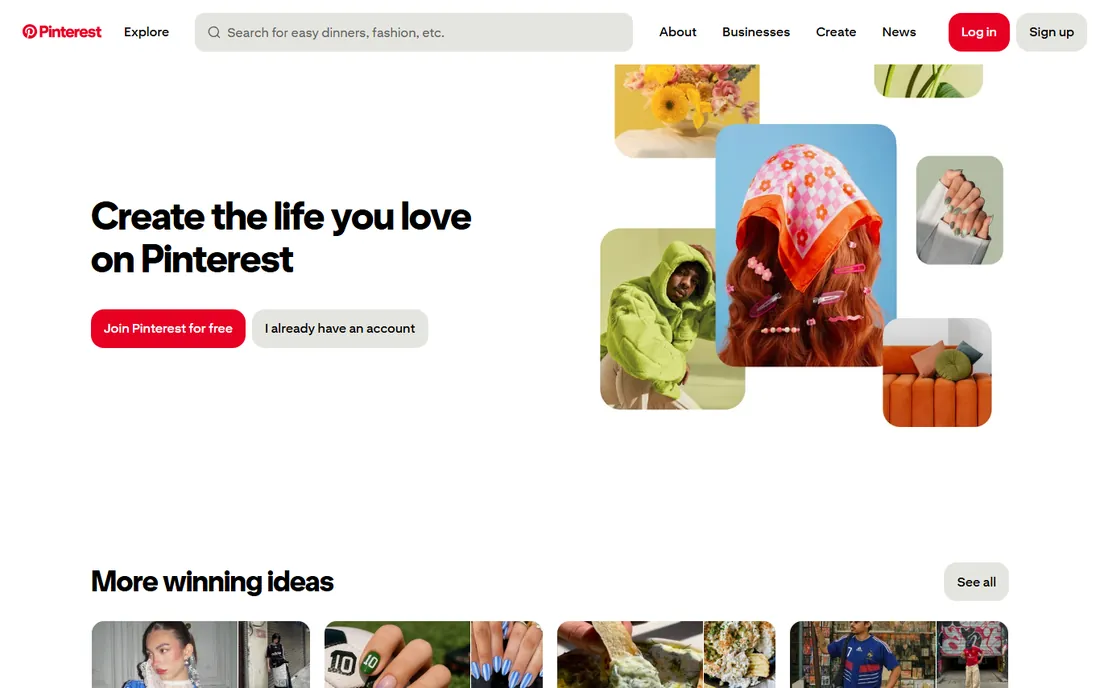
Pinterest behaves more like a visual search engine than a social network, and that is what makes it interesting for affiliates. A well-made pin with keyword-rich copy can keep sending traffic for months after it is published, unlike a tweet or Instagram post that dies in a day. The platform suits niches where people plan purchases visually: home decor, fashion, beauty, crafts, wedding planning, and similar categories where "inspiration" naturally becomes "I want to buy that."
Affiliates usually pin product images and blog content that link back to review pages carrying the affiliate links, rather than linking directly to merchants, which keeps things inside Pinterest's current rules. A free business account opens up analytics and the Creator Hub, so you can see which pins drive outbound clicks. The caveat is that Pinterest adjusts its affiliate and spam policies periodically, so check the current rules before you scale. Niches outside the visual-planning world tend to perform poorly here.
What we like- Pins drive evergreen search-style traffic
- Strong fit for home, fashion, beauty, and crafts niches
- Free business accounts with analytics
Watch out for- Affiliate links must comply with Pinterest's rules, which change
- Traffic quality varies by niche
- Best results need consistent pinning
Starting priceSee website
Free planYes
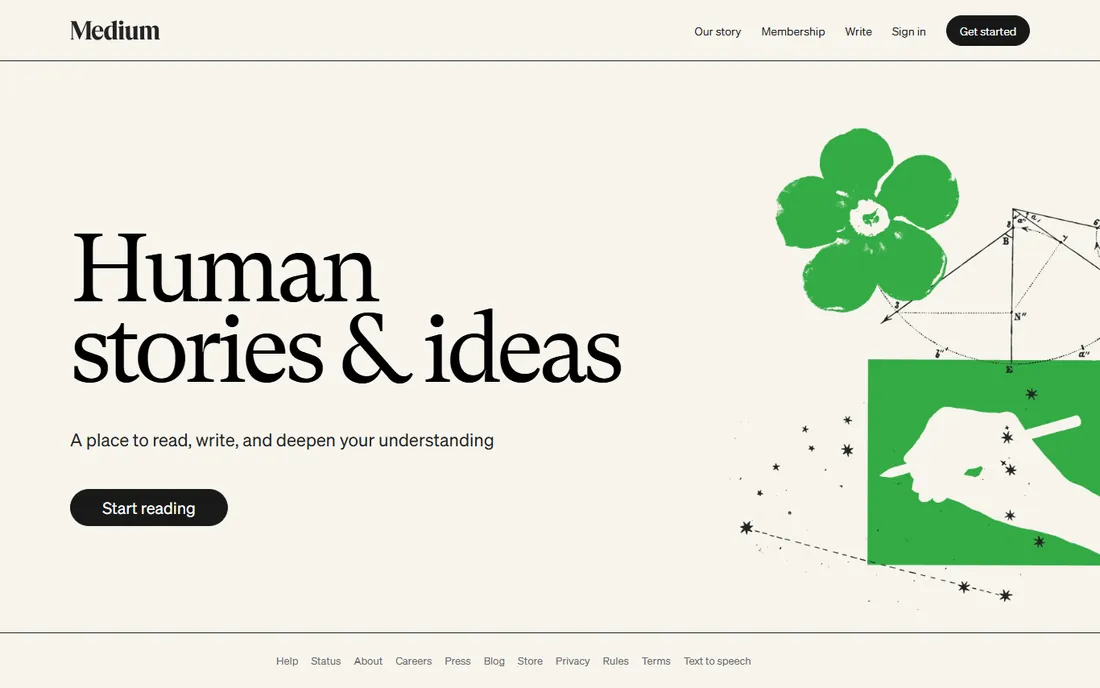
Medium is the low-friction way to publish affiliate content without running a website. You open an account, write a product roundup or how-to guide, embed your affiliate links, and publish. The platform has a built-in readership that can surface your stories to people interested in the topic, and Medium pages regularly rank in Google for product queries, which is traffic you did not have to build a domain to get.
The tradeoff is ownership. Your content lives on medium.com, so you are subject to Medium's rules and algorithm changes, and publications you submit to may restrict affiliate links. Some affiliates use Medium as a satellite channel: publish detailed guides there, link back to their own site for the full comparison, and capture readers on both ends. It costs nothing to start and can validate whether a niche responds to your content before you invest in a full website.
What we like- Publish in minutes with no site to maintain
- Built-in audience can discover your stories
- Articles rank in Google search
Watch out for- You build on someone else's domain
- Publications may have rules about affiliate content
- Monetization depends on your own offers
Starting priceSee website
Free planYes
Substack flips the usual affiliate model: instead of chasing traffic, you build a newsletter audience and promote products to people who asked to hear from you. That trust makes affiliate links in a newsletter convert at rates that blog sidebars can only envy. You can publish free, and readers subscribe with an email address you keep, which means your audience survives any single platform's policy change.
Substack posts are public and indexable, so they can also pull in search traffic, and the writing-first format suits affiliates who like explaining and comparing rather than filming. The catch is the commitment: newsletters that publish sporadically stall, and the popular ones treat it like a part-time job. Substack takes a share of paid subscriptions, but affiliate revenue itself costs you nothing extra to collect. For affiliates who would rather write to 5,000 loyal readers than chase 500,000 casual viewers, this is the right home base.
What we like- An email list you own beats any rented audience
- Affiliate links in newsletters get high-trust clicks
- Posts are public and indexable
Watch out for- Requires consistent writing to grow
- Discovery is weaker than social platforms
- Paid-subscription features take a cut
How we chose
We started from the two jobs an affiliate platform has to do: hold and manage the links themselves, and supply or reach the audience. That gave us the two WordPress link managers, the international link localizer, the link-in-bio hub, and four free audience channels. We checked each tool's own pricing page and documentation for current plans and affiliate policies, then cross-checked how affiliates actually use them through public reviews, creator discussions, and affiliate marketing communities. We did not test affiliate earnings ourselves, and we list only tools whose homepages we could open and verify directly.
What to look for before you commit
Pick your platform by working backward from your content, not from the tool list. If you already publish long-form content on WordPress, a link manager like Pretty Links or ThirstyAffiliates pays for itself the first time a merchant changes a URL across your archive. If your audience spans countries and you promote Amazon products, localization from Geniuslink can recover commissions you are currently losing without knowing it.
Match the channel to how your audience buys
Video buyers want to see the product work, so YouTube rewards reviewers who actually test things. Planners and shoppers who browse visually live on Pinterest, where a single strong pin can out-earn a month of tweets. Readers who compare specs before buying are on Medium and in newsletters, where a detailed breakdown with affiliate links feels helpful rather than pushy. Beacons fits creators whose audience lives on Instagram or TikTok and needs one page that holds everything.
Own at least one channel you control
Free platforms change their rules. Pinterest has tightened affiliate policies before, Medium publications can reject affiliate content, and YouTube can demonetize categories overnight. That is why many affiliates pair a rented audience channel with something they own: a WordPress site with managed links, or a Substack list they can email regardless of algorithm changes. The tools in the first half of this list are the insurance policy for the channels in the second half.
This deserves its own warning because affiliates learn it the hard way. Every free channel listed here has, at some point, restricted affiliate links, changed how links display, or cut the reach of promotional content. The affiliates who survive those changes are the ones with an email list, a site, or a diversified link setup that lets them redirect traffic in an afternoon. Diversification is not a growth strategy; it is a survival strategy. Start with one channel to learn the craft, then add a second one you control as soon as the first one earns.
Frequently asked questions
Can I promote affiliate links on Pinterest?
Yes, but read Pinterest's current affiliate and spam policies first, because they have changed before. Most affiliates link pins to their own review pages rather than directly to merchant sites, which keeps more control and stays within the rules.
Do I need a website to do affiliate marketing?
No. Many affiliates earn entirely through YouTube, newsletters, or link-in-bio pages like Beacons. A website helps with search traffic and link management, but it is not required to start.
Which is better for affiliates, Pretty Links or ThirstyAffiliates?
Both manage and cloak affiliate links on WordPress well. ThirstyAffiliates leans into Amazon workflows with one-click product importing and smart uncloaking, while Pretty Links adds checkout links and QR features. Try the free versions of both and keep the one whose interface you prefer.
How do affiliate links work on YouTube?
You place them in the video description and pinned comments, and YouTube allows them as long as the content complies with its policies. Viewers click through to the merchant, and you earn when they buy. Adding disclosure language in the description is required by the FTC in the US.
Is Substack free for affiliate marketers?
Publishing and sending free newsletters is free. Substack takes a cut only of paid subscription revenue, so affiliate commissions you earn from links in your emails cost you nothing extra beyond the merchant's own terms.
What does Geniuslink do that a URL shortener cannot?
A shortener just makes links shorter. Geniuslink routes each click to the right country store, deep-links mobile users into the shopping app, monitors link health, and lets you edit destinations after publishing, which a plain shortener cannot do.
Sources we checked (11)
- https://prettylinks.com
- https://thirstyaffiliates.com/
- https://geniuslink.com/
- https://beacons.ai/
- https://www.youtube.com/
- https://www.pinterest.com/
- https://medium.com
- https://substack.com/
- https://create.pinterest.com/get-started/
- https://sitenerdy.com/best-wordpress-affiliate-plugins/
- https://hellboundbloggers.com/thirstyaffiliates-review-best-wordpress-plugin-affiliates/
Is your product missing or out of date?
We review this list regularly. Vendors can request a listing, send updated pricing or ask about featured placement.

Shihab Mia · Founder, Rankite
Shihab has spent more than a decade helping SaaS and e-commerce brands grow through search. He writes Rankite's software buying guides from pricing pages, documentation and public user reviews. More about Shihab.