How we make this list: we compare pricing pages, product documentation and public user reviews. Rankite is independent; if a vendor ever pays for a featured spot, that listing is clearly labeled Partner.
Key takeaways
- Circle and Mighty Networks are the two leaders for paid membership communities, with Circle winning on polish and automation and Mighty on mobile engagement.
- Skool is the simplest way to launch a paid coaching community at a flat $99 per month, but customization is limited.
- Discourse is the best free and open-source option for forums, and the only one here with real SEO value for public communities.
- Discord and Facebook-style free options cost nothing but give you no data ownership and no monetization control.
- Bettermode and Hivebrite target bigger organizations that need embedded or alumni-style communities with serious customization.
Quick comparison
| Tool | Best for | Starting price | Free plan |
|---|
 Circle Circle | premium membership communities | $89/month (billed annually) | Free trial |
 Mighty Networks Mighty Networks | engagement-driven communities with courses | $950/year (Launch plan) | Free trial (14 days) |
 Skool Skool | simple paid coaching communities | $99/month | No |
 Discourse Discourse | open-source forums and support communities | See website | Yes |
 Discord Discord | free real-time chat communities | Free | Yes |
 Bettermode Bettermode | embedded customer communities for SaaS | See website | No |
 BuddyBoss BuddyBoss | WordPress-based course communities | See website | No |
 Hivebrite Hivebrite | alumni and association communities | See website | No |
Is your product missing or out of date?
We review this list regularly. Vendors can request a listing, send updated pricing or ask about featured placement.
The right community platform depends on what kind of community you are actually building. A paid coaching group, an open-source support forum, and an alumni network are three different products, and no single tool wins all three. Below are eight platforms that cover the real options, from free to enterprise.
Starting price$89/month (billed annually)
Free planFree trial
Circle is the default recommendation for creators building a paid membership business, and the default exists for a reason. The interface is clean in a way most community software is not, and the platform keeps expanding outward: community spaces, native courses, live events, payments, email marketing, and even a website builder now live in one system. For a solo creator or small team, that consolidation replaces three or four other subscriptions.
The 2026 additions that matter are AI agents and automation workflows, which handle onboarding, moderation, and member support without constant manual work. Circle also pushes hard on branded mobile apps through Circle Plus, which is where engagement really compounds. The honest catch is the pricing curve. $89 per month is the starting point, the entry plan takes a 2% transaction fee, and the features that make Circle special, like branded apps and advanced automation, sit on the pricier tiers.
What we like- Polished, modern interface that feels like your brand
- Courses, events, payments, and email in one system
- AI workflows and automation for onboarding and moderation
Watch out for- Entry plan carries a 2% transaction fee
- Costs climb fast as you add branded apps and higher tiers
Starting price$950/year (Launch plan)
Free planFree trial (14 days)
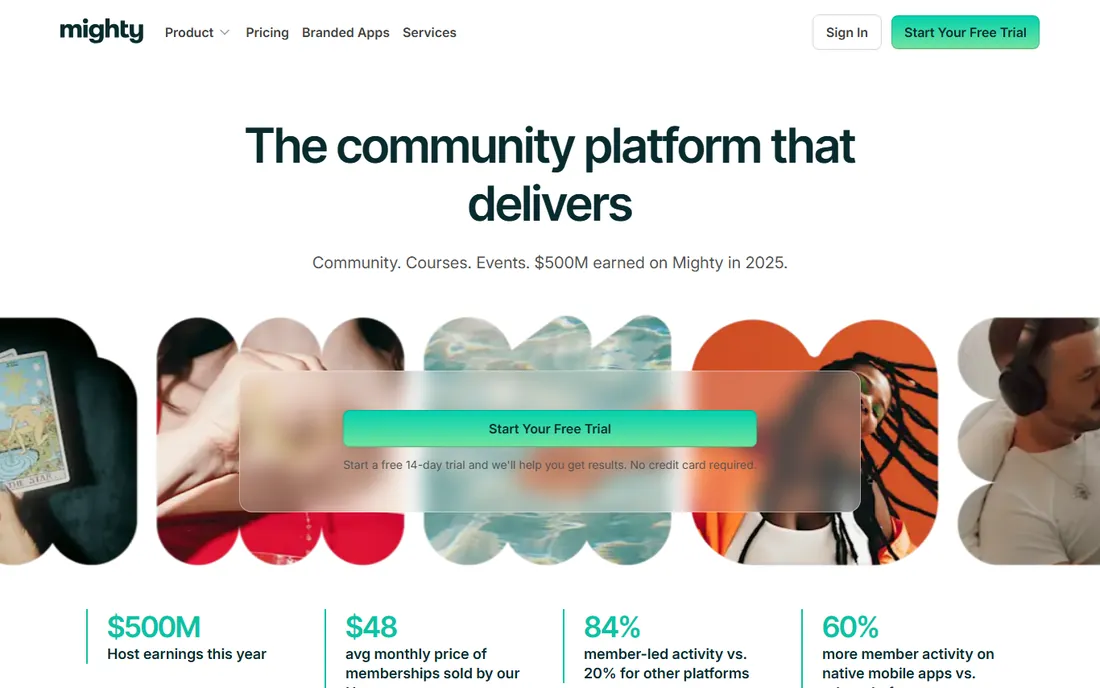
Mighty Networks has been in this fight longer than most, and it shows in the engagement numbers the company publishes: 84% of content created by members rather than hosts, and 60% more activity on native mobile apps than on web. If your community lives or dies on daily participation, that mobile-first design is a genuine advantage, not marketing fluff.
The platform bundles community, courses, events, and payments with an AI Cohost that helps design your membership offer, and the Community Design framework gives new hosts a playbook instead of a blank page. The Launch plan at $950 per year works out to about $79 per month, and the company backs it with a 14-day free trial that requires no credit card. The tradeoff is flexibility. Mighty is opinionated about how communities should be structured, which helps beginners but frustrates builders who want deep customization, and power features like branded apps require the higher Mighty Pro tier.
What we like- Native mobile apps drive notably higher member activity
- Community Design framework helps hosts structure engagement
- Strong built-in course and event tools
Watch out for- Annual Launch plan is the real entry point despite monthly talk
- Less design flexibility than Circle at the low end
Starting price$99/month
Free planNo
Skool is the anti-Circle: instead of a sprawling all-in-one platform, it does one thing, a paid group with a discussion feed and a simple course classroom, and does it with almost no learning curve. Coaches love it because members figure it out in minutes, and the built-in gamification (points, levels, leaderboards) drives participation without plugins or configuration.
The pricing is refreshingly simple at $99 per month flat per community, which makes the math easy when you are selling a $50 or $100 per month membership. There are no transaction fees from Skool itself beyond payment processing. The catch is the ceiling. You get one community per subscription, branding options are minimal, and anyone who outgrows the simple feed-and-classroom model ends up migrating to Circle or Mighty. Skool is a launchpad, not a forever home, and it is honest about that.
What we like- Dead-simple setup with community plus classroom in one
- Built-in gamification with points and leaderboards
- Flat pricing with no member limits to worry about
Watch out for- Very limited customization and branding
- One community per subscription
Starting priceSee website
Free planYes
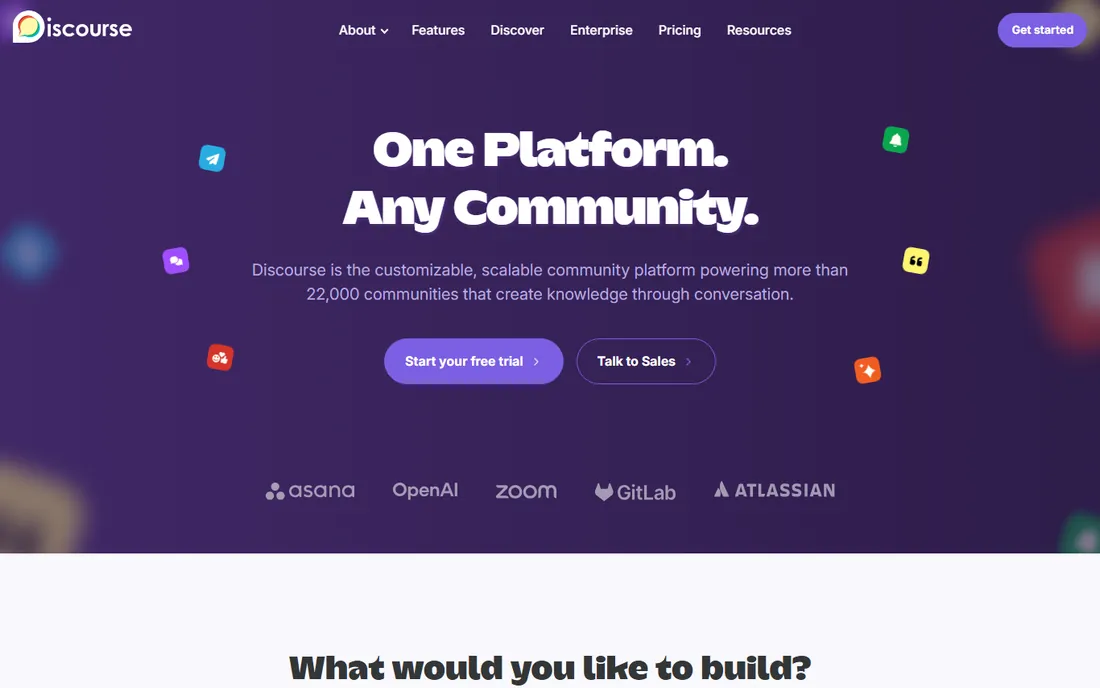
Discourse is the odd one out here and proud of it. It is open-source forum software, free to self-host, that powers the official communities of companies like OpenAI, Atlassian, and Shopify. If your community is a knowledge base that happens to have people in it, a support forum, a developer community, an open-source project, nothing else on this list comes close.
The SEO angle is the underappreciated superpower. Public Discourse threads rank in Google, which turns your community into a compounding acquisition channel. The trust-level system gamifies moderation naturally, and the plugin ecosystem covers chat, gamification, and integrations. The honest catch is format and effort. Discourse is a forum, not a social feed, and younger audiences sometimes bounce off it. Self-hosting is genuinely free but demands a server and someone comfortable maintaining it; managed hosting from the Discourse team removes that burden at a monthly cost.
What we like- Free and open source when self-hosted, with full data ownership
- Best-in-class SEO for public communities
- Mature moderation with trust levels
Watch out for- Forum format feels dated for social-style engagement
- Self-hosting requires technical skill
Starting priceFree
Free planYes
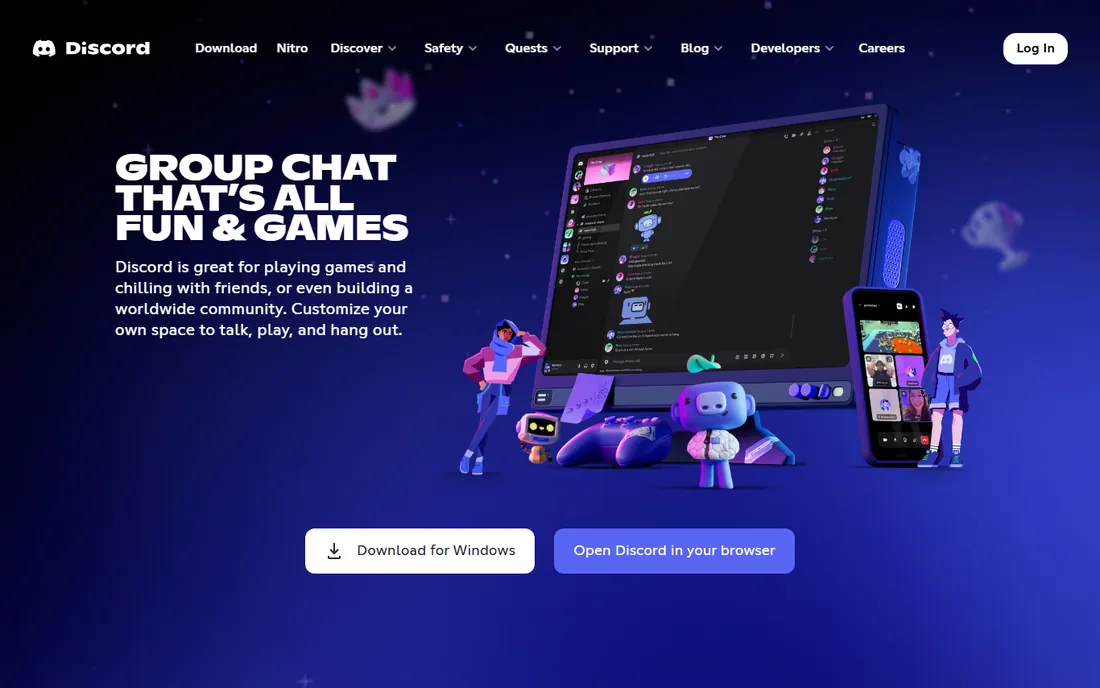
Discord is where communities go when they want energy and immediacy for zero dollars. Real-time text, voice channels, video, screen sharing, and a bot ecosystem that can run polls, tickets, leveling systems, and payments-adjacent workflows through tools like Whop or Patreon. For gaming, Web3, creator fan groups, and developer hangouts, the audience is already there.
The price is right because there is no price, and the mobile and desktop apps are genuinely excellent. But Discord is a rented audience in the purest sense. Threads vanish, nothing is indexed by search engines, discovery depends on invite links, and building a paid membership on top requires third-party tooling. It is the best platform to build a community when the community is the hangout itself, and a poor one when the community needs to be a business asset you control.
What we like- Completely free to start with excellent voice and video
- Huge existing user base, especially under 35
- Bots and integrations extend it enormously
Watch out for- Conversations disappear into the scroll, no SEO value
- You own nothing and monetization is awkward
Starting priceSee website
Free planNo
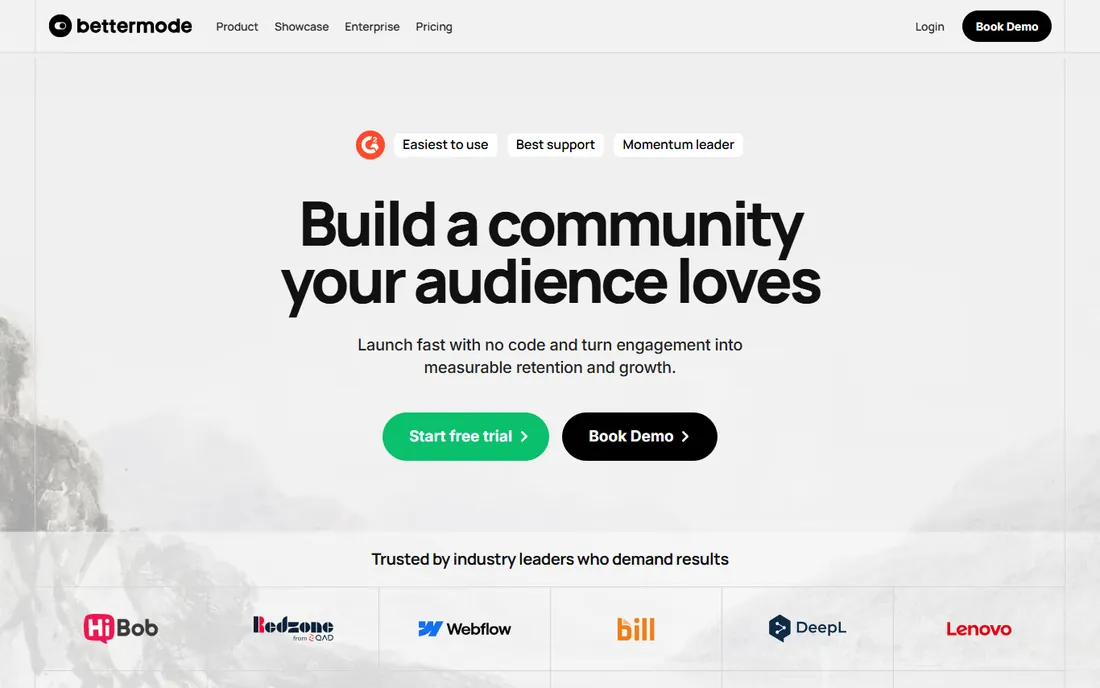
Bettermode, formerly Tribe, plays a different game from the creator platforms. It is built for companies that want a community inside their existing product or website: a support forum, a feature-request board, a customer knowledge hub that lives at your domain and matches your brand. The modular, API-first design means developers can embed spaces and widgets wherever they make sense.
For SaaS companies, this is often the right architecture. Your community becomes part of the product experience instead of a separate destination members must remember to visit. Integrations with Salesforce, HubSpot, and Intercom tie community activity into your customer data. The catch is price and positioning. Bettermode moved upmarket, pricing is quote-based at levels that exclude small creators, and if what you want is a lively paid membership with courses and events, the creator platforms will serve you better.
What we like- API-first and embeddable directly into your product or website
- Strong customization without heavy development
- Good fit for support and feedback communities
Watch out for- Pricing is quote-based and sits at the enterprise end
- Engagement tooling is thinner than creator-focused platforms
Starting priceSee website
Free planNo
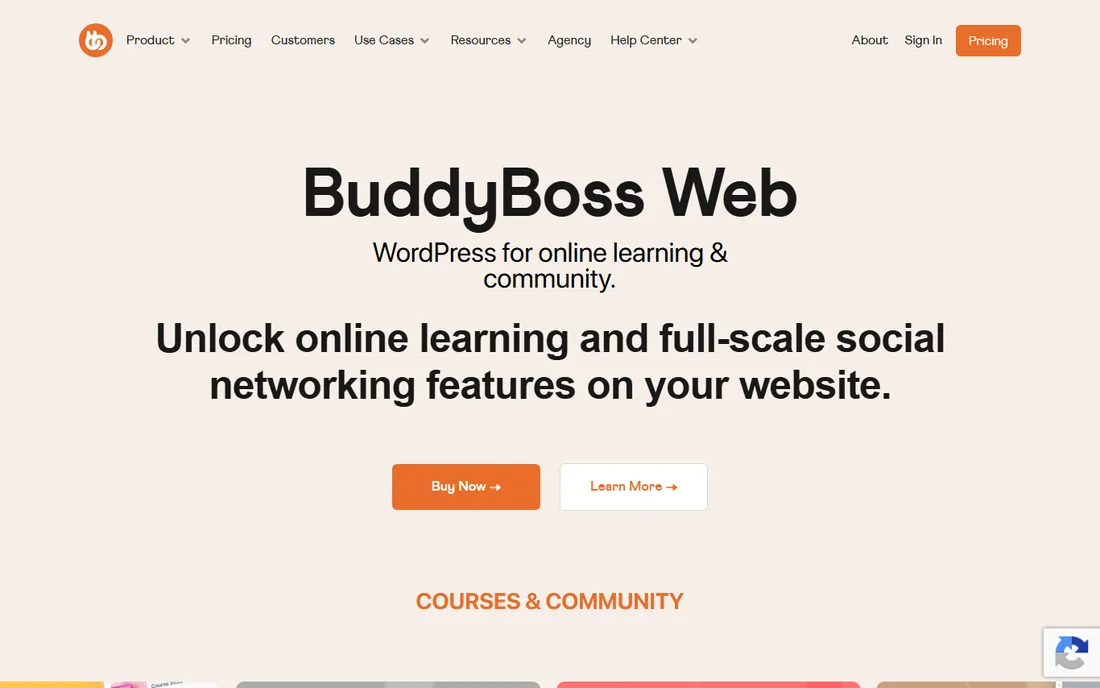
BuddyBoss is the answer for anyone who refuses to rent their community from a SaaS platform. It is a WordPress theme and platform that turns your site into a social network with courses, groups, forums, messaging, and events, plus white-label iOS and Android apps. You own the data, the design, and the domain, with no per-member fees and no transaction fees from the platform.
That ownership is the whole pitch, and for established WordPress businesses it is compelling: unlimited everything, thousands of integrations through the WordPress ecosystem, and costs that stay flat as you grow. The honest catch is that you are now running software. Hosting, updates, backups, security, and performance are your problems, and the initial setup demands real WordPress comfort. BuddyBoss suits teams that already live in WordPress and want community as a feature of their site, not a separate platform.
What we like- Full ownership, your data lives on your WordPress site
- Unlimited members, courses, and groups on every plan
- White-label mobile apps available
Watch out for- Requires WordPress expertise and your own hosting
- You are responsible for updates, security, and performance
Starting priceSee website
Free planNo
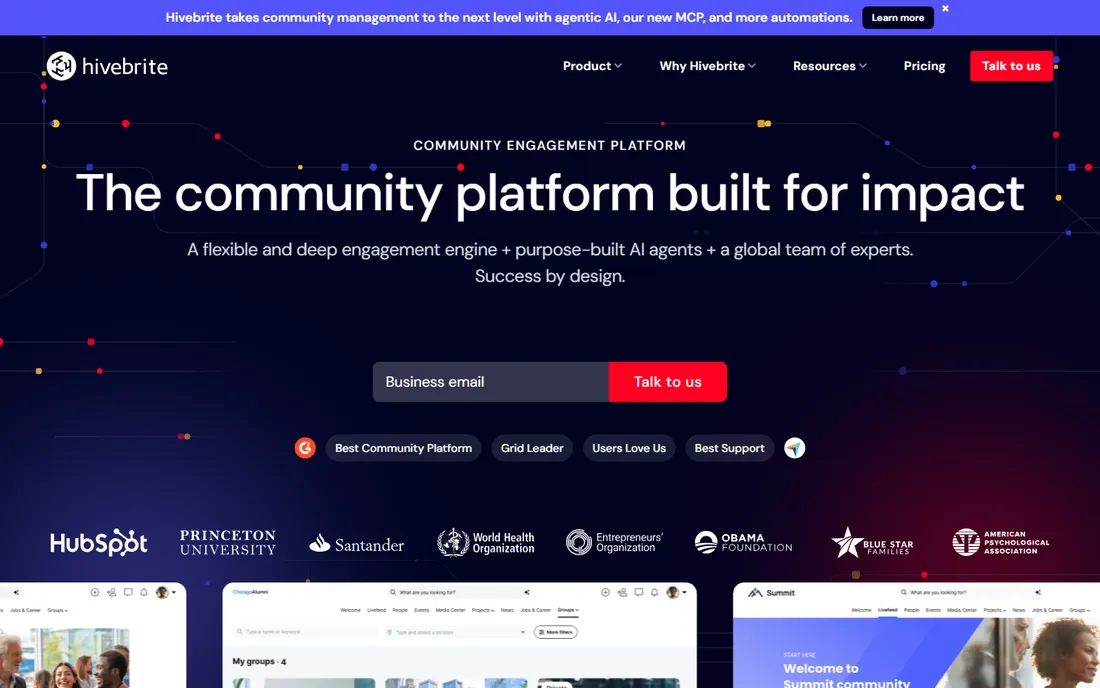
Hivebrite dominates a niche the other platforms mostly ignore: alumni networks, professional associations, and nonprofits. These organizations need member directories with custom profiles, mentoring programs, event management, subgroups by chapter or class year, and branded mobile apps, and Hivebrite ships all of it in one platform used by over 2,000 organizations.
The engagement tooling is genuinely deep, with engagement scoring, automated re-engagement across push, email, and WhatsApp, and AI-powered member matching. For an association executive, this replaces a patchwork of directory software, email tools, and event platforms. The catch is that none of this comes cheap. Pricing is quote-based and enterprise-grade, which puts Hivebrite out of reach for independent creators. It is the best platform to build a community when your members are alumni or association members, and the wrong tool for almost everything else.
What we like- Purpose-built for alumni, associations, and nonprofits with member directories and mentoring
- White-label branding with a native mobile app
- Strong engagement analytics
Watch out for- Enterprise pricing that starts high
- Overkill for a simple creator community
We started from the platforms that surface repeatedly in G2 and Capterra community software categories, practitioner comparisons, and creator-community discussion on Reddit and industry blogs. We verified each platform's homepage to confirm it exists today and fits community building rather than adjacent categories like email marketing or course-only tools. We evaluated feature breadth (discussion, events, courses, mobile apps, monetization), pricing transparency, data ownership, and fit for different community types, from free hobby groups to enterprise alumni networks. We did not claim hands-on testing. Pricing figures come from vendor pages and current plan listings where available; where vendors price by quote, we say so rather than repeating aggregator guesses.
Start with the business model, because it eliminates half the list. If members will pay you, you need native monetization: Circle, Mighty Networks, Skool, or Hivebrite. If the community supports a product, look at Bettermode or Discourse. If it is a free hangout, Discord costs nothing and asks nothing.
Next, decide how much you want to own. SaaS platforms trade control for convenience: faster launch, zero maintenance, but your community lives on someone else's infrastructure and your export options are limited. Self-hosted options like Discourse and BuddyBoss give you full ownership and full responsibility. There is no universally right answer, only the one that matches your team's skills and your tolerance for platform risk.
Finally, be honest about where your members already are. A community for gamers that is not on Discord will fight an uphill battle. A professional association whose members check email will do fine on Hivebrite or Circle. The best platform to build an online community is the one your specific members will actually open every week, and that is a question about your audience, not about feature lists.
The hub-and-spoke reality of modern communities
Almost nobody runs a community on a single platform anymore. The pattern that works in 2026 is hub-and-spoke: one owned platform where the real membership lives and the business happens (Circle, Mighty Networks, Discourse), plus free outposts where discovery happens (Discord, Reddit, social media, a public Slack). The outposts funnel people inward; the hub is where you monetize, organize knowledge, and build durable relationships.
This matters because it changes what you should optimize for. Your hub platform should be judged on ownership, monetization, and organization. Your spokes should be judged on reach and energy. Picking Discord as your hub because it is free is usually a mistake you pay for later, when you want to charge, export, or search two years of conversations and discover you cannot.
Frequently asked questions
What is the best platform to build an online community in 2026?
For most paid membership communities, Circle is the strongest all-around choice thanks to its polish, automation, and expanding all-in-one feature set. Mighty Networks is the better pick if mobile engagement and structured programs matter most, and Skool wins on simplicity for coaches just starting out.
How much does it cost to build an online community?
Free options like Discord and self-hosted Discourse cost nothing but your time. Paid creator platforms start around $79 to $99 per month (Mighty Networks, Circle, Skool). Enterprise and association platforms like Hivebrite and Bettermode are quote-based and typically run into the hundreds or thousands per month.
Can I build a community for free?
Yes. Discord is free and excellent for real-time chat communities, and Discourse is free and open source if you self-host it. The tradeoff is monetization and ownership: free platforms give you less control over data, branding, and revenue.
Should I build my community on Facebook Groups?
Facebook Groups offer massive reach and zero cost, which suits public or hobby communities. But you have no data ownership, no real monetization tools, and you are subject to Facebook's algorithm and rule changes. Most serious community businesses treat Facebook as a discovery outpost, not the home base.
What is the difference between Circle and Mighty Networks?
Circle offers a cleaner interface, deeper automation, and a broader all-in-one toolkit including email marketing and a website builder. Mighty Networks counters with stronger native mobile apps, higher member engagement, and the Community Design framework for structuring programs. Both charge around $79 to $99 per month to start and take transaction fees on lower plans.
Do I need a mobile app for my community?
Not on day one, but it matters as you grow. Platforms consistently report that members engage far more through mobile apps than web, with Mighty Networks citing 60% more activity on mobile. If daily participation drives your revenue, prioritize a platform with strong native or branded apps.
Sources we checked (8)
- https://circle.so
- https://mightynetworks.com/
- https://skool.com/
- https://www.discourse.org
- https://discord.com
- https://bettermode.com
- https://buddyboss.com/
- https://hivebrite.com/
Is your product missing or out of date?
We review this list regularly. Vendors can request a listing, send updated pricing or ask about featured placement.

Shihab Mia · Founder, Rankite
Shihab has spent more than a decade helping SaaS and e-commerce brands grow through search. He writes Rankite's software buying guides from pricing pages, documentation and public user reviews. More about Shihab.