How we make this list: we compare pricing pages, product documentation and public user reviews. Rankite is independent; if a vendor ever pays for a featured spot, that listing is clearly labeled Partner.
Key takeaways
- Ramp (free) and Brex (free) automate expenses through smart corporate cards that enforce policy at the point of spend.
- Expensify remains the dedicated expense management veteran with deep automation and integrations.
- Navan unifies travel booking with expense automation for T&E-heavy companies.
- Zoho Expense, Rydoo, Airbase and Sage Expense Management (formerly Fyle) serve specific segments from SMB to enterprise.
Quick comparison
| Tool | Best for | Starting price | Free plan |
|---|
 Ramp Ramp | eliminating expense reports through smart cards | Free; paid plans (see website) | Yes |
 Brex Brex | startups automating expenses from day one | Free; paid plans (see website) | Yes |
 Expensify Expensify | dedicated expense management with deep integrations | Free; paid plans (see website) | Yes |
 Navan Navan | companies where travel drives expenses | See website | No |
 Zoho Expense Zoho Expense | small businesses wanting affordable automation | Free; paid plans (see website) | Yes |
 Rydoo Rydoo | international companies with per diem complexity | See website | No |
 Airbase Airbase | expenses linked to procurement controls | See website | No |
 Sage Expense Management Sage Expense Management | AI-powered receipt capture and card reconciliation | See website | Free trial |
Is your product missing or out of date?
We review this list regularly. Vendors can request a listing, send updated pricing or ask about featured placement.
#1
Ramp
Best for: eliminating expense reports through smart cards
Visit ramp.com
Starting priceFree; paid plans (see website)
Free planYes
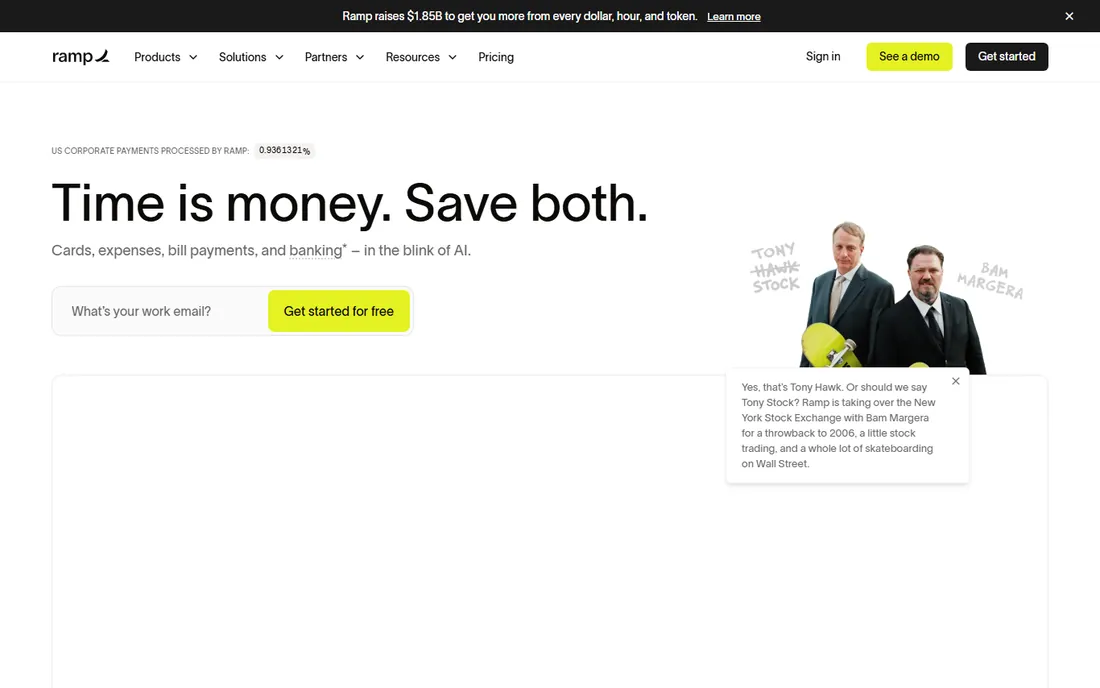
Ramp's insight is that the best expense report is the one you never file: smart corporate cards with built-in limits, automatic receipt capture and matching, and policy enforcement at the moment of purchase. Expenses flow to accounting coded correctly without manual reports. The free tier covers small companies completely.
Growing companies hit free tier limits and upgrade to paid plans. The model assumes card-based spending; cash and invoice expenses need separate handling. For card-heavy businesses, the automation eliminates the monthly expense report ritual.
What we like- Generous free tier
- Automatic receipt matching
- Policy enforcement at spend
Watch out for- Free limits push upgrades
- Card-centric model
#2
Brex
Best for: startups automating expenses from day one
Visit brex.com
Starting priceFree; paid plans (see website)
Free planYes
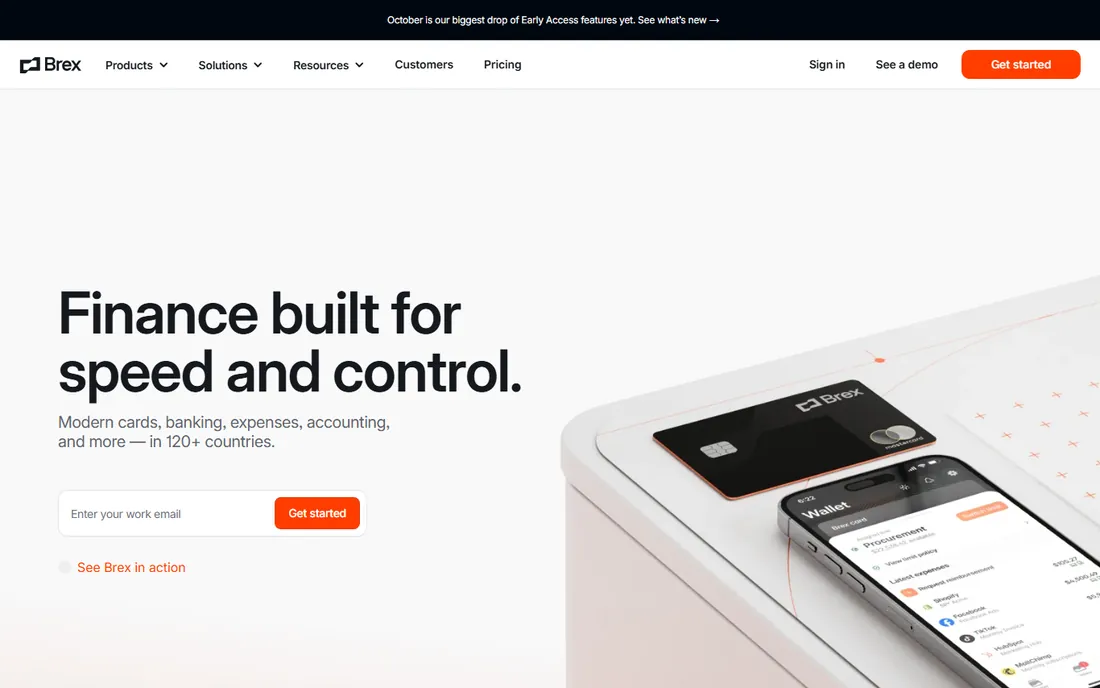
Brex gives startups corporate cards and expense automation without the traditional banking friction: instant virtual cards, automatic categorization, and approval flows that work from the mobile app. The onboarding is fast, and the interface is the cleanest in the category.
The company's strategic shifts (focusing upmarket) left some smaller customers uncertain. In automation depth, Ramp currently leads. But for startups that live in the Brex ecosystem, the integrated experience works well.
What we like- Startup-friendly
- Clean expense workflows
- Good mobile app
Watch out for- Strategic pivots created uncertainty
- Less automation depth than Ramp
Starting priceFree; paid plans (see website)
Free planYes
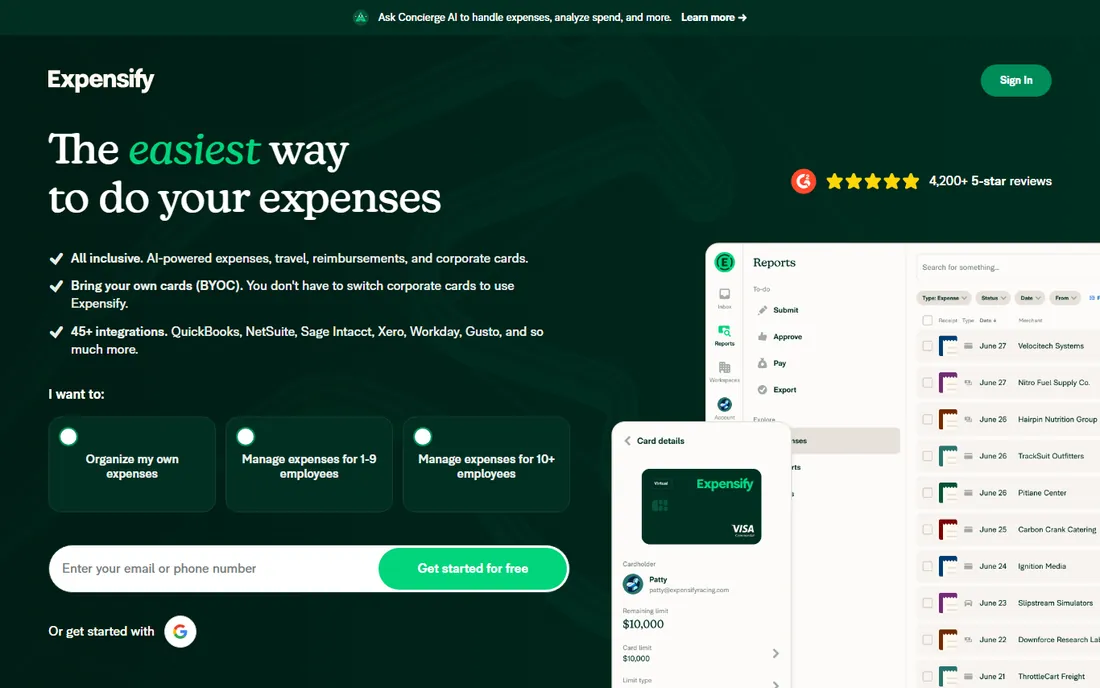
Expensify pioneered expense automation: SmartScan reads receipts automatically, expenses flow through approvals, and reimbursements process next-day. The integration library (accounting, HR, travel) is the deepest in the category. Companies that want best-of-breed expense software rather than a card platform choose Expensify.
The interface shows its age, and the pricing tiers confuse buyers. Card-first competitors automate more by controlling the spend itself. But for organizations with complex expense policies and existing card programs, Expensify's depth wins.
What we like- Purpose-built for expenses
- SmartScan receipt capture
- Huge integration library
Watch out for- Interface dated
- Pricing structure complex
Starting priceSee website
Free planNo
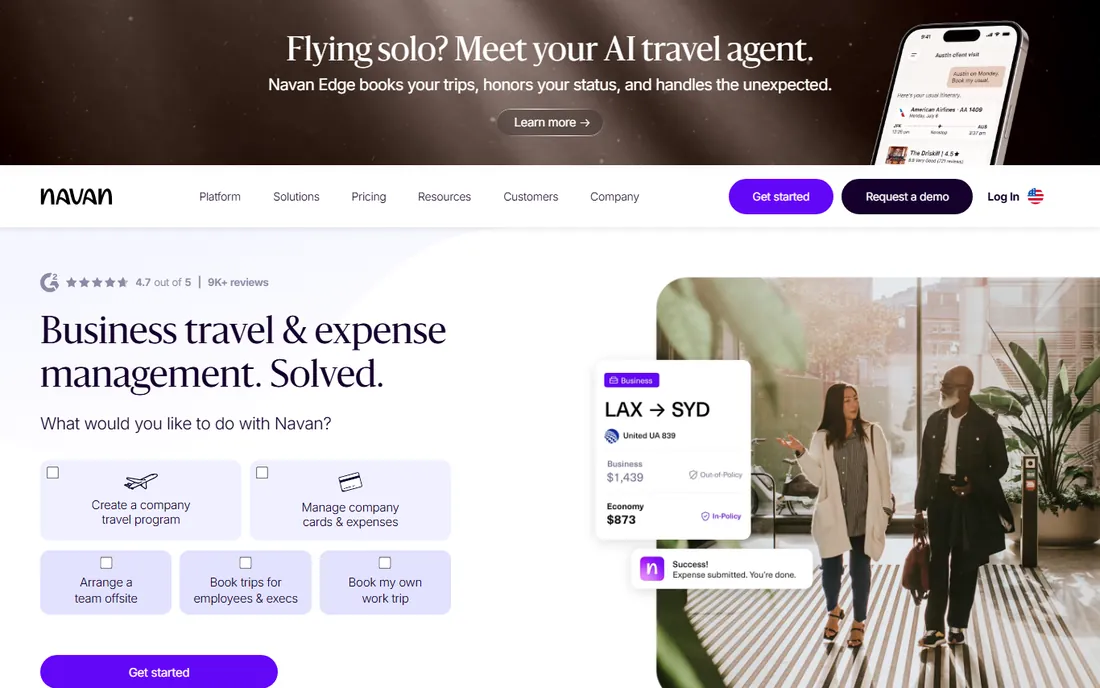
Navan eliminates the travel expense report by integrating booking and expenses: book within policy, and the expense creates itself. Travelers get a consumer-grade experience; finance gets control without the paperwork. For T&E-heavy companies, the unified model is transformative.
Businesses with minimal travel get less value. Pricing is not published. If travel is your largest expense category, Navan's approach beats separate travel and expense tools.
What we like- Travel booking integrated
- Policy enforced at booking
- Great traveler UX
Watch out for- Travel-centric
- Pricing not published
#5
Zoho Expense
Best for: small businesses wanting affordable automation
Visit zoho.com
Starting priceFree; paid plans (see website)
Free planYes
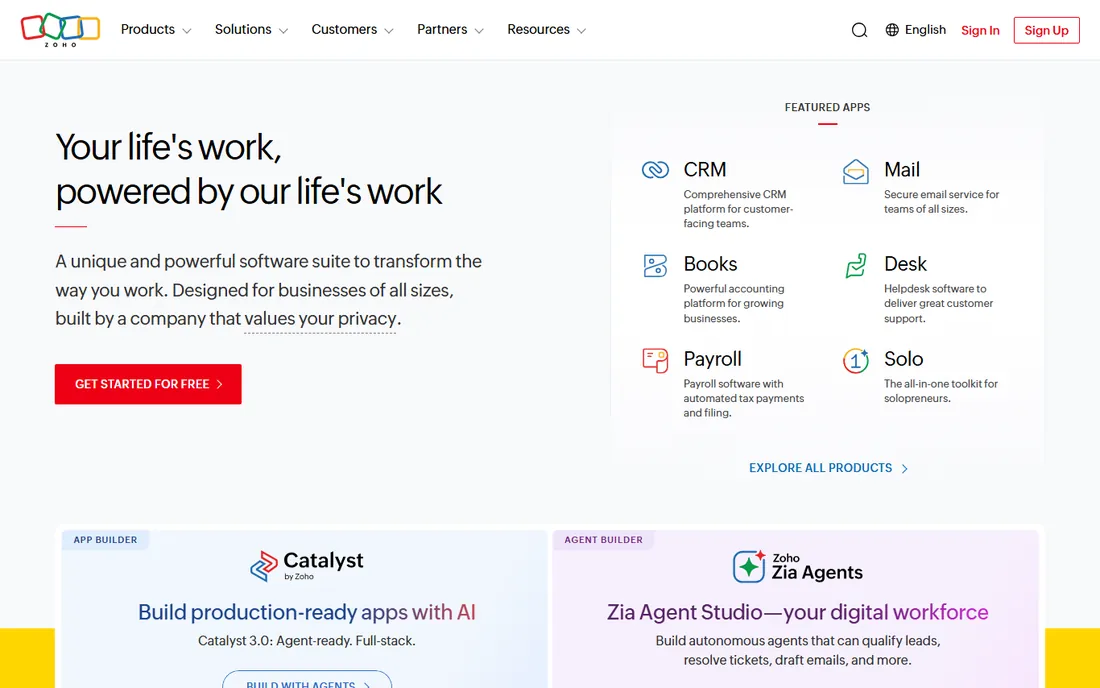
Zoho Expense brings competent expense automation to small businesses at minimal cost: receipt scanning, approval workflows, per diem tracking and accounting integration, with a free tier for small teams. Zoho ecosystem users get tight integration with Books, CRM and People.
The AI and automation sophistication trails Ramp and Expensify. The third-party integration library is smaller. For budget-conscious SMBs, especially in the Zoho world, the value is excellent.
What we like- Generous free tier
- Good Zoho ecosystem integration
- Affordable paid plans
Watch out for- Less advanced AI than leaders
- Smaller integration library
#6
Rydoo
Best for: international companies with per diem complexity
Visit rydoo.com
Starting priceSee website
Free planNo
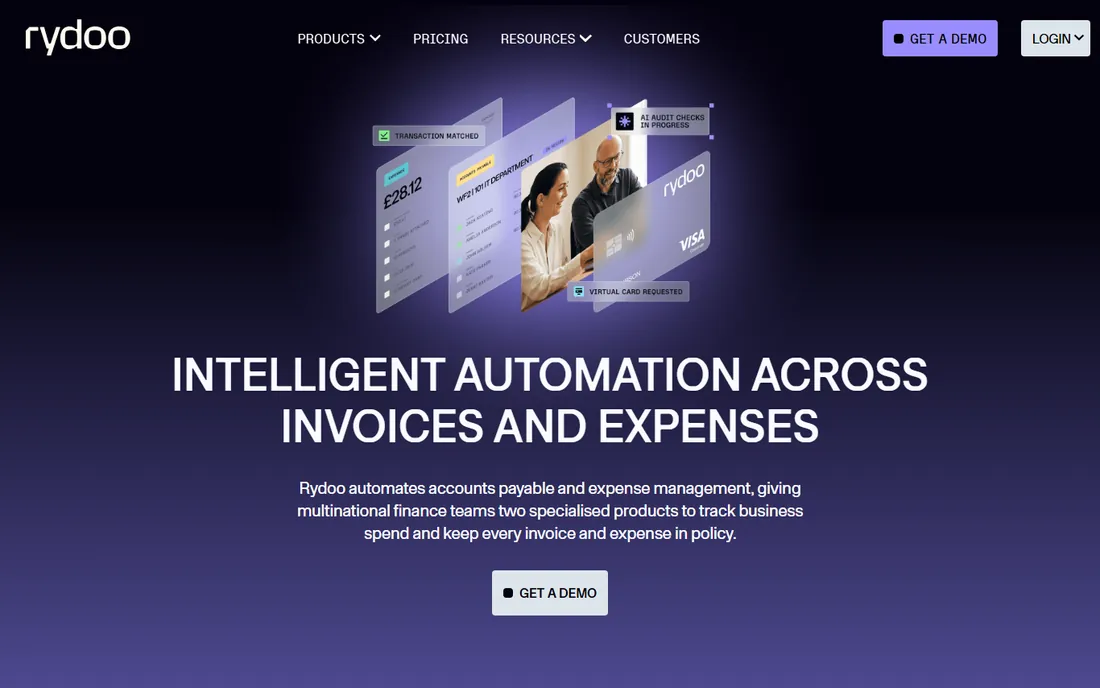
Rydoo (formerly Xpenditure) handles the international expense complexity that US-centric tools fumble: multi-currency, country-specific per diem rules, and VAT recovery. The mobile experience is polished, and the approval workflows adapt to regional requirements.
US buyers may prefer domestic vendors' support. Pricing is not published. For European and multinational companies, the international depth justifies the choice.
What we like- Strong multi-country support
- Per diem automation
- Good mobile experience
Watch out for- Pricing not published
- Less known in US
Starting priceSee website
Free planNo
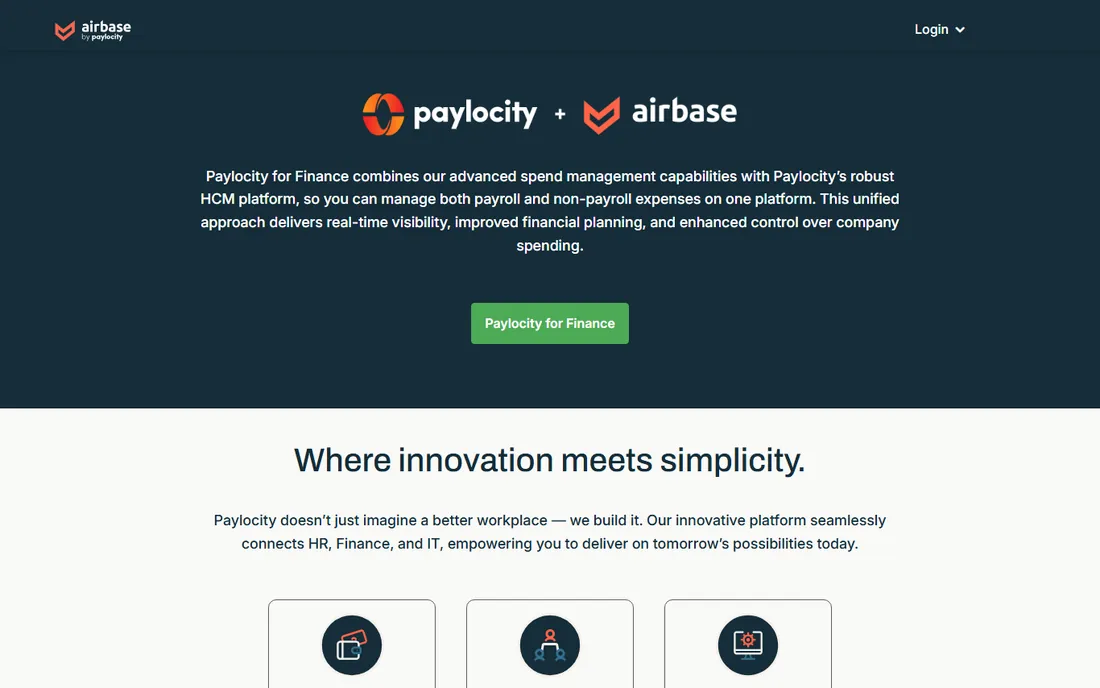
Airbase unifies expenses with procurement: the same approval workflows govern card spend, reimbursements and purchase orders. Finance teams that want consistent controls across all spending types get one system. The accounting integration is reliable.
Companies that only need expense reports may find the procurement breadth excessive. Pricing is not published. For organizations where expense control is part of broader spend governance, the unified approach works.
What we like- Procure-to-pay integration
- Strong approvals
- Good accounting sync
Watch out for- Pricing not published
- Expense-only buyers may find it heavy
#8
Sage Expense Management
Best for: AI-powered receipt capture and card reconciliation
Visit fylehq.com
Starting priceSee website
Free planFree trial
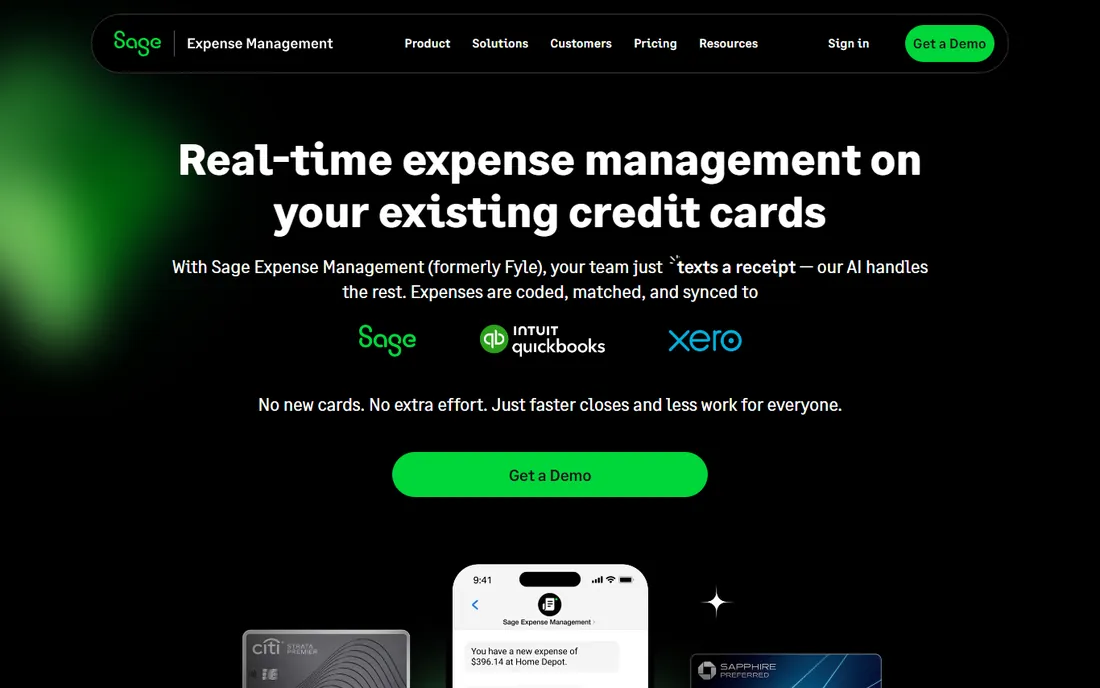
Sage Expense Management (formerly Fyle) excels at getting receipts into the system: text, email, Gmail, Outlook and mobile app capture, with AI extraction and real-time policy checks. The corporate card reconciliation matches receipts to transactions automatically. The AI copilot answers expense questions conversationally.
The Fyle-to-Sage rebrand confuses the market, and pricing is not published transparently. But the receipt capture breadth is genuinely best-in-class. Teams struggling with receipt collection (the eternal expense problem) find it solves the core pain.
What we like- Excellent multi-channel receipt collection
- Strong card reconciliation
- AI copilot
Watch out for- Rebranded from Fyle (market confusion)
- Pricing not transparent
How we chose
We evaluated current expense automation platforms on receipt capture, approval workflows, policy enforcement, integrations and pricing, cross-checked against finance practitioner reviews and 2026 comparisons. Every tool listed is actively maintained with a live homepage as of October 2026. We weighted end-to-end automation (not just digital forms) because true automation eliminates reports rather than digitizing them. Prices reflect each vendor's own published tiers.
The expense report is dying: what replaces it
The industry is moving from "file expense reports faster" to "never file expense reports." Smart corporate cards with pre-set limits and automatic categorization mean most expenses never need a report: the transaction arrives coded, receipted and policy-checked. Reimbursements shrink to the exceptions (cash expenses, mileage).
This changes the buying criteria. Evaluate platforms on how much spending they capture automatically, not on how pretty their report forms are. Ask what percentage of expenses flow touchless in typical deployments. The best platforms achieve 80%+ touchless; the worst are digital versions of the paper process. Buy the future, not the digitized past.
What to check before you sign
Start with receipt capture, because it is the bottleneck. Test the mobile app with real receipts: crumpled, faded, foreign-language. The AI extraction quality determines whether employees actually use the system or revert to shoeboxes. Multi-channel capture (email, text, app) matters for adoption.
Then verify the approval and reimbursement speed. Next-day reimbursement is the standard employees expect; slow reimbursements kill adoption regardless of features. Check the approval workflow flexibility: can it handle your actual org structure, delegation and escalation rules?
Finally, confirm the accounting integration depth. Expenses must sync to your ERP with correct GL codes, departments and projects, automatically. Test with your chart of accounts during the trial. Integration failures create the manual work the software was supposed to eliminate.
Do not underestimate the change management. Employees who have filed expense reports the same way for years need clear communication about what changes and why. Emphasize the benefits they care about (faster reimbursements, less paperwork) rather than the finance team's control objectives. Pilot with volunteers, gather feedback, and let early adopters champion the rollout.
Frequently asked questions
How much does expense management software cost?
From free tiers (Ramp, Brex, Zoho Expense) to $5-15 per user per month for paid plans, to custom enterprise pricing. A 50-person company typically pays $0-500/month depending on the platform. The ROI comes from time saved and policy compliance.
Can expense software really eliminate expense reports?
For card-based spending, largely yes: smart cards with limits and auto-categorization remove the report. Cash expenses, mileage and per diems still need submission, but automated. Expect 70-90% touchless with the best platforms.
How do I handle international expenses?
Use platforms with multi-currency support (Rydoo, Airbase, Sage) and verify per diem rules for your countries. Exchange rate handling and VAT recovery matter. Test with your actual international expense patterns during trials.
What is the best free expense management software?
Ramp's free tier is the most capable for card-based automation. Zoho Expense's free tier suits small teams. Expensify offers free tiers with limits. Start free, upgrade when transaction volumes or feature needs exceed the tier.
How long does implementation take?
Card-based platforms (Ramp, Brex) deploy in days. Dedicated expense tools (Expensify, Zoho) take 2-6 weeks including policy configuration and training. Enterprise deployments with complex approvals run longer. The policy design, not the software, is usually the bottleneck.
Should expenses integrate with our corporate cards?
Ideally, yes: card feeds with automatic receipt matching eliminate manual entry. If you have existing card programs, verify the platform ingests those feeds. If starting fresh, consider the platform's own cards for maximum automation.
How do I set expense policies that people follow?
Keep them simple and automate enforcement. Complex policies that require manual interpretation fail; clear limits enforced automatically succeed. Involve employees in policy design: the people who travel know what is reasonable. Review policies annually against actual spending data and adjust the outliers, not the norms.
The per diem versus actuals decision deserves thought. Per diems simplify administration enormously (no receipts, no judgment calls) but may overpay in cheap locations and underpay in expensive ones. Actuals are fairer but create more work. Many companies use per diems for meals and actuals for lodging: the hybrid captures most of the simplicity with better fairness. Whatever you choose, publish the policy clearly and make it easily accessible: employees cannot follow rules they cannot find. The best expense policies fit on one page. If yours needs a manual, it is too complex and will be ignored or circumvented.
Fraud prevention deserves explicit attention. Most expense fraud is opportunistic (inflated amounts, personal expenses) rather than criminal conspiracy. Automated policy checks, receipt verification and duplicate detection catch most of it. But the cultural deterrent matters more: clear policies, consistent enforcement and visible auditing discourage the casual fraud that costs companies far more than the rare big schemes. Make it known that expenses are reviewed: the perception of oversight prevents more fraud than the oversight itself. Regular audits, even light ones, signal that the system is watched and keep everyone honest. The goal is not to catch criminals but to maintain a culture where the expense process is respected by everyone.
Sources we checked (10)
- https://www.ramp.com
- https://www.brex.com
- https://www.expensify.com
- https://www.navan.com
- https://www.zoho.com
- https://www.rydoo.com
- https://www.airbase.com
- https://www.fylehq.com
- https://www.saasworthy.com/list/expense-management-software?page=5
- https://www.refrens.com/grow/top-expense-management-software-india/
Is your product missing or out of date?
We review this list regularly. Vendors can request a listing, send updated pricing or ask about featured placement.

Shihab Mia · Founder, Rankite
Shihab has spent more than a decade helping SaaS and e-commerce brands grow through search. He writes Rankite's software buying guides from pricing pages, documentation and public user reviews. More about Shihab.