How we make this list: we compare pricing pages, product documentation and public user reviews. Rankite is independent; if a vendor ever pays for a featured spot, that listing is clearly labeled Partner.
Key takeaways
- Shopify is the easiest all-in-one path to a selling store, from $29 a month billed annually.
- WooCommerce is free and the most flexible option for WordPress users who want full control.
- BigCommerce charges no transaction fees and scales on revenue-based tiers.
- Wix and Squarespace suit design-led brands with smaller catalogs.
- Adobe Commerce is the enterprise choice, with licenses reportedly starting around $22,000 a year.
Quick comparison
| Tool | Best for | Starting price | Free plan |
|---|
 Shopify Shopify | all-in-one ease of use | $29/mo (reported) | Free trial |
 WooCommerce WooCommerce | WordPress flexibility | $0 (plus hosting) | Yes |
 BigCommerce BigCommerce | no transaction fees | $29/mo (reported) | Free trial |
 Wix Wix | design-first small stores | $29/mo (reported) | Yes |
 Squarespace Squarespace | beautiful brand stores | $29/mo (reported) | Free trial |
 Adobe Commerce Adobe Commerce | enterprise scale | ~$22,000/yr (reported) | No |
 Shift4Shop Shift4Shop | free US ecommerce | $0 (reported) | Yes |
Is your product missing or out of date?
We review this list regularly. Vendors can request a listing, send updated pricing or ask about featured placement.
Starting price$29/mo (reported)
Free planFree trial

Shopify is the default answer for a reason. Sign up, pick a theme, add products, connect payments, and you can sell the same day. The Basic plan at $29 a month billed annually includes the store, checkout, discount codes, and reporting. Grow at $79 and Advanced at $299 add lower card rates and deeper features. A 3-day free trial starts the process.
The ecosystem is the moat. More than 8,000 apps cover reviews, upsells, subscriptions, B2B, and headless commerce. Shopify Markets simplifies international selling. The checkout is the industry's best-converting, and POS unifies online and retail. For most small and mid-size stores, nothing launches faster.
The honest catch is the total bill. Card rates run 2.9% plus 30 cents on Basic, and using a third-party payment provider adds up to 2% in transaction fees. Apps average real monthly costs on top of the subscription. Shopify is the easiest platform, not the cheapest. Budget the subscription plus fees plus apps, not just the headline price.
What we like- Fastest path from signup to selling
- 8,000+ app ecosystem
- Excellent checkout conversion
Watch out for- Transaction fees unless you use Shopify Payments
- App costs add up
- Limited content flexibility
Starting price$0 (plus hosting)
Free planYes
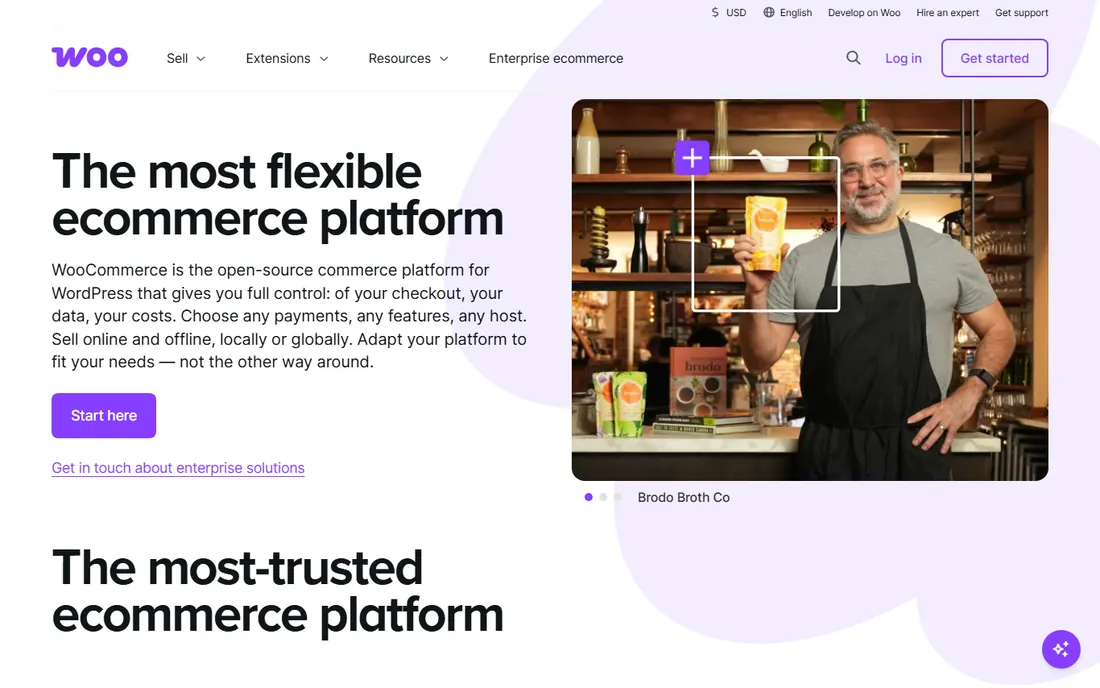
WooCommerce is the free, open-source plugin that turns WordPress into a store. The plugin itself costs nothing and takes no revenue share: you pay for hosting, a domain, and whatever extensions you need. A small store runs roughly $135 to $1,300 a year before payment fees, depending on hosting and extensions.
The flexibility is unmatched. You own the code, the data, and the hosting. Thousands of extensions cover subscriptions, bookings, memberships, and marketplaces. WordPress's content tools make it the best platform for stores that sell through content: blogs, guides, and SEO-driven product pages.
The trade-off is responsibility. Hosting, SSL, security, backups, and updates are yours to manage. Extensions priced $29 to $299 a year each add up for complex stores. And while setup is beginner-friendly, scaling and troubleshooting reward technical skill. For businesses that want control and already know WordPress, WooCommerce delivers the most per dollar.
What we like- Free and open source
- Total control over code and data
- Unmatched content and SEO flexibility
Watch out for- You manage hosting, security, and updates
- Extension costs add up
- Needs technical comfort or a developer
Starting price$29/mo (reported)
Free planFree trial
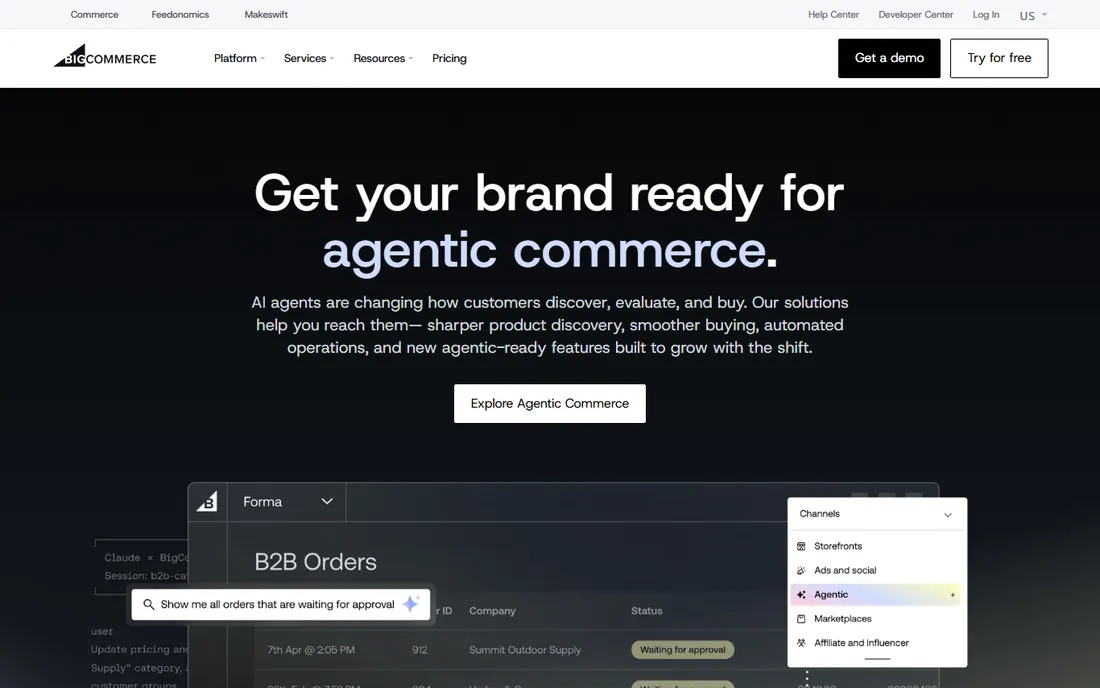
BigCommerce is Shopify's closest rival with a different pricing philosophy. The Standard plan at $29 a month billed annually includes unlimited products, unlimited staff accounts, and no transaction fees on any plan, even with third-party payment providers. Plus at $79 and Pro at $299 add abandoned cart recovery, segmentation, and advanced filtering.
The built-in feature depth stands out. More selling features ship in the box, so merchants rely less on paid apps than on Shopify. Multi-storefront, B2B functionality, and headless commerce options come standard at higher tiers. SEO features like optimized URLs and microdata are strong.
The honest catch is the revenue-based tiers. Plans cap annual online sales: $50,000 on Standard, $180,000 on Plus, $400,000 on Pro, with automatic upgrades when you exceed them. Growing stores can get bumped to a higher bill without choosing it. For stores that hate transaction fees and app sprawl, BigCommerce is the cleaner deal.
What we like- Zero transaction fees on every plan
- Strong built-in features reduce app dependence
- Unlimited staff accounts
Watch out for- Revenue thresholds trigger automatic upgrades
- Themes and design less flexible
- Smaller app ecosystem
Starting price$29/mo (reported)
Free planYes
Wix brings its famous design freedom to ecommerce. The Core plan at $29 a month includes basic ecommerce for up to 50,000 products, payments, and a 50GB store with the visual editor. Business at $39 adds abandoned cart recovery, subscriptions, and marketplace selling. Business Elite at $159 serves high-volume stores. A free plan exists but cannot sell online.
The design advantage is real. No platform gives non-designers more visual control. The template library is enormous, the editor is intuitive, and built-in marketing tools cover email, SEO, and social. For visual brands, boutiques, and creatives, Wix stores look better faster.
The limits are scale and flexibility. Once you pick a template, you cannot switch without rebuilding. Very large or complex catalogs strain the platform, and the app market is thinner than Shopify's. Wix charges no platform transaction fee, just processor rates. For small, beautiful stores, it is the easiest pretty option.
What we like- Best drag-and-drop design freedom
- Ecommerce from $29 a month
- Huge template library
Watch out for- Template choice is final once built
- Weaker for large catalogs
- App market quality varies
Starting price$29/mo (reported)
Free planFree trial

Squarespace makes the best-looking stores of any website builder, full stop. The 2026 plans run Basic at $19, Core at $29, Plus at $49, and Advanced at $99 a month billed annually, and you can sell on all of them. Core drops the transaction fee to zero with Squarespace Payments. AI tools generate product descriptions and site layouts.
The brand-building package is the appeal. Award-winning templates, strong blogging, email campaigns, and scheduling tools suit creatives, makers, and service businesses that sell products alongside their work. Unlimited products come on every plan.
The honest catch is ecommerce depth. Fifty extensions cannot match Shopify's 8,000 apps. There is no native dropshipping, no real wholesale, and stores above a few hundred SKUs feel the strain. There is also no free plan, only a trial. For design-led brands with focused catalogs, Squarespace is the prettiest path to revenue.
What we like- The best-looking templates of any builder
- Sell on every plan from $19
- Strong blogging and content tools
Watch out for- No free plan
- Thin extension ecosystem
- Weaker for large or complex catalogs
Starting price~$22,000/yr (reported)
Free planNo
Adobe Commerce, formerly Magento Commerce, is the enterprise ecommerce platform. B2B quoting, custom pricing, AI-powered merchandising, multi-brand catalogs, and deep customization come standard. Pricing is quote-based, with industry estimates starting around $22,000 a year on-premise and $40,000 a year for the managed cloud, scaling with revenue.
The power is the point. No SaaS platform matches Adobe Commerce for complex catalogs, custom workflows, and B2B selling. The newer SaaS version as a Cloud Service adds automatic updates with less infrastructure burden. Integration with the Adobe Experience Cloud serves marketing-heavy organizations.
The honest catch is everything else. Implementations take months and require developers. The free Magento Open Source edition exists but needs self-hosting and maintenance. For businesses under a few million in revenue, the cost and complexity are prohibitive. This is the platform you graduate to, not the one you start on.
What we like- Unmatched customization and B2B depth
- Multi-brand and multi-region from one instance
- Adobe ecosystem integration
Watch out for- Enterprise pricing with custom quotes
- Requires developers and long implementations
- Overkill below millions in revenue
Starting price$0 (reported)
Free planYes
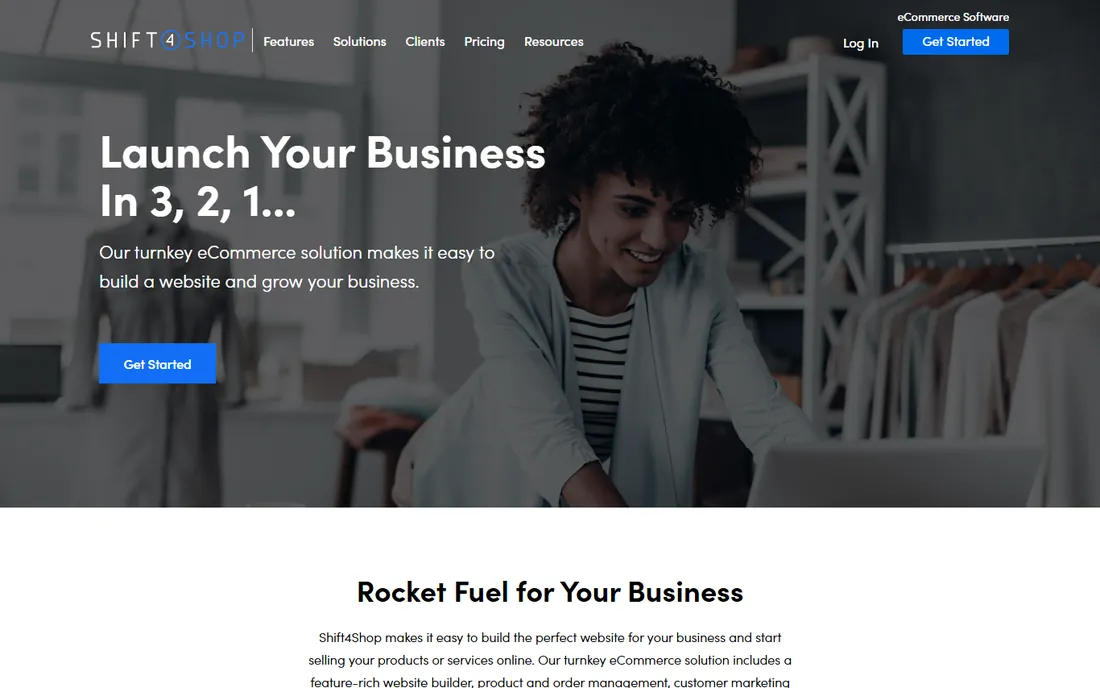
Shift4Shop, formerly 3dcart, offers one of the best deals in ecommerce: a free End-to-End plan with unlimited products, unlimited staff users, and no transaction fees for US merchants who process payments through Shift4. Paid plans from $29 to $229 a month serve merchants who prefer other payment providers.
The feature depth at the free price is remarkable. Built-in CRM, SEO tools, blogging, and 100+ themes come standard. For US startups that want a full-featured store without a monthly platform bill, the math is compelling: you pay only card processing at 2.9% plus 30 cents.
The trade-offs are the strings attached. The free plan requires Shift4 payment processing, the interface shows its age next to Shopify, and non-US merchants hit availability limits. Support quality has been inconsistent. But for eligible US merchants on a budget, Shift4Shop is the most capable free platform available.
What we like- Free End-to-End plan for US merchants using Shift4 payments
- Unlimited products and staff
- No transaction fees
Watch out for- Free plan requires Shift4 payment processing
- Dated interface
- Non-US merchants face limitations
How we chose
We selected seven platforms that build real ecommerce websites: hosted SaaS builders, open-source software, and enterprise commerce. We required current availability, real checkout functionality, and credible pricing evidence. Pricing is third-party reported where vendors quote privately. We did not build stores on any platform.
Start with your catalog and your skills. Under 100 products and no technical team: Shopify, Wix, or Squarespace. WordPress site already or developer access: WooCommerce. Thousands of SKUs or B2B complexity: BigCommerce or Adobe Commerce. US startup on a budget: Shift4Shop.
Model the total cost, not the subscription. Add payment processing (roughly 2.9% plus 30 cents per order), transaction fees where they apply, app or extension subscriptions, premium themes, and your time. A $29 platform with $100 in apps costs more than a $79 platform with everything built in. BigCommerce and Shift4Shop's no-transaction-fee models reward high-volume sellers.
Think about where you will be in two years. Migrating platforms is painful: URLs change, SEO dips, integrations rebuild, and staff retrain. Choose the platform that fits your realistic growth, not just today's catalog. It is cheaper to grow into BigCommerce or Shopify than to migrate to them later.
Hosted vs. open source
Hosted platforms like Shopify, BigCommerce, Wix, and Squarespace handle servers, security, and updates. You trade control for convenience and pay a subscription. Open source like WooCommerce and Magento Open Source gives you the code and the data. You trade convenience for control and pay with hosting and maintenance.
Most small businesses should choose hosted. The subscription buys freedom from technical emergencies. Open source pays off when you need custom functionality no SaaS platform offers, when you process enough volume to justify the infrastructure, or when data ownership is a requirement. Be honest about whether you are buying control you will never use.
What changes as you scale
Every platform gets more expensive as you grow, just differently. Shopify and Wix scale on plan tiers and app costs. BigCommerce scales on revenue thresholds with automatic upgrades. WooCommerce scales on hosting and developer time. Adobe Commerce scales on license tiers tied to revenue.
Watch the fee breakpoints. On Shopify, the Grow plan's lower card rate pays for itself around $10,000 a month in sales. On BigCommerce, crossing $50,000 in annual sales triggers the Plus upgrade. Run your actual numbers against each platform's fee structure before committing: the cheapest plan today may not be the cheapest at your target revenue.
International selling adds another layer. Multi-currency, multi-language, tax compliance, and local payment methods vary widely. Shopify Markets and BigCommerce multi-storefront lead here. WooCommerce handles it with extensions. If global expansion is on the roadmap, weight these features heavily in the decision.
Frequently asked questions
What is the cheapest way to build an ecommerce website?
WooCommerce is free software; you pay only hosting from a few dollars a month. Shift4Shop is free for US merchants using Shift4 payments. Wix has a free plan but it cannot sell online. Factor in payment processing fees, which apply on every platform.
Is Shopify or WooCommerce better?
Shopify is easier: hosted, maintained, and selling in hours, from $29 a month. WooCommerce is more flexible: free, open source, and fully customizable, but you manage hosting and updates. Choose Shopify for speed and simplicity, WooCommerce for control and content-driven selling.
Does BigCommerce charge transaction fees?
No. BigCommerce charges zero transaction fees on all plans, including with third-party payment providers. You pay only the card processor's rate. Plans are priced by revenue tier: Standard $29, Plus $79, Pro $299 a month billed annually, with automatic upgrades at sales thresholds.
Can I sell on Wix or Squarespace?
Yes. Wix sells from the $29 a month Core plan. Squarespace sells on all plans from $19 a month, with zero transaction fees from the $29 Core plan up. Both suit smaller catalogs and design-led brands better than large or complex stores.
What does Adobe Commerce cost?
Adobe does not publish pricing; licenses are quote-based. Industry estimates put Adobe Commerce on-premise from around $22,000 a year and the managed cloud from around $40,000 a year, scaling with revenue. The free Magento Open Source edition is the no-license alternative for developers.
How long does it take to build an ecommerce website?
On Shopify, Wix, or Squarespace, a basic store can launch in a day to a week. WooCommerce takes a week or two with hosting setup. BigCommerce is similar to Shopify. Adobe Commerce implementations typically take 4 to 8 months. Budget more time for product photography, copywriting, and payment setup than for the platform itself.
Sources we checked (20)
- https://bushe.co/blog/shopify-pricing/
- https://forceget.com/blog/shopify-pricing-plans-and-fees-for-april-2025/
- https://www.pluginhive.com/shopify-pricing/
- https://woocommerce.com/posts/wordpress-ecommerce-plugins/
- https://fluentcart.com/blog/how-much-does-woocommerce-cost/
- https://www.bluehost.com/blog/wordpress-e-commerce-plugin/
- https://www.netsolutions.com/insights/bigcommerce-vs-shopify/
- https://ecommerce.folio3.com/blog/bigcommerce-price/
- https://printify.com/blog/bigcommerce-vs-shopify/
- https://plumrocket.com/blog/wix-ecommerce-review
- https://www.godaddy.com/resources/skills/best-ecommerce-website-builder
- https://reverbico.com/blog/wix-vs-squarespace/
- https://googiehost.com/blog/squarespace-pricing-explained/
- https://www.websitebuilderexpert.com/ecommerce-website-builders/squarespace-e-commerce-business-review/
- https://www.magentoindia.in/blog/2026/09/09/magento-open-source-vs-adobe-commerce/
- https://www.stylefactoryproductions.com/blog/adobe-commerce-magento-vs-shopify
- https://www.mgt-commerce.com/blog/adobe-ecommerce-features/
- https://seriosity.com/shift4shop-vs-shopify/
- https://comparisons.financesonline.com/wix-shopping-cart-vs-x-cart-cloud-vs-shift4shop
- https://ecommerceparadise.com/shift4shop-review-2026-the-best-free-ecommerce-platform-for-us-dropshippers/
Is your product missing or out of date?
We review this list regularly. Vendors can request a listing, send updated pricing or ask about featured placement.

Shihab Mia · Founder, Rankite
Shihab has spent more than a decade helping SaaS and e-commerce brands grow through search. He writes Rankite's software buying guides from pricing pages, documentation and public user reviews. More about Shihab.