How we make this list: we compare pricing pages, product documentation and public user reviews. Rankite is independent; if a vendor ever pays for a featured spot, that listing is clearly labeled Partner.

Key takeaways
- Flickr and 500px remain the classic photo communities, with Flickr Pro offering unlimited storage for serious shooters.
- SmugMug, Zenfolio and PhotoShelter are business platforms first: client galleries, print sales and delivery workflows.
- VSCO blends editing, community and business tools in one membership for photographers going pro.
- Picfair is the simplest way to build a free store and sell prints and downloads.
- YouPic offers AI-assisted discovery and monetization for photographers building an audience.
Quick comparison
| Tool | Best for | Starting price | Free plan |
|---|
 500px 500px | exposure in a curated photography community | See website | Yes |
 Flickr Flickr | long-term photo storage and community | See website | Yes |
 SmugMug SmugMug | client galleries and print sales in one place | See website | No |
 VSCO VSCO | editing, community and pro business tools | See website | Yes |
 Zenfolio Zenfolio | all-in-one photography business platform | See website | Free trial |
 Picfair Picfair | free store to sell prints and downloads | Free to start | Yes |
 PhotoShelter PhotoShelter | pro archive and content distribution | See website | Free trial |
 YouPic YouPic | AI-assisted discovery and monetization | See website | Yes |
Is your product missing or out of date?
We review this list regularly. Vendors can request a listing, send updated pricing or ask about featured placement.
8 places photographers share, store and sell their work
Every photographer eventually hits the same wall: phone galleries are a mess, social feeds bury your best work, and clients need somewhere professional to view and buy. The right photo sharing platform solves a specific version of that problem. Some are communities built for feedback and discovery. Some are storefronts built for selling. Some are business systems built for delivering client work. Pick the one that matches the job, and your photos stop disappearing into the scroll.
#1
500px
Best for: exposure in a curated photography community
Visit 500px.com
Starting priceSee website
Free planYes
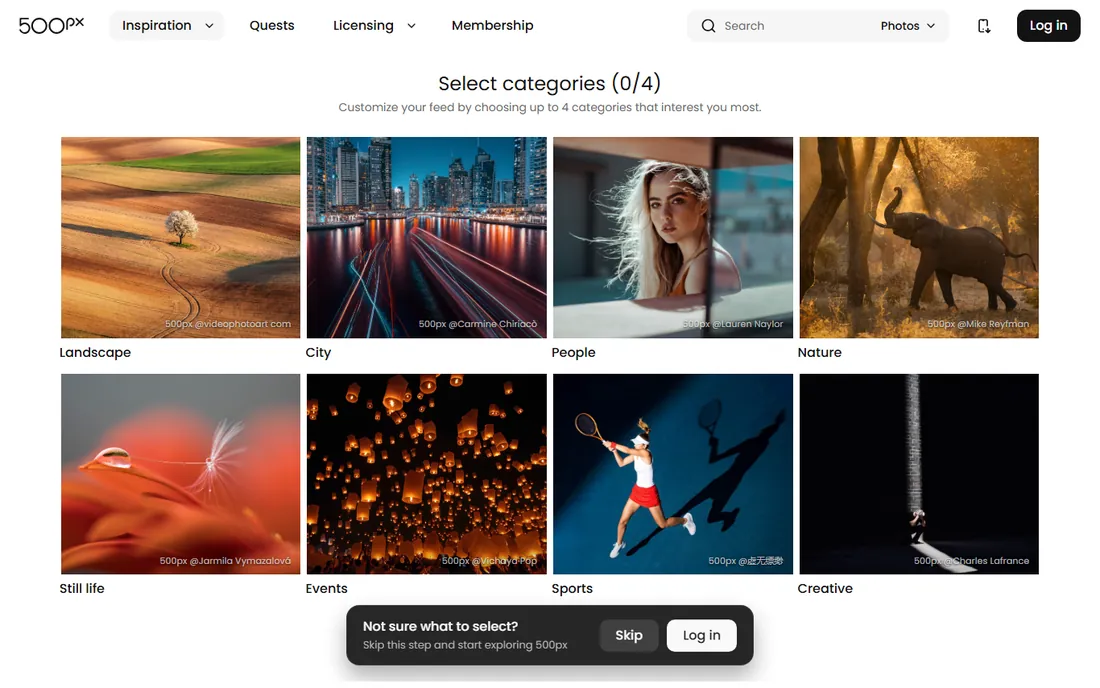
500px built its name on curation. The explore feed surfaces strong work across genres, and the community rewards technical skill, which makes it a good place to benchmark yourself against serious photographers. The licensing marketplace lets contributors sell images as stock, and paid plans add portfolio websites and higher upload limits. The free tier gets you into the community with limited uploads.
The culture runs competitive. Newcomers sometimes find the engagement cooler than Flickr's or YouPic's, and meaningful feedback is scarcer than likes. If your goal is to be seen by other skilled photographers and potentially license your work, 500px earns its spot. If you want a cozy community, look elsewhere on this list.
What we like- Curated, high-quality community feed
- Licensing marketplace for stock sales
- Portfolio sites included
Watch out for- Free tier limits uploads
- Community skews competitive rather than warm
Starting priceSee website
Free planYes
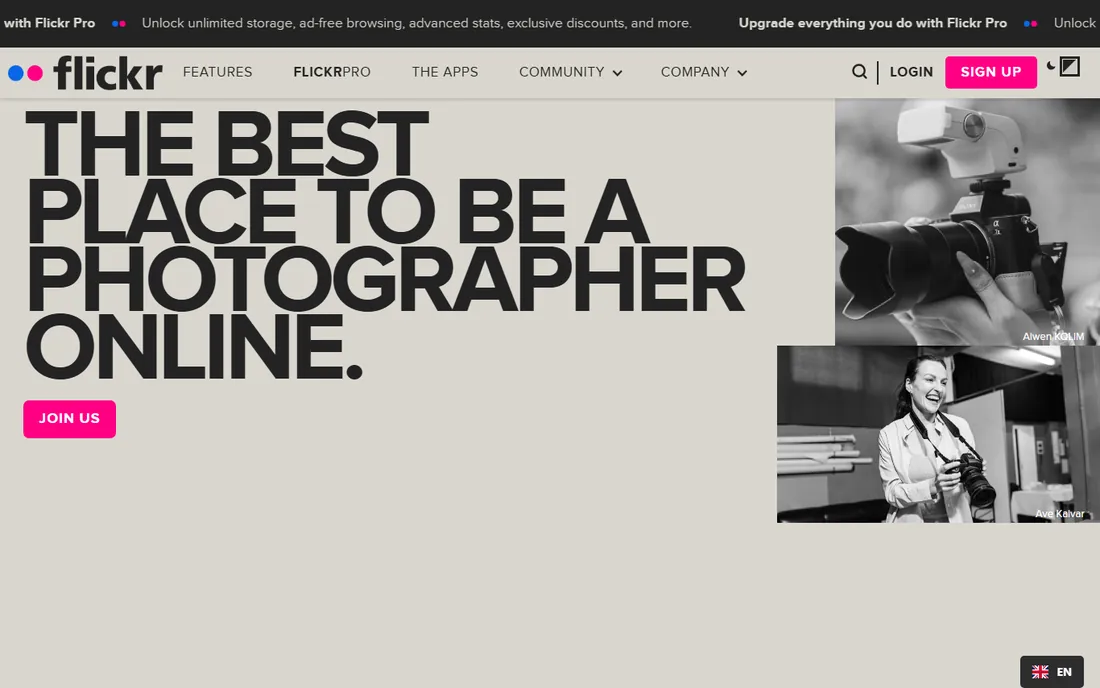
Flickr is the old reliable of photo sharing, and it keeps getting the important things right. Flickr Pro removes upload limits and stores your photos at full resolution, which makes it a genuine archive, not just a feed. Groups remain one of the best ways to get thoughtful critique, and the Creative Commons collection is the largest on earth, which matters if you care about licensing and reuse.
The free tier is a taste, not a home: upload caps push serious shooters to Pro. The design feels dated next to VSCO and YouPic, and younger photographers tend to skip it. But for photographers who want their work stored safely, organized in albums and discussed by people who care about photography, Flickr is still the most photographer-first community on the internet.
What we like- Full-resolution storage with Pro
- Groups for every niche imaginable
- Largest Creative Commons collection online
Watch out for- Free tier is limited
- The interface shows its age
Starting priceSee website
Free planNo

SmugMug is a business platform wearing a gallery's clothes. You get unlimited storage, customizable portfolio sites, client proofing galleries and integrated print sales through professional labs, all under your own branding with no ads. Wedding and portrait photographers use it as their entire client delivery system: shoot, upload, client orders prints, SmugMug fulfills.
There is no free plan worth mentioning, and the subscription tiers run from basic portfolios to full business setups. Template design lags behind Squarespace-style builders if you want a highly custom site. But for photographers whose income depends on delivering and selling photos to clients, SmugMug's combination of storage, galleries and commerce is the most complete package here.
What we like- Unlimited photo storage on paid plans
- Built-in print labs and sales tools
- No ads on your galleries
Watch out for- No real free tier
- Templates can feel generic
#4
VSCO
Best for: editing, community and pro business tools
Visit vsco.co
Starting priceSee website
Free planYes
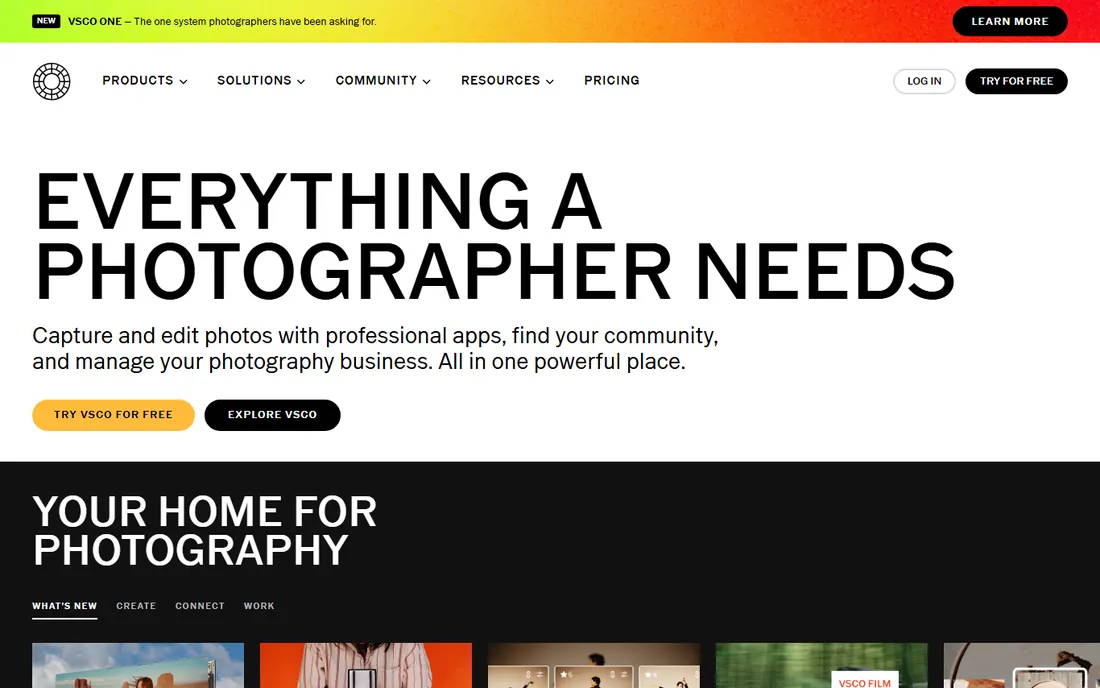
VSCO grew from its famous presets into a full photography ecosystem. The editor's film-emulation presets remain the industry benchmark for mobile editing, and the community side deliberately avoids the engagement mechanics that make other platforms exhausting. Membership tiers run from a free Starter with basic presets through Plus and Pro to VSCO One, which adds business tools for photographers running real operations.
The subscription model means the best presets and features sit behind paywalls, and the community is smaller than Flickr's or 500px's. VSCO suits photographers who value the editing workflow and a calmer creative space over maximum reach. It is also the rare platform that genuinely serves both hobbyists and working pros in one membership.
What we like- Beloved film-like presets and editor
- Community without like-count pressure
- Pro adds business tools
Watch out for- Subscription pricing for the good stuff
- Smaller community than the giants
Starting priceSee website
Free planFree trial

Zenfolio aims to run the entire photography business: portfolio websites with SEO, client galleries with proofing and print sales, booking and scheduling, email marketing and a volume workflow for school and sports photographers. A free trial lets you test the platform before committing to Basic, Advanced or Professional annual plans. The company has served photographers for over two decades, and it shows in the depth of the workflow.
Depth brings complexity. New users face a learning curve across the many modules, and costs rise as you add plans and features. It is more business software than community, so do not come for feedback and followers. For working photographers who want one login for their site, their galleries, their bookings and their sales, Zenfolio is the most business-complete option on this list.
What we like- Websites, galleries, booking and marketing in one
- Volume photography workflow
- 20+ years serving photographers
Watch out for- Pricing tiers add up
- The interface packs a lot to learn
Starting priceFree to start
Free planYes
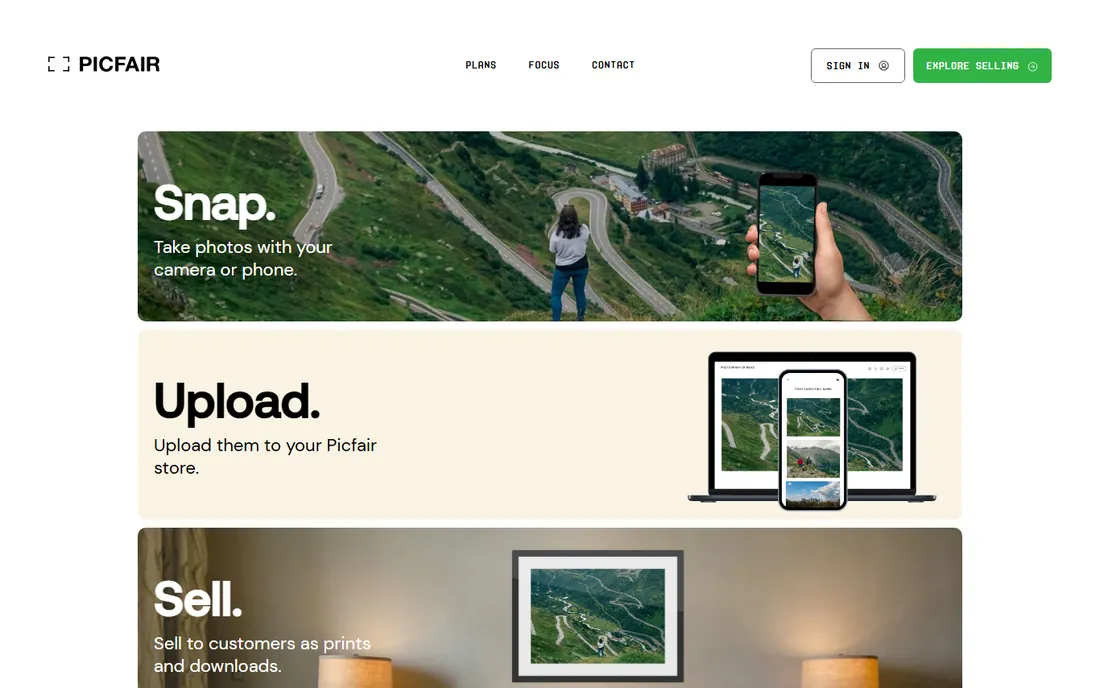
Picfair's pitch is refreshingly simple: upload your photos, get a free customizable store, sell prints and digital downloads. Picfair produces and ships the prints, handles licensing, image protection and payments globally, and you keep the focus on shooting. Public albums showcase your work while private password-protected albums serve events, commissions and family galleries.
You pay commission on sales rather than a subscription, which is fair for beginners but worth calculating once volumes grow. Discovery on the platform is limited; successful sellers drive their own traffic. For photographers who want to start selling with zero upfront cost and no technical setup, Picfair is the easiest on-ramp on this list.
What we like- Free store and portfolio
- Picfair handles printing, shipping and payments
- Public and private albums
Watch out for- Commission on sales
- Discovery depends on your own promotion
Starting priceSee website
Free planFree trial

PhotoShelter has evolved into a digital asset management platform for marketers, creatives and media teams, managing billions of assets with distribution, analytics and brand controls. For professional photographers working with brands, agencies and publications, it is the archive and delivery layer: organize everything, share with stakeholders, distribute content in real time and track how it performs.
This is enterprise software now, with pricing and onboarding to match. Solo hobbyists should look at Flickr or SmugMug instead. But for photographers whose clients are organizations with asset libraries, approval workflows and distribution needs, PhotoShelter is the professional standard, and its photographer roots mean it understands image workflows better than generic DAM tools.
What we like- Serious digital asset management
- Real-time content distribution
- Built for teams and brands
Watch out for- Enterprise pricing and positioning
- Overkill for casual sharing
Starting priceSee website
Free planYes

YouPic is the newer face of the photography community, pairing a global showcase with AI tools that help you improve, promote and monetize your work. The platform leans into discovery: good photos get surfaced to a worldwide audience, and the AI layer assists with the parts photographers dislike, like promotion and optimization. A free tier gets you into the community.
Newness is the honest caveat. The community is smaller than Flickr's or 500px's, and the AI features are still finding their shape. But YouPic represents where photo sharing is heading: communities that actively help your work get seen rather than just hosting it. For photographers building an audience from scratch, it is worth a serious look alongside the incumbents.
What we like- AI tools for improving and promoting work
- Global discovery community
- Monetization options for creators
Watch out for- Smaller community than the established platforms
- AI features still evolving
The platforms split into three jobs, and mixing them up wastes months. Community platforms (Flickr, 500px, YouPic, VSCO) exist for feedback, inspiration and discovery; they are where you grow as a photographer. Business platforms (SmugMug, Zenfolio, PhotoShelter) exist for client delivery and revenue; they are where you run the operation. Store platforms (Picfair, plus the licensing arms of 500px and others) exist to sell images and prints.
Most working photographers need one from each column. A common stack: Flickr or 500px for community and feedback, SmugMug or Zenfolio for client galleries and sales, Picfair for passive print income. Amateurs can start with just a community platform and add the business layer when clients appear. The expensive mistake is buying a business platform before you have clients, or expecting a community platform to pay your bills.
We verified each platform's homepage and final URL directly, then checked help centers, pricing pages and published plan details for fees, free tiers and upload limits. Where pricing was quote-based or gated behind signup, we marked it as "See website" rather than estimating. We weighed community quality against public reviews and photographer discussions on Reddit and photography forums, and confirmed business features against vendor documentation. We did not open paid accounts or run test transactions.
What to check before you commit your archive
Start with storage math. Full-resolution archives grow fast: a wedding photographer can generate hundreds of gigabytes a year. SmugMug's unlimited storage and Flickr Pro's full-resolution hosting solve this; free tiers on community platforms do not. Check upload limits, file size caps and whether originals are preserved before you migrate years of work.
Check who owns the audience. On community platforms, your followers are the platform's users, and algorithm changes can cut your reach overnight. On your own SmugMug or Zenfolio site, the domain and the client list are yours. Serious photographers use community platforms for discovery and their own sites for the business relationship, so a platform change never threatens the income.
Check the exit terms. Export tools, download options and data portability matter more than any feature list. Before uploading your life's work anywhere, confirm you can bulk-download originals and leave. Every platform on this list allows exports, but the ease varies, and your archive is too valuable to trap.
Frequently asked questions
What is the best free photo sharing platform for photographers?
Flickr's free tier, 500px's free tier, VSCO's Starter plan and YouPic all cost nothing to start. Flickr Pro is the cheapest path to unlimited full-resolution storage once you outgrow free limits. Picfair's free store lets you start selling with no upfront cost.
Where should professional photographers host client galleries?
SmugMug and Zenfolio are built exactly for this: password-protected galleries, online proofing, print sales and fulfillment. PhotoShelter serves photographers whose clients are brands and media organizations. All three keep your branding front and center instead of a social feed.
Can I sell my photos on these platforms?
Yes. Picfair sells prints and downloads with no upfront cost. SmugMug and Zenfolio integrate professional print labs into your galleries. 500px runs a licensing marketplace for stock sales. PhotoShelter supports distribution to brand clients. Each takes a cut or charges a subscription, so compare fee structures against your expected volume.
Is Flickr still worth it in 2026?
For photographers, yes. Flickr Pro remains one of the cheapest ways to store full-resolution photos with no compression, the groups still deliver real critique, and the Creative Commons collection is unmatched. It is not trendy, but it is dependable, and your archive will outlast every trend.
What is the difference between 500px and Flickr?
500px is curated and competitive, built around discovery and licensing, with a feed that rewards polished work. Flickr is community-driven and archival, built around groups, discussion and full-resolution storage. Photographers often use both: 500px for exposure, Flickr for the archive and the conversation.
How do I protect my photos from theft online?
Use platforms with screenshot protection and watermarking options (SmugMug, Zenfolio and Picfair all offer image protection features), upload web-sized versions rather than full originals to community platforms, and register copyright for work you license commercially. No protection is perfect, but these steps stop casual theft.
Sources we checked (8)
- https://500px.com
- https://www.flickr.com
- https://smugmug.com/
- https://vsco.co/
- https://zenfolio.com
- https://picfair.com/
- https://photoshelter.com/
- https://youpic.com
Is your product missing or out of date?
We review this list regularly. Vendors can request a listing, send updated pricing or ask about featured placement.

Shihab Mia · Founder, Rankite
Shihab has spent more than a decade helping SaaS and e-commerce brands grow through search. He writes Rankite's software buying guides from pricing pages, documentation and public user reviews. More about Shihab.