How we make this list: we compare pricing pages, product documentation and public user reviews. Ratings come from G2, Capterra or Trustpilot, with the date we checked them.
Key takeaways
- Groww and ET Money suit beginners who want simple SIPs and clear fund data, while INDmoney suits people with investments spread across several platforms.
- Kuvera and Zerodha Coin are strong for direct mutual funds, with a focus on low cost, goal based investing rather than trading noise.
- Jupiter and Fi Money combine banking style features with budgeting, which helps users who want spending and saving in one place.
- Moneycontrol works best as a research and tracking companion, not as a replacement for an investment app.
- All apps listed here operate in India, but charges and features change, so check the vendor page before opening an account.
Quick comparison
| Tool | Best for | Starting price | Free plan |
|---|
 Groww | Beginner investing and SIPs | See website | Yes |
 ET Money | Goal based investing and expense tracking | See website | Yes |
 INDmoney | Tracking all investments in one place | See website | Yes |
 Kuvera | Direct mutual funds and goal planning | See website | Yes |
 Jupiter | Everyday banking with smart saving | See website | Yes |
 Fi Money | Saving rules and spending insights | See website | Yes |
 Paytm Money | Simple investing inside the Paytm ecosystem | See website | Yes |
 Moneycontrol | Market news and portfolio tracking | See website | Yes |
 Zerodha Coin | Direct mutual funds for Zerodha users | See website | Yes |
Is your product missing or out of date?
We review this list regularly. Vendors can request a listing, send updated pricing or ask about featured placement.
The best personal finance apps in India for saving, investing, and tracking
Indian investors face a crowded choice. Some apps focus on mutual funds, some on banking, and some on tracking money that already sits elsewhere. The right pick depends on whether the main job is starting a SIP, cutting spending, or seeing a full net worth picture. The apps below are all available in India and cover those different jobs.
Starting priceSee website
Free planYes

Groww is often the easiest first step for a new investor in India. Opening an account is paperless, the fund pages explain returns, risk, and expense ratio in plain terms, and starting a SIP takes only a few taps. Stocks, exchange traded funds, and mutual funds sit in the same app, which keeps a beginner portfolio in one view.
The limit is depth. Groww explains the basics well, but it does not offer the same level of portfolio analysis or tax planning detail as some rivals. That is fine for a first SIP. As a portfolio grows and tax questions get more complex, a second app for tracking or advice may become useful.
What we like- Simple interface for direct mutual funds and stocks
- SIPs from small amounts
- Learning material for new investors
Watch out for- Research depth is lighter than specialist platforms
- Active traders may want more advanced charting tools
Starting priceSee website
Free planYes

ET Money tries to cover both sides of personal finance: growing money and watching spending. Its goal tools ask for a target, a timeline, and a monthly amount, then suggest a plan and show whether contributions stay on track. Expense tracking and bill reminders add a daily money view that pure investment apps do not provide.
That breadth comes with a trade-off. Users who only want stock trading will find ET Money limited, and users who want every premium insight may need a paid plan. For a salaried user who wants one app for SIPs, goals, and monthly spending, the combination is practical and easy to maintain.
What we like- Goal planning for major life targets
- Direct mutual funds
- Expense tracking and bill reminders
Watch out for- Some advanced features sit behind paid plans
- Stock investing is limited compared with broker apps
Starting priceSee website
Free planYes

INDmoney solves a common frustration: investments scattered across brokers, banks, and fund houses. By pulling holdings into one dashboard, it shows total net worth, asset mix, and goal progress without manual spreadsheets. It also supports investing in Indian and US stocks, which suits users with a wider portfolio.
Setup is the main hurdle. Linking accounts and verifying holdings takes patience, and the amount of data on screen can overwhelm a first time investor. Once set up, however, it becomes the app many users open for a monthly review, even if SIPs run elsewhere.
What we like- Consolidated view across stocks, mutual funds, NPS, and US stocks
- Net worth tracking
- Goal tools
Watch out for- Linking many accounts takes setup time
- Some features suit advanced users more than complete beginners
Starting priceSee website
Free planYes

Kuvera keeps its focus narrow, and that focus is its strength. It offers direct mutual funds, goal based SIPs, and tools that check whether a portfolio still fits its original purpose. Family account features also help households that invest together but want separate views. For long term fund investors, the lack of trading features is not a loss.
New investors who want stocks, news, and trading in the same app will need a second platform. Kuvera is best judged on what it does well: low cost fund investing, clear goals, and steady portfolio reviews without pressure to trade often.
What we like- Direct plans with no commission
- Goal based SIPs
- Portfolio health checks and tax saving tools
Watch out for- No stock trading
- Interface is functional rather than flashy
Starting priceSee website
Free planYes

Jupiter sits closer to a bank account than to a broker. Users get a digital savings account, spending categorisation, and pots that separate money for travel, bills, or an emergency fund. That structure helps people who struggle to save after spending, because money can be moved aside as soon as salary arrives.
Investors should not expect a full mutual fund or stock platform here. Jupiter works best as the everyday money app, paired with a dedicated investment app for SIPs. Used that way, it turns budgeting from a monthly chore into a habit tied to each transaction.
What we like- Digital savings account with spending insights
- Pots for separate goals
- Rewards on everyday spending
Watch out for- Not a full investment platform
- Banking features depend on the partner bank
#6
Fi Money
Best for: Saving rules and spending insights
Visit fi.money
Starting priceSee website
Free planYes
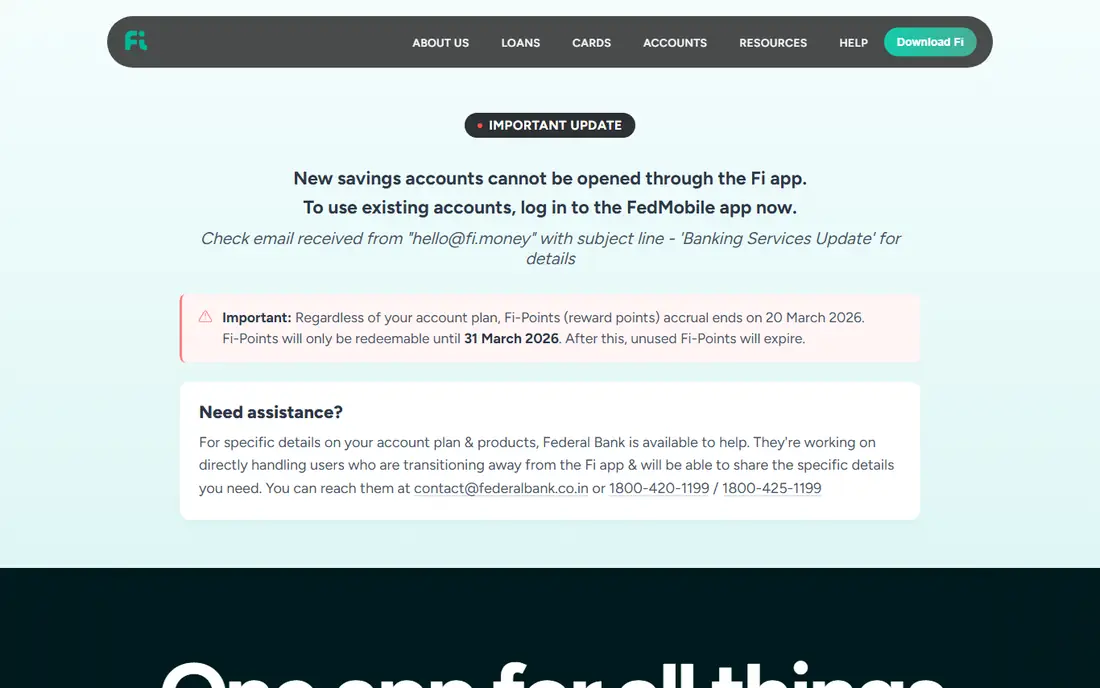
Fi Money appeals to users who want their account to help them save without constant manual effort. Saving rules can round up spending or move a set amount on a schedule, and insights break down where money goes each month. The app feels modern and mobile first, with a clear view of balance, recent activity, and savings progress.
As with Jupiter, Fi Money is not a substitute for a dedicated investment app. Its strength is behaviour: making saving automatic and spending visible. Pair it with Groww, Kuvera, or ET Money for SIPs, and use Fi Money to protect the monthly surplus that funds those SIPs.
What we like- Automated saving rules
- Spending insights
- Digital savings account with partner bank support
Watch out for- Investment options are limited
- Some features depend on salary account or partner terms
Starting priceSee website
Free planYes
Paytm Money benefits from familiarity. Millions of Indian users already use Paytm for payments, so adding investing to a known app lowers the barrier for a first SIP. Direct mutual funds, stocks, and NPS sit alongside simple fund comparisons, and SIP setup follows a short, guided flow.
Serious researchers may want more depth. Fund analysis, portfolio diagnostics, and goal planning are present but lighter than on ET Money or Kuvera. For a casual investor who values convenience and already lives inside the Paytm ecosystem, that trade-off is acceptable.
What we like- Direct mutual funds and stocks in one app
- Familiar for existing Paytm users
- Simple SIP setup
Watch out for- Research and advisory depth is modest
- Support quality can vary by issue
Starting priceSee website
Free planYes
Moneycontrol is best seen as a research desk, not a wallet. Its news, market data, fund pages, and portfolio tracker help users follow holdings and learn why markets move. A user can track a watchlist, read fund analysis, and check results before making a decision in a separate investment app.
The drawback is noise. The volume of headlines, tips, and market chatter can push a long term investor toward short term reactions. Use Moneycontrol for research and tracking, set a clear review schedule, and keep actual buying decisions tied to a written goal and SIP plan.
What we like- Wide market news and data
- Portfolio tracking across assets
- Fund and stock research pages
Watch out for- Not an investment execution app for most users
- Advertising and volume of news can distract
Starting priceSee website
Free planYes
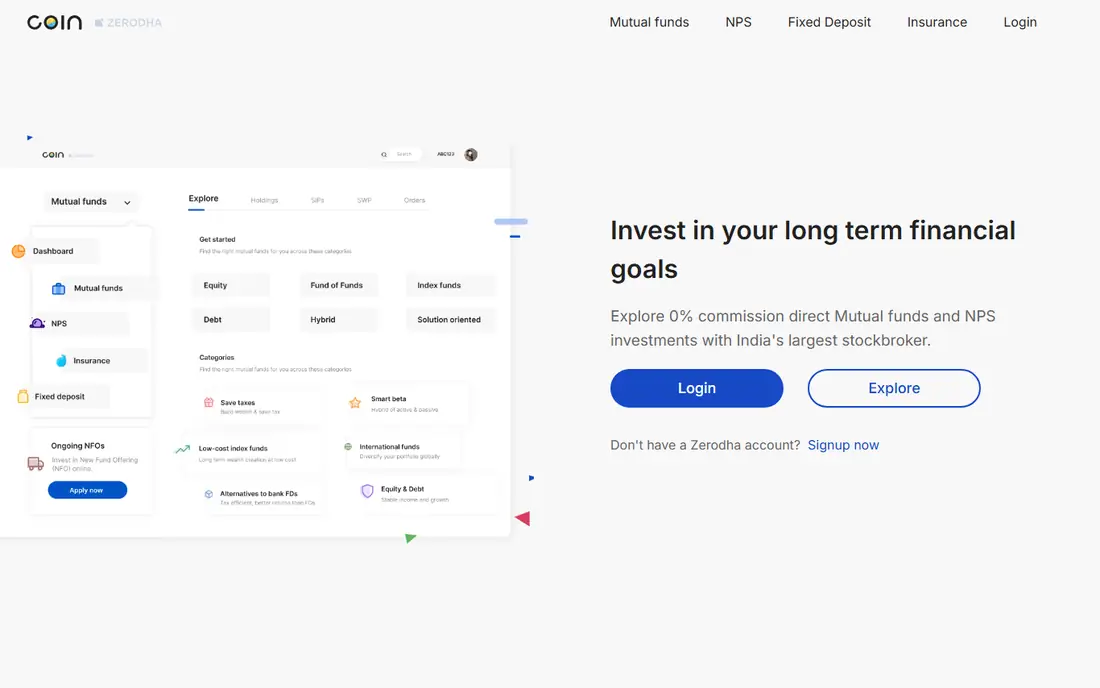
Zerodha Coin suits investors who already trade or hold stocks with Zerodha. Mutual fund units sit in demat form, the holding view is clean, and direct plans avoid commission drag over long periods. For a Zerodha user, adding Coin keeps stocks and funds under one login and one support system.
Users without a Zerodha account should weigh the extra step. Opening a demat account just for funds adds friction when Groww or Kuvera offer a simpler start. Coin makes most sense as part of an existing Zerodha relationship, not as a standalone first app for every beginner.
What we like- Direct mutual funds with no commission
- Clean holding view
- Fits well with an existing Zerodha account
Watch out for- Requires a Zerodha demat account
- No separate goal planning depth compared with specialist apps
How we chose
We compared vendor pages, app store listings, public documentation, and reviews on G2, Capterra, and Reddit, with a focus on availability in India, direct mutual fund support, SIP features, expense tracking, and banking integration. We checked that each app is actively maintained and available to Indian users in 2026, and we favoured apps with a clear primary job rather than a long list of half finished features. Charges, brokerage, and premium tiers change often, so we list See website where a simple starting price does not apply to consumer finance apps, and we point to vendor pages in Sources.
Picking an app that fits your money habits
The best app is the one that matches a real habit, not the one with the longest feature list. A user who checks spending daily needs different tools from a user who reviews a portfolio once a quarter.
Match the app to the main job
Start by naming the main job for the next six months. If it is starting SIPs, pick Groww, Kuvera, or ET Money. If it is seeing all holdings together, pick INDmoney. If it is controlling daily spending, pick Jupiter or Fi Money. If it is research, add Moneycontrol. One main app plus one tracker covers most households without clutter.
Keep costs and taxes in view
Direct mutual funds avoid commission that regular plans carry, and that saving compounds over years. Check fund expense ratios, account charges, and any premium tier before paying. For tax, keep statements and capital gains reports in one place, and review tax saving investments before the financial year ends rather than in a last minute rush.
Protect the account before adding money
Use a strong, unique password, turn on two factor authentication where offered, and never share login codes or one time passwords with anyone claiming to be support. Link only the accounts an app needs for its job, review linked permissions once a year, and keep a written record of SIP dates, fund names, and goal amounts outside the app.
Frequently asked questions
Which personal finance app is best for beginners in India?
Groww is the simplest start for SIPs and direct funds, while ET Money adds goal planning and expense tracking for users who want more structure. Beginners should start with one app, a small SIP, and a single goal, then add tools only when a clear need appears.
Are these apps safe to use in India?
Reputable apps work with regulated brokers, fund houses, and partner banks, and investor money generally sits with those regulated entities rather than with the app itself. Users should still use strong passwords, two factor authentication, and official app store downloads, and they should never share login credentials.
Can I use more than one finance app at the same time?
Yes, and many Indian investors do. A common pairing is one app for SIPs and one for tracking or daily banking. The risk is duplication and confusion, so keep a simple record of which app handles SIPs, which tracks net worth, and which holds spending money.
What is the difference between direct and regular mutual funds?
Direct plans are bought without a distributor commission, so their expense ratio is lower and more of the return stays with the investor over time. Regular plans include distributor commission. Most apps on this list focus on direct plans, which suits self directed investors.
Do I need a demat account to invest in mutual funds in India?
Not always. Apps such as Groww, Kuvera, and ET Money allow mutual fund investing without a separate demat account for many users. Zerodha Coin holds fund units in demat form, so it requires a Zerodha demat account. Check the app requirements before signing up.
Which app is best for tracking expenses in India?
Jupiter and Fi Money are strong for daily spending and saving rules tied to a bank account, while ET Money adds expense tracking beside investing. Users who prefer SMS based tracking should compare those features directly in the app, since tracking methods differ by bank and permission settings.
Sources we checked (9)
- https://groww.in
- https://www.etmoney.com
- https://www.indmoney.com
- https://kuvera.in
- https://www.jupiter.money
- https://fi.money
- https://www.paytmmoney.com
- https://www.moneycontrol.com
- https://coin.zerodha.com
Is your product missing or out of date?
We review this list regularly. Vendors can request a listing, send updated pricing or ask about featured placement.

Shihab Mia · Founder, Rankite
Shihab has 5+ years in B2B and SaaS SEO. He writes Rankite's software buying guides from pricing pages, documentation and public user reviews. More about Shihab.