How we make this list: we compare pricing pages, product documentation and public user reviews. Rankite is independent; if a vendor ever pays for a featured spot, that listing is clearly labeled Partner.
Key takeaways
- YNAB and Monarch Money are the two premium picks, with YNAB for hands-on budgeters and Monarch for couples and net worth tracking.
- Enable's free dashboard is the best free option for investment tracking and retirement planning.
- Rocket Money and PocketGuard automate the boring parts, tracking subscriptions and calculating safe-to-spend money.
- Simplifi by Quicken is the cheapest paid all-rounder, starting at $3.99 per month on its first-year annual plan.
Quick comparison
| Tool | Best for | Starting price | Free plan |
|---|
 YNAB YNAB | Hands-on zero-based budgeters | $14.99 per month (or $109/year) | Free trial (34 days) |
 Quicken Simplifi Quicken Simplifi | Affordable all-in-one money tracking | $3.99 per month (first year, billed annually) | Free trial (7 days) |
 Monarch Money Monarch Money | Couples and net worth tracking | $99.99 per year (or $14.99/month) | Free trial (7 days) |
 Enable Enable | Free investment and retirement dashboard | $0 (free dashboard) | Yes |
 Rocket Money Rocket Money | Subscription cleanup and bill negotiation | $0 (free plan) | Yes |
 EveryDollar EveryDollar | Ramsey-style zero-based budgeting | $0 (free plan) | Yes |
 PocketGuard PocketGuard | Knowing exactly what is safe to spend | $12.99 per month (or $74.99/year) | Free trial (7 days) |
 Goodbudget Goodbudget | Digital envelope budgeting | $0 (free plan) | Yes |
Is your product missing or out of date?
We review this list regularly. Vendors can request a listing, send updated pricing or ask about featured placement.
The best financial software for personal use
Starting price$14.99 per month (or $109/year)
Free planFree trial (34 days)
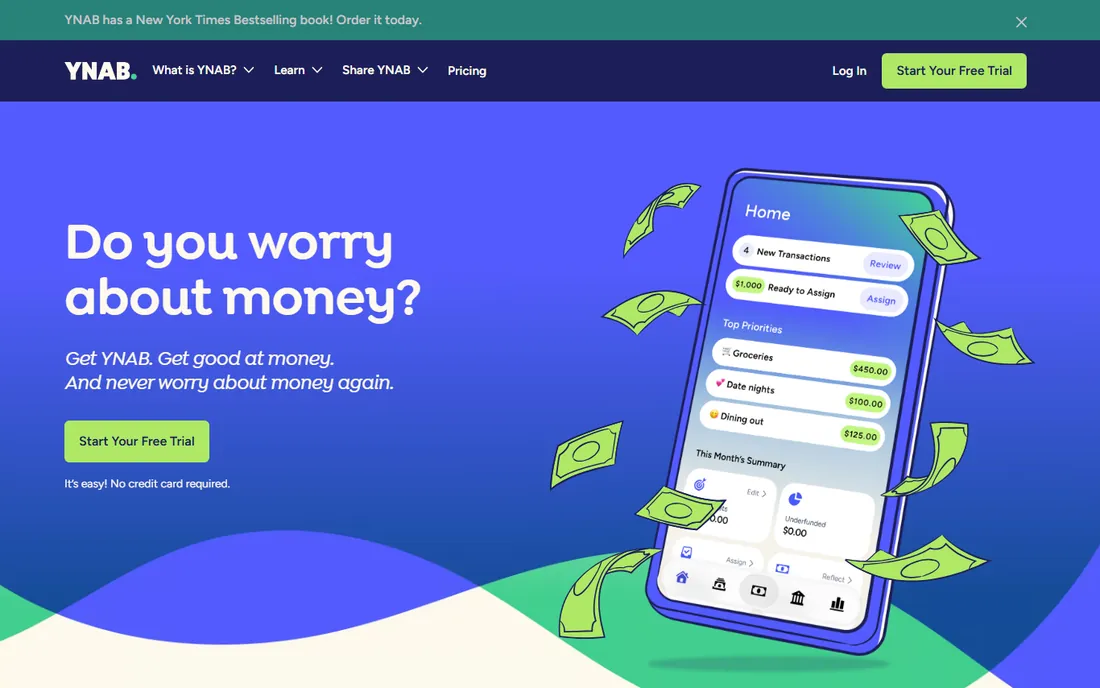
YNAB, short for You Need A Budget, is built around a simple philosophy: give every dollar a job before you spend it. You assign your actual income to categories, and when a category runs dry, you move money from another one rather than pretending the budget is fine. It is the most disciplined system in this list, and users who stick with it consistently report real results, with the company citing average first-year savings of $6,000.
The price is the obstacle: $14.99 per month or $109 per year, with no free tier for adults, though college students get a free year. The 34-day trial is generous and requires no credit card, and one subscription covers up to six people. The honest catch is effort. YNAB will not do the thinking for you, and if you stop reviewing your budget weekly, it stops working. For people who have tried passive trackers and failed, that discipline is the whole point.
What we like- The most effective budgeting method of any app here
- 34-day trial with no credit card
- Shareable with up to six people
Watch out for- The most expensive option
- Demands real weekly effort to work
Starting price$3.99 per month (first year, billed annually)
Free planFree trial (7 days)
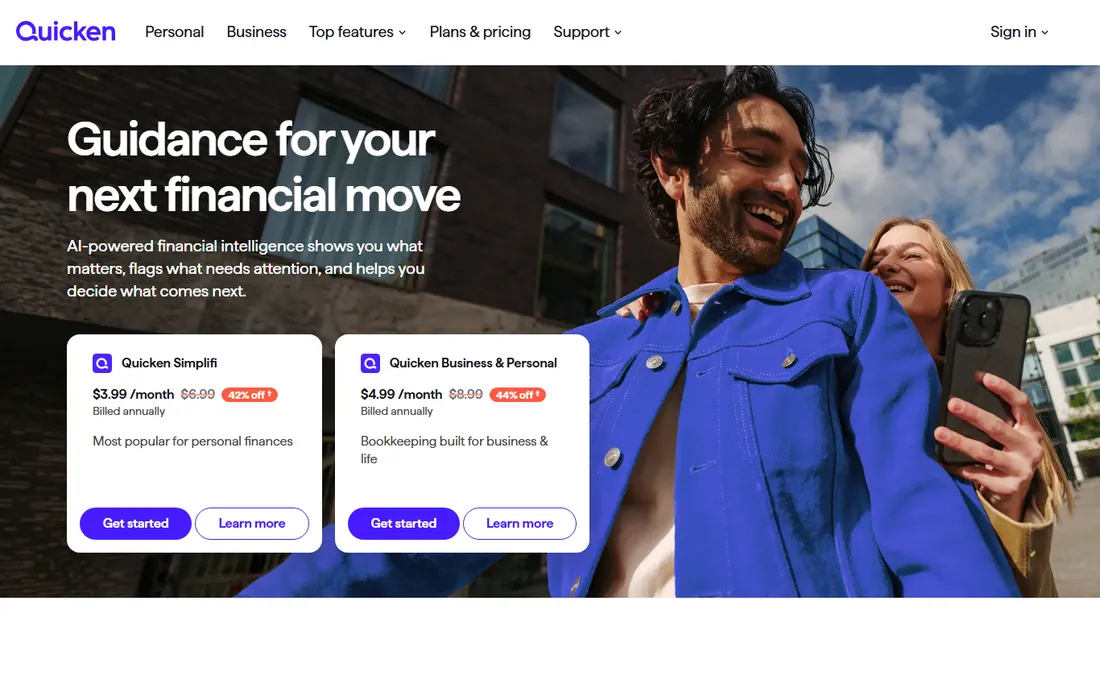
Simplifi is Quicken's modern answer to personal finance, and it is the best value paid app on this list. The spending plan view shows what is safe to spend after bills and savings, the 12-month cash flow forecast is unique among budgeting apps, and it packs real investment tracking, a retirement planner, and tax reports into a price that starts at $3.99 per month on the first-year annual plan. That is roughly $48 a year for tools competitors charge twice as much for.
Quicken lists the standard rate at $6.99 per month when billed annually, so budget for the renewal price. There is no permanent free plan, but a free trial is available and there is a 30-day money-back guarantee. The honest catch is that Simplifi sits in the middle of everything: less disciplined than YNAB, less polished than Monarch, less free than Enable. As a cheap all-rounder, though, it is hard to beat.
What we like- The cheapest paid option here
- 12-month cash flow forecasting
- Real investment and retirement tools
Watch out for- No free plan
- First-year promo price rises at renewal
Starting price$99.99 per year (or $14.99/month)
Free planFree trial (7 days)

Monarch Money is the app most former Mint users landed on after Mint shut down in 2024, and it is easy to see why. It brings every account into one clean dashboard, with flexible category budgets, net worth tracking over time, investment monitoring, goals, and automatic subscription detection. Partners get their own login at no extra cost, which makes it the best couples option here alongside shared budgets.
Pricing is $14.99 per month or $99.99 per year for Core, with a 7-day free trial. A Plus tier at $199 per year adds advanced investment analysis and estate planning tools that most personal users will never need. The honest catch is that Monarch does more of the work for you, which means less discipline than YNAB enforces. If you want to see everything and review weekly, Monarch is excellent. If you need the app to stop you from spending, YNAB is stricter.
What we like- The best all-in-one dashboard here
- Partner access at no extra cost
- Strong investment and net worth tracking
Watch out for- No free plan
- The Plus tier doubles the price for features most people skip
Starting price$0 (free dashboard)
Free planYes
Enable, formerly Personal Capital, offers the most powerful free personal finance dashboard anywhere. Link your checking, savings, credit cards, loans, and investment accounts, and you get real-time net worth, portfolio analysis against benchmarks, a retirement planner that runs Monte Carlo simulations, and a fee analyzer that surfaces hidden mutual fund and 401(k) fees. The dashboard costs nothing and needs no credit card.
The company makes its money from wealth management, which costs 0.49 to 0.89 percent of assets annually with a $100,000 minimum, so expect occasional advisor outreach. The honest catch is that budgeting is not the focus: Enable shows where your money went, but it will not run your monthly budget the way YNAB or Monarch does. Use it as your free investment and net worth hub, and pair it with a real budgeting app if you need one.
What we like- Completely free dashboard
- The best free retirement planner and fee analyzer
- Real-time net worth across all accounts
Watch out for- Budgeting is basic
- Expect sales calls about wealth management
Starting price$0 (free plan)
Free planYes
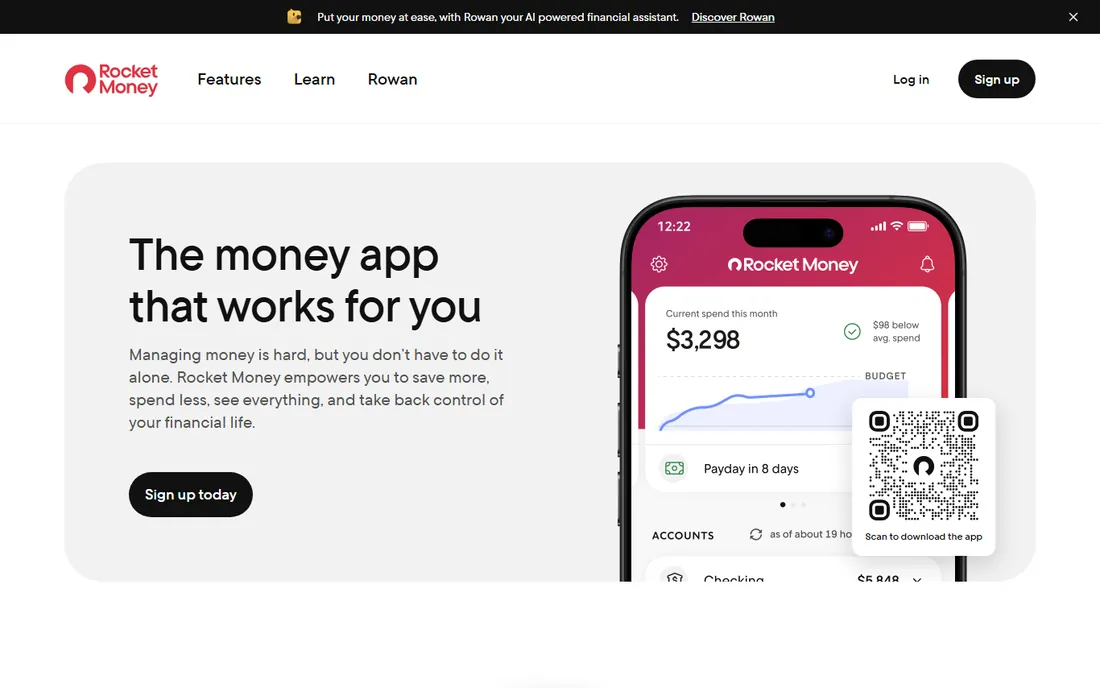
Rocket Money's superpower is finding money you are wasting. The free tier scans your transactions, surfaces every recurring subscription, and tracks spending against a basic budget, which alone can uncover a forgotten $15 monthly charge. Premium adds concierge subscription cancellation, bill negotiation, unlimited budgets, net worth tracking, and automated savings, priced on a pay-what-you-think-is-fair model that typically lands between $7 and $14 per month. A Premium+ tier at $15 per month adds an AI assistant and drops the bill negotiation success fee.
A 7-day free trial covers the paid tiers. The honest catch is the business model: free users get the subscription detection, but the cancellation help and negotiation, the things that actually save you money, sit behind the paywall, and successful bill negotiations carry a 35 to 60 percent success fee on the first year's savings. Start free, see what subscriptions it finds, and decide from there.
What we like- Free tier finds and tracks subscriptions
- Pay-what-you-think-is-fair Premium pricing
- Bill negotiation concierge
Watch out for- Pay-what-you-want pricing can creep upward
- Bill negotiation takes a success fee
Starting price$0 (free plan)
Free planYes
EveryDollar is Ramsey Solutions' official budgeting app, built around the Baby Steps debt payoff plan and zero-based budgeting. The free plan is a clean manual budget with unlimited categories, sinking funds, and bill due dates. Premium at $17.99 per month or $79.99 per year adds bank sync, paycheck planning, custom reports, a debt payoff tracker, and live coaching sessions, with a 14-day trial.
The app is deliberately simple, which is its strength for budgeting beginners. The honest catch is the philosophy baked in: EveryDollar discourages credit card use and offers only the debt snowball method, so if you want to choose your own payoff strategy or run rewards cards deliberately, YNAB is more flexible. Note that EveryDollar Premium is only available in the United States.
What we like- The simplest zero-based budget to learn
- Free manual plan is genuinely usable
- Built around the Ramsey Baby Steps
Watch out for- US only
- Premium is the priciest monthly plan here
- Credit cards are philosophically discouraged
Starting price$12.99 per month (or $74.99/year)
Free planFree trial (7 days)

PocketGuard reduces budgeting to a single number: Leftover, which is your income minus bills minus savings goals, updated in real time. For Tom from our opening story, that number is the entire product. Pace forecasting predicts whether your spending rate will carry you to month's end, and the debt payoff planner and subscription tracking round out a simple, focused app that syncs with over 20,000 financial institutions.
PocketGuard Plus costs $12.99 per month or $74.99 per year, with a 7-day free trial and a $149.99 lifetime option that appears periodically. The honest catch is that there is no permanent free tier, and the app is deliberately simpler than the heavyweights here. If you want one number to check before spending, PocketGuard is the best at that job. If you want deep planning, look at Monarch or YNAB.
What we like- The Leftover number answers the one question that matters
- Supports zero-based, envelope, and 50/30/20 methods
- Syncs with 20,000+ institutions
Watch out for- No permanent free tier
- Simpler than Monarch or YNAB
Starting price$0 (free plan)
Free planYes
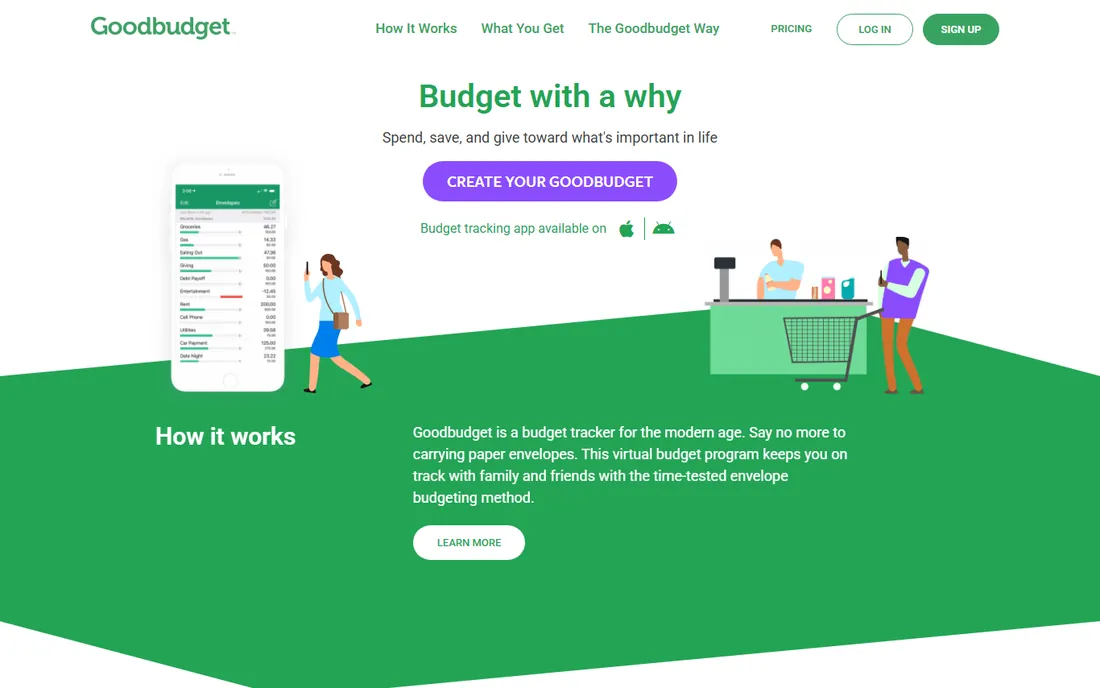
Goodbudget digitizes the classic envelope method: divide your money into envelopes for groceries, gas, and rent, and stop spending when an envelope is empty. The free plan includes 10 regular plus 10 annual envelopes, one account, and household sync so partners share the same envelopes. Plus at $10 per month or $80 per year adds unlimited envelopes and accounts, five devices, and seven years of history.
The manual entry is a feature, not a bug: with no bank sync to break, the app never loses connection, and typing every transaction makes you notice your spending. The honest catch is that manual entry gets tiring, the interface feels dated next to Monarch, and reporting is limited. For envelope traditionalists and anyone who distrusts bank connections, it is the most honest budgeting app here.
What we like- Free forever plan teaches real envelope discipline
- Household sync on both tiers
- No bank connection to break or hack
Watch out for- Manual entry by design
- Dated interface
- Limited reporting
How we chose
We compared personal finance apps against vendor pricing pages and feature documentation current as of October 2026, plus public reviews on app stores, G2, and personal finance publications. We looked for tools with real budgeting or tracking capability for individuals and households, covering zero-based budgeting, automated tracking, envelope methods, and investment dashboards. We did not test these apps hands-on, and prices change frequently, so verify current pricing before subscribing.
Match the app to your money personality
The best financial software is the one you will actually use, and that depends on your habits. If you have tried passive trackers and kept overspending, you probably need the discipline of YNAB or EveryDollar, where every dollar gets a job. If you already know roughly where your money goes and want a clear dashboard, Monarch or Simplifi will serve you better with less effort.
If your biggest leak is subscriptions and bills, start with Rocket Money's free tier before paying for anything. If investments and retirement are the main event, Enable's free dashboard beats every paid option for tracking. And if the old envelope method is what finally stuck for you, Goodbudget's free plan is the honest digital version of it. Pick by the problem you actually have, not the feature list that impresses you.
The Mint shutdown changed the market
Intuit shut down Mint in March 2024 and pointed users toward Credit Karma, which left millions of budgeters looking for a new home. Monarch Money, Rocket Money, and Simplifi absorbed most of that migration, and the competition improved all of them. If you are still using a spreadsheet because Mint died and nothing felt right, this is a better market than the one you left.
One thing Mint did not teach: the free apps make money somehow. Enable sells wealth management, Rocket Money sells bill negotiation and Premium, and ad-supported free apps sell your attention. Paid subscriptions like YNAB, Monarch, and Simplifi align the company's interests with yours: they only keep your money if the app keeps working. That is worth remembering when comparing a free tool to a $100-a-year subscription.
Frequently asked questions
What is the best free personal finance software?
Enable offers the most powerful free dashboard, with net worth tracking, investment analysis, and retirement planning at no cost. For free budgeting specifically, Rocket Money's free tier tracks subscriptions and spending, and EveryDollar's free plan is a solid manual budget.
Is YNAB worth the price?
YNAB costs $109 per year, which is steep for a budgeting app, but it works if you use it: the zero-based method forces you to confront every dollar, and engaged users consistently report significant savings. The 34-day free trial with no credit card is enough to know whether the method clicks for you.
What replaced Mint?
After Intuit shut down Mint in March 2024, most users moved to Monarch Money, Rocket Money, or Simplifi by Quicken. Monarch is the closest to Mint's all-in-one dashboard, Rocket Money leads on subscription management, and Simplifi is the cheapest paid option.
Should I use a budgeting app or a spreadsheet?
Spreadsheets are free and fully customizable, but they require manual updates that most people abandon. Apps with bank sync remove the friction that kills spreadsheet budgets. If you have maintained a spreadsheet for months, keep it. If you have started three and quit, try an app.
Do budgeting apps sell my data?
Reputable paid apps like YNAB, Monarch, and Simplifi state they do not sell personal data; the subscription is their revenue. Free apps typically monetize through adjacent services, like Enable's wealth management or Rocket Money's bill negotiation. Read the privacy policy of any app you link to your bank accounts.
Can couples share a budgeting app?
Yes. YNAB's subscription covers up to six people, Monarch includes partner access at no extra cost, EveryDollar has a household feature, and Goodbudget syncs envelopes across devices on both plans. PocketGuard couples typically share one login.
Sources we checked (8)
- https://ynab.com/
- https://www.quicken.com/
- https://monarchmoney.com/
- https://www.enable.com/
- https://www.rocketmoney.com/
- https://everydollar.com/
- https://pocketguard.com/
- https://goodbudget.com/
Is your product missing or out of date?
We review this list regularly. Vendors can request a listing, send updated pricing or ask about featured placement.

Shihab Mia · Founder, Rankite
Shihab has spent more than a decade helping SaaS and e-commerce brands grow through search. He writes Rankite's software buying guides from pricing pages, documentation and public user reviews. More about Shihab.