How we make this list: we compare pricing pages, product documentation and public user reviews. Rankite is independent; if a vendor ever pays for a featured spot, that listing is clearly labeled Partner.
Key takeaways
- YNAB ($109/year) is still the best pick if you want a strict method that changes spending habits, not just a dashboard.
- Monarch Money ($99.99/year) is the strongest all-in-one for couples: budgeting, investments, and net worth in one clean view.
- Tiller ($79/year) is the sleeper pick for spreadsheet people: bank feeds flow straight into Google Sheets or Excel you own.
- EveryDollar and Rocket Money both have genuinely usable free tiers, good if you want to start paying nothing.
- Copilot Money ($95/year) is the best-looking option, but only if you live in the Apple ecosystem.
Quick comparison
| Tool | Best for | Starting price | Free plan |
|---|
 Quicken Simplifi Quicken Simplifi | households that want everything in one app | $6.99/month (billed annually) | No |
 YNAB YNAB | people who want a budgeting method, not just an app | $109/year | Free trial |
 Monarch Money Monarch Money | couples who want budgeting plus investments in one dashboard | $99.99/year | Free trial |
 Copilot Money Copilot Money | Apple users who want the best-designed finance app | $95/year | Free trial |
 Tiller Tiller | spreadsheet lovers who want automation without giving up control | $79/year | Free trial |
 PocketSmith PocketSmith | planners who want to see decades into the future | See website | Yes |
 Goodbudget Goodbudget | envelope budgeting purists | See website | Yes |
 EveryDollar EveryDollar | Dave Ramsey followers and Baby Steps budgeters | $79.99/year | Yes |
 Rocket Money Rocket Money | cutting subscriptions and negotiating bills | $7-14/month (Premium) | Yes |
Is your product missing or out of date?
We review this list regularly. Vendors can request a listing, send updated pricing or ask about featured placement.
The best home finance software for real households
Picture the end of the month: three bank apps, two credit cards, a mortgage portal, and a vague feeling that money disappeared somewhere between payday and now. Home finance software exists to replace that feeling with a number you trust. The nine tools below all do that job, but they disagree about how. Some want you to plan every dollar before you spend it. Others just want to show you everything in one place and let the patterns speak.
#1
Quicken Simplifi
Best for: households that want everything in one app
Visit quicken.com
Starting price$6.99/month (billed annually)
Free planNo
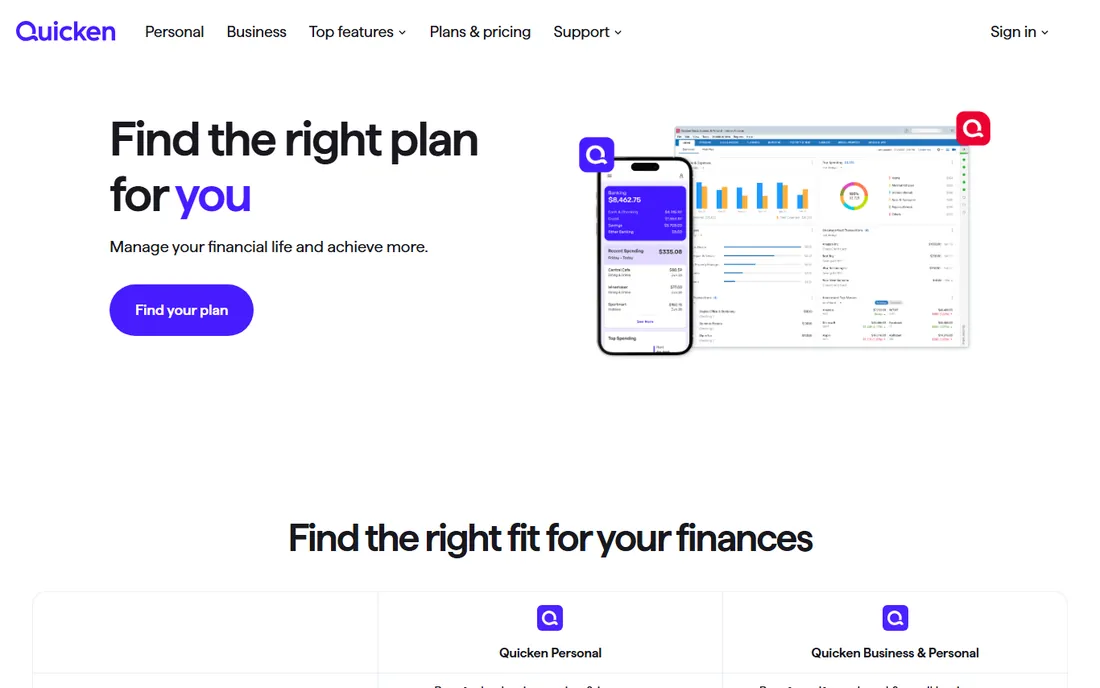
Quicken has been doing personal finance since the 1980s, and Simplifi is its modern answer: a web and mobile app that pulls in bank accounts, credit cards, loans, investments, and even crypto, then builds a spending plan from your actual income and bills. The projected cash flow view is the standout, showing where your balances are headed weeks out.
Pricing on quicken.com lists Simplifi at $6.99 per month billed annually, with frequent first-year promotions. There is no free version, though there is a refund window if it does not click. The honest knock: Quicken moved to a required subscription years ago, and long-time users still grumble about it. If you want the deepest feature set and do not mind paying, it remains the most complete option here.
What we like- Deep account coverage including investments and crypto
- Projected cash flow
- Decades of product maturity
Watch out for- No free tier
- The subscription is required to keep the software working
#2
YNAB
Best for: people who want a budgeting method, not just an app
Visit ynab.com
Starting price$109/year
Free planFree trial
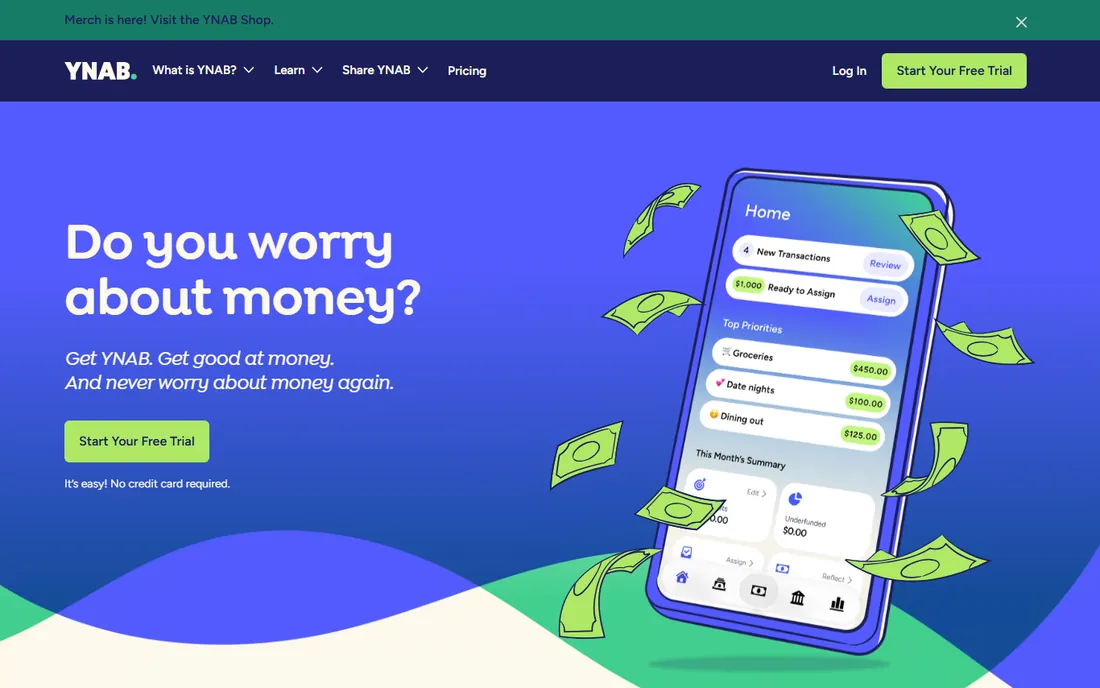
YNAB, short for You Need a Budget, is less an app than a discipline with software attached. Give every dollar a job, plan for true expenses, roll with overspending, age your money. The method takes a few weeks to click, especially the credit card handling, but users who stick with it tend to become evangelists. The company claims the average user saves $600 in the first month.
It costs $14.99 per month or $109 per year, with no free tier beyond the generous 34-day trial. One subscription covers up to six people through YNAB Together, which makes it reasonable for couples. If you want software that tells you what to do rather than just showing you what happened, start here.
What we like- The Four Rules method genuinely changes habits
- 34-day free trial with no card required
- Up to six people share one subscription
Watch out for- Steep learning curve
- Bank sync can lag a day or two behind
Starting price$99.99/year
Free planFree trial
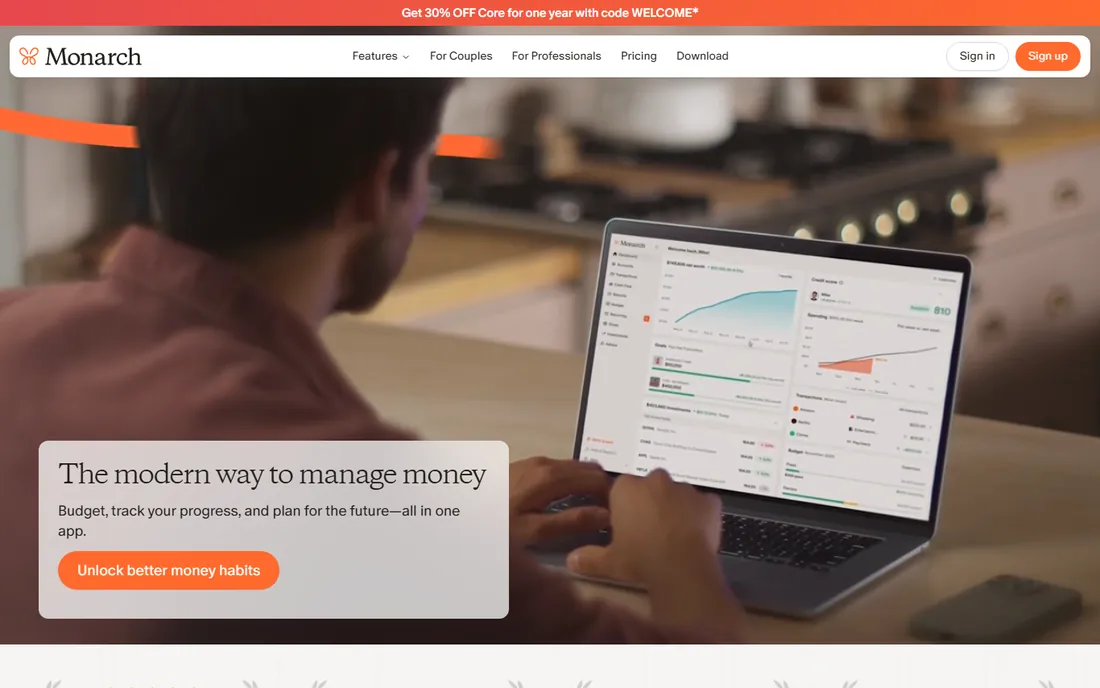
Monarch was built by former Mint engineers, and it shows: this is the product Mint should have become. Every account lands in one view, transactions categorize themselves, and the net worth chart actually makes progress feel tangible. Couples get separate logins on one subscription, with per-account visibility settings for keeping some things individual.
Core costs $14.99 per month or $99.99 per year, with a 7-day trial. The budgeting is flexible rather than strict, closer to targets than to YNAB's zero-based discipline. If your main problem is visibility across accounts rather than overspending in categories, Monarch is the better fit.
What we like- Beautiful, customizable dashboard
- Strong investment and net worth tracking
- Household sharing included at no extra cost
Watch out for- No permanent free tier
- The newer Plus tier at $199/year is overkill for most
#4
Copilot Money
Best for: Apple users who want the best-designed finance app
Visit copilot.money
Starting price$95/year
Free planFree trial

Copilot is the design nerd's finance app: native iPhone, iPad, Mac, and web apps that feel like they belong on Apple hardware, with widgets and Apple Watch support. The AI transaction categorization learns from your corrections and gets noticeably accurate within weeks. It tracks investments, crypto, and real estate alongside cash, so net worth is one screen.
Pricing is simple: $13 per month or $95 per year, one tier, everything included, with a free trial to start. The dealbreaker is platform. There is no Android app, and the web app is a companion, not a replacement. If your household is all-Apple, it is lovely. Otherwise, look at Monarch.
What we like- The cleanest interface in the category
- AI categorization that learns fast
- Solid investment and crypto tracking
Watch out for- No Android app at all
- Couples pay for two subscriptions since there is no household plan
#5
Tiller
Best for: spreadsheet lovers who want automation without giving up control
Visit tillerhq.com
Starting price$79/year
Free planFree trial
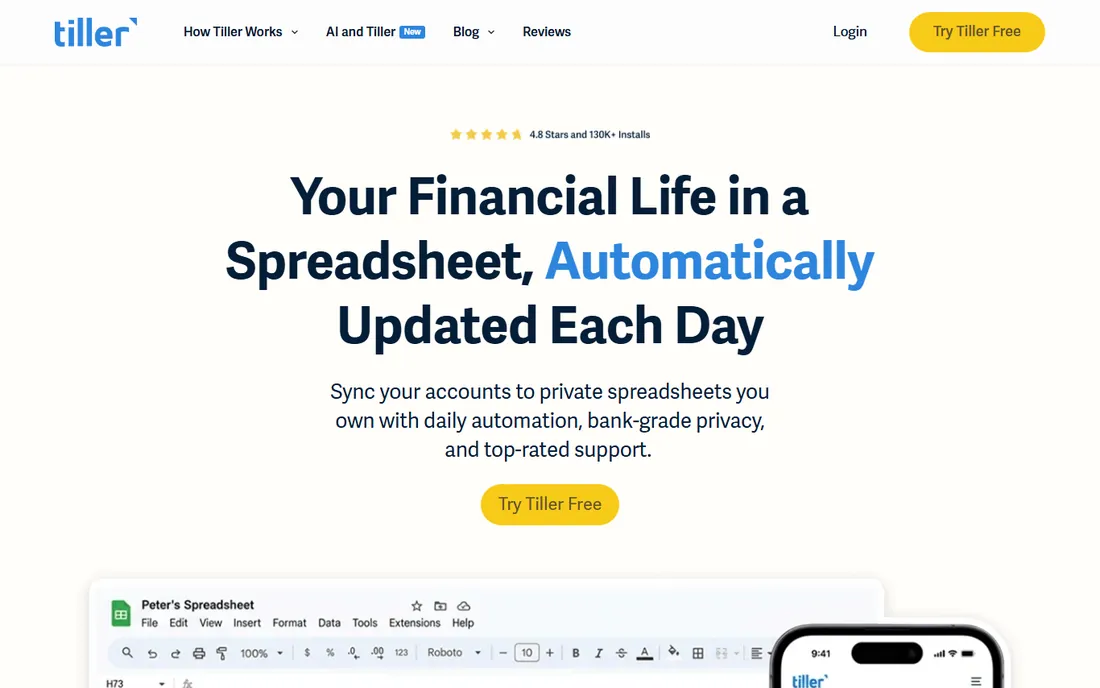
Tiller is the odd one out, and proud of it. Instead of an app, you get automated bank feeds that pour daily transactions and balances into Google Sheets or Excel templates. The Foundation template covers budgeting out of the box, and the community template gallery covers nearly everything else. Your data lives in spreadsheets you own, which privacy-minded users love.
One plan: $79 per year after a 30-day free trial, no ads, no data selling. The catch is obvious: if you do not like spreadsheets, this is not for you. But if you have ever built a budget in Excel and wished the numbers filled themselves in, Tiller is exactly that, and it is cheaper than most of the app competition.
What we like- Bank feeds flow into Google Sheets or Excel you own
- Endlessly customizable
- Your data stays in your spreadsheets
Watch out for- Requires comfort with spreadsheets
- No native mobile app to speak of
Starting priceSee website
Free planYes
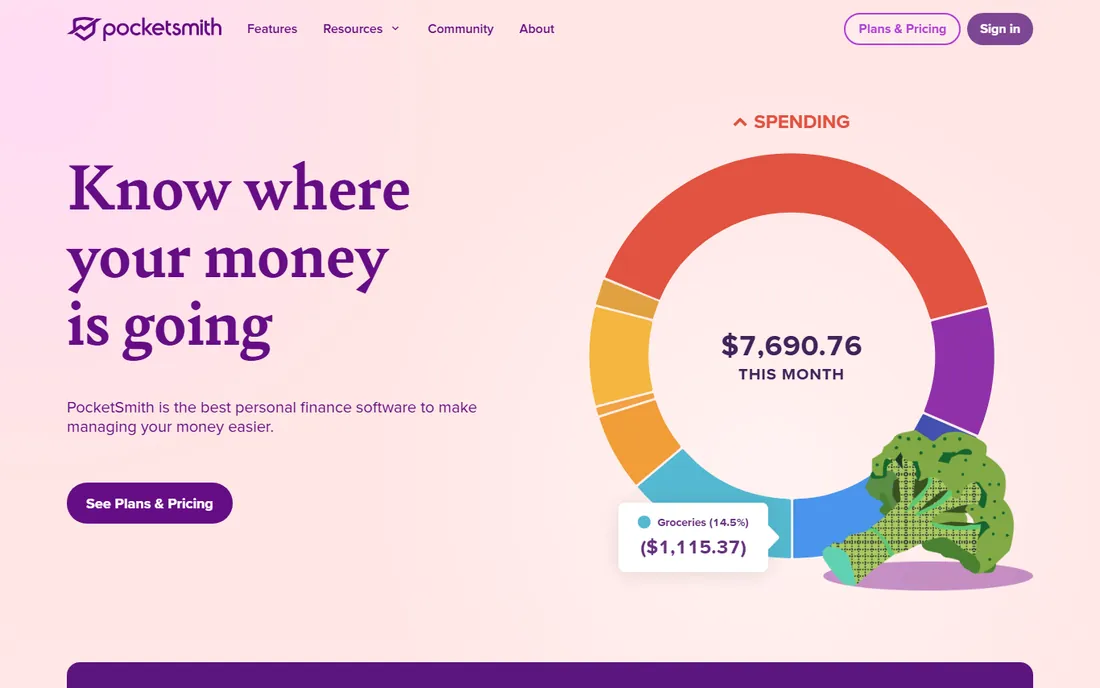
PocketSmith's superpower is the forecast. Where most apps show you last month, PocketSmith projects your account balances forward, up to 60 years on the top tier, so you can model scenarios like a career break or an early mortgage payoff. The calendar view lays upcoming bills against projected balances, which makes timing decisions concrete.
There is a free plan with manual imports and two accounts, and paid tiers (Foundation, Flourish, Fortune) add automatic bank feeds and longer projections. Pricing sits above most competitors, so it makes sense mainly if forecasting is the feature you actually want. Multi-currency support is genuinely good, a real plus for households with accounts in more than one country.
What we like- Cash flow forecasting up to 60 years out
- Strong multi-currency support
- Calendar view of upcoming bills
Watch out for- Paid tiers are pricier than rivals
- The interface takes time to learn
Starting priceSee website
Free planYes
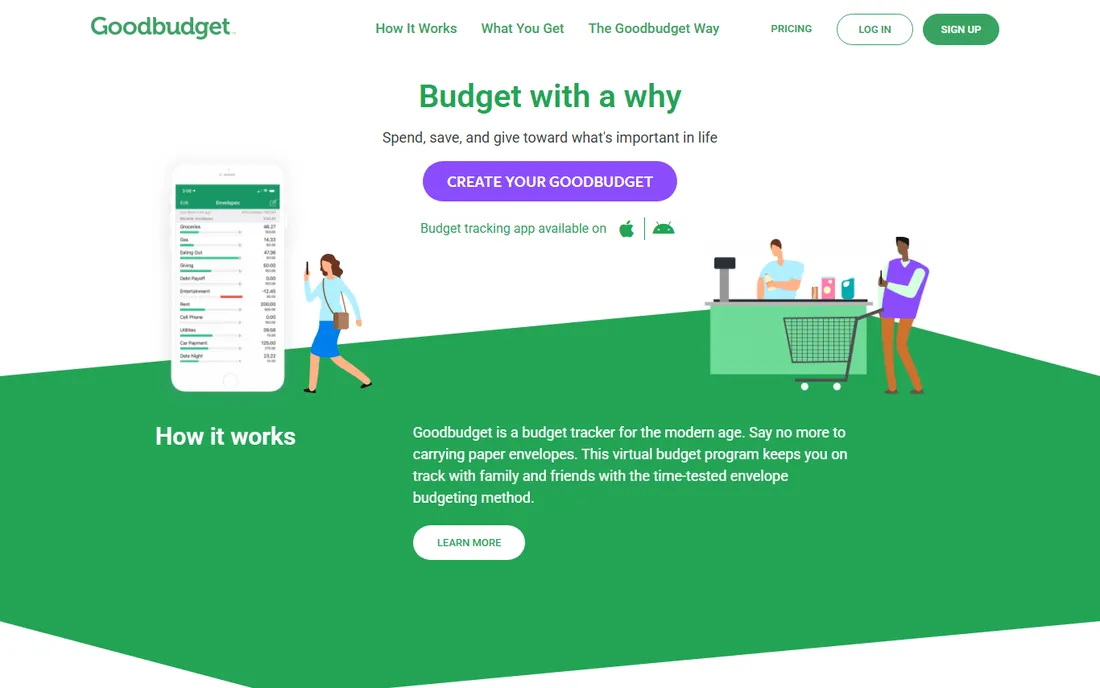
Goodbudget digitizes the envelope method your grandparents used: at the start of each month you fill envelopes for groceries, rent, fun money, and when an envelope is empty, you stop spending there. It is manual by design. You log each purchase yourself, which sounds like a chore but is precisely why it works for people who need friction between themselves and their money.
The free tier covers 10 envelopes and one account, genuinely usable for a simple budget, and Plus adds unlimited envelopes, more accounts, and more devices. Household sync works on both tiers, so partners share envelopes across phones. If bank sync breaking has ever ruined a budgeting app for you, Goodbudget's stubborn manual approach is a feature, not a bug.
What we like- Faithful digital envelope system
- Household sync on both tiers
- Manual entry means no broken bank connections
Watch out for- No automatic bank sync at all
- The interface feels dated next to newer apps
Starting price$79.99/year
Free planYes
EveryDollar is Ramsey Solutions' official app, built around the 7 Baby Steps: emergency fund, debt snowball, investing, and so on. The budget itself is zero-based and dead simple: plan every dollar of income into categories until income minus planned spending equals zero. The 2026 relaunch added a margin-finding tool and live coaching for premium users.
The free tier is a real manual budget you can use indefinitely. Premium costs $17.99 per month or $79.99 per year and adds bank sync, payday planning, a financial roadmap, and coaching. The honest assessment: if you are working the Baby Steps, this is the obvious tool and the coherence is worth it. If you are not, you are paying Ramsey-ecosystem prices for a simpler app than YNAB.
What we like- The simplest zero-based budget to learn
- Official Ramsey Baby Steps integration
- Usable free tier
Watch out for- Debt strategy is snowball-only
- Premium monthly price is the highest in this list
Starting price$7-14/month (Premium)
Free planYes
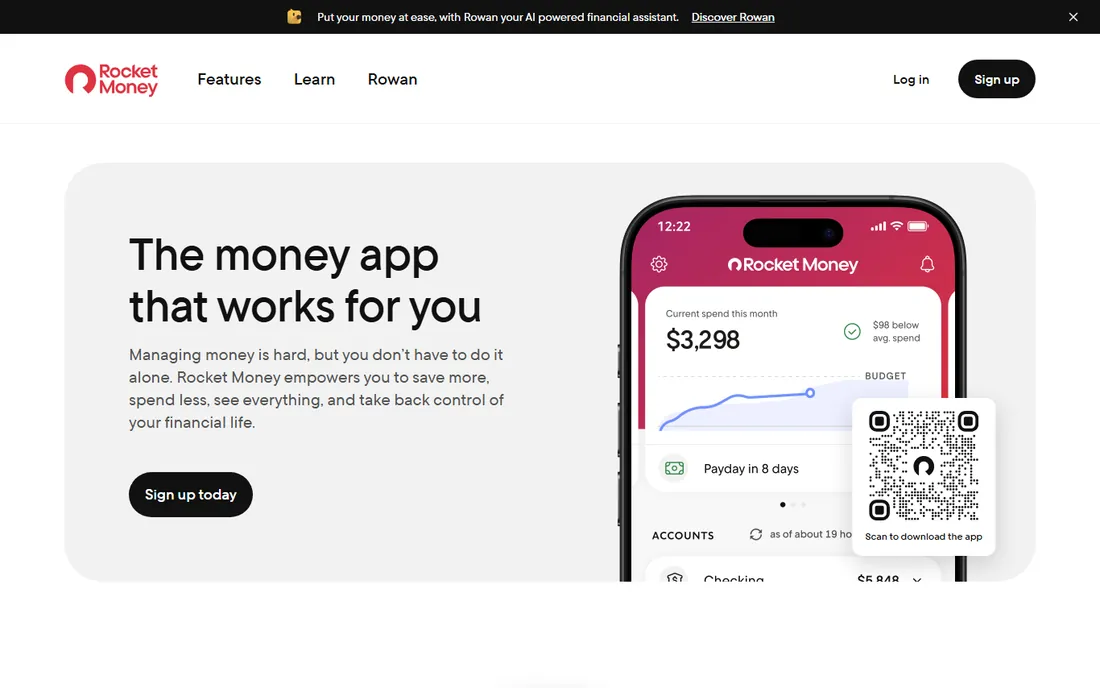
Rocket Money started as Truebill, and its roots show: it is the best tool here for subscription archaeology. It finds every recurring charge across your accounts, and Premium members can have the team cancel the unwanted ones. The bill negotiation service haggles with your internet or phone provider, though it keeps 35 to 60 percent of the first year's savings as its fee.
The free tier covers subscription tracking, basic budgeting, and credit score viewing. Premium uses an unusual pay-what-you-think-is-fair model, typically $7 to $14 per month, plus a $15 per month Premium+ tier with an AI assistant. If your money problem is death by a thousand subscriptions, start with the free tier and let it find them.
What we like- Finds and cancels subscriptions for you
- Bill negotiation service
- Pay-what-you-want Premium pricing
Watch out for- The most useful features sit behind Premium
- Bill negotiation takes a 35-60% cut of first-year savings
How we chose
We compared nine established home finance apps with real, shipping products, checking vendor homepages and pricing pages directly in October 2026. We weighed budgeting methodology, bank sync reliability, investment and net worth tracking, household sharing, platform coverage, and price, drawing on public reviews from the App Store, Google Play, Reddit, and personal finance press. We did not run hands-on tests; findings rest on vendor documentation and public user feedback.
Picking the right one for your money style
Start with how you actually behave. If you overspend and need guardrails, pick a method-first app: YNAB or EveryDollar. If you are already disciplined and want visibility, pick a dashboard: Monarch, Copilot, or Simplifi. If you think in spreadsheets, Tiller will make you happier than any app. And if subscriptions are the leak, Rocket Money's free tier finds them in an afternoon.
Then check the household math. YNAB covers six people on one subscription. Monarch includes partner sharing. Copilot charges per person, so couples pay double. Goodbudget syncs households even on the free tier.
Watch the renewal price, not the promo
Several of these apps discount the first year heavily. Quicken Simplifi's page shows promotional monthly pricing against a higher regular rate, and Monarch and YNAB both run first-year deals through partners. The number that matters is what you pay in year two. Annual billing is almost always cheaper than monthly, often by 40 percent or more.
Frequently asked questions
What is the best home finance software for couples?
Monarch Money and YNAB are the two strongest picks. Monarch gives each partner a separate login on one subscription with shared dashboards, while YNAB Together covers up to six people. Goodbudget is the best free option for couples, with household sync on its free tier.
Is there a good free home finance app?
Yes. Rocket Money's free tier tracks subscriptions and spending, EveryDollar's free tier is a complete manual budget, and Goodbudget's free tier covers envelope budgeting. PocketSmith also has a free plan with manual imports. The paid tiers add bank sync and automation.
YNAB vs Monarch: which should I choose?
Choose YNAB if you want a strict zero-based method that changes spending behavior and you are willing to learn it. Choose Monarch if you want a beautiful all-in-one dashboard with strong investment tracking and an easier start. YNAB costs $109 per year; Monarch Core costs $99.99 per year.
Do budgeting apps sell my data?
The paid apps on this list generally do not. YNAB, Monarch, Copilot, Tiller, and Quicken all state that subscriptions, not data sales or ads, fund the product. Free tiers are where data monetization usually happens, which is one more reason to prefer a paid plan from a subscription-funded company.
Can I use these apps outside the US?
It depends on the app. Bank sync coverage is US-centric for most, with Canada supported by several. PocketSmith has the best multi-currency support of the group. Quicken notes its bank connections are US and Canada only. If you live elsewhere, check bank coverage before paying.
What happened to Mint?
Intuit shut down Mint in March 2024 and directed users to Credit Karma. Monarch Money, Rocket Money, and Copilot Money all absorbed large numbers of former Mint users, and each positions itself as the modern replacement.
Sources we checked (10)
- https://www.quicken.com/products
- https://ynab.com/
- https://www.monarchmoney.com
- https://copilot.money
- https://tillerhq.com/
- https://www.pocketsmith.com/
- https://goodbudget.com/
- https://everydollar.com/
- https://www.rocketmoney.com
- https://www.rocketmoney.com/learn/personal-finance/how-much-does-rocket-money-cost
Is your product missing or out of date?
We review this list regularly. Vendors can request a listing, send updated pricing or ask about featured placement.

Shihab Mia · Founder, Rankite
Shihab has spent more than a decade helping SaaS and e-commerce brands grow through search. He writes Rankite's software buying guides from pricing pages, documentation and public user reviews. More about Shihab.