How we make this list: we compare pricing pages, product documentation and public user reviews. Rankite is independent; if a vendor ever pays for a featured spot, that listing is clearly labeled Partner.
Key takeaways
- Clariti (formerly BasicGov) is the modern permitting platform built specifically for local governments.
- Cloudpermit offers community development software with online permitting at its core.
- OpenGov and Tyler Technologies serve larger governments with full civic platforms.
- Every serious permitting platform is quote-based; expect RFPs, demos and implementation projects.
Quick comparison
| Tool | Best for | Starting price | Free plan |
|---|
 Clariti Clariti | Modern local government permitting | See website | No |
 Cloudpermit Cloudpermit | Community development permitting | See website | No |
 OpenGov OpenGov | Full civic cloud suites | See website | No |
 Tyler Technologies Tyler Technologies | Enterprise government ERP | See website | No |
 CitizenServe CitizenServe | Community development departments | See website | No |
 GovPilot GovPilot | Digital government transformation | See website | No |
 CityView CityView | Municipal permitting and licensing | See website | No |
 CivicPlus CivicPlus | Civic engagement plus permitting | See website | No |
 GOGov GOGov | Citizen-facing government apps | See website | No |
Is your product missing or out of date?
We review this list regularly. Vendors can request a listing, send updated pricing or ask about featured placement.
The best permit software
Starting priceSee website
Free planNo
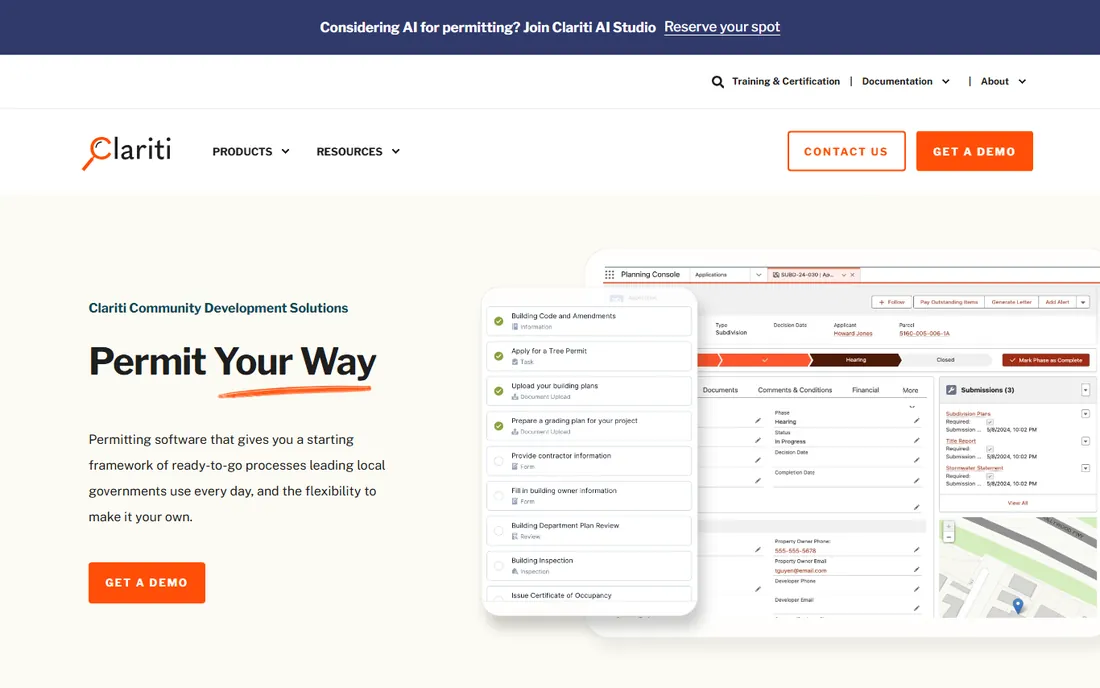
Clariti (formerly BasicGov) builds permitting, licensing and code enforcement software specifically for local governments. Online applications, electronic plan review, inspections scheduling and mobile field tools come in a modern interface that staff and citizens can actually use. The company grew out of government IT practitioners, which shows in the workflows.
Pricing is quote-based with implementation services. Smaller municipalities get enterprise-grade permitting without legacy baggage. For a local government modernizing its permit counter, Clariti is the purpose-built choice.
What we like- Purpose-built for permitting
- Modern interface
- Strong customer community
Watch out for- Quote-based pricing
- Implementation effort varies
Starting priceSee website
Free planNo
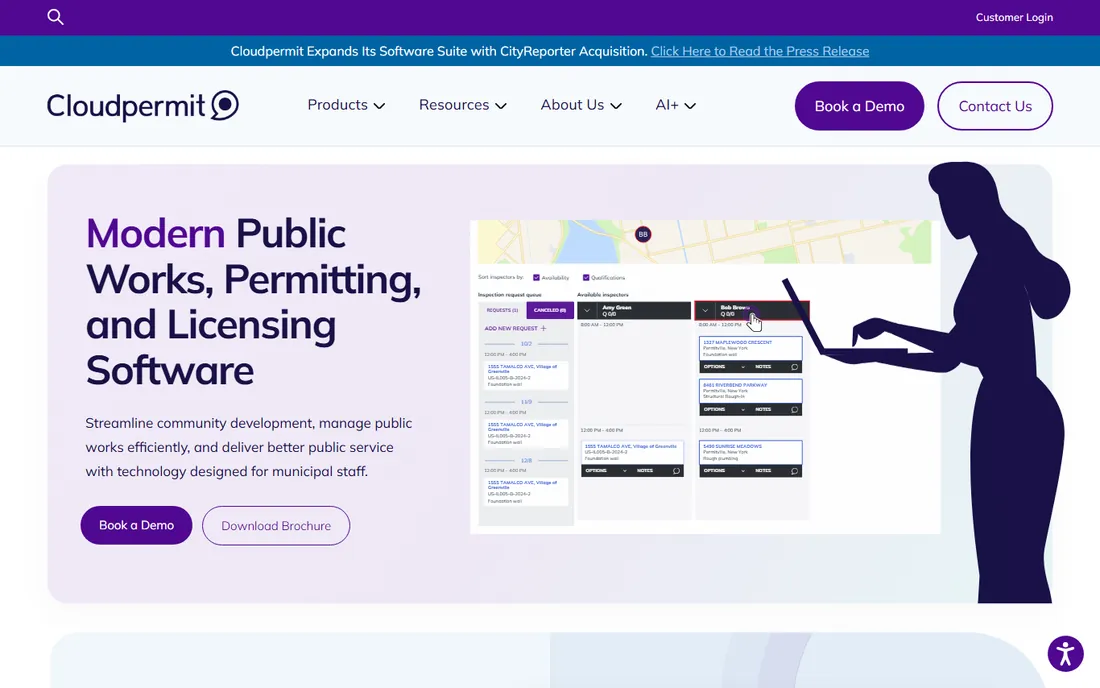
Cloudpermit offers cloud-based community development software centered on building permits: online applications, digital plan review, inspections and contractor management. The online-first design suits building departments moving from paper to digital.
Pricing requires a conversation. The focus is narrower than OpenGov or Tyler's full suites. For a building department that needs permitting done well without a civic platform overhaul, Cloudpermit fits.
What we like- Online-first permitting
- Good for building departments
- International presence
Watch out for- Quote-based
- Narrower than full civic suites
Starting priceSee website
Free planNo
OpenGov's cloud platform spans permitting and licensing alongside budgeting, procurement, asset management and citizen services. Governments standardizing on one vendor get permitting integrated with finance and operations. The company has grown rapidly through product development and acquisition (including ViewPoint Cloud).
Pricing is enterprise and quote-based. Buying OpenGov for permitting alone underuses the platform. For governments pursuing a full civic cloud strategy, the integrated suite is compelling.
What we like- Permitting inside a full civic cloud
- Budgeting and transparency tools
- Strong growth
Watch out for- Enterprise pricing
- Suite commitment
Starting priceSee website
Free planNo
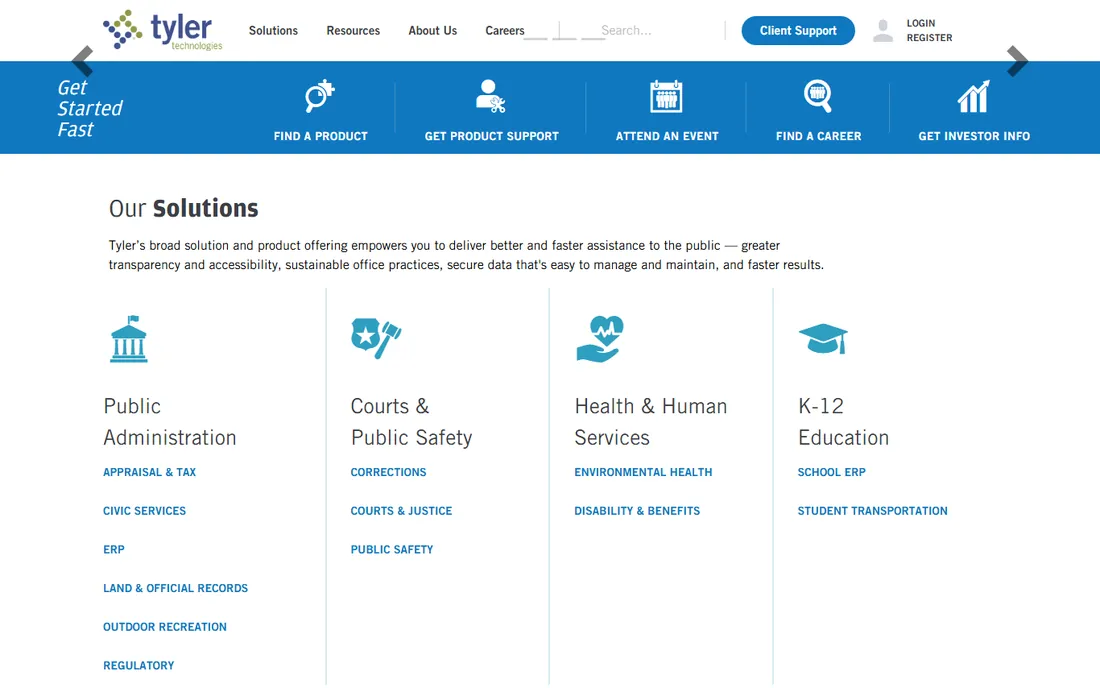
Tyler Technologies is the largest public sector software vendor, and EnerGov is its permitting and land management solution: permits, inspections, code enforcement, licensing and planning inside Tyler's broader ERP ecosystem. Large cities and counties run their operations on Tyler.
Everything is enterprise: pricing, sales cycles and implementations. Smaller governments will find it heavyweight. For large jurisdictions standardizing on Tyler, EnerGov completes the picture.
What we like- Largest govtech vendor
- EnerGov permitting depth
- End-to-end public sector suite
Watch out for- Enterprise pricing and timelines
- Complex implementations
Starting priceSee website
Free planNo
CitizenServe provides cloud software for community development: permitting, planning and zoning, code enforcement and licensing with an online citizen portal. Departments get the core workflows without enterprise complexity.
The vendor is smaller than Tyler or OpenGov, so diligence on support and roadmap matters. Pricing is quote-based. For mid-size municipalities that want community development software that fits, CitizenServe is the focused option.
What we like- Community development focus
- Online citizen portal
- Code enforcement included
Watch out for- Smaller vendor
- Quote-based pricing
Starting priceSee website
Free planNo
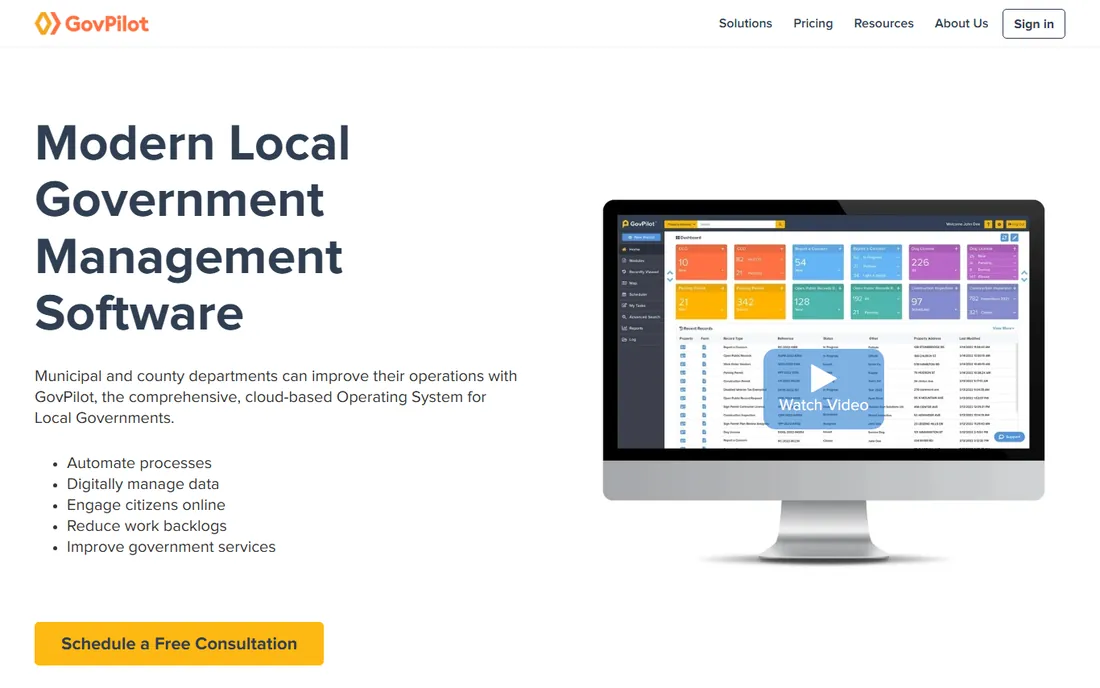
GovPilot helps local governments digitize operations with modules spanning permitting, licensing, code enforcement, FOIA management and more. The platform approach lets small to mid-size governments modernize many processes with one vendor.
Permitting depth is less than pure-play specialists. Pricing is quote-based. For a municipality digitizing broadly rather than permitting specifically, GovPilot's module range is efficient.
What we like- Broad digital government modules
- Good for small to mid governments
- Modern approach
Watch out for- Quote-based
- Breadth over permitting depth
Starting priceSee website
Free planNo

CityView has served municipalities for years with permitting, licensing, code enforcement and land management software. Property-based workflows connect permits to parcels, owners and history, which matches how municipal staff think.
The interface shows its age next to cloud-native competitors. Pricing requires a conversation. For municipalities that value a proven municipal vendor over modern flash, CityView's track record counts.
What we like- Long municipal track record
- Permitting plus licensing
- Property information integration
Watch out for- Interface aging in places
- Quote-based pricing
Starting priceSee website
Free planNo
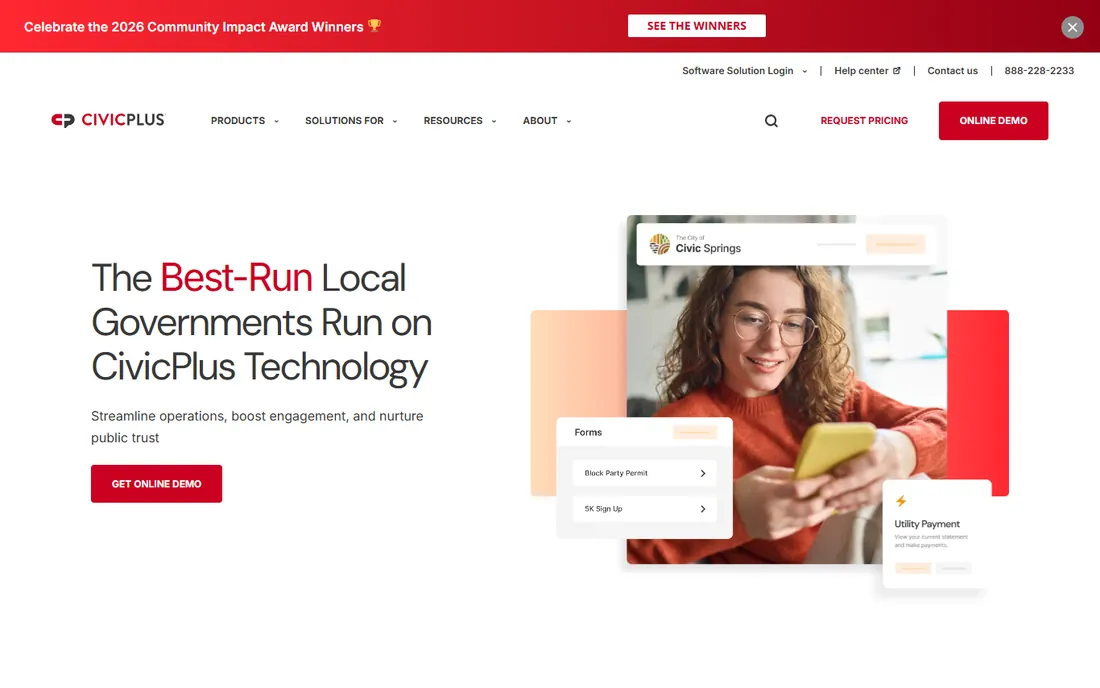
CivicPlus is known for municipal websites and civic engagement, with permitting and licensing available in its broader local government suite. Governments already on CivicPlus for their web presence can add permitting within the same vendor relationship.
As a permitting specialist it trails pure-plays. Pricing is quote-based. For CivicPlus customers expanding the relationship, the integrated modules simplify procurement and support.
What we like- Strong civic engagement roots
- Broad local government suite
- Large customer base
Watch out for- Permitting is one module among many
- Enterprise pricing
Starting priceSee website
Free planNo
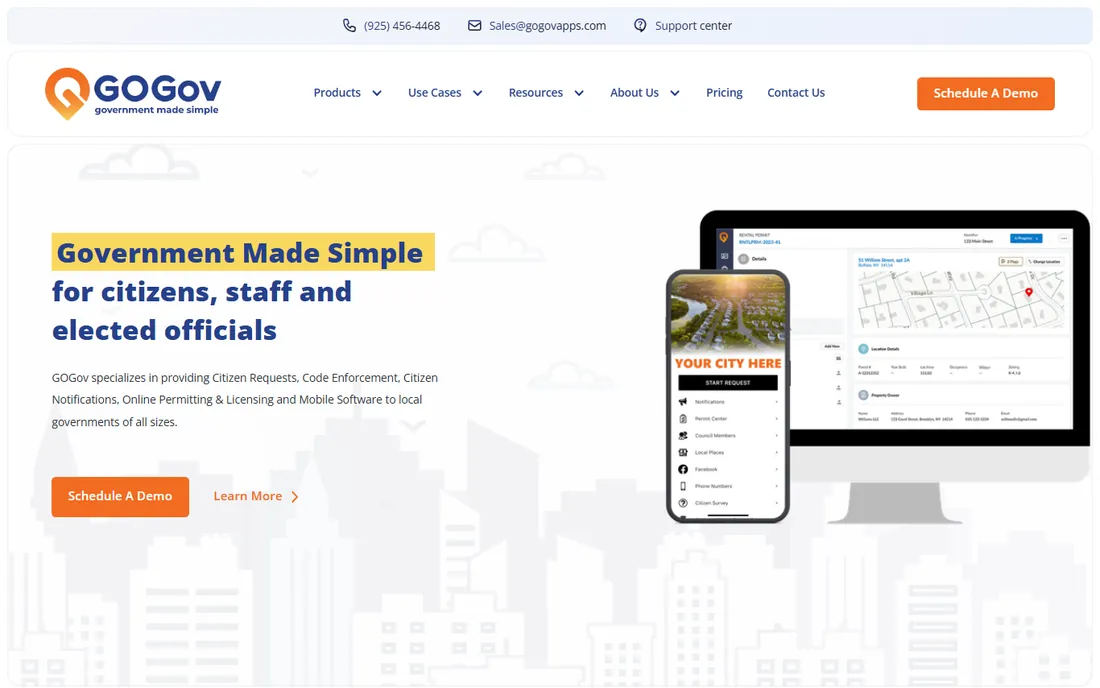
GOGov builds mobile-first citizen engagement with 311 request management alongside permitting and licensing workflows. Small governments get modern citizen-facing tools without enterprise budgets or timelines.
Complex permitting operations need more depth than GOGov offers. Pricing is quote-based. For small municipalities prioritizing citizen experience and 311 with permitting attached, GOGov's mobile focus stands out.
What we like- Mobile-first citizen experience
- 311 plus permitting
- Good for small governments
Watch out for- Smaller vendor
- Less depth for complex permitting
What to require in the RFP
Online applications with document upload are table stakes. Electronic plan review with markup tools saves the most staff time. Mobile inspections with offline capability matter for field staff. GIS and parcel integration should be native, not custom. Public-facing permit tracking reduces counter traffic measurably. And confirm the data migration: years of permit history must transfer accurately, because staff will not trust a system missing their records.
Implementation reality
Permitting implementations take 3 to 12 months depending on scope, data migration and configuration. The software is rarely the hard part; process redesign and staff training are. Assign an internal project owner with authority, not just IT. Run the old and new systems in parallel for at least one permit cycle. And budget for change management: counter staff who have done paper for 20 years need more than a training webinar.
Driving online adoption with citizens and contractors
The permitting software can be perfect and still fail if applicants keep walking into city hall with paper. Online adoption is the metric that determines ROI: every permit applied for online saves counter staff time, reduces data entry errors, and speeds processing. Yet many governments launch online permitting and watch usage stall at 20 percent while the counter stays busy. The gap is rarely the software; it is change management for an audience that was never asked to change. Contractors and homeowners need reasons to switch, help making the switch, and eventually no alternative.
Make the online channel obviously better, not just available. Faster processing for online applications is the strongest incentive: publish the turnaround difference and let it sell itself. Reduce fees slightly for online submissions if the budget allows; the staff time saved usually covers it. Ensure the online forms are genuinely easier than paper: pre-filled applicant data for registered contractors, document upload instead of photocopies, real-time status tracking instead of phone calls. If the online process is harder than the counter, adoption will not happen no matter how much you promote it. Test the application flow with real contractors before launch and fix every friction point they find.
Contractor onboarding deserves a dedicated program. Contractors file the most permits and influence homeowner behavior, so winning them wins the volume. Run hands-on training sessions (breakfast workshops work well), create account setup guides specific to their trades, and assign a staff contact for their first three online applications. The goal is to get each active contractor through the learning curve once; after that, the convenience retains them. Track contractor adoption individually and follow up personally with the holdouts. A phone call from the permit office ("we noticed you haven't tried the online system; can we walk you through it?") converts better than any email campaign.
Homeowners need a different approach: simplicity and reassurance. Most homeowners apply for one permit every few years and find the process intimidating. The online system should guide them with plain language, not code citations. Provide a "what permit do I need" wizard before the application. Offer phone support with staff who can see the applicant's screen. And keep expectations honest about timelines; nothing erodes trust like a published two-week turnaround that takes two months. Publish real performance data monthly. Transparency about delays builds more goodwill than optimistic estimates that fail.
Eventually, mandate the transition with care. After 12 to 18 months of voluntary adoption with support, most governments move to online-first: paper accepted only by exception or with a processing surcharge. Announce the timeline early, provide ample help during the transition, and maintain accommodations for genuine hardship cases. The mandate works only after the system is proven and supported; mandating a broken process breeds revolt. Measure adoption monthly and celebrate milestones publicly. When online applications cross 80 percent, the counter staff can shift from data entry to complex cases and customer service, which is the transformation the software was bought to enable.
Frequently asked questions
How much does permit software cost?
Quote-based across the category. Small municipalities might pay thousands annually; large cities pay six figures plus implementation. Cloud subscriptions are replacing old perpetual licenses. Always budget implementation separately.
Can citizens apply for permits online?
Yes, that is the core value proposition. Online applications with document upload, fee payment and status tracking are standard on every platform here. Expect meaningful reductions in counter traffic and phone calls.
Does permit software handle inspections?
Yes. Scheduling, mobile field apps with offline mode, checklists and result recording are standard. Confirm offline capability if inspectors work in areas with poor connectivity.
How long does implementation take?
Simple deployments go live in 3 to 6 months. Complex ones with data migration, integrations and process redesign take 6 to 12+ months. Data cleanup is usually the longest phase.
Can it integrate with our GIS?
Leading platforms integrate with Esri ArcGIS and parcel databases natively. Confirm your specific GIS version and what parcel data flows automatically versus manually.
What about code enforcement?
Most permitting platforms include or offer code enforcement modules: case management, violation tracking, inspections and hearings. If code enforcement matters, evaluate it as a separate workflow during demos.
How we chose
We compared the permitting platforms local governments actually buy, from focused permit specialists to full civic suites. Pricing is quote-based across the category. We weighted permitting workflow depth, citizen experience, mobile inspections and fit for different government sizes. No hands-on testing was performed; assessments rest on vendor documentation and public reviews.
Sources we checked (9)
- https://www.claritisoftware.com/
- https://cloudpermit.com/
- https://opengov.com/
- https://www.tylertech.com/
- https://www.citizenserve.com/
- https://www.govpilot.com/
- https://www.cityview.com/
- https://www.civicplus.com/
- https://www.gogovapps.com/
Is your product missing or out of date?
We review this list regularly. Vendors can request a listing, send updated pricing or ask about featured placement.

Shihab Mia · Founder, Rankite
Shihab has spent more than a decade helping SaaS and e-commerce brands grow through search. He writes Rankite's software buying guides from pricing pages, documentation and public user reviews. More about Shihab.