How we make this list: we compare pricing pages, product documentation and public user reviews. Rankite is independent; if a vendor ever pays for a featured spot, that listing is clearly labeled Partner.
Key takeaways
- Stessa, TurboTenant, Innago and Avail all offer genuinely free tiers for independent landlords.
- AppFolio and Buildium are the full platforms for professional property managers.
- DoorLoop and Hemlane serve growing managers with modern, easy-to-use software.
- RentRedi balances affordability with features for landlords scaling up.
Quick comparison
| Tool | Best for | Starting price | Free plan |
|---|
 AppFolio AppFolio | Professional managers | See website | No |
 Buildium Buildium | Growing management firms | See website | Free trial |
 RentRedi RentRedi | Affordable landlord software | See website | Free trial |
 Stessa Stessa | Free rental accounting | Free | Free plan |
 TurboTenant TurboTenant | Free landlord tools | Free | Free plan |
 Avail Avail | DIY landlords | Free | Free plan |
 DoorLoop DoorLoop | Modern management software | See website | Free trial |
 Innago Innago | Free property management | Free | Free plan |
 Hemlane Hemlane | Remote management | See website | Free trial |
Is your product missing or out of date?
We review this list regularly. Vendors can request a listing, send updated pricing or ask about featured placement.
The best software for rental property
Starting priceSee website
Free planNo
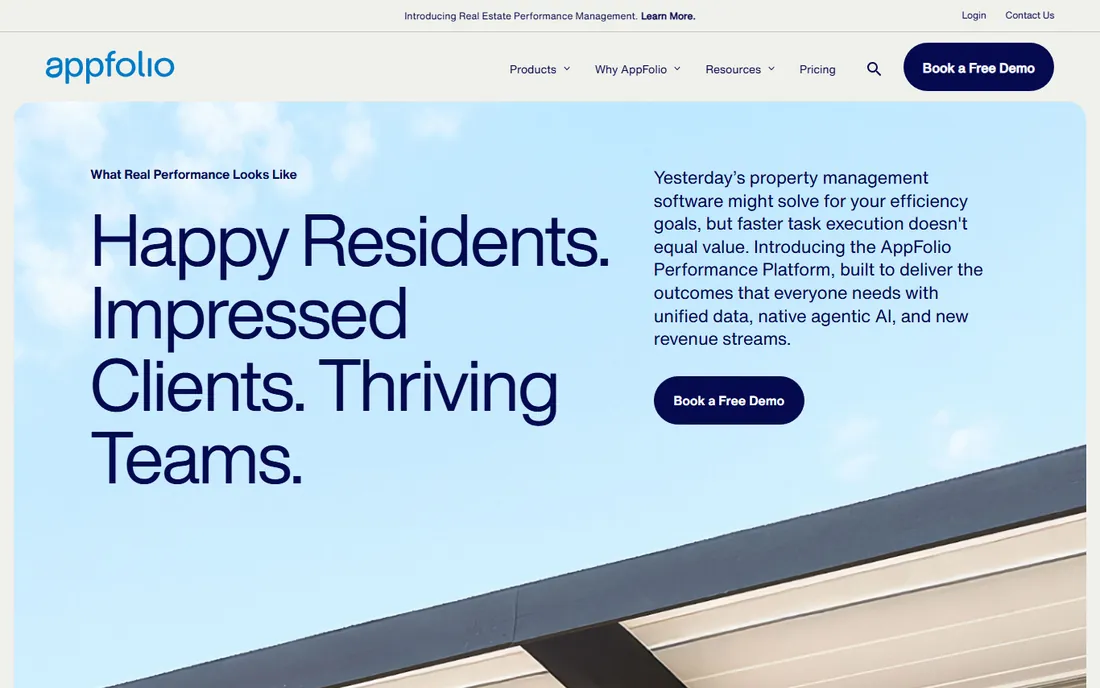
AppFolio Property Manager is the leading platform for professional property managers: leasing, accounting, maintenance, communications and AI-assisted workflows in one modern system. Managers with hundreds or thousands of units run their business on it.
Pricing is premium and small landlords will find it oversized. For professional management companies that want the best platform available, AppFolio's depth and innovation lead.
What we like- Most powerful property platform
- AI leasing tools
- Scales to thousands of units
Watch out for- Premium pricing
- Overkill for small landlords
Starting priceSee website
Free planFree trial
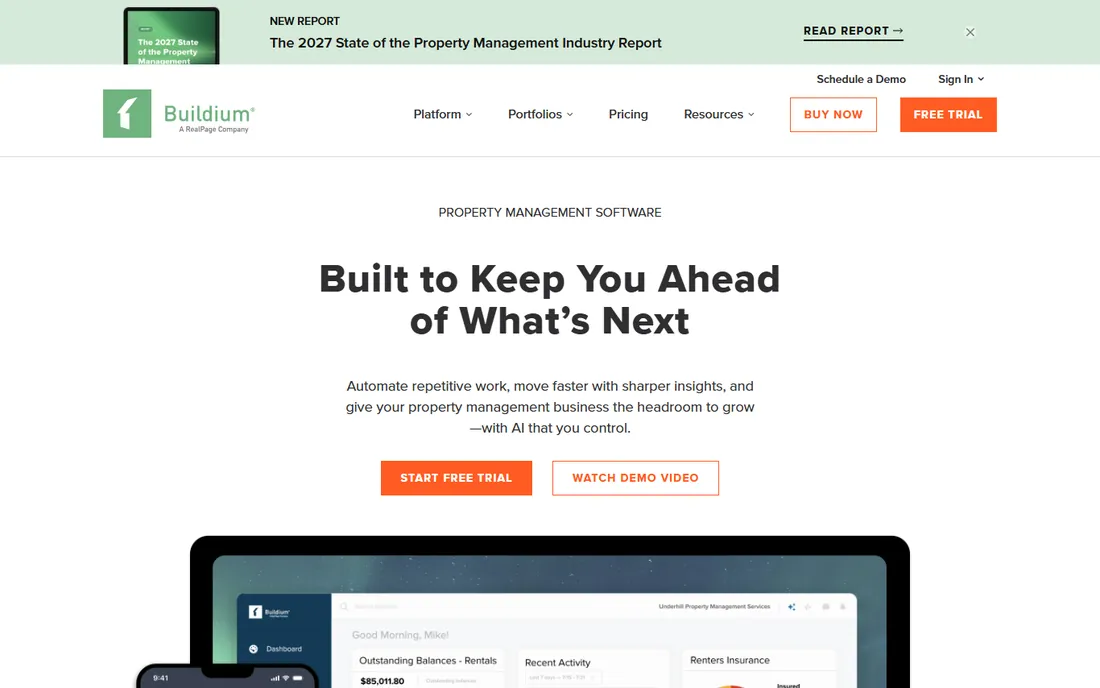
Buildium serves property managers and HOAs with leasing, accounting, maintenance and resident portals. The accounting is proper (not simplified), and the platform scales from dozens to thousands of units. Growing firms standardize on it.
Costs scale with the portfolio, and the full feature set takes learning. For management companies that have outgrown landlord tools, Buildium is the proven step up.
What we like- Full management feature set
- Good accounting
- Proven at scale
Watch out for- Pricing grows with units
- Learning curve
Starting priceSee website
Free planFree trial
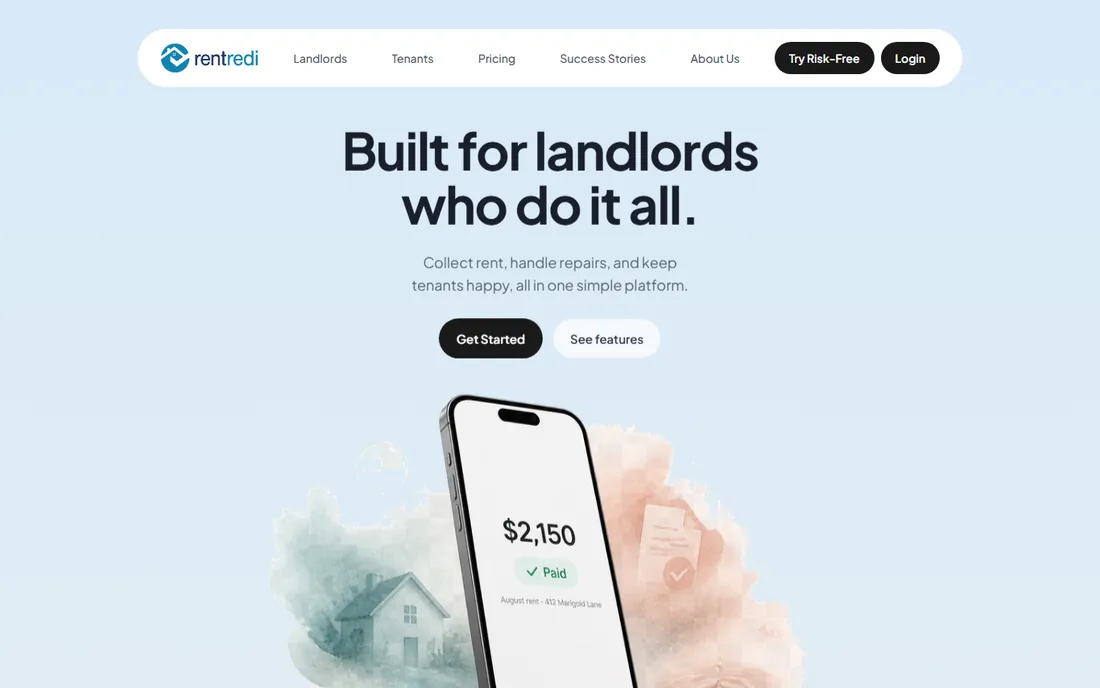
RentRedi gives landlords rent collection, tenant screening, maintenance tracking and listings at flat, affordable pricing. The mobile app is strong, which matters for landlords in the field. Value for money is the pitch.
Enterprise management depth is not here. For landlords with a handful to dozens of units who want real software without real enterprise pricing, RentRedi balances cost and capability.
What we like- Affordable flat pricing
- Tenant screening
- Good mobile app
Watch out for- Less depth than AppFolio
- Smaller company
Starting priceFree
Free planFree plan
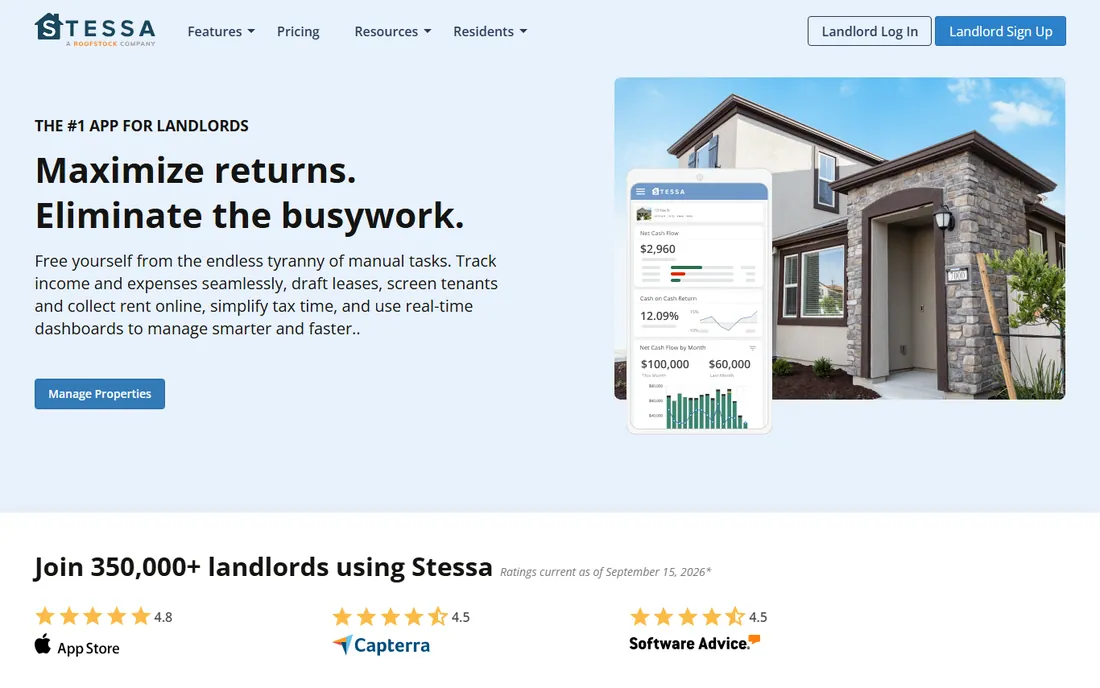
Stessa (now part of a larger real estate group) offers free rental property accounting: automated income and expense tracking, performance dashboards and tax-ready reports. Landlords get investor-grade financials without paying.
Full management features (leasing, maintenance workflows) are lighter than competitors. For landlords whose priority is knowing exactly how each property performs financially, Stessa's free accounting is unmatched.
What we like- Free rental property accounting
- Automated income tracking
- Tax reports
Watch out for- Management features lighter
- Now part of a larger company
Starting priceFree
Free planFree plan
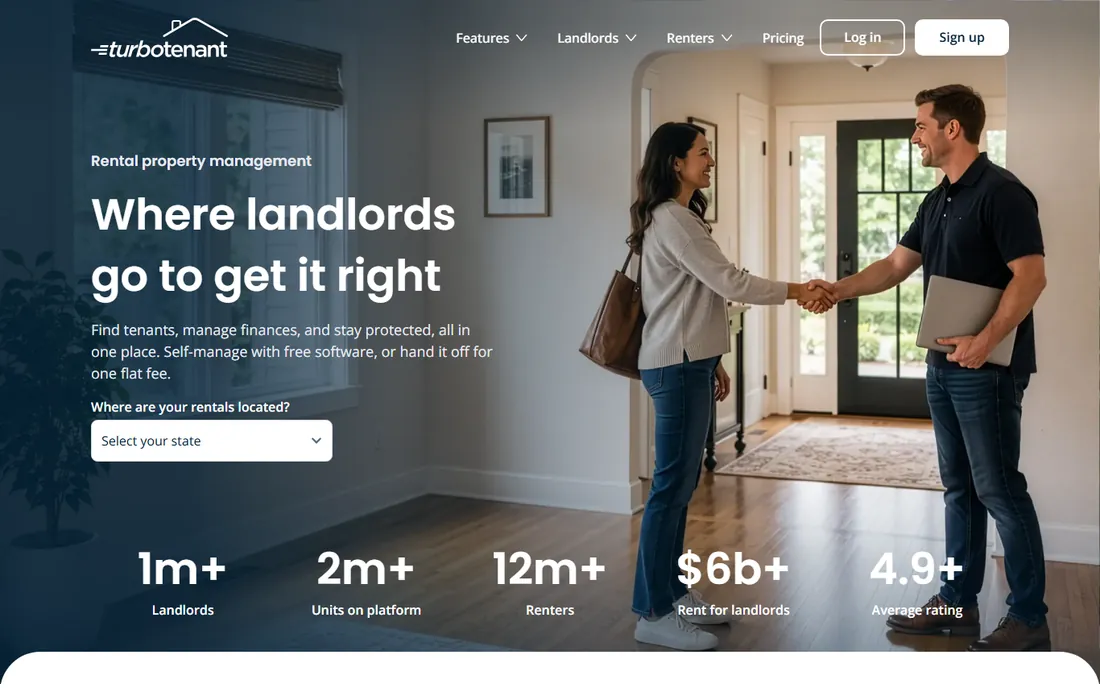
TurboTenant helps DIY landlords with rental applications, tenant screening, leases, rent collection and maintenance requests, with a free tier covering the essentials. The landlord-focused design assumes no property management background.
Professional managers need more depth. Paid tiers add advanced features. For independent landlords managing their own properties, TurboTenant's free tools handle the core jobs.
What we like- Free tier covers essentials
- Rental applications
- Good for DIY landlords
Watch out for- Advanced features paid
- Less for professional managers
Starting priceFree
Free planFree plan
Avail (now part of Realtor.com's parent company) gives DIY landlords listings syndication, applications, leases, rent collection and maintenance with a free tier. The educational content helps first-time landlords learn the business.
Professional management features are thinner. For a landlord renting out their first (or fifth) property themselves, Avail's free platform plus guidance is the friendly start.
What we like- Free landlord platform
- Listings syndication
- Educational resources
Watch out for- Now part of a larger company
- Less for managers
Starting priceSee website
Free planFree trial
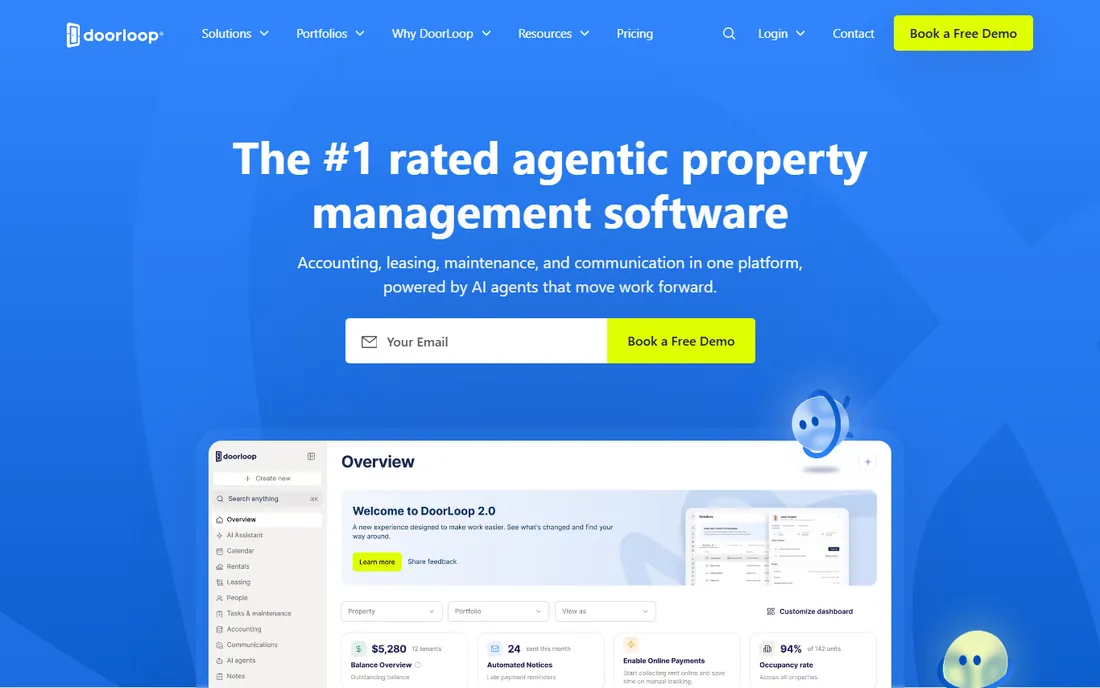
DoorLoop is the modern challenger in property management software: leasing, accounting, maintenance and portals in an interface that feels current. The company has grown fast by being easier to adopt than legacy platforms.
The track record is shorter than AppFolio or Buildium. Pricing is quote-based. For managers wanting modern software without legacy baggage, DoorLoop's momentum is compelling.
What we like- Modern easy interface
- Full management features
- Fast-growing
Watch out for- Newer than AppFolio/Buildium
- Pricing by quote
Starting priceFree
Free planFree plan

Innago offers free property management software: applications, screening, leases, rent collection and maintenance with no unit limits and no subscription. The business model runs on optional paid add-ons rather than software fees.
Support depth for free users and advanced features trail paid platforms. For landlords and small managers who refuse to pay for software, Innago's free core is the most complete no-cost option.
What we like- Completely free core
- Applications and leases
- No unit limits
Watch out for- Revenue from add-ons
- Support for free tier
Starting priceSee website
Free planFree trial
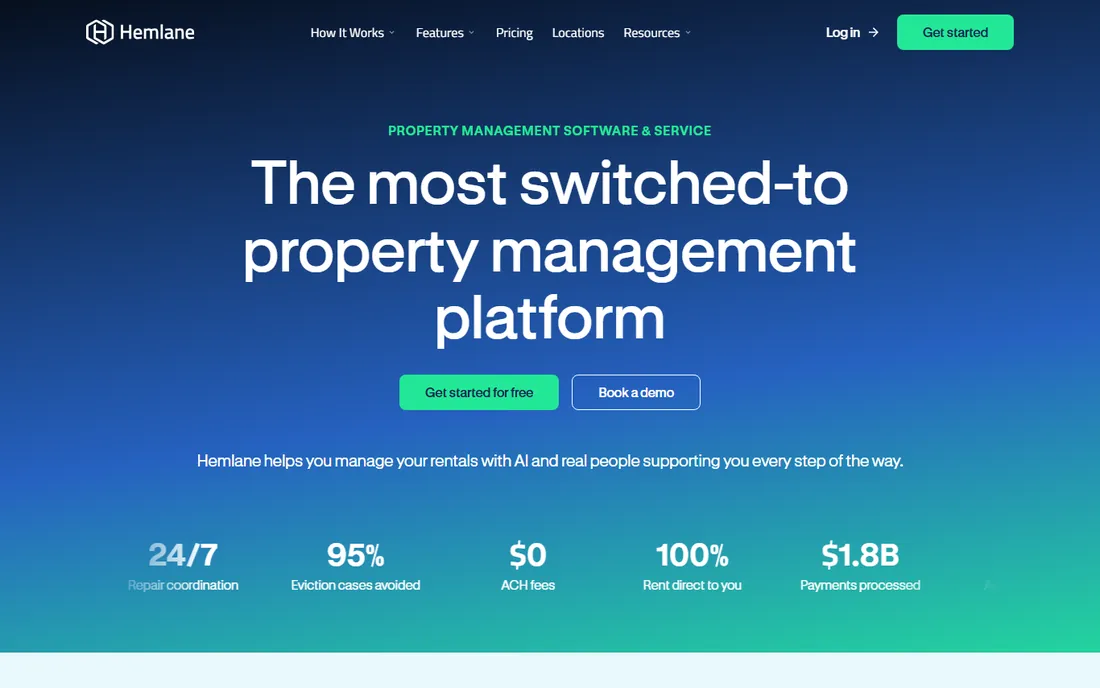
Hemlane serves remote landlords and managers: leasing automation, maintenance coordination with local pros, rent collection and accounting designed for owners who never visit the property. The remote-first design is the differentiator.
Pricing exceeds free landlord tools, and the vendor is newer than category leaders. For out-of-state investors and remote managers, Hemlane's purpose-built workflows solve the distance problem.
What we like- Built for remote landlords
- Maintenance coordination
- Leasing automation
Watch out for- Pricing higher than landlord tools
- Newer vendor
Free vs paid: the honest math
Free tools (Stessa, TurboTenant, Innago, Avail) cover the essentials genuinely well. Paid platforms ($50+/month and up, or per-unit pricing) add depth: real accounting, maintenance workflows, owner portals and scale. The break-even is usually around 10-20 units or when you hire help. Below that, free tools plus discipline win. Above that, paid software pays for itself in saved time.
Tenant screening: do it right
Every tool here offers or integrates tenant screening: credit, criminal and eviction history. Follow the Fair Housing Act strictly: consistent criteria for every applicant, documented decisions, adverse action notices when required. Screening protects your investment; discrimination lawsuits destroy it. The software helps; the policy is yours.
Tenant retention economics: the profit lever nobody pulls
Tenant turnover is the most expensive line item most landlords underestimate. The true cost of a turnover includes vacancy loss (one month vacant on a $1,500 unit is $1,500 gone), make-ready costs (cleaning, paint, repairs: typically $1,000 to $3,000), leasing costs (advertising, showings, screening, your time), and the risk of a worse tenant replacing a good one. Total: easily $3,000 to $6,000 per turnover. Against that, the math of retention becomes obvious: spending $500 keeping a good tenant is wildly profitable compared to spending $5,000 replacing them. Yet most landlords invest heavily in finding tenants and almost nothing in keeping them. The software helps when used as a retention tool, not just a rent collector.
Responsive maintenance is the number one retention driver, and it is entirely operational. Tenants do not expect luxury; they expect things fixed promptly when they break. The data is consistent: maintenance responsiveness correlates with renewal rates more than rent levels, unit finishes or amenities. This means the maintenance workflow in your property software is a retention system. Track response times (acknowledge within 24 hours, resolve urgent issues within 48), communicate proactively about delays, and follow up after completion to confirm satisfaction. Tenants who rate maintenance highly renew at dramatically higher rates. Every maintenance request is a retention moment; treat it that way.
Renewal workflows should start early and feel personal, not transactional. Begin the conversation 90 to 120 days before lease end: a personal message noting their tenancy, the renewal offer, and any options (12-month at one rate, 24-month with a small discount). The software should automate the timeline while keeping the tone human. Know your market: a renewal increase matching the market is fair, but pushing the maximum on a great tenant who pays on time and never complains is penny-wise. Model the turnover cost against the increase; keeping a $1,500 tenant at $1,550 beats finding a new one at $1,650 after a month vacant. Long-term tenants are also lower risk: you know their payment history and behavior.
Small gestures compound into loyalty. None of this requires extravagance: a holiday card, a small gift on lease anniversary, responsiveness that treats tenants as customers rather than inconveniences. Use the software's communication tools for periodic check-ins beyond rent reminders: a seasonal maintenance reminder, a community update, a quick satisfaction survey mid-lease. These touches cost almost nothing and differentiate you from every landlord who only communicates about money and problems. Track satisfaction with simple annual surveys; the feedback also surfaces maintenance issues before they become move-out reasons.
Measure retention like the KPI it is. Track renewal rate (percentage of eligible tenants who renew), average tenancy duration, turnover cost per unit, and the reasons tenants give for leaving. Exit interviews, even brief ones, reveal patterns: if everyone cites slow maintenance, you know the fix; if everyone cites rent increases, your pricing needs review. Set a retention target (70 percent renewal rates are good; 80 percent is excellent) and review it annually alongside financials. The landlords who treat retention as a managed metric consistently outperform those who treat turnover as bad luck. In rental property, keeping good tenants is the highest-ROI activity available, and it runs through the same software that collects the rent.
Frequently asked questions
How much does rental property software cost?
Stessa, TurboTenant, Innago and Avail have free tiers. RentRedi and Hemlane run tens of dollars monthly. Buildium and DoorLoop run higher with unit-based pricing. AppFolio is premium and quote-based.
Can tenants pay rent online?
Yes, online ACH and card payments are standard. ACH costs less; many landlords pass card fees to tenants or encourage ACH. Automatic late fees and reminders reduce chasing.
Does it handle maintenance requests?
Yes, with varying depth. Tenants submit requests with photos; landlords assign, track and communicate. Hemlane and the paid platforms handle this best. Free tools cover the basics.
What about accounting and taxes?
Stessa specializes in rental accounting with tax-ready reports. Buildium and AppFolio have full accounting. All track income and expenses; confirm the reports suit your CPA before tax season, not during it.
Can I list vacancies on Zillow and apartments.com?
Yes. Listing syndication to major rental sites is standard across these tools. Write good listings with real photos; the software distributes them, but quality still determines inquiries.
Should I self-manage or hire a manager?
Under ~10 local units, self-management with good software usually wins financially. Remote portfolios, large unit counts or low time availability favor professional managers (who use AppFolio/Buildium). Be honest about your time.
How we chose
We compared the rental property tools landlords actually use, from free DIY options to professional management platforms. Pricing is free-tier or subscription across the category. We weighted rent collection, tenant screening, maintenance workflows, accounting quality and honest fit for different landlord sizes. No hands-on testing was performed; assessments rest on documentation and public reviews.
Sources we checked (9)
- https://www.appfolio.com/
- https://www.buildium.com/
- https://rentredi.com/
- https://www.stessa.com/
- https://www.turbotenant.com/
- https://www.avail.com/
- https://www.doorloop.com/
- https://innago.com/
- https://www.hemlane.com/
Is your product missing or out of date?
We review this list regularly. Vendors can request a listing, send updated pricing or ask about featured placement.

Shihab Mia · Founder, Rankite
Shihab has spent more than a decade helping SaaS and e-commerce brands grow through search. He writes Rankite's software buying guides from pricing pages, documentation and public user reviews. More about Shihab.