How we make this list: we compare pricing pages, product documentation and public user reviews. Rankite is independent; if a vendor ever pays for a featured spot, that listing is clearly labeled Partner.
Key takeaways
- Bubble is the most capable no-code platform for building real web applications with complex logic and databases.
- Webflow leads for marketing sites where design control matters more than app logic.
- Glide and Softr turn spreadsheets into working apps fastest, ideal for internal tools.
- Adalo and FlutterFlow build real mobile apps, with FlutterFlow offering code export for developers.
- OutSystems, Mendix, and SAP Build Apps serve enterprises building business applications with IT governance.
Quick comparison
| Tool | Best for | Starting price | Free plan |
|---|
 Bubble Bubble | full web applications | See website | Yes |
 Webflow Webflow | design-led websites | See website | Yes |
 Glide Glide | spreadsheet-to-app | See website | Yes |
 Softr Softr | client portals and directories | See website | Yes |
 Adalo Adalo | native mobile apps | See website | Yes |
 FlutterFlow FlutterFlow | mobile apps with code export | See website | Yes |
 OutSystems OutSystems | enterprise applications | See website | Yes |
 Mendix Mendix | enterprise low-code apps | See website | Yes |
 SAP Build Apps SAP Build Apps | SAP ecosystem apps | See website | Free trial |
Is your product missing or out of date?
We review this list regularly. Vendors can request a listing, send updated pricing or ask about featured placement.
Starting priceSee website
Free planYes
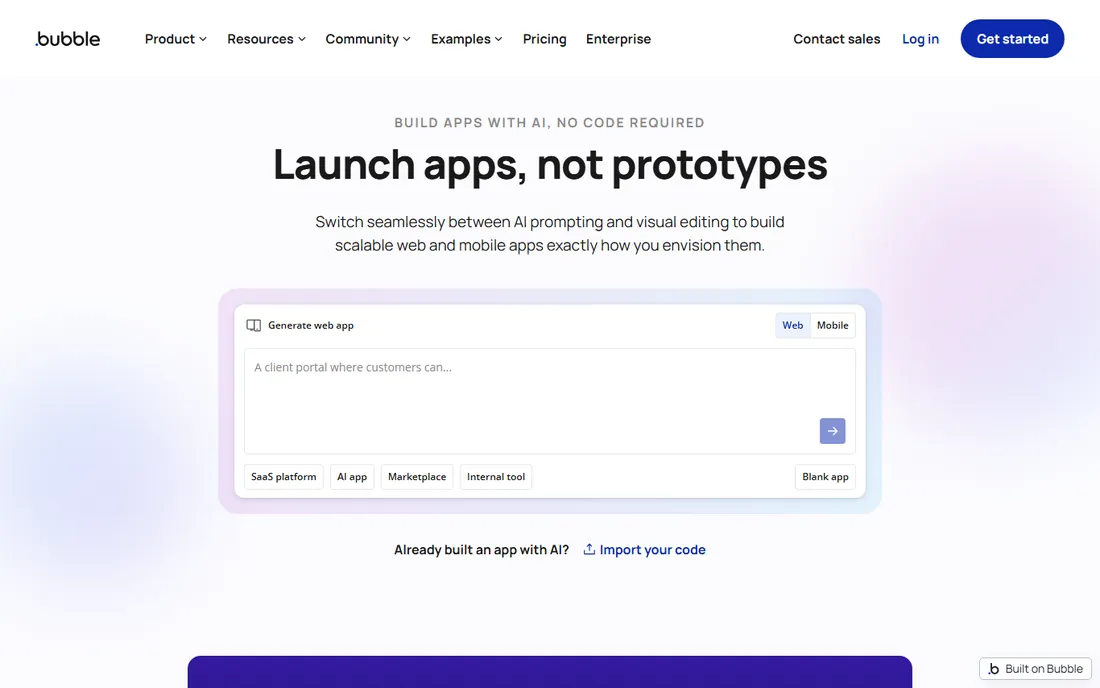
Bubble is the closest no-code comes to real software development. Visual workflows handle complex logic, the built-in database manages relational data, and plugins extend nearly everything. Startups have built funded companies on Bubble, which no other platform here can claim as credibly.
Power brings complexity. Bubble has a genuine learning curve, and poorly structured apps run slowly. But founders who invest the learning time get applications that would cost six figures to code. For web apps with real logic, user accounts, and payments, Bubble remains the default answer.
What we like- Most powerful visual programming
- Real database and logic
- Large community
Watch out for- Learning curve is real
- Performance needs optimization
Starting priceSee website
Free planYes
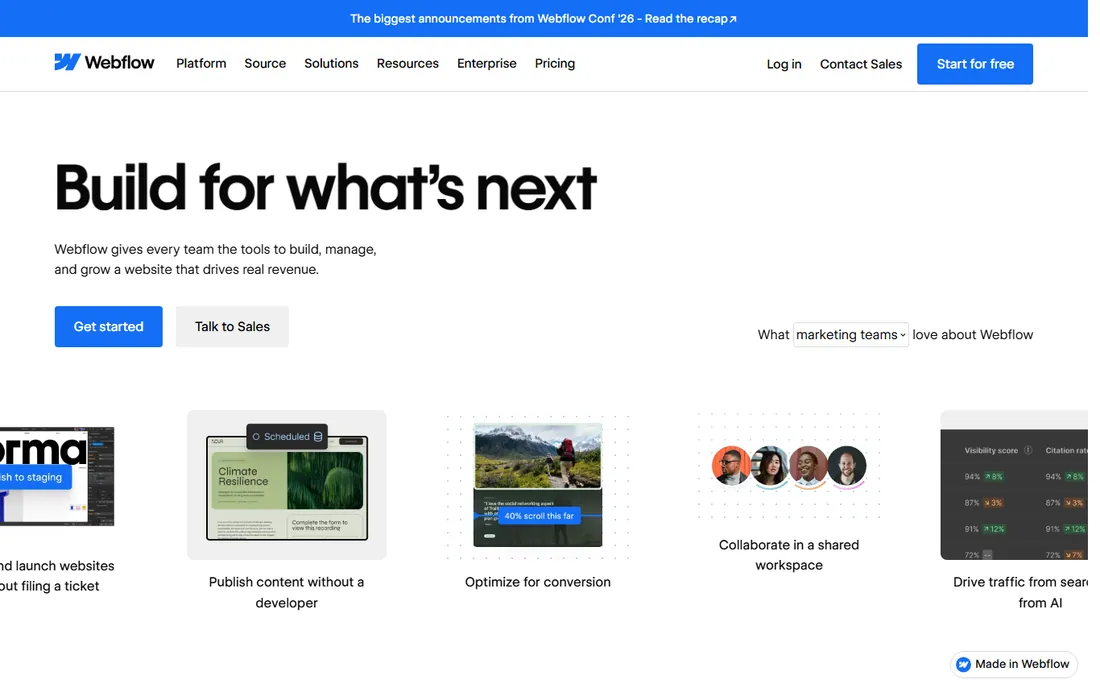
Webflow gives designers the control they lose in template builders. Build exactly the site you imagine with professional-grade CSS control, manage content in a real CMS, and publish to fast global hosting. Agencies and marketing teams produce award-level sites without developers.
It is a website builder, not an app platform. User accounts, complex logic, and marketplaces stretch it beyond its design. E-commerce exists but trails Shopify. But when the deliverable is a beautiful, high-performing website, Webflow's design fidelity has no no-code equal.
What we like- Pixel-perfect design control
- Clean code output
- Great CMS
Watch out for- Not for complex app logic
- Pricing per site adds up
Starting priceSee website
Free planYes
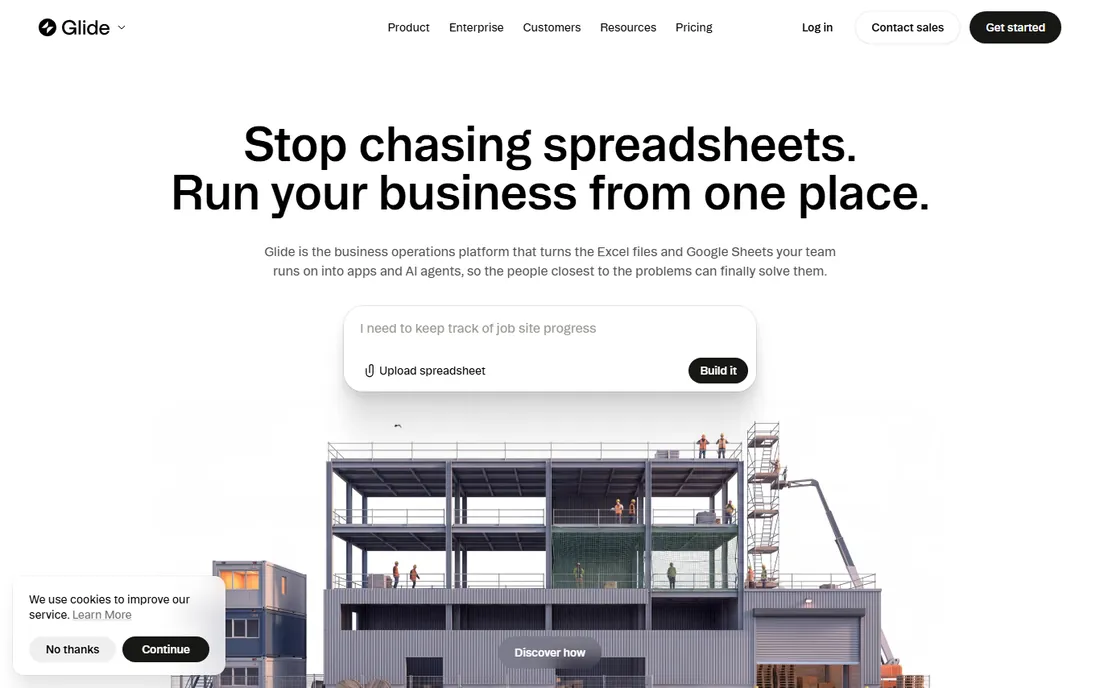
Glide turns a spreadsheet into a working mobile-friendly app in minutes. Point it at Google Sheets or Airtable and get a polished interface with search, forms, and user accounts automatically. Internal tools, directories, and simple customer apps come together shockingly fast.
Complex application logic hits walls; Glide is a data interface builder, not a programming environment. Heavy customization needs workarounds. But for the enormous category of "we need an app on top of this spreadsheet," Glide's speed from idea to working software is unmatched.
What we like- Fastest path from data to app
- Beautiful defaults
- Easy for non-builders
Watch out for- Limited for complex logic
- Tied to data sources
Starting priceSee website
Free planYes
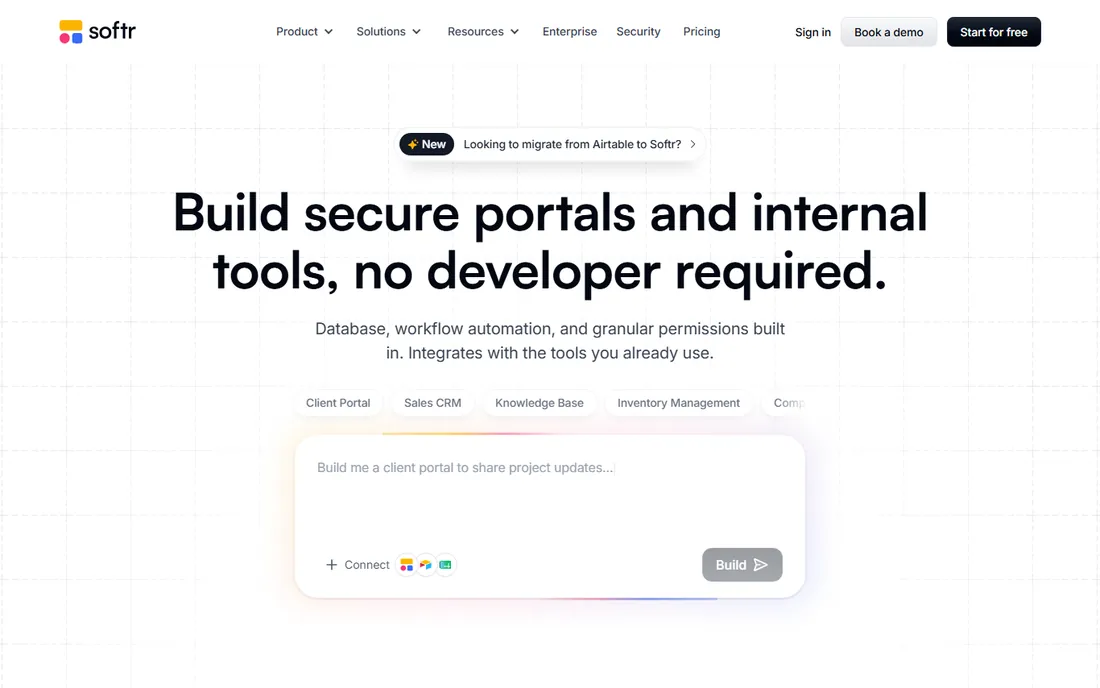
Softr builds the gated web: client portals, member directories, internal dashboards, and marketplace MVPs on top of Airtable or Google Sheets. Pre-built blocks for lists, profiles, payments, and user accounts assemble fast. Agencies productize client portals on it profitably.
Design customization stays within Softr's system; distinctive visual brands need Webflow instead. Complex workflows need creative block combinations. But for functional portals where the data matters more than the pixels, Softr ships in days what agencies used to quote in weeks.
What we like- Great for portals and memberships
- Airtable and Google Sheets native
- Quick setup
Watch out for- Design flexibility limited
- Advanced logic needs workarounds
Starting priceSee website
Free planYes
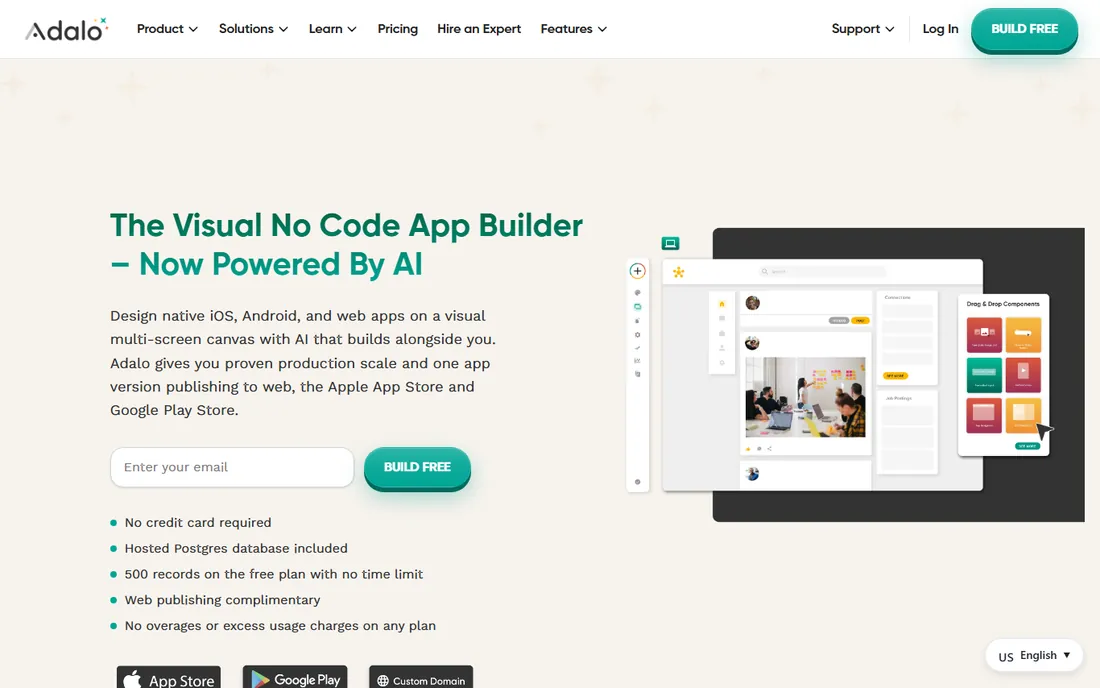
Adalo builds actual native mobile apps that publish to the App Store and Google Play. The visual builder covers screens, navigation, databases, and integrations, letting non-developers ship real apps. MVPs and internal mobile tools launch without native developers.
Scale reveals limits: complex apps with heavy data can feel slow, and pricing per published app adds up for portfolios. But for validating a mobile app idea or serving a defined user base, Adalo delivers genuine native apps at a fraction of development cost.
What we like- Real native mobile apps
- Publishes to app stores
- Visual database
Watch out for- Performance limits at scale
- Pricing per app
Starting priceSee website
Free planYes
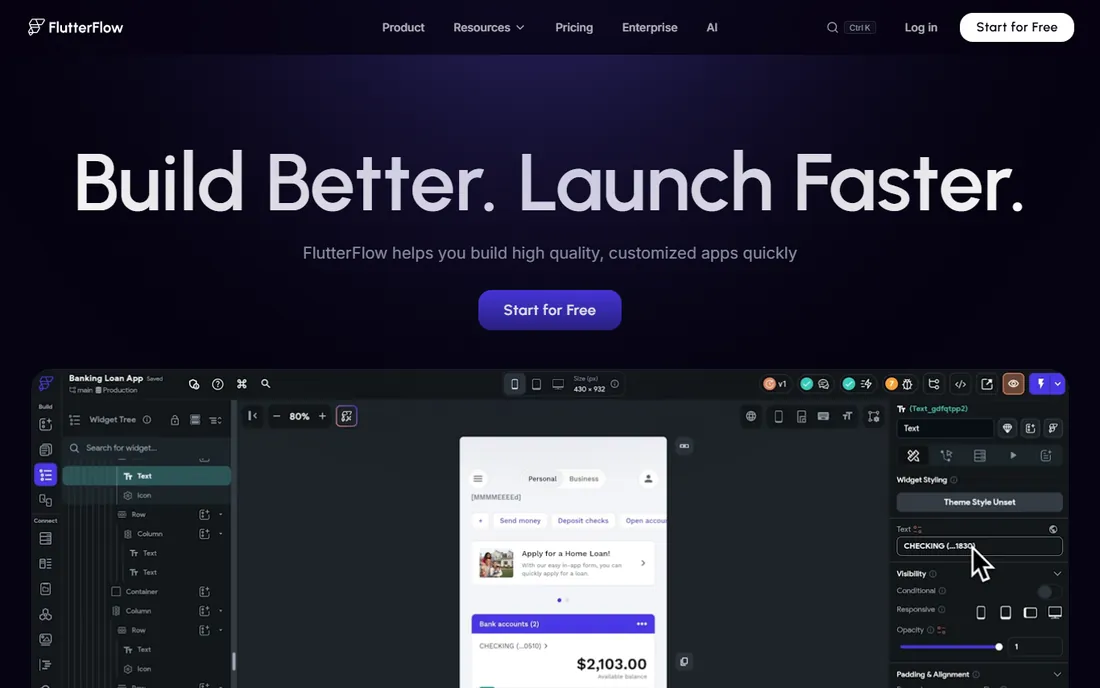
FlutterFlow's killer feature is the exit ramp: it generates real Flutter code you can export and continue developing. Build visually, then hand clean code to developers when the app outgrows no-code. The UI builder is excellent and Firebase integration covers backend needs.
It helps to understand Flutter concepts; pure non-technical builders face a learning curve. But the code export changes the risk calculation entirely. Teams can start no-code without fearing a rewrite, which makes FlutterFlow the strategic pick for apps meant to scale.
What we like- Exports real Flutter code
- Beautiful UI builder
- Firebase integration
Watch out for- Flutter knowledge helps
- Learning curve
Starting priceSee website
Free planYes
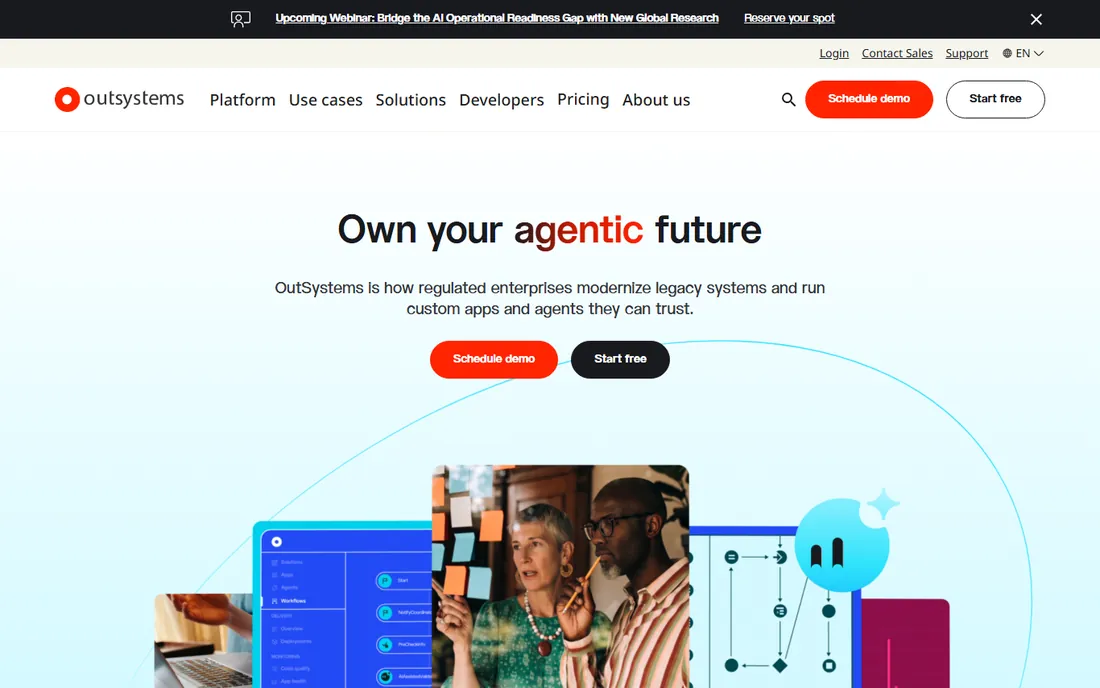
OutSystems is low-code for the enterprise: visual development with the scalability, security, and governance IT departments require. Banks, insurers, and governments build customer portals and core systems on it. AI assistance accelerates development while keeping architectural standards.
Pricing and process are enterprise through and through. Small teams should not bother. But organizations that need custom applications with enterprise controls, and have the budgets to match, find OutSystems the most credible low-code platform for serious systems.
What we like- Enterprise-grade scalability
- Strong governance
- AI-assisted development
Watch out for- Enterprise pricing
- Overkill for simple apps
Starting priceSee website
Free planYes
Mendix, a Siemens company, targets the same enterprise low-code space as OutSystems with particular strength in manufacturing and industrial applications. Visual modeling, reusable components, and deployment controls suit organizations building portfolios of business applications.
Like its rival, it is enterprise software with enterprise sales cycles. The free tier lets developers learn, but production use means real budgets. Siemens ownership reassures industrial buyers planning decade-long platform commitments. Evaluate both Mendix and OutSystems if this is your category.
What we like- Siemens backing
- Strong manufacturing and enterprise fit
- Good governance
Watch out for- Enterprise complexity
- Pricing needs conversation
Starting priceSee website
Free planFree trial

SAP Build Apps, built on the AppGyver acquisition, lets SAP customers build mobile and web apps on their SAP data without traditional development. Fiori-style interfaces, workflow integration, and SAP authentication come naturally. For the SAP installed base, it is the obvious extension platform.
Outside SAP, the value proposition thins; general builders offer more freedom. But SAP shops with citizen developers and backlogs of app requests get a governed path from idea to deployed app on their system of record. In that context, nothing else integrates as cleanly.
What we like- Native SAP integration
- Formerly AppGyver
- Good for SAP shops
Watch out for- Best inside SAP
- Less for general use
Choosing by what you are building
Match the platform to the deliverable. Marketing websites go to Webflow. Web applications with real logic go to Bubble. Mobile apps go to Adalo, or FlutterFlow if you might need code later. Internal tools and portals go to Glide or Softr. Enterprise systems go to OutSystems, Mendix, or SAP Build Apps.
The most expensive mistake is building on the wrong type and discovering the limits mid-project. Prototype the hardest feature first: user permissions, complex workflows, or offline mobile. If the platform handles your hardest requirement in the trial, it will handle the rest.
The lock-in question
No-code platforms own your runtime. If Bubble raises prices or changes terms, migrating a complex app means rebuilding. Mitigate by choosing platforms with export options (FlutterFlow's code export is the gold standard), keeping business logic documented, and owning your data with regular exports.
For MVPs and internal tools, lock-in risk is acceptable; speed matters more. For core business systems expected to run a decade, weigh the risk seriously and favor enterprise platforms with contractual protections or code-export paths.
Frequently asked questions
What is the best no-code platform for startups?
Bubble for web applications with real functionality, FlutterFlow or Adalo for mobile apps. The choice depends on the product: web-first startups default to Bubble, mobile-first to FlutterFlow. Both have free tiers for validation.
Can no-code platforms scale?
It depends on the platform and the app. Bubble apps serve real businesses with thousands of users when built well. Enterprise low-code platforms like OutSystems scale to millions. Simple builders like Glide suit hundreds of users. Architecture matters more than the platform: well-structured no-code apps scale, messy ones do not.
Is Webflow better than WordPress?
For design-led marketing sites, Webflow offers better design control and performance without plugin maintenance. WordPress wins on ecosystem size, cost, and content-heavy sites. Agencies choose Webflow for custom designs; bloggers and publishers often prefer WordPress.
Do I need to learn to code to use no-code?
No, but logical thinking helps enormously. Bubble rewards users who understand data relationships and workflows. Simpler tools like Glide and Softr need only spreadsheet skills. The "no-code" promise is real; the "no-thinking" promise is not.
What does low-code mean versus no-code?
No-code targets non-developers with fully visual building. Low-code targets developers and IT, accelerating professional development with visual tools plus code where needed. OutSystems and Mendix are low-code; Bubble, Glide, and Softr are no-code. The line blurs in practice.
Knowing when to graduate to custom code
No-code platforms carry projects remarkably far, but honest builders watch for the signals that custom development is due. Performance degrades as data and users scale beyond the platform's sweet spot. Workarounds pile up for requirements the platform never anticipated. Or the business needs proprietary technology as a competitive moat rather than assembled components.
Plan the exit before you need it. Choose platforms with data export and, ideally, code export like FlutterFlow. Document business logic outside the platform so developers can rebuild it. And consider the hybrid path many startups take: keep the no-code app for validated workflows while building custom code for the differentiating core. Graduation is a success milestone, not a failure of the platform.
Estimating build time honestly
No-code does not mean instant. Simple apps, directories, booking forms, landing pages with logic, take days to a couple of weeks. Real applications with user accounts, payments, and complex workflows take one to three months of focused building. The speed advantage over custom code is real but not magical.
The hidden time goes to data modeling and edge cases. Map your data structure on paper before building: what entities exist, how they relate, who can see what. Then list the edge cases: failed payments, expired trials, permission changes. Builders who plan these upfront finish in weeks; those who discover them mid-build stall for months. Prototype the hardest workflow first to validate the platform choice before committing the full build.
How we chose
We covered the category by builder type: web apps, websites, mobile apps, internal tools, and enterprise platforms. We verified each vendor's current site, compared free tiers and pricing models, and weighed builder-community sentiment on real projects. We favored platforms with genuine production use over demos. No vendor paid for placement, and we did not claim hands-on testing.
Sources we checked (9)
- https://bubble.io
- https://webflow.com
- https://www.glideapps.com
- https://www.softr.io
- https://www.adalo.com
- https://www.flutterflow.io
- https://www.outsystems.com
- https://www.mendix.com
- https://www.sap.com
Is your product missing or out of date?
We review this list regularly. Vendors can request a listing, send updated pricing or ask about featured placement.

Shihab Mia · Founder, Rankite
Shihab has spent more than a decade helping SaaS and e-commerce brands grow through search. He writes Rankite's software buying guides from pricing pages, documentation and public user reviews. More about Shihab.