How we make this list: we compare pricing pages, product documentation and public user reviews. Rankite is independent; if a vendor ever pays for a featured spot, that listing is clearly labeled Partner.
Key takeaways
- AI prompt-to-app builders (Lovable, Bolt.new, Base44) now generate working apps from plain language, but you still own the iteration work.
- Classic no-code platforms (Bubble, Glide, Softr) remain better for serious products because they give you real databases, permissions, and control.
- Bubble is the most powerful no-code AI platform for complex web apps, but it has the steepest learning curve here.
- Free plans are generous across the category, so you can prototype on almost every tool before paying.
- Microsoft Power Apps is the enterprise pick for companies already on Microsoft 365, priced at $20 per user per month.
Quick comparison
| Tool | Best for | Starting price | Free plan |
|---|
 Bubble Bubble | complex web apps and SaaS | $29/month (billed annually) | Yes |
 Lovable Lovable | prompt-to-app MVPs with code you own | $25/month | Yes |
 Bolt.new Bolt.new | fastest prompt-to-deployed web app | $25/month | Yes |
 Base44 Base44 | all-in-one apps with built-in backend | $16/month (billed annually) | Yes |
 Softr Softr | client portals on existing data | $19/month (billed annually) | Yes |
 Glide Glide | spreadsheet-powered internal tools | See website | Yes |
 Adalo Adalo | native mobile apps without code | $36/month | Yes |
 Microsoft Power Apps Microsoft Power Apps | enterprise apps on Microsoft 365 | $20/user/month | Yes |
Is your product missing or out of date?
We review this list regularly. Vendors can request a listing, send updated pricing or ask about featured placement.
No-code split into two tribes in the last two years. The old guard (Bubble, Glide, Softr) gives you visual builders with real databases. The new guard (Lovable, Bolt.new, Base44) lets you describe an app in plain English and watches AI generate it. Both tribes now claim the AI label. Here is how the eight serious options compare.
Starting price$29/month (billed annually)
Free planYes
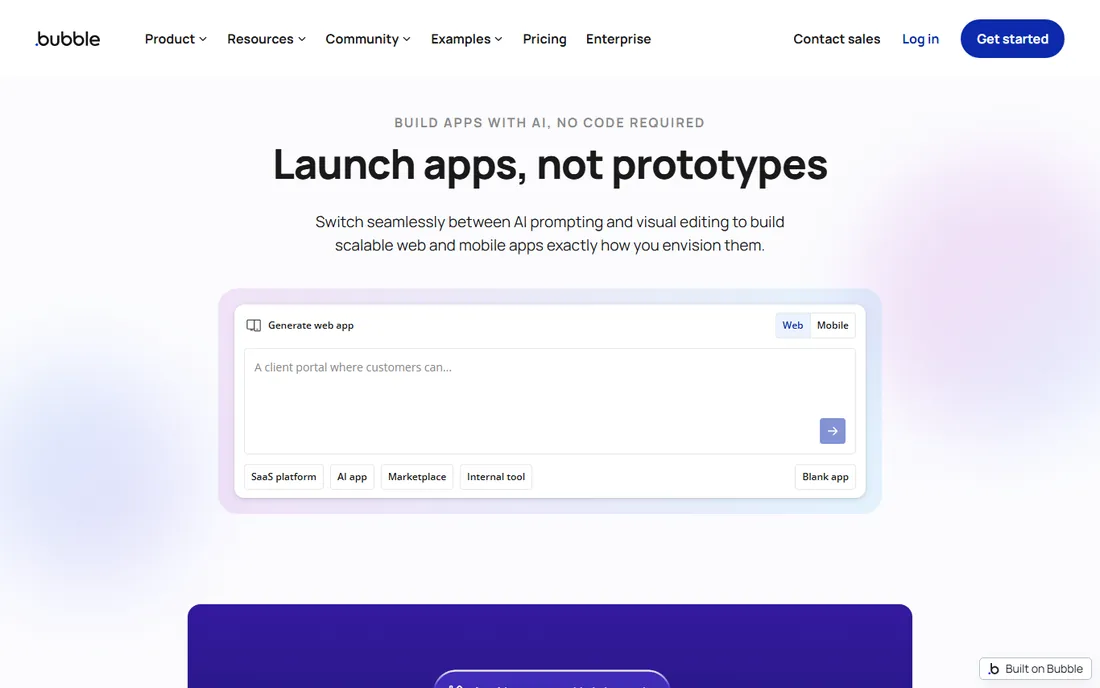
Bubble is the heavyweight. When someone builds a real SaaS product without code, marketplaces, dashboards, social apps with complex logic, it is usually Bubble. The visual workflow editor handles logic that simpler tools cannot express, the built-in database is genuinely capable, and the plugin marketplace extends it into payments, maps, AI models, and thousands of other integrations.
The company now positions itself as a no-code AI app builder, adding AI assistance to the visual building experience rather than replacing it. That is the right call for its audience: Bubble users want control, not a black box. The honest catch is the learning curve. Bubble is visual, not simple, and building well takes weeks of learning. There is also no code export, so your app lives on Bubble permanently. For a serious product you plan to run for years, that tradeoff is usually worth it.
What we like- Deepest visual development power in no-code, with real workflows and database
- Huge plugin and template ecosystem
- Now adding AI-assisted building
Watch out for- Steepest learning curve on this list
- No code export, so you are committed to the platform
Starting price$25/month
Free planYes
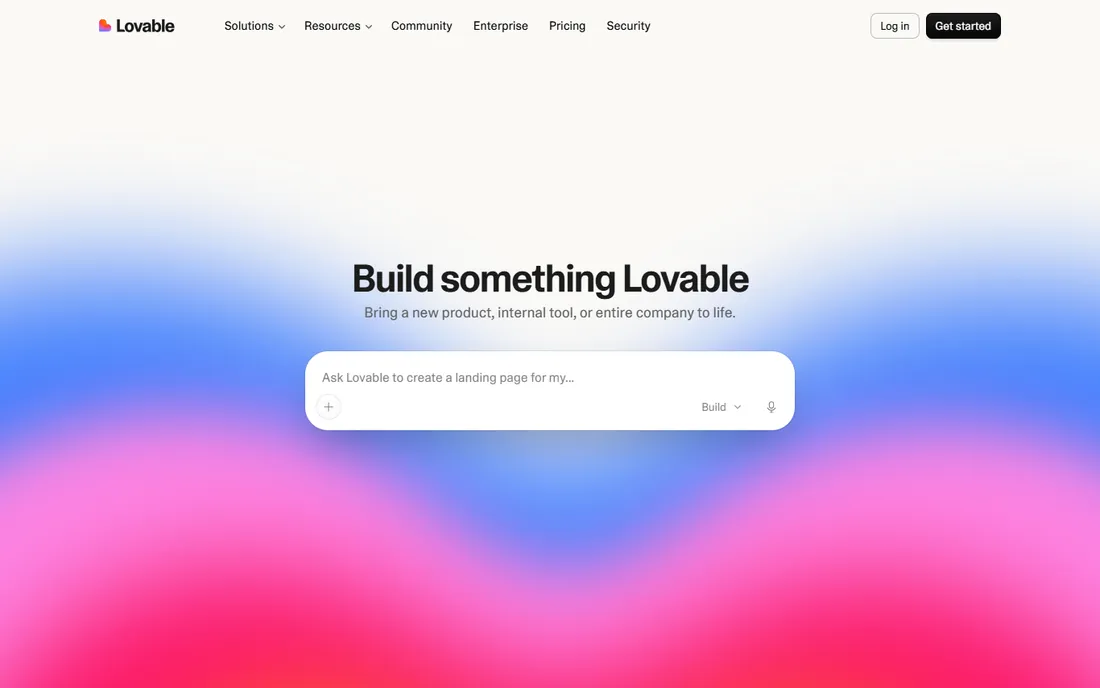
Lovable defined the vibe-coding wave for non-developers: type what you want, watch a real web app appear, iterate by chatting. The output is genuinely impressive, polished UI, working functionality, deployed instantly. For landing an MVP in front of users this weekend, nothing beats the speed.
The critical difference from pure no-code is code ownership. Lovable generates real React and TypeScript that you can export and hand to developers later, which removes the platform lock-in fear. The free plan with daily credits lets you experiment meaningfully. The honest catch is that "AI wrote it" is not the same as "it is well architected." As apps grow, you will hit decisions about databases, auth, and structure where the AI needs direction, and at that point some technical judgment, yours or a developer's, becomes necessary.
What we like- Describe your app in plain language and get production-grade code
- You own the React code and can export it
- Fast iteration by chatting with the AI
Watch out for- AI-generated code still needs your judgment on architecture
- Backend setup (like Supabase) is on you for serious apps
#3
Bolt.new
Best for: fastest prompt-to-deployed web app
Visit bolt.new
Starting price$25/month
Free planYes
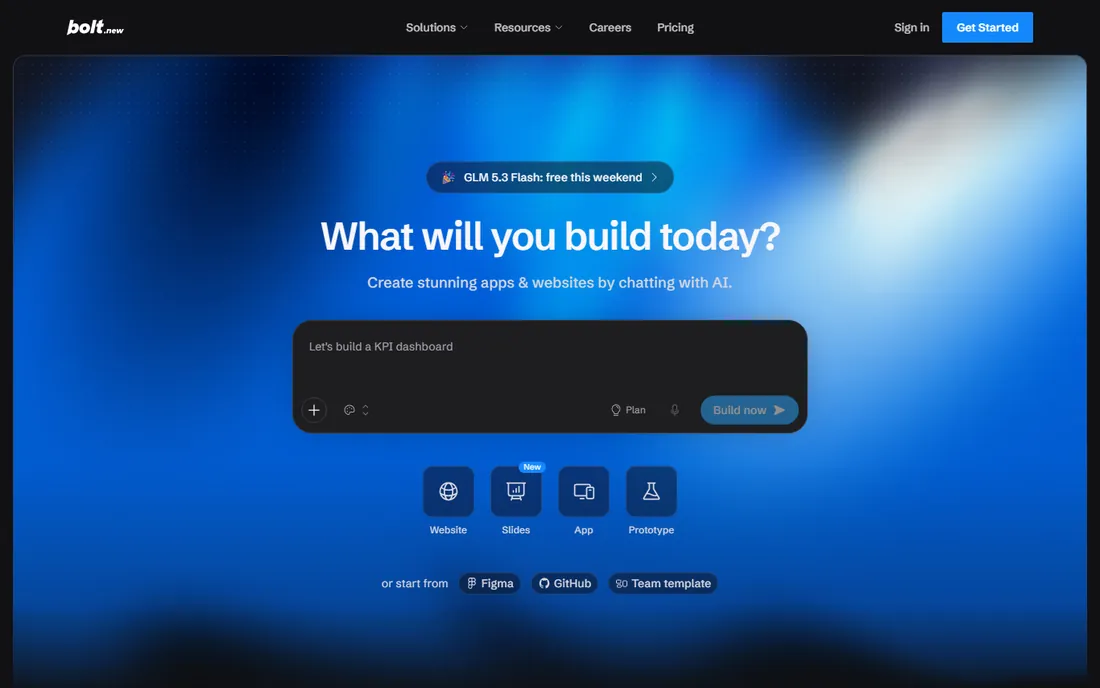
Bolt.new takes the prompt-to-app idea and removes every setup step: it runs entirely in the browser, generates full-stack web apps, and deploys them instantly. The AI automatically routes tasks to the right model, balancing quality against cost, and it tests and refactors as it goes, which reduces the error-spiral that plagues AI-generated code.
For hackathons, prototypes, landing pages with real functionality, and internal tools, the speed is unmatched. The free tier is genuinely usable, and paid plans start accessibly. The honest catch is scope. Bolt excels at getting version one live; it is less suited to the months-long iteration of a complex product with intricate business logic, where Bubble's visual workflows or exported codebases give you more control. Think of it as the fastest sketchpad, not the final workshop.
What we like- Browser-based building with instant deployment
- Automatic model routing for quality and cost
- Generous free tier to start
Watch out for- Best for prototypes and smaller apps rather than complex products
- Credit-based pricing can surprise heavy iterators
Starting price$16/month (billed annually)
Free planYes
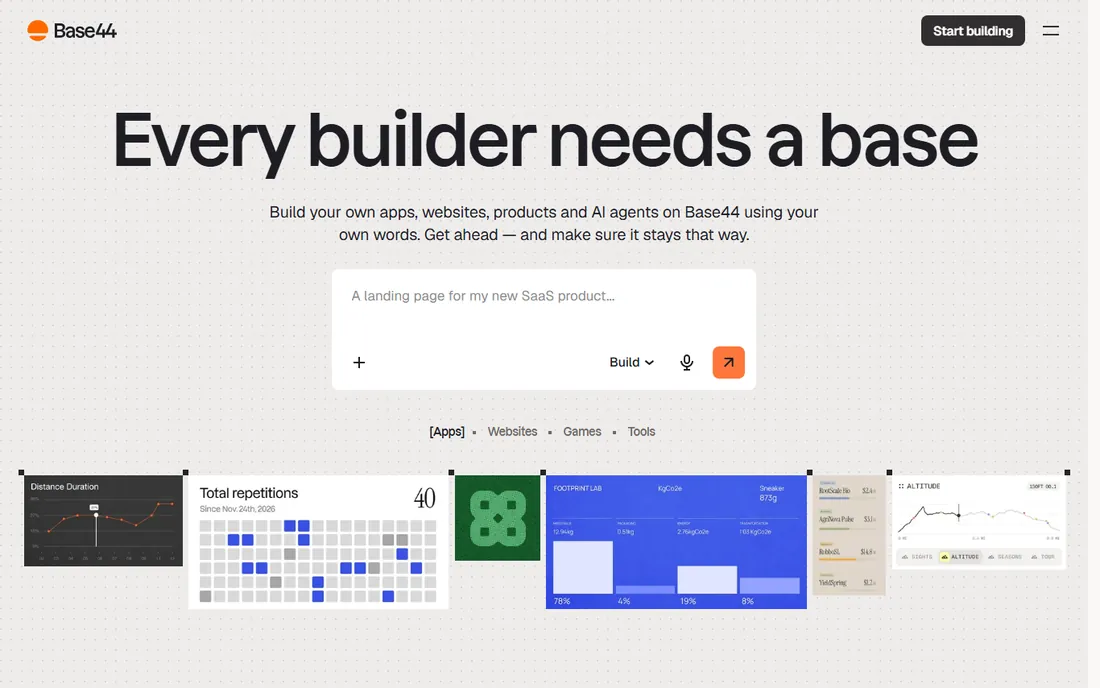
Base44 answers Lovable's main weakness: the backend. Describe your app and Base44 generates not just the interface but the database, authentication, payments, and hosting, all included. You do not wire up Supabase or configure auth providers; it is simply there. It can also build AI agents that connect to your tools and take action, which extends the platform beyond apps into automation.
At $16 per month billed annually, with a real free plan, it is the cheapest paid entry on this list, and the company (now part of Wix) has momentum. The honest catch is youth. The community, template library, and third-party resources are thinner than Bubble's decade-deep ecosystem, and the credit system means every AI build and refinement spends credits, so undisciplined iterating burns through your allowance. Plan your builds in phases.
What we like- Backend, auth, payments, and hosting all built in from a plain-language prompt
- Cheapest paid entry here
- Can also build AI agents, not just apps
Watch out for- Newer platform with a smaller community than Bubble
- Credit-based AI generation requires planning your iterations
Starting price$19/month (billed annually)
Free planYes
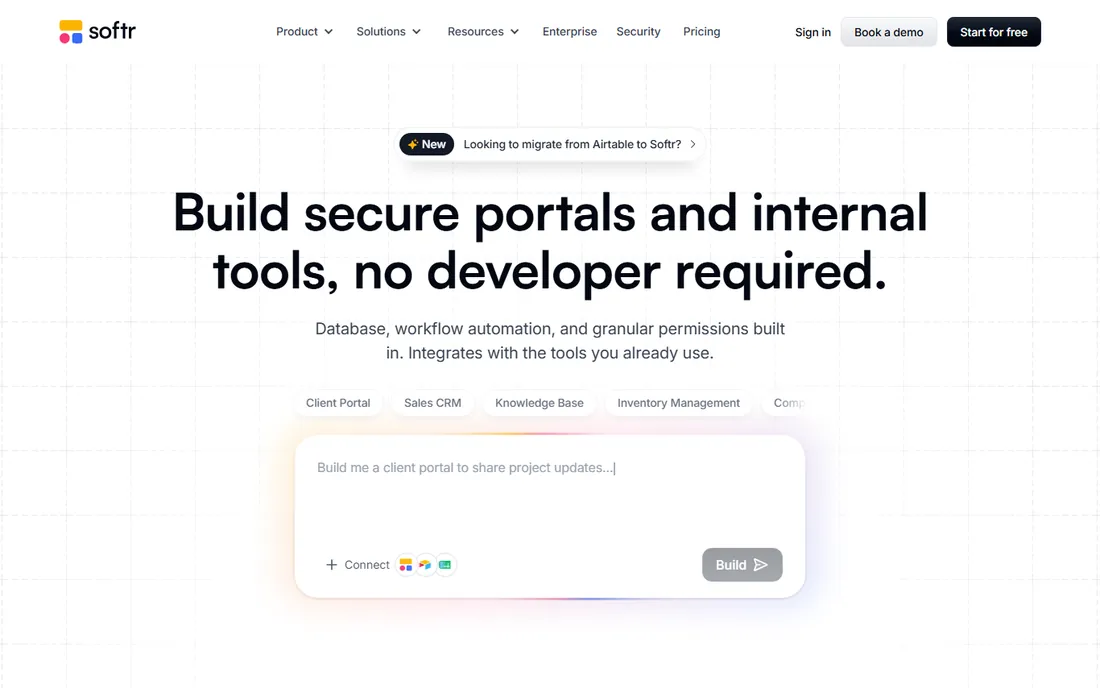
Softr is the specialist: it turns your existing data into client portals, internal tools, CRMs, and dashboards faster than anything else. Connect Airtable, Google Sheets, or its native database, pick blocks, set permissions, and you have a working portal in an afternoon. The AI Co-Builder now generates the database, pages, roles, and logic from a description.
Where Softr wins is permissions and economics. User groups control exactly who sees what down to the record level, and because Softr charges by app user rather than per seat like Airtable, a portal serving hundreds of clients stays affordable. The vendor confirms plans from $19 per month annually with a genuinely useful free tier. The honest catch is the ceiling: Softr builds portals and internal tools brilliantly, but if your ambition is an original SaaS product with custom interactions, you will outgrow the block editor.
What we like- The easiest path from a spreadsheet or Airtable to a polished portal
- Granular permissions and user groups built in
- Predictable per-app-user pricing
Watch out for- Block-based design limits truly custom products
- Not the tool for building original SaaS apps
Starting priceSee website
Free planYes
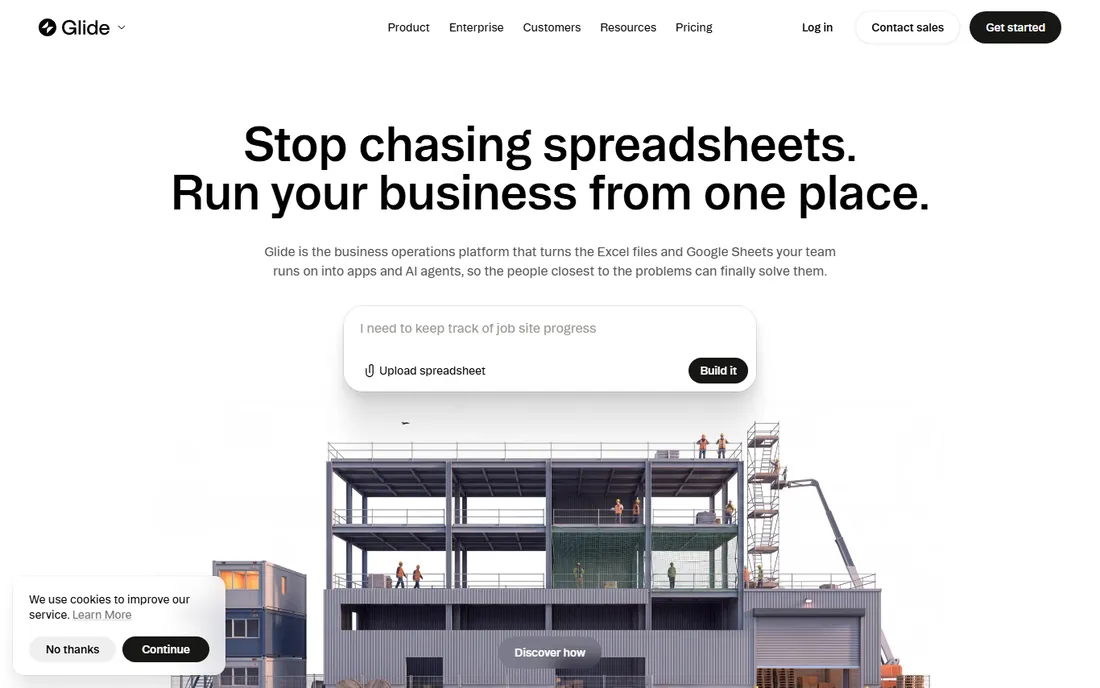
Glide's pitch is that your business already runs on spreadsheets, so your apps should start there. Drop in a Google Sheet or Excel file and Glide generates a polished app with dashboards, forms, and workflows, now augmented with AI agents that understand your data. Enterprises like Airbus and Coca-Cola appear in its customer stories, which says something about how far "spreadsheet to app" has come.
The security posture is enterprise-grade, with SOC 2, GDPR, and encryption, and apps stay private by default. For operations teams building field apps, inventory trackers, and internal dashboards, Glide hits a sweet spot of speed and polish. The honest catch is pricing volatility: Glide has restructured its plans several times, so confirm current pricing before committing. Output is progressive web apps rather than native store apps, which is fine for internal tools but limiting for consumer products.
What we like- Turns spreadsheets into polished mobile and desktop apps fast
- Strong security story with SOC 2 and GDPR
- AI agents that work with your business data
Watch out for- Pricing has shifted multiple times, so verify current plans
- PWA output rather than native app store apps
Starting price$36/month
Free planYes
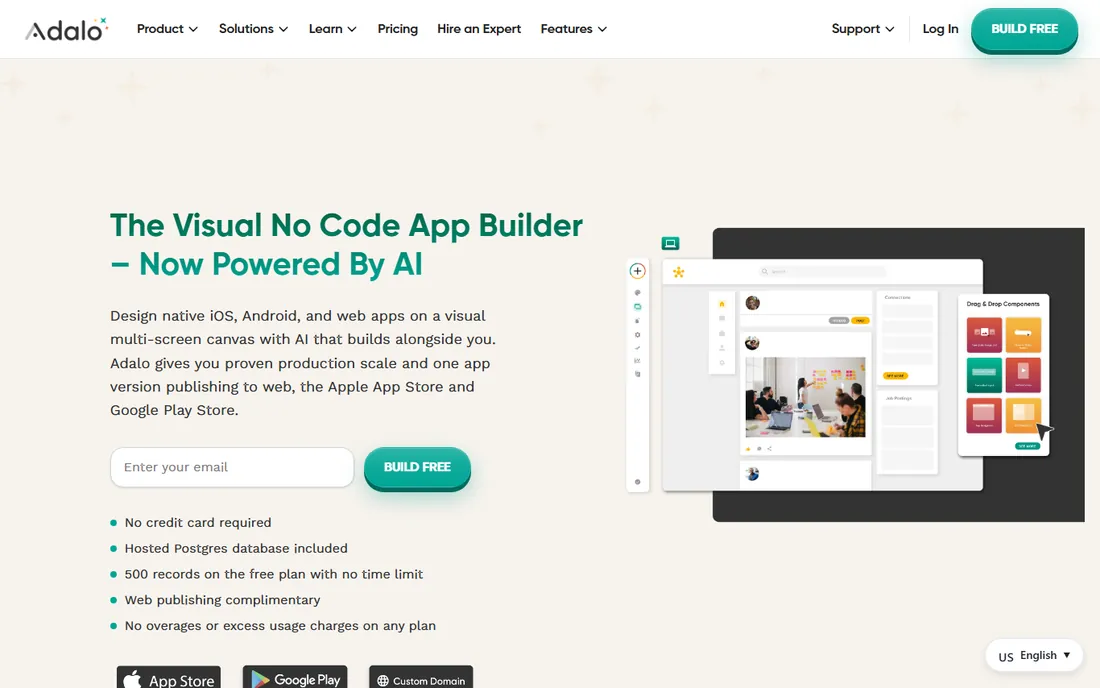
Adalo is the answer when your idea needs to live in the app stores. Its visual canvas designs native iOS, Android, and web apps from one project, and it handles the painful parts, publishing, hosted database, integrations, so you can ship a real mobile app without touching Xcode or Android Studio. The AI assistant Ada now helps with prompt-based building alongside the visual editor.
Over a million apps have been created on the platform, and the free plan is genuinely useful with 500 database records and web publishing included. For booking apps, marketplaces, community apps, and simple SaaS companions, Adalo is the most direct route to native mobile. The honest catch is depth: complex logic and heavy data operations strain the platform compared to Bubble, and truly custom native features may require workarounds. It is the best no-code path to the app stores, not the best no-code platform overall.
What we like- Publishes real native apps to the App Store and Google Play
- Visual multi-screen canvas plus AI assistant
- Free plan includes 500 database records
Watch out for- Less powerful for complex web apps than Bubble
- Performance can lag on data-heavy apps
Starting price$20/user/month
Free planYes
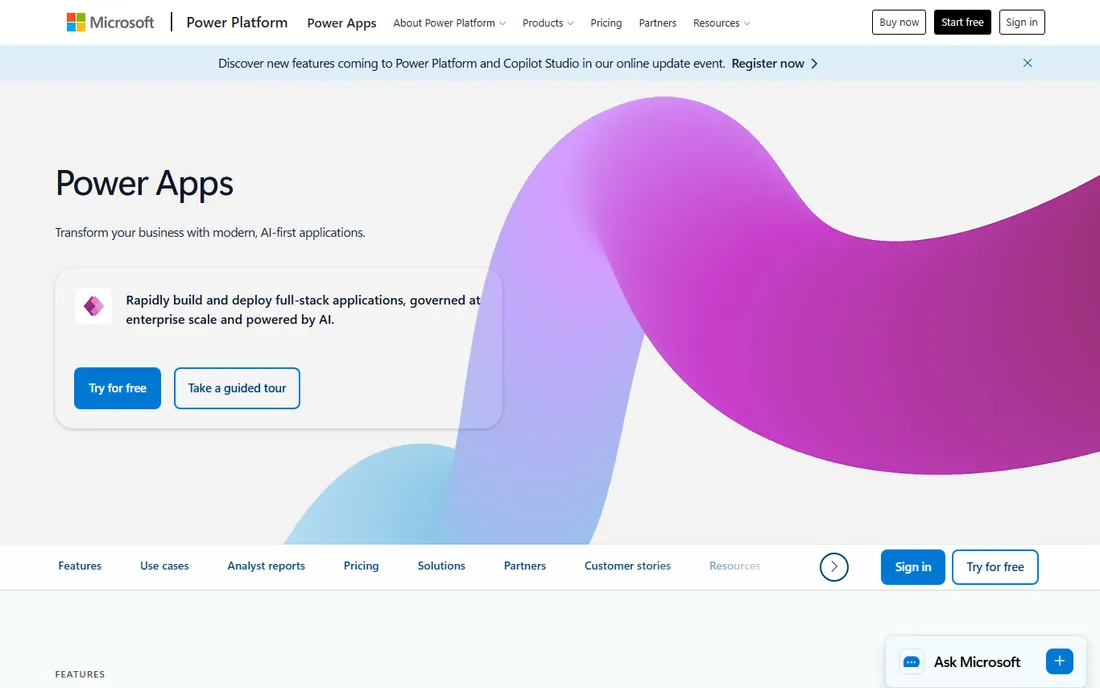
Power Apps is the enterprise incumbent, and for organizations standardized on Microsoft 365, it is barely a decision. Apps built here inherit Azure security, Dataverse data management, and governance that IT departments require, and they connect natively to SharePoint, Teams, Dynamics 365, and the rest of the stack. The AI builder generates apps from descriptions, and the free developer plan lets anyone learn without a license.
At $20 per user per month for Premium, the pricing is clear and published, which is more than most enterprise software manages. For internal tools in regulated industries, the compliance story alone justifies it. The honest catch is the obvious one: this is a Microsoft world. Per-user pricing multiplies fast across a large workforce, the platform is at its best inside the Microsoft ecosystem and less compelling outside it, and "no-code" here still benefits from someone who understands data modeling.
What we like- Unbeatable if your company lives in Microsoft 365 and Dataverse
- Enterprise governance, security, and compliance built in
- Free developer plan for learning
Watch out for- Per-user pricing gets expensive at scale
- The Microsoft ecosystem is both the reason to choose it and the lock-in
We surveyed the platforms dominating no-code and AI builder discussions in 2026: G2 and Capterra categories, founder communities, and practitioner comparisons. We verified each homepage to confirm the product exists today and fits AI-assisted app building. We deliberately covered both tribes, classic visual no-code (Bubble, Glide, Softr, Adalo, Power Apps) and prompt-to-app AI builders (Lovable, Bolt.new, Base44), because "no-code AI platform" now means both. We did not claim hands-on testing. Pricing comes from vendor pages where published and current third-party plan listings otherwise; Glide's shifting plans earned a "See website."
Picking between prompt-to-app and visual no-code
The choice comes down to what happens after version one. Prompt-to-app builders (Lovable, Bolt.new, Base44) are unmatched for speed: describe it, get it, iterate by chatting. They are ideal for MVPs, prototypes, landing pages with functionality, and testing ideas fast. But every AI-generated app eventually needs architectural decisions, and at that point you either develop judgment or hire it.
Visual no-code platforms (Bubble, Glide, Softr, Adalo, Power Apps) are slower to start but give you explicit control over data, logic, and permissions. They are better for products you will operate for years, internal tools with compliance requirements, and anything where you need to understand exactly why the app behaves as it does. Many successful builders use both: prompt-to-app for the prototype, visual no-code (or exported code) for the product.
Strip away the marketing and AI does three distinct jobs across these tools. First, generation: describing an app and getting working software back (Lovable, Bolt.new, Base44, and increasingly everyone else). Second, assistance: AI that helps inside a visual builder, suggesting workflows, writing formulas, or building alongside you (Bubble, Adalo's Ada, Softr's Co-Builder). Third, agents: AI that acts within your app or business, answering questions and executing workflows (Glide's agents, Base44's Superagents, Power Apps' Copilot).
When evaluating, ask which of the three you actually need. If you want speed, prioritize generation quality and iteration cost. If you want a maintainable product, prioritize the assistance layer inside a platform you control. If you want automation, look at the agent capabilities and what systems they can touch. A platform can be excellent at one and mediocre at the others.
Frequently asked questions
What is the best no-code AI platform in 2026?
For complex products, Bubble remains the most capable no-code platform. For the fastest path from idea to working app, Lovable and Bolt.new lead the prompt-to-app category. For portals and internal tools on existing data, Softr is the easiest. The best choice depends on whether you prioritize speed, control, or simplicity.
Can I really build an app with no coding experience?
Yes, for a defined range of apps. Prompt-to-app builders generate working software from plain-language descriptions, and visual platforms like Softr and Glide need no code at all. You will still need to think clearly about your data model and user flows, and complex products eventually benefit from technical input.
How much does it cost to build an app with no code?
Free plans on every platform here let you prototype at no cost. Paid plans start at $16 per month (Base44, annual) to $36 per month (Adalo), with Bubble at $29 and Lovable and Bolt.new at $25. Enterprise options like Power Apps run $20 per user per month. Budget more for AI credits if you iterate heavily on prompt-based builders.
Do I own the app I build on these platforms?
It depends. Lovable generates code you can export and own outright. Bubble, Glide, Softr, Adalo, and Base44 host your app on their platforms with no code export (though your data is exportable). If long-term independence matters, factor code ownership into your choice from day one.
What is the difference between no-code and vibe coding?
No-code platforms give you visual tools, databases, and hosted infrastructure with explicit control over logic and permissions. Vibe coding (Lovable, Bolt.new) generates actual code from natural language prompts, which you can inspect, export, and hand to developers. Vibe coding is faster to start; no-code platforms offer more operational control.
Can no-code apps scale to real businesses?
Yes, with the right platform choice. Bubble powers production SaaS products, Glide serves enterprise operations teams, and Power Apps runs inside some of the world's largest companies. The constraint is rarely the platform's scale; it is whether the app's architecture, which you designed, holds up as complexity grows.
Sources we checked (10)
- https://bubble.io
- https://glideapps.com/
- https://www.softr.io
- https://lovable.dev/
- https://bolt.new/
- https://base44.com/
- https://adalo.com/
- https://www.microsoft.com/en-us/power-platform/products/power-apps
- https://itechnolabs.ca/blog/best-no-code-ai-app-builders/
- https://www.miniloop.ai/blog/best-no-code-app-builder-2026
Is your product missing or out of date?
We review this list regularly. Vendors can request a listing, send updated pricing or ask about featured placement.

Shihab Mia · Founder, Rankite
Shihab has spent more than a decade helping SaaS and e-commerce brands grow through search. He writes Rankite's software buying guides from pricing pages, documentation and public user reviews. More about Shihab.