How we make this list: we compare pricing pages, product documentation and public user reviews. Ratings come from G2, Capterra or Trustpilot, with the date we checked them.
Key takeaways
- Distribution gets your music onto Spotify, Apple Music, and other stores, but it does not promote it for you, so plan marketing separately.
- DistroKid suits artists who release often, since one yearly fee covers unlimited uploads, while TuneCore and CD Baby charge per release.
- Keep 100 percent of royalties where possible, and check whether a distributor takes a cut or charges extra for YouTube, sync, or publishing.
- Release timelines matter, since stores need days to weeks to process a release, and playlist pitching needs lead time.
- Read the exit terms before you sign, since moving catalogs between distributors takes care and can pause earnings.
Quick comparison
| Tool | Best for | Starting price | Free plan |
|---|
 DistroKid | Frequent releases | See website | No |
 TuneCore | Per release control | See website | No |
 CD Baby | One time per release fee | See website | No |
 Ditto Music | Unlimited releases | See website | Free trial |
 Amuse | Free starter distribution | Free | Free |
 RouteNote | Free with revenue share | Free | Free |
 UnitedMasters | Brand partnerships | See website | Free |
 AWAL | Selective artist support | See website | No |
Is your product missing or out of date?
We review this list regularly. Vendors can request a listing, send updated pricing or ask about featured placement.
The best music distribution service for independent artists
Starting priceSee website
Free planNo
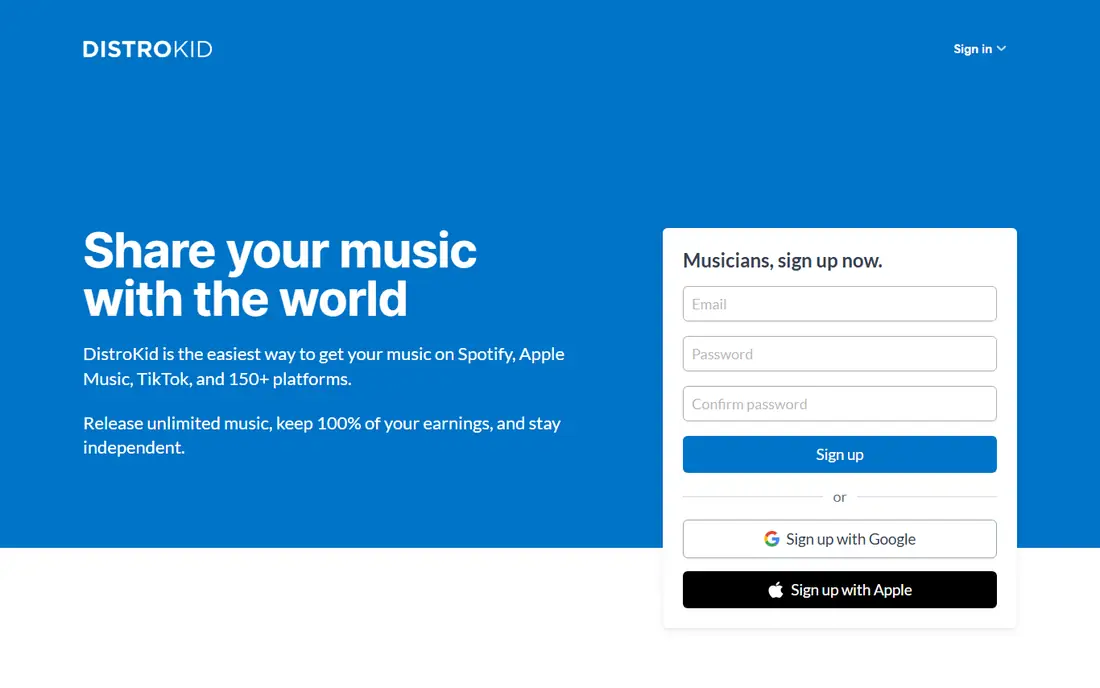
DistroKid charges a yearly fee per artist for unlimited uploads, which suits artists who release singles often, since per release fees would add up fast. Delivery covers Spotify, Apple Music, TikTok, Instagram, and dozens of other stores, with HyperFollow pages that collect pre saves in one link. Splits let collaborators share royalties automatically, and daily sales stats show store performance.
Extras add cost, including YouTube Content ID, Shazam, and store maximizer tools, so the base fee is not the full bill for every artist. If you stop paying, music can come down unless you buy a leave a legacy extra. For a prolific independent artist, DistroKid remains the simplest value choice.
What we like- Unlimited uploads for a yearly fee
- Fast store delivery
- HyperFollow pages
Watch out for- Yearly fee per artist
- Extras such as YouTube monetization cost more
Starting priceSee website
Free planNo
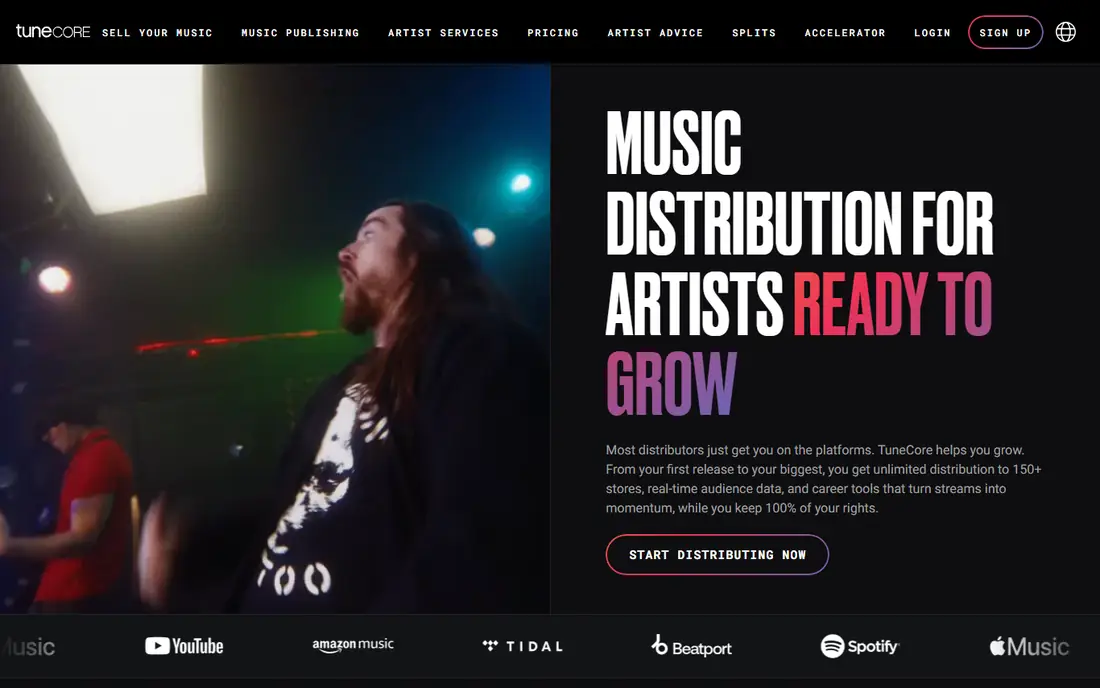
TuneCore charges per single or album per year, and artists keep 100 percent of royalties, which suits artists who release rarely and want clear per release accounting. Sales reports break down stores and territories, and publishing administration can collect songwriter royalties for an extra fee. The dashboard also offers social and promo tools for releases.
Frequent releasers pay more than on DistroKid, since each release renews yearly, and a large catalog can cost hundreds per year. For an artist with a few careful releases a year who wants full royalties and detailed reports, TuneCore gives control and clarity.
What we like- Keep 100 percent of royalties
- Detailed sales reports
- Publishing admin option
Watch out for- Per release fees add up
- Yearly renewal per release
Starting priceSee website
Free planNo
CD Baby charges a one time fee per release with no yearly renewal, and it takes a commission on digital royalties, which suits artists who dislike yearly bills. Sync licensing pitches music for film, TV, and ads, and the company also helps with physical CDs and vinyl. Sales and streaming stats cover major stores, with payout thresholds to note.
The commission means you keep less than 100 percent of royalties, and delivery can be slower than DistroKid for some stores. For an artist who wants to pay once and leave music up indefinitely, CD Baby offers peace of mind that subscription models cannot.
What we like- One time fee, no yearly renewal
- Sync licensing
- Physical distribution help
Watch out for- Takes a commission on royalties
- Slower for some stores
Starting priceSee website
Free planFree trial
Ditto Music offers unlimited uploads for a yearly fee, with artists keeping royalties, plus chart registration and label services for artists who grow. Distribution covers major stores and social platforms, and analytics show streams, sales, and audience geography. Promo tools include pre save links and pitch support.
Support response times draw mixed reviews, and the yearly fee needs renewal to keep music live, similar to DistroKid. For an artist who releases often and wants label style services as they grow, Ditto gives a path from DIY to supported releases.
What we like- Unlimited uploads
- Keep royalties
- Label services for growing artists
Watch out for- Yearly fee
- Support response times vary
Starting priceFree
Free planFree
Amuse offers a genuinely free tier for new artists, with uploads from a phone app and royalty splits for collaborators. Paid Pro tiers speed up delivery, add stores, and include team features, so an artist can start free and upgrade when releases pick up. The app first design suits artists who record and release on mobile.
Free tier delivery is slower than paid tiers, and some stores and features need Pro. For a new artist testing the waters with a first single, Amuse removes the upfront cost barrier, which is rare among major distributors.
What we like- Free tier for starters
- Fast app uploads
- Royalty splits
Watch out for- Free tier is slower
- Pro needed for fast delivery and extras
Starting priceFree
Free planFree
RouteNote offers two paths, a free tier that takes a 15 percent revenue share, and a premium tier with yearly fees where artists keep 100 percent of royalties. Both cover major stores, with analytics and referral tools included. The free tier suits artists with no budget, since music goes live without upfront payment.
Free tier earnings are lower due to the share, and support response can be slow during busy periods. Artists can switch a release between tiers, though timing matters. For a zero budget start with an upgrade path, RouteNote gives a fair deal.
What we like- Free tier with revenue share
- Premium tier keeps royalties
- Wide store reach
Watch out for- Free tier takes 15 percent
- Support can be slow
Starting priceSee website
Free planFree
UnitedMasters combines distribution with brand partnership opportunities, and its history with sports and brand campaigns draws artists who want sync and sponsorship paths. The free tier distributes music with a revenue share, while the paid SELECT tier keeps royalties and adds promo tools. Analytics cover audience and store performance.
Brand deals are selective, so most artists should not expect one, and free tier earnings reflect the share taken. For an artist who wants distribution plus a shot at brand work, UnitedMasters offers a distinct angle beyond plain store delivery.
What we like- Brand deal opportunities
- NBA partnership history
- Keep royalties on paid tier
Watch out for- Free tier takes a share
- Selectivity for brand deals
Starting priceSee website
Free planNo
AWAL, part of Sony Music, offers label style support for selected independent artists, with playlist pitching, marketing help, and a global team, while artists keep ownership of their music. Distribution covers major stores, and the model takes a revenue share rather than upfront fees. Artists apply and are chosen based on traction and potential.
Open signup is not available, so new artists without traction may not qualify, and the share model means AWAL earns alongside the artist. For an artist with growing streams who wants label support without signing away ownership, AWAL is a strong next step.
What we like- Label style support
- Playlist pitching
- Global team
Watch out for- Application based
- Not open to every artist
- Revenue share model
How we chose
We compared store reach, royalty terms, pricing model, delivery speed, analytics, splits, sync and publishing options, and exit terms for independent artists. We favored distributors with clear royalty terms, wide store coverage, and honest renewal rules, and we noted where free tiers trade speed or share for cost. No hands on testing is claimed, and prices are shown as See website where fees vary by plan and release type.
Planning a release that actually lands
Work backwards from release day, allowing stores two to three weeks to process audio, artwork, and metadata, and more for playlist pitching. Spotify for Artists and Apple Music for Artists let you pitch a track for editorial playlists before release, but only if the release is delivered early, so late uploads lose that chance. Prepare artwork to spec, lyrics where supported, and a pre save link, then line up social posts, a short video, and an email to fans for release week.
Royalties, splits, and moving distributors
Register songs with a performing rights organization and, where relevant, a publishing administrator, since distribution royalties and songwriting royalties flow separately. Set splits before release, so collaborators are paid automatically and disputes stay rare. If you move distributors later, keep the same ISRC codes where possible, overlap the old and new delivery briefly, and expect a short earnings gap during the switch. A careful move protects streams, playlist placements, and chart history.
Promotion beyond distribution
Distribution puts music in stores, but fans find it through your own work, so plan a release budget for content, ads, and live shows even if it is small. Post short clips, behind the scenes footage, and lyric videos in the weeks around release, and ask fans to save and share on day one, since early saves help algorithmic playlists. Track which stores and cities stream most, then focus touring and ads there. Consistent releases, even small singles, build algorithmic momentum faster than one large album every few years.
Before you decide
Keep a simple release calendar with upload dates, pitch deadlines, and promo posts, so no single lands without playlist pitching or pre saves in place. Check your distributor dashboard weekly after release, since early stream data shows which stores and cities respond first and where promo money works hardest.
Frequently asked questions
Do I keep my royalties with a distributor?
It depends on the model, since TuneCore and DistroKid paid tiers let artists keep 100 percent, while free tiers from RouteNote and UnitedMasters take a share. CD Baby takes a commission, and AWAL takes a share in return for support. Read the royalty clause before you upload, since it decides your long term earnings.
How long before release should I upload?
Allow at least two to three weeks for stores to process a release, and more if you want playlist pitching. Late uploads still go live on most stores, but they miss editorial pitch windows and pre save campaigns. Plan artwork, metadata, and promo assets before you upload, not after.
Can I switch distributors later?
Yes, but take care with ISRC codes, takedown timing, and playlist placements, since a gap between takedown and redelivery can lose streams. Overlap deliveries briefly where the new distributor allows it, and keep records of earnings from the old distributor. A planned switch protects your catalog better than a rushed one.
Do distributors promote my music?
Most distributors offer basic promo tools such as pre save links and pitch forms, but they do not run full marketing campaigns unless you use a label service such as AWAL. Promotion remains the artist job, through social content, live shows, and ads. Budget time and money for promotion alongside distribution fees.
What is the difference between distribution and publishing?
Distribution delivers recordings to stores and collects recording royalties, while publishing collects songwriting royalties for the composition. A distributor may offer publishing admin as an extra, but the two income streams stay separate. Register with a performing rights organization to collect songwriting income.
Sources we checked (8)
- https://distrokid.com
- https://www.tunecore.com
- https://cdbaby.com
- https://dittomusic.com
- https://www.amuse.io
- https://routenote.com
- https://unitedmasters.com
- https://www.awal.com
Is your product missing or out of date?
We review this list regularly. Vendors can request a listing, send updated pricing or ask about featured placement.

Shihab Mia · Founder, Rankite
Shihab has 5+ years in B2B and SaaS SEO. He writes Rankite's software buying guides from pricing pages, documentation and public user reviews. More about Shihab.