How we make this list: we compare pricing pages, product documentation and public user reviews. Ratings come from G2, Capterra or Trustpilot, with the date we checked them.
Key takeaways
- Fivetran defines managed ELT with 700-plus connectors; Airbyte counters with open-source flexibility.
- Estuary unifies CDC, streaming and batch in one real-time platform with exactly-once delivery.
- Matillion and dbt represent the ELT-plus-transformation pattern: load raw, model in the warehouse.
- Hevo Data and Meltano serve teams wanting simpler pipelines or open-source DataOps.
Quick comparison
| Tool | Best for | Starting price | Free plan |
|---|
 Fivetran Fivetran | Fully managed ELT | See website | No |
 Airbyte Airbyte | Open-source connectors | See website | Yes |
 Matillion Matillion | Cloud-native ELT and AI | See website | No |
 Hevo Data Hevo Data | Simple SaaS pipelines | See website | No |
 Estuary Estuary | Real-time CDC and streaming | See website | No |
 Meltano Meltano | Open-source DataOps | See website | Yes |
 Informatica Informatica | Enterprise data integration | See website | No |
 dbt dbt | SQL-based transformation | See website | No |
Is your product missing or out of date?
We review this list regularly. Vendors can request a listing, send updated pricing or ask about featured placement.
Modern data integration moved from batch ETL to cloud ELT, streaming CDC and open connectors. The architecture question is how data moves: managed service, open source or real-time platform. Eight tools.
Starting priceSee website
Free planNo
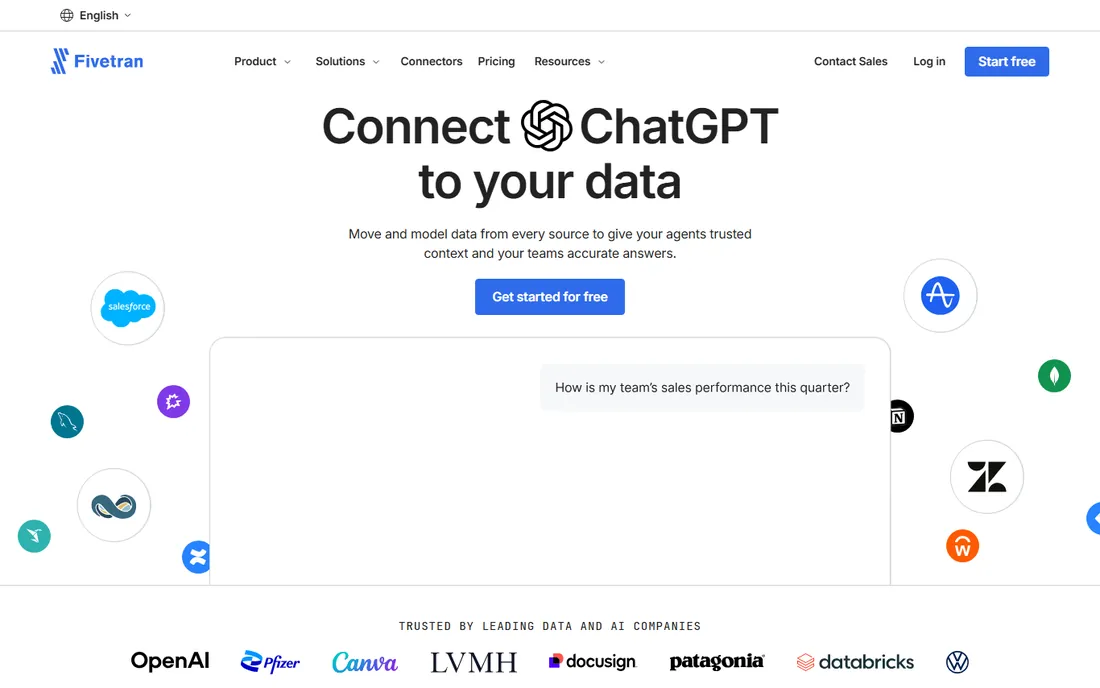
Fivetran centralizes data with managed pipelines: connectors adapt to source schema changes automatically, syncing SaaS, databases and files to warehouses and lakes. Enterprises like Dropbox and Pfizer run on it.
Cost scales with usage. Fivetran fits teams wanting integration handled entirely, without pipeline maintenance.
What we like- 700-plus fully managed connectors
- Automated schema handling
- SOC 2, HIPAA and ISO certifications
- Proven at enterprise scale
Watch out for- Consumption-based pricing can surprise
- Less control than open-source alternatives
Starting priceSee website
Free planYes
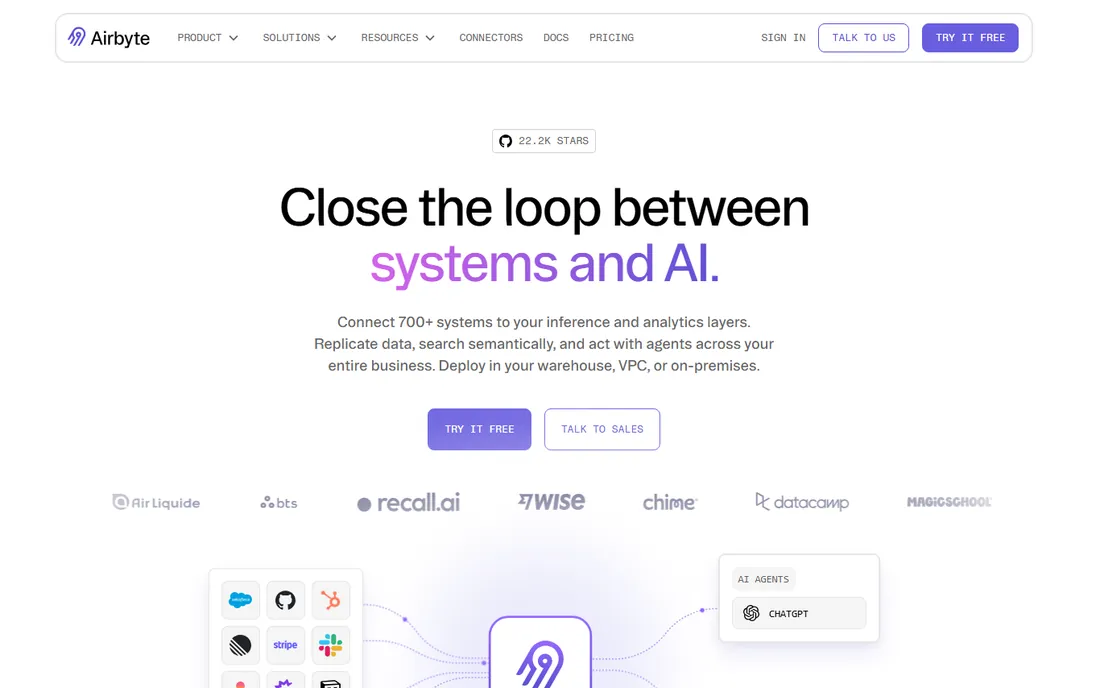
Airbyte's open-source model built the largest connector ecosystem alternative to Fivetran: build custom connectors, self-host for control, or use the cloud for convenience.
Quality varies across community connectors. Airbyte fits data teams wanting open infrastructure and connector extensibility.
What we like- Open-source with a huge connector community
- Self-host or cloud
- No vendor lock-in on the core
Watch out for- Self-hosting needs engineering
- Managed cloud pricing adds up
- Connector quality varies
Starting priceSee website
Free planNo
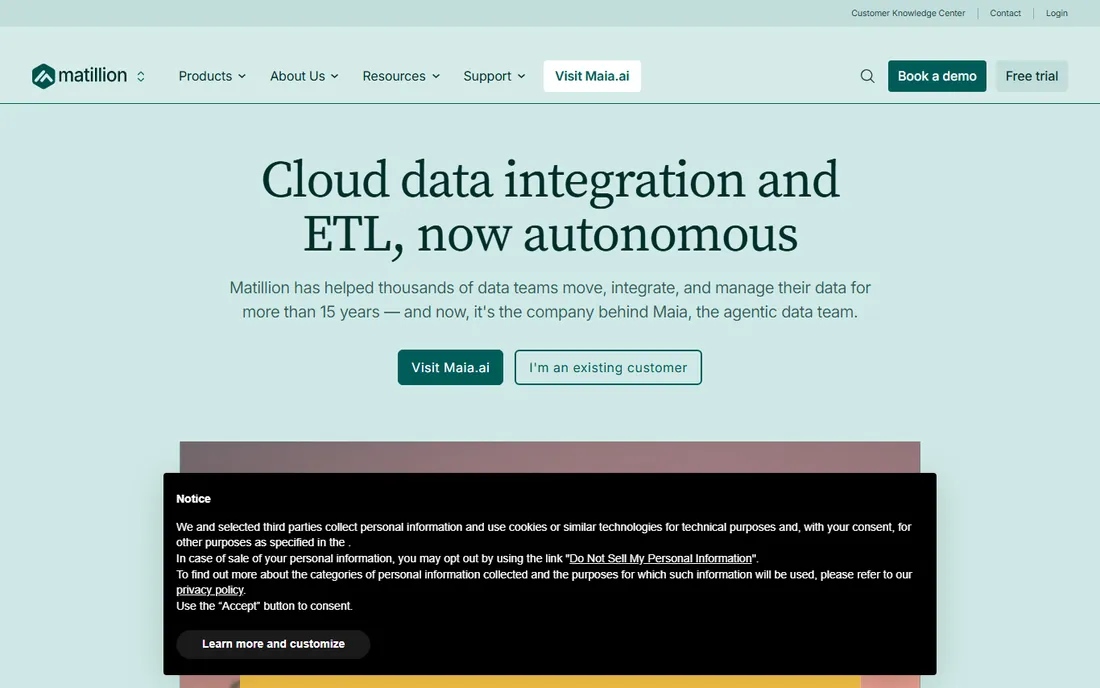
Matillion designs for the modern stack: ELT pipelines that push compute into Snowflake, Databricks and BigQuery, with AI assistance for building flows. The Data Productivity Cloud extends into orchestration.
Legacy sources get less love. Matillion fits cloud-data-warehouse teams building production pipelines.
What we like- Purpose-built for cloud warehouses
- Visual and code-based pipelines
- AI features for pipeline building
- Strong Snowflake and Databricks alignment
Watch out for- Cloud-warehouse-centric
- Pricing is custom
Starting priceSee website
Free planNo
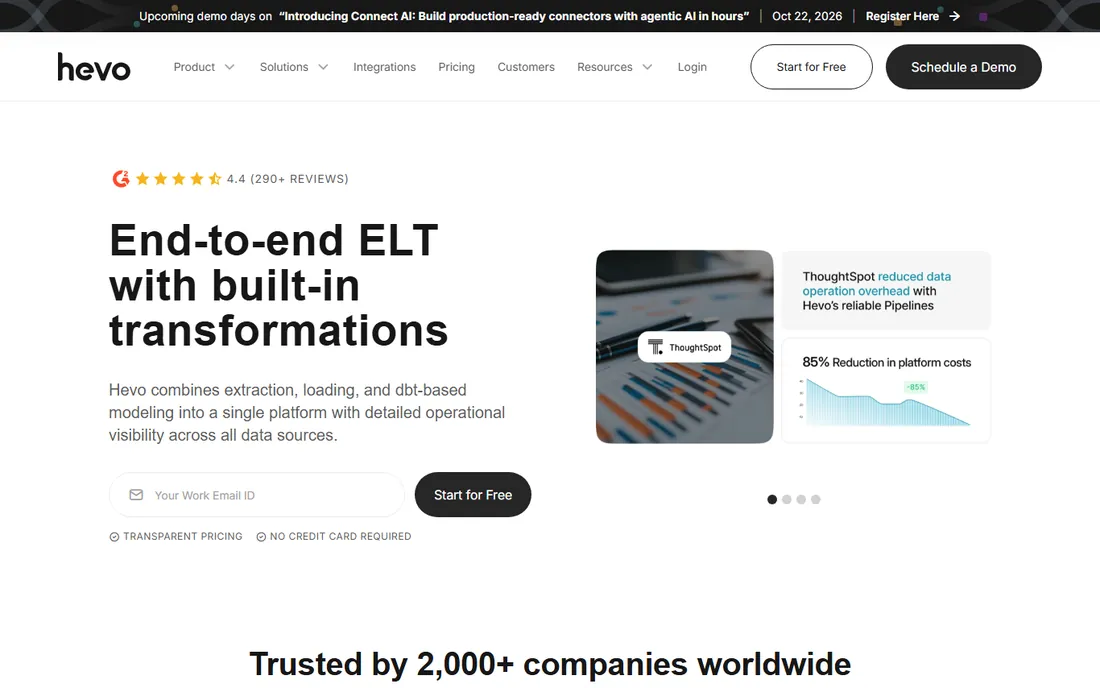
Hevo Data simplifies pipelines for analytics teams: sync 150-plus SaaS apps to warehouses and lakes with minimal engineering, plus modeling for analytics-ready data.
Complex CDC and streaming needs exceed it. Hevo fits mid-market analytics teams wanting reliable pipelines without data engineers.
What we like- Intuitive no-code pipeline setup
- 150-plus SaaS sources
- Databricks partnership
- Good for analytics teams without data engineers
Watch out for- Less depth for complex transformations
- Smaller connector catalog than leaders
Starting priceSee website
Free planNo
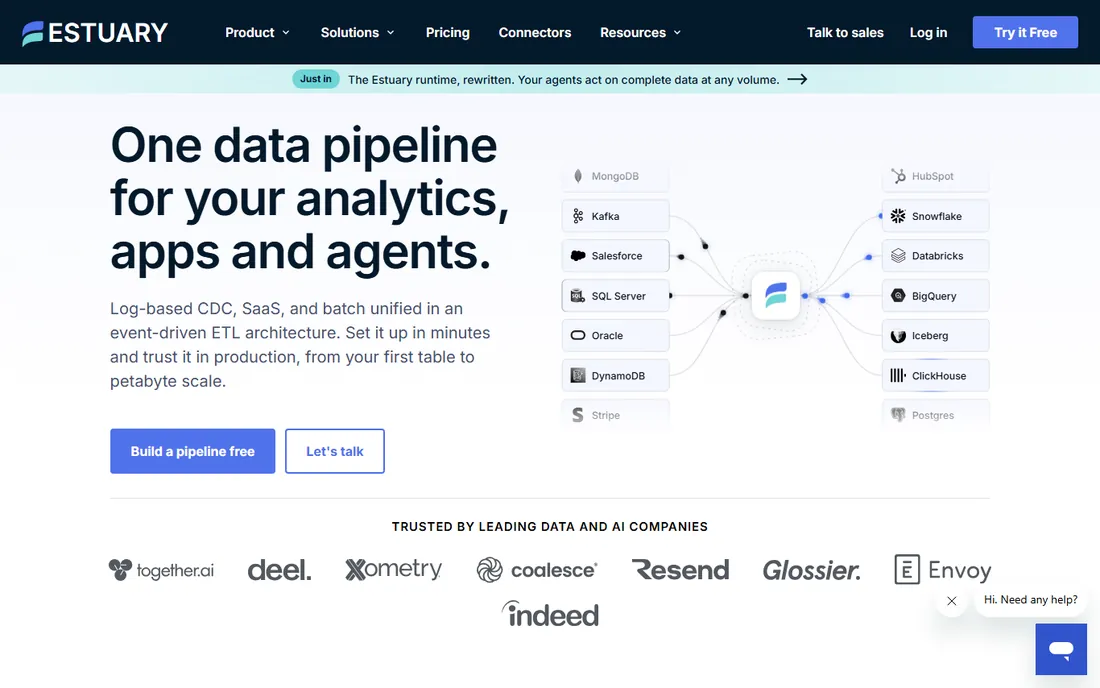
Estuary captures data once into durable collections, then fans out to warehouses, lakes and AI systems at any cadence from sub-second streaming to batch. Customers report significant cost cuts versus batch ELT tools.
The model differs from classic ELT. Estuary fits teams wanting real-time data movement without Kafka complexity.
What we like- Unifies CDC, streaming and batch with exactly-once delivery
- 200-plus managed connectors
- BYOC deployment
- AI agent skills for pipeline building
Watch out for- Newer vendor with a smaller community
- Real-time architecture is a paradigm shift for batch teams
Starting priceSee website
Free planYes
Meltano brings software engineering practices to data: pipelines as code with version control and CI/CD, assembling best-in-class open-source tools. The Singer tap ecosystem provides connectors.
It demands engineering investment. Meltano fits data teams committed to DataOps principles with the skills to run them.
What we like- Open-source DataOps platform
- Version control, CI/CD and code review for pipelines
- Singer ecosystem compatibility
Watch out for- Requires data engineering resources
- Scaling documentation is thin
- No managed pricing, but not really free in effort
Starting priceSee website
Free planNo
Informatica's Intelligent Data Management Cloud covers integration alongside data quality, governance and MDM. The cloud integration service handles complex enterprise scenarios.
Small teams should look elsewhere. Informatica fits large enterprises standardizing data management on one platform.
What we like- Deepest enterprise data management heritage
- Cloud data integration with governance
- Massive connector and transformation library
Watch out for- Enterprise licensing and complexity
- Overkill for simple pipelines
Starting priceSee website
Free planNo
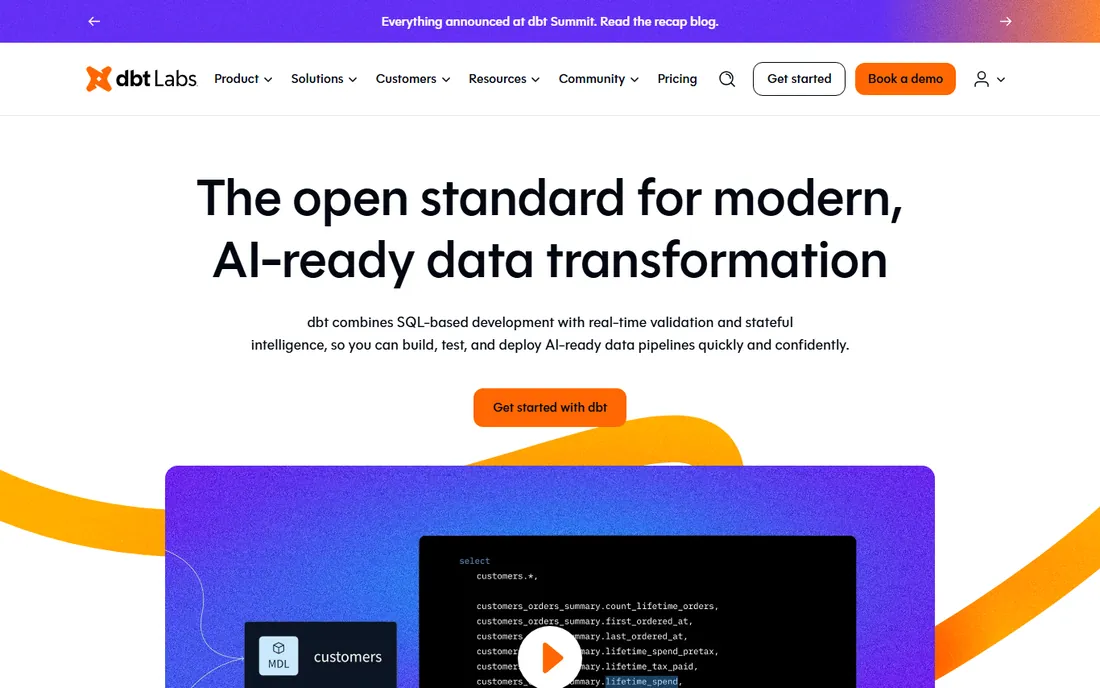
dbt owns the T in ELT: analysts write SQL models with tests, documentation and version control, transforming raw loaded data into analytics-ready tables. The community and ecosystem are unmatched.
Pair it with Fivetran, Airbyte or Estuary for ingestion. dbt fits every modern data stack needing governed transformations.
What we like- The standard for in-warehouse transformation
- SQL-based with testing and docs
- Huge community
- Dbt Cloud adds orchestration
Watch out for- Transformation only, not ingestion
- Needs an ELT tool alongside
What to check before you buy
Decide your latency needs. Batch ELT suits daily analytics; CDC and streaming suit operational use cases. The architecture should match the question.
Check connector coverage for your specific sources and their update cadence. Verify schema-change handling: the best platforms adapt automatically. Confirm deployment options for your security requirements. Finally, model total cost including compute: consumption pricing behaves very differently across vendors.
Batch vs streaming: an honest decision framework
The industry markets streaming as the future and batch as legacy. The reality is that most companies need both, and choosing wrong in either direction wastes money. Here is how to decide per use case.
Choose batch when the decision cadence is daily or slower. Financial reporting, marketing attribution, executive dashboards and most ML training run fine on data that is hours old. Batch pipelines are simpler, cheaper and easier to debug. A well-run hourly or daily ELT setup handles the majority of analytics workloads, and there is no prize for making a monthly report real-time.
Choose streaming when latency has business value. Fraud detection, inventory availability, personalization, operational alerting and live dashboards justify the complexity. The test is concrete: what decision changes if the data is one minute old instead of one hour old? If you cannot name it, you do not need streaming.
Choose change data capture when the source is a database and freshness matters. CDC reads the database transaction log instead of polling tables, which gives near-real-time updates without hammering the source system. It is the right pattern for operational syncs: keeping the warehouse, search index and cache consistent with the production database.
Beware the complexity tax. Streaming systems introduce exactly-once semantics, late-arriving data, schema evolution and state management. These are solvable problems, but they require skills most analytics teams do not have yet. A streaming pipeline nobody on the team fully understands is a 3 a.m. pager incident waiting to happen.
The pragmatic architecture for most companies: batch ELT as the backbone, CDC-based streaming for the handful of use cases where latency pays, and a platform that handles both so the team learns one system. Start with batch, add streaming where the business case is explicit, and revisit the mix annually.
How we chose
We selected data integration platforms with live products and real data-team customers, spanning managed, open-source and real-time architectures, using vendor sites, documentation and public reviews. Pricing is consumption or quote-based, so all prices are See website. We did not run pipelines.
The hidden costs of data pipelines
Pipeline pricing pages show the visible costs. The hidden ones decide whether the project stays within budget.
Compute creep is the biggest. Consumption-based pricing means every inefficient query, every unnecessary full refresh and every duplicated pipeline costs real money. Teams routinely discover that a single misconfigured sync burns more than the rest of the account combined. Set up cost alerts per pipeline from day one, and review the top spenders monthly. The cheapest platform with no cost visibility often ends up more expensive than a pricier one with good metering.
Schema change firefighting is the hidden labor cost. Sources change their APIs and schemas constantly; each change can break downstream models and dashboards. Platforms that handle schema evolution automatically save real engineering hours. When evaluating, ask specifically: what happens when a source adds a column, renames a field or changes a type? The answer reveals how much babysitting you are buying.
Backfill and reprocessing costs surprise everyone once. When a bug corrupts three months of data, replaying history through the pipeline can cost as much as months of normal operation. Understand the platform's backfill pricing and mechanics before you need them at 2 a.m.
Data quality debt compounds silently. Pipelines that move data faithfully but never validate it deliver dashboards nobody trusts. Budget for testing and monitoring: freshness checks, volume anomalies, schema tests and row-count reconciliations. The platform may include these or you may build them; either way, they are part of the cost.
Finally, the exit cost. Migrating hundreds of pipelines to another platform is a project measured in quarters. This is not an argument against buying; it is an argument for choosing carefully, negotiating contract terms that protect you, and keeping pipeline definitions portable where the platform allows it.
Frequently asked questions
What is the difference between ETL and ELT?
ETL transforms data before loading; ELT loads raw data into the warehouse first, then transforms it there. Modern cloud platforms favor ELT for flexibility and compute economics.
What is CDC?
Change Data Capture: streaming database changes in real time instead of batch extracts. Estuary and Debezium-based tools specialize in it.
Fivetran vs Airbyte: which should I choose?
Fivetran for fully managed reliability with minimal engineering. Airbyte for open-source control, custom connectors and avoiding vendor lock-in.
Where does dbt fit?
dbt handles transformation inside the warehouse. It complements ingestion tools like Fivetran or Airbyte rather than replacing them.
What is a data lakehouse?
Architecture combining data lake storage economics with warehouse query performance, popularized by Databricks. Integration tools increasingly target lakehouse destinations.
Do I need real-time data integration?
Only if use cases demand it: operational dashboards, fraud detection, personalization. Daily reporting works fine on batch ELT at lower cost.
Should a small team build pipelines with open source or buy managed?
Buy managed unless data engineering is a core competency you plan to keep. Open-source tools save license fees but cost engineering time in setup, monitoring and maintenance, which is usually the scarcer resource. The breakeven point sits around having at least one dedicated data engineer; below that, managed platforms are cheaper in practice.
How do I estimate data integration costs?
Model three components: platform fees (often consumption-based on rows synced or compute used), implementation effort, and ongoing maintenance. The biggest variable is usually data volume growth, so project costs at two to three times current volume. Ask vendors for a cost estimate based on your actual source list and sync frequencies, not list prices.
What skills does a data team need to run modern pipelines?
SQL is the foundation, plus enough Python for custom logic, and familiarity with the warehouse you run on. Streaming adds event-driven concepts and operational skills like monitoring and incident response. The scarcest skill is usually data modeling: designing tables and transformations that stay correct as sources evolve. Hire or train for that first.
Sources we checked (8)
- https://www.fivetran.com
- https://airbyte.com
- https://www.matillion.com
- https://hevodata.com
- https://estuary.dev/
- https://meltano.com/
- https://www.informatica.com/products/cloud-integration/cloud-data-integration-c.html
- https://www.getdbt.com
Is your product missing or out of date?
We review this list regularly. Vendors can request a listing, send updated pricing or ask about featured placement.

Shihab Mia · Founder, Rankite
Shihab has 5+ years in B2B and SaaS SEO. He writes Rankite's software buying guides from pricing pages, documentation and public user reviews. More about Shihab.