How we make this list: we compare pricing pages, product documentation and public user reviews. Ratings come from G2, Capterra or Trustpilot, with the date we checked them.
Key takeaways
- Fueled is the best fit for a consumer app where design quality will decide whether users stay past the first week.
- WillowTree, now part of TELUS Digital, suits startups that already have funding and need enterprise-grade engineering from the start.
- Dogtown Media is a strong pick for health and emerging-technology apps, where regulated experience matters more than a low quote.
- Appinventiv and Hyperlink InfoSystem offer the broadest delivery capacity, with large teams that can staff a full product build quickly.
- TechAhead, BlueLabel Labs, and Intellectsoft give startups different routes to the same goal: AI-ready builds, a structured sprint process, or senior dedicated teams.
Quick comparison
| Tool | Best for | Starting price | Free plan |
|---|
 Fueled | Startups building a consumer app where design is the advantage | See website | No |
 WillowTree | Funded startups that need large-team engineering and product strategy | See website | No |
 Dogtown Media | Startups in health, finance, and emerging technology | See website | No |
 Appinventiv | Startups that need a full product team across many industries | See website | No |
 Hyperlink InfoSystem | Startups on a strict budget that still need a full build | See website | No |
 TechAhead | Startups building AI-native apps and connected platforms | See website | No |
 BlueLabel Labs | Startups that want a structured sprint from idea to launch | See website | No |
 Intellectsoft | Startups that need senior engineers as an extended team | See website | No |
Is your product missing or out of date?
We review this list regularly. Vendors can request a listing, send updated pricing or ask about featured placement.
The best mobile app development companies for startups
#1
Fueled
Best for: Startups building a consumer app where design is the advantage
Visit fueled.com
Starting priceSee website
Free planNo
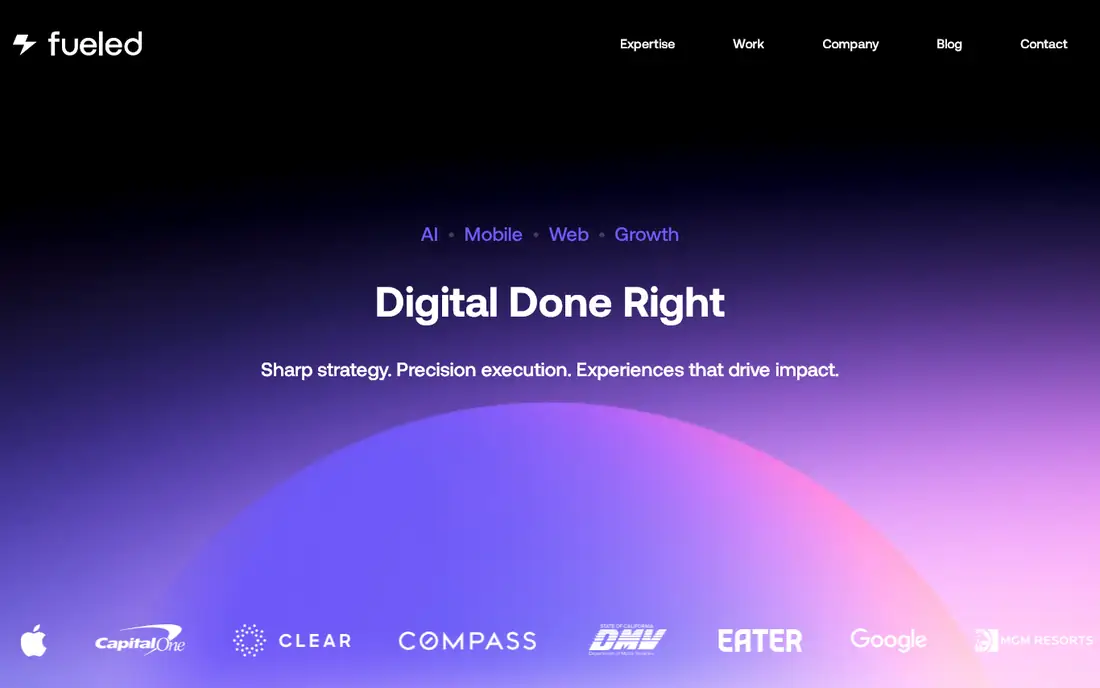
Fueled approaches an app as a product, not a coding job, and that shows in how it works. Strategy and research come first, design follows, and engineering builds on a concept that has already been tested against real user needs. For a consumer startup, that order matters: a beautiful, well-tested onboarding flow can matter more than an extra feature nobody finds. Fueled has built chart-topping iOS apps and worked with large consumer brands, which gives a startup founder useful confidence during fundraising.
The trade-off is cost and pace at the start. Fueled is a premium firm, so a pre-seed founder with a small budget may find the engagement out of reach, and the discovery phase will feel slow if you only want code written quickly. If your app must win on experience, though, that upfront work is the point. Talk to Fueled when design quality is your moat and you can fund a proper build.
What we like- Long record in iOS and mobile design
- Strategy, design, and engineering under one roof
- Work for major consumer brands
Watch out for- Premium pricing
- Less suited to a bare-bones MVP on a tight budget
- Discovery process takes time before coding starts
Starting priceSee website
Free planNo
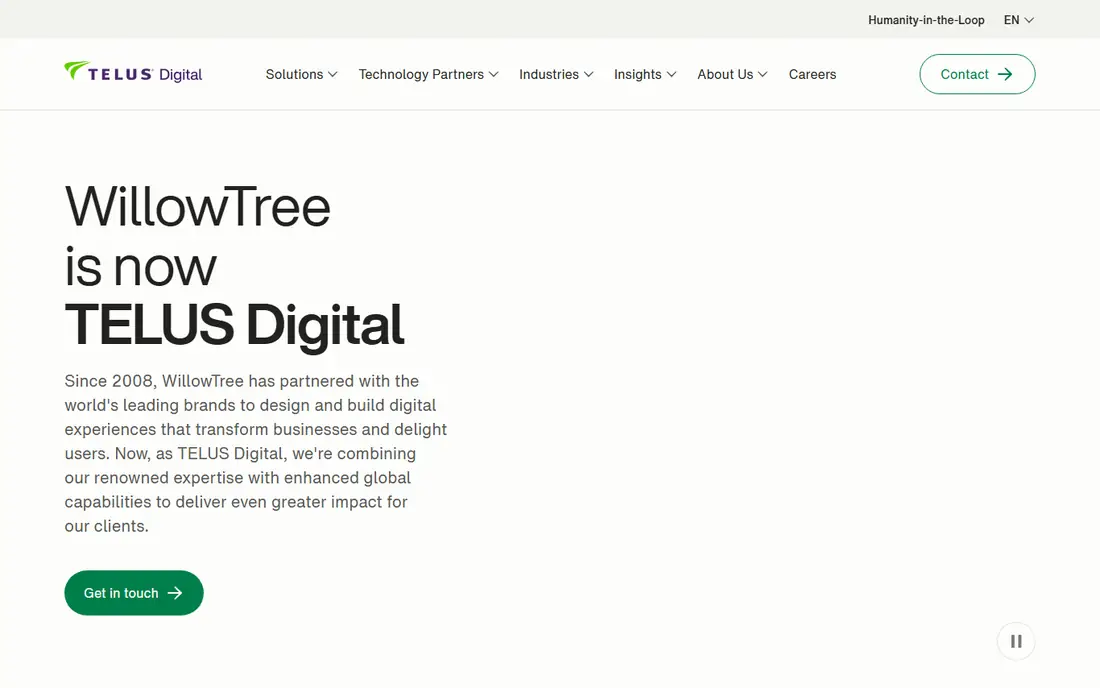
WillowTree has built digital products since 2008, and its homepage now notes that it operates as TELUS Digital, combining its product design heritage with wider global capability. That history shows in its process: product strategy, experience design, and full-stack engineering sit together, so a startup gets a roadmap, a design system, and a build plan from one partner. For a funded startup planning to scale fast, that breadth reduces the risk of rebuilding later.
The firm is not a bargain MVP shop. Its project-based pricing is not published, and its team size suits larger engagements better than a two-person prototype. Founders should approach WillowTree when they have funding, a validated idea, and a need for engineering that will hold up under growth, not when they need the cheapest possible first version.
What we like- Deep experience design and full-stack engineering
- Large team capacity
- Now backed by TELUS Digital global scale
Watch out for- Enterprise scale can overwhelm a tiny team
- Pricing is project-based and not published
- Less of a fit for a quick, cheap MVP
Starting priceSee website
Free planNo
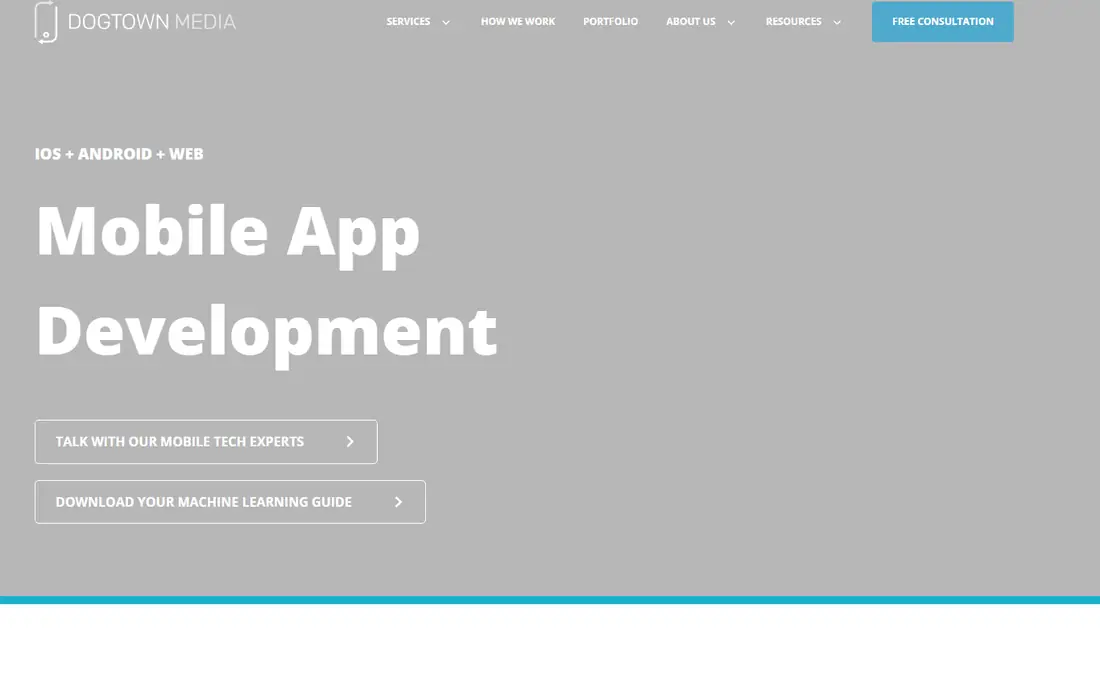
Dogtown Media describes itself as a mobile development company for startups and larger firms alike, with work across industries and a focus on cross-platform apps. Its value for a startup lies in specialization: health and emerging-technology projects carry compliance, security, and integration questions that a generalist shop may miss, and Dogtown has worked in those areas since its early years. The firm also offers a free tech consultation, which gives a founder a low-risk way to test fit before signing.
The limit is breadth. Dogtown is not the largest firm here, so a startup that needs dozens of engineers at once may outgrow it. For a health app, a connected-device app, or an AI-assisted product where domain care matters, Dogtown is a credible, focused choice. Ask about similar past projects in your exact niche before you commit.
What we like- End-to-end iOS, Android, and web development
- Experience with VC-backed startups
- Free tech consultation offered
Watch out for- Specialized focus means less breadth in consumer marketing apps
- Project pricing not published
- Smaller team than Appinventiv
#4
Appinventiv
Best for: Startups that need a full product team across many industries
Visit appinventiv.com
Starting priceSee website
Free planNo
Appinventiv is a digital product engineering firm that covers the full lifecycle, from strategy and design through engineering, AI services, and post-launch support. Its homepage lists work across health, finance, retail, travel, logistics, and many other sectors, plus flexible models including dedicated teams and staff augmentation. For a startup, that range matters when the product needs more than an app: a backend, integrations, data pipelines, and AI features all in one engagement.
Size brings a warning too. A large firm can staff quickly, but a small startup must confirm who will actually work on its project, not just who pitches it. Ask for the team leads by name, check their past startup work, and agree on communication cadence in writing. With those checks done, Appinventiv is one of the safest large-scale choices here.
What we like- Very large delivery organization
- Strategy, design, engineering, and AI under one roof
- Dedicated teams and staff augmentation options
Watch out for- Size can mean a more formal process
- Enterprise focus may push smaller projects to junior staff
- Pricing is quote-based
Starting priceSee website
Free planNo
Hyperlink InfoSystem, founded in 2011, positions itself directly for startups with strict budgets and limited resources, alongside small business and enterprise clients. It offers fixed-price projects, dedicated developers, and onsite models, plus mobile, web, AI, IoT, and game development. For a founder who needs a working MVP to show investors, that combination of price flexibility and team size is attractive.
The risk with any large, low-cost firm is consistency. Quality depends on the specific team assigned, so a founder should interview that team, review recent apps in the same category, and define scope tightly in the contract. Hyperlink is a good fit when budget is the binding constraint and you can manage the project actively. It is a weaker fit when you want a hands-off partner to own product decisions.
What we like- Large team of developers
- Fixed-price and dedicated-team models
- Explicit startup support and fast MVP positioning
Watch out for- Very large portfolio makes quality vary by team
- Communication across time zones needs management
- Low price can hide scope limits
Starting priceSee website
Free planNo
TechAhead presents itself as an AI-native app and enterprise software partner, building AI-powered apps, platforms, and connected systems with attention to security and governance. Its case work spans mobile apps for fitness and real estate, IoT platforms, and fintech products, which suits a startup whose app is only one part of a wider system. If your product depends on AI features, device data, or cloud platforms, TechAhead speaks that language from the first meeting.
The caution is scope. AI-native positioning is easy to claim and hard to verify, so ask for a concrete example of an AI feature shipped to production in your domain, and how it is measured. Also confirm budget fit early, since enterprise-grade process can cost more than a lean MVP shop. For an AI-centered startup with funding, TechAhead is a strong candidate.
What we like- AI and product engineering focus
- Mobile, IoT, and cloud experience
- Case work across fitness, real estate, and fintech
Watch out for- Enterprise positioning may suit larger budgets
- AI claims need validation against your use case
- Pricing is quote-based
Starting priceSee website
Free planNo
BlueLabel Labs, now branded BlueLabel, has built its reputation on a structured product process: a sprint framework that moves from opportunity and roadmap to a pilot, with a dedicated program manager as the single point of contact. Its teams split design into product experience and interface roles, which helps a startup avoid the common trap of a pretty app that confuses users. The firm also publishes unusually open cost ranges for its work, which helps founders budget honestly.
The shift to note is positioning: its homepage now leads with AI development, so a founder hiring for a pure mobile build should confirm that mobile engineering, not just AI strategy, leads the team. BlueLabel suits a startup that wants process, clear ownership, and a partner who will challenge the idea before building it. It suits a founder who already knows exactly what to build less well.
What we like- Defined sprint framework with a pilot in weeks
- Dedicated program manager on each project
- Design split into UX and UI roles
Watch out for- Now positions heavily around AI consulting, so confirm mobile focus
- Project costs vary widely by scope
- New York base may cost more
#8Intellectsoft
Best for: Startups that need senior engineers as an extended team4.4/5 on
G2 (7 reviews, checked Oct 2026)
Visit intellectsoft.net
Starting priceSee website
Free planNo
Intellectsoft describes itself as an AI-first software engineering firm serving both Fortune 500 firms and startups, with senior talent and an architecture-first method. Every engagement starts with a senior architect setting technical direction, which is exactly what a startup needs when early architecture mistakes become expensive later. Dedicated teams, AI-assisted delivery, and post-launch support round out a model built for long partnerships rather than one-off builds.
The fit question is budget and attention. A firm serving large enterprises may price above a pre-seed startup, and a global team needs agreed overlap hours. If you can fund a senior team and want an engineering partner who stays past launch, Intellectsoft is a solid choice. If you need a quick, cheap prototype to test an idea, a smaller MVP shop will move faster.
What we like- Architecture-first approach with a senior architect on each engagement
- Dedicated engineering teams
- AI across the delivery lifecycle
Watch out for- Enterprise client list suggests premium pricing
- Global team coverage needs clear working hours
- Quote-based pricing
How we chose
We compared company websites, service descriptions, and public reviews on Clutch and GoodFirms, and we checked each company homepage to confirm it still operates under that name and offers mobile development. We favored firms with a clear startup-relevant model, such as MVP builds, dedicated teams, or a structured discovery process, over firms that only list enterprise services. Where pricing is quote-based, we listed it as "See website" rather than publishing a figure no vendor page supports.
We also weighed fit over fame. A famous agency is a poor choice for a bootstrapped MVP, and a cheap offshore team is a poor choice for a regulated health app. That is why this list mixes premium design firms, large delivery firms, and specialized shops, so a founder can match budget, domain, and team size instead of chasing a single ranking.
Hiring without regret
Start with a small, paid discovery
Before signing a full build, pay for a short discovery phase: user stories, wireframes, a technical plan, and a fixed estimate. A good firm will welcome this, because it protects both sides. If a firm refuses discovery and quotes a full app from a one-page brief, treat that as a warning, not as speed.
Check the team, not just the portfolio
Portfolios show finished apps, not who built them. Ask to meet the project manager, designer, and lead engineer who would work on your app, and ask what they built most recently. Check two references from startups at your stage, and ask those founders what went wrong, not just what went well. The answers will tell you more than any case study page.
Own your code, data, and accounts
Put ownership in writing before work starts: source code, design files, app store accounts, and analytics should belong to your company. Agree on a handover process, documentation standards, and a maintenance plan for the first six months after launch. An app is a living product, and the cheapest build becomes expensive if nobody can update it.
Frequently asked questions
How much does it cost to build a startup app?
Most simple apps cost tens of thousands of dollars, and complex apps with backends, integrations, and AI features can run into six figures. Simple apps often take a few months, while larger platforms take longer. Get a fixed estimate after discovery, and budget separately for design, testing, app store submission, and post-launch maintenance.
Should a startup build native or cross-platform?
Native iOS and Android apps give the best performance and full access to device features, but they cost more because you build twice. Cross-platform tools such as React Native or Flutter let one team ship to both stores faster and cheaper, which suits most MVPs. Choose native when performance or device features are central to the product, and cross-platform when speed and budget matter more.
How long does a startup MVP take?
A focused MVP often takes two to four months, including discovery, design, development, and testing. Timelines stretch when scope grows, feedback cycles slow, or integrations prove harder than expected. Protect the date by cutting features, not by cutting testing, since a buggy launch costs more trust than a delayed feature.
Do I need a designer, or just developers?
You need both, even for an MVP. Developers build what works, designers decide what users understand and enjoy, and a weak design will lose users no matter how solid the code is. Firms such as Fueled and BlueLabel staff design and engineering together for this reason. If you hire developers alone, budget separately for product design.
What should be in the contract?
Scope, milestones, payment tied to accepted deliverables, intellectual property ownership, source code handover, confidentiality, and post-launch support terms. Add a clear change process, so new features are priced and scheduled instead of quietly expanding the project. Read the maintenance clause closely: launch is the start of the product, not the end of the work.
Can a startup switch agencies later?
Yes, if ownership and documentation were set up correctly. You need the source code, design files, credentials, and a handover note explaining architecture and third-party services. Switching is painful when one agency holds the app store account or the code repository, so keep those accounts in your company name from day one.
Sources we checked (9)
- https://fueled.com
- https://www.willowtreeapps.com
- https://dogtownmedia.com
- https://appinventiv.com
- https://www.hyperlinkinfosystem.com
- https://www.techaheadcorp.com
- https://bluelabellabs.com
- https://intellectsoft.net
- https://ravennainteractive.com/our-thinking/best-mobile-app-development-companies-in-usa
Is your product missing or out of date?
We review this list regularly. Vendors can request a listing, send updated pricing or ask about featured placement.

Shihab Mia · Founder, Rankite
Shihab has 5+ years in B2B and SaaS SEO. He writes Rankite's software buying guides from pricing pages, documentation and public user reviews. More about Shihab.