How we make this list: we compare pricing pages, product documentation and public user reviews. Rankite is independent; if a vendor ever pays for a featured spot, that listing is clearly labeled Partner.
Key takeaways
- Low-code splits into enterprise platforms (OutSystems, Mendix, Appian, Pega) and accessible builders (Bubble, Retool, Power Apps).
- Enterprise platforms are mostly quote-based; expect five-figure annual pricing and use the free editions to evaluate.
- Microsoft Power Apps is the default for Microsoft 365 shops at around $20 per user per month for Premium.
- Bubble and Retool are the cheapest credible options, with free tiers and paid plans from about $10 to $29 a month.
Low-code is two markets wearing one name. In one, IT departments build mission-critical apps with governance, pipelines and six-figure contracts. In the other, a founder ships a working product in a weekend on a $29-a-month plan. The tools below cover both markets honestly, because the wrong lane is the most expensive mistake you can make: buy an enterprise platform for a prototype and you drown in sales calls; buy a weekend builder for a bank and you hit a wall in production. Here are eight platforms, each in its right lane.
Starting priceSee website
Free planYes
OutSystems is the enterprise full-stack pick for organizations building long-lived, mission-critical applications. It covers web and mobile with AI-assisted development, deployment pipelines and proper SDLC governance, the things IT departments need before they trust a platform. The Personal Edition is free for learning and small experiments.
Pricing is quote-based, with third-party comparisons listing entry points around $36,000 a year. That is not a scare figure; it is the reality of enterprise low-code, and you should only be here if you have the budget and the app portfolio to justify it. For large organizations standardizing on a platform, OutSystems is the safest bet in this list.
What we like- Full-stack development with strong mobile support
- One-click deployment and monitoring
- Free Personal Edition for learning
Watch out for- Quote-based pricing with enterprise entry points
- Genuine lock-in at depth
- Overkill for small projects
Starting priceSee website
Free planYes
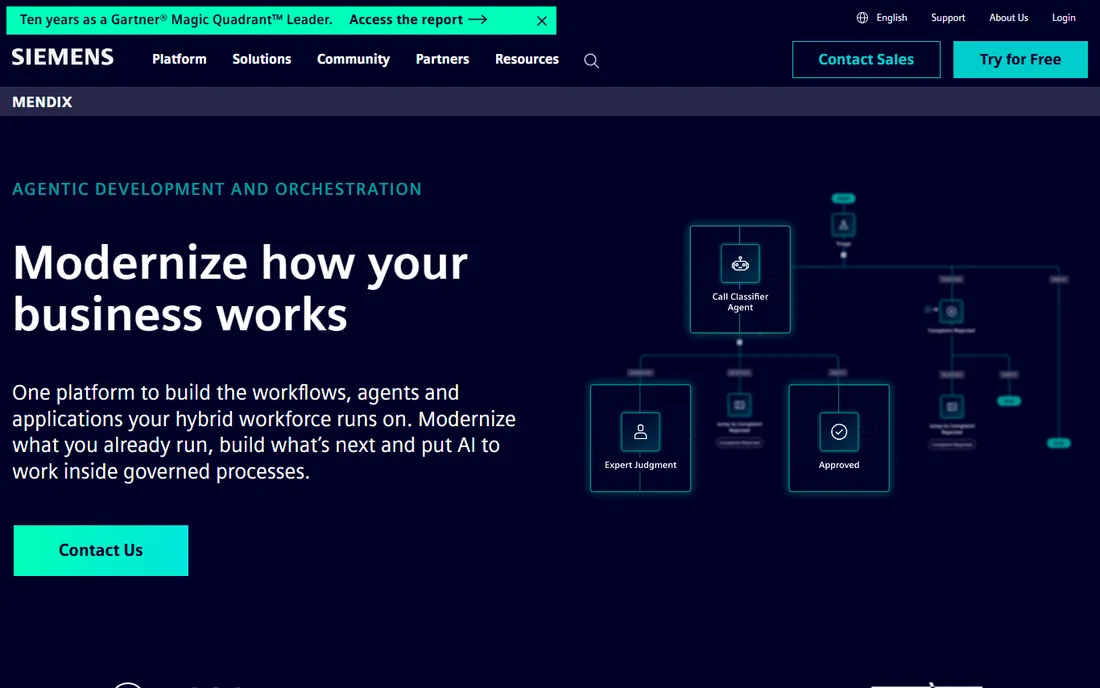
Mendix, a Siemens company, is the platform for organizations where business analysts and professional developers need to work in the same governed environment. Business users shape visual models while developers handle complex logic and integrations, with version control, collaboration tools and a marketplace of reusable modules. Deployment spans Mendix Cloud, private cloud and SAP BTP.
There is a free community edition for learning, with paid tiers climbing steeply from there, so verify current pricing on Mendix's own documentation before budgeting. It is the wrong tool for a simple internal form and the right one for a portfolio of applications that need to stay in sync for years.
What we like- Model-driven development with AI assistance
- Strong governance and lifecycle management
- Free community edition
Watch out for- Complex for small teams
- Pricing climbs steeply past entry tiers
- Can feel heavyweight next to newer AI-first tools
Starting priceSee website
Free planFree trial
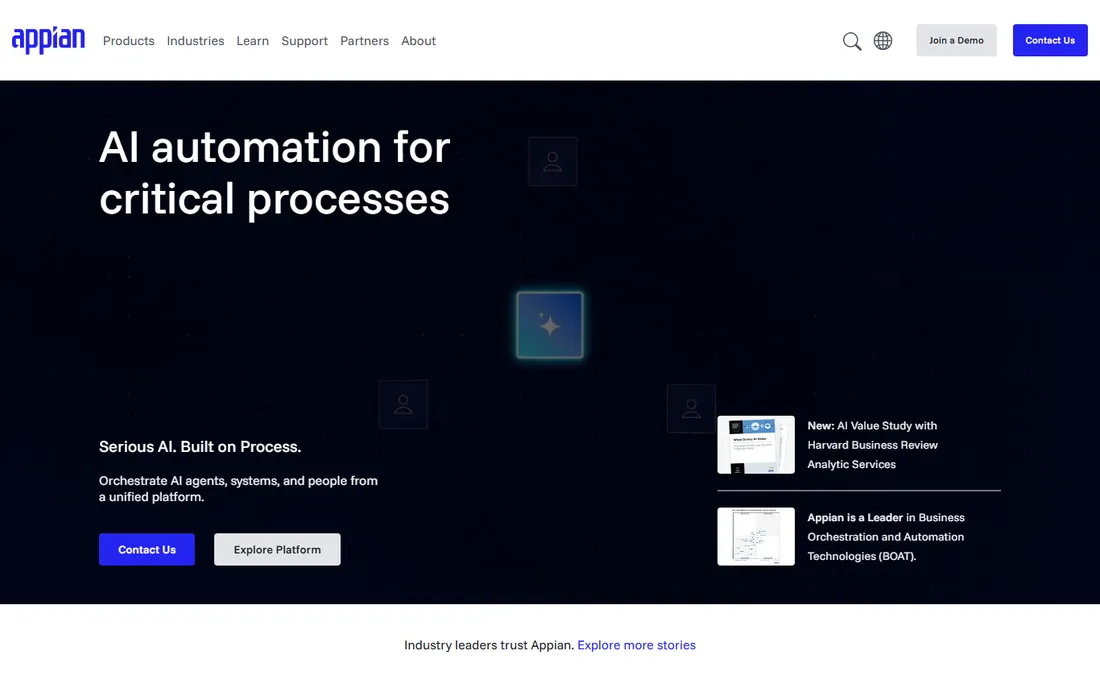
Appian comes at low-code from the process side: it is first a platform for automating business processes end to end, and the app-building is part of that story. Process mining, intelligent document processing and decisioning are built in, which makes it the pick when the real problem is a broken workflow rather than a missing app.
Pricing is quote-based with a free trial for evaluation. Organizations in financial services, insurance and government, where case management and compliance matter, get the most from Appian. If you need a general-purpose app factory, OutSystems or Mendix fit better.
What we like- Intelligent automation and process mining built in
- Strong in BPM and case management
- Recognized analyst leader
Watch out for- Quote-based pricing
- Free trial is limited
- Less of a general app builder than OutSystems or Mendix

#4
Pega
Best for: decision automation and complex case work
Visit pega.com
Starting priceSee website
Free planFree trial
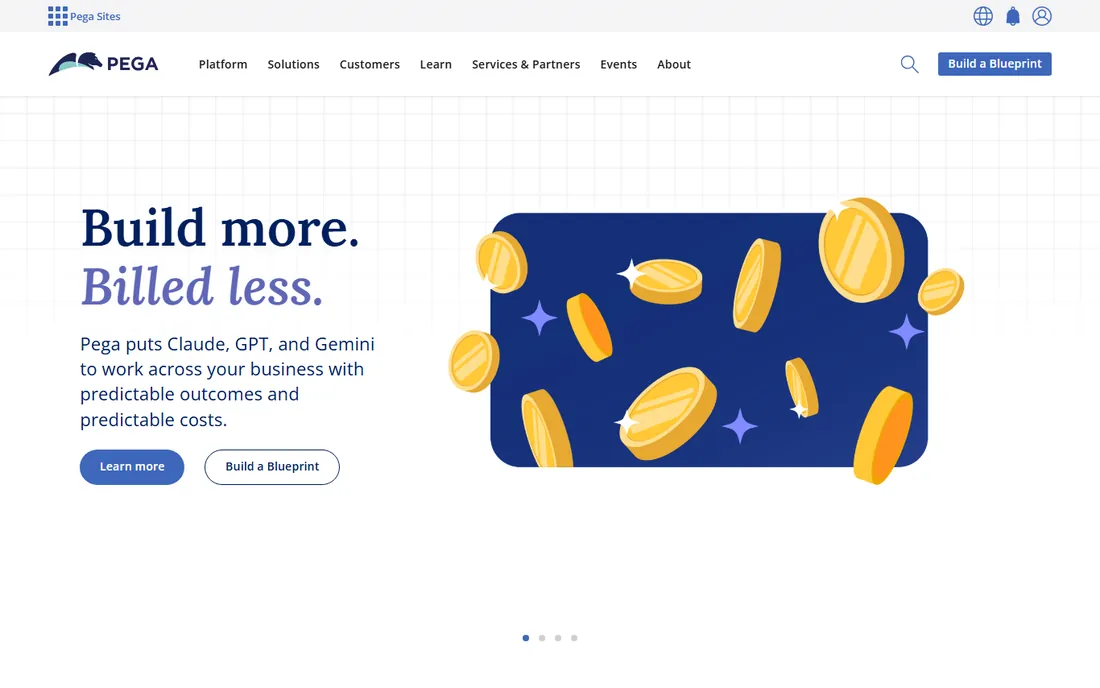
Pega's distinction is its decisioning engine: where other platforms automate workflows, Pega automates the decisions inside them, with AI that routes, prioritizes and resolves cases. That makes it the choice for customer operations, claims and service processes where judgment at scale is the product. Deployment covers cloud and on-premise.
This is enterprise-only territory, with pricing by quote and a learning curve that assumes dedicated teams. Smaller organizations should look at Retool or Power Apps. For large operations with complex case work, Pega's decisioning is genuinely different from anything else here.
What we like- Advanced decisioning and AI engine
- Strong in customer engagement and operations
- Cloud and on-premise deployment
Watch out for- Enterprise pricing by quote
- Steep learning curve
- Aimed at large organizations only
Starting price~$20/user/month (Premium)
Free planFree trial
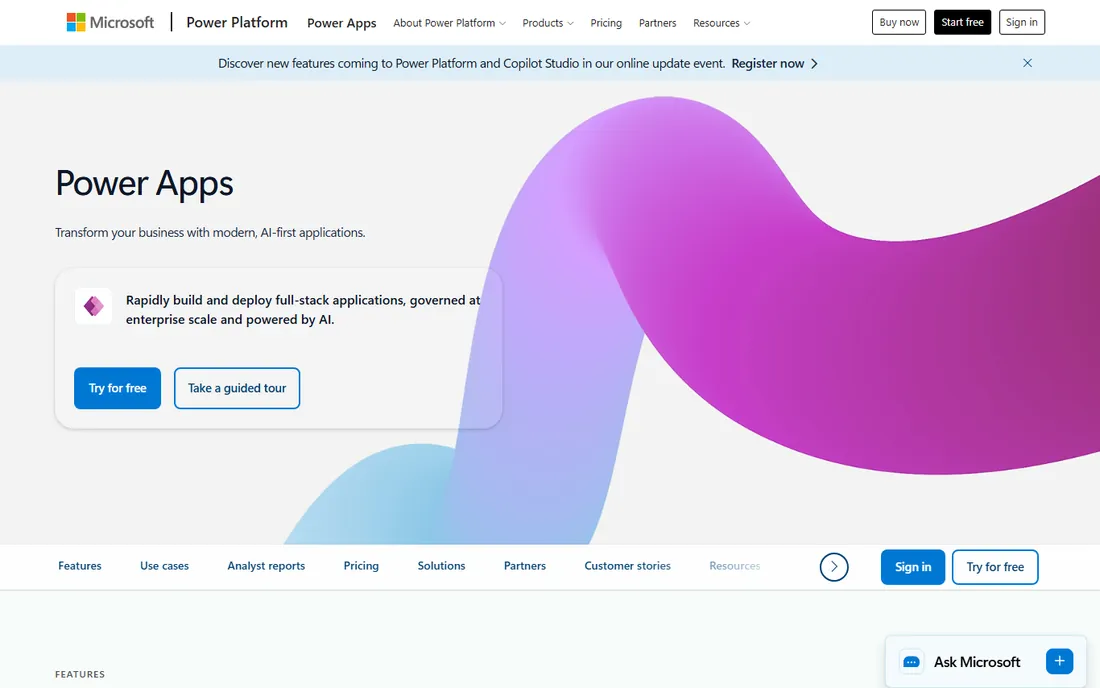
If your company runs on Microsoft 365, Power Apps is the obvious starting point. Approval flows, field apps and internal tools build quickly against the data and identities you already have, with Power Automate connecting the systems between them. Around $20 per user per month for Premium opens the connectors that make it useful.
The limit is the ecosystem boundary: outside the Microsoft stack, the value drops fast, and the deeper you build, the more you commit to Dataverse. But for Microsoft shops, no other platform gets you from idea to deployed internal app as fast, and the licensing is refreshingly transparent for this category.
What we like- Deep Microsoft 365, Dynamics and Azure integration
- Huge existing user base
- Power Automate handles the plumbing
Watch out for- Premium connectors need Premium licensing
- Struggles outside the Microsoft stack
- Deeper use pulls you into Dataverse

#6
Bubble
Best for: founders shipping real web apps without code
Visit bubble.io
Starting priceSee website
Free planYes
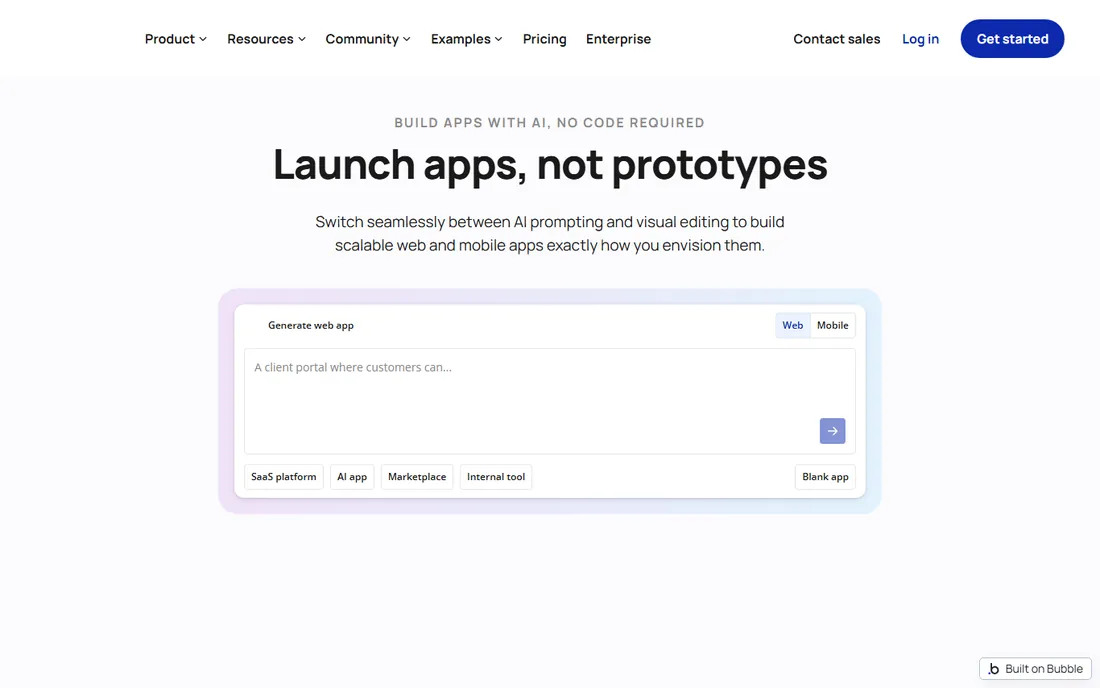
Bubble is the platform that launched a thousand startups: a visual builder capable of real SaaS products, marketplaces and complex web apps, with a plugin ecosystem that covers payments, maps and everything in between. The free tier lets you learn and prototype, and paid plans scale with your app's workload.
Be honest about the ceiling. Bubble apps can hit performance limits at serious scale, and the workload-based pricing rewards efficient design. For an MVP or a niche product, it is unmatched. For an enterprise system of record, it is not in the same conversation as OutSystems, and that is fine.
What we like- Visual workflow editor handles complex logic
- Large plugin ecosystem
- Free tier for learning and prototypes
Watch out for- Performance questions at serious scale
- Pricing scales with workload
- Not ideal for native mobile

#7
Retool
Best for: internal tools and dashboards for developers
Visit retool.com
Starting price~$10/user/month
Free planFree trial
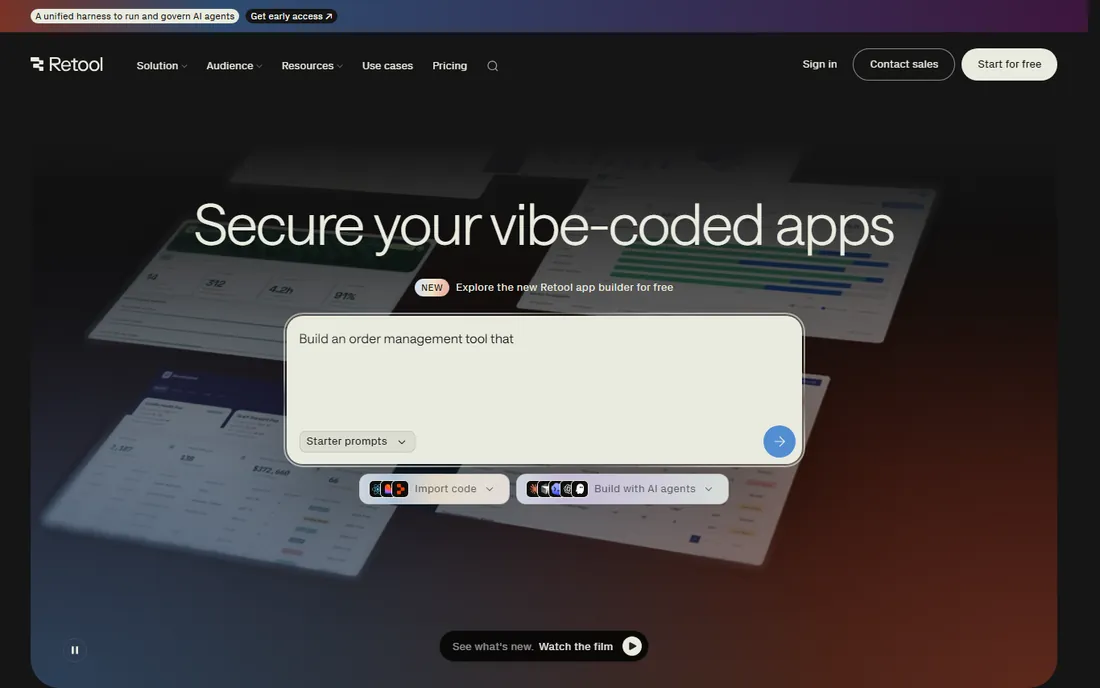
Retool is low-code for people who can code but would rather not spend a week on an admin panel. Connect it to your database or API and assemble internal tools, dashboards and workflows from drag-and-drop components, with real code where you need it. Pricing starts around $10 per user per month and scales to $75.
It is not a citizen-developer tool and does not pretend to be; the audience is engineering teams drowning in internal tool requests. UI flexibility has limits compared to custom builds, but for the 80 percent of internal tools that are CRUD plus a chart, Retool pays for itself in the first month.
What we like- Fast path to admin panels and dashboards
- Connects to databases and APIs directly
- Developers stay productive
Watch out for- UI flexibility is limited
- Pricing climbs with team size
- Aimed at developers, not citizen builders
Starting priceSee website
Free planFree trial
ServiceNow's App Engine lets organizations build custom workflow applications on top of the ServiceNow platform, which many enterprises already run for IT service management. If your company lives in ServiceNow, building there means your apps inherit its data, security model and workflows instead of integrating with them.
Outside a ServiceNow shop, there is little reason to start here; the pricing is quote-based and the platform assumes the ecosystem. Inside one, it is the fastest path to workflow apps your IT team will actually approve. Evaluate with the free developer resources before engaging sales.
What we like- Builds on the enterprise service management platform
- Strong workflow and ITSM integration
- Governance built in
Watch out for- Quote-based pricing
- Only makes sense inside a ServiceNow shop
- Heavyweight for standalone apps
Pick your lane first. Enterprise IT building a portfolio of governed applications belongs with OutSystems, Mendix, Appian or Pega. A founder shipping an MVP belongs with Bubble. An engineering team drowning in internal tools belongs with Retool. A Microsoft shop belongs with Power Apps. Most bad low-code purchases are lane mistakes, not product mistakes.
Treat free tiers as the evaluation. OutSystems and Mendix both offer free editions, and Bubble's free tier builds real prototypes. Run your actual use case, not a vendor demo, through the free tier for two weeks. You will learn more about fit, performance and the real learning curve than any sales call will teach you.
Model the total cost, not the entry price. Enterprise platforms are quote-based because the price depends on users, apps and capacity; get the quote early. Per-user tools like Power Apps and Retool multiply with headcount, so project a year out. Bubble's workload pricing rewards lean apps and punishes sloppy ones. The cheapest platform at ten users is rarely the cheapest at two hundred.
Frequently asked questions
What is the difference between low-code and no-code?
Low-code platforms speed up professional developers with visual tools while still allowing custom code; no-code tools target non-technical users with purely visual building. In practice the line blurs: Bubble is called no-code but handles complex logic, while OutSystems is low-code but business users can contribute. Pick by who will build, not by the label.
How much does a low-code platform cost?
It ranges enormously. Bubble and Retool start around $10 to $29 a month; Power Apps Premium is about $20 per user per month; enterprise platforms like OutSystems, Mendix, Appian and Pega are quote-based, often starting in the tens of thousands per year. Always get a quote for your user and app counts.
Can low-code replace traditional development?
For internal tools, dashboards, workflows and standard business apps, largely yes. For novel products with unique requirements, heavy scale or deep technical differentiation, traditional development still wins. Most organizations end up with both: low-code for speed on standard work, custom code where it matters.
Is there a free low-code platform?
Yes, with limits. Bubble, OutSystems Personal Edition and Mendix Community Edition are free for learning and small projects. Retool and Power Apps offer trials. Free tiers are excellent for evaluation and prototypes but rarely cover production use at any scale.
Which low-code platform is best for startups?
Bubble, for shipping a real product fast without a development team. Retool covers the internal tools once you have engineers. Startups should avoid enterprise platforms until they have enterprise budgets; the sales process alone will slow you down more than any technical limit.
Quick comparison
| Tool | Best for | Starting price | Free plan |
|---|
 OutSystems OutSystems | enterprise full-stack app development | See website | Yes |
 Mendix Mendix | business and IT teams building together | See website | Yes |
 Appian Appian | process automation and case management | See website | Free trial |
| Pega | decision automation and complex case work | See website | Free trial |
 Microsoft Power Apps Microsoft Power Apps | companies already in Microsoft 365 | ~$20/user/month (Premium) | Free trial |
| Bubble | founders shipping real web apps without code | See website | Yes |
| Retool | internal tools and dashboards for developers | ~$10/user/month | Free trial |
 ServiceNow App Engine ServiceNow App Engine | workflow apps inside the ServiceNow platform | See website | Free trial |
Is your product missing or out of date?
We review this list regularly. Vendors can request a listing, send updated pricing or ask about featured placement.
Sources we checked (11)
- https://www.outsystems.com/
- https://www.mendix.com/
- https://appian.com
- https://www.pega.com
- https://retool.com
- https://bubble.io
- https://www.servicenow.com
- https://powerapps.microsoft.com/
- https://cio.economictimes.indiatimes.com/tools/best-low-code-platforms/126101630
- https://www.sencha.com/blog/rapid-ext-js-awesome-low-code-editor-for-web-development/
- https://medium.com/@rhigladney3/the-ten-best-low-code-platforms-and-who-each-one-is-actually-for-227931ca729e
Is your product missing or out of date?
We review this list regularly. Vendors can request a listing, send updated pricing or ask about featured placement.

Shihab Mia · Founder, Rankite
Shihab has spent more than a decade helping SaaS and e-commerce brands grow through search. He writes Rankite's software buying guides from pricing pages, documentation and public user reviews. More about Shihab.