How we make this list: we compare pricing pages, product documentation and public user reviews. Rankite is independent; if a vendor ever pays for a featured spot, that listing is clearly labeled Partner.
Key takeaways
- OutSystems and Mendix lead enterprise low-code with governance IT departments trust.
- Microsoft Power Apps wins where Microsoft 365 already runs the business.
- Retool is the developer favorite for internal tools built fast.
- Bubble lets non-technical founders ship real web apps without code.
- Betty Blocks, Zoho Creator, Appian, Pega and Budibase cover mid-market, process automation and open-source needs.
Quick comparison
| Tool | Best for | Starting price | Free plan |
|---|
 OutSystems OutSystems | Enterprise low-code apps | See website | Free trial |
 Mendix Mendix | Enterprise app development | See website | Free tier |
 Microsoft Power Apps Microsoft Power Apps | Microsoft-centric organizations | See website | Free trial |
 Retool Retool | Internal tools for developers | Free | Yes |
 Bubble Bubble | No-code web apps for founders | Free | Yes |
 Betty Blocks Betty Blocks | Business-user app building | See website | Free trial |
 Zoho Creator Zoho Creator | Affordable custom apps | See website | Free trial |
 Appian Appian | Process automation apps | See website | Free trial |
 Pega Pega | Complex enterprise workflows | See website | No |
 Budibase Budibase | Open-source internal tools | Free | Yes |
Is your product missing or out of date?
We review this list regularly. Vendors can request a listing, send updated pricing or ask about featured placement.
Starting priceSee website
Free planFree trial
OutSystems is the enterprise low-code leader for a reason: it builds genuinely complex applications, customer portals, core system extensions, mobile apps, with visual development backed by serious architecture. Governance, security, performance monitoring and CI/CD satisfy IT departments that reject lighter tools. Large organizations standardize on it.
The licensing is enterprise-grade and the platform takes real training; this is not a weekend tool. Simple apps do not need this much platform. But when the requirement is "business-critical applications built fast, governed properly," OutSystems is the reference standard.
OutSystems' AI-assisted development, from natural language prompts to full application scaffolding, accelerates the already-fast visual building measurably. The architecture dashboard monitors technical debt across applications, which matters when citizen-built apps proliferate. TrueChange visualizes change impact before deployment. For IT leaders, the governance story, who built what and what it touches, is what justifies the enterprise price tag.
What we like- The most complete enterprise low-code platform
- Strong governance and DevOps
- Scales to serious applications
Watch out for- Expensive licensing
- Learning curve for the platform
- Overkill for simple apps
Starting priceSee website
Free planFree tier
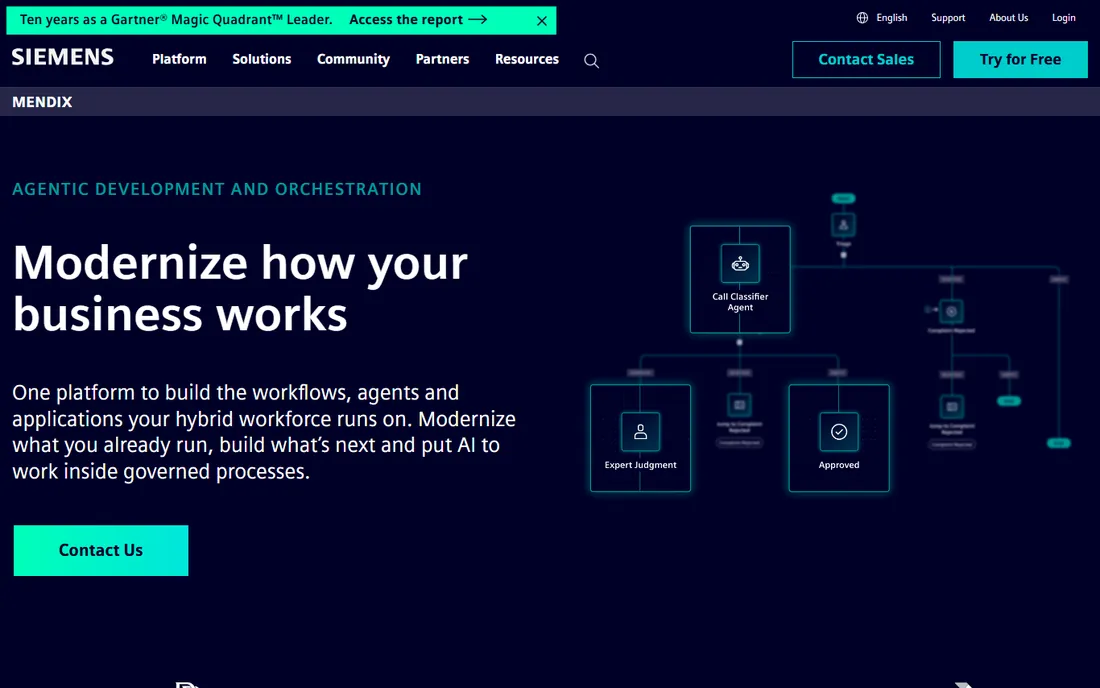
Mendix, owned by Siemens, pioneered the collaboration model: business users prototype in Studio while developers extend in Pro, with governance bridging both. Industrial and enterprise customers build everything from factory apps to customer portals. The free tier lets teams evaluate seriously.
Pricing and complexity target enterprises; small teams find it heavy. The ecosystem speaks enterprise rather than startup. For large organizations wanting business-IT collaboration with industrial-grade governance, Mendix and OutSystems are the two-horse race.
Mendix's Studio Pro gives professional developers full control, custom widgets, JavaScript actions and database modeling, while Studio keeps business users productive: the two-tier approach is the most honest in low-code. The Data Hub catalogs shareable data sources across the organization. Siemens' industrial backing shows in IoT and manufacturing connectors. For enterprises where IT and business must genuinely collaborate, the dual-studio model works.
What we like- Strong collaboration between business and IT
- Siemens backing brings industrial strength
- Good free tier
Watch out for- Enterprise pricing
- Complexity for casual users
- Ecosystem is enterprise-flavored
Starting priceSee website
Free planFree trial
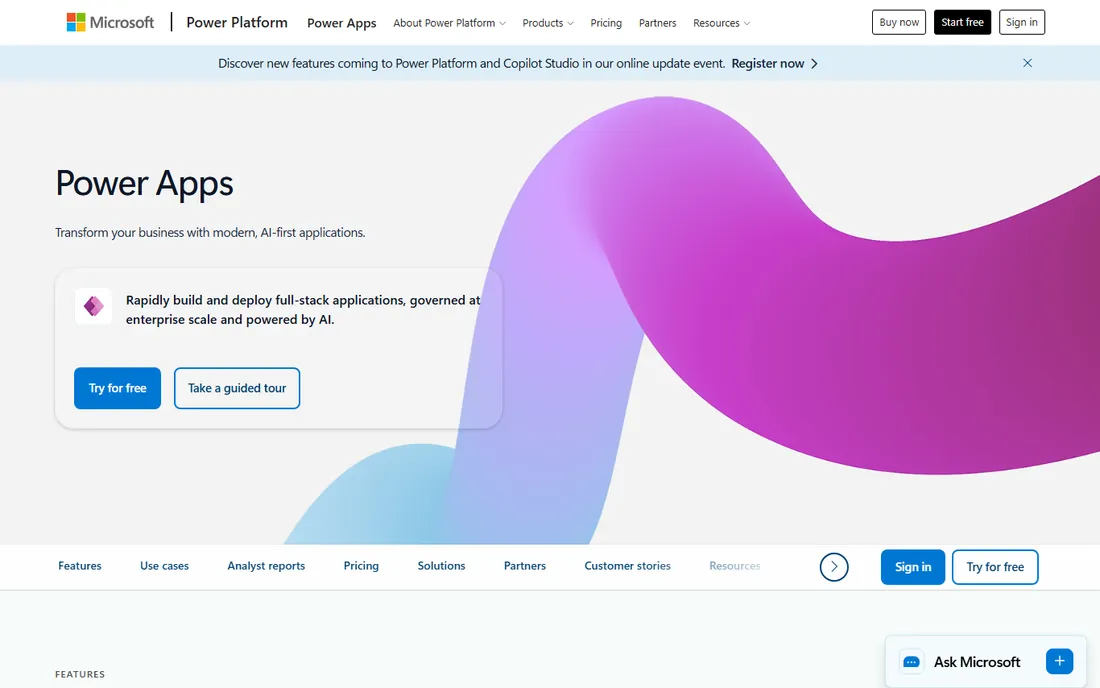
Power Apps turns the Microsoft 365 subscription into an app platform: build forms, approvals and data apps on SharePoint, Dataverse and Dynamics data with low code. For organizations already paying for Microsoft 365, the marginal cost starts low and adoption spreads virally. AI Builder adds document processing and predictions.
The licensing deserves a spreadsheet: premium connectors, Dataverse capacity and per-app versus per-user plans confuse everyone. Complex applications strain the platform's limits. But for departmental apps inside Microsoft shops, nothing beats the integration and the installed base.
Power Apps' Dataverse provides the governed data layer separating serious apps from spreadsheet toys: security roles, business rules and audit history built in. Copilot Studio integration lets apps include conversational AI without separate projects. Premium licensing per app or per user needs careful modeling; the wrong choice doubles costs. For the thousands of departmental apps rotting in spreadsheets, Power Apps is the sanctioned path forward.
What we like- Native in Microsoft 365 and Dataverse
- Huge existing user base
- AI Builder adds smarts
Watch out for- Licensing is confusing
- Premium connectors cost extra
- Complex apps hit platform limits
Starting priceFree
Free planYes
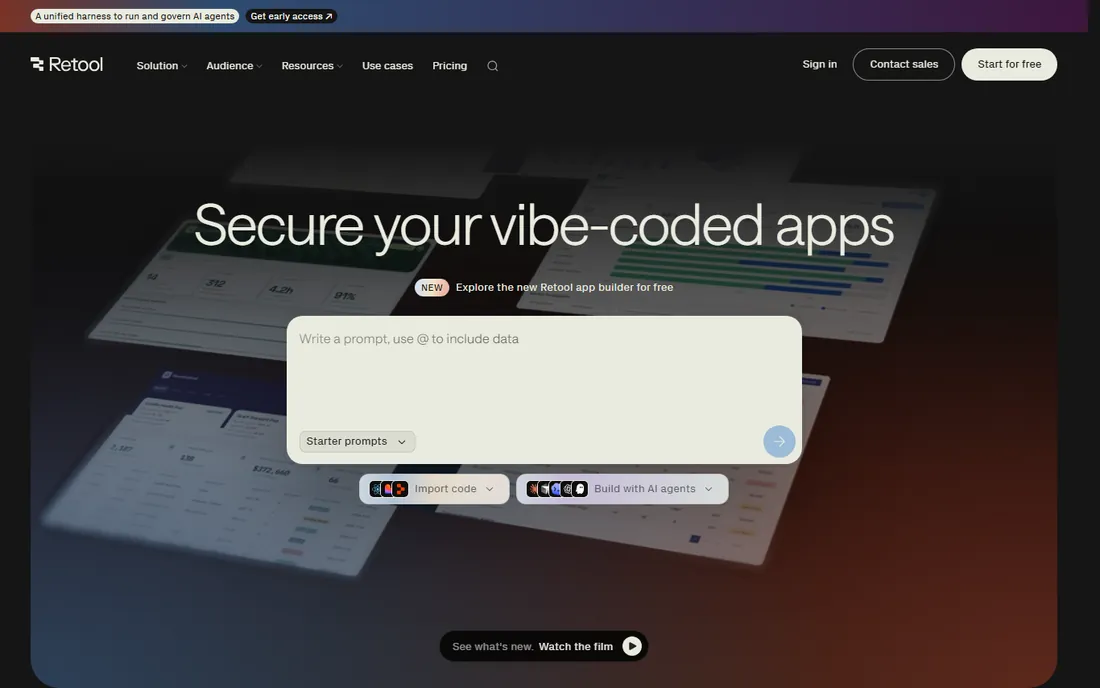
Retool is the developers' low-code: drag-and-drop UI components wired to any database or API, with JavaScript where visual building stops. Admin panels, dashboards and internal workflows that took weeks now take days. The free tier covers small teams, and the component library is excellent.
Per-user pricing means widely-used internal tools get expensive; price the end users, not just builders. It is for internal tools, not customer-facing products. For engineering teams drowning in internal tool requests, Retool pays for itself in the first sprint.
Retool's prebuilt database integrations, covering Postgres, MongoDB, Snowflake, Salesforce and dozens more, mean developers skip the API plumbing consuming internal-tool projects. The custom component framework lets teams build proprietary UI when the library falls short. Workflows automates the cron jobs and ETL surrounding internal tools. Pricing per end user demands honest seat counting, but development speed, often cited as ten times faster, dominates the ROI math.
What we like- Developers build internal tools 10x faster
- Real code where needed
- Huge component and integration library
Watch out for- Priced per end user which scales cost
- Not for customer-facing apps
- Design customization has limits
Starting priceFree
Free planYes
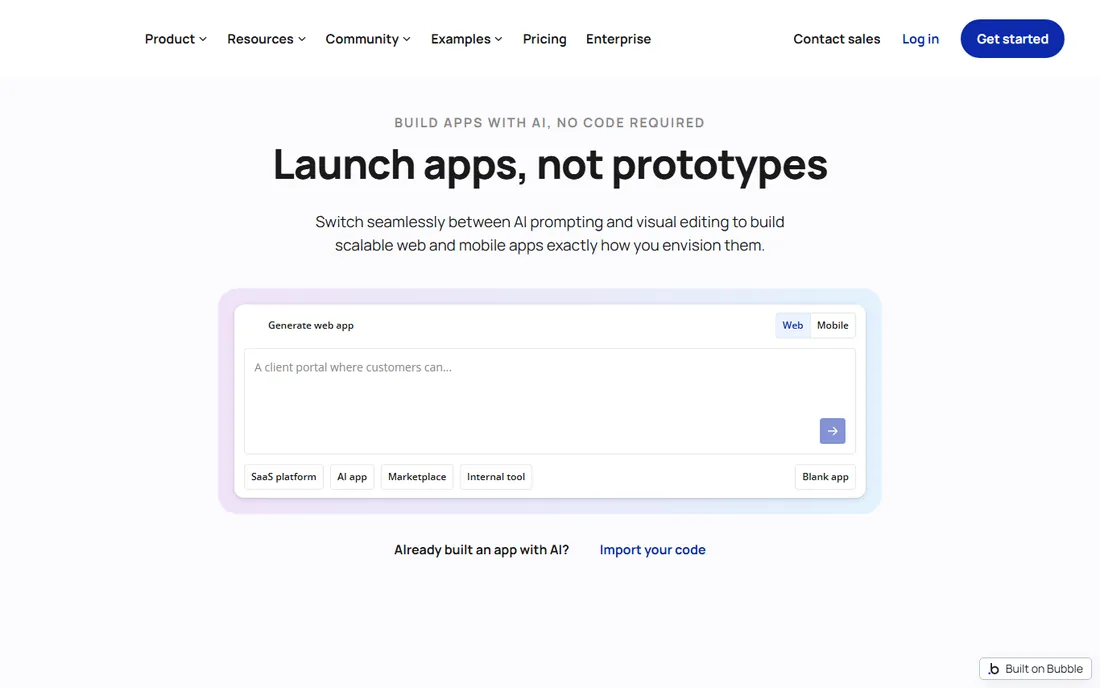
Bubble lets non-technical founders build real web applications: databases, user accounts, payments, API integrations and complex logic, all visual. Thousands of startups launched on Bubble, and the plugin ecosystem extends it enormously. The free tier allows genuine building before paying.
Serious scale needs optimization and sometimes workarounds; it is not the platform for the next Twitter. Lock-in is absolute: your app lives on Bubble or nowhere. And the learning curve surprises people expecting drag-and-drop simplicity. For founders validating ideas and reaching revenue without engineers, Bubble remains unmatched.
Bubble's plugin marketplace, with thousands of community and commercial plugins, extends the platform into payments, maps, AI and specialized widgets. The responsive engine handles mobile layouts without separate builds. API connector workflows integrate any REST service visually. Successful Bubble startups share a pattern: validate fast, optimize performance deliberately, and rebuild in code only when unit economics demand it. The ceiling is higher than skeptics claim.
What we like- True no-code with real database and logic
- Huge template and plugin ecosystem
- Startups ship real products
Watch out for- Performance at scale needs care
- Platform lock-in is total
- Learning curve steeper than it looks
Starting priceSee website
Free planFree trial
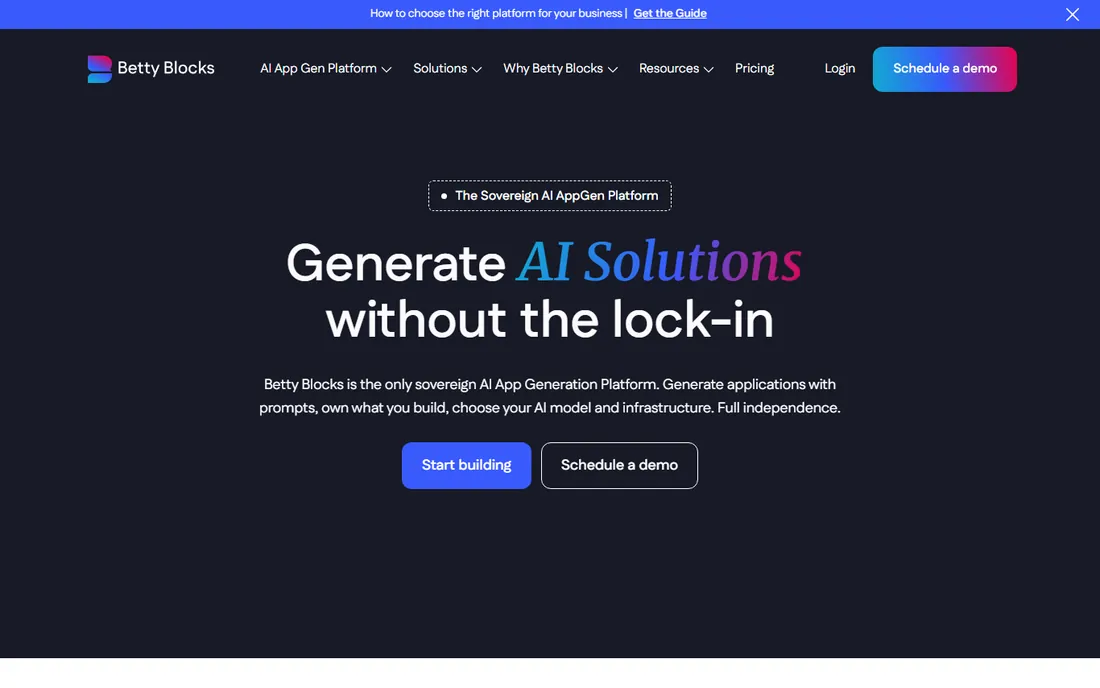
Betty Blocks targets the citizen developer: business users building departmental apps with guardrails IT approves. The governance model lets IT enable building without losing control, which is the central tension in low-code adoption. European enterprises form the core customer base.
The ecosystem is smaller than OutSystems or Mendix, pricing is quote-based, and US buyers find less community. For mid-size organizations wanting governed citizen development without enterprise-platform weight, Betty Blocks' positioning is well judged.
Betty Blocks' block-based development composes applications from reusable components, enforcing the consistency IT wants from citizen development. The governance dashboard gives IT visibility into every app built on the platform. Templates for common departmental apps accelerate delivery. For mid-size European enterprises balancing innovation with control, the governed-citizen model hits the sweet spot.
What we like- Designed for business technologists
- Good governance for citizen development
- Strong European presence
Watch out for- Smaller ecosystem than leaders
- Pricing is quote-based
- Less known outside Europe
Starting priceSee website
Free planFree trial
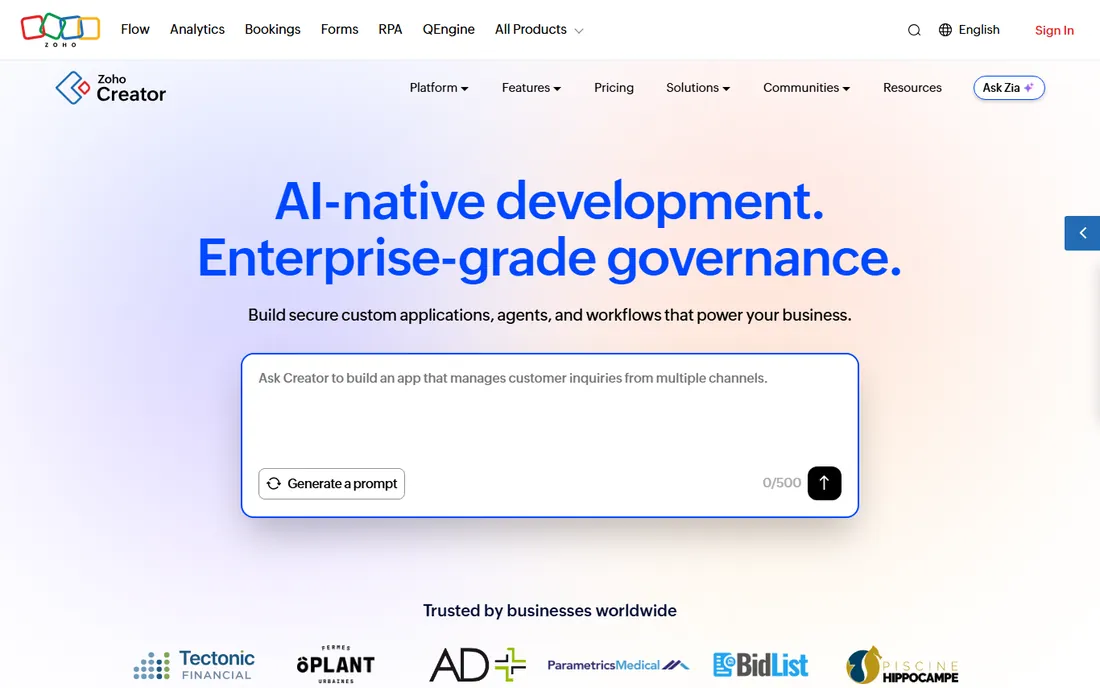
Zoho Creator brings low-code to small-business budgets: custom apps for inventory, orders, HR and workflows at prices far below the enterprise platforms. Integration across Zoho's forty-plus apps means the app you build connects to your CRM, books and email naturally. Deluge scripting handles logic visual builders cannot.
The interface lags the premium tools aesthetically, and the world revolves around Zoho. But the value is exceptional: businesses priced out of OutSystems get real custom applications. For Zoho shops and budget-conscious SMBs, Creator is the pragmatic low-code choice.
Zoho Creator's Deluge scripting handles the business logic visual builders cannot: custom functions, complex validations and scheduled operations. Integration with forty-plus Zoho apps means the custom app talks to CRM, books and helpdesk natively. Customer portals extend apps to external users. At Zoho's pricing, small businesses get custom software that would cost fifty times more built bespoke.
What we like- Very affordable with generous tiers
- Integrates across Zoho's suite
- Deluge scripting adds power
Watch out for- Interface feels dated
- Less polished than premium rivals
- Ecosystem is Zoho-centric
Starting priceSee website
Free planFree trial
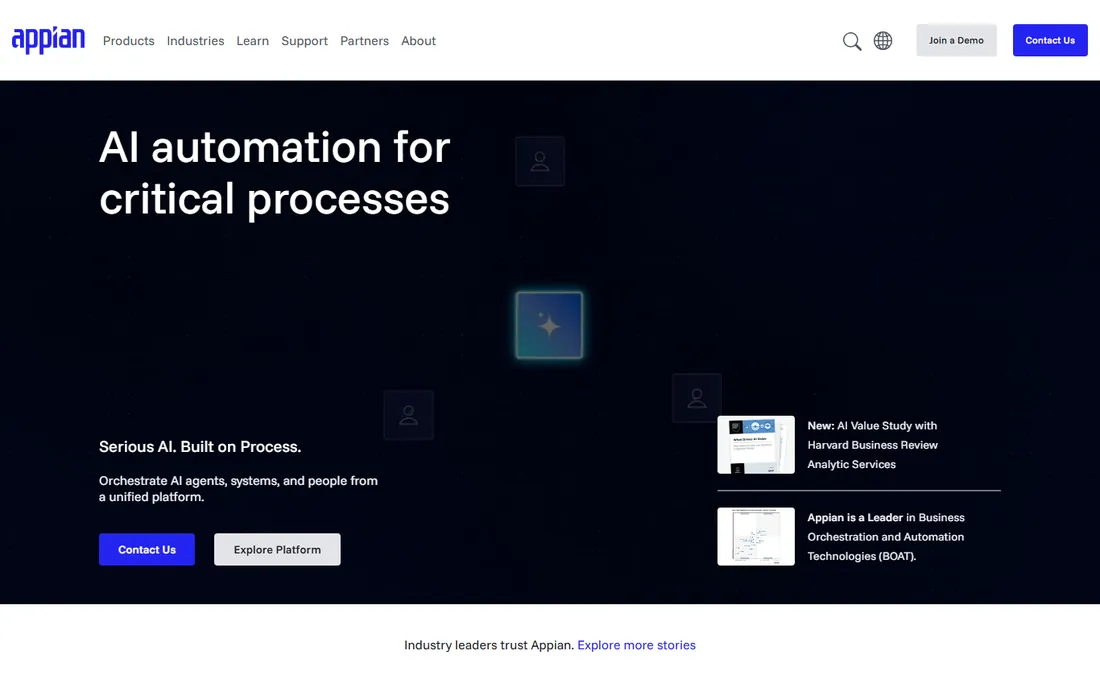
Appian unifies low-code development with process automation: build applications that orchestrate complex workflows across people, bots and systems. Banks, insurers and government agencies choose it for regulated processes needing audit trails. The data fabric unifies data without migration.
Pricing and positioning are enterprise; simple app builders look elsewhere. The process-centric model fits workflow-heavy applications better than content apps. For organizations automating complex, regulated processes, Appian's combined platform beats buying BPM and low-code separately.
Appian's process mining discovers how work actually flows before automation, preventing efficient versions of broken processes. The data fabric unifies enterprise data without migration, a genuine differentiator in brownfield environments. AI skills for document processing plug into workflows. For regulated industries where every automated decision needs an audit trail, Appian's governance is the reason it wins.
What we like- Process automation plus low-code in one
- Strong in regulated industries
- Good AI and data fabric features
Watch out for- Enterprise pricing
- Process-centric view not for all apps
- Learning curve
Starting priceSee website
Free planNo
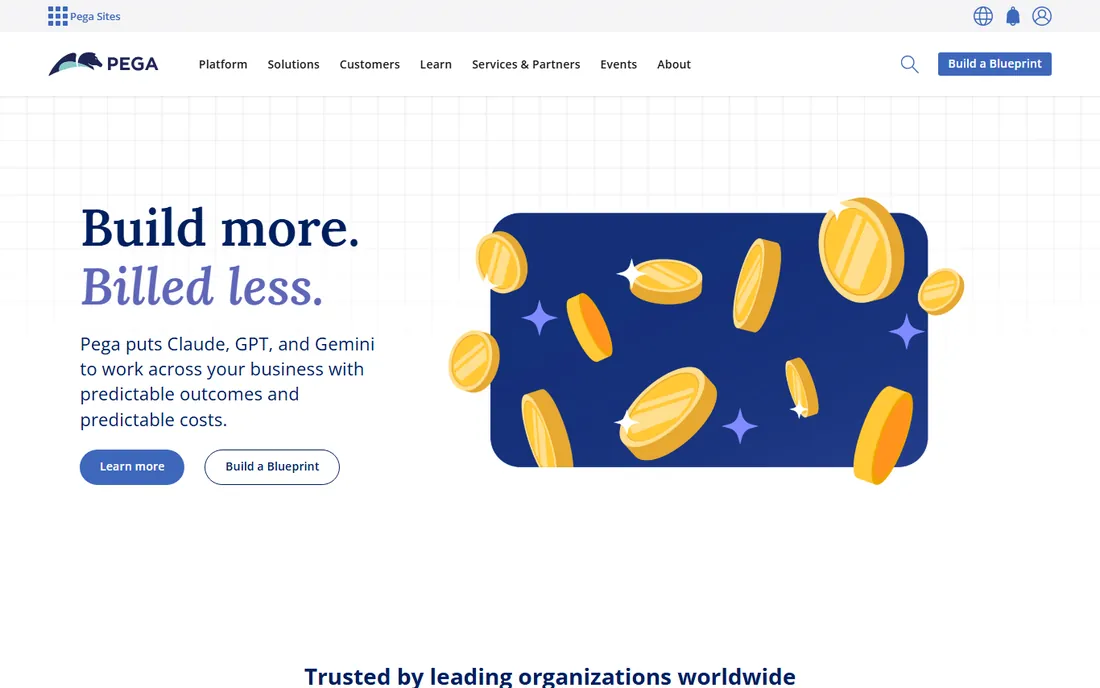
Pega is the heavyweight for complexity: banks processing millions of cases, insurers automating claims, telcos orchestrating service, all on Pega's case management and decisioning engine. The AI-driven workflows adapt in ways simpler platforms cannot. At massive scale with intricate rules, nothing else matches it.
Everything about Pega is enterprise: price, implementation complexity, expertise requirements. Straightforward applications drown in its power. But when the problem is genuinely complex, high-volume case work with sophisticated decisioning, Pega is the platform built exactly for that.
Pega's Center-out architecture builds applications around the customer journey rather than channels, so changes propagate consistently everywhere. The decisioning engine applies AI to next-best-action in real time across millions of cases. The Constellation design system keeps enterprise apps consistent. Implementations need certified expertise, which is scarce and expensive, but for the complexity class Pega serves, there is no simpler alternative.
What we like- Unmatched for complex case management
- AI-driven decisioning
- Proven at massive scale
Watch out for- Expensive and complex
- Needs specialized expertise
- Overkill for straightforward apps
Starting priceFree
Free planYes
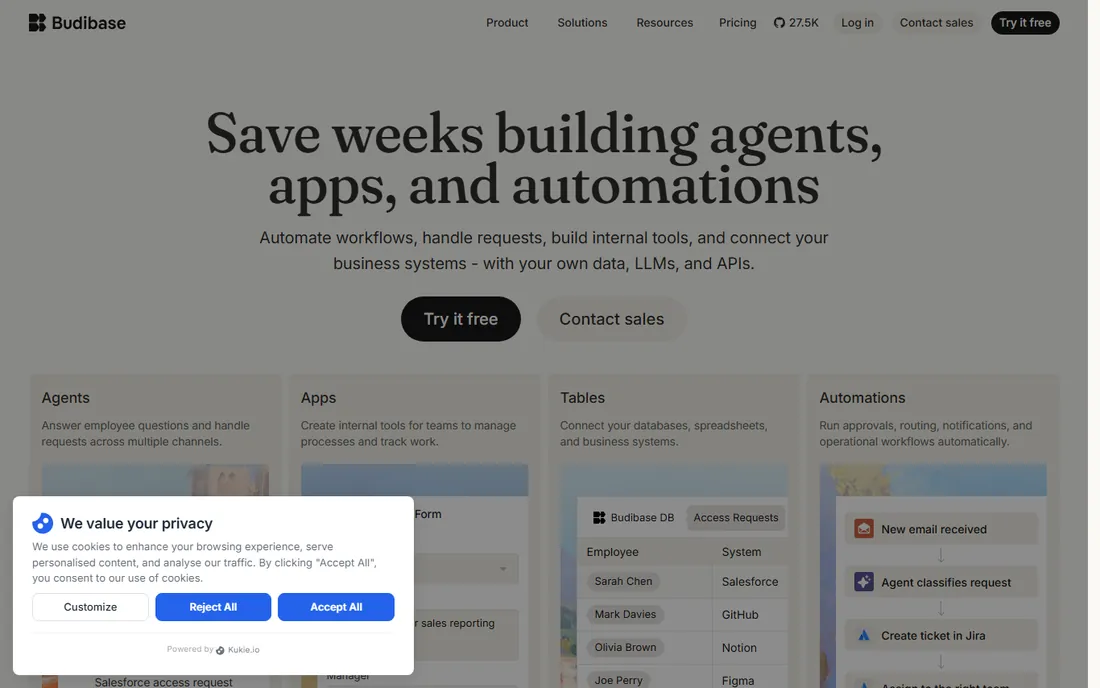
Budibase is the open-source answer to Retool: build internal tools, dashboards and admin panels on your own infrastructure. The self-hosted option appeals to organizations with data control requirements, and the pricing avoids per-user meters. Development is active and the community growing.
It is younger than Retool with a smaller ecosystem and fewer integrations. Enterprise features sit on paid tiers. For teams that want Retool-like speed with open-source freedom and self-hosting, Budibase is the principled choice gaining real traction.
What we like- Open source with self-hosting
- Fast internal app building
- No per-user pricing traps
Watch out for- Younger project
- Smaller ecosystem
- Advanced features need paid tiers
How we chose
We selected platforms for building real web applications, spanning enterprise low-code, developer tools and no-code. We reviewed vendor documentation, analyst coverage and practitioner reviews, and verified each platform's current status. We excluded pure website builders, which belong in a different roundup.
Choosing between low-code and pro-code
Low-code wins on speed for standard business applications: CRUD apps, approvals, dashboards and portals ship in weeks. Pro-code wins on differentiation: unique user experiences, extreme scale and total control. Most organizations need both, and the platforms above increasingly blend: Retool and OutSystems let developers drop into code where visual building stops.
The governance question decides enterprise adoption. IT departments fear ungoverned citizen development creating security and maintenance nightmares. Platforms with real ALM, OutSystems, Mendix, Power Apps with governance, Appian, exist to resolve that fear. Evaluate the governance story as seriously as the building experience.
Frequently asked questions
What is the best low-code platform?
OutSystems and Mendix lead for enterprises; Power Apps for Microsoft shops; Retool for developer-built internal tools. The best depends on who builds and what governance you need.
Can I build a startup on no-code?
Yes, thousands have with Bubble. Validate and reach revenue without engineers, then evaluate: many successful Bubble apps stay, some rebuild in code at scale. The right time to rebuild is when no-code constraints cost more than engineers.
How much do low-code platforms cost?
From free (Bubble, Retool, Budibase tiers) to enterprise contracts in the hundreds of thousands. Mid-market platforms like Zoho Creator stay affordable; enterprise leaders are quote-based. Price end users, not just builders.
Will low-code replace developers?
No. It shifts developers from boilerplate to differentiation: integrations, architecture and complex logic. The platforms themselves are built by developers, and serious applications still need engineering judgment.
What about governance and security?
Enterprise platforms offer SSO, audit logs, environment management and compliance certifications. Evaluate these as seriously as features; citizen development without governance is how security incidents happen.
Open source vs SaaS low-code?
Open source (Budibase) gives control and self-hosting; SaaS gives managed updates and support. Regulated or control-focused organizations lean open source; speed-focused teams lean SaaS.
Sources we checked (10)
- https://www.outsystems.com/
- https://www.mendix.com/
- https://www.microsoft.com/en-us/power-platform/products/power-apps
- https://retool.com/
- https://bubble.io/
- https://bettyblocks.com/
- https://www.zoho.com/creator/
- https://appian.com/
- https://www.pega.com/
- https://budibase.com/
Is your product missing or out of date?
We review this list regularly. Vendors can request a listing, send updated pricing or ask about featured placement.

Shihab Mia · Founder, Rankite
Shihab has spent more than a decade helping SaaS and e-commerce brands grow through search. He writes Rankite's software buying guides from pricing pages, documentation and public user reviews. More about Shihab.