How we make this list: we compare pricing pages, product documentation and public user reviews. Rankite is independent; if a vendor ever pays for a featured spot, that listing is clearly labeled Partner.
Key takeaways
- TrackStreet is the strongest pick for brands that need evidence-backed enforcement with legal-grade audit trails, but pricing is quote-only and it skews enterprise.
- Priceva is the value play: published plans start at $99/month with a genuinely free Starter tier, rare in a category where most vendors hide pricing.
- MAPP Trap publishes a $200/month starting price and bundles seller identification with enforcement, which suits mid-size brands that want a managed feel without enterprise contracts.
- Price2Spy runs on adjustable tiers with a 14-day trial and no credit card required, but final pricing comes from a personalized quote, so budget planning takes a call.
- Wayvia (formerly PriceSpider) now positions MAP enforcement inside a broader commerce platform, which is a plus for enterprise brands but may be more than a small brand needs.
Quick comparison
| Tool | Best for | Starting price | Free plan |
|---|
 TrackStreet TrackStreet | enterprise brands that need audit-ready MAP enforcement | See website | No |
 Price2Spy Price2Spy | brands that want tiered, scalable monitoring with a trial | See website | Free trial (14 days) |
 MAPP Trap MAPP Trap | mid-size brands that want seller identification bundled in | $200/month | Free trial |
 Priceva Priceva | brands that want published pricing and a real free tier | $99/month | Yes |
 Wayvia Wayvia | enterprise brands that want MAP inside a full commerce platform | See website | No |
 Trade Vitality Trade Vitality | brands choosing between DIY software and a fully managed service | See website | No |
 NetRivals NetRivals | international brands needing price intelligence at global scale | See website | No |
 MetricsCart MetricsCart | consumer brands that want MAP inside digital shelf analytics | See website | No |
Is your product missing or out of date?
We review this list regularly. Vendors can request a listing, send updated pricing or ask about featured placement.
The best minimum advertised price software
Starting priceSee website
Free planNo
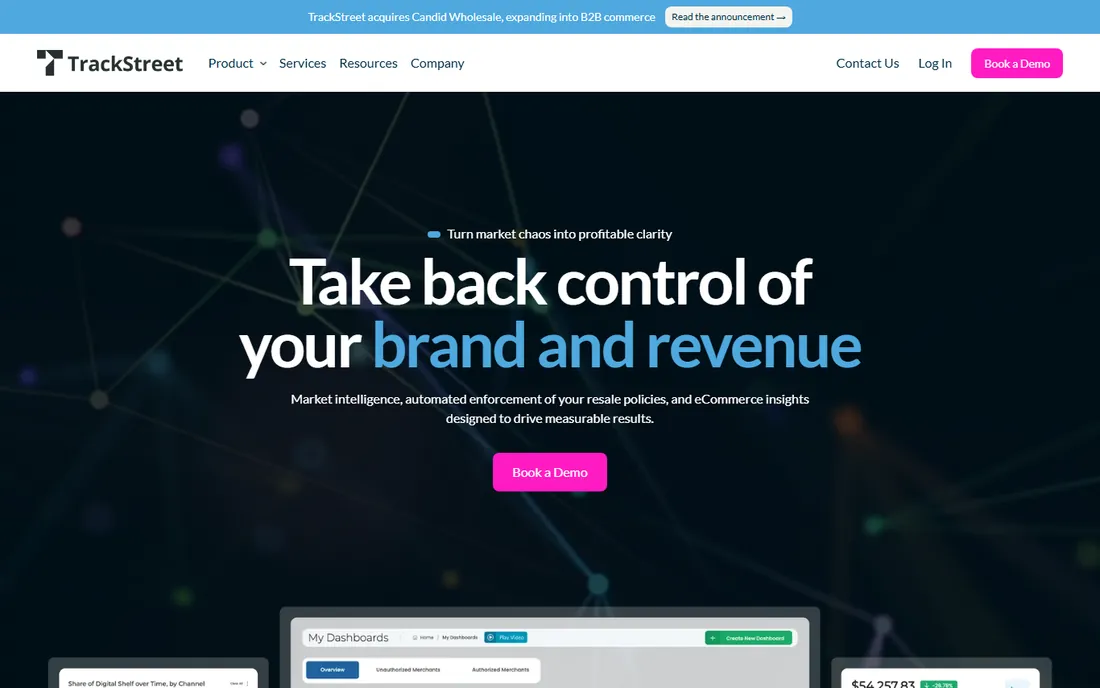
TrackStreet built its name on enforcement, not just monitoring. The platform watches advertised prices across a very large crawl footprint, then routes violations through customizable escalation sequences that attach timestamps, listing data and merchant details to every notice. For a compliance or legal team that needs to show a clean paper trail, that evidence layer is the product's core argument.
The tradeoff is accessibility. There is no self-serve signup and no published price list, so you start with a demo and a conversation. Brands with smaller catalogs or a single marketplace problem will pay for breadth they never use. If your team already has a defined MAP policy and just needs a disciplined enforcement engine behind it, TrackStreet is the category's heavyweight. If you are still writing the policy, look at a lighter option first.
What we like- Automated escalation workflows with evidence-backed notices
- Monitors 185K+ websites and marketplaces
- Dedicated managed services for brands without in-house teams
Watch out for- No public pricing, everything runs through a demo
- Built for larger catalogs, likely overkill for a ten-SKU brand
- Enterprise positioning means longer sales cycles
#2
Price2Spy
Best for: brands that want tiered, scalable monitoring with a trial
Visit price2spy.com
Starting priceSee website
Free planFree trial (14 days)
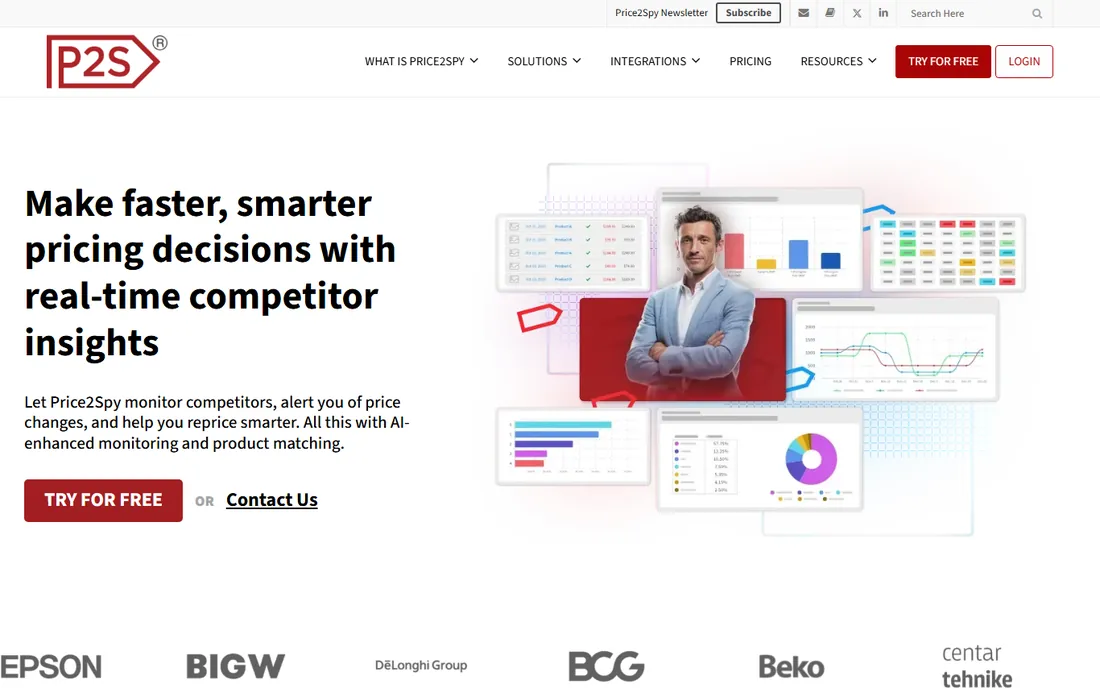
Price2Spy takes a modular approach. The base tiers cover price monitoring, market analytics and MAP violation detection, and you bolt on repricing, screenshot capture, automatching or GA4 integration as needed. That flexibility keeps the entry cost down for a brand tracking a few hundred SKUs, and the 14-day trial lets you validate match accuracy before talking to sales.
The catch is that the pricing page publishes tiers without dollar figures, so the "simple, transparent pricing" headline is only half true. You will need a quote to know what Basic or Premium actually costs at your volume. Teams that hate sales-led buying should weigh that against Priceva's published $99/month plan. For brands comfortable with a short sales conversation, the trial-first model is fair and the feature set is broad.
What we like- Clear Starter, Basic and Premium tier structure
- 14-day free trial with no credit card required
- MAP monitoring built into Basic and above with instant alerts
Watch out for- Final pricing requires a personalized quote, so you cannot budget from the website alone
- Add-on modules like repricing and screenshots cost extra
- Self-serve Starter tier skips dedicated support
#3
MAPP Trap
Best for: mid-size brands that want seller identification bundled in
Visit mapptrap.com
Starting price$200/month
Free planFree trial

MAPP Trap positions itself around a simple claim: anyone can monitor, but identifying the reseller is the hard part. The platform tracks products on Amazon, eBay, Walmart and Google Shopping, creates watermarked evidence of violations, and uses investigative techniques to connect anonymous seller accounts to real businesses. That identification step is where many cheaper monitors leave you hanging.
At $200/month to start, it undercuts the enterprise tier by a wide margin while still offering a managed white-glove program for teams that do not want to run enforcement themselves. The phone number is front and center on the site, which tells you the buying process is consultative rather than click-to-buy. For a mid-size manufacturer that knows its policy but keeps losing to anonymous third-party sellers, this is a practical middle ground.
What we like- Published $200/month starting price
- Seller identification service unmasks violators behind unfamiliar store names
- White Glove Compliance Program offers a managed option
Watch out for- Pricing scales with product and site count, so large catalogs cost more
- Smaller vendor with less public review volume than the enterprise players
- Onboarding leans on phone calls rather than self-serve
#4
Priceva
Best for: brands that want published pricing and a real free tier
Visit priceva.com
Starting price$99/month
Free planYes
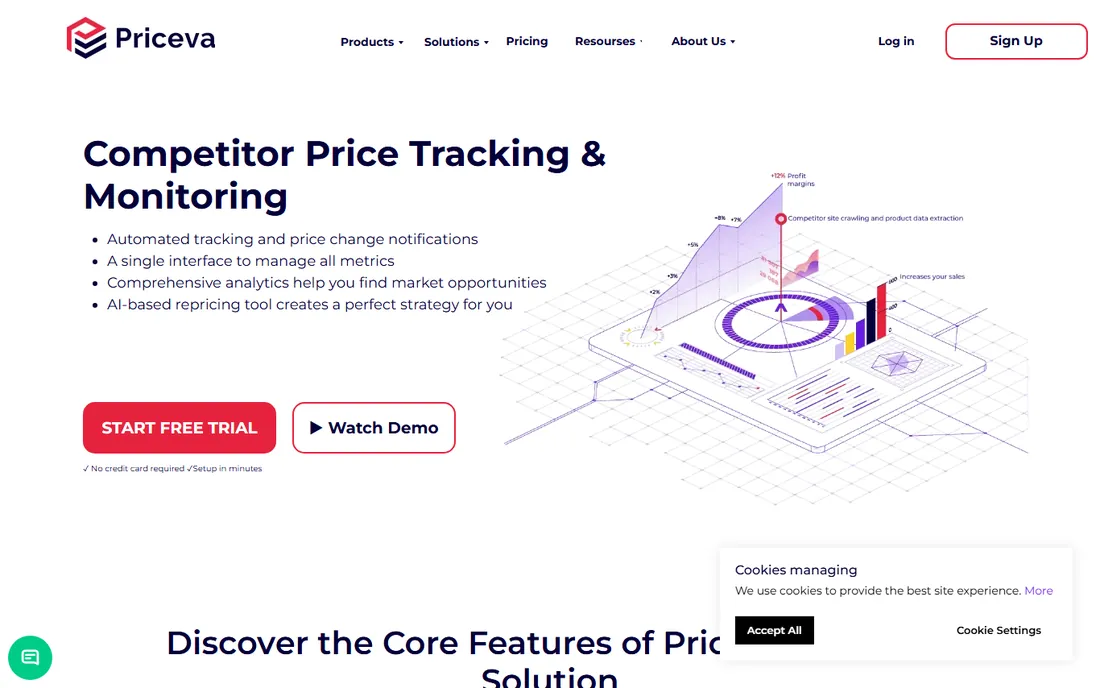
Priceva is the transparency outlier in this list. The homepage shows the full pricing grid: free Starter, $99/month Business, $199/month Pro and custom Enterprise. You can read the check limits, competitor caps and region allowances before ever contacting sales, which is more than most MAP vendors offer. The free Starter tier, limited as it is, gives a small brand a genuine way to test MAP monitoring on its hero products.
Feature depth is solid for the price. Paid plans include MAP and MSRP monitoring, product page snapshots for evidence, marketplace monitoring and automated repricing rules. The honest catch is the usage-based pricing underneath: once you exceed the monthly check allowance, overage fees kick in per check and per extra competitor. Model your SKU count and check frequency before committing, and the $99 plan can be excellent value.
What we like- Published plans from $99/month with a free Starter tier (20 products)
- MAP and MSRP monitoring included in paid plans with product page snapshots
- Free trial with no credit card required
Watch out for- Free tier caps at 20 products and 6,200 price checks per month
- Per-check overage fees ($0.0029 and up) can add up on big catalogs
- Advanced features like cart-price monitoring sit on higher tiers
Starting priceSee website
Free planNo
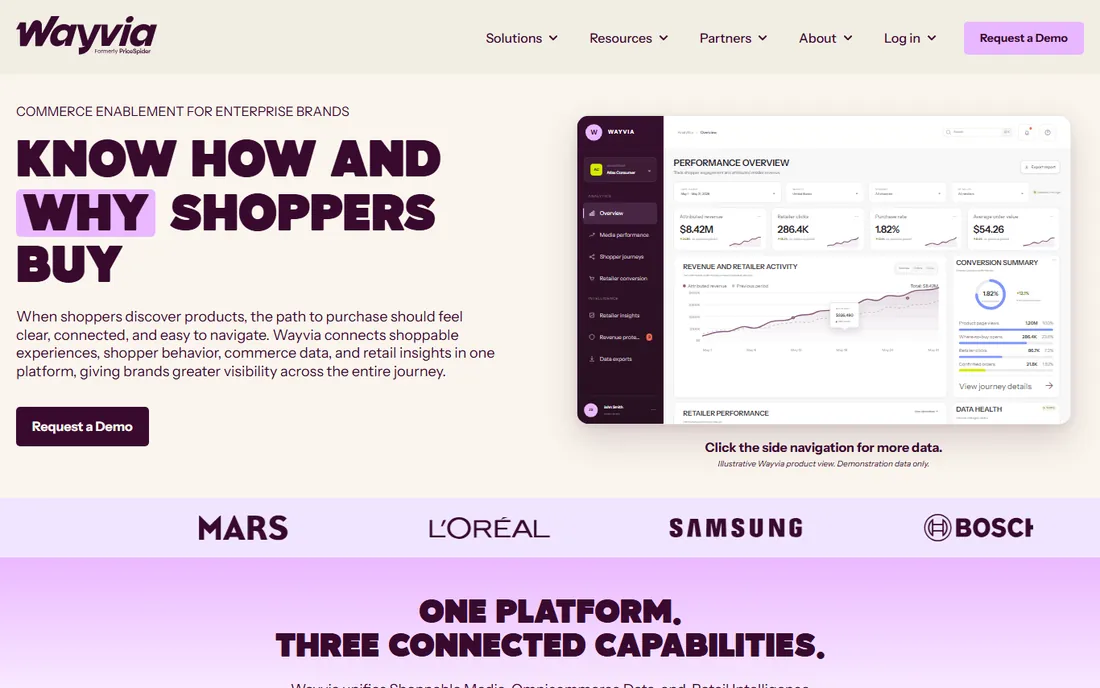
The company behind PriceSpider has rebranded as Wayvia, and the MAP story changed with it. Prowl, the price monitoring and enforcement product, now lives inside a commerce enablement platform that also covers shoppable media, where-to-buy, retail intelligence and closed-loop measurement. For an enterprise brand team, having MAP violations, price intelligence and retailer performance in one dashboard is genuinely useful context that point tools cannot provide.
The flip side is fit. If your only problem is MAP enforcement on Amazon and Walmart, Wayvia is a cannon aimed at a sparrow, and the quote-based enterprise pricing will reflect that. There is no trial and no self-serve path. But for large consumer brands already investing in digital shelf analytics, consolidating MAP enforcement into the same platform can simplify vendor management and reporting.
What we like- MAP monitoring (Prowl) sits alongside shoppable media and retail intelligence in one platform
- 32,000+ retailer network with validated links
- Built for large enterprise brand teams
Watch out for- Platform breadth means MAP-only buyers pay for features they may not use
- No public pricing or trial
- Enterprise onboarding is slower than point solutions
#6
Trade Vitality
Best for: brands choosing between DIY software and a fully managed service
Visit tradevitality.com
Starting priceSee website
Free planNo
Trade Vitality sells MAP enforcement two ways. You can run the SaaS dashboard yourself, monitoring sellers, sending violator notices and managing your policy in one place, or you can hand 99 percent of the enforcement work to their team as a managed service. That dual model is the differentiator: few competitors let you start DIY and graduate to managed without switching vendors.
The company also emphasizes that human eyes review the violation data before it reaches you or your sellers, which matters when a false accusation can damage a retailer relationship. Pricing is not published, so expect a quote. Trade Vitality is not the broadest platform on this list, but for a brand that wants MAP handled as a service rather than a software project, the managed option is worth a demo.
What we like- Offers both a self-serve SaaS dashboard and a fully managed enforcement service
- Human review layer double-checks violation data
- Focused specifically on MAP rather than general price intelligence
Watch out for- No published pricing or trial
- Smaller company with a narrower feature footprint than platform vendors
- Managed service quality depends on the account team you get
#7
NetRivals
Best for: international brands needing price intelligence at global scale
Visit netrivals.com
Starting priceSee website
Free planNo

NetRivals comes from the price intelligence world rather than the MAP enforcement world, and it shows. The platform's scale is its argument: daily tracking of 600 million-plus products from more than 35,000 stores, with AI matching, dynamic repricing and assortment analysis. For a brand selling across many countries and currencies, that breadth catches MAP-relevant violations as part of a wider pricing picture.
MAP enforcement workflows, however, are not the product's center of gravity. There is no published MAP-specific escalation engine comparable to TrackStreet or MAPP Trap, and pricing is entirely custom. NetRivals fits brands that want one price intelligence platform for competitive strategy, repricing and MAP visibility together, especially now that the Lengow acquisition adds marketplace execution. If MAP enforcement is your only job, a dedicated tool will serve you better.
What we like- Tracks hundreds of millions of products across tens of thousands of stores daily
- AI-powered product matching for accurate comparisons
- Now part of Lengow, adding channel execution integrations
Watch out for- Pricing is fully custom with no public plans
- Strength is price intelligence broadly, not MAP enforcement specifically
- Enterprise sales process with demo-first access
#8
MetricsCart
Best for: consumer brands that want MAP inside digital shelf analytics
Visit metricscart.com
Starting priceSee website
Free planNo
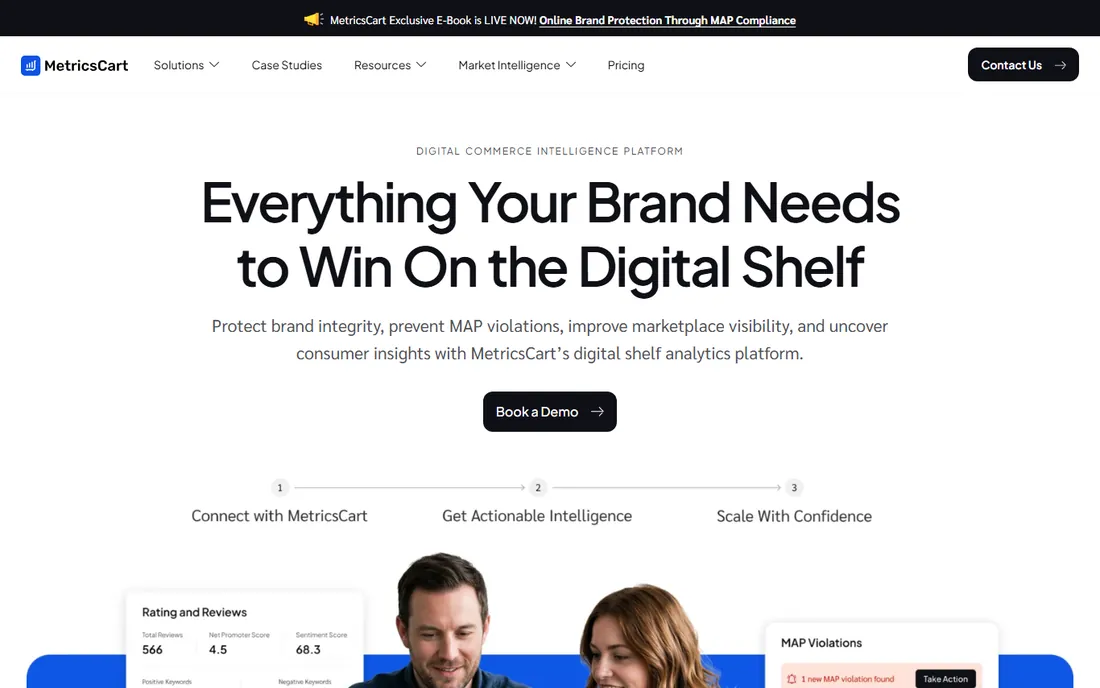
MetricsCart approaches MAP as part of digital shelf intelligence. Instead of a standalone enforcement tool, you get MAP violation detection alongside review monitoring, availability tracking, competitor pricing and content compliance, all in one dashboard. For a consumer brand team that already needs shelf analytics, folding MAP into the same subscription avoids buying and integrating a separate tool.
The company promises fast onboarding, with custom retailer connections delivered in about 72 hours, and white-glove setup handled by specialists. Pricing is not published, which is typical for the enterprise-leaning tools in this category. MetricsCart is a good fit when MAP is one of several digital shelf problems you are solving at once. As a pure-play enforcement engine, the dedicated vendors above go deeper.
What we like- Covers 150+ retailers and marketplaces including Amazon, Walmart and Target
- Combines MAP violation detection with reviews, availability and competitor tracking
- 72-hour onboarding with white-glove setup
Watch out for- No public pricing
- MAP is one module inside a broader analytics platform
- Newer vendor with a smaller review base than incumbents
How we chose
We started by mapping the category: MAP software means tools that detect advertised prices below a brand's minimum advertised price policy, capture evidence, and route violations into enforcement workflows. We screened vendor homepages, pricing pages, documentation and public reviews on G2 and Capterra, and kept only products that exist today and handle MAP monitoring or enforcement as a real function. Pricing and plan details come from each vendor's own website as of October 2026; where a vendor publishes no prices, we say so rather than quoting third-party estimates. We excluded generic price trackers without MAP-specific features and vendors whose products had been shut down or folded into unrelated suites.
What to check before you sign a MAP contract
Start with your catalog size and check frequency, because most MAP pricing scales on one or both. A vendor quoting per product per month looks cheap at 200 SKUs and punishing at 20,000. Ask exactly what counts as a monitored product, whether variants count separately, and how often prices are rechecked at your tier. Daily checks are the minimum worth paying for; hourly or near-real-time checks usually sit on higher plans.
Evidence quality decides whether enforcement actually works. A violation alert without a timestamped screenshot is just an accusation your retailer can dispute. Confirm that the tool captures page snapshots automatically, stores them with timestamps and URLs, and lets you export the evidence for legal or distributor conversations. MAPP Trap's watermarked images and TrackStreet's evidence-backed notices exist for this reason.
Then look at the workflow after detection. Monitoring without enforcement is a dashboard of bad news. You want automated notice templates, escalation sequences for repeat offenders, seller contact databases and a record of every action taken. If you do not have staff to run this, price the vendor's managed service option against hiring; Trade Vitality and MAPP Trap both sell managed enforcement, which changes the math for lean teams.
Finally, confirm marketplace coverage for your actual channels. Amazon, Walmart and eBay are table stakes, but Google Shopping, regional marketplaces and direct retailer sites vary by vendor. Ask for a coverage list, and run the trial on your ten most-violated SKUs before signing anything. Match accuracy matters more than feature count: a tool that misidentifies products will flood your team with false positives and erode trust with retailers.
MAP monitoring versus MAP enforcement: why the distinction matters
Vendors use these terms loosely, and the difference affects what you pay for. MAP monitoring is detection: crawling listings, comparing advertised prices against your policy floor, and alerting you to violations. MAP enforcement adds the action layer: evidence capture, violator identification, automated notices, escalation paths and case management through resolution.
Most tools on this list do both, but they weight them differently. Price2Spy and NetRivals lean toward monitoring and price intelligence, with enforcement as a lighter layer. TrackStreet, MAPP Trap and Trade Vitality lean toward enforcement, with monitoring as the input. Price your decision accordingly. If your team already handles enforcement manually and just needs better detection, a monitoring-leaning tool at a lower price point is the rational buy. If violations sit unaddressed for weeks because nobody owns the follow-up, pay for the enforcement workflow or the managed service. The most expensive outcome is a monitoring dashboard nobody acts on.
Frequently asked questions
What is minimum advertised price software?
It is software that helps brands enforce their minimum advertised price policies. It monitors retailer and marketplace listings for advertised prices below the brand's set floor, captures timestamped evidence of violations, identifies the offending sellers and automates the enforcement workflow, from warning notices to escalation. Without it, brands usually discover violations through retailer complaints or manual spot checks.
How much does MAP software cost?
Pricing varies widely. Published plans start around $99/month (Priceva) to $200/month (MAPP Trap) for smaller catalogs, while enterprise platforms like TrackStreet and Wayvia are quote-based and typically run into the thousands per month. Most vendors price on monitored SKUs, check frequency and marketplace coverage, so get a quote based on your actual catalog before budgeting.
Can MAP software find unauthorized sellers?
Yes, several tools specialize in this. MAPP Trap's seller identification service unmasks violators operating under unfamiliar store names, TrackStreet offers AI-linked seller identity resolution across accounts and domains, and Wayvia's Prowl includes unauthorized seller discovery. This matters because anonymous third-party sellers cause a large share of MAP violations on marketplaces like Amazon.
Does MAP software work on Amazon?
Yes. Amazon is the most commonly monitored channel across this category. Tools track advertised prices, Buy Box ownership and seller behavior on Amazon listings, capture screenshot evidence of violations and support enforcement workflows. Some, like TrackStreet and MetricsCart, add Amazon-specific features such as Buy Box suppression alerts and sales velocity data.
Is a free trial available for MAP software?
It depends on the vendor. Price2Spy offers a 14-day free trial with no credit card required, MAPP Trap offers a free trial, and Priceva has both a free trial and a genuinely free Starter plan capped at 20 products. Enterprise vendors like TrackStreet, Wayvia, Trade Vitality and NetRivals are demo-led with no public trial, so you evaluate through a guided demo instead.
Should I choose monitoring software or a managed enforcement service?
Choose software if you have someone on staff who can own enforcement day to day; the tools automate detection and notices but still need a human making judgment calls. Choose a managed service, offered by vendors like Trade Vitality and MAPP Trap, if your team is lean or violations have gone unaddressed. Many brands start with software and move to managed once they see the volume of work involved.
Sources we checked (12)
- https://trackstreet.com/
- https://price2spy.com/
- https://www.price2spy.com/pricing/
- https://mapptrap.com/
- https://www.mapptrap.com/pricing/mapp-trap-monitor-identify-get-started
- https://www.pricespider.com/
- https://tradevitality.com/
- https://priceva.com/
- https://www.netrivals.com/
- https://metricscart.com/
- https://www.42signals.com/blog/best-map-enforcement-software-2026/
- https://tradevitality.com/blog/best-map-monitoring-software-tools-in-2025-ranked-reviewed
Is your product missing or out of date?
We review this list regularly. Vendors can request a listing, send updated pricing or ask about featured placement.

Shihab Mia · Founder, Rankite
Shihab has spent more than a decade helping SaaS and e-commerce brands grow through search. He writes Rankite's software buying guides from pricing pages, documentation and public user reviews. More about Shihab.