How we make this list: we compare pricing pages, product documentation and public user reviews. Ratings come from G2, Capterra or Trustpilot, with the date we checked them.
Key takeaways
- Khan Academy is the strongest fully free option, with structured lessons across math, science, and humanities.
- Duolingo and Blinkist offer useful free tiers, but the free version limits daily content or adds ads.
- Short lessons work best when they include recall, such as quizzes, flashcards, or practice problems, not just reading.
- Pair one habit app for daily lessons with one on-demand app for specific topics, rather than paying for five subscriptions at once.
Quick comparison
| Tool | Best for | Starting price | Free plan |
|---|
 Khan Academy | Fully free structured learning | Free | Yes |
 Duolingo | Free language lessons | Free; Super $12.99 per month | Yes |
 Blinkist | Nonfiction book summaries | Free; Premium $15.99 per month | Yes |
 Headway | Visual book summaries | Free; Premium $12.99 per month | Yes |
 Brilliant | Hands-on STEM learning | See website | Yes |
 Quizlet | Flashcards and exam prep | Free; Plus $35.99 per year | Yes |
 Chunks | Humanities in short chapters | Free; Premium available | Yes |
 Deepstash | Idea cards and daily reading | Free; Pro varies | Yes |
Is your product missing or out of date?
We review this list regularly. Vendors can request a listing, send updated pricing or ask about featured placement.
The best free microlearning apps
#1Khan Academy
Best for: Fully free structured learning4.5/5 on
G2 (177 reviews, checked Oct 2026)
Visit khanacademy.org
Starting priceFree
Free planYes
Khan Academy is the clearest free pick because the core library costs nothing and follows a real course structure. Lessons run five to twenty minutes, with short videos, practice exercises, and quizzes that check understanding rather than asking you to trust that you learned something. Subjects range from school math and science to computing, economics, and test preparation, so it suits students, career changers, and curious adults alike.
The style is calmer than a gamified app, which is a strength for focused study and a weakness for casual use. There are no streak animations pushing you to open the app, and the design rewards steady progress over quick wins. If you want a free, structured way to learn a subject properly in short sessions, start here and add a second app only for a specific gap, such as language practice or book summaries.
What we like- Entirely free core content
- Structured courses with practice
- Covers math, science, computing, and humanities
Watch out for- Less gamified than Duolingo
- Video style suits study more than casual browsing
- No book summaries
#2Duolingo
Best for: Free language lessons4.5/5 on
G2 (145 reviews, checked Oct 2026)
Visit duolingo.com
Starting priceFree; Super $12.99 per month
Free planYes
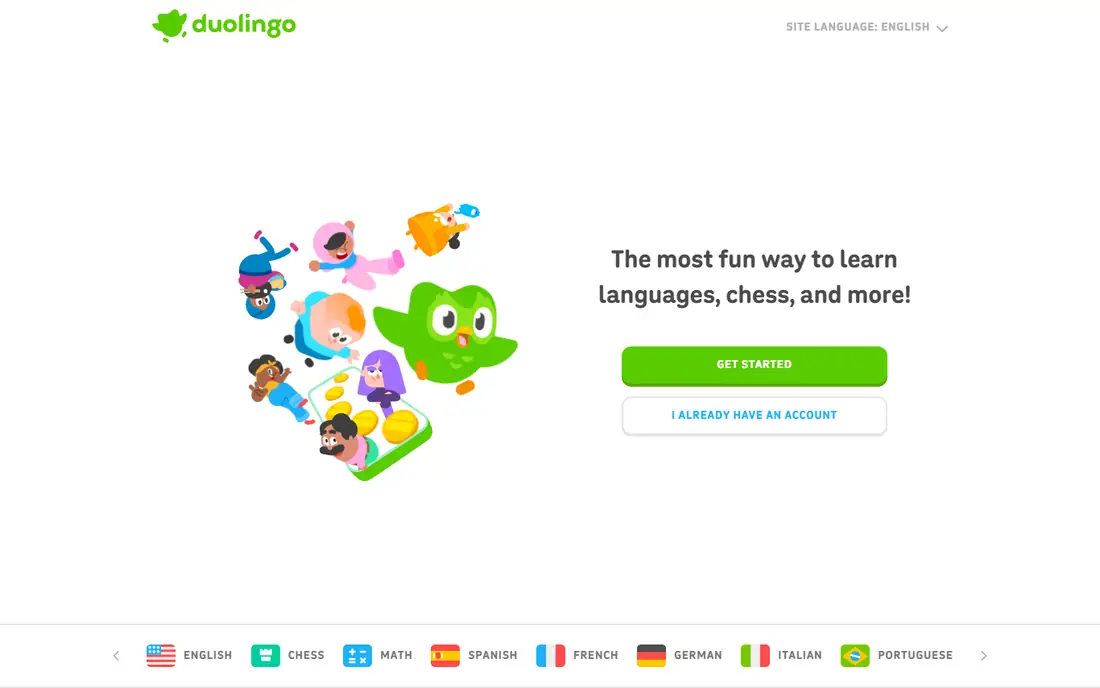
Duolingo turns language learning into a daily habit with lessons of three to five minutes, streaks, points, and short exercises in vocabulary, listening, and sentence building. The free tier covers the core course content, which is why it remains the most popular free language app, and the low time commitment makes it easy to fit into a commute or a lunch break. For beginners, that habit-forming design is often more valuable than a deeper course that gets opened once a month.
The free limits are real. Ads appear between lessons, and hearts limit mistakes before you must wait or watch ads, which can break flow on a bad day. Super removes ads and hearts and adds offline access, but the core teaching stays the same: strong for vocabulary and basic grammar, weaker for conversation and advanced fluency. Use Duolingo free for habit and vocabulary, and add speaking practice elsewhere when you are ready.
What we like- Free core lessons with ads
- Short gamified sessions
- Streaks and leagues support a daily habit
Watch out for- Free version uses hearts and ads
- Depth is limited for advanced learners
- Grammar explanations are light
Starting priceFree; Premium $15.99 per month
Free planYes
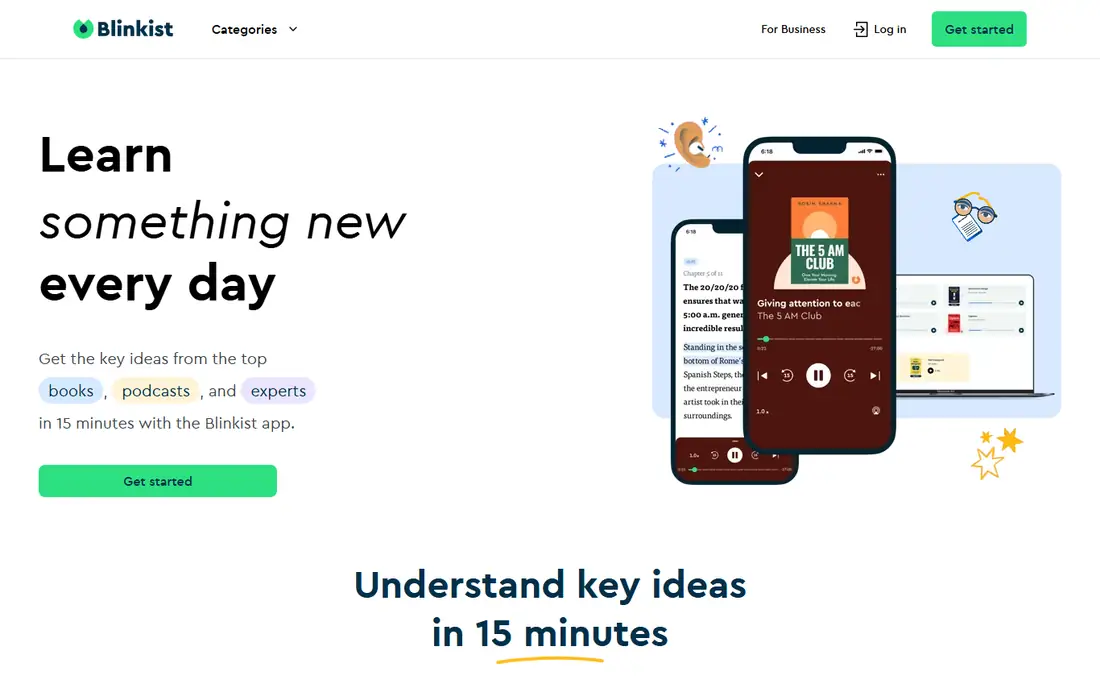
Blinkist condenses nonfiction books into summaries of about fifteen minutes, available as text and audio. That format suits commutes, workouts, and short breaks, and it helps you preview a book before buying the full version or recap ideas from a book you already read. The library covers business, psychology, productivity, and science, with new titles added regularly.
The free tier gives one summary a day, which is enough to test the format but not enough for heavy readers. Premium opens the full library and offline listening, at a price that only makes sense if you finish several summaries a week. Treat Blinkist as a preview and recap tool, not a replacement for books that deserve a full read, and use the free daily summary to judge whether the style suits you.
What we like- Fifteen-minute book summaries in text and audio
- Large nonfiction library
- Daily free summary on the free tier
Watch out for- Summaries replace depth, not the full book
- Free tier is limited to one summary a day
- Premium price is high for casual readers
Starting priceFree; Premium $12.99 per month
Free planYes
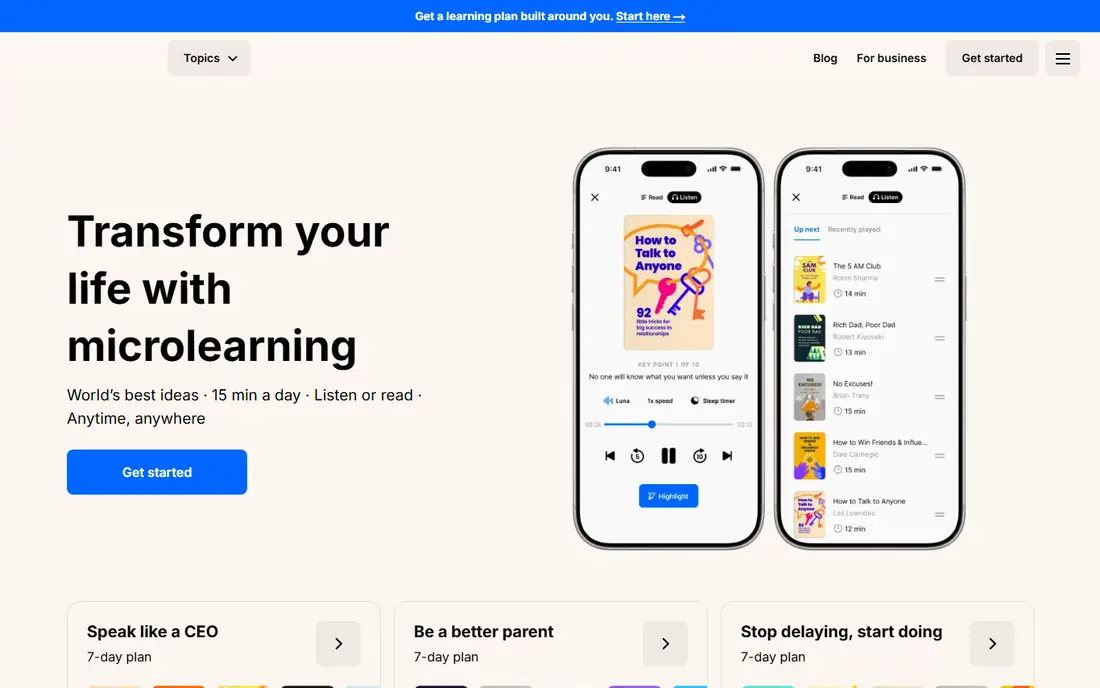
Headway offers book summaries with a stronger visual style, using infographics, key insights, and gamified streaks to make a short daily read feel rewarding. Lessons run five to fifteen minutes, and the app adds challenges and daily goals that suit readers who like a clear target. For business and self-development books, the visual format can make ideas easier to recall than a plain text summary.
The free tier is limited, with one free summary a day in many plans, so heavy readers will hit the paywall quickly. Premium pricing also varies by promotion and region, so check the current offer in the app before subscribing. Headway suits visual learners who want a quick daily summary habit, while readers who want deeper guides may prefer Blinkist or the full book itself.
What we like- Visual summaries and infographics
- Gamified streaks and challenges
- Short daily reads for busy schedules
Watch out for- Free content is limited
- Summaries are shorter than Blinkist on some titles
- Premium pricing varies by offer
Starting priceSee website
Free planYes
Brilliant teaches math, science, data, and computing through interactive problems you solve step by step, rather than lectures you watch passively. That hands-on style helps concepts stick, since you test an idea, get feedback, and adjust, instead of reading about it once. Lessons run about ten to fifteen minutes, and daily challenges give a short reason to return each day.
The free tier gives a limited daily preview, so serious learners will need a paid plan for full courses. Brilliant also covers STEM only, so it pairs well with Khan Academy for breadth or Blinkist for reading, rather than replacing them. Choose Brilliant if you learn best by solving problems and want short, structured STEM lessons that go beyond watching a video.
What we like- Interactive problem solving, not just videos
- Covers math, science, and computing
- Daily challenges build a habit
Watch out for- STEM only
- Free tier is limited to a daily preview
- Full access costs more than book summary apps
#6Quizlet
Best for: Flashcards and exam prep4.5/5 on
G2 (291 reviews, checked Oct 2026)
Visit quizlet.com
Starting priceFree; Plus $35.99 per year
Free planYes
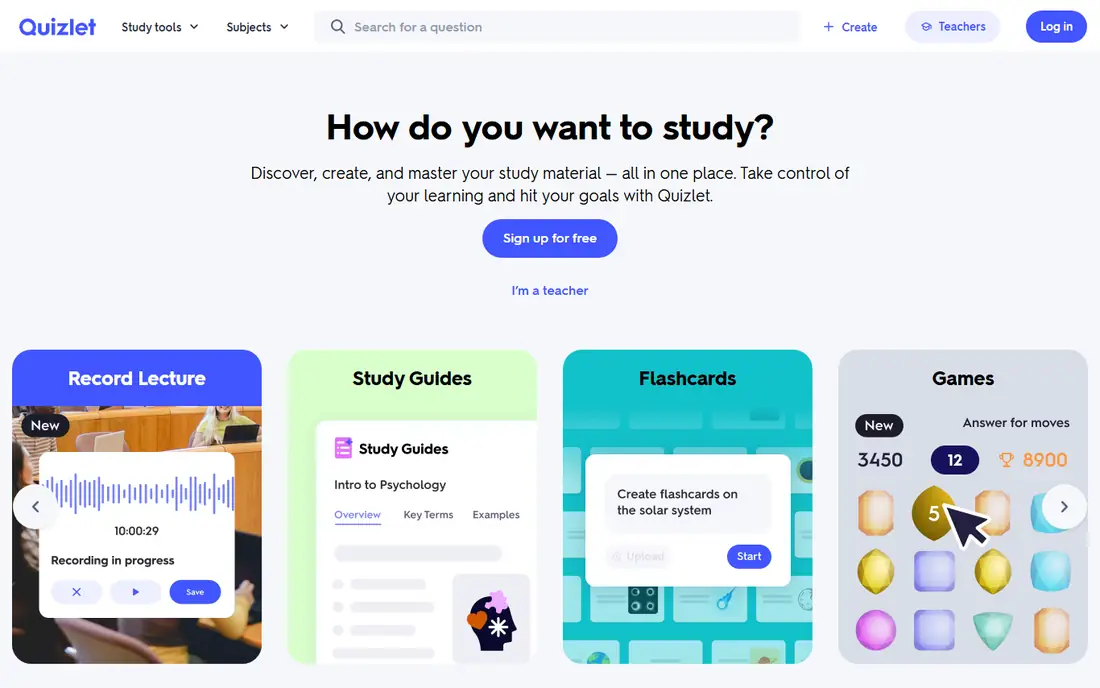
Quizlet is the strongest free tool for recall, which is the part of learning that short lessons often skip. You can build flashcards, use learn and test modes, and study sets made by other users for exams, vocabulary, and course topics. Spaced repetition schedules reviews at increasing intervals, which helps facts move from short-term memory into longer recall, and the free tier covers the core study modes.
The limits are about teaching versus testing. Quizlet helps you remember material you have already met, but it does not teach a new subject from scratch the way Khan Academy or Brilliant do. User-made sets also vary in accuracy, so check a set before trusting it for an exam. Use Quizlet as the recall layer on top of a teaching app, and pay for Plus only if you need offline access, ad-free study, or advanced learning paths.
What we like- Free flashcards and study sets
- Spaced repetition and test modes
- Large user-made library for exams
Watch out for- Quality of user-made sets varies
- Some features need Plus
- Best for recall, not first-time teaching
Starting priceFree; Premium available
Free planYes
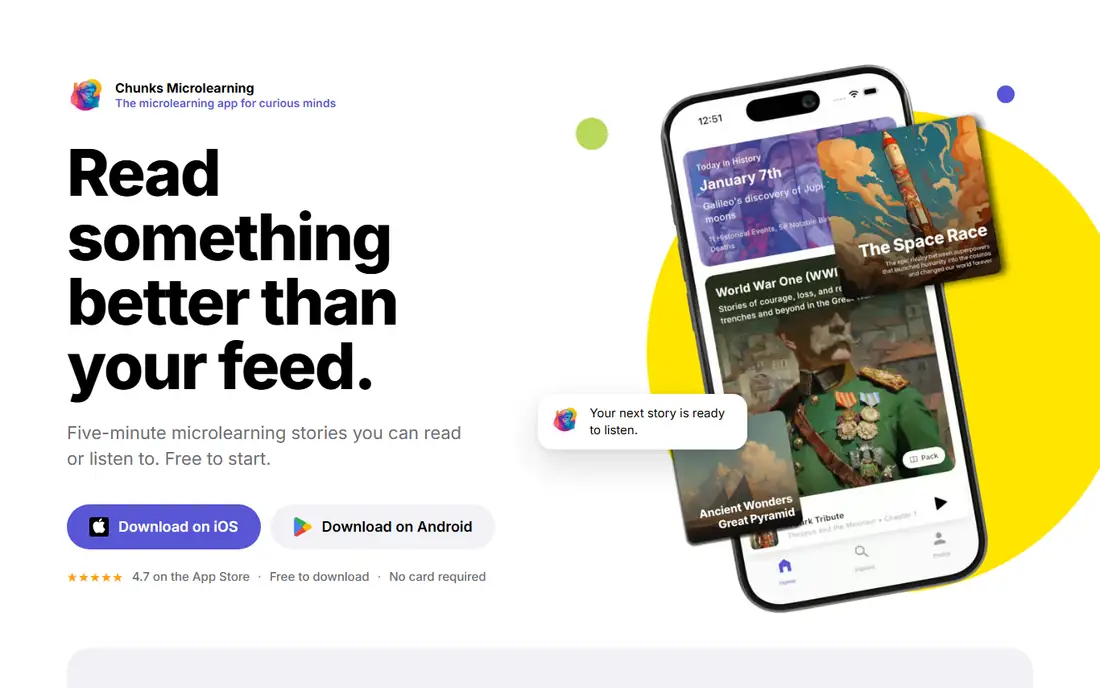
Chunks offers short, story-driven chapters on history, philosophy, literature, science, and art, with sessions of five to ten minutes. The narrative style suits readers who find textbook lessons dry, since each chunk reads like a short story with ideas woven in, rather than a list of facts. That approach makes it a good casual learning app for evenings or commutes, when a full course feels like too much.
The library is smaller than a book summary service, and the humanities focus means you will not find career skills or STEM problem sets here. The free tier lets you try rotating content before paying, which is the right way to judge it. Chunks suits curious readers who want a daily dose of humanities, paired with a teaching app for any subject they want to study in depth.
What we like- Story-driven chapters on history, philosophy, and science
- Five to ten minute sessions
- Free tier for trying the format
Watch out for- Smaller library than Blinkist
- Humanities focus means less STEM or career content
- Premium details vary
Starting priceFree; Pro varies
Free planYes
Deepstash turns ideas from books, articles, and podcasts into short cards you can read in one to three minutes and save for later. That format suits busy readers who want a steady stream of ideas without committing to a fifteen-minute summary or a full chapter. You can follow topics, build a personal idea library, and revisit saved cards when you need a reminder.
The trade is depth. A card gives you an idea, not a full argument, and it will not teach a skill step by step. Deepstash works best as a discovery and reminder tool, feeding you topics to explore further in books, courses, or longer articles. Use the free tier for daily reading, and consider Pro only if you want unlimited saves, offline access, or advanced features that your free use actually needs.
What we like- Short idea cards from books and articles
- Easy to save and revisit ideas
- Free core reading
Watch out for- Cards are summaries, not courses
- Depth is limited
- Pro pricing varies by region
How we chose
We compared microlearning apps using vendor pricing pages, free tier details, lesson length, and public reviews. Each app had to offer a real free tier or a fully free core library, short lessons that fit into a busy day, and content that teaches or reinforces a skill, not just entertainment. We favored apps that include recall features, such as quizzes, flashcards, or practice problems, and we noted where a free tier is limited to one item a day.
How to build a free learning habit that lasts
Start with one teaching app and one recall app, not five subscriptions. A common pairing is Khan Academy for structured lessons plus Quizlet for flashcards, or Duolingo for language habit plus a book summary app for reading. Two apps are easier to open daily than a folder of apps you never finish, and the recall layer is what turns a short lesson into lasting knowledge.
Set a small, fixed time rather than a vague goal. Ten minutes at the same time each day, such as after breakfast or on a commute, beats an hour on a single weekend day. Use streaks and reminders as a nudge, but do not let a broken streak end the habit. If you miss a day, restart the next day without trying to catch up on a backlog, since backlog pressure is a common reason people quit.
Finally, check the free tier before paying. Use the free version for at least a week, count how many lessons you actually finish, and note where the paywall blocks you. If the free tier covers your real use, keep it free. If you finish several lessons a week and the paywall blocks the next step, a monthly plan may be worth it, but cancel after a month if your use drops.
Frequently asked questions
What is the best completely free microlearning app?
Khan Academy is the strongest fully free option, with structured courses, practice, and quizzes at no cost. Duolingo and Quizlet also offer useful free tiers, but their free versions include ads or limits that Khan Academy does not.
Are free microlearning apps enough to learn a language?
Free apps such as Duolingo build vocabulary and basic grammar well, but they rarely lead to fluency alone. Add speaking practice, reading, and listening to real content as you progress, and treat the free app as the habit layer, not the whole course.
How long should a microlearning session be?
Five to fifteen minutes is a good target for most people, since it fits into a break and supports daily consistency. Longer sessions help for complex topics, but a short session you repeat daily usually beats a long session you do once a month.
Do book summary apps replace reading the full book?
No. Summaries give the main ideas and help you preview or recap a book, but they skip examples, arguments, and nuance. Use summaries to choose which books deserve a full read, and read the full book when the topic matters to you.
Can I use these apps for exam preparation?
Yes, with a clear split. Use Khan Academy or Brilliant to learn concepts, Quizlet for recall and test practice, and a summary app for quick revision. Check user-made study sets for accuracy before relying on them for an exam.
Should I pay for a microlearning app?
Pay only if you use the paid features regularly. Test the free tier for a week, count finished lessons, and check what the paywall blocks. If the free tier meets your needs, keep it free and spend the money on a book or course instead.
Sources we checked (8)
- https://www.khanacademy.org
- https://www.duolingo.com
- https://www.blinkist.com
- https://www.makeheadway.com
- https://www.brilliant.org
- https://www.quizlet.com
- https://www.chunks.app
- https://www.deepstash.com
Is your product missing or out of date?
We review this list regularly. Vendors can request a listing, send updated pricing or ask about featured placement.

Shihab Mia · Founder, Rankite
Shihab has 5+ years in B2B and SaaS SEO. He writes Rankite's software buying guides from pricing pages, documentation and public user reviews. More about Shihab.