How we make this list: we compare pricing pages, product documentation and public user reviews. Rankite is independent; if a vendor ever pays for a featured spot, that listing is clearly labeled Partner.
Starting priceSee website
Free planSee website
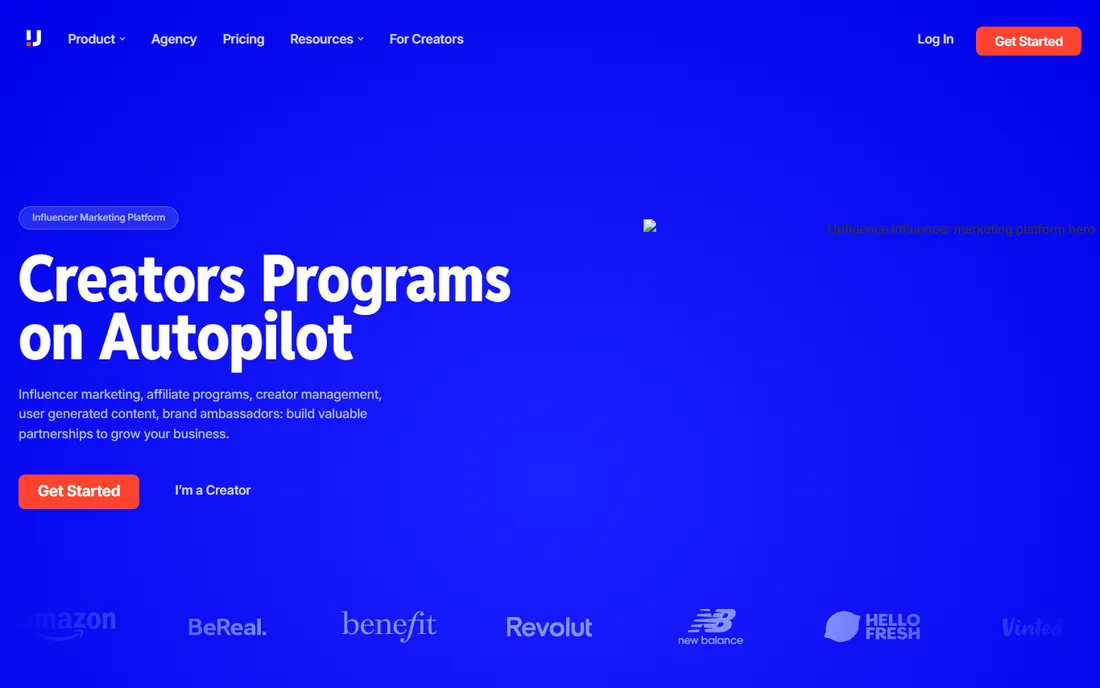
Upfluence ties every creator to revenue instead of vanity metrics. It connects to your Shopify, WooCommerce, or Amazon store, matches creators to your actual product catalog, and attributes clicks, conversions, and ROI to each creator. Payments run through the platform with compliance handled, which matters once you are paying dozens of creators across countries.
The platform works on custom quotes rather than public pricing, which tells you who it is for: brands with real budgets. Upfluence is strongest where the goal is measurable sales from creators. If you want awareness content without strict revenue tracking, several cheaper tools on this list will do.
What we like- Connects directly to Shopify, WooCommerce, and Amazon for per-creator sales tracking
- Creator payments with built-in compliance and tax handling
- AI co-pilot recommends creators and drafts outreach
Watch out for- No public pricing, plans are custom quotes
- Built around commerce, less useful for awareness-only campaigns
- Smaller teams may not need the full analytics depth
Starting priceSee website
Free planSee website
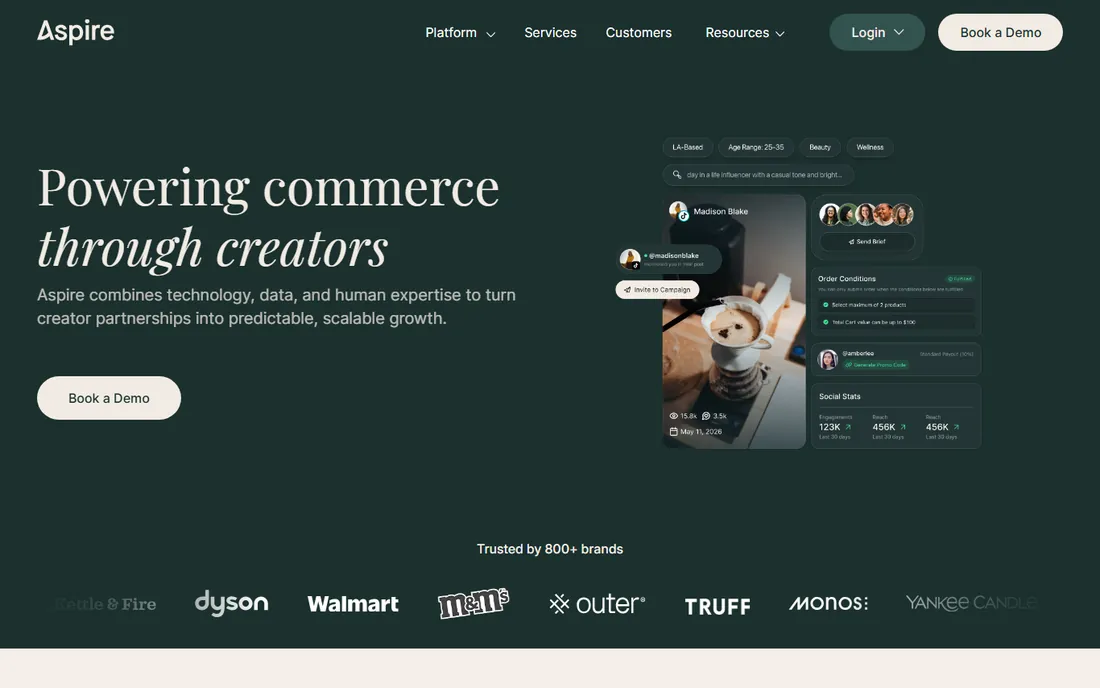
Aspire runs the entire creator program in one workspace: AI-assisted discovery, campaign management, content approval, product seeding through Shopify, affiliate tracking, and payments. It also handles the step most platforms ignore, turning top creator content into paid ads and tracking ROAS on them.
Aspire is quote-based with no public entry tier, so it sits in the premium bracket. For ecommerce teams running hundreds of creators and needing product fulfillment plus attribution in one system, that can be worth it. Smaller brands should look at the free-to-start options lower on this list first.
What we like- Full lifecycle in one system from discovery to payments and reporting
- Shopify integration ships products to creators and attributes sales
- Affiliate links, promo codes, and paid-media boosting built in
Watch out for- Quote-based pricing with no free plan or public tiers
- The breadth of features takes real onboarding
- Aimed at mid-market and up, not solo founders

#3
GRIN
Best for: Brands that want an AI-run creator CRM
Visit grin.co
Starting price$200/month (paid plans)
Free planYes
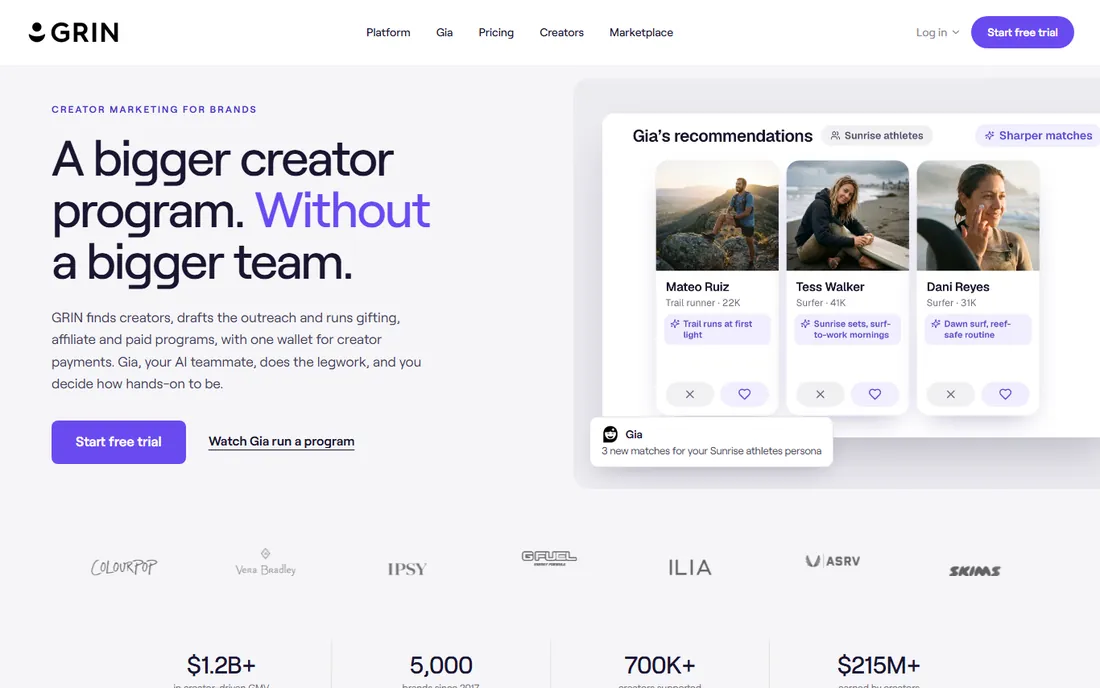
GRIN rebuilt its platform around Gia, an AI agent that runs your creator program: finding creators, sending outreach, and managing workflows while you approve the moments that matter. Underneath is a real creator CRM with 700,000-plus opted-in creators and performance data from more than a decade of programs. Start free with no credit card, and simple affiliate programs with unlimited creators, links, and codes cost nothing at all.
Paid plans start at $200 per month, billed month to month with no lock-in, and use credits for what the AI does rather than seat or creator counts. GRIN suits brands that want the program mostly run for them. Teams that prefer to control every step manually will find the AI layer gets in the way.
What we like- Start free with no credit card
- Simple affiliate programs cost nothing with no commissions
- AI agent Gia handles discovery, outreach, and program operations
Watch out for- The AI-heavy approach suits hands-off teams, not brands wanting full control
- Pricing is credit-based, so costs scale with AI usage
- Marketplace is strongest in consumer verticals
Starting priceSee website
Free planSee website
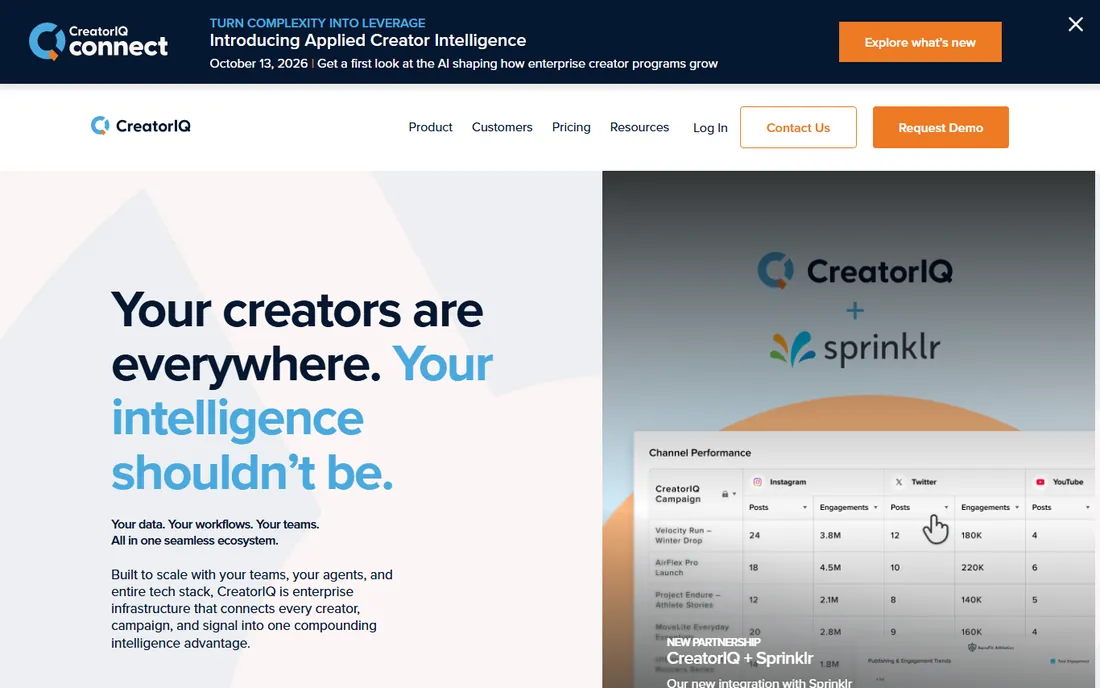
CreatorIQ is infrastructure for enterprises that run creator programs across multiple brands, markets, and teams. Its strengths are the things smaller tools skip: brand-safety vetting of creator content at scale, governance controls, measurement defensibility, and API access that feeds creator data into the rest of the enterprise stack.
There is no public pricing and no self-serve path, which is honest positioning: this is not for a brand running its first ten creators. If compliance, measurement rigor, and multi-team coordination matter, CreatorIQ is the standard. Everyone else should pick something cheaper and simpler.
What we like- Industry-leading brand safety vetting at scale
- Governance, compliance, and API extensibility for complex teams
- Trusted by large multi-brand organizations
Watch out for- Enterprise pricing with no public tiers
- Overkill for small brands or one-off campaigns
- Implementation is a project, not a signup
Starting priceSee website
Free planSee website
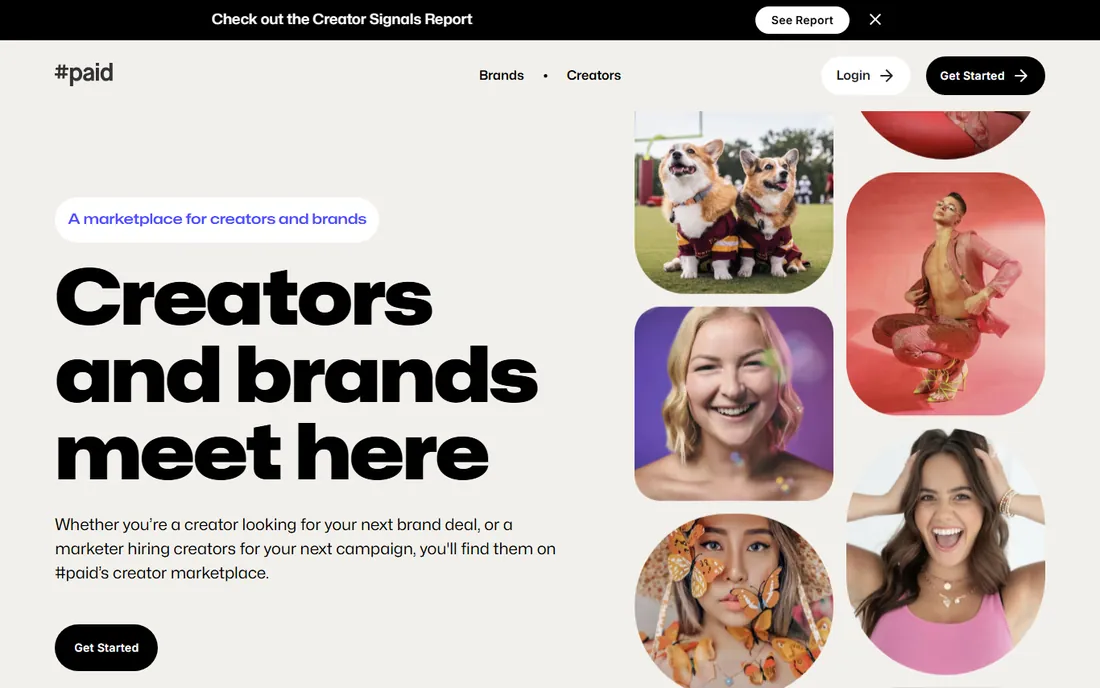
paid is a creator marketplace with a human layer. Beyond matching brands and creators, its team collaborates on creative strategy backed by research, first-party data, and industry benchmarks, then measures what content elements actually perform so each campaign improves on the last.
Pricing is not public, which puts it in the custom-quote category. #paid fits brands that want matched creators plus creative guidance rather than a pure self-serve tool. If you want to browse and hire creators yourself in minutes, the marketplace tools further down this list are faster.
What we like- Matching engine pairs brands with creators based on fit
- Dedicated team helps build creative strategy with research and benchmarks
- Content repurposing across channels supported
Watch out for- No public pricing
- Strategy services suggest mid-market budgets and up
- Less self-serve than pure marketplaces
Starting priceFree (10% fee per order; paid plans from $249/month)
Free planYes
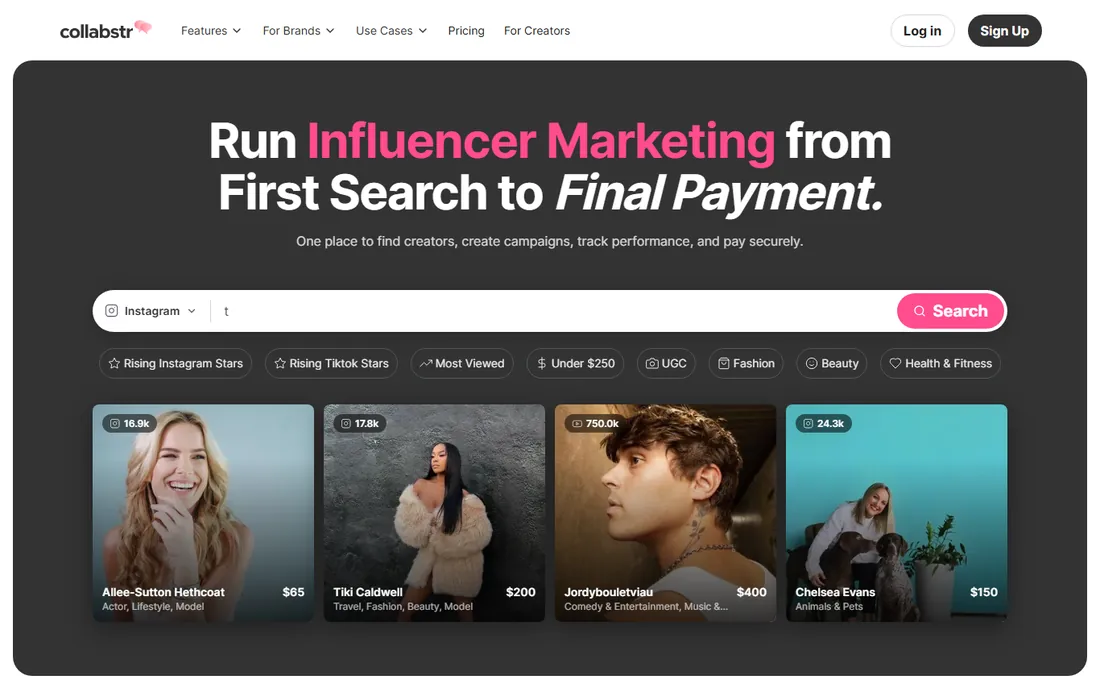
Collabstr is the most accessible entry point on this list. Brands search a large marketplace of vetted creators across Instagram, TikTok, and YouTube, see each creator's pricing upfront, and book directly. Funds stay in escrow until you approve the content, and payouts with tax forms to 150 countries are handled automatically.
The model is free to start: no subscription, no minimum spend, with a 10 percent hiring fee on each order. Paid plans start at $249 per month for advanced filters, analytics, and reduced fees. Collabstr is ideal for first campaigns and steady UGC sourcing. It is not built for complex long-term ambassador programs, which is exactly the trade it offers for the price.
What we like- Free to browse, post campaigns, and hire with no subscription
- Upfront creator pricing with payments held in escrow
- Paid plans add analytics and reduced fees
Watch out for- The 10% marketplace fee applies to every order on the free plan
- Advanced campaign management is limited compared to full platforms
- You handle product shipping yourself
Starting priceFree
Free planYes
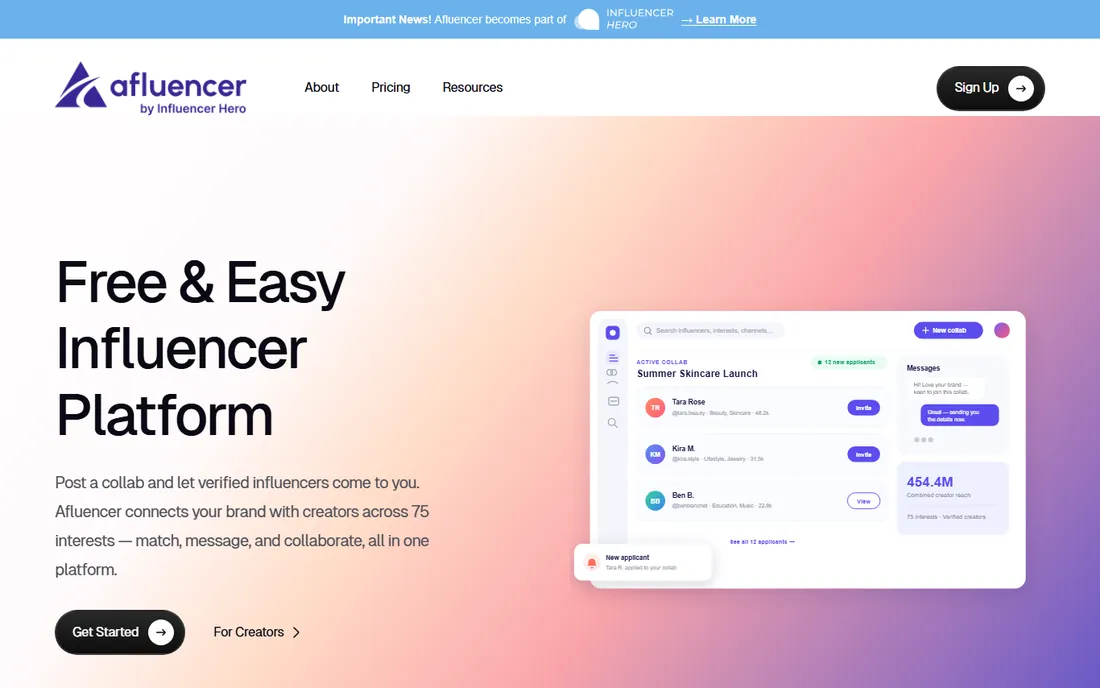
Afluencer flips the usual workflow: you post a collab describing your ideal creator, and verified creators apply to work with you. The free plan covers posting unlimited collabs and searching the directory with no credit card and no commitment, which makes it one of the cheapest real platforms in the category.
Every influencer is a real verified user rather than scraped data, and you manage matches, messages, and collaborations from one dashboard. Afluencer suits small brands that want inbound applications without paying for a platform. Brands needing deep analytics or automated payments will need something bigger.
What we like- Free plan includes posting unlimited collabs and searching the creator directory, no credit card
- Verified creators, no scraped data
- Inbound model means creators apply to you
Watch out for- Fewer full-CRM features than the enterprise tools
- Relies on creators applying, which favors attractive offers
- Payments and tracking are lighter than Upfluence or Aspire
Starting priceSee website
Free planYes
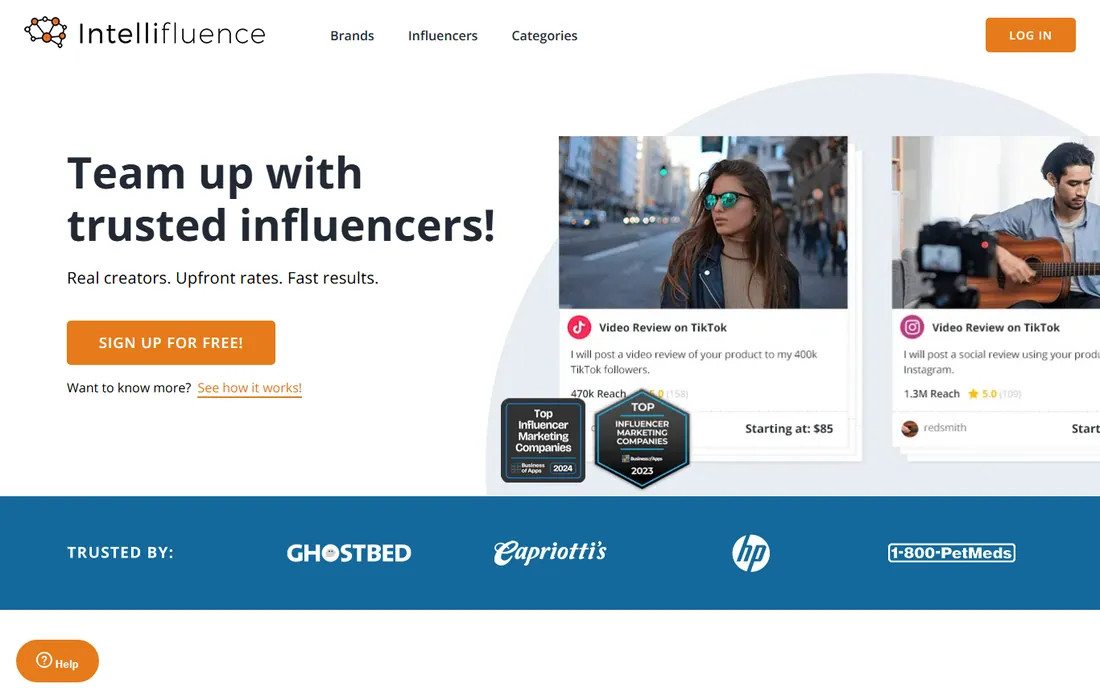
Intellifluence has been running the warm-contact model for years: brands pitch influencers directly through the platform, or influencers apply to brand offers in the marketplace. It supports Instagram, TikTok, YouTube, X, Pinterest, LinkedIn, Twitch, and more, and the vendor confirms a free plan for brands plus subscription plans for different budgets.
The vendor's own pricing page holds the exact tiers, so check there for current numbers. Intellifluence suits brands that want an affordable, straightforward way to reach real micro and nano creators without enterprise budgets. Expect solid reach into the long tail, not celebrity access.
What we like- Free plan for brands to explore the platform
- Large network with warm-contact model across major social networks
- No long-term contracts on plans
Watch out for- Public pricing is not on the vendor's own site
- The interface feels dated next to newer platforms
- Network skews toward micro and nano creators, not celebrities
Starting price$69/month (billed annually)
Free planYes
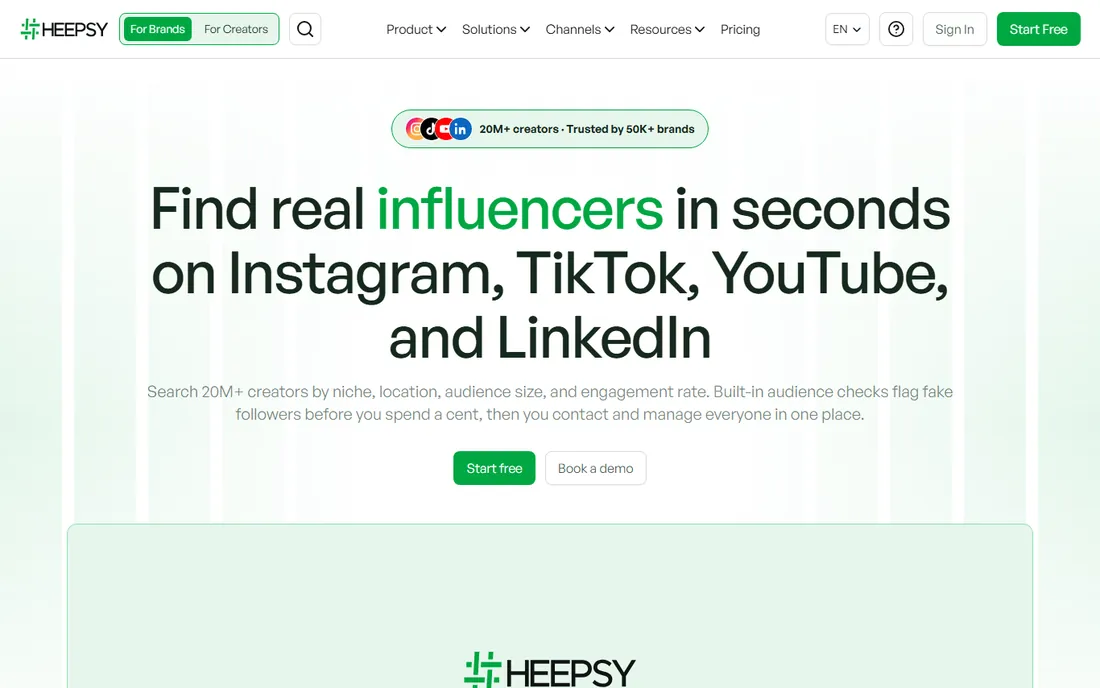
Heepsy is a discovery-first platform built for small and mid-size teams. Search 20 million-plus creators by niche, location, audience size, and engagement, then open advanced profiles to see genuine versus suspicious followers, unusual growth, and full demographics. Campaigns can be managed end to end in Projects, with outreach, payments, and auto-generated reports.
You can start free with no demo required, and paid plans start at $69 per month billed annually with no lock-in. Heepsy suits teams whose biggest fear is paying a creator with fake followers. If you need deep ecommerce attribution or affiliate infrastructure, look at Upfluence or Aspire instead.
What we like- Free plan to start with no demo required
- 20 million-plus creators across Instagram, TikTok, YouTube, and LinkedIn
- Audience authenticity checks flag fake followers before you spend
Watch out for- Monthly billing costs more than the $69 annual-billed starting price
- Advanced workflow features are thinner than Aspire or Upfluence
- Discovery is the core strength, campaign depth is lighter

#10
Modash
Best for: Discovery and audience analytics for growth brands
Visit modash.io
Starting priceSee website
Free planFree trial (14 days)
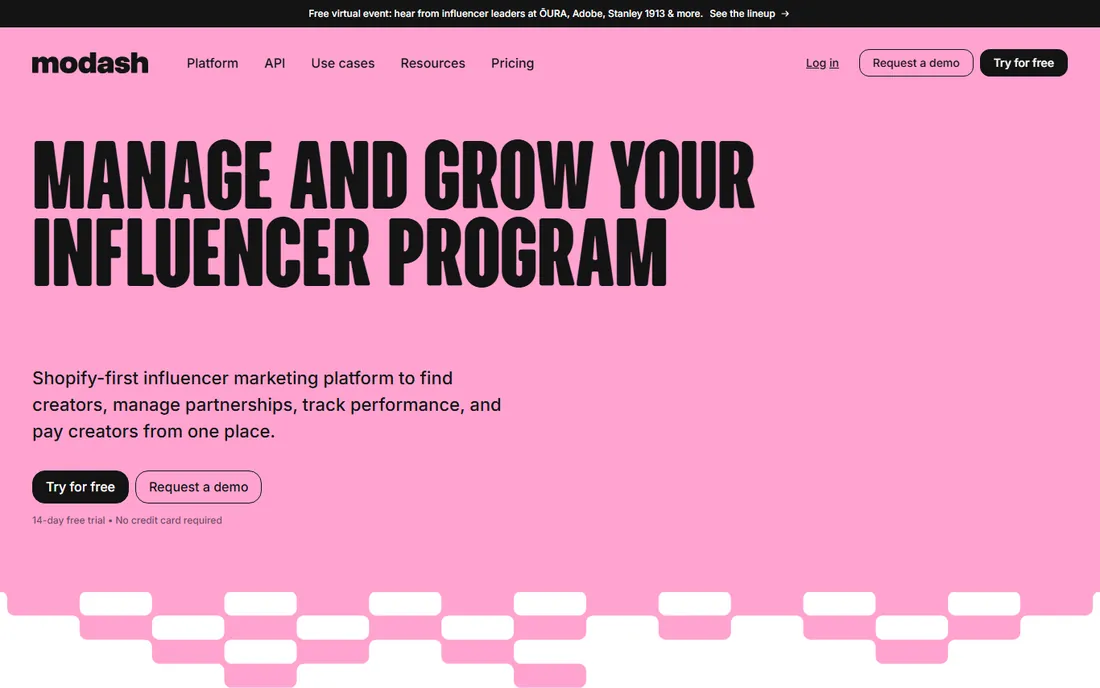
Modash takes the long-tail approach: instead of a marketplace creators join, it indexes public creator data so brands can find niche creators with engaged small audiences without waiting for opt-ins. It is particularly strong for Shopify-adjacent DTC brands that prioritize growth.
The vendor's own channels confirm a 14-day free trial; check the pricing page for current plans. Modash fits brands that care most about discovery and audience data. Teams needing full campaign management with payments and contracts will want one of the end-to-end platforms above.
What we like- Discovery database built on public data with no creator sign-in required
- Strong audience analytics and monitoring
- 14-day free trial
Watch out for- Pricing details are limited publicly
- Homepage access was unavailable during our check
- Positioned for growth brands rather than enterprise compliance teams
How to pick the right one without the sales call
Start by naming the job. If the goal is sales attribution, you need a platform that connects to your store, which rules out pure discovery tools. If the goal is content, a marketplace with escrow payments like Collabstr gets you moving today. If the goal is scale with governance, you are in CreatorIQ or Aspire territory whether you like it or not.
Then check the two things that actually differ between vendors. First, where do the creators come from: opted-in marketplaces, scraped public data, or your own customer list. Each has trade-offs in reach, quality, and compliance. Second, what happens after matching: discovery-only tools leave you to handle contracts, payments, and tracking yourself, while full platforms absorb that work.
Finally, start with the cheapest plan that does the job. A free marketplace account that runs your first ten campaigns teaches you more about your program's needs than any demo. Upgrade when you hit a real limit, not when a sales call tells you to.
Expect two cost structures. Marketplaces charge per order: Collabstr's free plan costs nothing until you hire, with a 10 percent fee per booking, and GRIN's simple affiliate programs cost nothing at all. Afluencer's free plan covers unlimited collab posting. These are genuine free starts, not demos with expiration dates.
Subscriptions start at $69 per month billed annually for Heepsy and $200 per month for GRIN's AI-assisted plans. Everything else on this list is quote-based: Upfluence, Aspire, CreatorIQ, #paid, and Intellifluence set prices around program size. For those, budget for an annual contract and negotiate from what comparable platforms publish.
The hidden cost is your team's time. A platform with discovery but no payment handling shifts the admin work back to you, which costs more than a subscription at scale. Price the workflow, not just the software.
How we chose
We focused on platforms built for micro and nano creators rather than celebrity booking tools: marketplaces where small creators apply or get discovered, plus full platforms with real micro-influencer workflows. We opened each vendor's homepage to confirm the current brand and URL, and checked each vendor's own pricing page or official pricing statements for starting prices and free plans. Where a homepage was unavailable, we confirmed the URL through search results and flagged it in our report.
Frequently asked questions
What is a micro-influencer platform?
Software that helps brands find creators with smaller audiences, usually between 1,000 and 100,000 followers, run campaigns with them, track results, and pay them. Micro-influencers typically have higher engagement rates and lower fees than celebrities, which makes them practical for brands that want many authentic partnerships instead of one big one.
How much does a micro-influencer platform cost?
Anywhere from free to custom enterprise quotes. Marketplaces like Collabstr and Afluencer start free and charge per order or offer free collab posting. Mid-tier tools like Heepsy and GRIN start at $69 and $200 per month. Upfluence, Aspire, CreatorIQ, #paid, and Intellifluence are quote-based, with pricing set around program size.
Do I need to pay creators on top of the platform fee?
Yes. The platform fee covers software; creator fees are separate. Creators set their own rates, typically per post or per campaign, and many also accept product gifting. Micro-influencer rates are often modest: Collabstr's own data puts 80 percent of influencer engagements under $300.
Which platform is best for finding fake followers?
Heepsy builds audience authenticity checks into creator profiles, showing genuine versus suspicious followers and unusual growth patterns. Modash's audience analytics serve a similar purpose. Both let you vet an audience before spending anything, which is the single most valuable feature for avoiding wasted budget.
Should I use a marketplace or a full platform?
Use a marketplace like Collabstr or Afluencer when you want to hire creators quickly with minimal commitment. Use a full platform like Aspire, Upfluence, or GRIN when you run ongoing programs and want discovery, contracts, payments, and reporting in one system. Many brands start with a marketplace and graduate to a platform as volume grows.
Sources we checked (10)
- https://upfluence.com/
- https://www.aspire.io
- https://grin.co/
- https://www.creatoriq.com
- https://hashtagpaid.com/
- https://collabstr.com/
- https://afluencer.com/
- https://intellifluence.com/
- https://www.heepsy.com
- https://www.modash.io/
Is your product missing or out of date?
We review this list regularly. Vendors can request a listing, send updated pricing or ask about featured placement.

Shihab Mia · Founder, Rankite
Shihab has spent more than a decade helping SaaS and e-commerce brands grow through search. He writes Rankite's software buying guides from pricing pages, documentation and public user reviews. More about Shihab.