How we make this list: we compare pricing pages, product documentation and public user reviews. Rankite is independent; if a vendor ever pays for a featured spot, that listing is clearly labeled Partner.
Key takeaways
- Five of the ten platforms publish starting prices; Hunter ($34/mo annual), Snov.io ($39/mo), Clay ($167/mo), and Seamless.AI (free for 50 credits) are the most transparent.
- Credit systems dominate this category, and the fine print matters: Apollo, Hunter, and Clay credits expire each billing cycle, while Snov.io rolls unused credits over only on its Ultra plan.
- Data accuracy guarantees separate the confident from the careful: UpLead promises 95%+ accuracy, Seamless.AI refunds credits for invalid emails automatically.
- ZoomInfo Lite, Lusha, Hunter, Apollo, Snov.io, Seamless.AI, and Kaspr all offer genuinely free plans, so you can test data quality before spending.
Quick comparison
| Tool | Best for | Starting price | Free plan |
|---|
 Apollo.io Apollo.io | all-in-one prospecting plus outreach | See website | Yes |
 Hunter.io Hunter.io | finding and verifying emails | $34/mo (Starter, billed annually) | Yes |
 Snov.io Snov.io | email and LinkedIn outreach stack | $39/mo (Starter) | Yes |
 Clay Clay | waterfall enrichment across providers | $167/mo (Launch) | Yes |
 ZoomInfo ZoomInfo | enterprise-grade data with intent | See website | Yes |
 Lusha Lusha | phone numbers and direct dials | See website | Yes |
 UpLead UpLead | verified data with accuracy guarantee | See website | No |
 RocketReach RocketReach | large database, simple lookup | See website | Yes |
 Seamless.AI Seamless.AI | real-time data search with credit-back | See website | Yes |
 Kaspr Kaspr | LinkedIn prospecting for Europe | See website | Yes |
Is your product missing or out of date?
We review this list regularly. Vendors can request a listing, send updated pricing or ask about featured placement.
The best lead gen software
Nobody buys lead generation software for the database. They buy it because their SDRs are spending mornings copy-pasting from LinkedIn instead of booking meetings. The ten platforms below all solve that problem, but they charge for it in very different ways, and the credit math is where buyers get burned. Here is the honest breakdown.
Starting priceSee website
Free planYes
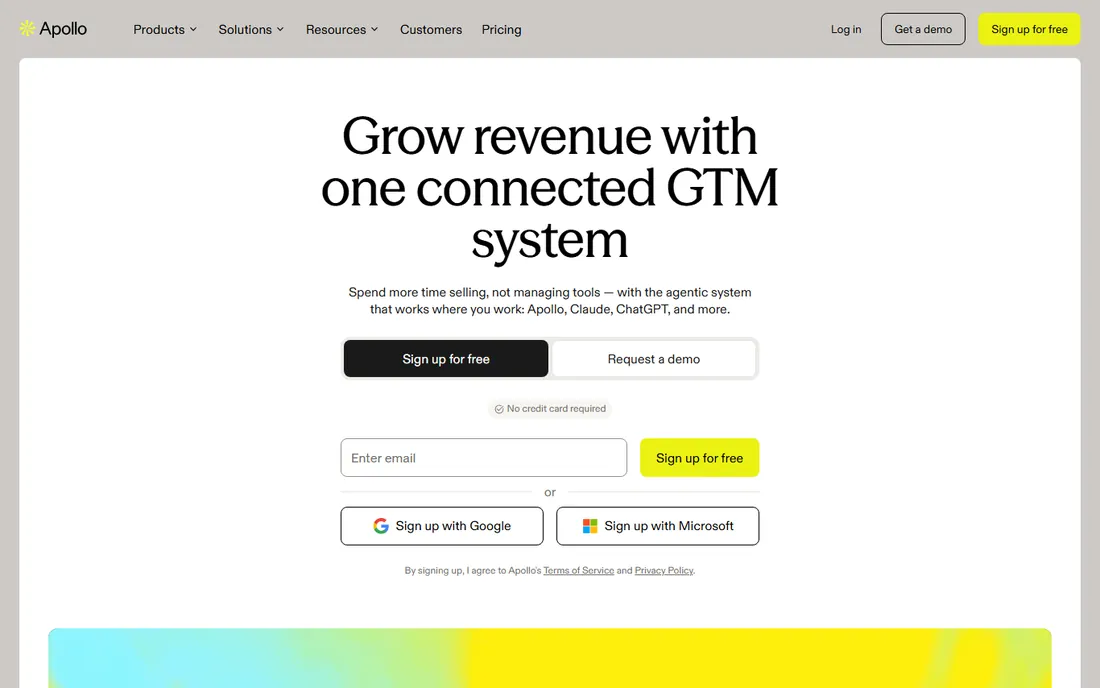
Apollo wants to be the whole outbound stack: a contact database of 240M+ contacts and 30M+ accounts, email sequencing, a dialer, and pipeline tools in one subscription. The free Starter plan stays free with no time limit, which makes it the easiest serious tool to evaluate. Paid tiers run Basic, Professional, and Custom, and every seat on an account sits on the same plan.
The credit system is the part to understand. Credits are the currency for emails, phone numbers, email warmup, domains and mailboxes, and AI-researched data. They are pooled across the whole team and granted upfront each cycle, and unused credits expire without rollover. Admins can set per-user caps to stop one rep burning the pool.
The catch is transparency. The vendor's pricing page describes plans and credit mechanics but does not show dollar figures in the plan cards, so you will talk to sales. Apollo data also may not be resold or used to power external products under standard terms. For pure data-and-outreach teams, it is the default shortlist pick.
What we like- Free Starter plan with no time limit
- 240M+ contacts with sequencing built in
- Credits pooled across the team
Watch out for- No public starting price on the pricing page
- Unused credits expire each cycle
Starting price$34/mo (Starter, billed annually)
Free planYes
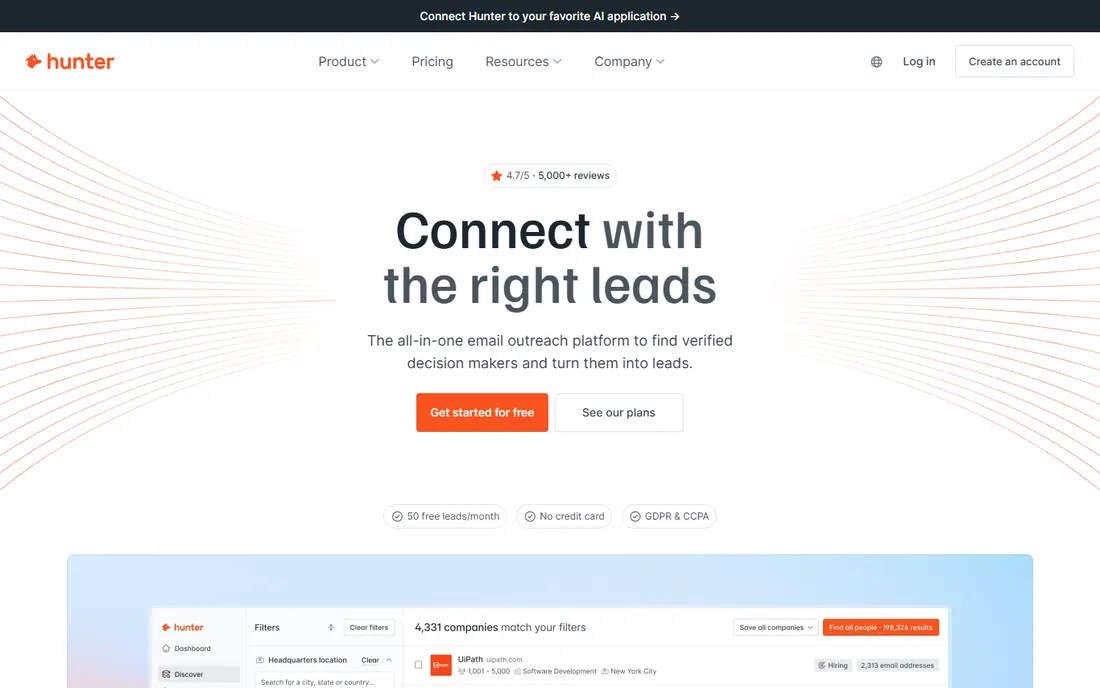
Hunter built its name on one job: find someone's work email and prove it is real. Domain Search, Email Finder, and Email Verifier cover that, and the pricing is refreshingly public. Starter is $49 a month, or $34 a month billed annually, for 2,000 credits. Growth is $149 ($104 annual) for 10,000 credits, and Scale is $299 ($209 annual) for 25,000 credits. The free plan gives 50 credits a month, 500 recipients per sequence, and one connected email account.
The credit rules are buyer-friendly. One credit buys one email found, half a credit buys one verification, and nothing is charged when an email cannot be found or verified. Unlimited team members can share one plan's credit pool at no extra cost, and subscriptions can be taken for a single month and cancelled.
The catch is scope. Hunter is an email tool that grew into outreach (Sequences, Inbox Protection, managed email accounts) rather than a full contact database with deep phone coverage. If your motion is phone-first, pair it with something like Lusha or RocketReach.
What we like- Free plan with 50 credits monthly
- Unlimited users on every plan
- Failed searches and verifications cost nothing
Watch out for- Phone data is not the strength
- Credits do not roll over
#3
Snov.io
Best for: email and LinkedIn outreach stack
Visit snov.io
Starting price$39/mo (Starter)
Free planYes
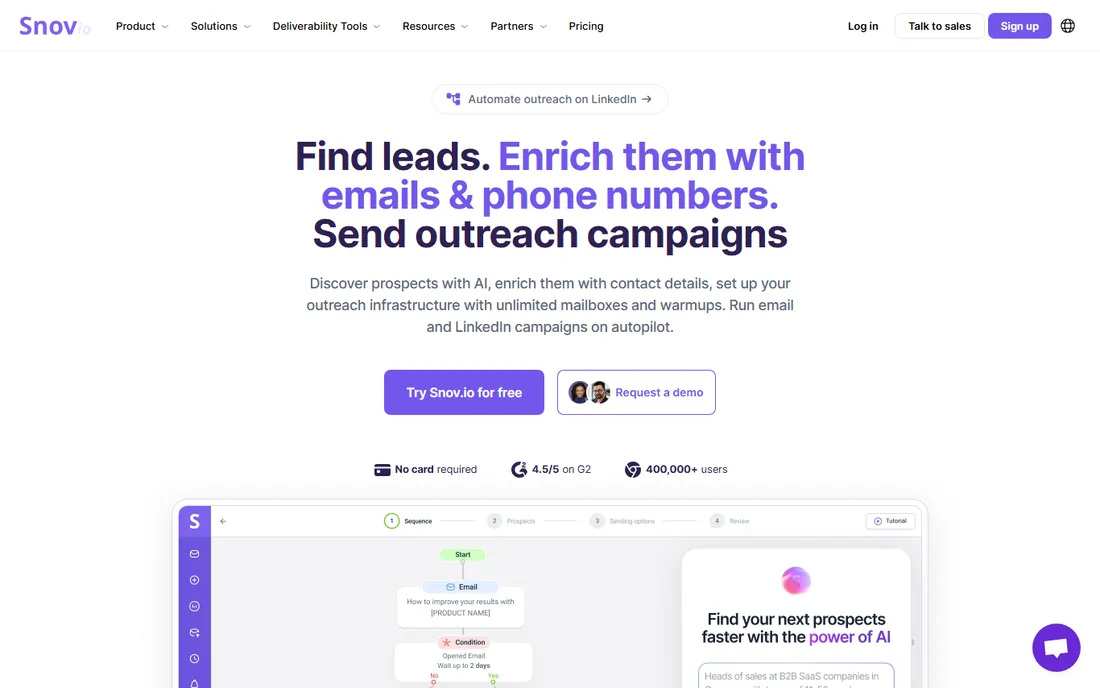
Snov.io replaces the classic four-tool stack: email finder, verifier, drip campaigns, LinkedIn automation, warm-up, and a built-in CRM. Starter is $39 a month with 1,000 credits, 5,000 recipients, 3 email warm-ups, and unlimited monthly emails. Pro is $99 a month with 5,000 credits, 25,000 recipients, and unlimited warm-ups. Annual billing saves 25%, and every plan includes unlimited team seats.
Two details matter for buyers. First, LinkedIn automation slots are a $69-per-month add-on per slot, not included in the plan price, so multichannel outreach costs more than the headline number. Second, credits are spent on prospect search, email search, and verification at one credit each, while recipients are counted only on first contact, with follow-ups free in the same billing period.
The catch is complexity. Snov.io does so much that new teams underuse it, and the learning curve is real. But for a small team that wants one subscription instead of five, the math is hard to beat.
What we like- Full stack from finder to CRM in one tool
- Unlimited team seats and unlimited emails
- 25% discount on annual billing
Watch out for- LinkedIn automation costs $69 per slot extra
- Lower plans limit warm-ups and enrichment tokens
Starting price$167/mo (Launch)
Free planYes
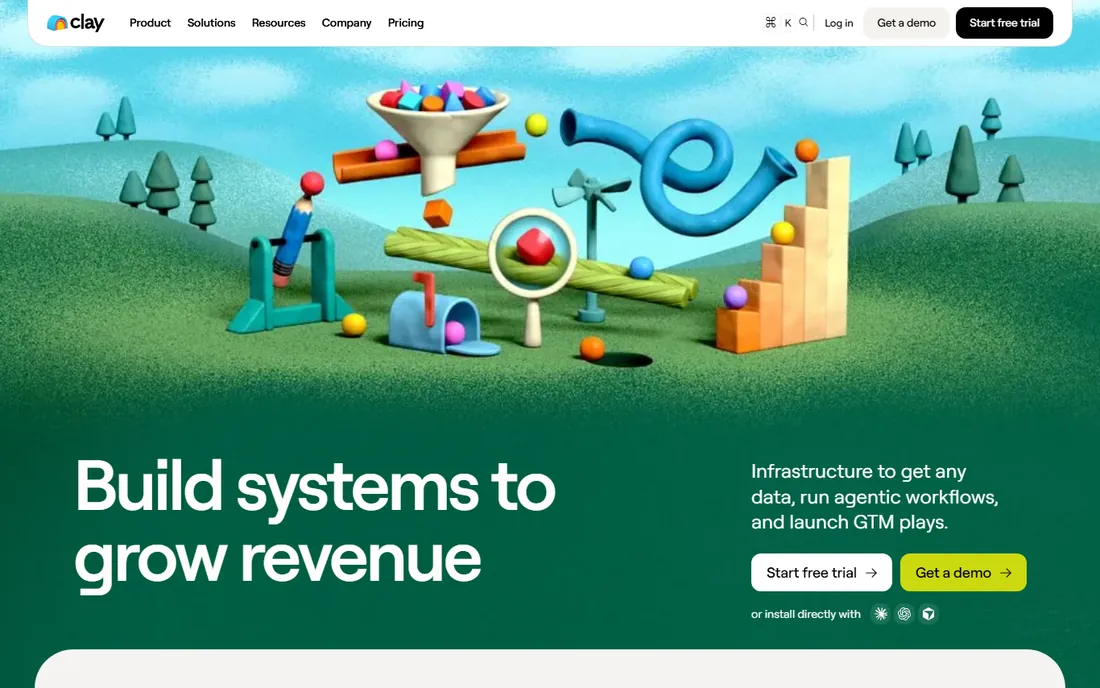
Clay is not a database. It is a spreadsheet-style workspace where each column can call one of 200+ data and AI vendors, try them in the order you set, and keep the first hit. That waterfall approach is why enrichment match rates beat single-source tools. Launch is $167 a month with 15,000 actions and 3,000 data credits; Growth is $446 a month with 40,000 actions and 6,000 data credits. The free plan includes 500 actions and 100 data credits a month, unlimited seats, and up to 200 rows per table.
The pricing logic is the fairest in the category: an enrichment that returns nothing costs neither credits nor actions, and you can bring your own API keys to skip data credits entirely. Claygent, the built-in AI agent, researches custom data points the databases do not sell.
The catch is the learning curve and the cost modeling. Actions and data credits are two separate currencies, and a team running big waterfalls needs to watch both dashboards. This is a power tool for teams with someone who enjoys building systems, not a plug-and-play list source.
What we like- 200+ data vendors in one marketplace
- Unlimited seats on every plan
- You pay nothing when an enrichment finds nothing
Watch out for- Usage-based pricing takes effort to model
- Free plan caps tables at 200 rows
Starting priceSee website
Free planYes
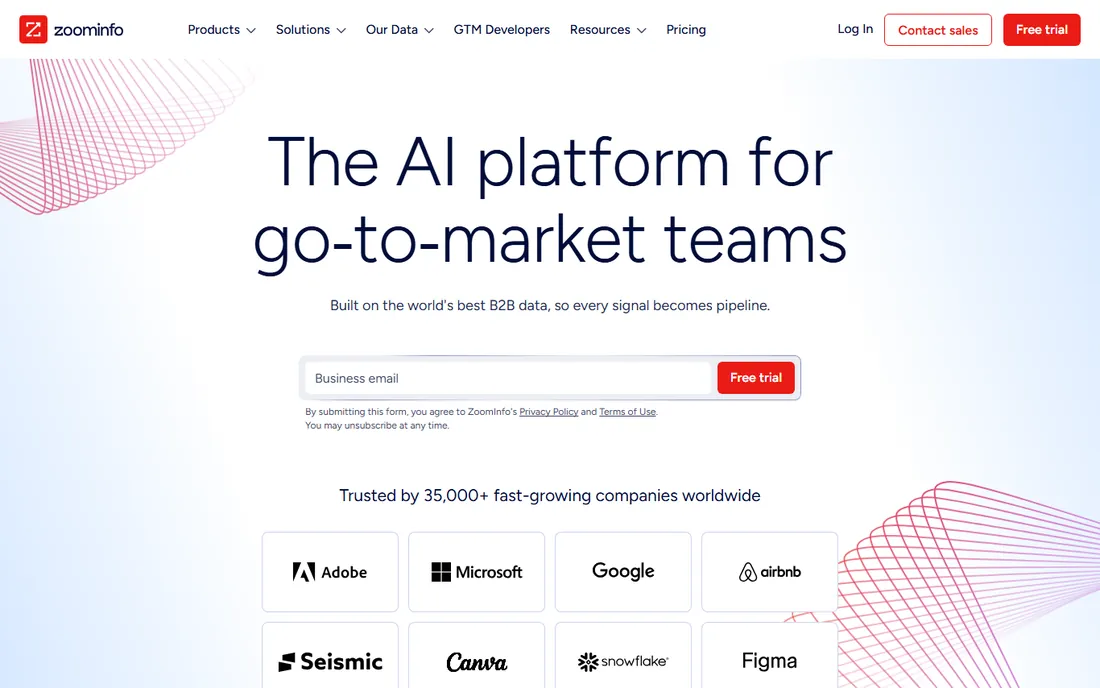
ZoomInfo is the incumbent: 500M+ contacts, 100M+ companies, intent data, org charts, and AI agents, used by more than half of the Fortune 500. The pricing model changed in a buyer-friendly direction: ZoomInfo Lite is a permanent free plan with no credit card required, and paid plans run on consumption credits rather than fixed seat tiers, so cost tracks usage instead of headcount. A free trial of the full platform is available.
The data operation is serious: public web sources, filings, job postings, a contributory network, AI deduplication, and 300+ human researchers, processing 1.5B+ data points daily. Compliance certifications include ISO 27001, ISO 27701, SOC 2 Type II, and GDPR and CCPA validations, and the vendor publishes how it sources data.
The catch is the quote wall. Beyond Lite, pricing goes through sales, and the platform's breadth means small teams pay for enterprise machinery they will never use. Start with Lite, measure match rates on your ICP, and only then take the sales call.
What we like- ZoomInfo Lite is a permanent free plan
- Consumption pricing with no seat tiers
- 500M+ contacts with intent signals
Watch out for- Paid pricing is quote-only
- Full platform can be overkill for small teams
Starting priceSee website
Free planYes
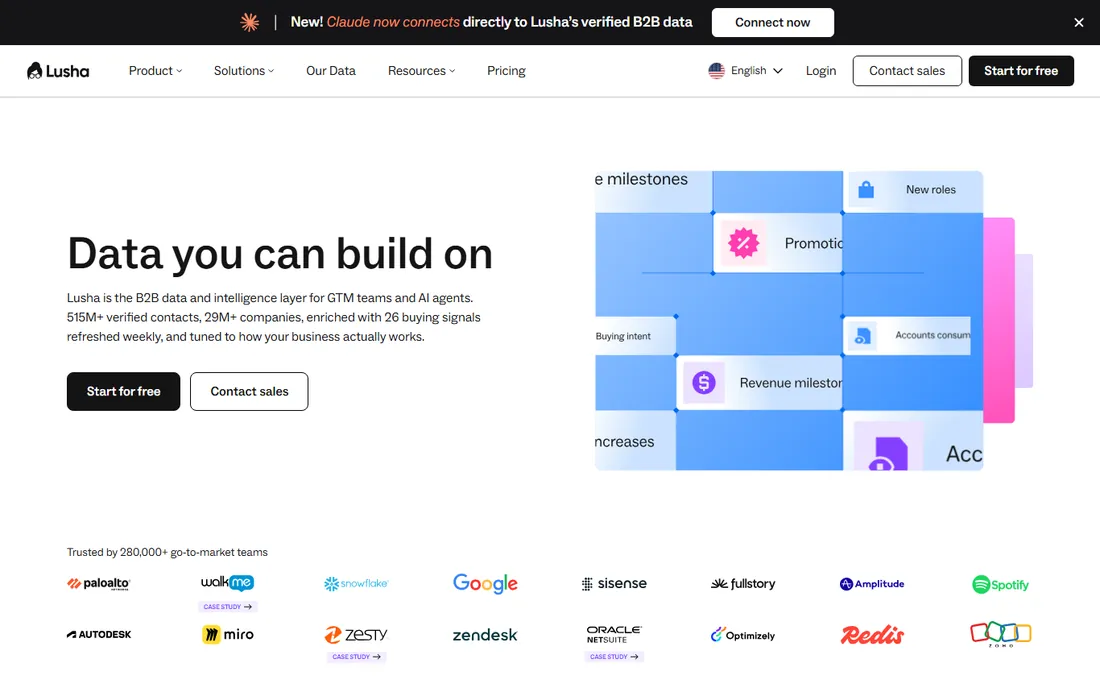
Lusha's reputation rests on phone numbers: 515M+ verified contacts, 165M+ emails, and 117M+ direct dials, with 26 buying signals refreshed weekly. The Chrome extension reveals contact data on LinkedIn profiles and company sites, and the free plan requires no credit card, with limits published on the pricing page. Native CRM apps cover Salesforce, HubSpot, monday, Zoho, and Pipedrive, plus a full API and an MCP server for AI agents.
The compliance story is unusually thorough for this category: ISO 27701, ISO 27001, ISO 42001, SOC 2 Type II, GDPR certification, and CCPA validation. The vendor publishes its accuracy claims and even its own measurement of data decay, which is more transparency than most rivals offer.
The catch is pricing opacity past the free tier. Plans are quote-based, and credit consumption varies by data type, so a phone-heavy team should get the exact credit math in writing before committing. It also works best as a prospecting layer rather than a full outreach platform.
What we like- Free plan with no credit card
- Strong phone data with 117M+ direct dials claimed
- Chrome extension for LinkedIn prospecting
Watch out for- Pricing is quote-based beyond the free plan
- Credit costs vary by data type
Starting priceSee website
Free planNo
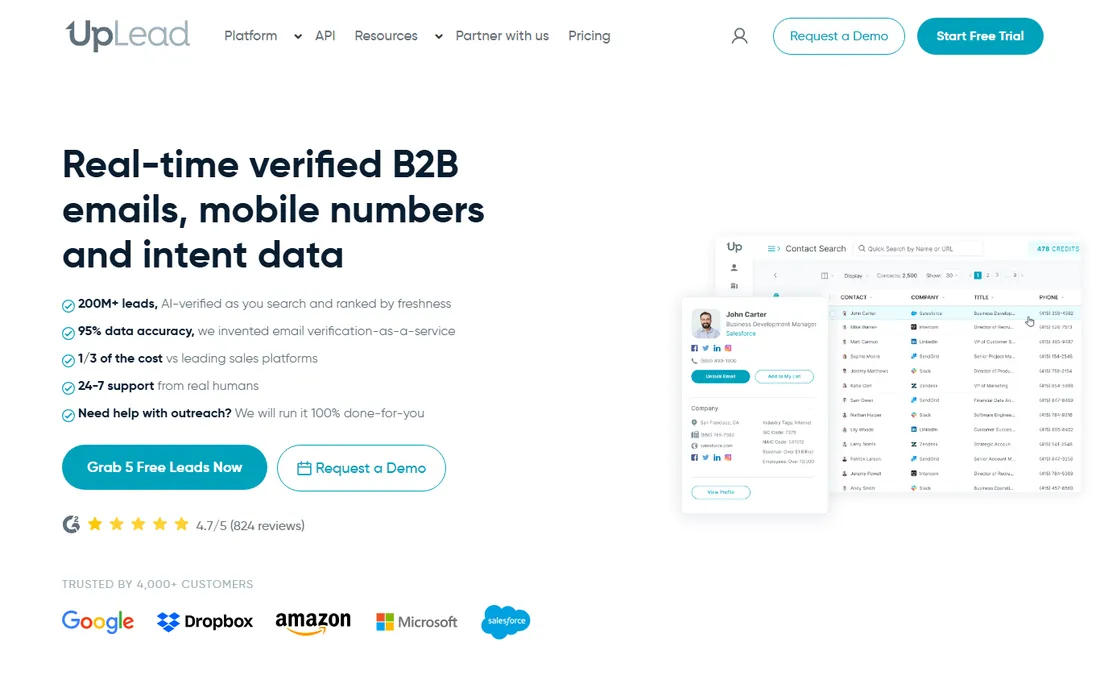
UpLead's pitch is quality over quantity, and it puts money behind it: a 95%+ data accuracy guarantee with friendly credits that refund you for bounces and poor data. Every export passes through real-time email verification, and the Prospector offers 50+ search filters across contacts and companies, plus technographics, intent data, mobile direct dials, and a Chrome extension.
The platform integrates with Salesforce, HubSpot, and Pipedrive, and offers a real-time API for enrichment. The vendor says its CTO invented email verification as a service, and the product reflects that heritage.
The catch is access. There is no free plan, only a limited trial, and plans are quote-based. Export limits on bulk lookups can slow large campaigns. But if your team has been burned by bad data, the accuracy guarantee is the strongest promise in this list.
What we like- 95%+ accuracy guarantee with credit refunds for bad data
- Real-time email verification on every export
- 50+ search filters
Watch out for- No free plan, trial only
- Export limits can constrain large campaigns
Starting priceSee website
Free planYes
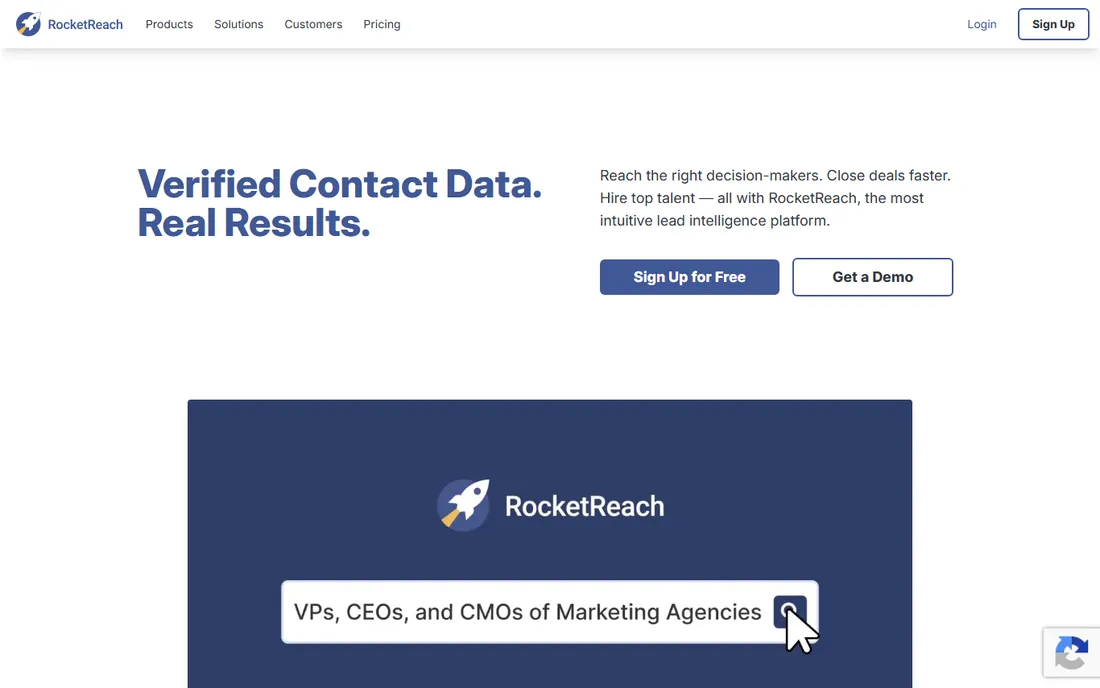
RocketReach keeps the model simple: a huge database (700M profiles, 60M companies), search with 100+ filters, and real-time email and phone validation, with a browser extension for prospecting as you browse. A free account offers up to 5 lookups with no credit card, which is enough to test match rates on your actual ICP. The vendor claims 90-98% deliverability on verified emails and 300,000+ extension users.
The platform also includes Messages for sending emails with automated follow-ups and Autopilot for automated discovery workflows, plus a contact data API with 4.5B records. CRM integrations cover Salesforce and HubSpot.
The catch is depth. RocketReach is a lookup tool first and an engagement platform second; teams wanting advanced sequencing or multichannel campaigns will find Apollo or Snov.io more complete. Pricing beyond the free tier is quote-based.
What we like- 700M profiles and 60M companies
- Free account with up to 5 lookups
- 90-98% deliverability claimed on verified emails
Watch out for- Pricing is quote-based
- Engagement features are thinner than Apollo or Snov.io
Starting priceSee website
Free planYes
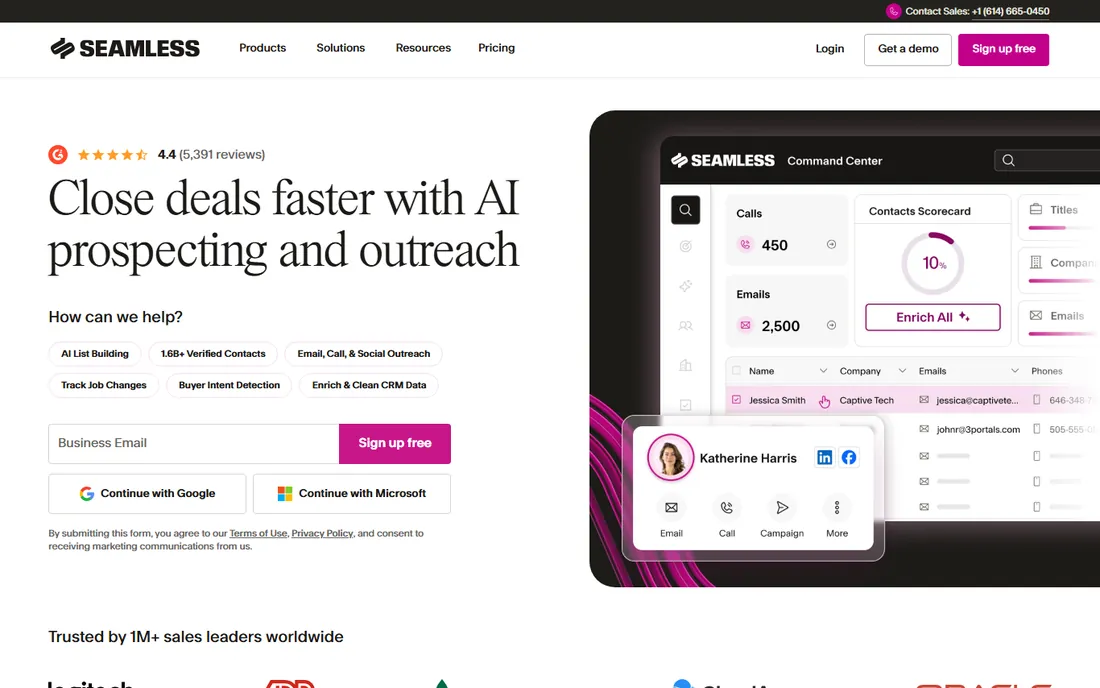
Seamless.AI's differentiator is architectural: instead of querying a stored database, it searches the web in real time with AI every time you look someone up, which the vendor argues keeps data fresher than databases that go stale. It is free for up to 50 credits, and paid plans are quote-based through sales.
The trust mechanism is the 100% credit-back protection: if an email turns out invalid, the credit is refunded automatically with no forms. The platform now spans a data engine (prospector, buyer intent, job changes, CRM enrichment), an engagement hub (email, calling, social), AI sales agents, and an automation network with API, MCP, and bulk credits. The API is available on every plan, including free.
The catch is the sales-led pricing and the speed tradeoff of real-time search at volume. For list-building at scale, test a few hundred lookups on the free credits and measure both accuracy and time per record before committing.
What we like- Free for up to 50 credits
- 100% automatic credit refund on invalid emails
- Real-time search instead of a static database
Watch out for- Paid pricing goes through sales
- Real-time search can be slower than database lookup
Starting priceSee website
Free planYes
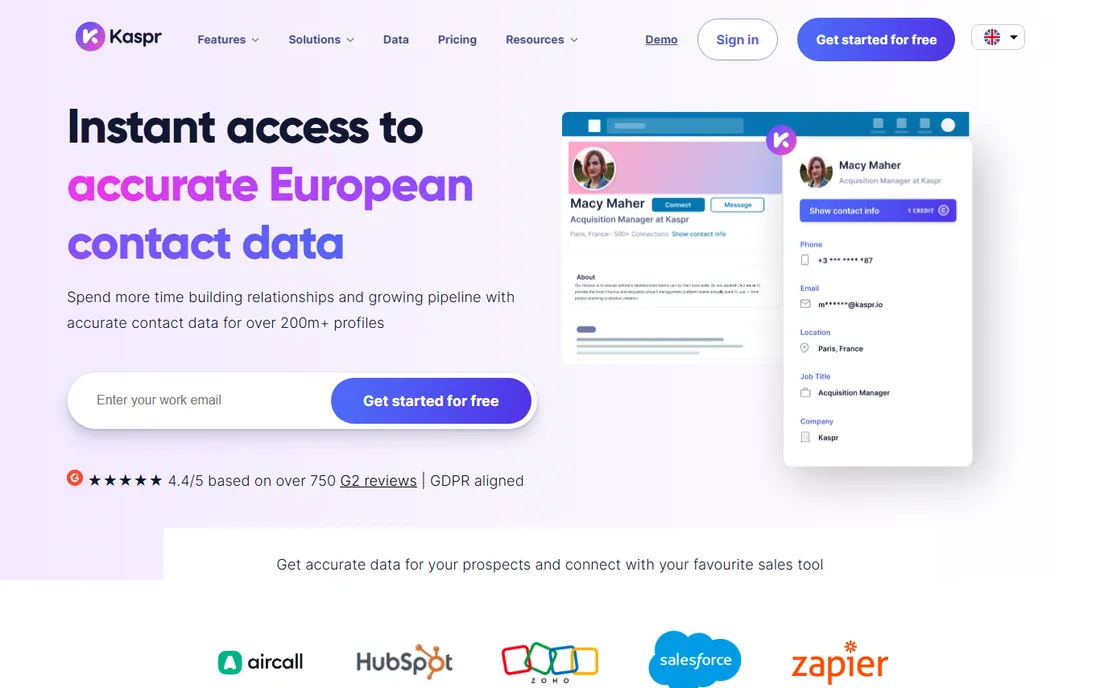
Kaspr is the LinkedIn-native pick: a Chrome extension that reveals phone numbers and emails directly on LinkedIn profiles, search results, groups, and Sales Navigator, backed by a claimed 500M+ verified and compliant contacts with an emphasis on European coverage. It is free to get started with no credit card required, and setup takes minutes with no onboarding.
The dashboard handles lead management, bulk enrichment workflows, and sales automation, with integrations for Salesforce, HubSpot, Zoho, Aircall, Ringover, and Zapier, plus an API. The vendor positions itself as GDPR-aligned, which matters for teams prospecting in Europe.
The catch is the LinkedIn dependency. If your sourcing starts outside LinkedIn, Kaspr adds less value, and heavy extension use should stay within LinkedIn's usage limits to protect your account. Pricing beyond the free tier is quote-based.
What we like- Free to start with no credit card
- Strong European data coverage
- GDPR-aligned with 500M+ contacts claimed
Watch out for- Pricing is quote-based
- LinkedIn-centric workflow limits non-LinkedIn sourcing
Credit math: the part that decides your real cost
Almost every tool here sells credits, and the definitions differ. Hunter charges 1 credit per email found and 0.5 per verification, and charges nothing on failure. Apollo, Hunter, and Clay credits expire at each billing cycle, so buying big and using little is waste. Snov.io counts recipients only on first contact, making follow-ups free. Clay charges nothing when an enrichment finds nothing. Seamless.AI refunds credits automatically on invalid emails, and UpLead refunds for bounces.
Before you sign, run this exercise. Take 100 real prospects from your ICP, run them through the free plan or trial, and record the verified-email match rate and the credits consumed. Then price your monthly volume against two plans, not one, because the cheapest plan is rarely the one that fits. Ask specifically about rollover, because most vendors keep what you do not use.
Start from your workflow, not the feature list. If your team lives in LinkedIn, Kaspr or Lusha's extension will feel natural. If you want one tool for data and outreach, Apollo or Snov.io cover the full motion. If your CRM data is decaying, Clay's waterfall enrichment or UpLead's verified exports fix that. If you sell to the enterprise, ZoomInfo's intent data and org charts justify the quote process.
Then check three things on the trial. Data accuracy on your ICP, not the vendor's demo list. Credit consumption per verified contact, not per search. And compliance posture for your markets: GDPR and CCPA certifications matter if you prospect in Europe or California, and the vendors' own trust pages spell out their basis. Finally, confirm the integration with your CRM actually syncs both ways before you pay for a year.
How we chose
We started with the platforms that appear most often in G2, Capterra, and Reddit threads about B2B lead generation, then kept the ten with the clearest product-market fit for small and mid-size teams, mixing database giants, email specialists, and enrichment builders. Every homepage was opened to confirm the product and the company behind it. Pricing and free-plan details come only from the vendors' own pages: Hunter's $34-per-month annual Starter and free 50-credit plan, Snov.io's $39 Starter, Clay's $167 Launch and free tier, Seamless.AI's free 50 credits, and the free plans at ZoomInfo, Lusha, Apollo, RocketReach, and Kaspr. Where vendors publish no dollar figure, we wrote See website rather than repeating third-party directories. Feature descriptions come from vendor pages and vendor press releases.
Frequently asked questions
Which lead gen software has a free plan?
Nine of the ten: Apollo.io (free Starter, no time limit), ZoomInfo Lite (permanent free plan), Lusha, Hunter.io (50 credits a month), Snov.io, Seamless.AI (50 credits), Clay, RocketReach (5 free lookups), and Kaspr. UpLead is the only one with no free plan. Free tiers are the best way to test data quality on your ICP before paying.
How do credits work in lead gen tools?
Credits are the currency for finding or verifying contacts. Hunter charges 1 credit per email found and 0.5 per verification, and charges nothing when nothing is found. Apollo pools credits across the team. Clay charges nothing when an enrichment returns nothing. Most vendors expire unused credits each cycle, so size your plan to real usage.
What is the cheapest lead gen software here?
Hunter's Starter at $34 a month billed annually and Snov.io's Starter at $39 a month are the lowest published starting prices. But the cheapest plan is not always the cheapest outcome: credit consumption, match rates, and whether credits roll over decide the real cost per verified contact.
Is buying contact data legal?
It depends on your market. Vendors like ZoomInfo, Lusha, and Seamless.AI publish GDPR and CCPA compliance programs and certifications. You still need a lawful basis for outreach in each jurisdiction, and you should read the vendor's data-processing terms before running campaigns in Europe.
Should I choose a database or a real-time search tool?
Databases like ZoomInfo, Apollo, and RocketReach return results instantly from stored records, which can go stale. Seamless.AI searches in real time, which can be fresher but slower at volume. Test both on your ICP and compare verified match rates rather than trusting the architecture pitch.
Do I need a separate outreach tool?
Not necessarily. Apollo, Snov.io, and Hunter include sequencing and email sending, and Clay now has a native sequencer. If your outreach is phone-heavy or multichannel, a dedicated sales engagement tool may still earn its place alongside a pure data provider like UpLead or Lusha.
Sources we checked (14)
- https://apollo.io/
- https://www.apollo.io/pricing
- https://zoominfo.com/
- https://www.lusha.com/
- https://hunter.io/
- https://hunter.io/pricing
- https://snov.io/
- https://snov.io/pricing
- https://clay.com/
- https://www.clay.com/pricing
- https://www.uplead.com/
- https://rocketreach.co/
- https://seamless.ai/
- https://kaspr.io/
Is your product missing or out of date?
We review this list regularly. Vendors can request a listing, send updated pricing or ask about featured placement.

Shihab Mia · Founder, Rankite
Shihab has spent more than a decade helping SaaS and e-commerce brands grow through search. He writes Rankite's software buying guides from pricing pages, documentation and public user reviews. More about Shihab.