How we make this list: we compare pricing pages, product documentation and public user reviews. Rankite is independent; if a vendor ever pays for a featured spot, that listing is clearly labeled Partner.
Key takeaways
- Ahrefs and Semrush bundle rank tracking into full SEO suites; buy them for the suite, not the tracker, since standalone tools cost less per keyword.
- SE Ranking is the value pick for most teams: 2,000 daily tracked keywords at $103.20 a month on annual billing, with audits and research included.
- AccuRanker and Advanced Web Ranking serve agencies tracking thousands of keywords; AccuRanker wins on on-demand refreshes, AWR on SERP analysis depth.
- Nightwatch is the pick for local SEO and big teams: ZIP-code precision, AI search tracking and unlimited seats on every plan.
- Mangools SERPWatcher is the cheapest paid entry at $18.85 a month annually, but weekly updates on the Basic plan limit its usefulness for active campaigns.
Quick comparison
| Tool | Best for | Starting price | Free plan |
|---|
 Ahrefs Ahrefs | Rank tracking inside a full SEO suite | $129 per month | Yes (limited) |
 Semrush Semrush | Position tracking with a marketing suite | $139.95 per month | Free trial |
 AccuRanker AccuRanker | Agencies needing on-demand refreshes | $129 per month | Free trial (14 days) |
 SE Ranking SE Ranking | Best value all-in-one with tracking | $129 per month | Free trial (14 days) |
 Advanced Web Ranking Advanced Web Ranking | Deep SERP analysis for agencies | $139 per month | Free trial |
 Nightwatch Nightwatch | Unlimited seats and local precision | €79 per month | Free trial (14 days) |
 Wincher Wincher | Simple affordable tracking | $49 per month | Free trial (7 days) |
 Serpstat Serpstat | Budget suite with rank tracking | $59 per month | Free trial |
 Mangools SERPWatcher Mangools SERPWatcher | Cheapest paid entry | $18.85 per month (billed annually) | Free trial (10 days) |
 Moz Pro Moz Pro | Beginners learning SEO | $99 per month | Free trial (30 days) |
Is your product missing or out of date?
We review this list regularly. Vendors can request a listing, send updated pricing or ask about featured placement.
The best keyword rank tracker software
Pick the wrong rank tracker and you pay twice. First in the subscription, which is the small part. Then in the bad decisions: keywords that stopped updating weeks ago, local rankings that never reflected the real SERP, and reports that showed your client climbing while their traffic fell. A tracker that lies to you quietly is worse than no tracker at all.
The second cost is migration. Rank history is the asset, and it does not transfer. When you switch tools after a year, you lose the trend lines that made the data useful. That makes the first choice the one that sticks, so it deserves more than a glance at the pricing page.
This list covers ten tools that track keyword positions today, from full SEO suites to single-purpose trackers. The best keyword tracking tool is the one whose update frequency, location precision and keyword limits match how you actually work.
Starting price$129 per month
Free planYes (limited)
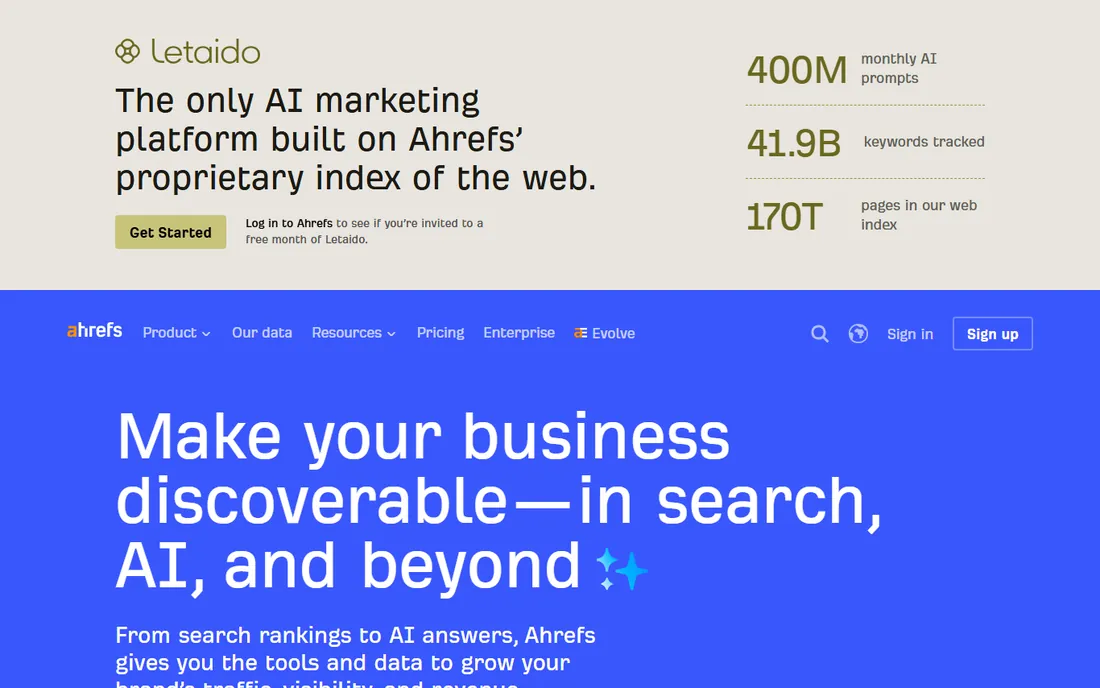
Most Ahrefs customers buy it for backlinks and keyword research, and Rank Tracker comes along for the ride. That is the right way to think about it. The Lite plan at $129 a month ($108 on annual billing) tracks 750 keywords across 5 projects, which is plenty for a freelancer or small team. The Starter plan at $29 a month tracks 50 keywords if you just need a toe in the water.
The honest limitation is freshness. Ahrefs updates tracked rankings weekly by default, which is fine for quarterly trend lines and useless the morning after a Google update. If daily movement matters to you, a dedicated tracker below will serve you better. Ahrefs also has no white-label reporting, so agencies factor that in.
What we like- Deepest backlink and keyword database behind the tracker
- Tracks 750 keywords on Lite
- Free tools for verified sites
Watch out for- Default update frequency is weekly, not daily
- Expensive if you only need tracking
- One seat included, extras cost $40+
Starting price$139.95 per month
Free planFree trial
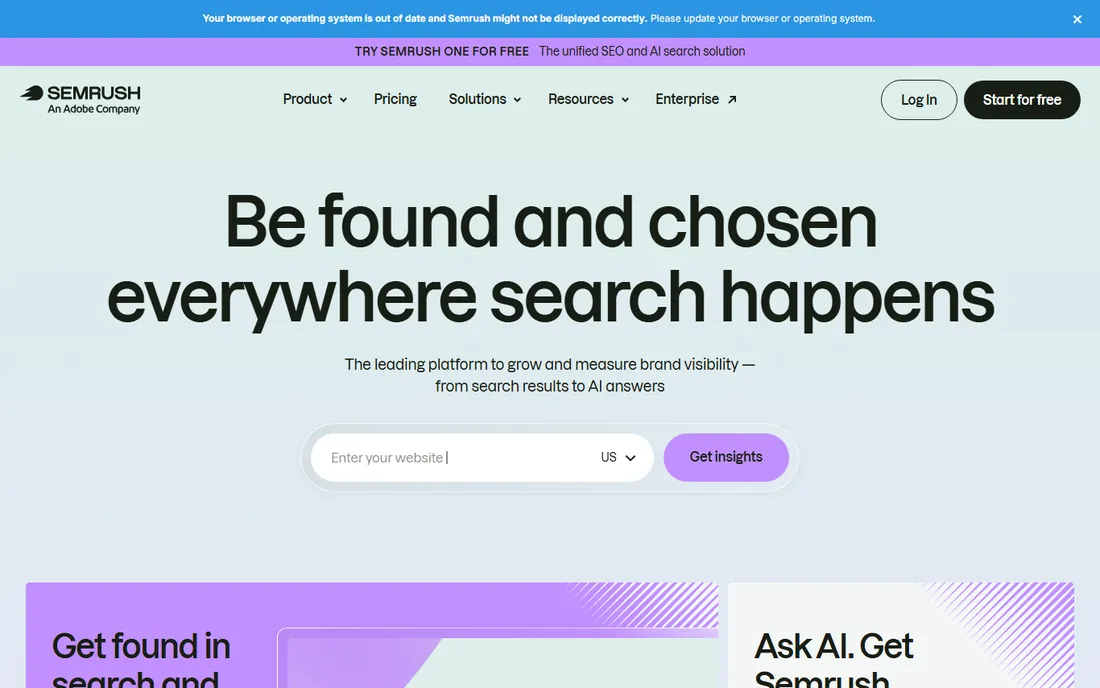
Semrush's Position Tracking updates daily and sits inside the broadest marketing toolkit on this list. The entry SEO plan runs $139.95 a month ($117.33 on annual billing) and tracks 500 keywords across 5 projects. For a marketing lead who wants one vendor relationship covering research, audits, tracking and PPC intel, that consolidation is the selling point.
Five hundred keywords sounds generous until you add competitor domains, mobile versus desktop splits and local variants, which eat the allowance faster than expected. Count your real tracking list before choosing a tier. Semrush also sells AI visibility tracking as part of its newer bundles, which matters if your clients are asking about ChatGPT and AI Overviews.
What we like- Position Tracking with daily updates
- 500 keywords on the entry plan
- One login for SEO, PPC and content tools
Watch out for- Priciest way to get tracking alone
- Keyword limits burn fast with competitors and local variants
- Extra seats cost $45 each
Starting price$129 per month
Free planFree trial (14 days)
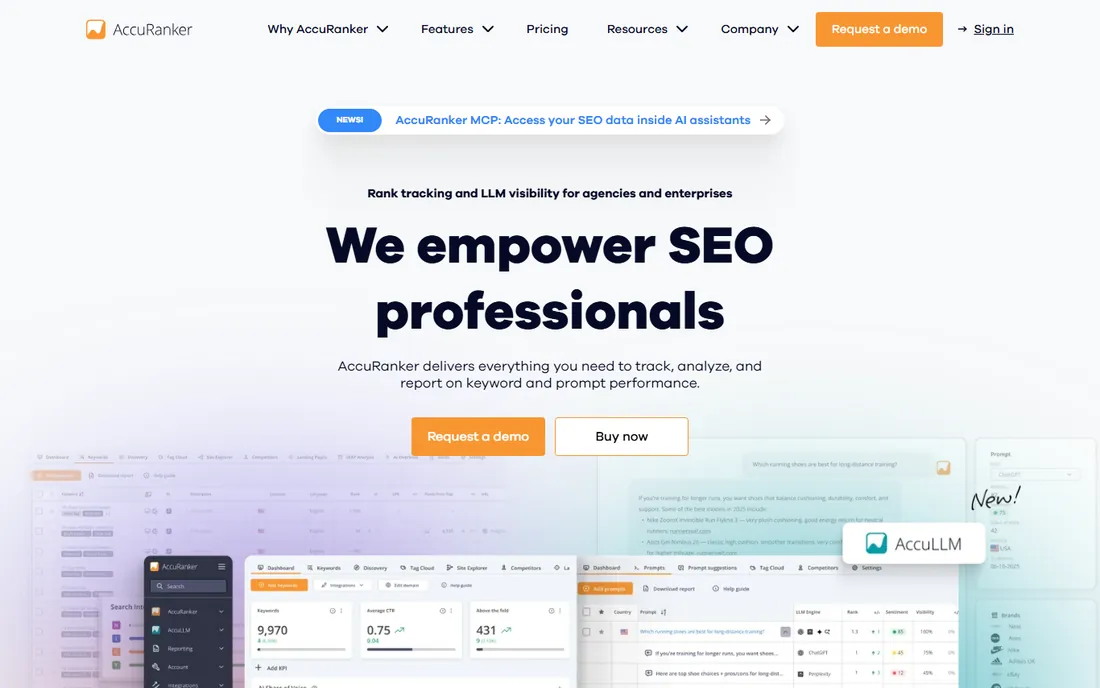
AccuRanker does one job, rank tracking, and does it faster than almost anyone. When a client calls asking where they rank right now, the on-demand refresh answers in minutes instead of tomorrow. Plans start at $129 a month for 1,000 keywords, scaling to $224 a month for 2,000 on Professional. Annual billing takes 10 percent off.
The trade is scope. There is no site audit, no backlink data and no real keyword research, so most teams pay for a second tool alongside it. Small businesses tracking a few hundred keywords will also find the entry price steep for what they use. Buy AccuRanker when tracking speed and scale are the job; buy something else when you need a suite.
What we like- On-demand ranking refreshes
- Very fast data at scale
- Daily updates standard
Watch out for- No small plan for tiny keyword lists
- No audits, backlinks or research included
- Tracking depth thins below the top 30 after Google's 2025 changes
Starting price$129 per month
Free planFree trial (14 days)
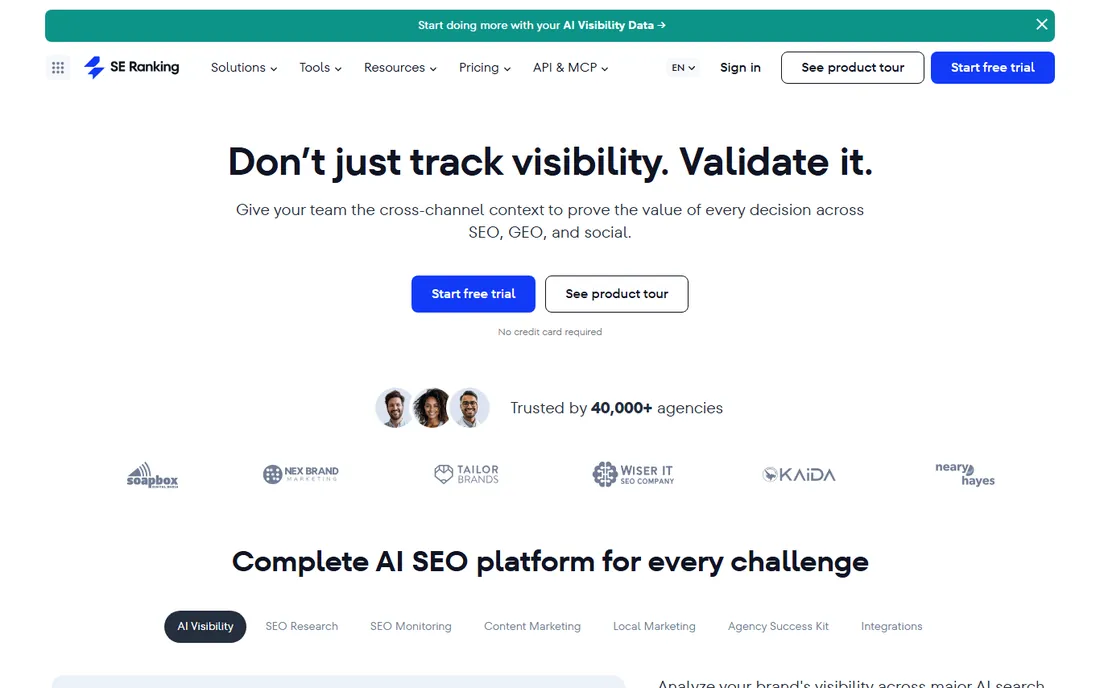
SE Ranking is the tool most small agencies land on after comparing everything else. The Core plan at $129 a month ($103.20 on annual billing) tracks 2,000 keywords daily and bundles site audits, keyword research and backlink monitoring. That is roughly the price of Semrush's entry tier with four times the keyword allowance. The AI Search Toolkit tracks brand visibility inside ChatGPT, Perplexity and Google AI Overviews.
Read the metering carefully before you celebrate. The keyword allowance is counted per search engine, so tracking Google desktop, mobile and Bing turns 2,000 checks into about 667 unique keywords. White-label client reports need the Agency Pack add-on at $69 a month. Even with those caveats, the value per dollar is the strongest on this list for teams under fifty clients.
What we like- 2,000 keywords tracked daily on Core
- Audits, research and backlink monitoring included
- AI search visibility toolkit
Watch out for- Keyword checks multiply across search engines, shrinking the real allowance
- White-label needs the Agency Pack add-on
- API is a separate add-on
Starting price$139 per month
Free planFree trial
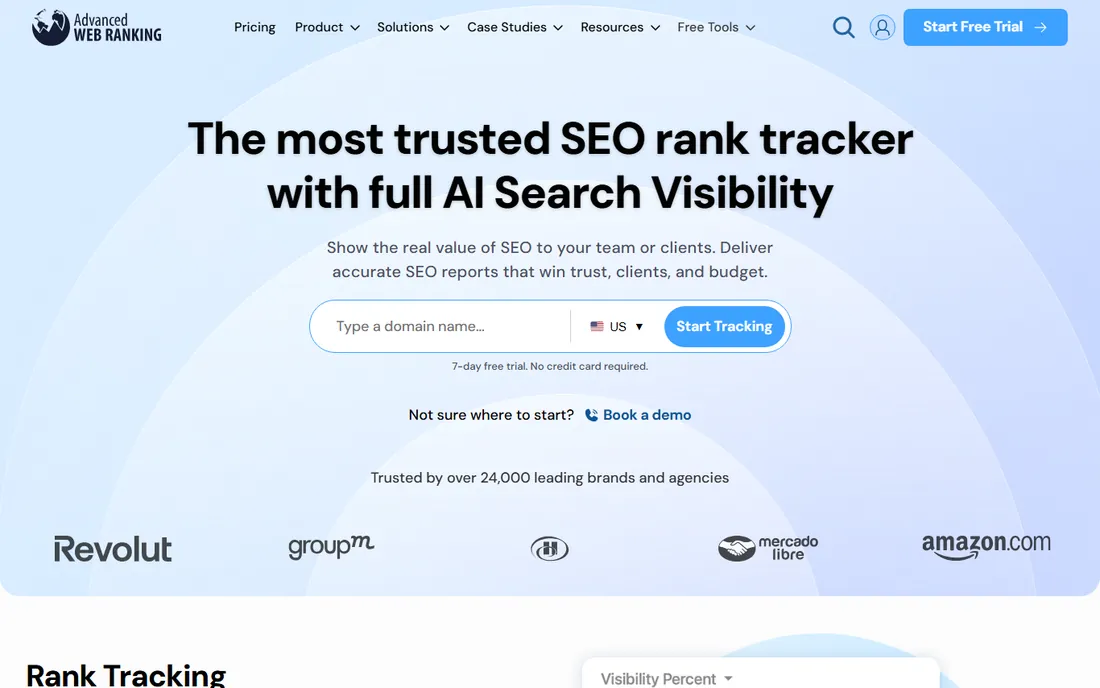
AWR has tracked rankings since 2002, and it shows in the depth: SERP features analysis, market share views, competitor intelligence and forecasting that the younger tools are still catching up on. The Pro plan at $139 a month covers 7,000 keywords with unlimited projects and users, which is generous per-keyword pricing for agencies. Every plan now includes AI visibility tracking across Google AI Mode, ChatGPT, Perplexity and Gemini.
It is a specialist, not a suite. Keyword research and site audits are thin, so pair it with a research tool. The keyword unit system also needs attention: unmanaged projects with many search engines and locations can burn through units quickly. For rank-tracking-focused buyers, though, reviewers consistently rate it the best value per keyword at scale.
What we like- 7,000 keywords on the Pro plan
- AI visibility tracking on every plan
- Unlimited projects, users and seats
Watch out for- Rank tracking only, no research or audit depth
- Interface has a learning curve
- Keyword units burn fast if unmanaged
Starting price€79 per month
Free planFree trial (14 days)
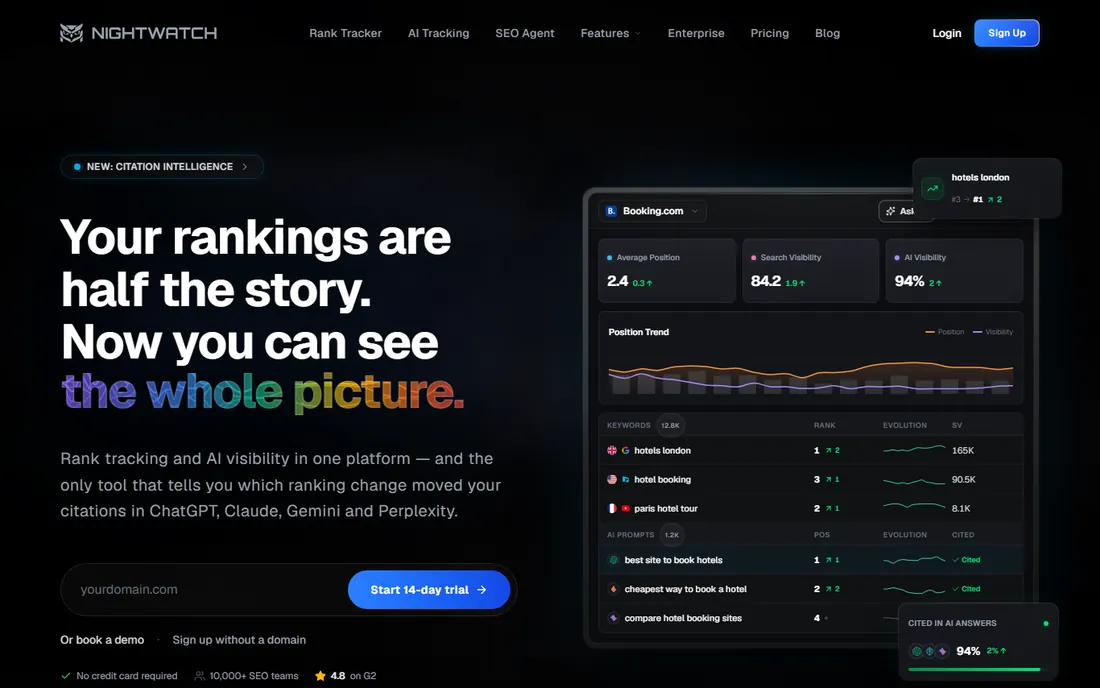
Nightwatch built its name on location accuracy: rankings down to ZIP-code level across more than 100,000 locations, plus map pack tracking that local SEO teams actually need. The Starter plan at €79 a month billed annually tracks 500 keywords daily. Every plan includes unlimited seats, which makes it cheap for large teams that would pay per-seat elsewhere. AI visibility tracking across ChatGPT, Claude, Gemini and Perplexity is included.
Two quirks for US buyers. Pricing is in euros, so the dollar amount moves month to month; budget a range, not a line item. And the keyword ladder stops at 20,000 before you need a sales conversation, so true enterprise volumes go elsewhere. For local agencies and in-house teams, it is one of the strongest picks here.
What we like- Unlimited users on every plan
- ZIP-code level local tracking
- AI search tracking included
Watch out for- Prices in euros, so US bills fluctuate
- No plan below 500 keywords
- Keyword ladder tops out before enterprise volumes
Starting price$49 per month
Free planFree trial (7 days)
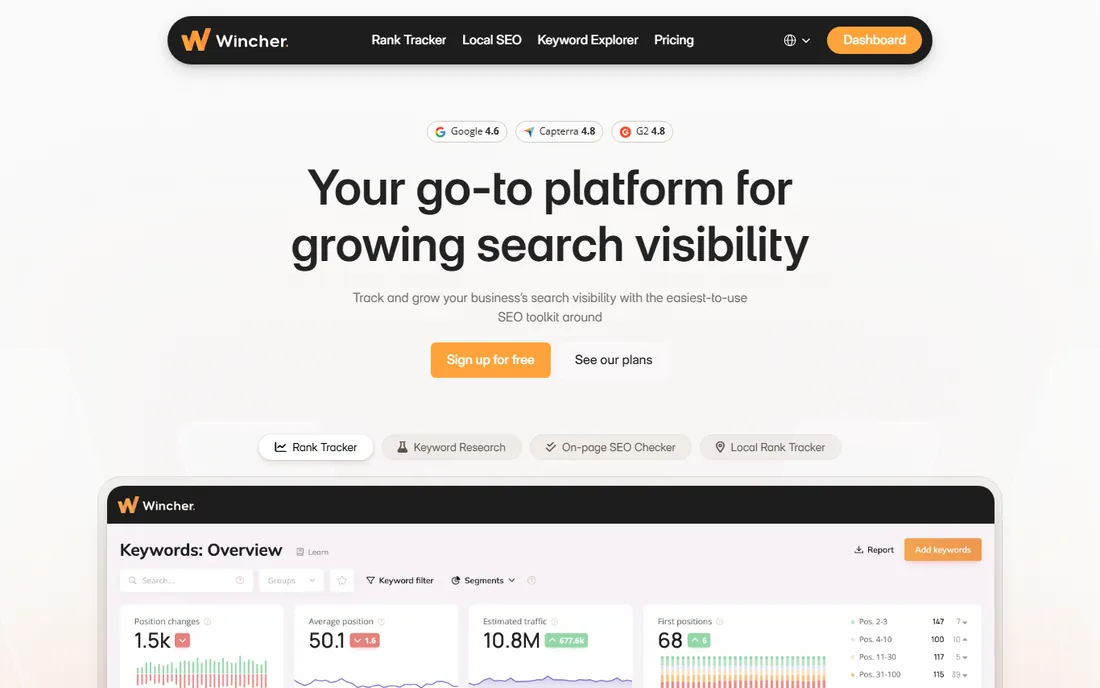
Wincher deliberately does less than the suites, and for many small teams that is the appeal. Daily rank tracking with a clean dashboard, competitor tracking and basic reporting, without the hundred features you will never open. The Basic plan at $49 a month tracks from 500 keywords. Setup takes minutes and the learning curve is close to zero.
The simplicity is also the ceiling. If you need deep SERP analysis, local precision or AI visibility tracking, Wincher does not compete with the specialists above. It is a tracker for teams that want a number every morning and a chart every month, at a price that does not need approving.
What we like- Clean, simple interface
- Daily updates
- Affordable for small teams
Watch out for- Thin on advanced analysis
- Limited keyword research
- Smaller feature set than suite rivals
Starting price$59 per month
Free planFree trial
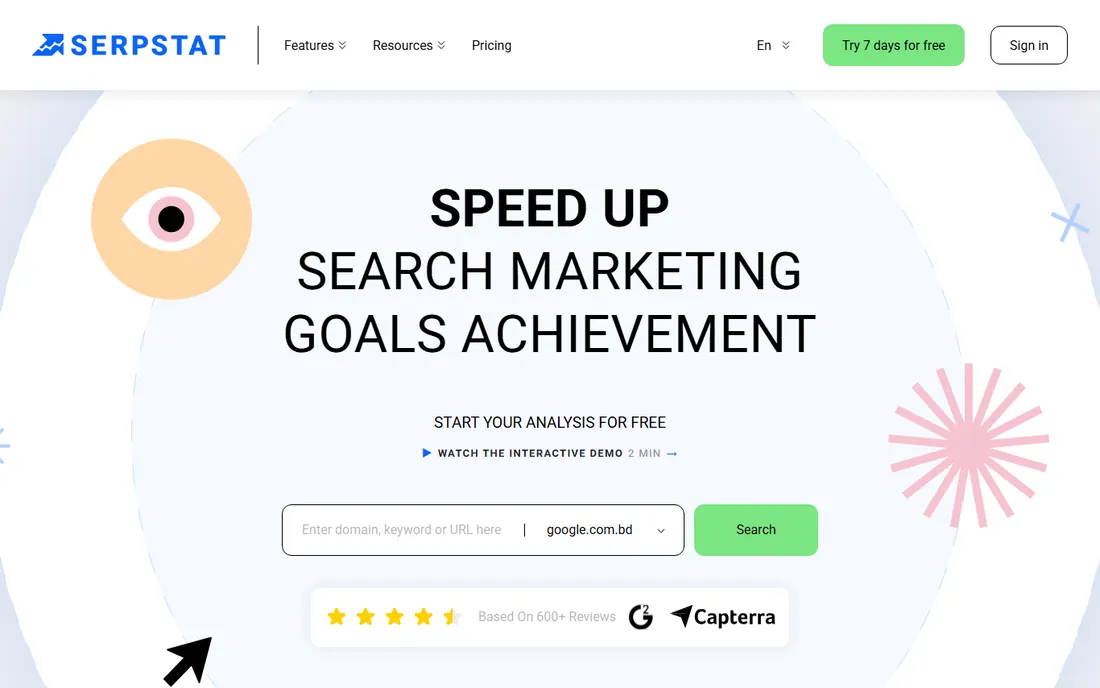
Serpstat is the budget suite play: rank tracking plus keyword research, site audits, competitor analysis and backlink tools from $59 a month on the Individual plan ($50 on annual billing). For freelancers and small businesses that need a bit of everything, it undercuts Ahrefs and Semrush substantially while covering the same checklist. The database spans 230-plus Google regions, which suits international work.
Rank tracking itself is competent rather than exceptional. Daily query limits are the real constraint on heavy tracking use, and the interface shows its age next to newer tools. Buy Serpstat when you want one cheap subscription covering the SEO basics; buy a dedicated tracker when rankings are the product you sell.
What we like- 30+ SEO tools in one subscription
- 230+ Google regional databases
- Generous published limits for the price
Watch out for- Rank tracking is one module among many, not the star
- Daily query caps constrain heavy users
- Interface feels dated next to newer rivals
Starting price$18.85 per month (billed annually)
Free planFree trial (10 days)
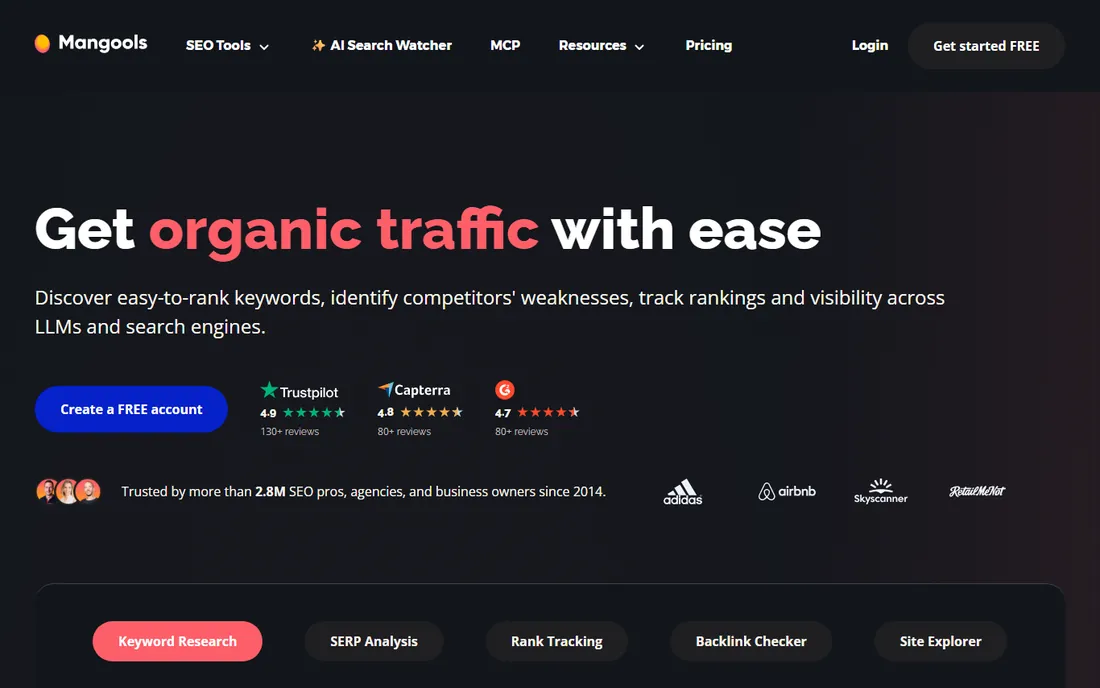
Mangools built its reputation on being the friendly, affordable SEO suite, and SERPWatcher is its rank tracker. The Basic plan at $18.85 a month on annual billing is the cheapest paid tracking on this list, and it bundles KWFinder, SERPChecker, LinkMiner and SiteProfiler. For a blogger or small site owner who needs the basics, the value is hard to argue with.
The catch is update frequency: Basic updates weekly, with daily updates reserved for higher tiers. Weekly tracking is fine for long-term trend watching and inadequate for active SEO campaigns. The 200-keyword entry limit also fills fast. It is a starter tool with a clear upgrade path, not a destination for serious tracking.
What we like- Lowest entry price on this list
- Includes KWFinder and four other SEO apps
- Very easy to learn
Watch out for- Basic plan updates weekly, not daily
- 200 tracked keywords at entry
- Limited white-label and API options
Starting price$99 per month
Free planFree trial (30 days)
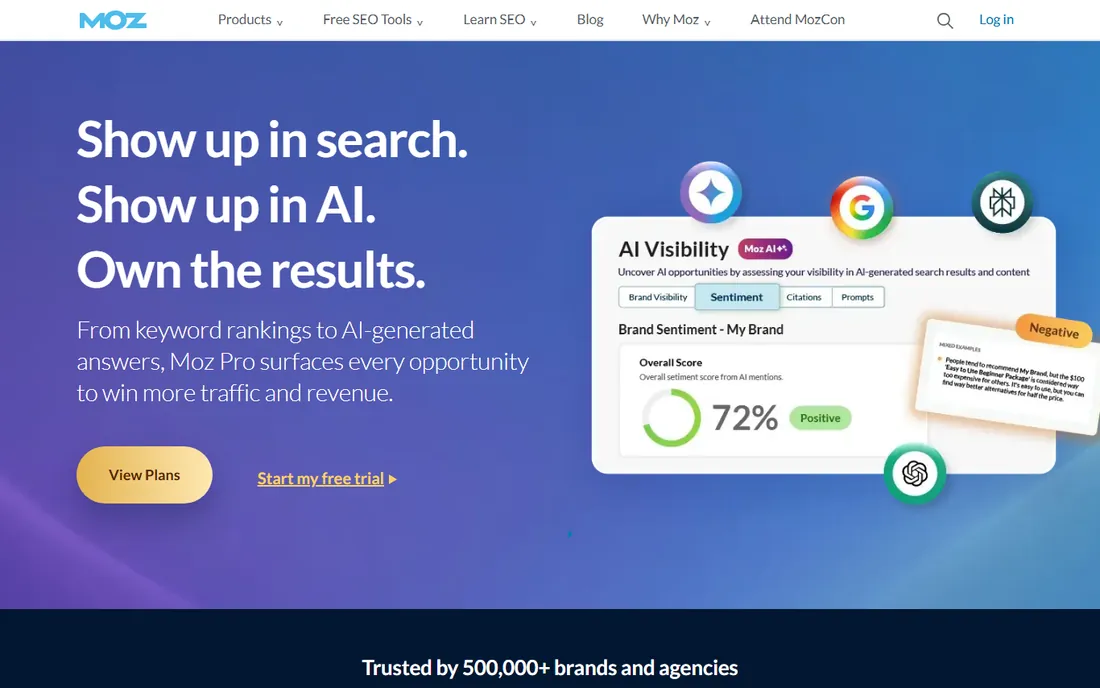
Moz Pro is the on-ramp many SEOs started on, and it remains the most approachable suite for beginners. Domain Authority is still the industry's shorthand metric, and the platform explains what to do, not just what the numbers are. The Standard plan at $99 a month ($79 on annual billing) tracks 300 keywords, and the 30-day free trial is the longest on this list.
Specialists beat it on raw tracking depth and database size. Ahrefs and Semrush have larger keyword indexes, and the dedicated trackers above update faster and analyze SERPs more deeply. Choose Moz Pro when the team is learning SEO and needs guidance; graduate to a specialist when rankings become the deliverable.
What we like- 30-day free trial, longest here
- Beginner-friendly guidance and metrics
- 300 tracked keywords on Standard
Watch out for- Smaller keyword database than Ahrefs or Semrush
- Tracking depth lags specialists
- $79 annual rate still pricey per keyword
How this shortlist was assembled
This list was built from vendor pricing pages, feature documentation and public reviews on G2, Capterra and SEO communities, checked in October 2026. Only tools available today with genuine rank tracking were included. Prices and keyword limits come from current vendor-published figures; where plans changed during 2026, the current lineup is shown. No hands-on testing was performed and no vendor paid for placement. Update frequencies are vendor-stated defaults.
What to check before you buy a rank tracker
Start with update frequency, because it decides what the tool is for. Daily tracking suits active campaigns, post-update monitoring and client reporting. Weekly tracking suits long-term trend watching and costs less. Several tools on this list charge more or reserve daily updates for higher tiers, so confirm the frequency at the plan you will actually buy, not the plan on the pricing page headline.
Next, count your real keyword load. Multiply your keyword list by search engines (desktop and mobile count separately), by locations, and by competitor domains if you track those. A 500-keyword plan can become a 150-keyword plan once the multipliers apply. SE Ranking and AWR are explicit about this metering; others bury it in documentation. Do the multiplication before checkout.
Location and AI search coverage
If you do local SEO, confirm the tool tracks at the precision you sell: country, city or ZIP code, plus map pack results. National trackers with city-level data will embarrass you in front of a local client. Also ask about AI search visibility: ChatGPT, Perplexity, Gemini and Google AI Overviews are where a growing share of discovery happens, and only some tools on this list track them. If your clients are asking about it, weight this heavily.
Reporting and seats
Agencies should check white-label reporting, scheduled reports and API access before buying, since several tools gate these behind higher tiers or add-ons. Count seats too: per-seat pricing at $40 to $45 a month per extra user adds up fast on Ahrefs and Semrush, while Nightwatch and AWR include unlimited seats. The cheapest sticker price is not always the cheapest team price.
The AI search wrinkle
Rank tracking was built for ten blue links, and search is no longer ten blue links. AI Overviews answer queries without clicks, ChatGPT and Perplexity handle research tasks that used to start on Google, and brand visibility now spans surfaces no classic tracker was designed for. The tools on this list are responding at different speeds: Nightwatch, AWR, AccuRanker and SE Ranking ship AI visibility tracking, while others treat it as a future roadmap item.
This does not make classic rank tracking obsolete; it makes it incomplete. Keep tracking Google positions, because they still drive the majority of organic traffic, but add AI visibility tracking if your category is affected. The practical move is to pick a tracker that covers both surfaces in one subscription rather than buying a second tool next year.
Frequently asked questions
How many keywords should I track?
Track the keywords that map to revenue: your money pages, your top traffic drivers and the terms you are actively trying to win. Most small businesses need 100 to 300; agencies need thousands across clients. Resist tracking everything; every keyword you add costs money and attention. Review the list quarterly and prune dead terms.
Is daily rank tracking worth it over weekly?
For active SEO campaigns, yes. Daily data catches the impact of Google updates, site changes and competitor moves while you can still react. For stable sites with quarterly reporting, weekly is fine and cheaper. The trap is paying for daily updates on keywords nobody looks at; match frequency to how often decisions get made.
What is the cheapest good rank tracker?
Mangools SERPWatcher at $18.85 a month on annual billing is the cheapest paid option, though the Basic plan updates weekly. For daily tracking at low cost, Wincher at $49 a month and Nightwatch's lower tiers are the value picks. Google Search Console is free and every site should use it, but it is not a substitute for competitor and historical tracking.
Do I need a separate rank tracker if I have Ahrefs or Semrush?
Not necessarily. Both bundle competent tracking, and if you already pay for the suite, the tracker is effectively free. Buy a dedicated tracker when you need daily updates at scale, on-demand refreshes, deeper local precision or AI visibility tracking that the suite does not offer. Many agencies run both: the suite for research, the specialist for tracking.
How accurate are rank trackers?
Good trackers match what you see in a clean browser session closely, but no tracker matches every user's personalized SERP exactly. Location, device, search history and data center all shift results. Use trackers for trends and relative movement, not for claiming an exact position to a client. Cross-check important keywords manually in an incognito window.
What is AI search tracking and do I need it?
AI search tracking measures your brand's visibility inside AI answers: ChatGPT, Perplexity, Gemini, Google AI Overviews and AI Mode. It tracks mentions, citations and share of voice rather than classic positions. You need it if your buyers research in AI tools, which is increasingly common for B2B and considered purchases. Nightwatch, AWR, AccuRanker and SE Ranking include it; others are catching up.
Sources we checked (15)
- https://kairosy.ai/blog/ahrefs-kw-explorer-vs-kwfinder
- https://macroter.com/ahrefs-review/
- https://dev.to/stimlau/semrush-pricing-explained-pro-guru-and-business-in-2026-56ie
- https://www.vendr.com/marketplace/semrush
- https://www.g2.com/products/accuranker/pricing
- https://zutrix.com/guides/accuranker-alternatives
- https://www.searchenginemagazine.com/se-ranking/
- https://ecommerceparadise.com/seranking-pricing/
- https://targetinternet.com/resources/awr-review
- https://www.g2.com/products/advanced-web-ranking/pricing
- https://www.spotsaas.com/blog/best-rank-tracker-tools
- https://zutrix.com/guides/nightwatch-alternatives
- https://nightwatch.io/blog/10-best-keyword-rank-trackers/
- https://www.searchenginemagazine.com/serpstat-review
- https://www.techradar.com/reviews/serpstat
Is your product missing or out of date?
We review this list regularly. Vendors can request a listing, send updated pricing or ask about featured placement.

Shihab Mia · Founder, Rankite
Shihab has spent more than a decade helping SaaS and e-commerce brands grow through search. He writes Rankite's software buying guides from pricing pages, documentation and public user reviews. More about Shihab.